 1500+ reviews

How to Get Rid of Spiders in Garage for Good

You open the garage door in Magnolia, Texas, and see the same scene many homeowners know well: webs stretched around the door track, a spider tucked behind holiday decorations, and small insects gathering near the light. Sweeping the visible webs away may make the space look better for a day, but it won't solve the conditions bringing spiders back. The reliable answer to how to get rid of spiders in a garage is to redesign the garage so it stops working as a shelter. That means finding entry points, removing harborage, reducing insect activity, sealing gaps, and using treatment only where it supports those steps. Texas A&M's spider IPM guidance places physical exclusion, sanitation, clutter reduction, and monitoring at the center of that process, with chemical control used as a supplement rather than the whole plan (Texas A&M spider IPM guidance). Why Garages in Magnolia Attract So Many Spiders In Magnolia, a garage can support spider activity while still looking reasonably clean. A mower or ladder stays tight against the wall, holiday decorations sit in cardboard boxes, and the space behind a workbench goes weeks without being disturbed. Those conditions create shelter. Exterior lights and moisture also draw insects, giving spiders a dependable food source. The garage therefore functions as habitat, not just an entry point. Clutter forms protected gaps, wall-adjacent storage blocks airflow and cleaning access, and quiet corners let webs and egg sacs remain undisturbed. Kentucky extension guidance identifies sheltered storage areas, thresholds, cracks, and clutter as practical targets for cleanup, monitoring, and control (garage spider control guidance from the University of Kentucky). A useful way to diagnose the problem is to connect the clutter to the spider activity. Webs behind stacked bags point to a harborage zone. Insects gathering near a light point to an exterior attractant. Repeated webbing around the door suggests an opening or poorly sealed edge. Mapping those relationships tells you which storage areas to move, which gaps to seal, and where treatment may be justified. Common mistake: sweeping visible webs and stopping there. The web disappears, but the sheltered object, insect activity, and entry route remain. The garage continues to provide the same conditions, so new webbing returns. The local conditions matter Magnolia is an incorporated city in southwest Montgomery County and part of the Houston metropolitan area (Magnolia location information). In this part of the region, a closed garage can hold moisture and stay quiet for long periods. Seasonal storage makes that effect worse when boxes and equipment remain in place through warm, humid weather. A practical timing choice is to clear and reorganize before the season when garage doors stay open more often, then check again after periods of rain or heavy insect activity. The control sequence is simple: Remove shelter: Clear floor edges and separate stored items from walls. Reduce prey: Limit insects around lights, moisture, and exposed materials. Seal routes: Address thresholds, cracks, penetrations, and other gaps. Monitor results: Use recurring webs and trap catches to find remaining activity. For a broader explanation of household conditions that draw spiders indoors, see this guide to what attracts spiders to your home. Spraying without changing shelter and prey conditions usually leaves the garage operating as a refuge. How to Spot Spider Harborage and Entry Points in Your Garage Start the inspection when the garage is quiet and use a bright flashlight. Don't just look at open floors. Move slowly around the perimeter, because spiders and their egg sacs often remain behind stored objects, above eye level, and in narrow spaces where a broom won't reach. Read the garage as a map Inspect in a consistent path, beginning at the garage door and continuing around the walls. Mark each finding with painter's tape or note it on your phone. Door thresholds: Look along the bottom seal, side tracks, and corners where the door meets the frame. Dust lines, web strands, and small gaps point to both entry and harborage. Pipe and wire penetrations: Check where plumbing, electrical conduit, cables, or other services pass through walls. Even narrow openings can provide a route inside. Wall-adjacent storage: Pull bins, shelving, bags, and lawn equipment away from the wall. Webbing behind an object tells you that the item has been shielding the area from disturbance. Overhead structure: Examine ceiling joints, beams, opener components, and the upper corners of the garage door frame. Rarely used equipment: Inspect folded ladders, garden tools, tarps, spare parts, and seasonal decorations before moving them deeper into storage. Web shape can help you prioritize work, but don't rely on identification by appearance alone. Dense webbing in a sheltered corner usually indicates a stable harborage, while fresh strands near a light may point to active insect traffic. Egg sacs deserve attention because removing only adult spiders may leave the next generation in the same protected area. Inspection rule: Follow the web to the protected space behind it. The visible web is often the symptom, not the main harborage. Place sticky traps along baseboards, beside the garage door, and near suspected storage zones. These traps help monitor spider movement, but they also reveal whether insects are supporting the activity. If traps catch many small insects, cleaning and lighting changes may matter as much as removing spiders. Use a simple sketch or phone photo to record each hotspot. Note whether it sits near a light, damp area, vegetation touching the exterior, a crack, or stored cardboard. That map tells you where to vacuum, what to move, and which seals deserve attention first. A short visual walkthrough can help you recognize the inspection process before you begin: Exclusion and Sanitation That Makes Your Garage Less Inviting A garage in Magnolia can look tidy and still function as a spider shelter. Shelves packed against walls, damp cardboard, door gaps, and insects gathering around lights give spiders protection and a steady food supply. The fix is to redesign the space so it stays visible, dry, and accessible after the initial cleanup. Start with a shop vacuum,
How to Prepare House for Pest Control Checklist
You've scheduled pest control for your Magnolia home, and the appointment is suddenly close. The kitchen is full of small appliances, the children's toys are scattered across the floor, pet bowls are still out, and there's a damp corner beneath the sink. You don't need to panic or deep-clean every room. You need to remove the conditions that let pests feed, drink, hide, and return. The practical answer to how to prepare house for pest control is to focus on food, water, shelter, and access. In humid Southeast Texas, that means treating the inside and outside as one connected system. A clean countertop won't solve much if a leaking pipe, leaf pile, or unsealed utility opening continues to support pest activity. Why Preparation Makes Pest Control Work Better A Magnolia homeowner once showed me a kitchen where the counters were spotless, but the lower cabinet under the sink was packed with cleaning supplies, paper bags, and damp material from a slow leak. Ants were traveling behind the cabinet. Roaches had hiding space near the plumbing. The room looked clean from standing height, but the conditions pests needed were still in place. That's why preparation isn't just tidying up before a technician arrives. The EPA's room-by-room home checklist recommends sealed plastic or glass food containers, tightly covered garbage cans, regular trash removal, repaired plumbing leaks, and no pet food or water left out overnight. It also recommends sealing openings around cabinets, baseboards, and pipes with caulk, steel wool, or wire mesh. Practical rule: Remove what attracts pests, expose where they travel, and preserve access for the inspection. What technicians need to see Clutter gives pests shelter and gives technicians fewer opportunities to identify trails, droppings, nests, moisture damage, and entry points. Alberta Health Services' checklist asks homeowners to look for spilled food, moisture, clutter, and debris in kitchens, storage areas, and hallways, while also keeping food products off the floor for inspection. California IPM guidance makes the same broader point through sanitation, repairs, clutter reduction, and weatherproofing. That approach is called integrated pest management, or IPM. It places sanitation and structural exclusion before chemical treatment. The sequence matters because products can't solve an ongoing food source, standing water, or an open route into the structure. For a useful explanation of the factors that influence results, review this guide to what makes pest control successful. Homeowners comparing providers can also consult general professional pest help from South Mountain for additional context, then apply the same preparation logic to local conditions. In Magnolia, moisture and exterior harborage deserve special attention. Humid weather, shaded vegetation, leaf debris, and damp foundations can keep pressure on the house even after an interior application. Preparation works best when it reduces those conditions instead of making the home look merely presentable. What to Do Before Your Technician Arrives in Magnolia Use a short countdown rather than trying to do everything at once. The most effective order is identify, remove, seal, and communicate. Before the day of service Start by recording where you've seen pests. Note the room, time of day, visible trails, droppings, damaged materials, unusual odors, or gaps where activity appears to begin. Don't spray over those areas immediately. A technician gets better information from undisturbed evidence than from a freshly treated surface. Next, remove the obvious resources: Food: Put pantry goods, snacks, and pet food in sealed containers. Wipe crumbs and spills, and remove trash. Water: Fix leaking faucets or plumbing, empty standing water, and avoid leaving pet water out overnight. Shelter: Reduce cardboard, paper stacks, floor clutter, and debris near walls or appliances. Access: Seal practical openings around pipes, wires, vents, thresholds, and baseboards when you can do so safely. These priorities follow IPM guidance that places inspection, sanitation, harborages, and exclusion before treatment. Nevada extension material identifies skipped identification, persistent moisture, clutter, food, leaks, and unsealed gaps as conditions that can allow pests to persist or rebound. FullScope Pest Control serves Magnolia in Montgomery County and the greater north Houston area, including ZIP codes 77354 and 77355, with nearby service relationships that can include Conroe, Kingwood, and Porter. On the appointment day Confirm that the technician can enter every area connected to the complaint. Open gates, garages, utility rooms, crawlspace access, and storage areas if those locations need inspection. Move vehicles or outdoor items that block foundation access, and keep children and pets away from work areas until the provider gives re-entry instructions. Tell the technician about leaks, renovations, previous products, allergies, pregnancy, asthma, pets, fish tanks, and any rooms that must remain occupied. Product labels and application methods determine the final safety directions, so honest information is more useful than guessing. Interior Preparation Room by Room Without Overdoing It The best interior preparation creates visibility without creating extra work. You're not trying to empty the house. You're clearing the places where pests hide, feed, travel, or enter. Kitchen and pantry Begin under the sink. Remove bottles, bags, sponges, paper products, and anything that hides the cabinet floor or plumbing penetrations. This lets the technician inspect for moisture, droppings, trails, and gaps without handling your belongings. Store open food in sealed containers made from plastic or glass. Remove dishes, cookware, utensils, and small appliances from surfaces that may need inspection or treatment. Pull the trash, clean crumbs and grease, and check behind accessible appliances for food debris. You don't need to dismantle a refrigerator or stove unless the technician specifically requests it. For additional kitchen-specific context, use this guide to pest control in the kitchen basics. If fleas are part of the concern, carpet preparation may require a different approach than a general perimeter service. Review this step-by-step flea powder application, and follow the product label and professional advice rather than applying extra material on your own. Living rooms and bedrooms Reduce floor clutter around baseboards, closets, pet resting areas, and furniture legs. Move smaller furniture slightly away from walls when practical, but don't stack belongings in the center where they block walking
Rats in Walls: Signs, Risks, and What to Do Next

You're lying awake in your Magnolia, Texas home, listening to scratching move behind the kitchen wall. The sound stops when you turn on the light, then starts again near the garage, attic hatch, or a plumbing line. That's not a nuisance to ignore. It's a clue that an animal may have crossed the building envelope and found a protected route through the structure. Rats in walls are usually a structural and exterior-envelope problem first, with sanitation and indoor-air concerns following close behind. The fix isn't “put out more traps.” You need to identify the route, determine whether the wall void is occupied, control the animal safely, and seal the openings with materials that can withstand chewing and weather. Magnolia is a specific service geography, not a vague north Houston label. The city is in Montgomery County and uses USPS ZIP codes 77353, 77354, and 77355, as documented by Magnolia's postal geography listing. That matters because a home near Stagecoach, Pinehurst, Tomball, or another nearby community may have a different access route, foundation design, and response pattern. Treat the sound as evidence, not drama, and follow a plan that moves from suspicion to certainty to a permanent seal. Why Scratching in the Walls Should Never Be Ignored The first night, most homeowners try to explain the sound away. Tree branches scrape siding. A pipe expands. Something small ran across the attic. Those explanations are possible, but repeated movement behind drywall deserves inspection, especially when it happens after dark and returns from the same wall or ceiling area. In Magnolia subdivisions, rats can exploit soffit gaps, plumbing penetrations, garage transitions, and openings around air-conditioning lines. Roof rats tend to use routes such as attics, rooflines, and wall cavities, while Norway rats more often stay close to foundations and lower levels. Sound alone won't identify the species, but the location and pattern help a technician decide where to look first. Practical rule: A recurring sound is useful evidence, but it isn't a diagnosis. Pair it with physical inspection. Rats chew because their incisors keep growing. Inside a wall cavity, that behavior can damage wiring insulation, plastic components, wood framing, and flexible duct materials. A rat doesn't need to make a large visible hole to create a serious problem. The hidden damage often occurs along travel routes near utility penetrations, sill plates, attic insulation, and electrical runs. A major U.S. housing survey found that nearly 14.8 million housing units reported seeing mice or rats during the previous 12 months. It also found that homes with outside walls that slope, lean, or buckle were about 5.6 times more likely to report rodent sightings than homes without those wall problems, according to the U.S. Census Bureau's housing pest survey. The lesson is straightforward. Exterior-wall defects can support rodent access and persistence, even when food isn't the main attraction. The next day matters more than another month of guessing. Photograph exterior defects, note where the noise starts and stops, and inspect the likely route before sealing anything. If a rat is still inside, a rushed patch can trap it in the wall and force harder chewing around the next weak point. Five Reliable Signs That Rats Are Living in Your Walls A technician doesn't confirm rats in walls from sound alone. The strongest diagnosis comes from several physical signs that line up along a route. Start with the areas where walls meet utilities, floors, ceilings, and exterior openings. Check damage before cleaning Gnaw marks carry the most weight near utilities. Look around electrical cables, plastic vents, drain lines, framing, and pipe penetrations. Fresh damage has sharp edges and light-colored exposed material. Old damage may be darkened by dust. Squirrels and other rodents can create similar marks, so photograph the location, shape, and nearby droppings before repairing it. The rodent sign guide from FullScope Pest Control can help you compare common indicators. Droppings establish movement, not just presence. Check baseboards, cabinet voids, the area beneath the kitchen sink, the attic, and garage storage. Rat droppings are typically elongated and rice-like, but insects, lizards, and old debris can create misleading evidence. Photograph the distribution before vacuuming. A line of droppings along a wall is more useful than one isolated pellet. Rub marks reveal repeated travel. Rats leave dark or greasy smudges where their bodies brush studs, sill plates, wall edges, and openings. Fresh marks may look shiny, while older marks collect dust. Dirt from construction, plumbing work, or stored items can mimic them, so check whether the marks connect two signs such as droppings and a gap. A musky ammonia odor points toward urine-saturated materials. Closed rooms, attic spaces, wall-adjacent cabinets, and HVAC return areas deserve attention. Damp insulation, plumbing leaks, and stagnant air can smell similar. Photograph visible staining and write down where the odor is strongest before using cleaners or opening a wall. Entry evidence tells you where exclusion must begin. Shredded insulation, damaged soffit screens, gaps beneath garage doors, chewed vent covers, and openings around pipes all matter. The University of Nebraska's rodent inspection guidance identifies scratch and chew sounds, droppings, rub marks, nests, and chew holes near travel routes and utility penetrations as useful indicators. It also notes that rats can destroy insulation and use it for nesting. Sounds deserve one mention only. Nighttime scratching can support the diagnosis, but it doesn't identify the animal or prove that the wall void is occupied. Build your decision around physical evidence. Use the following inspection video after you've documented the first signs, not as a substitute for checking the structure. The Real Risks Behind a Rat in the Wall The first risk is electrical damage. Rats strip insulation from wires as they gnaw, exposing conductors inside concealed spaces. That can produce arcing and fire, and the hidden wiring damage may be more dangerous than the visible hole in a wall, as explained in this rodent electrical-damage guidance. If you find damaged wire insulation, don't touch the wiring or remove an outlet cover. Shut off the affected
Rats Nest in House: Safe Removal and Prevention
You hear scratching above the ceiling after dark. The next morning, there are droppings behind the refrigerator, a musty smell near the water heater, or a pile of shredded insulation tucked into a quiet corner. In a Magnolia or Kingwood home, that combination deserves more attention than a single rat seen crossing the driveway. A rat nest in house changes the problem. You aren't dealing only with an animal that wandered indoors. You may be dealing with a protected nesting site, established travel routes, contaminated material, and an opening that other rodents can keep using. Safe control starts with identifying the evidence, protecting your household from exposure, removing the active population, and closing the route that allowed entry. Why a Rat Nest Inside Your Home Is Different A homeowner in Magnolia may first notice the problem behind the refrigerator, where droppings collect along the wall and the compressor creates a warm, sheltered gap. Someone in Kingwood may hear movement in the ceiling at night but never see a rat. In both situations, the important clue isn't the missing sighting. It's the pattern of repeated activity in a protected part of the structure. Outdoor rat activity is much more common than indoor activity. England's national housing surveys found that 0.3% of dwellings had rats inside in 2001, compared with 2.9% that had rats outside, and a later 15-year survey found indoor prevalence ranging from 0.28% to 0.46%, while rats around dwellings ranged from 2.09% to 3.92% in the national housing survey data. Those figures don't mean a Texas home is immune. They show why an indoor nest carries more meaning than a rat moving through the yard. A nest signals usable conditions Rats remain indoors when the structure offers some combination of food, water, shelter, and dependable travel routes. A nest made from insulation, paper, fabric, or other soft material usually sits near a route to those resources. The animal may move through wall voids, utility chases, attics, crawlspaces, or gaps behind appliances while remaining invisible during the day. A single sighting can be difficult to interpret. A nest accompanied by droppings, grease marks, gnawing, or repeated nighttime sounds is different. It suggests that the home has supported ongoing use, even if the household has only just discovered it. That distinction also affects the response. Spraying a room, placing one trap in an open area, or removing visible nesting material without locating the entry point may change what you see without solving the cause. The correct path is identify, assess risk, remove safely, and prevent re-entry. A nest means an established indoor problem, not a passing rat. How to Find and Identify a Rat Nest Inspection should follow evidence, not guesswork. Rats are nocturnal and often remain hidden, so daytime sightings aren't required for an active nest. Fresh droppings, repeated rub marks, and disturbed insulation can tell you more than a brief glimpse of the animal. Start with the signs. Droppings often appear along walls, behind appliances, near stored food, or beneath a suspected nesting area. Fresh feces may look darker and softer, while older material can become dull and brittle. Don't handle it bare-handed, and don't sweep it into the air. Gnaw marks on wood, plastic, food packaging, or wiring indicate that a rat is feeding or maintaining access. Look for paired tooth marks, roughened edges, and damage around openings. Grease rubs appear as dark smudges where a rat's body repeatedly brushes baseboards, pipes, rafters, or other edges. A stale, musty, or ammonia-like odor becomes more noticeable in enclosed spaces. Search according to rat behavior Species changes the inspection priority. Roof rats prefer higher nesting sites, including attics and ceilings, while Norway rats more often use lower spaces, such as wall voids, burrows, crawlspaces, and ground-level areas, as described in this rodent behavior guidance. That distinction matters because sealing an attic vent won't address a Norway rat entering near a foundation, and filling a low foundation gap won't solve a roof rat using a damaged soffit. In warm, humid Southeast Texas homes, inspect places that stay dark and undisturbed: Attic spaces: Check insulation, roof penetrations, rafters, soffits, and the edges near vents. Wall voids: Listen near plumbing walls and utility chases, then look for droppings where pipes enter cabinets. Kitchen areas: Inspect behind the refrigerator, range, dishwasher, and lower cabinets. Water-heater areas: Examine insulation, pipe penetrations, and the wall or floor behind the unit. Crawlspaces: Look around foundation penetrations, debris, insulation, and perimeter vents. Storage zones: Check cardboard, fabric, clutter, and cabinets that provide nesting material. Don't tear open every wall immediately. First, map the signs. Mark where droppings are fresh, where grease marks continue, and where scratching is loudest at night. That map helps distinguish a travel route from the nest itself and helps a technician choose trap locations. For more visual guidance on recognizing evidence, compare your observations with this guide to rodent infestation signs. Identification is complete only when the evidence points to both where the rats travel and where they shelter. Health and Structural Risks of an Indoor Rat Nest Removing a nest isn't ordinary housekeeping. Droppings, urine, saliva, nesting material, and contaminated dust can expose people when they disturb an infested area. The American Lung Association's rodent guidance warns that disturbed particles in poorly ventilated indoor spaces create a serious hantavirus exposure concern, and rodent allergens can trigger or worsen asthma, particularly in children. The risk rises when someone opens a wall void, pulls apart insulation, or sweeps dry droppings from a confined attic. A mask intended for ordinary dust, bare hands, and a household broom don't provide a reliable cleanup protocol. Keep children and pets away from the area, avoid unnecessary disturbance, and treat the nest as contaminated material until it's properly managed. Rodent exposure affects many households. A large U.S. housing survey found that nearly 14.8 million American homes reported seeing rodents, and one urban household study found rodent signs in 63% of case households compared with 35% of control households. Burrows,
Termite Inspections Cost in Magnolia and Southeast Texas

Routine termite inspections in Magnolia and nearby Southeast Texas communities typically run $75 to $150, while a real-estate WDI report usually adds $50 to $100 on top, so the document you need dictates the final price. A homeowner standing at the kitchen counter comparing three quotes can easily mistake different scopes of work for different levels of honesty. That confusion is common around Magnolia, including homes near FM 1488, Pinehurst, Stagecoach, and the surrounding Montgomery and Waller County communities. One company may be pricing a quick preventive inspection, another may be quoting a formal report for a lender, and a third may be including difficult crawlspace access or detached structures. The right question isn't, "What do termite inspections cost?" It's, "What am I receiving for that fee?" Why Magnolia Homeowners Get Three Different Quotes A Magnolia homeowner calls three pest companies about the same single-family home off FM 1488. The first company quotes $75, the second says $125, and the third gives a $175 estimate. None of those prices automatically signals a problem. Each provider may be inspecting the same house while promising a different deliverable. The $75 quote may cover a routine visual check, a discussion of conducive conditions, and treatment recommendations. The $125 quote may include a Texas Wood Destroying Insect Report, commonly called a WDI or T-47 report, for a pending sale. The $175 quote may account for crawlspace access, an attached garage, and detached structures that the first company never included. Practical rule: Compare the scope beside the price. A lower number often means fewer areas inspected or less documentation, not necessarily a lower standard of work. Magnolia's local conditions also affect how an inspector approaches a property. Subterranean termites are a serious concern in Southeast Texas, and a home with a crawlspace, damp soil, wood-to-ground contact, or blocked foundation access demands more attention than an easy-to-walk slab property. The inspector may need to enter the crawlspace, examine plumbing penetrations, check porch supports, and document inaccessible areas. That takes more time and creates more liability when the customer needs a written opinion for a transaction. The paperwork matters just as much as the inspection itself. A routine assessment may be useful for a homeowner deciding whether to monitor, correct moisture, or pursue treatment. A formal WDI report must serve a buyer, seller, title company, or lender, so the provider has to document the property and findings in a way that satisfies the transaction. Home-service businesses also need clear marketing language so customers understand what a “free inspection” includes and what it doesn't. The pest control AI-driven content tactics resource from Transactional LLC offers useful context for explaining service differences without reducing every offer to a headline price. The rest of the pricing question becomes easier once you separate routine inspections, transaction reports, reinspections, and complex properties. Routine Inspections vs Real-Estate WDI Reports A routine termite inspection answers a homeowner's practical question: Is there visible evidence of termite activity, damage, or conditions that make the property more vulnerable? The inspector typically reviews accessible areas, records observations, and recommends treatment, monitoring, repairs, or further evaluation. The report may appear on company letterhead, but it isn't automatically the form a lender or title company needs. A real-estate WDI report serves a different purpose. In Texas transactions, the Texas-prescribed form documents wood-destroying insect findings for the property address and transaction. A licensed pest-control operator completes and signs the report, records inspected areas and limitations, and identifies evidence, damage, conducive conditions, and recommendations. Because the document carries formal transaction significance, it generally costs more than a basic preventive visit. The price difference comes from more than printing a form. The operator must follow the required reporting process, associate the findings with the property and inspection date, and accept greater responsibility for the accuracy of the documented opinion. Buyers, sellers, refinancers, title companies, and lenders may each have specific expectations, so confirm the required report before booking. Compare the deliverables before choosing Feature Routine Inspection Real-Estate WDI Report Primary purpose Home maintenance and early risk identification Sale, refinance, title, or lender documentation Typical audience Homeowner or property manager Buyer, seller, agent, title company, or lender Report format Company findings and recommendations Texas-prescribed transaction report Scope emphasis Visible activity, damage, moisture, and conducive conditions Documented findings, inspected areas, limitations, and recommendations Price pattern Usually the lower-cost service Usually higher because of formal paperwork and liability For planning purposes, paid standalone inspections commonly fall around $75 to $150, while free inspections are also common when a company expects to quote treatment work, according to market guidance on home-buying termite inspections. When a lender requires a WDI or NPMA-33-style report, the documentation can add about $50 to $100, bringing the transaction-related total to roughly $100 to $200. Magnolia customers often need both services at different stages. A buyer may order a formal report during the purchase, while an owner later requests a routine inspection to monitor moisture and termite risk. A useful explanation of the transaction document is available in this wood-destroying insect report guide. Don't let a company quote one service while your agent or lender expects the other. What Drives the Price Up or Down Termite inspection pricing in Magnolia moves with four practical variables: property size, access, report purpose, and follow-up requirements. The national picture supports that separation. A 2026 analysis of 401 licensed-inspector quotes found an average inspection price of $133, with a typical routine range of $110 to $156. The same analysis placed real-estate transaction inspections at $100 to $325 and WDO inspections at $150 to $300, because those services involve broader coverage or formal documentation. See the licensed-inspector pricing analysis for the underlying comparison. Property size and structures A compact home with straightforward access takes less inspection time than a large rural property with an attached garage, detached garage, barn, shop, shed, or guest house. Outbuildings also create a scope question. If the customer wants them inspected, the provider must include the additional travel through the property, access
Integrated Pest Management Services: A Homeowner’s Guide
You step onto the back porch of your Magnolia home in July and notice a fresh fire ant mound beside the walkway. You spray it, rinse the nozzle, and assume the problem is handled. Hours later, ants are rebuilding the mound a short distance away, and now you're wondering whether the product failed or whether the treatment addressed only what you could see. That frustration is exactly why integrated pest management services focus on the whole property, not just the visible pest. A quality program identifies how pests enter, what conditions support them, how activity changes over time, and which treatment creates the least disruption. For Southeast Texas homeowners, that means paying attention to moisture, vegetation, foundation gaps, drainage, stored goods, and the seasonal pressure that comes with warm weather. What Integrated Pest Management Services Actually Mean Integrated pest management, or IPM, is a coordinated service strategy that combines inspection, prevention, monitoring, and targeted control. It doesn't mean refusing to use pesticides. It means using treatment after the technician understands the pest, the source of activity, and the level at which action makes sense. A one-time pest control visit usually responds to a complaint. A technician may identify the insect, apply a treatment, and leave. An ongoing IPM program works differently. The provider creates a property history, records findings, checks whether previous actions worked, and changes the plan when new evidence appears. The service is a system, not a spray A real IPM visit should answer practical questions: Where is the pest active? Is a roach trail connected to a plumbing penetration, pantry storage, or an exterior gap? Why is it getting inside? Foundation cracks, damaged screens, standing moisture, and vegetation touching the structure can all affect pressure. What evidence supports treatment? Traps, droppings, damage, live sightings, and conducive conditions help the technician choose the next step. What happens after treatment? The service report should identify follow-up actions and the next monitoring point. The technician's work should be visible in the documentation. A report can show which areas were inspected, what was found, what was treated, and what the homeowner needs to correct. Without that record, repeated visits can become a cycle of spraying without learning. Practical rule: If a provider can't explain what will be inspected, recorded, and reviewed at the next visit, you're probably buying an application rather than an IPM program. This distinction matters in Magnolia, where wooded lots, warm temperatures, carefully maintained yards, and moisture around foundations can create recurring pest opportunities. The rest of this guide focuses on the history behind IPM, the principles technicians use, what a meaningful inspection looks like, and how to evaluate providers serving Magnolia and nearby Montgomery County communities. How IPM Evolved Into a Modern Service Model For much of the twentieth century, pest control often centered on scheduled chemical applications. A property received treatment because the calendar said it was time, not necessarily because monitoring showed a defined pest problem. That approach created pressure to use pesticides repeatedly, even when prevention or a more targeted method could have addressed the source. The need for a coordinated alternative became clear in agriculture. IPM was formally defined in 1965 at a Food and Agriculture Organization symposium in Rome, where 87 delegates from 34 countries and seven international agencies gathered around the emerging concept of coordinated pest management. EPA records and its historical summary describe how the concept expanded during the 1970s in response to pesticide resistance, pest resurgence, and growing health and environmental concerns linked to intensive chemical use. From crop fields to homes and facilities The United States then developed IPM research at a broader national scale. From 1972 to 1978, the EPA was the principal funder of a major national IPM research project. The related EPA summary describes an intensive seven-year study begun in 1972, involving scientists at 19 universities and covering six major crops, including cotton, soybeans, alfalfa, citrus, pome fruits, and stone fruits. The work helped establish a service mindset based on identification, monitoring, thresholds, and coordinated controls rather than routine chemical dependence. That framework now appears in residential and commercial pest management. A technician may combine exclusion, sanitation recommendations, sticky monitors, traps, bait formulations, and carefully selected chemistry. The product still matters, but it becomes one tool within a documented decision process. IPM also moved beyond theory into policy and service delivery. FAO reports that 83% of countries consider IPM a high priority in agricultural policy, while its Integrated Production and Pest Management programme, launched in 2001 in three West African countries, expanded to 10 countries and worked with more than 180,000 farmers. FAO's overview of IPM adoption and programme development records those milestones. That history explains why IPM should be treated as a professional operating standard, not a trendy label. In a Magnolia home, the same logic applies on a smaller scale. Inspect first, prevent entry, monitor activity, treat only when justified, and evaluate the result. The Core Principles That Guide Every IPM Service A dependable IPM program follows a connected set of principles. Each one answers a different question, from how pests enter to how the provider decides whether the plan is working. Prevention starts before the first treatment A technician may find roaches entering through weep holes, gaps around utility penetrations, or openings where siding meets the slab. Sealing those routes can reduce access more reliably than repeatedly treating the same interior edge. Rodent prevention may involve repairing a damaged vent screen, closing a shed gap, or correcting a door that doesn't seal. The property itself also needs attention. Leaking hose connections, dense groundcover, clutter beside the foundation, and poorly managed waste can create shelter or moisture. IPM calls for correcting those conditions where practical. Monitoring turns suspicion into evidence Sticky traps in a garage can help confirm whether a suspected rodent route is active. Glue boards, pheromone monitors, visual inspections, and documented observations give the technician a clearer picture than a single sighting. Identification matters, too. A fire ant, carpenter ant,
Gnats on Window Sill: A Magnolia, TX Removal Guide
You notice them first in the afternoon, when sunlight hits the glass: tiny flies resting on the sill, lifting off when you approach, then settling back a few inches away. In Magnolia homes, gnats on a window sill usually aren't a window problem by themselves. The sill is often just the brightest, most visible place where adults gather after emerging from damp potting soil, a drain, or an outdoor entry gap. That distinction matters. Killing the insects you can see may clear the glass temporarily, but the next group will appear if the moisture or breeding site remains. The practical fix starts with identifying the fly, tracing its movement back to the source, and correcting the conditions that keep attracting it. What Those Gnats on Your Window Sill Probably Are The two small flies most Magnolia homeowners see on a sill are fruit flies and fungus gnats, and they come from very different places. Fruit flies have a rounded tan body, red eyes, and a compact shape, usually around 1/8 inch long. They tend to hover around fruit bowls, trash cans, recycling containers, and sink drains. Fermenting produce and sugary residue draw them indoors, a familiar problem in Gulf Coast kitchens during warm weather. If the sill is beside the kitchen, check the drain and food waste before blaming a plant. Fungus gnats look darker and more delicate. Their narrow bodies and longer legs give them a mosquito-like appearance, but they're much smaller, generally 1/16 to 1/8 inch long, and their flight is weak and wandering. They commonly emerge from overwatered houseplants, soggy saucers, or damp potting mix, then drift toward the window because adults are attracted to light and often accumulate near window frames. Utah State University Extension explains the fungus gnat life cycle and its strong association with light and windows. Use movement and location as clues A fruit fly usually stays close to food or plumbing. A fungus gnat often lifts off when you disturb the soil, then heads toward light. If you move a potted palm and several dark flies rise from the container, you've likely found the breeding site. Southeast Texas humidity also changes how quickly potting soil dries. A watering routine that seems modest can still leave the center of a container damp for too long, particularly when the pot has poor drainage or sits in a saucer. Females can lay up to 200 eggs, eggs may hatch in 3 to 6 days, and the complete indoor life cycle can finish in 3 to 4 weeks under favorable conditions, according to the Utah extension fact sheet linked above. Drain flies and outdoor midges can occasionally show up on a sill, but they're less common explanations for this specific complaint. Start with the plant, drain, and entry points before treating an unusual possibility. For a closer look at plant-related activity, this guide to fungus gnats in potting soil is a useful reference. Reading the Sill to Pinpoint the Source A window sill reveals its source when you inspect it carefully before reaching for a spray. Start with the closest houseplant. Press a finger into the potting soil, look under the container, and check for white larvae, decaying leaves, or fungal growth. Damp mix beside several dark, weak-flying insects points toward fungus gnats. Then examine the sill corners, frame, and window track. Condensation, mildew, dead insects, and wet debris show where moisture collects. In Southeast Texas, aluminum and vinyl frames can remain damp after humid weather, especially when afternoon thunderstorms raise indoor humidity and cool glass meets warm air. Cleaning the surface will not stop repeat activity if damaged seals let in water or moisture remains inside the track. Use this Mildew on windowsill guide to compare ordinary surface buildup with signs that the frame needs closer attention. Inspect the area below the window, too. Bubbling paint, soft trim, staining, or a musty odor warrants more investigation than a few dead flies on the glass. Match the concentration to the source Gnats clustered near a kitchen window call for an inspection of the sink drain, disposal, trash can, and fruit bowl. Wipe residue from the drain opening, then check for activity after the sink has sat unused. FullScope's fruit fly guidance provides additional clues for kitchen-related sightings. Activity around a plant puts the potting mix first. Check drainage, the saucer, and the soil surface before blaming the window. Magnolia homes often keep tropical plants indoors, and damp containers can support recurring fungus gnat activity through humid weather. Sightings mainly at dusk near a cracked window, porch light, or screen edge suggest outdoor entry. Homes along the FM 1774 and FM 1488 corridors may have more contact with vegetation and evening lighting, but the same inspection applies throughout Magnolia and greater Montgomery County. A window opened for a cross-breeze can admit insects drawn to porch lights. Check screen corners, weather stripping, and the lower track. A daytime gap may be easy to miss, yet visible when indoor light shines around the frame at night. Removing Gnats from the Sill Without Spreading Them Start by removing what feeds the insects. Put ripe fruit in the refrigerator, empty and rinse trash cans, and clean sugary residue from counters and recycling containers. For a kitchen drain, scrub the opening with a brush, flush it with boiling water where the plumbing and fixture allow it, and remove the organic film that supports small flies. For a plant-related problem, pull the containers away from the sill. Let the top two inches of soil dry completely when the plant can tolerate that level of drying, and empty every saucer. Don't keep watering on schedule because the calendar says it's time. Check the soil first. Practical rule: Traps tell you where adults are. Drying the breeding material is what breaks the cycle. Set traps only after the source has been addressed. A shallow dish of apple cider vinegar with a drop of dish soap works as a simple fruit fly trap near a
9 Hard Working Animals and Their Essential Roles

Working animals aren't limited to horses, oxen, or dogs pulling and carrying loads. A cat watching a feed room, a dragonfly hunting over a pond, and a parasitic wasp controlling garden pests all perform useful work through behavior that supports people and ecosystems. The scale of animal labor is larger than many homeowners realize. The Brooke and World Veterinary Association report more than 116 million working equids worldwide, supporting over 600 million people through transport, farming, and hauling according to Brooke's working-animal data. Magnolia, Texas, provides a practical setting for understanding these roles. The city sits at the junction of FM 1774 and FM 1488, about 45 miles northwest of Houston and 25 miles southwest of Conroe, according to the City of Magnolia's location information. Properties range from homes and businesses near the city center to gardens, ponds, livestock operations, and larger acreage in the surrounding Montgomery County area. Some animals perform direct work through guarding, hunting, or pollinating. Others offer biological pest management, reducing insects or rodents as part of a wider property plan. None automatically replaces inspection, exclusion, targeted treatment, or prevention from a qualified pest professional. The strongest approach matches the animal to the task, then fills the remaining gaps with responsible property maintenance and professional service. 1. Domestic Cats for Rodent Control in Magnolia Homes and Businesses Domestic cats can reduce rodent activity, but they do not replace exclusion or professional control. Barn cats, warehouse cats, and cats near rural outbuildings patrol familiar territory, investigate movement, and may hunt mice or rats indoors and outside. Their presence adds biological pest management to a rodent control plan for homes and yards, while gaps, food sources, and nesting areas still require direct attention. Magnolia homes and businesses may use cats around detached offices, workshops, storage buildings, warehouses, or feed mills. A multi-unit property could support a managed community-cat program alongside professional services, provided residents, managers, and animal-care partners agree on feeding, veterinary care, shelter, and supervision. The cat supplies ongoing pressure, like a patrol that makes a site less comfortable for rodents. It cannot inspect every hidden space or confirm that an infestation has ended. Use cats as part of a larger rodent plan Start with the building. Seal openings around doors, utility penetrations, rooflines, and foundations. Keep feed and pet food in secure containers, clean spills promptly, and check for droppings, odors, gnaw marks, or damaged wiring. Large properties: A commercial or multi-acre rural site may need more than one cat, with food, water, shelter, veterinary care, and parasite prevention for each animal. Health protection: Routine veterinary care protects the cat and helps address fleas, ticks, intestinal parasites, and untreated injuries. Escalating activity: Persistent sightings, contamination, odor, or wiring damage warrant professional inspection, exclusion, trapping, or treatment. Cats provide dependable presence, not guaranteed eradication. Keep them away from rodenticides and unsafe structures, and do not place an animal in danger to control pests. For Magnolia properties, the practical division is clear: cats may support monitoring and pressure, while secure construction, sanitation, and qualified pest services address the infestation itself. 2. Livestock Guardian Dogs for Rural Magnolia Properties A livestock guardian dog can make a rural property less inviting to predators and roaming wildlife. Through territory, presence, and routine patrol, suitable guardian breeds may stay near sheep, goats, poultry, equines, or other animals and respond to unfamiliar movement. On Magnolia acreage, that can reduce pressure around barns, pastures, feed storage, and perimeter areas. The dog's work begins long before it patrols. It needs an appropriate temperament, gradual introduction to livestock, secure fencing, training, shelter, water, and regular supervision. Owners comparing training methods can review this guide to dog training approaches before choosing a program or animal. A dog works like a visible alarm. It may discourage wildlife from approaching active areas and make rodents less comfortable nearby, but it cannot examine every roofline, crawl space, attic, or outbuilding for hidden access. A gap under a barn door still provides an entry route, even when a guardian is on duty. For rural Magnolia properties, pair the dog with physical exclusion: Fence first: Use secure fencing to contain the dog and reduce wildlife access to livestock areas. Inspect weak points: Check gates, lower fence edges, barn openings, and feed rooms for gaps or damage. Support working conditions: Magnolia's hot, humid weather calls for shade, airflow, clean water, and weather-protected shelter. Plan for care: Veterinary attention and parasite prevention matter where dogs work around livestock, brush, standing water, and wildlife. A guardian dog suits equine and livestock operations, agricultural businesses, and larger residential properties, but its role is deterrence and early warning rather than complete wildlife control. If animals continue entering through concealed routes, Wildlife exclusion services can address access points the dog cannot control. Treat the dog as a working partner, not a replacement for humane property design or professional wildlife management. 3. Honeybees for Pollination in Magnolia Gardens Honeybees can make a Magnolia garden more productive, but their work is biological support rather than pest removal. As foraging bees move between flowers, they transfer pollen that helps plants produce fruit, seeds, vegetables, and ornamental blooms. A managed hive may therefore serve residential gardens, small farms, community gardens, educational facilities, and commercial properties. A homeowner might place hives near a productive vegetable garden. A small farm could gain pollination alongside honey production, while a grounds manager might include bees in a broader sustainability plan. Results depend on flowering plants, hive health, weather, and careful placement. The practical question is safety and coordination. Bees need dependable forage, yet nearby pests still require separate decisions. Aphids and caterpillars affect plants, mosquitoes affect outdoor comfort, and termites or stinging wasps can threaten structures and people. Before installing a hive, check applicable local requirements and keep it away from busy walkways, play areas, doors, and neighboring activity. Provide forage: A range of flowering plants offers food across more of the season than one brief bloom. Inspect hives: Regular checks can reveal disease, parasites,
Carpenter Ant vs Termite: How to Tell Them Apart
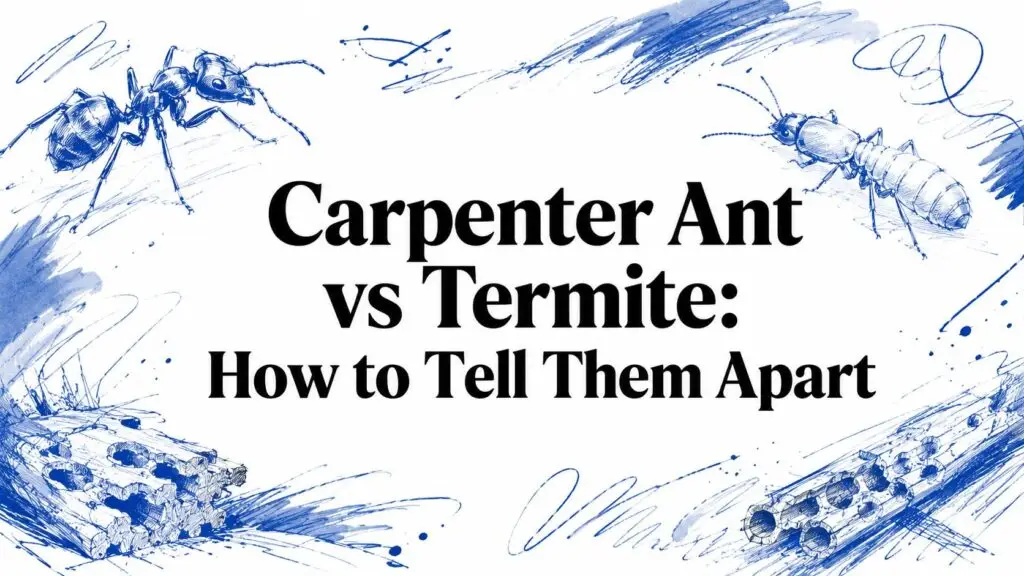
A small pile of gritty debris beside a Magnolia baseboard can trigger an expensive question: is a carpenter ant excavating a nest, or is a termite consuming the house? Pale winged insects near a window create the same worry, especially after a warm spring rain. The insect matters, but the more useful question is what kind of wood damage and moisture condition you're looking at. In Montgomery County homes, common discoveries include shed swarmers by a back door, fibrous frass below a bathroom baseboard, or a soft spot in a porch beam. A reliable diagnosis combines body shape, antennae, wing pattern, gallery construction, and debris, then connects those clues to the wood's location and moisture history. What a Homeowner in Magnolia Just Found A homeowner may notice the problem while sweeping the garage, checking a back porch, or opening a bathroom cabinet. The debris might look like coarse sawdust. The insects might be dark, pale, winged, or already dead on the windowsill. From a standing position, those clues can feel interchangeable, but they point to different service decisions. Carpenter ants and termites are often confused because both can appear around wood and both produce winged reproductive insects. Their biology, however, is different. Carpenter ants excavate wood to create nesting galleries, while termites consume cellulose in wood as food, a distinction documented by University of California Integrated Pest Management guidance on carpenter ants. A porch beam that feels soft may reflect moisture damage before any insect arrived. A bathroom baseboard with frass may indicate a nest in damp framing. Shed wings near a door may show a swarm event, but the wings alone won't tell you whether the colony is inside the structure, below the slab, or outside and attracted to light. Practical rule: Treat the insect as a clue, not the entire diagnosis. The wood condition often explains why the pest is present and what must change for control to last. Start with the three visible clues Body structure: Carpenter ants have a narrow, pinched waist. Termites have a thicker body without that constriction. Antennae: Carpenter ant antennae are elbowed. Termite antennae are straight. Wings and debris: Ant swarmers have unequal wing lengths, while termite swarmers have two pairs that are about equal. Fibrous frass favors carpenter ants, while mud tubes and packed galleries favor subterranean termites. A photograph can help narrow the possibilities, but it has limits. A crushed insect may hide the waist. A close-up may omit the wings, antennae, foundation, or moisture source that makes the difference. If the finding involves structural wood, preserve the evidence and arrange an inspection instead of relying on a quick visual guess. Two Wood Pests, Two Very Different Habits Carpenter ants are wood-nesting insects, not wood-eating insects. They excavate galleries in damp, softened, or decaying wood, often using a moisture-compromised joist, window header, soffit, porch component, tree, stump, or fence post as a nesting site. Their galleries are usually smooth and clean, and the colony pushes fibrous material out through small openings. Termites use wood differently. Subterranean termites maintain a soil-connected colony and travel through protected mud tubes to reach structural timber. They consume cellulose and commonly hollow wood along the grain, which can leave serious thinning behind surfaces that still look intact. The University of Massachusetts comparison of termite and carpenter ant control describes this difference in both feeding behavior and gallery pattern. Trait Carpenter Ant Subterranean Termite Relationship with wood Excavates wood for nesting Consumes cellulose as food Typical gallery appearance Smooth, clean galleries, often across the grain Grain-following damage, often packed or lined with mud Moisture relationship Strongly associated with damp or decayed wood Relies on moist soil and protected humidity Common evidence Coarse, fibrous frass near kick-out holes Mud tubes, hollowed wood, or packed galleries Body structure Pinched waist and elbowed antennae Thick body and straight antennae Winged forms Front wings longer than hind wings Two wing pairs about equal in length Why the nesting location matters A carpenter ant colony can occupy a moisture-damaged section of framing, while additional satellite nests may occur outdoors in trees, stumps, or fence posts. The visible ants may be foraging from a nest that isn't directly behind the baseboard. Subterranean termites usually depend on a route between soil and wood. Foundation edges, crawl spaces, plumbing penetrations, porch connections, and other concealed transitions deserve attention because the colony may remain underground while workers feed inside the structure. Drywood termites also occur in Texas coastal areas, but inland Southeast Texas homes more often require careful evaluation for subterranean activity and moisture-conducive conditions. The important distinction isn't colony size. It's whether the insect is using the wood as shelter or as a continuing food supply. That biology explains the practical severity gap. Carpenter ants can create extensive tunnel networks, but their excavation is closely tied to nesting behavior and pre-existing wood deterioration. Termites can continue consuming sound cellulose, which raises a more direct concern about ongoing structural loss. Maryland's pest guidance on termites and ants also emphasizes that carpenter ants may signal hidden moisture intrusion rather than represent an isolated insect problem. Reading the Body, Wings, and Antennae Most homeowners don't find termite workers or carpenter ant workers during a swarm event. They find winged reproductives, shed wings, or a few dead insects near a window. That makes three physical checks especially useful. Check the waist first A carpenter ant has a distinct, narrow waist between the thorax and abdomen. It looks segmented and pinched, similar to the body plan people associate with ants. A termite has a broad, more uniform body with no obvious constriction. Don't judge by color alone. Both groups can include dark or pale reproductive forms, and size can overlap. The waist is more dependable than a quick impression from across the room. Inspect the antennae Carpenter ant antennae are elbowed, with a visible bend near the head. Termite antennae are straight and bead-like. If the insect is intact, this feature can separate the two even when lighting
Cockroach vs Ants: Identify, Compare, and Control Them

At dusk in a Magnolia kitchen, movement along the baseboard can look like one problem until the flashlight catches the details. A few tiny insects may be odorous house ants, while a larger, fast-moving insect disappearing beneath the refrigerator may be a German cockroach. Both pests follow edges, seek moisture, and become more noticeable when outdoor food and water conditions change. That confusion matters because the treatment logic isn't the same. Ant colonies can respond to delayed-action bait that workers carry back and share, while cockroach control depends heavily on removing food, water, grease, and protected harborages. In Magnolia, post-rain humidity, shaded landscaping, homes near creeks, and pier-and-beam additions can give either pest the advantage. The practical question isn't just which insect is worse. It's which pest is present, what conditions are supporting it, and whether the activity is limited to one entry point or spread through the structure. Why Homeowners in Magnolia Are Asking This Question A homeowner may find a line of tiny brown insects along a counter one evening, then notice a dark oval insect near the dishwasher the next. From across the room, both sightings become “bugs in the kitchen.” Up close, they represent different biology, different harborages, and different control priorities. Magnolia homes experience the conditions that make this overlap common. Rain can push ants away from saturated soil and toward wall penetrations, windows, and plumbing routes. Shaded mulch beds can stay damp against the foundation, while crawlspaces, under-sink cabinets, and condensate lines provide reliable moisture indoors. Homes with pier-and-beam sections or additions may also have more connected voids than a homeowner can inspect from the living area. Both pests tend to use edges because edges provide cover. Baseboards, cabinet corners, pipe penetrations, appliance gaps, and window tracks let insects move while staying protected. Activity can increase at night, when homeowners are more likely to see a cockroach crossing open flooring or an ant trail extending toward a forgotten food source. What the first sighting can and can't tell you One insect doesn't reveal the size of the problem. A single outdoor ant may have entered through a gap, while one cockroach can indicate a nearby harborage that deserves inspection. Daytime cockroach activity is especially concerning because it can mean the usual nighttime hiding areas are crowded or disturbed. Look for patterns rather than relying on a single encounter: One defined trail: Ants are more likely, particularly if the line follows a counter edge, window sill, or plumbing penetration. Pepper-like debris or dark smears: Those clues point more strongly toward cockroaches. Repeated sightings after rain: Outdoor moisture changes may be driving ants indoors, but the same weather can also increase cockroach movement around foundations and utility openings. Activity in several rooms: Multiple routes suggest the need for a structural inspection rather than a trap placed beside the first sighting. Practical rule: Product choice comes after identification. Moisture, sanitation, exclusion, and harborage usually determine whether treatment holds. Magnolia is a small but expanding suburban service area in Montgomery County. The U.S. Census Bureau QuickFacts data lists a population of 5,320 in July 2023, compared with 2,359 in the 2020 Census and 1,393 in 2010. The Census Reporter profile for Magnolia provides that local population context. For homeowners, the useful takeaway is simple: homes, renovations, landscaping, and pest pressure can vary sharply from one part of the community to another. Cockroach vs Ants at a Glance The fastest visual distinction is scale. A German cockroach is much larger than an odorous house ant worker, while carpenter ants occupy an intermediate range. You can usually identify the broad category with a flashlight, but species-level confirmation may require a close photograph, magnification, or an inspection of the insect's body features. Trait Cockroach, German and American Ant, Odorous House and Carpenter Typical appearance German cockroaches are light brown to tan, while American cockroaches are larger and commonly reddish-brown to mahogany Odorous house ants range from brown to dark brown or black; carpenter ants may be black, reddish, or combinations of those colors Body size German adults are commonly discussed as small household roaches; American roaches are substantially larger Odorous house ant workers are tiny, while carpenter ant workers are visibly larger Antennae Long and whip-like, extending prominently from the head Elbowed, with a distinct bend that becomes easier to see in a close-up Movement Fast, generally solitary when seen foraging Often organized into visible trails with multiple workers Diet Broad omnivorous scavengers that exploit crumbs, grease, starches, and organic debris Depending on species, workers seek sweets, proteins, insects, honeydew, or moisture and may excavate damp wood Nesting Hidden in cracks, appliance spaces, wall voids, cabinets, and other protected harborages Colonies may occupy soil, wall voids, landscape materials, or moisture-compromised wood Reproduction Females produce protected egg cases called oothecae Queens maintain colonies and workers support brood, so killing foragers alone may not eliminate the source Best visible clue Droppings, smear marks, cast skins, odor, or a roach disappearing into a narrow gap A persistent trail, nest entrance, winged swarmers, or sawdust-like material beneath damp wood The traits you can inspect tonight Use a flashlight low to the floor and watch the insect's behavior. A cockroach usually bolts toward cover, while ants commonly move along a repeatable route. Look for an elbow in the ant's antennae and the narrow waist between its thorax and abdomen. Don't rely on color alone. Lighting, age, and dirt can make brown ants look black or make a cockroach appear lighter than expected. A close photograph beside a coin can help, and the ant identification guide can help Magnolia homeowners compare common ant groups before they decide whether the trail is an indoor colony or an outdoor foraging route. Reading the Evidence Each Pest Leaves Behind The insect itself may vanish before you get a good look. The evidence left behind is often more reliable, especially after the house has been quiet overnight. Start in the kitchen. Check beneath the sink, inside the cabinet corners, behind