1500+ reviews

You're lying awake in your Magnolia, Texas home, listening to scratching move behind the kitchen wall. The sound stops when you turn on the light, then starts again near the garage, attic hatch, or a plumbing line. That's not a nuisance to ignore. It's a clue that an animal may have crossed the building envelope and found a protected route through the structure.
Rats in walls are usually a structural and exterior-envelope problem first, with sanitation and indoor-air concerns following close behind. The fix isn't “put out more traps.” You need to identify the route, determine whether the wall void is occupied, control the animal safely, and seal the openings with materials that can withstand chewing and weather.
Magnolia is a specific service geography, not a vague north Houston label. The city is in Montgomery County and uses USPS ZIP codes 77353, 77354, and 77355, as documented by Magnolia's postal geography listing. That matters because a home near Stagecoach, Pinehurst, Tomball, or another nearby community may have a different access route, foundation design, and response pattern. Treat the sound as evidence, not drama, and follow a plan that moves from suspicion to certainty to a permanent seal.
Why Scratching in the Walls Should Never Be Ignored
The first night, most homeowners try to explain the sound away. Tree branches scrape siding. A pipe expands. Something small ran across the attic. Those explanations are possible, but repeated movement behind drywall deserves inspection, especially when it happens after dark and returns from the same wall or ceiling area.
In Magnolia subdivisions, rats can exploit soffit gaps, plumbing penetrations, garage transitions, and openings around air-conditioning lines. Roof rats tend to use routes such as attics, rooflines, and wall cavities, while Norway rats more often stay close to foundations and lower levels. Sound alone won't identify the species, but the location and pattern help a technician decide where to look first.
Practical rule: A recurring sound is useful evidence, but it isn't a diagnosis. Pair it with physical inspection.
Rats chew because their incisors keep growing. Inside a wall cavity, that behavior can damage wiring insulation, plastic components, wood framing, and flexible duct materials. A rat doesn't need to make a large visible hole to create a serious problem. The hidden damage often occurs along travel routes near utility penetrations, sill plates, attic insulation, and electrical runs.
A major U.S. housing survey found that nearly 14.8 million housing units reported seeing mice or rats during the previous 12 months. It also found that homes with outside walls that slope, lean, or buckle were about 5.6 times more likely to report rodent sightings than homes without those wall problems, according to the U.S. Census Bureau's housing pest survey. The lesson is straightforward. Exterior-wall defects can support rodent access and persistence, even when food isn't the main attraction.
The next day matters more than another month of guessing. Photograph exterior defects, note where the noise starts and stops, and inspect the likely route before sealing anything. If a rat is still inside, a rushed patch can trap it in the wall and force harder chewing around the next weak point.
Five Reliable Signs That Rats Are Living in Your Walls
A technician doesn't confirm rats in walls from sound alone. The strongest diagnosis comes from several physical signs that line up along a route. Start with the areas where walls meet utilities, floors, ceilings, and exterior openings.
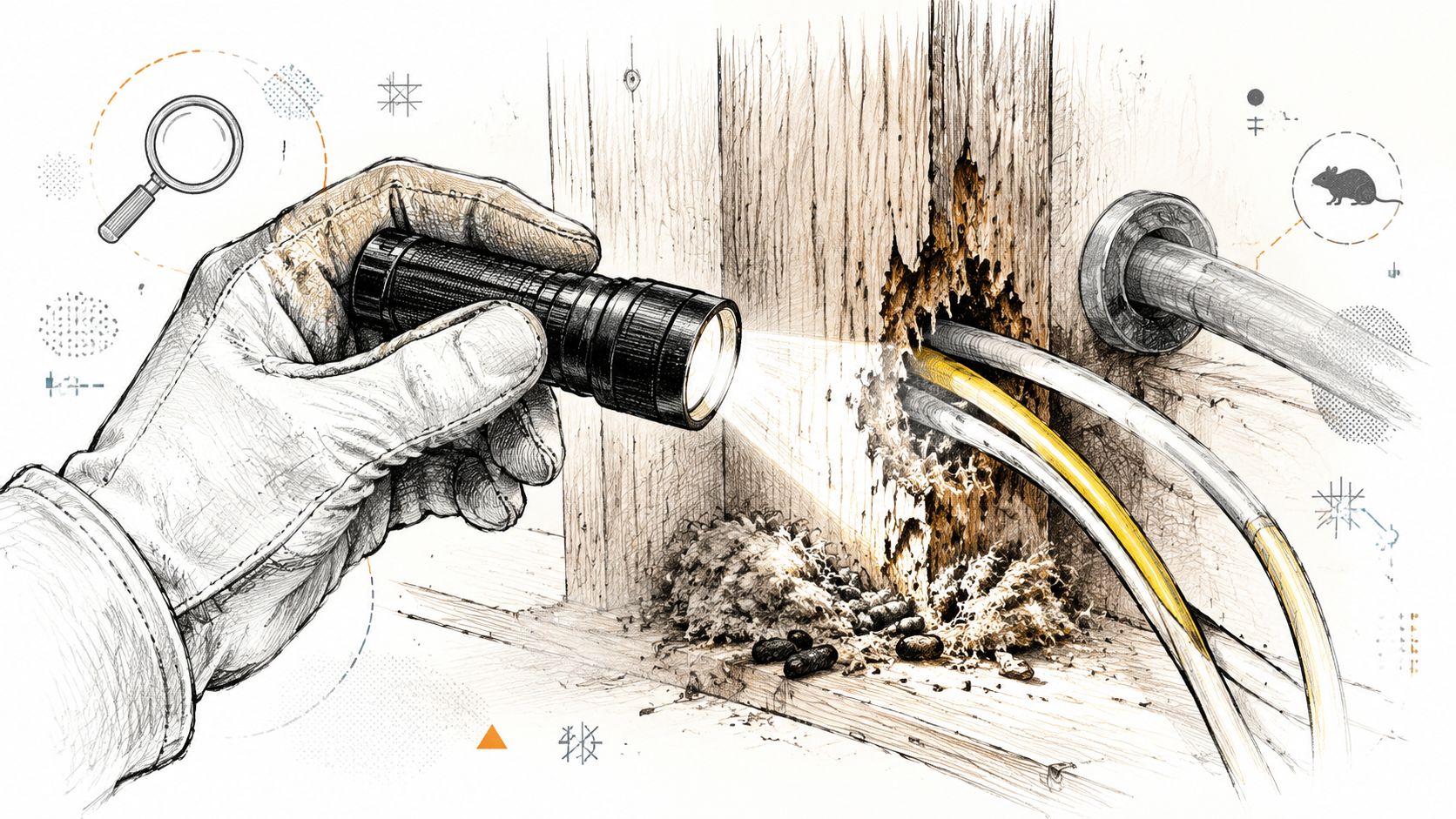
Check damage before cleaning
Gnaw marks carry the most weight near utilities. Look around electrical cables, plastic vents, drain lines, framing, and pipe penetrations. Fresh damage has sharp edges and light-colored exposed material. Old damage may be darkened by dust. Squirrels and other rodents can create similar marks, so photograph the location, shape, and nearby droppings before repairing it. The rodent sign guide from FullScope Pest Control can help you compare common indicators.
Droppings establish movement, not just presence. Check baseboards, cabinet voids, the area beneath the kitchen sink, the attic, and garage storage. Rat droppings are typically elongated and rice-like, but insects, lizards, and old debris can create misleading evidence. Photograph the distribution before vacuuming. A line of droppings along a wall is more useful than one isolated pellet.
Rub marks reveal repeated travel. Rats leave dark or greasy smudges where their bodies brush studs, sill plates, wall edges, and openings. Fresh marks may look shiny, while older marks collect dust. Dirt from construction, plumbing work, or stored items can mimic them, so check whether the marks connect two signs such as droppings and a gap.
A musky ammonia odor points toward urine-saturated materials. Closed rooms, attic spaces, wall-adjacent cabinets, and HVAC return areas deserve attention. Damp insulation, plumbing leaks, and stagnant air can smell similar. Photograph visible staining and write down where the odor is strongest before using cleaners or opening a wall.
Entry evidence tells you where exclusion must begin. Shredded insulation, damaged soffit screens, gaps beneath garage doors, chewed vent covers, and openings around pipes all matter. The University of Nebraska's rodent inspection guidance identifies scratch and chew sounds, droppings, rub marks, nests, and chew holes near travel routes and utility penetrations as useful indicators. It also notes that rats can destroy insulation and use it for nesting.
Sounds deserve one mention only. Nighttime scratching can support the diagnosis, but it doesn't identify the animal or prove that the wall void is occupied. Build your decision around physical evidence.
Use the following inspection video after you've documented the first signs, not as a substitute for checking the structure.
The Real Risks Behind a Rat in the Wall
The first risk is electrical damage. Rats strip insulation from wires as they gnaw, exposing conductors inside concealed spaces. That can produce arcing and fire, and the hidden wiring damage may be more dangerous than the visible hole in a wall, as explained in this rodent electrical-damage guidance. If you find damaged wire insulation, don't touch the wiring or remove an outlet cover. Shut off the affected circuit if you can do so safely and call a qualified electrician and pest professional.
The second risk is contamination and insulation loss. Rats use insulation for nests, and urine can saturate materials inside wall cavities and attic spaces. The University of Nebraska notes that insulation damage alone can reach several thousand dollars within only a few years, according to its rodent damage publication. The repair may involve removal, sanitation, drying, and replacement rather than a simple surface cleaning.
The third risk is indoor air. Rodent allergens from urine proteins and fur can become airborne when dry. The American Lung Association's indoor rodent guidance explains that exposure can trigger allergic reactions and asthma attacks. Wall voids and contaminated insulation can create a health concern even when you don't see droppings in the living room.
| Risk | Severity | Typical Time to Damage | Action Priority |
|---|---|---|---|
| Chewed wiring | High, because exposed conductors can arc | Damage can begin as soon as rats establish a route | Immediate electrical and pest inspection |
| Contaminated insulation | High, especially where odor or dust reaches occupied areas | Worsens while nesting and marking continue | Inspect, remove, and remediate affected material |
| Allergens in ducts or air pathways | Significant for people with asthma or allergies | Persists while contaminated dust is disturbed | Control the source and assess HVAC pathways |
| Soffit, fascia, and wall damage | Moderate to high, depending on location | Expands as rats reuse the route | Repair the entry and damaged building components |
| Secondary pests | Variable, but can extend the infestation | May appear after nesting debris accumulates | Include cleanup in the treatment plan |
There's another problem homeowners often miss. Health concerns can remain after removal if contaminated insulation, dust, or duct-adjacent material is disturbed during renovation. Trapping solves the animal problem. It doesn't automatically solve the remediation problem.
What to Do in the First 24 Hours Without Making It Worse
Start with evidence, not panic. Record the room, wall, and approximate time when movement occurs. Photograph droppings, gnaw marks, gaps, and insulation damage before cleaning. Then inspect the kitchen, utility closet, attic hatch, garage, and garage-to-house door for openings large enough to permit rodent access.
Contain the activity safely
- Use snap traps, not glue boards. Place them across wall travel lines, behind appliances, or near verified droppings. Use a small amount of peanut butter as bait, anchor the trap so a rat can't drag it into a void, and check it daily.
- Remove accessible food. Close pet doors, seal pantry goods, and move bird seed and pet food into hard containers. Don't leave bowls out overnight.
- Protect your lungs during cleanup. Wear gloves and an N95 respirator. Avoid stirring dry droppings with a broom. A shop vacuum can remove fresh droppings, but contaminated areas may need professional sanitation rather than ordinary household cleaning.
- Record the route. Mark where you see fresh evidence and where the sound travels. That information can save a technician from opening the wrong section of wall.
You can use the rat-trapping guidance from FullScope Pest Control to review trap placement and handling basics. Keep traps away from children and pets, and don't reach into an outlet, switch plate, wall cavity, or utility opening to chase a noise.
Avoid the shortcuts that backfire
Don't seal a suspected exterior hole while rats may still be inside. A trapped rat often chews harder and shifts the damage to wiring, ductwork, or another section of the wall. Don't loosely stuff steel wool into a gap and call the job finished. Rats can move loose material, and the opening may also need weatherproof structural repair.
If droppings are widespread, activity appears on multiple floors, or ammonia odor reaches more than one room, stop buying more traps. Arrange a licensed rodent inspection that includes exclusion and sanitation planning.
How Professionals Seal Rats Out for Good
Permanent exclusion starts with the entire building envelope, not the hole where you heard scratching. A technician should inspect the perimeter, attic, roofline, garage, foundation, vents, and every utility penetration. That includes A/C line sets, dryer vents, water spigots, gas lines, crawl-space vents, and the seam where brick veneer meets the slab.
A proper job follows a clear sequence:
- Map every opening. The technician records gaps, damaged screens, roofline defects, and penetrations instead of sealing only the most obvious entry.
- Match the material to the opening. Masonry gaps need durable mesh and structural sealant. Pipe penetrations may need metal plates. Foundation cracks may require cementitious repair. Vents need welded hardware cloth that is cut and screwed into place, not stapled.
- Confirm the route is empty. A mirror, borescope, tracking patch, or inspection of fresh chew activity can help establish whether the wall void remains occupied. Sealing a live animal inside is poor workmanship.
- Control the exterior conditions. Remove nesting opportunities, trim vegetation away from the structure, and leave monitoring stations where appropriate. Follow-up matters because a sealed opening can reveal a second route after rain or maintenance work.
| Opening / Location | Recommended Material | Common DIY Mistake |
|---|---|---|
| Masonry crack or brick-to-slab seam | Copper or stainless-steel mesh with structural-grade sealant | Smearing ordinary caulk over a moving joint |
| Pipe or utility penetration | Metal exclusion plate with a tight seal around the service line | Packing loose foam or steel wool around the pipe |
| Foundation crack | Cementitious patch suited to the substrate | Covering the crack without checking for moisture movement |
| Soffit, gable, or foundation vent | Welded hardware cloth, cut and screwed securely | Using plastic screen or staples that rats can defeat |
| Garage door bottom seal | Proper replacement weatherstrip fitted to the door | Leaving side gaps or an uneven slab transition unaddressed |
Ask the provider what materials they use, how they confirm the void is empty, and whether they warranty exclusion for at least 90 days. Also ask whether they reinspect after the first heavy rain typical of Southeast Texas.
For larger facilities, the same principle applies at a broader scale. The warehouse pest control Facility Management Insights resource is useful for property teams that need to connect building maintenance, sanitation, inspection records, and pest prevention.
A residential provider may combine trapping, inspection, exclusion, and cleanup guidance. FullScope Pest Control offers rodent services that include inspection, exclusion, sanitation guidance, and trapping for homes in north Houston and nearby Southeast Texas communities. Compare the written scope, materials, follow-up schedule, and warranty before choosing a contractor.
When DIY Stops Working and a Pro Should Step In
DIY control is reasonable when the problem is narrow and visible. A single room, limited droppings confined to a garage or attic, a ground-level opening you can clearly identify, and a homeowner who can check traps daily for two weeks are manageable conditions.
That plan stops being sensible when the evidence points into the structure.
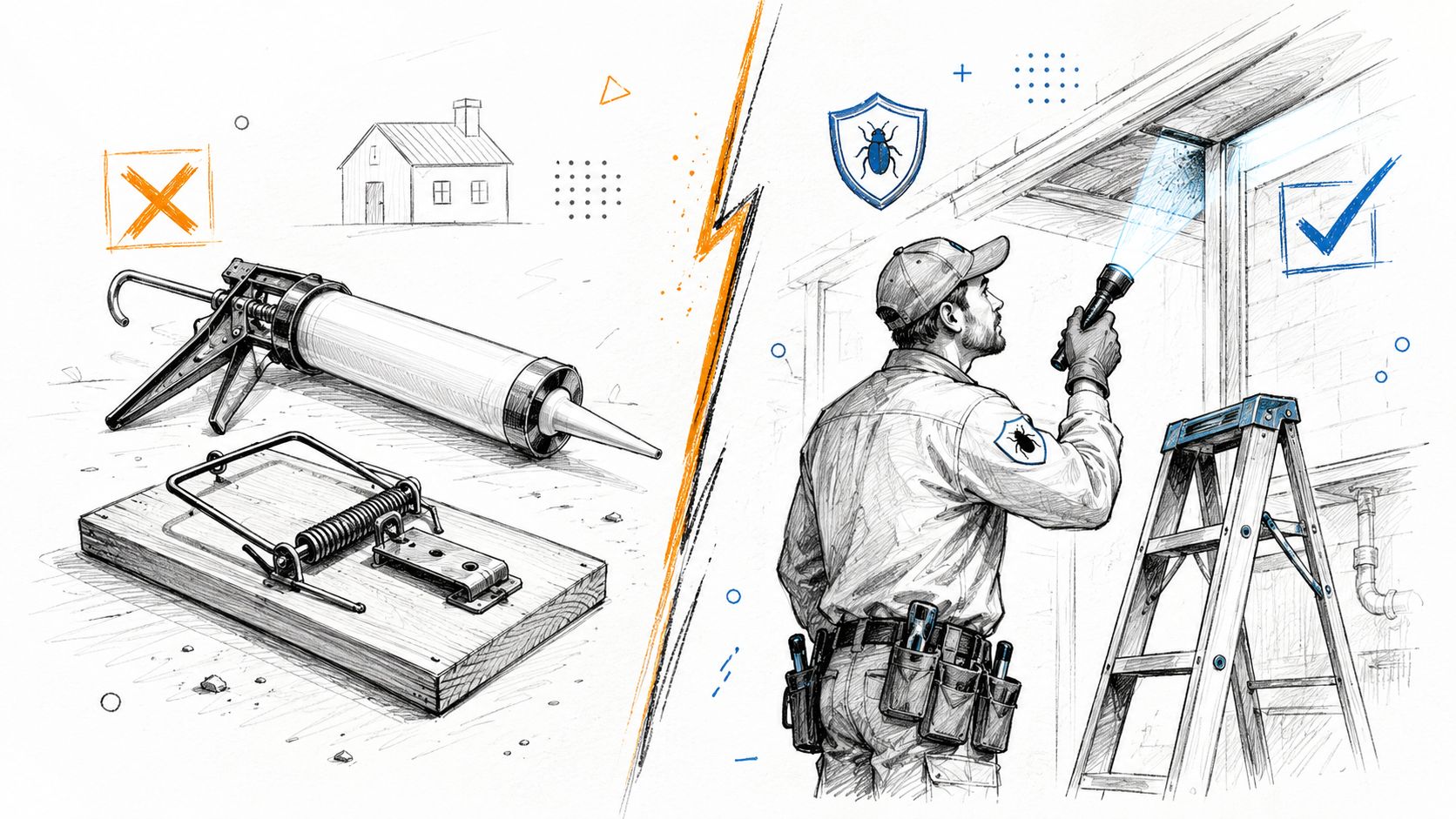
| DIY may be reasonable | Professional service is the safer choice |
|---|---|
| One-room activity with limited, recent evidence | Sounds or droppings on more than one floor |
| Visible ground-level entry that can be repaired correctly | Unknown entry point or activity inside a wall cavity |
| No wiring or duct damage | Chewed wire insulation, ducts, or flexible water lines |
| Safe trap placement away from pets and children | Pets or small children make snap-trap placement unsafe |
| No persistent odor after basic cleaning | Ammonia odor remains or spreads through rooms |
| No indoor sighting or prior history | Recent living-space sighting or recurring rodent history |
Older Magnolia neighborhoods may include pier-and-beam foundations with under-house voids that ordinary traps can't reach. Moisture after flooding can also push rats toward slab edges, crawl spaces, and sheltered wall routes. Those structural variables change the job from “catch the animal” to “find and close the system.”
Persistent daytime activity is another clear warning. So is a rat seen in an occupied room, damage near outlets or attic wiring, or evidence that HVAC components are involved. Once any of those conditions appears, delay increases the chance of electrical repair, duct cleaning, insulation replacement, and broader exclusion work.
Choose a provider that explains what happens before, during, and after treatment. A warranty is useful, but only if the written scope states what the warranty covers and what maintenance remains the homeowner's responsibility.
Southeast Texas Prevention Tips for Magnolia Homeowners
Magnolia homeowners should treat rodent prevention as weatherproofing plus management of the area around the home, not just food storage. Hot, humid conditions, heavy vegetation, and storm-related moisture give rats more ways to shelter near a structure. Cooling weather can drive outdoor activity toward attics, soffits, garages, and wall voids, while flood conditions may shift animals from creek corridors and low ground toward raised or protected building edges.
Maintain the envelope
Inspect soffit screens, ridge vents, gable vents, foundation vents, and roof-to-wall flashing. Cover openings with durable metal screening rather than plastic mesh. Check weep holes and service penetrations without blocking drainage or ventilation. Replace worn garage-door weatherstripping and seal gaps around A/C line sets, plumbing, dryer vents, hose bibs, and condensate lines.
A rat doesn't need a dramatic breach. Small defects around multiple utilities can create a connected route from the exterior to the attic or wall cavity.
Reduce protected travel routes
Trim branches that touch or overhang the roof. Keep vines from forming dense cover against siding and soffits. Move firewood and stored materials away from the slab, and clear clutter that gives rodents a sheltered staging area. Pick up fallen fruit and manage bird-seed spills if those sources are present on the property.
Don't rely on scent repellents as a structural solution. Odors may change behavior temporarily, but they don't repair a soffit, screen a vent, or close a foundation gap.
Use Magnolia's service geography intelligently
Magnolia is listed in Montgomery County with ZIP codes 77353, 77354, and 77355, and public directory information identifies 77354 as a primary ZIP code for the city, according to Texas city directory data. A separate Magnolia ZIP directory places the city in the Houston metropolitan orbit and lists the same local postal coverage.
Give the provider the exact address, ZIP code, nearest cross street, foundation type, and whether the activity is in the attic, wall, garage, or crawl space. That information helps route the right inspection instead of treating every call as a generic suburban rodent visit. For homes near Stagecoach, Pinehurst, Tomball, and unincorporated Montgomery County areas, precise location details can also clarify whether the technician understands the surrounding building conditions.
A Simple Checklist for Deciding Your Next Move
Make four decisions this week. They're judgments about evidence and risk, not purchases.
Decide whether activity is real
Use a flashlight and silence test in the kitchen and garage on two nights. Check the wall edges, cabinet voids, utility closet, attic hatch, and garage transition before and after the period when you usually hear movement. Photograph anything new, and don't treat silence as proof that the animal left.
Decide where the animal entered
Inspect the eight highest-probability locations:
- Dryer vent: Check the flap, screen, and wall penetration.
- Plumbing penetrations: Look beneath sinks and behind utility access panels.
- HVAC line set: Inspect where refrigerant lines and condensate lines enter the wall.
- Attic soffit: Look for damaged screening, gaps, and nesting material.
- Garage-door weatherstrip: Check the bottom and side seals for daylight.
- Foundation vent: Inspect screens, frames, and surrounding cracks.
- Gable vent: Look for loose or chewed screening.
- Roof-to-wall flashing: Check transitions where exterior materials meet.
Decide whether the response fits DIY work
A single recent sighting paired with a clearly visible entry point may support careful trapping and exclusion. Ongoing scratching, multiple droppings, an unknown route, damaged wiring, persistent odor, or activity across floors favors professional service.
Professional exclusion is the lower-risk default when certainty matters because the technician can inspect concealed routes, verify that animals are out, and document the repair. Property managers can also adapt the same evidence-first approach through property manager checklists that organize inspection, maintenance, and follow-up responsibilities.
Decide whether prevention is complete
Schedule envelope repairs within 14 days of resolving the active issue. Recheck vents, soffits, garage seals, utility penetrations, vegetation, stored food, and attic or crawl-space access. The goal isn't merely to remove one rat. It's to make the route unusable for the next one.
If you're in Magnolia ZIP code 77353, 77354, or 77355 and you're hearing movement behind a wall, photograph the evidence, avoid sealing a live entry, and request an inspection that includes exclusion. The right service call should end with a documented route, appropriate repair materials, safe removal, and a prevention plan you can maintain.
Contact a licensed rodent professional serving Magnolia and nearby Montgomery County communities today, and provide your ZIP code, the room where you hear activity, the time pattern, and any photographs of droppings, gnaw marks, or exterior gaps. Ask for an inspection and written exclusion scope, not a trap-only visit.