 1500+ reviews

Termite Inspections Cost in Magnolia and Southeast Texas
Routine termite inspections in Magnolia and nearby Southeast Texas communities typically run $75 to $150, while a real-estate WDI report usually adds $50 to $100 on top, so the document you need dictates the final price. A homeowner standing at the kitchen counter comparing three quotes can easily mistake different scopes of work for different levels of honesty. That confusion is common around Magnolia, including homes near FM 1488, Pinehurst, Stagecoach, and the surrounding Montgomery and Waller County communities. One company may be pricing a quick preventive inspection, another may be quoting a formal report for a lender, and a third may be including difficult crawlspace access or detached structures. The right question isn't, "What do termite inspections cost?" It's, "What am I receiving for that fee?" Why Magnolia Homeowners Get Three Different Quotes A Magnolia homeowner calls three pest companies about the same single-family home off FM 1488. The first company quotes $75, the second says $125, and the third gives a $175 estimate. None of those prices automatically signals a problem. Each provider may be inspecting the same house while promising a different deliverable. The $75 quote may cover a routine visual check, a discussion of conducive conditions, and treatment recommendations. The $125 quote may include a Texas Wood Destroying Insect Report, commonly called a WDI or T-47 report, for a pending sale. The $175 quote may account for crawlspace access, an attached garage, and detached structures that the first company never included. Practical rule: Compare the scope beside the price. A lower number often means fewer areas inspected or less documentation, not necessarily a lower standard of work. Magnolia's local conditions also affect how an inspector approaches a property. Subterranean termites are a serious concern in Southeast Texas, and a home with a crawlspace, damp soil, wood-to-ground contact, or blocked foundation access demands more attention than an easy-to-walk slab property. The inspector may need to enter the crawlspace, examine plumbing penetrations, check porch supports, and document inaccessible areas. That takes more time and creates more liability when the customer needs a written opinion for a transaction. The paperwork matters just as much as the inspection itself. A routine assessment may be useful for a homeowner deciding whether to monitor, correct moisture, or pursue treatment. A formal WDI report must serve a buyer, seller, title company, or lender, so the provider has to document the property and findings in a way that satisfies the transaction. Home-service businesses also need clear marketing language so customers understand what a “free inspection” includes and what it doesn't. The pest control AI-driven content tactics resource from Transactional LLC offers useful context for explaining service differences without reducing every offer to a headline price. The rest of the pricing question becomes easier once you separate routine inspections, transaction reports, reinspections, and complex properties. Routine Inspections vs Real-Estate WDI Reports A routine termite inspection answers a homeowner's practical question: Is there visible evidence of termite activity, damage, or conditions that make the property more vulnerable? The inspector typically reviews accessible areas, records observations, and recommends treatment, monitoring, repairs, or further evaluation. The report may appear on company letterhead, but it isn't automatically the form a lender or title company needs. A real-estate WDI report serves a different purpose. In Texas transactions, the Texas-prescribed form documents wood-destroying insect findings for the property address and transaction. A licensed pest-control operator completes and signs the report, records inspected areas and limitations, and identifies evidence, damage, conducive conditions, and recommendations. Because the document carries formal transaction significance, it generally costs more than a basic preventive visit. The price difference comes from more than printing a form. The operator must follow the required reporting process, associate the findings with the property and inspection date, and accept greater responsibility for the accuracy of the documented opinion. Buyers, sellers, refinancers, title companies, and lenders may each have specific expectations, so confirm the required report before booking. Compare the deliverables before choosing Feature Routine Inspection Real-Estate WDI Report Primary purpose Home maintenance and early risk identification Sale, refinance, title, or lender documentation Typical audience Homeowner or property manager Buyer, seller, agent, title company, or lender Report format Company findings and recommendations Texas-prescribed transaction report Scope emphasis Visible activity, damage, moisture, and conducive conditions Documented findings, inspected areas, limitations, and recommendations Price pattern Usually the lower-cost service Usually higher because of formal paperwork and liability For planning purposes, paid standalone inspections commonly fall around $75 to $150, while free inspections are also common when a company expects to quote treatment work, according to market guidance on home-buying termite inspections. When a lender requires a WDI or NPMA-33-style report, the documentation can add about $50 to $100, bringing the transaction-related total to roughly $100 to $200. Magnolia customers often need both services at different stages. A buyer may order a formal report during the purchase, while an owner later requests a routine inspection to monitor moisture and termite risk. A useful explanation of the transaction document is available in this wood-destroying insect report guide. Don't let a company quote one service while your agent or lender expects the other. What Drives the Price Up or Down Termite inspection pricing in Magnolia moves with four practical variables: property size, access, report purpose, and follow-up requirements. The national picture supports that separation. A 2026 analysis of 401 licensed-inspector quotes found an average inspection price of $133, with a typical routine range of $110 to $156. The same analysis placed real-estate transaction inspections at $100 to $325 and WDO inspections at $150 to $300, because those services involve broader coverage or formal documentation. See the licensed-inspector pricing analysis for the underlying comparison. Property size and structures A compact home with straightforward access takes less inspection time than a large rural property with an attached garage, detached garage, barn, shop, shed, or guest house. Outbuildings also create a scope question. If the customer wants them inspected, the provider must include the additional travel through the property, access
Integrated Pest Management Services: A Homeowner’s Guide
You step onto the back porch of your Magnolia home in July and notice a fresh fire ant mound beside the walkway. You spray it, rinse the nozzle, and assume the problem is handled. Hours later, ants are rebuilding the mound a short distance away, and now you're wondering whether the product failed or whether the treatment addressed only what you could see. That frustration is exactly why integrated pest management services focus on the whole property, not just the visible pest. A quality program identifies how pests enter, what conditions support them, how activity changes over time, and which treatment creates the least disruption. For Southeast Texas homeowners, that means paying attention to moisture, vegetation, foundation gaps, drainage, stored goods, and the seasonal pressure that comes with warm weather. What Integrated Pest Management Services Actually Mean Integrated pest management, or IPM, is a coordinated service strategy that combines inspection, prevention, monitoring, and targeted control. It doesn't mean refusing to use pesticides. It means using treatment after the technician understands the pest, the source of activity, and the level at which action makes sense. A one-time pest control visit usually responds to a complaint. A technician may identify the insect, apply a treatment, and leave. An ongoing IPM program works differently. The provider creates a property history, records findings, checks whether previous actions worked, and changes the plan when new evidence appears. The service is a system, not a spray A real IPM visit should answer practical questions: Where is the pest active? Is a roach trail connected to a plumbing penetration, pantry storage, or an exterior gap? Why is it getting inside? Foundation cracks, damaged screens, standing moisture, and vegetation touching the structure can all affect pressure. What evidence supports treatment? Traps, droppings, damage, live sightings, and conducive conditions help the technician choose the next step. What happens after treatment? The service report should identify follow-up actions and the next monitoring point. The technician's work should be visible in the documentation. A report can show which areas were inspected, what was found, what was treated, and what the homeowner needs to correct. Without that record, repeated visits can become a cycle of spraying without learning. Practical rule: If a provider can't explain what will be inspected, recorded, and reviewed at the next visit, you're probably buying an application rather than an IPM program. This distinction matters in Magnolia, where wooded lots, warm temperatures, carefully maintained yards, and moisture around foundations can create recurring pest opportunities. The rest of this guide focuses on the history behind IPM, the principles technicians use, what a meaningful inspection looks like, and how to evaluate providers serving Magnolia and nearby Montgomery County communities. How IPM Evolved Into a Modern Service Model For much of the twentieth century, pest control often centered on scheduled chemical applications. A property received treatment because the calendar said it was time, not necessarily because monitoring showed a defined pest problem. That approach created pressure to use pesticides repeatedly, even when prevention or a more targeted method could have addressed the source. The need for a coordinated alternative became clear in agriculture. IPM was formally defined in 1965 at a Food and Agriculture Organization symposium in Rome, where 87 delegates from 34 countries and seven international agencies gathered around the emerging concept of coordinated pest management. EPA records and its historical summary describe how the concept expanded during the 1970s in response to pesticide resistance, pest resurgence, and growing health and environmental concerns linked to intensive chemical use. From crop fields to homes and facilities The United States then developed IPM research at a broader national scale. From 1972 to 1978, the EPA was the principal funder of a major national IPM research project. The related EPA summary describes an intensive seven-year study begun in 1972, involving scientists at 19 universities and covering six major crops, including cotton, soybeans, alfalfa, citrus, pome fruits, and stone fruits. The work helped establish a service mindset based on identification, monitoring, thresholds, and coordinated controls rather than routine chemical dependence. That framework now appears in residential and commercial pest management. A technician may combine exclusion, sanitation recommendations, sticky monitors, traps, bait formulations, and carefully selected chemistry. The product still matters, but it becomes one tool within a documented decision process. IPM also moved beyond theory into policy and service delivery. FAO reports that 83% of countries consider IPM a high priority in agricultural policy, while its Integrated Production and Pest Management programme, launched in 2001 in three West African countries, expanded to 10 countries and worked with more than 180,000 farmers. FAO's overview of IPM adoption and programme development records those milestones. That history explains why IPM should be treated as a professional operating standard, not a trendy label. In a Magnolia home, the same logic applies on a smaller scale. Inspect first, prevent entry, monitor activity, treat only when justified, and evaluate the result. The Core Principles That Guide Every IPM Service A dependable IPM program follows a connected set of principles. Each one answers a different question, from how pests enter to how the provider decides whether the plan is working. Prevention starts before the first treatment A technician may find roaches entering through weep holes, gaps around utility penetrations, or openings where siding meets the slab. Sealing those routes can reduce access more reliably than repeatedly treating the same interior edge. Rodent prevention may involve repairing a damaged vent screen, closing a shed gap, or correcting a door that doesn't seal. The property itself also needs attention. Leaking hose connections, dense groundcover, clutter beside the foundation, and poorly managed waste can create shelter or moisture. IPM calls for correcting those conditions where practical. Monitoring turns suspicion into evidence Sticky traps in a garage can help confirm whether a suspected rodent route is active. Glue boards, pheromone monitors, visual inspections, and documented observations give the technician a clearer picture than a single sighting. Identification matters, too. A fire ant, carpenter ant,
What Is Digging Holes in My Yard in Magnolia Texas
You step onto the lawn in Magnolia, Texas, expecting morning dew and a quick walk to the mailbox. Instead, you find fresh soil scattered across the St. Augustine, several shallow craters near the garden bed, and a patch of turf that looks as though something has been searching beneath it overnight. The immediate question is simple: what is digging holes in my yard? The answer usually comes from a pattern, not from one hole. University extension guidance recommends comparing diameter, mound shape, tunneling, location, tracks, and timing before deciding whether a mammal, insect, snake, or non-animal cause is responsible. That approach works especially well in Magnolia neighborhoods, where finished lawns may sit beside wooded greenbelts, drainage areas, oak roots, compost piles, and fence lines. Walking the Yard and Spotting the Damage A Magnolia morning often gives you the clearest evidence. In a subdivision in ZIP code 77354 or 77355, dew still clings to the grass when you notice loose dirt clods on the walkway side of the lawn. The turf is disturbed, a few blades look clipped or pulled, and faint marks seem to lead toward the back fence and the darker edge of a wooded area. Don't step directly through the damaged patch. Start at the sidewalk and make a slow perimeter walk around the property. Take photographs in the morning light, before children, pets, mowing, or watering erase the smaller clues. Record where each hole appears Use your phone to photograph every opening from above and from the side. Include a ruler or another familiar object for scale, then write down whether the hole sits beside oak tree roots, a compost pile, a dog run, a shed, a garden bed, or the back fence. The location helps explain the behavior. A hole near roots may reflect foraging, while damage along a fence may point to shelter, an established travel route, or a pet digging at the boundary. Scattered divots across open turf mean something different from a connected line of openings. Practical rule: Photograph first, measure second, and repair last. Filling a hole too soon can remove the evidence needed to identify its maker. University extension guides describe lawn digging as a common sign of wildlife searching for food, nesting, or burrow space. They also emphasize that hole size, soil mounds, and nearby tracks narrow the likely cause more effectively than the number of holes alone. University of Maryland Extension's guide to animals digging in lawns explains why the same property can show different digging signatures as nocturnal and seasonal activity changes. Measuring Holes and Reading the Clues A tape measure, a flashlight, and a wooden stick can turn a confusing lawn into a manageable suspect list. Measure the widest part of each opening, not the loose soil around it. Then check whether the entrance slopes inward, drops vertically, or connects to a visible tunnel. University extension sources commonly associate openings under 3 inches with insects, moles, rodents, or snakes, while larger 6 to 12 inch excavations near trees, logs, or walls can suggest animals such as skunks, red foxes, armadillos, coyotes, or gopher tortoises. North Carolina Extension also describes scattered 6 to 10 inch holes without a mound as possible skunk or raccoon activity, 2 inch holes as possible squirrel, chipmunk, rat, or mole activity, and one-quarter-inch openings as possible ground bee holes. See the University of Florida guidance on identifying yard holes for the broader comparison. Use the whole pattern A raised, compact mound suggests soil pushed from below. A fan-shaped scatter may indicate material kicked backward during surface digging. A clean entrance with a worn edge can point to repeated use, while a shallow divot with no tunnel often reflects brief food searching. Look for claw marks on the rim, fine hairs caught in the soil, webbing across an unused opening, or tracks leading between holes. A faint urine odor near a suspected den can support the idea of an active animal, but don't lean over an opening or place your face close to the soil. Diameter Typical Shape Likely Cause One-quarter inch Tiny, clean opening, sometimes in sunny soil Ground bees or other small insects One to two inches Scattered divots, small mound, or shallow cone Squirrels, chipmunks, voles, insects, or small mammals Two to three inches Conical dig or compact entrance Armadillos, skunks, rodents, moles, or snakes Six to ten inches Broad excavation without a clear mound Skunks or raccoons Six to twelve inches Large opening or excavation near a feature Larger wildlife or a substantial burrow Use a flashlight without touching the opening. Depth, nesting material, and side branches can separate a feeding pit from a true burrow. Also record when the damage first appeared. Overnight changes suggest nocturnal activity, while damage noticed around dawn may reflect animals that were active before daylight. The Most Common Hole Makers in Southeast Texas Magnolia yards can attract several kinds of diggers, so a familiar animal isn't automatically the right answer. The most useful question is, what single sign would be difficult for another cause to imitate? Armadillos often leave small, conical excavations and disturbed St. Augustine near roots or soft soil. A hole measuring a few inches may fit this pattern, but the strongest clue is a series of fresh feeding digs accompanied by uprooted turf. For more detail on shape and identification, see how armadillos dig holes. The diagnostic sign is a cone-shaped food-searching pit with nearby turf disturbance. Raccoons may disturb sod while searching for grubs or other food, especially near damp areas, drainage features, or water. A larger entrance beneath a shed or porch indicates shelter rather than a quick feeding stop. Look for overturned pieces of turf and muddy tracks as the main clue. Skunks commonly create small, neat, conical holes while searching for grubs. Scattered openings without a connected tunnel are more consistent with foraging than with a den. The diagnostic sign is a cluster of cone-shaped divots across open lawn. Feral hogs can leave broad, heavily disturbed
Tiny Ant Like Bugs: Identification Guide for 2026
You're standing at the kitchen sink in a Magnolia home, wiping up the same trail again, and the bugs are still there by dinner. They're small enough to make you second-guess yourself, fast enough to disappear into a crack, and annoying enough that every crumb, pet bowl, and damp baseboard suddenly feels suspicious. In Southeast Texas, that's usually the moment homeowners start calling everything “ants,” even when the actual problem might be a baby termite, a moisture-driven trail, or one of several tiny ant like bugs that look similar until you check the right details. What matters first is not the color. It's whether you're dealing with a true ant, a look-alike, or a sign of a bigger issue hiding in the wall or crawlspace. Magnolia homes give these pests plenty of cover, from humid slab edges and AC condensate to pantry corners and pet-food stations, so a quick guess based on size alone usually leads to the wrong treatment and more repeat visits. The good news is that a magnifier, a few minutes of observation, and a little local context will narrow the field fast. What Counts as a Tiny Ant Like Bug A Magnolia homeowner spots a pinhead-sized line near the sink, along a pantry baseboard, or by a pet bowl, wipes it away, and sees it again by evening. That call is familiar in north Houston because warm weather, indoor moisture, and small gaps around slab edges, utility runs, and crawlspace access give tiny insects plenty of ways in. A working definition for Magnolia homes For field work, tiny ant like bugs means insects small enough to get lumped together at a glance, often under 5 mm long, where body shape matters more than color. True ants are one of the most abundant animal groups on Earth, with a 2022 synthesis estimating about 20 quadrillion ants worldwide and roughly 2.5 million ants per person (PubMed synthesis). That scale helps explain why ants show up so often, but it also explains why the kitchen trail can feel nonstop instead of occasional. In the U.S., ants are widespread enough that homeowners run into them regularly, yet only a small share of species commonly invade houses (National Geographic ant facts). In Magnolia, that usually means the bug on the counter is more likely to be one of a few indoor specialists than some odd one-off from outdoors. Practical rule: if the insects are tiny, persistent, and follow a line to moisture or food, treat the problem as an identification job first, not a spraying job. Why local homes keep seeing them Magnolia sits in the north Houston service area, where warm stretches last long and indoor pests can keep foraging well past the point many homeowners expect. A clean kitchen does not automatically end the trail, because the colony may be feeding from a hidden moisture source, a pantry gap, or a wall void, not just a crumb on the floor. That is why the same line can keep coming back even after vacuuming and wiping. The better question is simple. What am I looking at? Once that is answered, the response gets much more precise, and the wrong treatment path is easier to avoid. The Magnifier Test That Tells Ants from Impostors The quickest DIY ID check is simple. Put a 10x loupe or smartphone magnifier over the insect, then look at the waist and the antennae. Those two features usually tell you more than the color ever will, and that matters because tiny ants, termites, and ant mimics can all look “just brown” or “just black” from standing height. What a true ant looks like A true ant has a sharply constricted petiole, or waist, between the thorax and abdomen, and the antennae are elbowed rather than straight (field identification reference). Some ants have one petiole node, others have two, but both still show that narrow waist. Six legs attach to the mesosoma, which helps separate them from insects that only look ant-like at first glance. Under magnification, that waist is the giveaway. The body narrows like a little hourglass, then opens again into the abdomen. If the antennae bend sharply at the base, you're probably looking at an ant, not a termite. What a termite impostor looks like Baby termites and other mimics usually show a broad waist and antennae that look more straight or bead-like. That difference matters because termites are not just nuisance insects, they can be tied to structural risk. If the insect has no pinched waist and the antennae don't elbow, don't assume it's a harmless ant because the body is tiny. A quick photo helps later. Hold the camera low, turn on the flash if the insect is in shade, and try to capture the side view where the waist shows best. A clean profile shot beats a blurry close-up every time. How to use the result If the bug has the classic ant waist, move to species clues. If it doesn't, shift immediately to termite-risk thinking and inspect nearby wood, drywall edges, and baseboards. One narrow body part can save you from choosing the wrong treatment path. The Six Tiny Pests You Are Most Likely Seeing Most Magnolia calls fall into a short list. These insects overlap in size, but their colors, habits, and nest locations are different enough that a careful look usually narrows the field fast. That's also why a casual spray can miss the colony while the trail keeps rebuilding itself somewhere else. Species Size Color Key Feature Where You See Them Pharaoh ant 1.5 to 2 mm Light yellow to reddish-brown Very small workers, often in indoor trails Kitchens, bathrooms, wall voids Little black ant About 1.5 to 2 mm Glossy black 12-segmented antennae with a three-segment club Baseboards, counters, cracks Ghost ant About 1.5 mm Pale body with translucent legs and abdomen Nearly invisible on light surfaces Countertops, sinks, potted plants Thief ant Very small, often mistaken for other tiny ants Yellowish, greasy-looking Often confused
What Do Cockroaches Look Like: Pest ID Guide for 2026
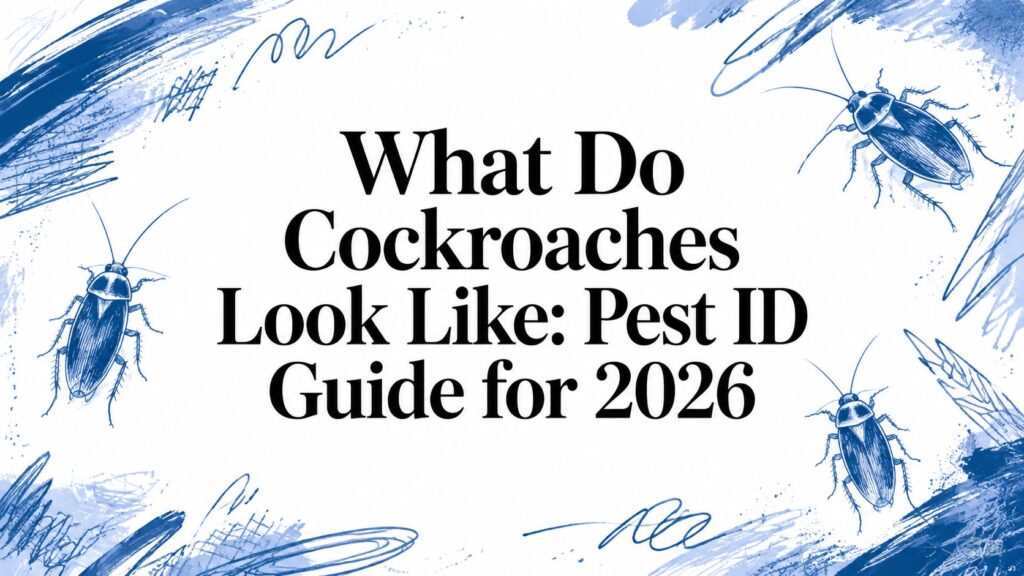
You glance under the kitchen sink in your Magnolia home, see something brown flash across the tile, and that one quick movement leaves you with more questions than answers. Was it a cockroach, a beetle, or just a shadow moving too fast to trust your eyes? In homes across Magnolia, that first sighting often happens at night, in a damp corner, or near food and plumbing, and the challenge is not just spotting a roach, it's knowing what do cockroaches look like before the problem spreads. Understanding Why Cockroach Appearance Matters A homeowner in Magnolia usually doesn't get a perfect, stationary view of a roach. They get a blur near the pantry, a fast shape slipping behind a refrigerator, or a small insect that disappears before they can react. That's why appearance matters so much. A quick visual ID can tell you whether you're dealing with a large outdoor invader, a small indoor pest, or a mix of adults and younger stages hiding deeper in the home. Historically and biologically, cockroach appearance is one of the most recognizable insect body plans, and that recognition has real value in pest control. Sources describe the group's flattened body shape and the head concealed under the pronotum as defining features across species, which is part of why they're so easy to miss until they're already established Texas A&M cockroach biology and management guide. The same guide notes that the American cockroach can reach about 4 cm, or 1.6 inches, and some references place adults at 1.5 to 2 inches, while the German cockroach is roughly half an inch long and much lighter in color. Practical rule: size, shape, and markings matter more than a quick glance at color alone. That difference is exactly why Magnolia homeowners need a careful eye. A large reddish-brown roach in a garage looks very different from a small tan roach in a kitchen cabinet, and those clues help narrow down where the insects are nesting, how they're entering, and what kind of response makes sense. When you can read those details early, you stop guessing and start targeting the problem. Recognizing Cockroach Anatomy and Traits The easiest way to remember cockroach anatomy is to picture a low, smooth insect built to slide into tight spaces. Most species have a flattened, oval body, a small head tucked under a shield-like pronotum, six spiny legs, and long threadlike antennae that help them move through cracks and find food in the dark cockroach identification traits. The head often seems hidden because the pronotum works like a little protective hood. That shape is not accidental. It lets roaches press flat against surfaces, move under trim boards, and vanish into the narrowest gaps around pipes, cabinets, and baseboards. The spiny legs also matter, because they give cockroaches traction while they run and climb. When a homeowner says a pest seemed “flat” or “hardly shaped like a normal bug,” that's usually the first clue they saw a cockroach rather than a beetle or cricket. What the head and antennae tell you The antennae are often longer and more obvious than the body itself when a cockroach is moving. They sweep ahead like feelers, helping the insect find its way in low light and detect food or shelter. Britannica describes the head as bent downward, with mouthparts pointing backward rather than forward, which gives cockroaches that tucked, armored look Britannica cockroach anatomy. A roach rarely looks “open” or delicate. It usually looks compact, low, and hard to grab with the eye. For Magnolia homeowners, that means the first shape to notice is not the legs or wings, it's the silhouette. If you see a small oval insect moving fast along a dark edge, especially at night, the flattened profile is one of the strongest visual clues you have. Identifying Common Cockroach Species in Magnolia Texas Magnolia homes can attract different roaches, but two species cause most of the confusion indoors. The German cockroach is typically about 13 to 16 mm long, light brown to tan, and marked by two dark parallel stripes on the pronotum Illinois cockroach guidance. The American cockroach is much larger, around 1.5 to 2 inches long, reddish-brown, and has wings capable of flight Michigan State Extension on American cockroaches. Those differences are useful in Magnolia because the wrong ID leads to the wrong response. A third species, the Oriental cockroach, is often part of homeowner comparisons, especially when people are trying to sort out dark, shiny roaches seen near damp areas. Rather than guessing from memory, use size, color, and markings side by side. Comparison of Common Cockroach Species Adult Size Color Distinctive Markings German cockroach 13 to 16 mm Light brown to tan Two dark parallel stripes behind the head American cockroach 1.5 to 2 inches Reddish-brown Yellowish margin on the pronotum, wings usually obvious Oriental cockroach Smaller than the American cockroach, but still visibly larger than a German roach Dark brown to black Less striped, darker overall look For a visual comparison that many homeowners find helpful, this Magnolia-focused roach guide shows how the most common indoor species differ in body size and markings. The key is not to fixate on one trait. A German cockroach can look “plain” until you catch the pronotal stripes, while an American cockroach can seem almost beetle-like until you notice its bulk and coloring. In Magnolia kitchens, laundry rooms, and attached garages, that difference often decides whether the issue is a hidden indoor infestation or a stray insect that wandered in from outside. Spotting Adult and Nymph Stages of Cockroaches A cockroach nymph is not a different insect. It's a younger stage of the same pest, and it often looks like a smaller, less finished version of the adult. That's why many Magnolia homeowners mistake nymphs for tiny beetles or ant-like bugs, especially when the insect is pale, fast, and hard to catch in good light. How to separate nymphs from adults Adults usually show fuller wing development, while young stages may
Do Roaches Leave Droppings and What to Do About Them
You're standing at the kitchen shelf with a paper towel in one hand and a flashlight in the other, trying to decide whether those tiny dark specks are dirt, mouse signs, or the thing you were hoping to avoid. In Magnolia and across Southeast Texas, that moment usually happens under a sink, behind a coffee maker, or along the pantry edge, where heat and moisture make pests feel at home. Roaches do leave droppings, and those droppings tell you a lot more than people think. What Roach Droppings Actually Tell You A homeowner usually notices the evidence before the insect. Small dark specks on a pantry shelf, in a drawer corner, or under the sink can look like nothing more than grime until they keep showing up after wiping. That's the point where the question changes from “What is this?” to “How much activity is there?” Why droppings matter beyond the mess Public-health agencies treat roach droppings as more than a cleanup issue. The U.S. Environmental Protection Agency notes that cockroach feces, saliva, eggs, and cuticles contain allergenic substances and that droppings can trigger asthma attacks, while the Illinois Department of Public Health explains that fragmented exoskeletons and bits of feces can act as antigens when inhaled in indoor spaces like kitchens and other enclosed rooms. The EPA also notes that roach allergens are a meaningful indoor hazard, not just visible waste, because they're tied to respiratory irritation and asthma risk. EPA guidance on cockroaches and indoor allergens That's why droppings function as a diagnostic marker. Roaches tend to defecate where they live and travel, so the waste piles up in concentrated spots instead of appearing randomly all over the house. Those focal points can keep pulling roaches back through pheromones, which means the droppings aren't only evidence of current activity, they can help sustain it. Practical rule: if you keep finding the same dark specks in the same cabinet, seam, or shelf edge, you're not looking at a one-time nuisance. You're looking at a location roaches have already claimed. For Magnolia-area homes, that often means the pantry, the sink base, or the space behind appliances. A quick wipe tells you whether the material is stale. Reappearance tells you whether you still have a live source nearby. Identifying Droppings by Cockroach Species The shape of the dropping matters because not all roaches leave the same evidence. A lot of homeowners call every dark pellet “roach poop,” but the field ID gets more accurate when you match the size, shape, and texture to the likely insect. That helps you decide whether you're dealing with a stray outdoor roach or a breeding indoor problem. What the size and shape tell you Smaller indoor species such as German cockroaches typically leave 1 to 2 mm dark specks that look like black pepper or coffee grounds, while larger species such as American cockroaches leave roughly 2 to 3 mm cylindrical pellets with blunt ends and longitudinal ridges. That blunt-ended, ridged look matters because it helps separate roach droppings from mouse droppings, which are usually pointed. Better Termite's roach poop guide gives a useful side-by-side distinction, and the same practical difference shows up during real inspections. Species Dropping Size Shape and Texture What It Suggests German cockroach 1 to 2 mm Pepper-like specks, coffee-ground look A likely indoor breeding issue American cockroach about 2 to 3 mm Cylindrical pellets, blunt ends, ridges A larger roach, often moving through moist zones Oriental cockroach Larger, pellet-like Dark, cylindrical waste with a more obvious pellet form Activity near damp entry points or crawlspaces German roaches matter more from a control standpoint because they're the indoor, fast-breeding problem that usually spreads through kitchens and cabinet voids. A few small specks in a Magnolia apartment, townhome, or slab home can turn into a broader infestation faster than one might expect. Larger American roaches are sometimes wanderers from outdoors, but if their droppings keep showing up indoors, the issue is no longer just a one-off visit. The most useful decision point is the pattern, not just the species. A single pellet near a garage threshold might be manageable with exclusion. A repeated line of pepper-like specks under a toaster, along with the kind of clustering described in FullScope Pest Control's American versus German roach comparison, points to an indoor harborage that needs more than wiping. Where to Look for Roach Droppings in Your Home A fast inspection doesn't need special gear, just a flashlight and a minute-by-minute sweep that follows where roaches travel. They hug edges, hide in warm gaps, and settle near moisture, so the waste ends up where they feed and nest, not in the middle of open floors. That's why random cleaning rarely tells the whole story. The highest-yield kitchen zones Start at the pantry edges, then move to drawer corners, under the fridge, under the stove, behind appliances, and around the sink seam. Those places are high-value to roaches because food crumbs, grease film, and moisture collect there. If you see droppings in cabinet hinges or at the back of a lower shelf, you're seeing their traffic pattern, not just debris. Bathrooms and laundry rooms matter too, especially near plumbing penetrations and under vanities. In a Southeast Texas house, the humidity keeps those spots attractive longer than in drier climates. Garages and entry thresholds deserve a look as well, especially if the home backs up to landscaping, wooded edges, or stored cardboard. Floor corners and baseboard edges: Roaches use these as travel lanes, so waste often builds up where the wall meets the floor. Behind appliances: Warmth and access to food residue make these common harborage points. Under sinks: Moisture and pipe gaps create the kind of shelter roaches prefer. Pantry corners: These are prime spots when droppings collect near dry goods or open packaging. If the specks are showing up on open shelving or in daylight-visible areas, don't downplay it. That usually means the pressure is high enough that roaches are no longer staying hidden.
How to Bat Pest Control in Magnolia Texas Homes
You hear scratching over the bedroom ceiling a few minutes after sunset. Then comes the chirping. By the time you step outside with a flashlight, dark shapes are slipping out near the roofline and disappearing over the trees. If you live in Magnolia, that's not a curiosity. It's a bat problem, and if you handle it the wrong way, you can create a bigger mess than the bats did. Most homeowners wait too long. They hope the noise stops, assume it's a few harmless animals, or they stuff a hole with foam and call it fixed. That's how people trap bats inside walls, end up with dead animals in the attic, and turn a manageable exclusion into a sanitation and liability problem. Bat pest control in Magnolia, Texas has two competing realities. First, bats matter. Insect-eating bats provide a critical ecosystem service valued at $3.7–$53 billion annually by suppressing crop pests, which is one reason they're protected and why removal has to be humane, according to the USGS discussion of bats and agriculture. Second, once bats move into an attic, barn, soffit, or wall void, they create risks you shouldn't ignore. Guano builds up. Odor spreads. Insulation gets contaminated. Buyers, tenants, and insurers don't treat that lightly. In Magnolia, timing matters as much as technique. Exclude bats during the wrong part of the year and you can trap non-flying pups inside. Miss even one secondary opening and the colony may circle right back into the house. Clean guano carelessly and you can spread dust through the attic and living space. Bottom line: if you've got bats in a Magnolia home, the right response is fast inspection, legal timing, proper exclusion hardware, and careful cleanup. Not poison. Not panic. Not guesswork. Introduction to Bat Pest Control Risks A typical Magnolia scenario begins subtly. A homeowner notices a musty smell in the attic after a stretch of hot weather. A week later, they find small dark droppings on the insulation near the access hatch. Then dusk hits, and the attic comes alive. That's when bat pest control stops being theoretical. You're no longer asking whether bats are useful outdoors. You're dealing with what happens when a colony chooses your roof system as a roost. Why Magnolia homes attract bats Magnolia has the right mix of conditions. Many homes sit near trees, ponds, wooded lots, detached shops, barns, and open eaves. Older rooflines, ridge vents, warped fascia, loose flashing, and utility penetrations give bats exactly what they want. They don't need a big gap. They need a quiet, high-up void with stable shelter. Once they settle in, the issue spreads beyond noise: Attic contamination from guano and urine Staining and odor around soffits, vents, and entry points Damage during failed DIY removal when bats try to force a new exit Liability concerns if pups are sealed inside during maternity season Real estate complications when a sale or lease requires disclosure or repair documentation Why “leave them alone” isn't a plan Bats belong outside. Inside a structure, they create a sanitation problem and a building-envelope problem. Homeowners often underestimate the second part. Bats usually exploit gaps that also let in heat, moisture, and rain. If you're trying to figure out whether the issue is just wildlife access or part of a broader roof failure, treat the exterior like a systems problem, not just an animal problem. A bat entry point is often also a building defect. Fixing one without checking the other is how repeat infestations happen. The right response in Magnolia is practical. Confirm activity. Identify every access point. Work within the legal and biological exclusion window. Protect the home during removal. Then clean and restore the affected space so the problem doesn't linger in the attic long after the bats are gone. Spotting Bat Activity and Assessing Risks If you suspect bats, check tonight at dusk. That's when you'll get the clearest answer without opening the attic and disturbing the roost. What active bat use looks and sounds like Magnolia homeowners usually notice one of three things first: fluttering at dusk, chirping from an attic or wall, or droppings below an exterior gap. Less obvious signs matter too. Brown or gray staining near soffits and vents can mark an entry point. A sharp ammonia-like odor in attic heat often points to a longer-term roost. Fresh activity tends to show up around: Ridge vents where the vent meets the roof deck Soffit returns at corners and overhangs Gable vents with loose screening Flashing edges around chimneys and roof transitions Cable and utility penetrations that were never sealed tightly A quick exterior survey you can do safely Don't climb onto the roof at night. Stay on the ground and use a strong flashlight. Pick a spot with a clear view of the roofline and watch the house for a while after sunset. Bats usually exit from the same points repeatedly, which makes identification easier than people expect. Look for movement along upper edges rather than in the middle of open roof slopes. If you want a useful checklist for exterior weak spots that also collect water intrusion, Commercial Roofers' leak detection guide is worth reading because many of the same seams, penetrations, and flashing failures that cause leaks also become animal entry routes. For more bat-specific warning signs around the home, FullScope's page on top signs you may have bats gives a practical local overview. How to judge urgency Not every noise means an emergency, but some signs mean don't wait: Guano below an interior hatch or attic platform means the roost is affecting usable parts of the home. Daytime bat sightings inside living space raise concern about direct contact and safe removal. Multiple exit points at dusk usually mean a bigger sealing job than a homeowner first assumes. Strong odor in hot weather suggests buildup that will need sanitation after exclusion. If you see staining, hear chirping, and watch bats exit at dusk, stop calling it a “possible issue.” You've confirmed occupancy.
Comprehensive Guide to Food-Safe Pest Control for Homes and Businesses
Pests are never welcome, but when they show up in food environments in Montgomery, Texas—whether it’s a restaurant, cafeteria, processing plant, or even your own kitchen—the risks multiply. Food contamination can cause serious illness, invite hefty fines, shut down operations, and damage a business’s reputation overnight. That’s why food-safe pest control is more than a best practice—it’s a necessity. This guide explores safe, effective pest control solutions for food-handling areas, with strategies for both commercial and residential settings. From preventative, non-chemical measures to professional treatments, you’ll learn how to keep pests out while keeping your food environment safe and compliant. Why Food-Safe Pest Control Matters Food-safe pest control isn’t just about killing pests. It’s about doing so without introducing risk to food, food prep surfaces, or people. This is especially vital in regulated spaces like restaurants, hotels, schools, hospitals, and food manufacturing facilities. The main drivers for food-safe practices include: The Quick Answer: Best Food-Safe Pest Control Options The safest and most effective programs use Integrated Pest Management (IPM)—a prevention-first strategy. Key elements include: The Foundation: Integrated Pest Management (IPM) IPM is the gold standard for food environments. It’s proactive, environmentally responsible, and focused on prevention. Core elements of IPM include: Non-Chemical Food-Safe Pest Control Options Non-chemical solutions should always come first in kitchens and food facilities. 1. Sanitation & Hygiene 2. Exclusion 3. Mechanical & Physical Controls Food-Safe Chemical Pest Control When infestations demand chemical intervention, the key is careful, targeted use of low-toxicity options: Application techniques include: Specialized Pest Control for Commercial Kitchens Restaurants and cafeterias face constant pest pressure. The best programs emphasize: Common food-service pests include: Choosing the Right Pest Control Partner The right partner ensures food safety, compliance, and peace of mind. Look for providers who: FullScope Pest & Lawn, based in Montgomery, Texas, has over 30 years of experience serving North Houston. Their team specializes in food-safe, eco-conscious pest control for both commercial and residential clients, focusing on prevention, compliance, and long-term protection. Technology & Compliance Modern food-service pest control uses: During inspections, you’ll need records of: FullScope provides clear, detailed reports to ensure compliance and peace of mind. Building a Lasting Food-Safe Program Effective pest control is a continuous process, not a one-time treatment. Success requires: Common Food-Service Pests and Safe Solutions ✅ Bottom line: Food-safe pest control protects more than food—it protects health, reputations, and businesses. With prevention-focused IPM, smart non-chemical tools, and careful use of food-safe products, you can keep kitchens and food facilities pest-free, safe, and fully compliant. Frequently Asked Questions – Restaurant Pest Control & Health Codes (Montgomery, TX) Q1: What are the most common pest-related health code violations in Montgomery restaurants?The most frequent violations involve evidence of rodents or cockroaches, improper food storage, unsealed entry points, and a lack of documented pest control. These issues can lead to citations, fines, or even closures during inspections. Q2: How often should restaurants schedule pest control to stay compliant?Most restaurants in Montgomery benefit from monthly professional pest control services, along with routine inspections and monitoring. High-traffic or high-risk environments may require more frequent visits to meet health code standards. Q3: Do health inspectors require pest control documentation?Yes. Inspectors expect to see detailed service reports from a licensed pest control provider. FullScope provides thorough records of inspections, treatments, and recommendations so you’re always prepared. Q4: What pests are inspectors most concerned about in restaurants?Health inspectors are especially alert to signs of cockroaches, rodents, and flies, as these pests spread disease and can contaminate food prep areas. Ants and stored-product pests (like moths) may also be noted. Q5: Are chemical treatments allowed in food prep areas?Yes, but only under strict conditions. Products must be EPA-approved, food-safe, and applied carefully to non-food surfaces. At FullScope, we prioritize Integrated Pest Management (IPM) to minimize chemical use and ensure full compliance. Q6: How can restaurants in Montgomery prevent pest-related health code issues?Prevention is key:
Spiders: Freeloading Roommates Who Think They’re Helping
“Sure, they eat bugs—but do they pay rent? No.” Let’s face it: spiders have a bit of a PR problem. Some people see them as harmless houseguests that take care of other pests. Others see them as eight-legged nightmares with a web design degree. Either way, one thing is certain—they didn’t get your permission to move in. At FullScope Pest Control, we’re all about facts and fun. So here’s a lighthearted look at why spiders think they’re helping…and why you probably still want them gone. 🕷️ The Spider’s Pitch: Why They Think They’re Great Roommates Spiders are the ultimate self-appointed pest control agents. Here’s what they think they bring to the table: We’ll give them this—they’re quiet, resourceful, and don’t raid your fridge. But… 🕸️ The Reality: Why You Might Not Want a Spider-Based Security System Here’s why relying on spiders isn’t exactly a foolproof plan: 1. Web Decor Isn’t Exactly Trendy Unless you’re decorating for Halloween year-round, random webs in corners, windows, and ceiling fans are a visual nuisance. 2. They Multiply…Quietly One spider is quirky. Ten is a problem. If you see webs in every room, your freeloaders may have invited their cousins. 3. Some Bites Hurt While most house spiders are harmless, Texas is home to venomous spiders like the brown recluse and black widow. Suddenly, that “live and let live” approach feels a lot riskier. 4. They’re Still a Sign of Bigger Issues Spiders eat bugs. So if you’ve got a spider problem, guess what? You probably have other pests too. Recommended Read: Spider Extermination – Effective Methods Revealed 🧽 What You Can Do About It (Without Burning Down the House) 🧑🔧 Or… Let Us Handle It Like Pros At FullScope Pest Control, we love nature—but we don’t think it should live inside your house rent-free. Whether you’re dealing with one or twenty unexpected “roommates,” our safe and effective spider control services can help you reclaim your home. 🕷️ Ready to Evict Your Eight-Legged Freeloaders? We offer targeted treatments for both common house spiders and the more dangerous types.📞 Call us today or book online to schedule your free inspection. Check Out Our Residential Pest Control Packages – As low as $36 a month! FullScope Pest Control — Protecting Your Home from Pests (And Their PR Campaigns).
Expert Exterminators: Your Ultimate Pest Control Solution

Key Highlights Introduction Welcome to our blog on expert exterminators and how they can provide the ultimate pest control solution for your home or business. Dealing with pests can be a frustrating and challenging experience, but with the help of professional pest control services, you can eliminate these unwelcome visitors and ensure a pest-free environment. Pest control is crucial for maintaining a clean and healthy living space. Whether you’re dealing with common pests like ants and roaches, or more destructive pests like termites, it’s essential to address the issue as soon as possible. Professional exterminators have the knowledge, experience, and resources to effectively eliminate pests and prevent future infestations. Termite control is another critical aspect of pest management. Termites can cause significant damage to your property, including structural damage that can be costly to repair. By hiring expert exterminators, you can protect your home or business from these destructive pests and ensure the longevity of your property. Rodents, such as mice and rats, can also pose a threat to your health and property. They can contaminate food, spread diseases, and cause damage to wiring and insulation. Professional rodent control services can help you eliminate these pests and prevent them from returning to your home or business. At FullScope Pest Services, we understand the importance of effective pest control. We offer a comprehensive approach to pest extermination, tailored to meet the unique needs of each customer. With our professional exterminators and advanced treatment methods, we can provide you with peace of mind and a pest-free environment. Understanding the Need for Professional Pest Control Effective pest management is essential for maintaining a safe and healthy living environment. While there are DIY pest control methods available, they often have limitations in terms of effectiveness and long-term results. Professional pest control services offer a more comprehensive approach, including initial assessments, customized treatment plans, and ongoing support to ensure the complete eradication of pests. By relying on expert exterminators, you can address pest infestations more effectively and prevent potential health risks and property damage associated with pests. The risks pests pose to health and property Pests can pose significant risks to both health and property. Some pests, like cockroaches and rodents, can carry and spread diseases, putting you and your family at risk. They can contaminate food, surfaces, and air with their droppings and saliva, leading to allergic reactions and respiratory problems. Additionally, pests like termites can cause extensive damage to structures, including wooden furniture, flooring, and even the foundation of your home. This can result in costly repairs and compromise the structural integrity of your property. By addressing and eliminating pests through professional pest control services, you can mitigate these risks and ensure a safe and healthy living environment. The limitations of DIY pest control methods While DIY pest control methods may seem like a cost-effective solution, they often have limitations when it comes to effectively eliminating pests. Many common pests, such as ants, roaches, and bed bugs, require specialized treatment plans and products that may not be readily available to homeowners. DIY methods often provide temporary relief but fail to address the root cause of the infestation. Moreover, misapplication of pesticides or improper handling of infested materials can lead to health hazards and further exacerbate the pest problem. Professional exterminators have the knowledge, experience, and tools to accurately identify and treat the infestation, ensuring a more comprehensive and long-lasting solution. By opting for professional pest control services, you can avoid the limitations of DIY methods and achieve a pest-free environment. The FullScope Approach to Pest Extermination At FullScope Pest Services, we take a comprehensive approach to pest extermination. Our process begins with an initial service that includes a thorough assessment of your property to identify the type and extent of the infestation. Based on our findings, we develop a customized treatment plan tailored to your specific needs. Our exterminators use effective and safe treatment methods to eliminate pests and prevent future infestations. We also provide guidance on preventive measures to help you maintain a pest-free environment in the long term. With our FullScope approach, you can trust that your pest problem will be addressed efficiently and effectively, giving you peace of mind. Initial assessment and customized plan During the initial assessment, our professional exterminators will thoroughly inspect your property to identify the type and extent of the pest infestation. This assessment is crucial in developing a customized plan that targets the specific pest problem you are facing. We take into account factors such as the type of pest, the severity of the infestation, and any unique conditions that may contribute to the pest problem. Based on our assessment, we will design a treatment plan that addresses the infestation and provides long-term prevention. Our goal is to provide you with a tailored solution that effectively eliminates pests and minimizes the risk of future infestations. With our initial assessment and customized plan, you can trust that your pest problem will be handled with expertise and precision. Pest Control At FullScope Pest Services, we offer the best pest control solutions to address a wide range of common pests. Whether you are dealing with ants, roaches, spiders, or bed bugs, our professional exterminators have the knowledge and experience to eliminate the pest problem effectively. We use industry-leading products and advanced treatment methods to ensure the complete eradication of pests from your property. Our goal is to provide you with a pest-free environment and peace of mind. Don’t let pests take over your home or business. Trust FullScope Pest Services for all your pest control needs. Termite Control Termites are highly destructive pests that can cause significant damage to your property if left untreated. At FullScope Pest Services, we specialize in termite control, offering comprehensive solutions to protect your home or business. Our professional exterminators are trained to identify termite infestations and implement the most effective treatment methods. We use advanced technology and proven techniques to eliminate termites and prevent further damage. With our termite control services,