1500+ reviews

You hear scratching over the bedroom ceiling a few minutes after sunset. Then comes the chirping. By the time you step outside with a flashlight, dark shapes are slipping out near the roofline and disappearing over the trees. If you live in Magnolia, that's not a curiosity. It's a bat problem, and if you handle it the wrong way, you can create a bigger mess than the bats did.
Most homeowners wait too long. They hope the noise stops, assume it's a few harmless animals, or they stuff a hole with foam and call it fixed. That's how people trap bats inside walls, end up with dead animals in the attic, and turn a manageable exclusion into a sanitation and liability problem.
Bat pest control in Magnolia, Texas has two competing realities. First, bats matter. Insect-eating bats provide a critical ecosystem service valued at $3.7–$53 billion annually by suppressing crop pests, which is one reason they're protected and why removal has to be humane, according to the USGS discussion of bats and agriculture. Second, once bats move into an attic, barn, soffit, or wall void, they create risks you shouldn't ignore. Guano builds up. Odor spreads. Insulation gets contaminated. Buyers, tenants, and insurers don't treat that lightly.
In Magnolia, timing matters as much as technique. Exclude bats during the wrong part of the year and you can trap non-flying pups inside. Miss even one secondary opening and the colony may circle right back into the house. Clean guano carelessly and you can spread dust through the attic and living space.
Bottom line: if you've got bats in a Magnolia home, the right response is fast inspection, legal timing, proper exclusion hardware, and careful cleanup. Not poison. Not panic. Not guesswork.
Introduction to Bat Pest Control Risks
A typical Magnolia scenario begins subtly. A homeowner notices a musty smell in the attic after a stretch of hot weather. A week later, they find small dark droppings on the insulation near the access hatch. Then dusk hits, and the attic comes alive.
That's when bat pest control stops being theoretical. You're no longer asking whether bats are useful outdoors. You're dealing with what happens when a colony chooses your roof system as a roost.
Why Magnolia homes attract bats
Magnolia has the right mix of conditions. Many homes sit near trees, ponds, wooded lots, detached shops, barns, and open eaves. Older rooflines, ridge vents, warped fascia, loose flashing, and utility penetrations give bats exactly what they want. They don't need a big gap. They need a quiet, high-up void with stable shelter.
Once they settle in, the issue spreads beyond noise:
- Attic contamination from guano and urine
- Staining and odor around soffits, vents, and entry points
- Damage during failed DIY removal when bats try to force a new exit
- Liability concerns if pups are sealed inside during maternity season
- Real estate complications when a sale or lease requires disclosure or repair documentation
Why “leave them alone” isn't a plan
Bats belong outside. Inside a structure, they create a sanitation problem and a building-envelope problem. Homeowners often underestimate the second part. Bats usually exploit gaps that also let in heat, moisture, and rain.
If you're trying to figure out whether the issue is just wildlife access or part of a broader roof failure, treat the exterior like a systems problem, not just an animal problem.
A bat entry point is often also a building defect. Fixing one without checking the other is how repeat infestations happen.
The right response in Magnolia is practical. Confirm activity. Identify every access point. Work within the legal and biological exclusion window. Protect the home during removal. Then clean and restore the affected space so the problem doesn't linger in the attic long after the bats are gone.
Spotting Bat Activity and Assessing Risks
If you suspect bats, check tonight at dusk. That's when you'll get the clearest answer without opening the attic and disturbing the roost.
What active bat use looks and sounds like
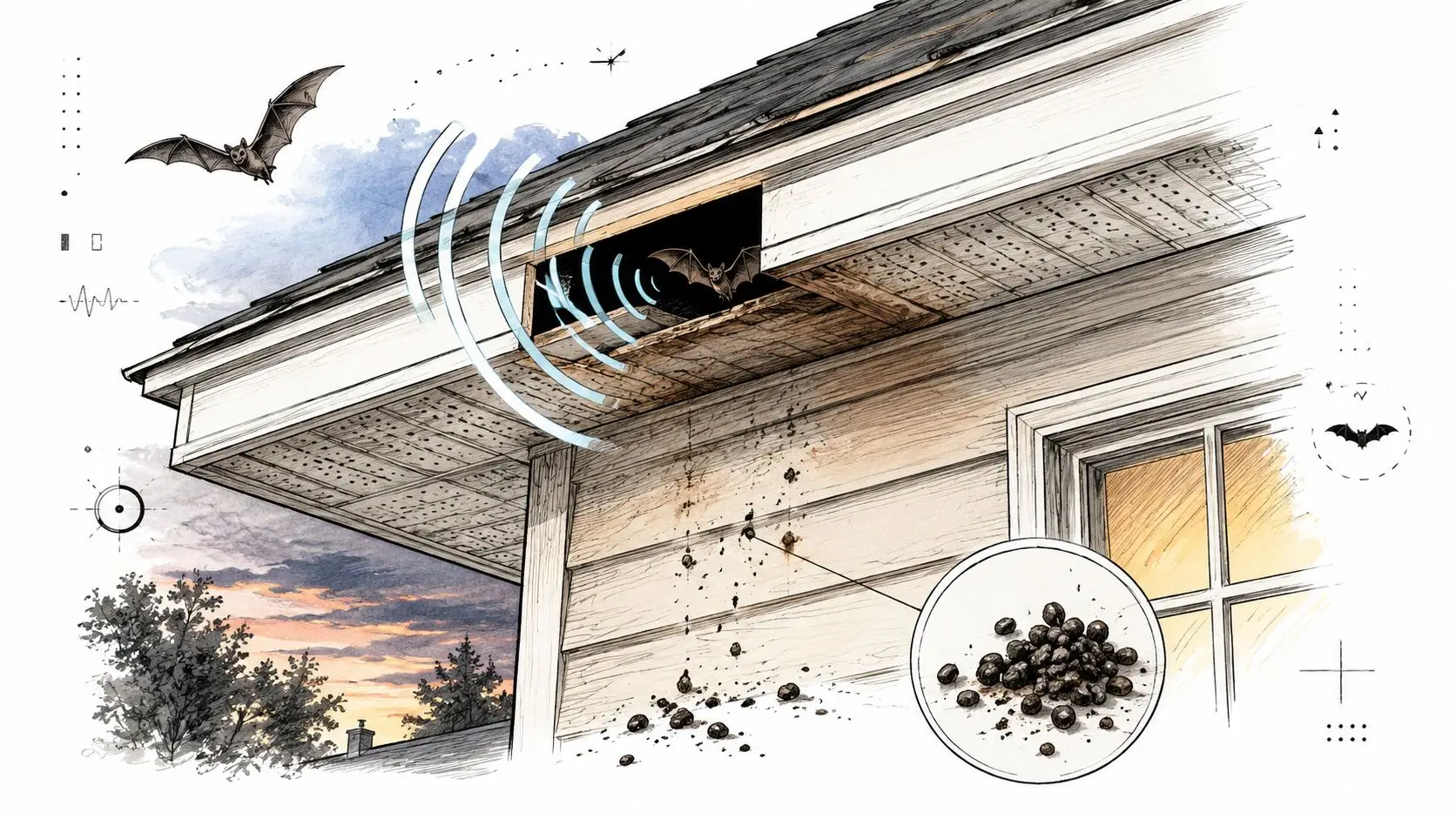
Magnolia homeowners usually notice one of three things first: fluttering at dusk, chirping from an attic or wall, or droppings below an exterior gap. Less obvious signs matter too. Brown or gray staining near soffits and vents can mark an entry point. A sharp ammonia-like odor in attic heat often points to a longer-term roost.
Fresh activity tends to show up around:
- Ridge vents where the vent meets the roof deck
- Soffit returns at corners and overhangs
- Gable vents with loose screening
- Flashing edges around chimneys and roof transitions
- Cable and utility penetrations that were never sealed tightly
A quick exterior survey you can do safely
Don't climb onto the roof at night. Stay on the ground and use a strong flashlight. Pick a spot with a clear view of the roofline and watch the house for a while after sunset. Bats usually exit from the same points repeatedly, which makes identification easier than people expect.
Look for movement along upper edges rather than in the middle of open roof slopes. If you want a useful checklist for exterior weak spots that also collect water intrusion, Commercial Roofers' leak detection guide is worth reading because many of the same seams, penetrations, and flashing failures that cause leaks also become animal entry routes.
For more bat-specific warning signs around the home, FullScope's page on top signs you may have bats gives a practical local overview.
How to judge urgency
Not every noise means an emergency, but some signs mean don't wait:
- Guano below an interior hatch or attic platform means the roost is affecting usable parts of the home.
- Daytime bat sightings inside living space raise concern about direct contact and safe removal.
- Multiple exit points at dusk usually mean a bigger sealing job than a homeowner first assumes.
- Strong odor in hot weather suggests buildup that will need sanitation after exclusion.
If you see staining, hear chirping, and watch bats exit at dusk, stop calling it a “possible issue.” You've confirmed occupancy.
When to observe and when to leave the attic alone
Outdoor observation is useful. Random attic disturbance isn't. In Magnolia's warmer months, especially when young bats may be present, poking around a roost can push bats deeper into wall voids or into the living area.
Use the attic only for limited visual confirmation if you can do it without standing in guano or stirring dust. Don't touch droppings. Don't spray repellents. And don't seal holes just because you found one. The house may have several.
Planning and Executing Safe Exclusion
You hear scratching over the bedroom, see bats slipping out at dusk, and want the holes sealed the next morning. That impulse gets Magnolia homeowners into trouble. Bat exclusion is a controlled process, and bad timing can leave live bats trapped in walls, soffits, or inside the house.
Know the Magnolia timing window first
Magnolia homeowners need to start with one question. Is this an active maternity-season roost?
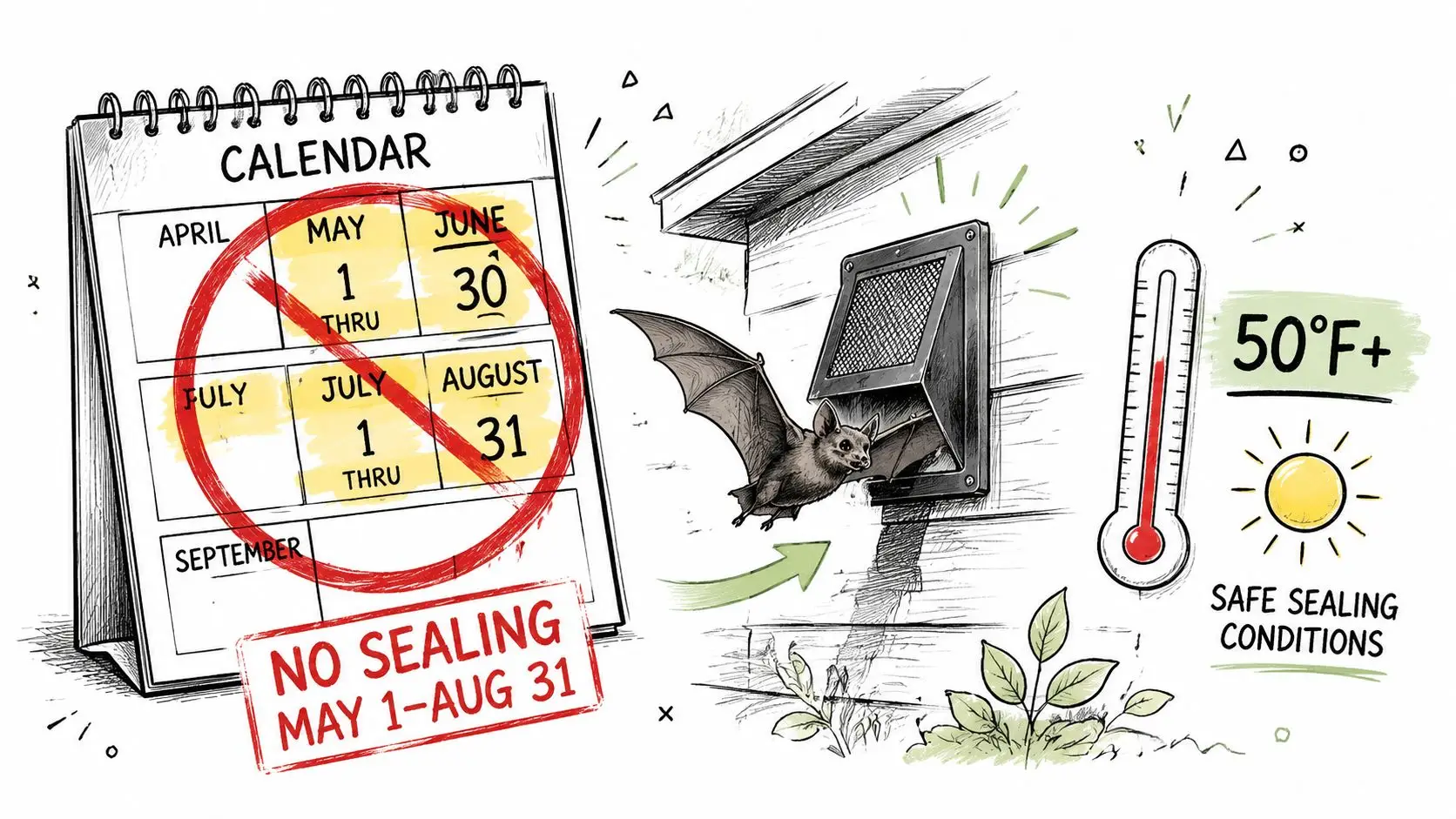
In Texas, building bat work is handled through exclusion, not poison, fumigation, or trapping inside the structure. The timing matters just as much as the method. During the maternity season from May 1 through August 31, sealing an active roost can strand flightless young inside, which is why exclusion work is barred during that period, as outlined in the BBC report on bat exclusion rules and methods.
Use this schedule:
- Before May 1, inspect, map entry points, and line up repairs.
- May 1 through August 31, do not permanently seal an active maternity roost.
- After August 31, schedule exclusion promptly if weather allows normal evening flight.
- During cold snaps or storms, wait for suitable bat flight conditions before counting exclusion nights.
Local providers who know Magnolia do not treat the calendar as the whole answer. They also watch the forecast, evening temperatures, and actual bat activity at the structure. That is how licensed companies avoid sealing too early and creating a bigger liability problem.
Use the right materials and skip gimmicks
Bat work fails when homeowners grab whatever is on the truck shelf. You need sealing materials for secondary gaps and one-way devices for active exits. You do not need repellents, noise machines, or a can of foam shoved into the main hole.
Openings around soffits, fascia joints, roof returns, flashing gaps, vent edges, and siding transitions should be evaluated and closed with durable materials matched to the surface. For general prep and personal protection, review these safety precautions while doing pest control before climbing ladders or entering attic areas.
Avoid these common mistakes:
- Foam stuffed into an active entry point traps bats or pushes them deeper into the structure.
- Screen installed over every visible gap on day one can force bats into wall voids or living space.
- Ultrasonic devices and scent repellents waste time because they do not fix the entry route.
- Patchwork repairs without a full exterior map leave backup exits open.
If you are tightening screens, vent covers, and exterior gaps as part of broader home hardening, Sparkle Tech's bug proofing tips are useful for spotting the small openings homeowners regularly miss.
Follow the exclusion sequence in the right order
The order matters more than people think. FullScope Pest Control and other licensed operators working in this area generally follow the same field logic: identify every possible access point, seal the secondary ones first, control the primary exits with one-way hardware, then confirm the colony is out before final closure.
Step 1: Map the exterior from the roofline down
Start high. Check ridge lines, roof intersections, gable vents, chimney flashing, fascia breaks, soffit returns, dormers, utility penetrations, and trim transitions. In Magnolia neighborhoods with mixed brick, siding, and metal details, those material changes often hide the main entry points.
Step 2: Seal the non-primary gaps first
Close the holes that are not being used as the main exits. This forces normal outflight toward the controlled openings and reduces the chance of bats scattering into hidden parts of the house.
Step 3: Install one-way devices on confirmed active exits
Use fitted netting, tubes, cones, or check-valve style devices that let bats leave and block re-entry. Sloppy placement defeats the whole job. Side gaps, lifted edges, and poorly anchored netting are common failure points.
Step 4: Give the devices enough flight-worthy nights
The ODFW bat control practices guide states that exclusion devices should stay in place for at least five nights with temperatures above 50°F and low wind so bats have a fair chance to exit. Magnolia providers often extend that window if rain, wind, or a cold front interrupts normal evening flight.
Step 5: Remove devices and complete final sealing
Only seal the last openings after you have a clear exit period and a dusk check showing no re-entry. If nobody has watched the structure at dusk after installation, the job is not ready for final closure.
Magnolia homes have predictable weak points
Local house layouts create repeat problem areas. Long porch soffits, detached garages, workshop rooflines, decorative gables, and utility tie-ins give bats covered travel routes and hidden entry seams.
Pay extra attention to:
- Detached garages and shops with warped trim or unsealed roof transitions
- Large attic spaces above porches where long soffit gaps go unnoticed
- Wooded lots near creeks or greenbelts where seasonal bat activity is more common
- Older homes with mixed exterior materials where brick, siding, and metal trim meet
Safe exclusion is disciplined work. Respect the maternity window, use one-way devices correctly, and finish repairs only after the roost is out. That is how licensed Magnolia providers keep the job legal, effective, and out of your living room.
Managing Guano Cleanup and Health Risks
Once the bats are out, the cleanup starts. Many homeowners then make their second big mistake. They assume the hard part is over, grab a shop vacuum, and fill the attic with contaminated dust.
Treat guano like a contamination issue
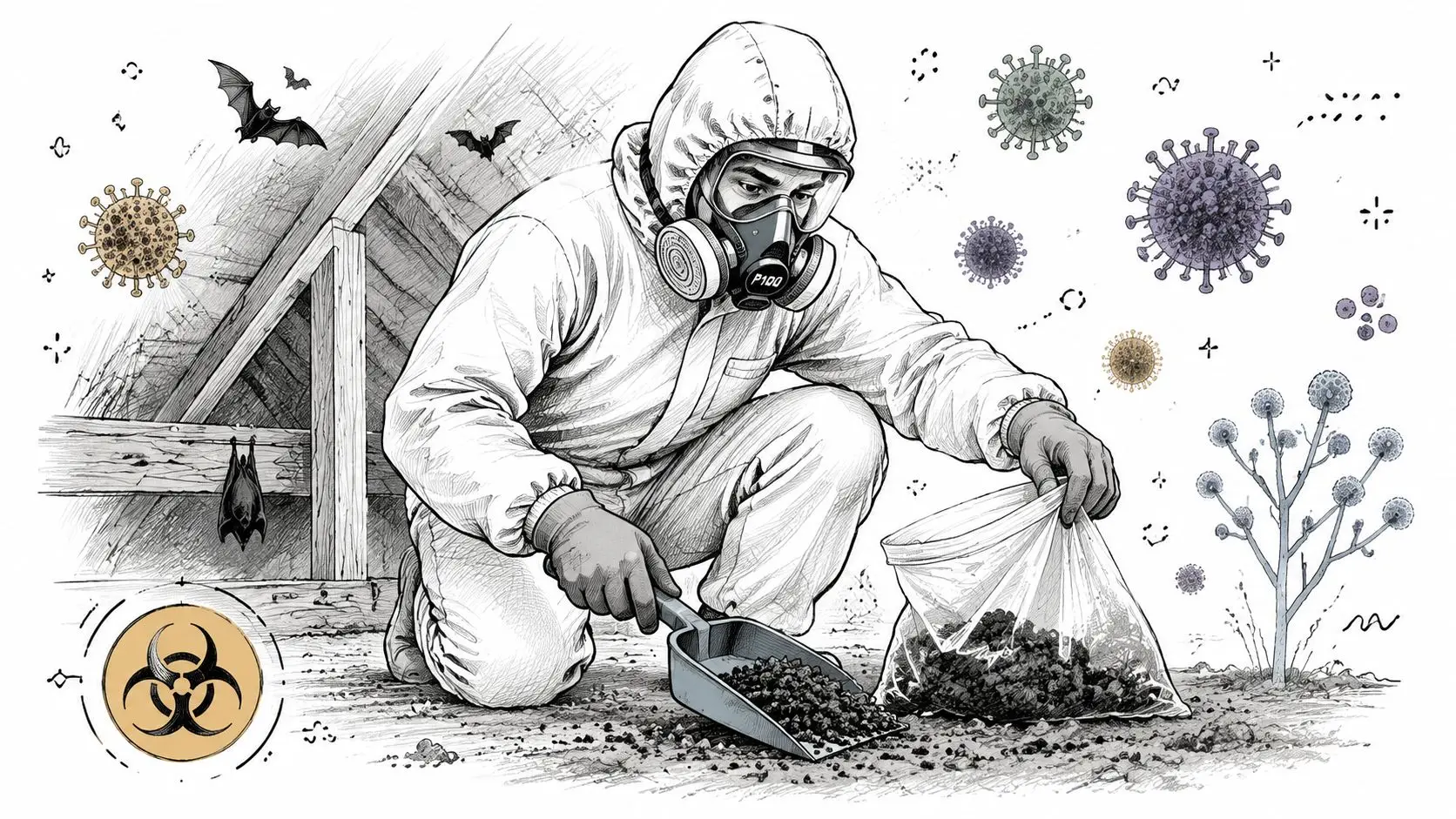
Bat droppings don't just look bad. They can foul insulation, stain wood, create odor, and spread fine particles if disturbed carelessly. Government guidance often gets ignored in commercial articles, but one point deserves attention: most guides omit protocols for catching falling guano during exclusion; government agencies recommend drop-cloths and PPE to prevent inhalation of fungal spores, according to the British Columbia bat FAQ on exclusion and guano management.
That means your cleanup plan starts before final removal work is complete.
What to do before you disturb anything
Set the space up first. Don't step into the attic and start sweeping.
Use this sequence:
- Protect the drop zone with drop cloths or tarps where guano may fall during or after exclusion.
- Ventilate carefully so you improve airflow without blowing debris through the home.
- Wear proper PPE before entering the space. That means respirator protection, gloves, and disposable clothing suitable for dirty insulation work.
- Bag waste deliberately instead of dragging contaminated material through finished rooms.
The goal is simple. Remove waste without turning dry droppings into airborne dust.
Cleanup has to be controlled
Lightly dampening contaminated material can help keep particles down. Aggressive dry brushing, leaf blowing, or standard vacuuming can make the problem worse. The same goes for smashing expanding foam into a former roost area. If any bats remain hidden, they can die inside the material and create a concealed odor source.
Indoor air concerns don't stop at the attic hatch. If the home smells musty or stale after exclusion, some homeowners also review best purifiers for health to think through air-cleaning options during broader restoration. That doesn't replace source removal. It's just a support measure while contaminated material is being handled.
A short video can help you visualize the safety mindset involved in attic cleanup and exclusion work:
When cleanup becomes a professional remediation job
Some guano situations are small and localized. Others aren't. If insulation is heavily soiled, if droppings have spread across a large attic area, or if family members will be exposed during access, stop treating it like a routine chore.
Reviewing general safety precautions while doing pest control is a smart baseline, but bat guano cleanup often goes beyond ordinary pest work. It can require insulation removal, careful bagging, surface cleaning, and odor management.
Signs you shouldn't handle alone
- Large areas of droppings across insulation or decking
- Guano above living space penetrations such as recessed lights or attic hatches
- Visible dust release when material is disturbed
- Strong odor after bats are gone, which can indicate hidden contamination
- Anyone in the home with health sensitivities who shouldn't be exposed to attic dust
Cleanup is part of bat pest control. If you skip it, you haven't solved the problem. You've just removed the animals and left the contamination behind.
DIY Solutions Versus Professional Services
DIY bat pest control appeals to people for one reason. It feels simple from the driveway. Watch the bats leave, close the hole, save money. That version usually falls apart once you're on a ladder trying to identify every gap under a Magnolia roofline.
When DIY can work
A homeowner can sometimes handle a very limited exclusion if the structure is simple, the entry point is obvious, the attic is easy to monitor, and the work happens in the correct season. Think small detached structures, not a multi-level house with intersecting roof planes and hidden soffit voids.
DIY makes the most sense when you can confidently answer yes to all of these:
- Can you identify the active exit and the secondary gaps?
- Can you access them safely without roof-risk shortcuts?
- Can you wait for the legal and biological window instead of forcing the timeline?
- Can you manage cleanup without contaminating the house?
If the answer is no on even one of those, DIY gets shaky fast.
Where DIY usually goes wrong
Most failed bat removals come down to sequencing and access. Homeowners seal the main hole and miss the side gap behind trim. Or they act during the maternity period because the noise is driving them crazy. Or they remove guano with no containment plan and spread dust through the attic.
As noted earlier in the article, DIY exclusion often fails because people either seal too early or seal incompletely. That's not just frustrating. It can leave bats inside walls, create odor problems, and force more invasive repairs later.
A cheap exclusion that has to be redone isn't cheap. It's the first payment on a bigger repair.
What professional service changes
Professional bat exclusion is mostly about control. Better inspection, better access, better timing, better documentation. The proven upside is clear: DIY attempts often fail due to improper timing or incomplete sealing; professional exclusion success exceeds 95% when combined with guano removal and follow-up service, as stated in the bat control practices guidance cited earlier.
That matters most for:
- Complex roof architecture
- Tall homes or steep pitches
- Property managers who need records
- Homes with contaminated insulation
- Cases involving repeated seasonal return
Comparison of DIY vs Professional Bat Exclusion
| Criteria | DIY Approach | Professional Service |
|---|---|---|
| Timing control | Depends on homeowner understanding of exclusion window | Usually handled through inspection and scheduled legal timing |
| Access point mapping | Often limited to visible gaps | More systematic review of rooflines, vents, soffits, and penetrations |
| Safety | Ladder, attic dust, and contamination risks stay with homeowner | Field safety and cleanup process are part of the job |
| Exclusion hardware | Homeowner must choose and fit materials correctly | Devices and sealing methods are selected to match the structure |
| Guano cleanup | Frequently partial or delayed | More likely to be paired with sanitation and restoration |
| Documentation | Usually informal | Better for landlords, managers, and property files |
| Risk of repeat entry | Higher if secondary gaps are missed | Lower when the structure is fully sealed and rechecked |
If your Magnolia property is a simple shed, DIY might be enough. If it's your primary residence, a rental, or a home with a large attic, don't kid yourself. The difficulty isn't removing one bat. It's evicting the whole roost without causing a worse problem.
Working with Licensed Providers in Magnolia Texas
Magnolia homeowners should expect a local provider to operate with a clear sequence, not with mystery “treatments” and vague promises. Bat pest control done correctly is inspection-led and exclusion-based.
What local service should look like
A proper visit starts outside, not in the attic. The technician should walk the roofline from multiple angles and inspect soffits, vents, fascia transitions, flashing joints, ridge areas, and utility penetrations. Then they confirm interior signs, attic contamination, and likely travel paths.
That local familiarity matters in Magnolia because many properties combine suburban construction with semi-rural features. You'll see detached storage buildings, tree-heavy lots, covered porches, and larger attic footprints. Those details affect where bats enter and where cleanup gets complicated.
Why Magnolia service area matters
You asked for specifics on service area locations, so here they are plainly. FullScope explicitly lists Magnolia, Texas as a served community and says it is locally based and services the Magnolia area daily, which establishes a direct local presence rather than occasional spillover coverage, according to the company's Magnolia service area page.
That's important because bat calls often turn on timing. A provider that already works Magnolia can respond with local scheduling, local property familiarity, and practical knowledge of the area's roof styles, wooded lots, storage structures, and nuisance-wildlife patterns.
What the process should include
A licensed provider in Magnolia should give you a sequence that makes sense:
- Inspection and identification of active exits and secondary gaps.
- Timing review so exclusion isn't done during the prohibited maternity period.
- Installation of one-way devices on active exits after secondary gaps are sealed.
- Post-exit sealing once the colony has cleared.
- Guano and insulation evaluation to decide how much restoration is needed.
- Follow-up verification to check that no re-entry has occurred.
If you're evaluating bat-specific service details, professional bat removal gives an example of the kind of scope homeowners should expect from a dedicated exclusion service.
Questions to ask before you hire anyone
Don't hire a provider just because they say they “remove wildlife.” Ask direct questions.
- Will you use exclusion only, or are you proposing chemicals or poison?
- How do you handle the May through August maternity restriction in Texas?
- Do you inspect secondary gaps before placing devices?
- What happens if guano has contaminated insulation?
- Do you return to verify the structure is sealed and clear?
If a contractor's answer to bats sounds like the same answer they give for squirrels, move on.
One practical option in Magnolia
One factual local option is FullScope Pest Control, which lists Magnolia as an active service area and provides daily local coverage for pest-related work in that community, based on the company page cited above. That doesn't mean it's the only option. It means Magnolia homeowners should insist on the same standard from any licensed provider: legal exclusion timing, complete access-point mapping, sanitation planning, and documented follow-up.
That's the insider view of how competent local bat work should operate. No gimmicks. No repellent shortcuts. No sealing active maternity roosts because the calendar is inconvenient.
Actionable Checklists and Wrap Up
A Magnolia homeowner hears scratching overhead in June, finds droppings near the attic hatch, and wants the holes sealed that afternoon. That is how people end up with trapped bats, odor problems, and a bigger cleanup bill. In Magnolia, timing matters. Texas maternity season changes what a legal, safe bat job looks like, and any provider who works locally should treat that as standard procedure, not a footnote.
Use the checklists below to keep the job legal, orderly, and documented.
Homeowner checklist for Magnolia bat problems
- Confirm bat activity at dusk: Watch the roofline, soffits, vents, and fascia for exits.
- Take clear photos: Save images of guano, staining, rub marks, and likely entry gaps.
- Check the calendar first: If you are in the local maternity window, do not approve permanent exclusion that can trap flightless young inside.
- Do not seal holes while bats are still active: One-way exclusion comes first. Full sealing comes after the colony is out.
- Inspect the full exterior shell: Pay attention to ridge vents, gable vents, chimney flashing, roof returns, fascia joints, and utility penetrations.
- Keep people out of contaminated attic areas: Especially children, older adults, and anyone with breathing issues.
- Use proper protective gear before touching droppings: Gloves and respiratory protection are the baseline.
- Plan cleanup as part of the job: Guano left behind keeps the odor, staining, and health risk in place.
- Verify the result after exclusion: Recheck at dusk for continued movement, sound, or re-entry.
Property manager checklist for rentals and multi-building sites
- Document every complaint as a wildlife issue: “Attic noise” is too vague for liability records.
- Save dates, photos, and service notes: You need a paper trail if a tenant later reports odor, staining, or indoor bat contact.
- Approve work based on legal timing: Do not authorize a shortcut just because occupancy pressure is high.
- Restrict access around attic entries and cleanup zones: Keep residents and maintenance staff out until the area is safe.
- Require written scope for sanitation: Exclusion alone does not address contaminated insulation or guano buildup.
- Get final confirmation in writing: The provider should verify that exits were addressed and the structure was checked again after work.
Final recommendations that actually matter
If you suspect bats in a Magnolia attic tonight, start with observation, not action. Watch for exits at dusk. Photograph what you find. Then call a licensed provider who handles bat exclusion the way local professionals should handle it in this area: inspect every likely gap, account for the Magnolia maternity season window, and spell out the cleanup scope before sealing starts.
That local operating standard matters. FullScope Pest Control's Magnolia coverage reflects the basic expectation homeowners should have from any licensed company working here. Respect the legal exclusion window. Map the entire structure, not just the obvious hole. Treat guano cleanup as part of the problem, not an optional add-on after the fact.
The goal is simple. Get the bats out legally. Keep them out permanently. Leave the attic safer than you found it.
If you've confirmed bat activity in Magnolia and want the job inspected before exclusion timing closes, schedule a licensed local evaluation and get the roofline, attic, and cleanup scope documented before anyone starts sealing.