1500+ reviews

You step onto the lawn in Magnolia, Texas, expecting morning dew and a quick walk to the mailbox. Instead, you find fresh soil scattered across the St. Augustine, several shallow craters near the garden bed, and a patch of turf that looks as though something has been searching beneath it overnight. The immediate question is simple: what is digging holes in my yard?
The answer usually comes from a pattern, not from one hole. University extension guidance recommends comparing diameter, mound shape, tunneling, location, tracks, and timing before deciding whether a mammal, insect, snake, or non-animal cause is responsible. That approach works especially well in Magnolia neighborhoods, where finished lawns may sit beside wooded greenbelts, drainage areas, oak roots, compost piles, and fence lines.
Walking the Yard and Spotting the Damage
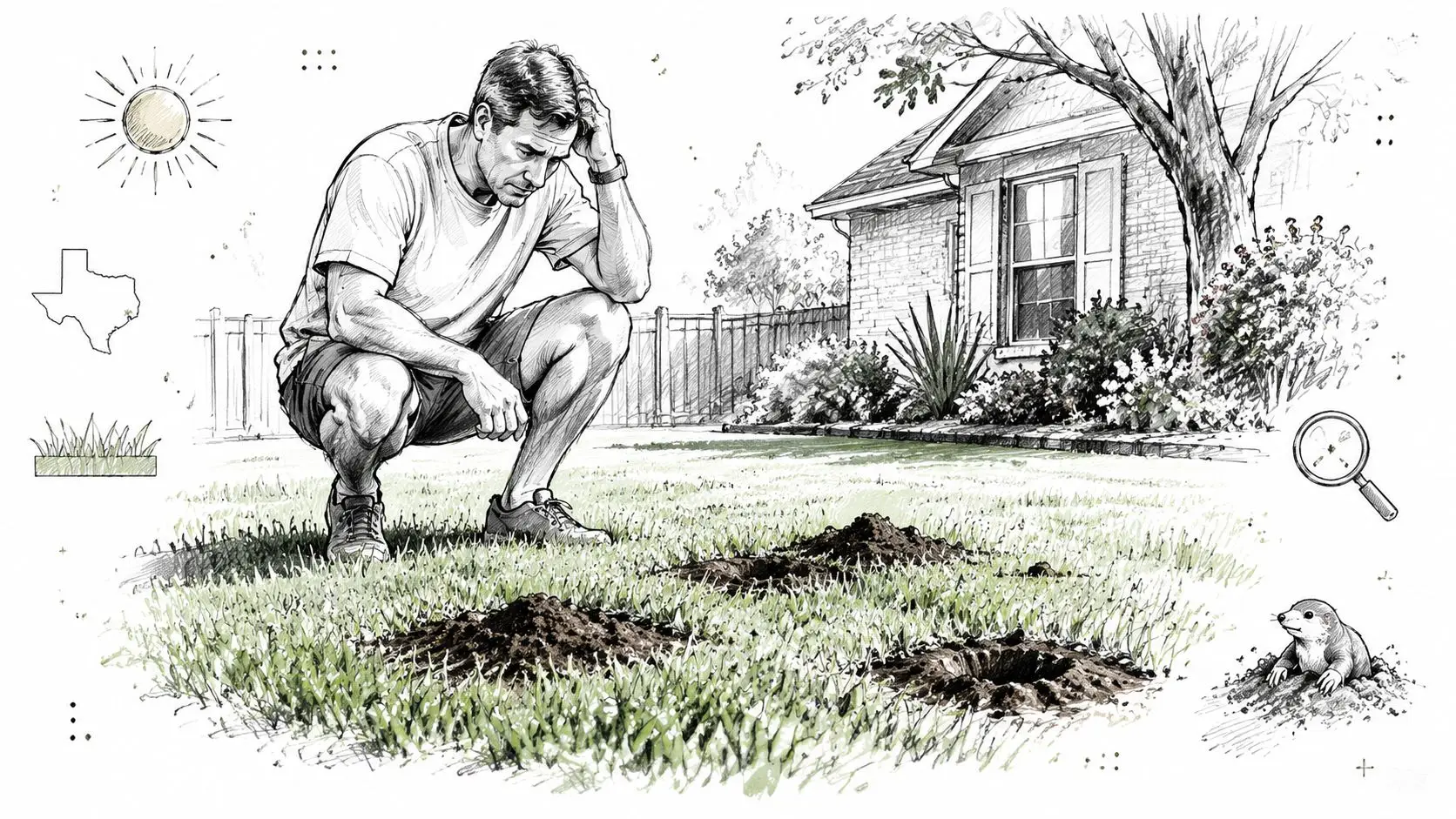
A Magnolia morning often gives you the clearest evidence. In a subdivision in ZIP code 77354 or 77355, dew still clings to the grass when you notice loose dirt clods on the walkway side of the lawn. The turf is disturbed, a few blades look clipped or pulled, and faint marks seem to lead toward the back fence and the darker edge of a wooded area.
Don't step directly through the damaged patch. Start at the sidewalk and make a slow perimeter walk around the property. Take photographs in the morning light, before children, pets, mowing, or watering erase the smaller clues.
Record where each hole appears
Use your phone to photograph every opening from above and from the side. Include a ruler or another familiar object for scale, then write down whether the hole sits beside oak tree roots, a compost pile, a dog run, a shed, a garden bed, or the back fence.
The location helps explain the behavior. A hole near roots may reflect foraging, while damage along a fence may point to shelter, an established travel route, or a pet digging at the boundary. Scattered divots across open turf mean something different from a connected line of openings.
Practical rule: Photograph first, measure second, and repair last. Filling a hole too soon can remove the evidence needed to identify its maker.
University extension guides describe lawn digging as a common sign of wildlife searching for food, nesting, or burrow space. They also emphasize that hole size, soil mounds, and nearby tracks narrow the likely cause more effectively than the number of holes alone. University of Maryland Extension's guide to animals digging in lawns explains why the same property can show different digging signatures as nocturnal and seasonal activity changes.
Measuring Holes and Reading the Clues
A tape measure, a flashlight, and a wooden stick can turn a confusing lawn into a manageable suspect list. Measure the widest part of each opening, not the loose soil around it. Then check whether the entrance slopes inward, drops vertically, or connects to a visible tunnel.
University extension sources commonly associate openings under 3 inches with insects, moles, rodents, or snakes, while larger 6 to 12 inch excavations near trees, logs, or walls can suggest animals such as skunks, red foxes, armadillos, coyotes, or gopher tortoises. North Carolina Extension also describes scattered 6 to 10 inch holes without a mound as possible skunk or raccoon activity, 2 inch holes as possible squirrel, chipmunk, rat, or mole activity, and one-quarter-inch openings as possible ground bee holes. See the University of Florida guidance on identifying yard holes for the broader comparison.
Use the whole pattern
A raised, compact mound suggests soil pushed from below. A fan-shaped scatter may indicate material kicked backward during surface digging. A clean entrance with a worn edge can point to repeated use, while a shallow divot with no tunnel often reflects brief food searching.
Look for claw marks on the rim, fine hairs caught in the soil, webbing across an unused opening, or tracks leading between holes. A faint urine odor near a suspected den can support the idea of an active animal, but don't lean over an opening or place your face close to the soil.
| Diameter | Typical Shape | Likely Cause |
|---|---|---|
| One-quarter inch | Tiny, clean opening, sometimes in sunny soil | Ground bees or other small insects |
| One to two inches | Scattered divots, small mound, or shallow cone | Squirrels, chipmunks, voles, insects, or small mammals |
| Two to three inches | Conical dig or compact entrance | Armadillos, skunks, rodents, moles, or snakes |
| Six to ten inches | Broad excavation without a clear mound | Skunks or raccoons |
| Six to twelve inches | Large opening or excavation near a feature | Larger wildlife or a substantial burrow |
Use a flashlight without touching the opening. Depth, nesting material, and side branches can separate a feeding pit from a true burrow. Also record when the damage first appeared. Overnight changes suggest nocturnal activity, while damage noticed around dawn may reflect animals that were active before daylight.
The Most Common Hole Makers in Southeast Texas
Magnolia yards can attract several kinds of diggers, so a familiar animal isn't automatically the right answer. The most useful question is, what single sign would be difficult for another cause to imitate?
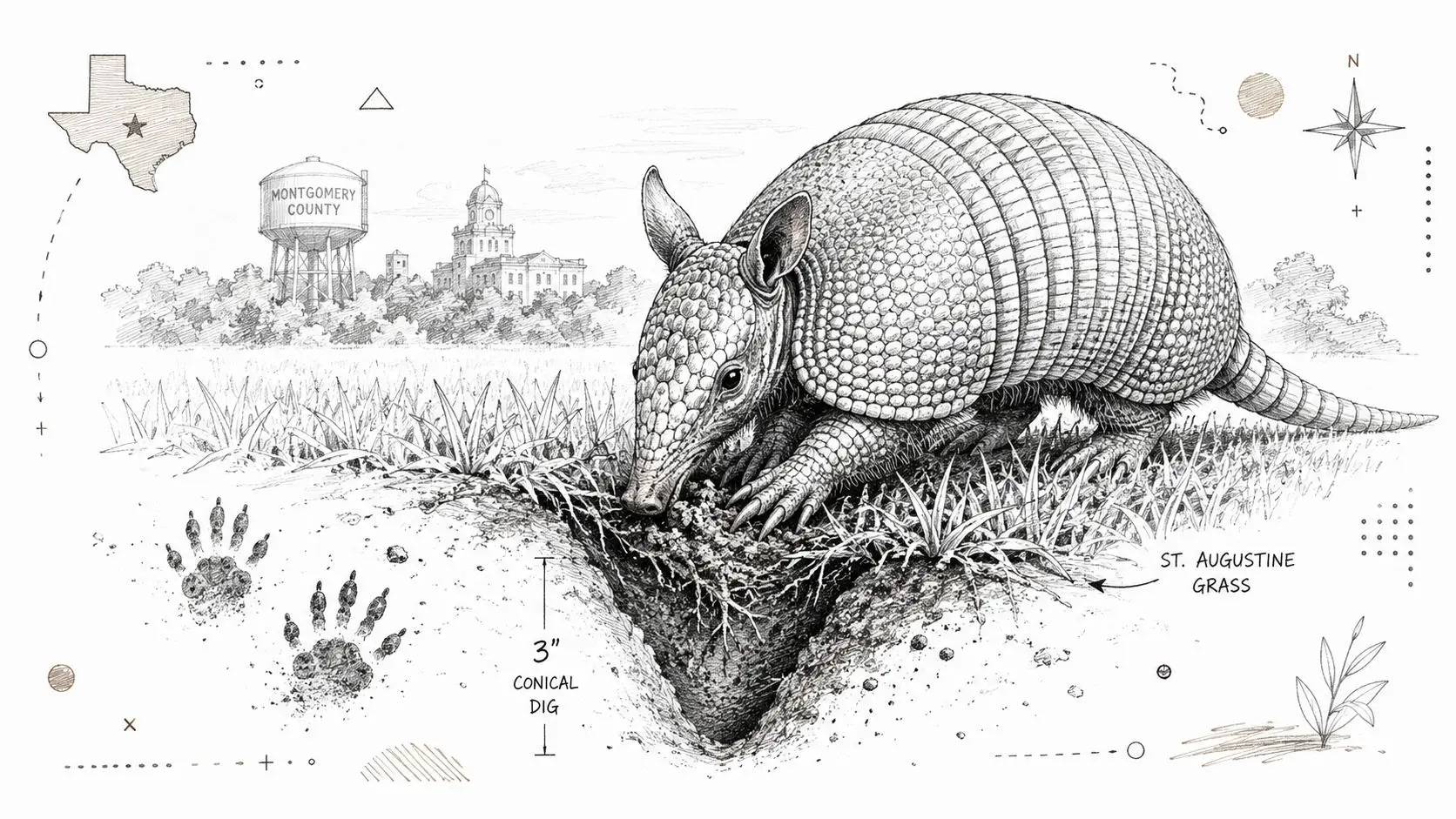
Armadillos often leave small, conical excavations and disturbed St. Augustine near roots or soft soil. A hole measuring a few inches may fit this pattern, but the strongest clue is a series of fresh feeding digs accompanied by uprooted turf. For more detail on shape and identification, see how armadillos dig holes. The diagnostic sign is a cone-shaped food-searching pit with nearby turf disturbance.
Raccoons may disturb sod while searching for grubs or other food, especially near damp areas, drainage features, or water. A larger entrance beneath a shed or porch indicates shelter rather than a quick feeding stop. Look for overturned pieces of turf and muddy tracks as the main clue.
Skunks commonly create small, neat, conical holes while searching for grubs. Scattered openings without a connected tunnel are more consistent with foraging than with a den. The diagnostic sign is a cluster of cone-shaped divots across open lawn.
Feral hogs can leave broad, heavily disturbed craters where they root through soil. Damage near creek bottoms or less-developed edges may look less like individual holes and more like a torn strip of ground. The key sign is wide rooting with several inches of soil turned over, not one tidy entrance.
Squirrels make small divots while caching acorns. These openings usually appear scattered beneath trees and don't form a tunnel system. The telltale clue is small, shallow holes concentrated near mature trees.
Fire ants create soil mounds rather than clean animal entrances. Pocket gophers push soil into distinctive horseshoe-shaped mounds, while eastern moles create soft, serpentine ridges instead of obvious open holes. In each case, the diagnostic feature is the surface pattern, not the presence of disturbed soil.
Mammals Versus Insects Versus Other Causes
Start by sorting the damage into three broad categories. Mammal activity usually leaves a combination of entrance edges, claw marks, tracks, droppings, fur, or a visible mound. A smooth opening that continues sideways may indicate a burrow, while a shallow depression that ends quickly is more likely a feeding pit.
Insects tend to create smaller and more uniform openings. Fire ants build noticeable mounds, and digger bees or wasps may produce individual holes in sunny, well-drained soil. Ground bees can make openings as small as one-quarter inch, according to the University of Florida's wildlife hole identification guide. Fine soil pellets or a low ring around several small entrances can support an insect explanation.
Don't overlook non-animal causes
Settling after heavy spring rain, an old utility trench, or a decaying root ball can leave depressions that resemble digging. Pets may also excavate repeatedly along a fence line, especially where they can smell animals on the other side.
Shine a flashlight into the opening without putting your hand inside. A straight drop, branching tunnel, nesting material, or smooth interior tells a different story from a shallow pocket beneath loose sod. If the holes don't show tracks, mounds, feeding debris, or consistent animal access, inspect irrigation lines, removed trees, and areas where soil has recently been disturbed.
If you find a larger opening or tracks that suggest a predator, keep pets away and review practical guidance on protecting yourself from coyotes before investigating farther.
Immediate DIY Checks and Safety Steps
You can gather useful evidence before dusk, but safety comes first. Keep children and pets away from the damaged area, particularly when you haven't identified the animal or confirmed whether the hole connects to a larger burrow.
Make the inspection controlled
- Photograph each opening. Take an overhead image, a side view, and a scale photo with a coin or ruler.
- Mark the location. Place a small flag or stick beside the hole, not inside it, so you can identify fresh activity overnight.
- Wear protection. Choose closed-toe shoes and gloves before walking through disturbed soil.
- Probe gently. Use a stick to estimate depth and direction. Never put your hand into an opening.
- Search nearby. Check the surrounding area for tracks, fur, feathers, or droppings, including within roughly three feet of the entrance.
- Control access. Keep dogs leashed until you know what made the hole.
Wash exposed skin with soap and water if you touch soil, droppings, or nesting material. Don't pour chemicals into a burrow, smoke an entrance, or block an active opening before determining whether an animal is inside. Armadillos, raccoons, and snakes can use similar sheltered spaces, and a close encounter can happen when a homeowner reaches into an apparently empty hole.
A marked hole gives you a baseline. A reopened hole gives you evidence of current activity.
Short Term Fixes and Prevention Strategies
Short-term measures work best when they remove food, shelter, and easy access at the same time. A single repellent rarely solves repeated digging if the yard still offers grubs, unsecured pet food, compost scraps, or dense cover.
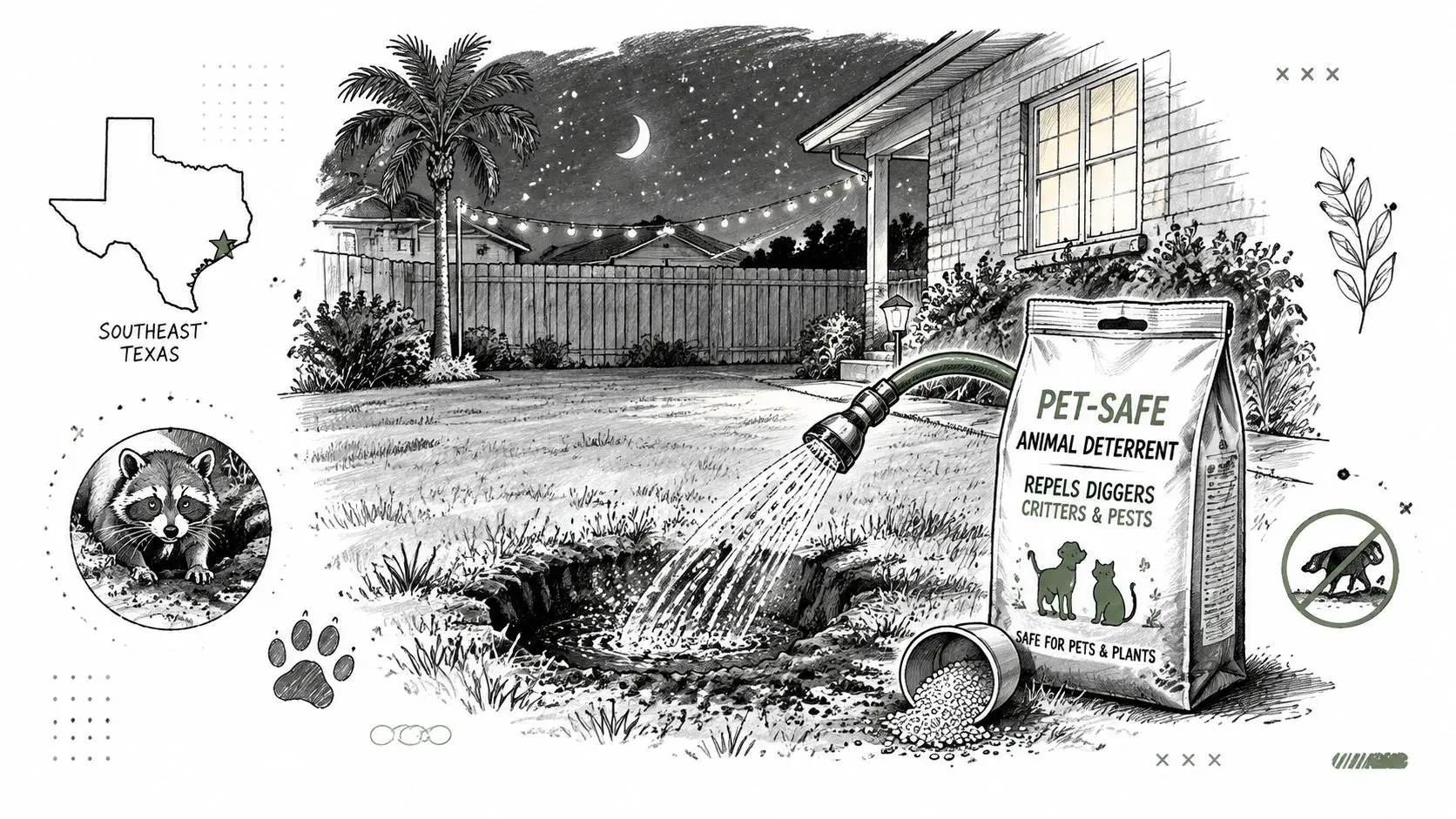
After dark, lightly watering an active area may make the surface less attractive to a nocturnal forager, but avoid flooding a burrow or using water where it could reach foundations or irrigation equipment. Pet-safe deterrents and castor-oil-based repellents can be applied along active runs according to the product label.
Reduce access around attractive areas
- Protect garden beds: Install low-gauge hardware cloth around beds and fence perimeters, burying the bottom edge six inches deep so animals can't easily push beneath it.
- Remove food sources: Pick up fallen magnolia pods, secure compost, and bring outdoor pet food inside.
- Open shelter zones: Trim dense shrubs near the foundation where armadillos and opossums may rest.
- Repair inactive damage: Fill abandoned holes with compacted soil and grass seed, then watch for reopening.
- Track the result: Compare marked locations after watering, deterrent use, or exclusion work.
Moles and gophers require a different response from surface foragers because their damage may appear as ridges or connected underground runs. This guide to getting rid of moles can help you distinguish underground activity from isolated lawn divots.
Don't fill a hole until you're reasonably sure it's inactive. Otherwise, you may force an animal to create a new opening somewhere less visible.
When to Call a Professional in Magnolia
Call a licensed pest or wildlife professional when the evidence keeps pointing to active wildlife and your basic exclusion steps haven't changed the pattern. Repeated overnight digging, fresh spoil piles, or a burrow larger than three inches deserve more than repeated patching, especially near a foundation, septic line, or sprinkler manifold.
Magnolia sits in southwest Montgomery County, and the city describes its location as part of one of the fastest-growing counties in the United States. Local service planning may include ZIP codes 77353, 77354, and 77355, with nearby coverage extending toward 77362, Woodloch, Stagecoach, and Tamina. The city's official Magnolia community information confirms the municipality's Montgomery County location. ZIP directories list 77353, 77354, and 77355 under Montgomery County, while mapping information places 77354 within the Houston metropolitan region and identifies 77355 with area code 281 and Central Time observance through ZIP code information for 77355.
Ask what the inspection includes
A qualified technician should inspect the damage, identify likely entry and feeding routes, check vulnerable structures, and separate pest control from wildlife work. Texas Department of Agriculture structural pest licenses and Texas Parks and Wildlife permissions address different activities, so ask which credentials apply to the proposed service.
A professional may recommend exclusion, habitat changes, trapping where lawful and appropriate, or targeted treatment. Poison-only solutions can leave an animal inside a structure or fail to address the opening that allowed access. For a closer look at escalation triggers, review when professional wildlife and rodent control makes sense.
FullScope Pest Control is one Magnolia-area option for inspections and pest or wildlife-related services. Ask any provider what the visit covers, where they serve, and how they'll protect pets, children, foundations, and irrigation equipment.
Your Next Steps for a Healthier Yard
You don't need to identify every yard hole instantly. You need a repeatable way to collect evidence before the pattern disappears.

Use this Magnolia homeowner checklist
- Walk the same route: Inspect the yard every Saturday morning, moving along the perimeter before crossing the center.
- Photograph for scale: Place a coin or ruler beside each new hole and capture the entrance from more than one angle.
- Keep a dated log: Record the location, diameter, mound shape, nearby feature, and whether the opening returns after filling.
- Protect the lawn: Repair inactive areas with compacted soil and seed suited to your yard, including St. Augustine or Bermuda where appropriate.
- Watch the boundaries: Give extra attention to wooded edges, creek-adjacent areas, oak roots, sheds, compost piles, and dog runs.
- Escalate early: Schedule a Magnolia-area inspection if more than five holes appear in a week or any burrow exceeds three inches across.
These observations protect more than the appearance of your lawn. Early action can reduce risks to children and pets and may help prevent damage near foundations, septic systems, and irrigation components. It also gives a professional a useful record instead of a recently repaired patch with no remaining clues.
If fresh holes are appearing across your Magnolia property, contact a qualified local provider serving your ZIP code, including 77353, 77354, or 77355, and request an inspection that identifies the animal before treatment begins.
Schedule your Magnolia-area yard inspection today if the digging is recurring, the openings are expanding, or you're unsure whether the damage comes from wildlife, insects, or a structural issue. Share your ZIP code, the hole measurements, photos, and the locations you've logged so the inspection can start with clear evidence.