 1500+ reviews

Kissing Bug vs Stink Bug: A Guide for Southeast Texas
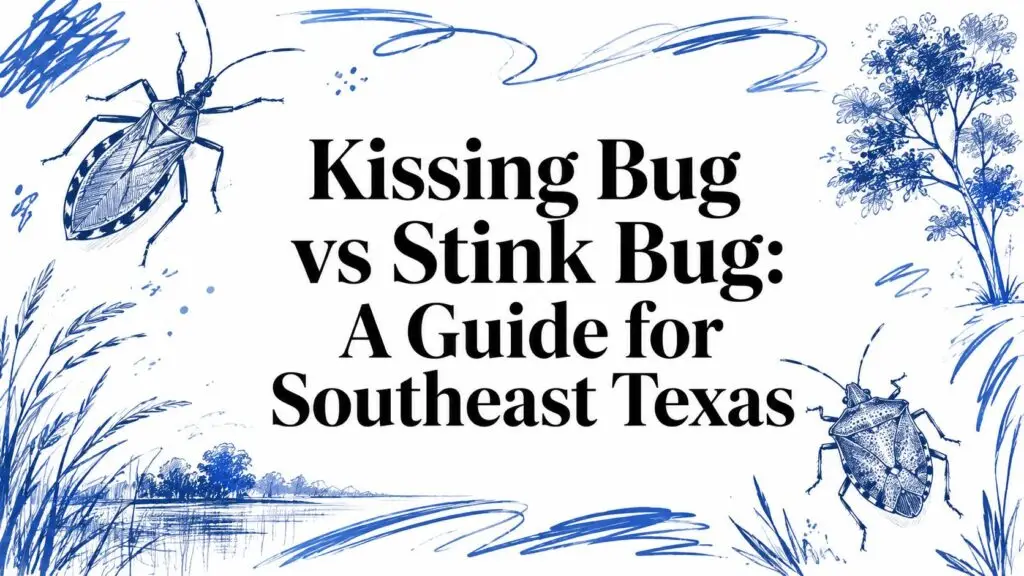
You're standing in the kitchen, looking at a brown bug on the wall, and your first thought is simple. Is this one of those dangerous kissing bugs, or is it just a stink bug? In Southeast Texas, that's a fair question. A lot of homeowners around North Houston, Conroe, Kingwood, and Magnolia see a flat brown insect and assume they're all basically the same. They aren't. In a kissing bug vs stink bug situation, the difference matters because one is mostly a nuisance and the other deserves much more caution. The good news is that you can usually sort them out by looking at a few specific features. Body shape, head shape, where you found it, and what it was doing all tell you a lot. If you live in Southeast Texas, those details can help you decide whether to remove the bug, monitor the area, or call a professional for identification. That Unfamiliar Bug in Your Home Rarely do bugs get a close look until one shows up indoors. It's on a curtain, near a back door, or crawling across the wall by the bed. That's when the confusion starts. Kissing bugs and stink bugs can both look brown from a distance. Both can turn up around homes in Texas. Both make people uneasy because they don't look like the common insects homeowners already know. But they're very different insects with very different risks. If you're unsure, don't crush it with your hand and don't guess based on color alone. A stink bug is usually an unwanted visitor. It may smell bad if disturbed, and it may be annoying around windows in cooler months, but it isn't trying to feed on people. A kissing bug is a different category of pest. It's associated with blood-feeding behavior and, in some cases, disease risk. That's why homeowners in Southeast Texas need a practical guide, not a vague one. If you're in Magnolia, Spring, Conroe, Kingwood, or nearby North Houston communities, the smartest approach is calm identification first, then the right next step. Visual Identification A Side-by-Side Comparison A quick ID starts with the outline. From across a room, a stink bug looks like a little shield. A kissing bug looks longer, flatter, and more like it was built with a pointed front end. Kissing Bug vs. Stink Bug At a Glance Feature Kissing Bug (Triatomine) Stink Bug (BMSB) Body shape Elongated, narrow body Broad, shield-shaped body Size Usually larger and longer-looking overall, often around 0.5 to 1 inch based on Angi's kissing bug vs stink bug guide Usually shorter and wider-looking, often around 0.5 inch Head shape Distinct cone-shaped head Smaller head that blends into the broad body Antennae Thin antennae Antennae that appear thicker relative to the body Overall outline Long and lean Pentagonal or triangular shield look Color pattern Often dark brown or black with lighter markings along the edge Mottled brown or brown-green coloration The Head Gives You the Fastest Answer If a homeowner in Magnolia sends us a photo and asks for a first impression, the head shape is usually the first thing we check. A kissing bug has a clear, forward-projecting, cone-shaped head. It gives the insect a stretched look, almost like the front end was pulled outward. A stink bug looks compact by comparison. Its head does not jut forward in the same way, and the body widens quickly into that familiar shield shape. A simple way to judge it is this. If the bug looks like it has shoulders, you are probably looking at a stink bug. If it looks narrow from front to back, pay closer attention. Body Shape Matters More Than Color Color causes a lot of mix-ups in Southeast Texas homes because both insects can look brown under indoor lighting. Porch lights, hallway shadows, and phone photos often make the color even less helpful. Start with the silhouette: Long and narrow points toward a kissing bug Wide and shield-shaped points toward a stink bug Pointed front end supports a kissing bug ID Broad upper body with a triangular back plate look supports a stink bug ID Practical rule: Ignore color at first. Check the outline, head, and body width before anything else. The Mouthparts Match the Job The body design also fits what each insect is built to do. Kissing bugs have mouthparts suited for piercing skin and taking a blood meal. Stink bugs have mouthparts meant for piercing plants. For homeowners, that matters because structure is not random. A kissing bug is shaped more like a slim needle tool. A stink bug is shaped more like a shield with legs. One design helps it stay tucked into cracks and feed on animals. The other is built for plant feeding and defense. If you are comparing other seasonal insects that show up around garages, patios, and entry points in warm weather, this guide to bugs to look out for this summer can help narrow it down. In North Houston area homes, especially around wooded lots, dog kennels, and properties with outdoor lighting, a photo from above usually gives enough detail to separate these two. If the insect appears long-bodied with a pointed head, treat it with more caution and avoid handling it directly. Contrasting Behaviors and Seasonal Habits You spot a bug on the inside of a window in Magnolia after sunset. The shape already matters, but behavior can give you the second clue. What the insect is doing, where it showed up, and what time of year you noticed it often points you in the right direction. What Stink Bugs Are Doing Around Your House Stink bugs behave like plant pests that accidentally end up indoors. Orkin's comparison of stink bugs and kissing bugs notes that stink bugs feed on plant matter and often become a nuisance when they gather on homes while seeking shelter. For Southeast Texas homeowners, that usually means you find them on garden plants, fruit trees, siding, window frames, porch areas, or garage doors. In
Does Bleach Kill Termites? a Risky DIY Termite Fix
Bleach can kill the few termites you see on contact, but it has zero capability to eliminate a colony. It also can't reach the 90-100% of a typical infestation that stays hidden, so the termites causing significant damage keep feeding out of sight. If you found winged insects near a window, mud tubes along a foundation, or soft wood that suddenly feels hollow, grabbing a bleach bottle is a very human reaction. You want to do something right now. I understand that impulse. But with termites, the fastest-looking fix is often the one that costs you time, creates safety risks, and lets the colony stay active. You Found Termites and Grabbed the Bleach Here's Why to Stop Most homeowners don't discover termites during a calm, scheduled inspection. They find them while moving storage in the garage, replacing trim, or cleaning up after rain. You see a few pale insects, maybe some discarded wings, and your mind goes straight to whatever is under the sink. Bleach feels strong, so it feels useful. That's the trap. With termites, surface action and real control are not the same thing. Killing a handful you can see doesn't mean you've touched the problem that matters. In a house, termite activity is usually hidden in wood members, wall voids, crawlspaces, or soil contact points. A reactive spray can make the visible evidence disappear while the colony keeps working. Practical rule: If a product only reaches the termite you can see, it probably isn't solving the termite problem you actually have. I've seen homeowners treat termite evidence the same way people treat water damage or mold stains. They clean what's visible and assume the issue is handled. That's why AMPM Restoration Services' expert advice is so relevant here. Hidden damage almost always matters more than what's on the surface. There's also a second problem. Bleach can push you into a false sense of control. Once the insects disappear from view, many people delay the inspection they should have scheduled first. By the time a technician evaluates the structure, the colony has had extra time to spread and feed. If you want a good example of how quick DIY choices can create bigger pest issues, FullScope has a useful breakdown of DIY pest control gone wrong. The short version is simple. Strong household chemicals are not the same as a termite treatment plan. What to do in the first hour Stop spraying random products: Don't add bleach, vinegar, borax, foaming cleaners, or anything else just because it's available. Leave evidence in place: Mud tubes, wings, damaged trim, and swarmers help a technician identify what species you're dealing with and where activity may be centered. Protect people first: If you already used bleach, ventilate the area and keep children and pets away until the fumes dissipate. Contact Kill vs Colony Elimination The most important thing to understand is the difference between contact kill and colony elimination. A contact kill means the product only affects the termite it physically touches. Colony elimination means the treatment reaches the hidden population that keeps the infestation alive. Those are not close to the same outcome. What bleach actually does Bleach can kill individual subterranean termites on direct contact by denaturing proteins and disrupting cell membranes, but it has zero capability to eliminate a colony or reach termites hidden within wood or soil structures. It also can't penetrate deep into the 90-100% of a typical home infestation where termites reside, and even if visible wood is soaked, the core colony of 50,000 to 1 million termites can remain untouched and active, as described by FullScope Pest Control's termite guidance. That's why the homeowner experience is so misleading. You spray. A few termites die. The wood still sounds hollow next week. Consider pulling one dandelion leaf while leaving the root system underground. The top changes. The source doesn't. Why the colony survives A termite colony is organized to protect its reproductive members and workforce. The termites you notice are usually the least important part of the problem. The queen, developing young, and the majority of workers stay protected in places surface sprays can't reach. Bleach is especially poor at termite control because it doesn't move through soil as a barrier treatment, and it doesn't get carried back through the colony the way a bait toxicant can. That's the difference between a household cleaner and a purpose-built termite system. Surface kill is visible. Colony control is what protects the house. If you want to understand what an actual colony-level approach looks like, this explanation of how termite baiting disrupts entire colonies lays out the core principle well. The treatment has to reach the population you can't see. The practical takeaway Here's the decision point that matters: If you saw one or two exposed termites: Bleach may kill those specific insects. If you have an infestation: Bleach won't eliminate it. If you want protection: You need a treatment that reaches hidden galleries, soil entry points, or the colony itself. That's why professionals talk less about killing termites and more about intercepting, transferring, or isolating termite activity at the structure. More Than Just Ineffective It's a Real Risk The problem with bleach isn't only that it fails. It's that it can make the situation worse. A lot of homeowners think of bleach as a strong all-purpose answer. In termite work, that mindset creates three separate hazards. You expose yourself to fumes, you risk damaging building materials, and you delay the treatment that could have stopped the infestation earlier. It creates avoidable safety issues Bleach acts as a contact-only killer that disrupts the termite exoskeleton and clogs respiratory spiracles, but it fails to penetrate beyond the outer 1–2 mm of wood. Its potency also wanes within minutes and it has no residual toxicity, so surviving termites can resume feeding with no long-term protection, according to Proof Pest's explanation of bleach and termites. That alone makes it a poor termite tool. The bigger concern for many homeowners is misuse.
Texas Wood Destroying Insect Inspection Cost Guide 2026
A formal wood destroying insect report usually costs $100 to $300, and the broader U.S. range is commonly $75 to $225, with a national average around $150. That paid report is not the same thing as the free termite check many homeowners see advertised, and that difference is what trips up a lot of buyers in the Houston area right before closing. If you're under contract on a house in Kingwood, Conroe, Porter, Humble, or The Woodlands, this usually comes up fast. A lender, agent, or title company asks for a WDI report, and the first question is simple: why am I paying for something I thought pest companies did for free? The short answer is that you're not paying only for someone to look for termites. You're paying for a licensed operator to inspect accessible areas, document findings on a real estate form, and put professional liability behind that paperwork for your transaction. In Southeast Texas, where termite pressure is part of normal homeownership, that paperwork matters. Understanding Your WDI Inspection Quote You are under contract, the option period is running, and an agent asks for a WDI report. Then the quote shows up. If you were expecting the kind of free termite check pest companies advertise to homeowners, that number can feel out of place. A WDI inspection quote is usually a transaction quote, not a basic service-call quote. The price covers the inspector's time on site, the written report used in the sale, and the responsibility that comes with putting a licensed company's findings on record for that specific date. That is why two services that both involve "looking for termites" can be priced very differently. What the quote usually includes For a home sale, the fee usually reflects a few practical parts of the job: Inspection of accessible areas: The inspector checks visible and reachable parts of the structure where wood-destroying insects, damage, or conditions conducive to infestation may show up. Real estate paperwork: The company prepares the form or report the buyer, seller, lender, or title side may request for closing. Professional liability tied to the report date: Once a company issues a WDI report, it is standing behind what was visible and accessible at the time of inspection. Scheduling pressure: Real estate files often need quick turnaround, especially in busy Houston-area markets where buyers are lining up multiple inspections in a short window. Some quotes also change based on the house itself. A pier-and-beam home, limited crawlspace access, a detached garage, a large attic, heavy storage against walls, or poor exterior clearance can all add time. More time usually means a higher fee. Practical rule: If the inspection is being ordered for a sale and someone needs written documentation for closing, expect a paid WDI quote. In Houston, that is the question to ask first. Not whether the company advertises free termite inspections. Ask what the quote includes, what form you are getting, and whether it meets the requirements of your transaction. That is how buyers avoid paying twice, once for a free check that does not satisfy the file, and again for the report they needed. The Difference Between a Free Inspection and a Paid WDI Report The biggest misunderstanding in this whole category is simple. Homeowners hear "free termite inspection" and assume every termite-related visit should cost nothing. That isn't how real estate transactions work. A free inspection is usually a marketing service. A pest company comes out, checks for visible signs of activity, and talks with the homeowner about treatment or prevention. That's useful, but it doesn't carry the same weight as a real estate document. A paid WDI report is different because it has legal and transactional value. The fee is often around $125 to $300, and the charge is for the escrow-compliant documentation, not just the act of looking around the property, as noted by Defender Pest's explanation of free inspections versus paid WDI reports. Why the paid report costs money The report creates responsibility for the pest company in a way a casual inspection doesn't. When a licensed operator signs off on a WDI report for a sale, that form becomes part of a transaction involving a buyer, seller, lender, and often a government-backed loan program. Here's the practical difference: Free homeowner check: Meant to identify concerns and start a conversation about service. Paid WDI report: Meant to document the condition of the property for escrow and lending. Free check: Often flexible in format. Paid report: Uses standardized documentation and has to be accurate, complete, and defensible. Free check: Usually for the current owner's information. Paid report: Usually for multiple parties who are making financial decisions. You're paying for the document people can act on, not just the flashlight time. What doesn't work for buyers What doesn't work is assuming the cheapest option solves the problem. If a company offers a no-charge visit but doesn't issue the form your lender or closing team needs, you haven't saved money. You've only delayed the deal. What does work is asking three direct questions before booking: Is this an official WDI report for a real estate transaction? Will a licensed operator complete it? Will the documentation satisfy my lender or agent's requirements? In Houston-area closings, that clarity matters more than shaving a small amount off the fee. How Much a Wood Destroying Insect Inspection Costs in Houston A Houston buyer sees a company advertising a free termite inspection, books it, and then learns two days later that the title company needs a paid WDI report. That is one of the most common cost surprises I see in real estate deals. In Houston, the number that matters for a closing is the fee for the official WDI report, not the price of a general termite check. As noted earlier, national pricing often falls into a broad range, but local quotes depend more on the house itself than on any advertised starting price. For most Houston-area transactions, a straightforward WDI inspection on