1500+ reviews

You're standing in the kitchen, looking at a brown bug on the wall, and your first thought is simple. Is this one of those dangerous kissing bugs, or is it just a stink bug? In Southeast Texas, that's a fair question.
A lot of homeowners around North Houston, Conroe, Kingwood, and Magnolia see a flat brown insect and assume they're all basically the same. They aren't. In a kissing bug vs stink bug situation, the difference matters because one is mostly a nuisance and the other deserves much more caution.
The good news is that you can usually sort them out by looking at a few specific features. Body shape, head shape, where you found it, and what it was doing all tell you a lot. If you live in Southeast Texas, those details can help you decide whether to remove the bug, monitor the area, or call a professional for identification.
That Unfamiliar Bug in Your Home
Rarely do bugs get a close look until one shows up indoors. It's on a curtain, near a back door, or crawling across the wall by the bed. That's when the confusion starts.
Kissing bugs and stink bugs can both look brown from a distance. Both can turn up around homes in Texas. Both make people uneasy because they don't look like the common insects homeowners already know. But they're very different insects with very different risks.
If you're unsure, don't crush it with your hand and don't guess based on color alone.
A stink bug is usually an unwanted visitor. It may smell bad if disturbed, and it may be annoying around windows in cooler months, but it isn't trying to feed on people. A kissing bug is a different category of pest. It's associated with blood-feeding behavior and, in some cases, disease risk.
That's why homeowners in Southeast Texas need a practical guide, not a vague one. If you're in Magnolia, Spring, Conroe, Kingwood, or nearby North Houston communities, the smartest approach is calm identification first, then the right next step.
Visual Identification A Side-by-Side Comparison
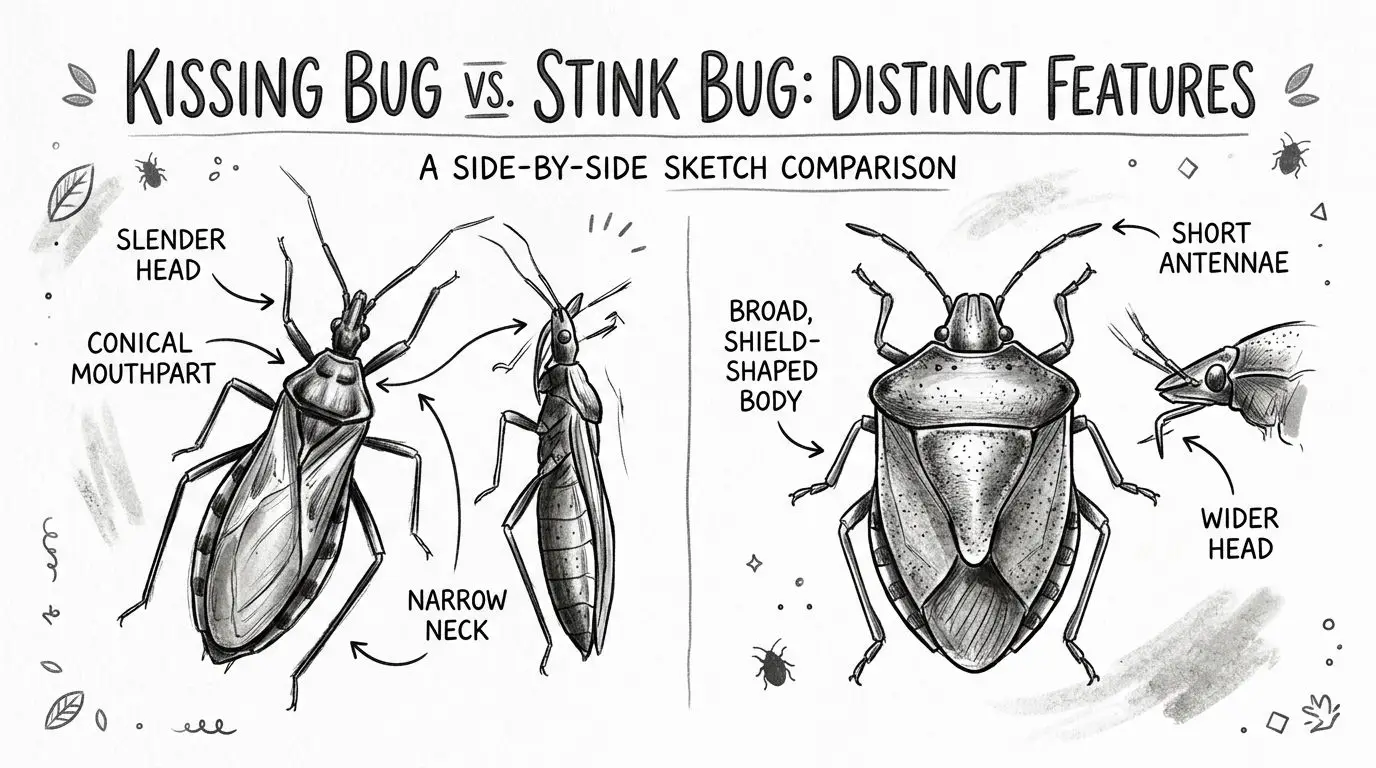
A quick ID starts with the outline. From across a room, a stink bug looks like a little shield. A kissing bug looks longer, flatter, and more like it was built with a pointed front end.
Kissing Bug vs. Stink Bug At a Glance
| Feature | Kissing Bug (Triatomine) | Stink Bug (BMSB) |
|---|---|---|
| Body shape | Elongated, narrow body | Broad, shield-shaped body |
| Size | Usually larger and longer-looking overall, often around 0.5 to 1 inch based on Angi's kissing bug vs stink bug guide | Usually shorter and wider-looking, often around 0.5 inch |
| Head shape | Distinct cone-shaped head | Smaller head that blends into the broad body |
| Antennae | Thin antennae | Antennae that appear thicker relative to the body |
| Overall outline | Long and lean | Pentagonal or triangular shield look |
| Color pattern | Often dark brown or black with lighter markings along the edge | Mottled brown or brown-green coloration |
The Head Gives You the Fastest Answer
If a homeowner in Magnolia sends us a photo and asks for a first impression, the head shape is usually the first thing we check.
A kissing bug has a clear, forward-projecting, cone-shaped head. It gives the insect a stretched look, almost like the front end was pulled outward. A stink bug looks compact by comparison. Its head does not jut forward in the same way, and the body widens quickly into that familiar shield shape.
A simple way to judge it is this. If the bug looks like it has shoulders, you are probably looking at a stink bug. If it looks narrow from front to back, pay closer attention.
Body Shape Matters More Than Color
Color causes a lot of mix-ups in Southeast Texas homes because both insects can look brown under indoor lighting. Porch lights, hallway shadows, and phone photos often make the color even less helpful.
Start with the silhouette:
- Long and narrow points toward a kissing bug
- Wide and shield-shaped points toward a stink bug
- Pointed front end supports a kissing bug ID
- Broad upper body with a triangular back plate look supports a stink bug ID
Practical rule: Ignore color at first. Check the outline, head, and body width before anything else.
The Mouthparts Match the Job
The body design also fits what each insect is built to do. Kissing bugs have mouthparts suited for piercing skin and taking a blood meal. Stink bugs have mouthparts meant for piercing plants.
For homeowners, that matters because structure is not random. A kissing bug is shaped more like a slim needle tool. A stink bug is shaped more like a shield with legs. One design helps it stay tucked into cracks and feed on animals. The other is built for plant feeding and defense.
If you are comparing other seasonal insects that show up around garages, patios, and entry points in warm weather, this guide to bugs to look out for this summer can help narrow it down.
In North Houston area homes, especially around wooded lots, dog kennels, and properties with outdoor lighting, a photo from above usually gives enough detail to separate these two. If the insect appears long-bodied with a pointed head, treat it with more caution and avoid handling it directly.
Contrasting Behaviors and Seasonal Habits
You spot a bug on the inside of a window in Magnolia after sunset. The shape already matters, but behavior can give you the second clue. What the insect is doing, where it showed up, and what time of year you noticed it often points you in the right direction.
What Stink Bugs Are Doing Around Your House
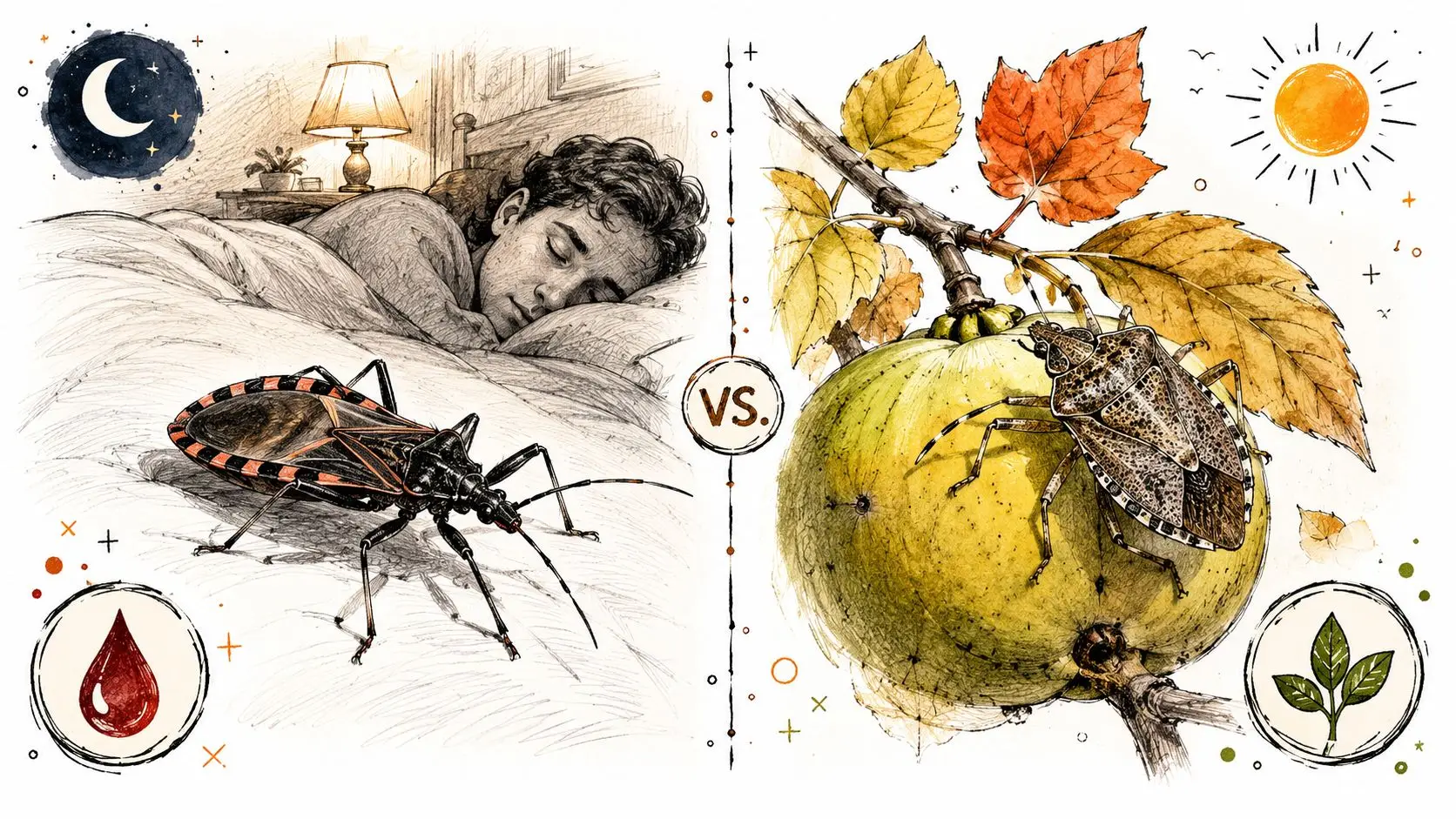
Stink bugs behave like plant pests that accidentally end up indoors. Orkin's comparison of stink bugs and kissing bugs notes that stink bugs feed on plant matter and often become a nuisance when they gather on homes while seeking shelter.
For Southeast Texas homeowners, that usually means you find them on garden plants, fruit trees, siding, window frames, porch areas, or garage doors. In cooler stretches, they may collect on sunny exterior walls and then slip inside through small gaps. That pattern is common around homes with landscaping, vegetable beds, or nearby wooded edges.
Their odor is another clue. If the insect releases a strong smell when disturbed or crushed, that fits stink bug behavior much better than kissing bug behavior.
What Kissing Bugs Are Doing Instead
Kissing bugs follow a very different pattern. They are not coming in to feed on your tomato plants or to spend the winter on a window frame. They are drawn to blood meals, darkness, and nearby hosts such as people, dogs, chickens, or wildlife.
That is why location matters so much.
A suspected kissing bug found near pet bedding, a dog kennel, a sleeping area, or a room with easy nighttime entry deserves immediate caution. In North Houston and Magnolia, I would pay even closer attention if the property backs up to woods, has outdoor lights that attract insects, or has places where rodents or other animals may nest.
If someone in the home wakes up with an unexplained bite and the insect you found matches that long, narrow profile, compare it with this guide to identify common bug bites and bite patterns and avoid handling the insect with bare hands.
Seasonal Clues for Southeast Texas
Stink bugs usually become more noticeable during seasonal shifts, especially when they start looking for protected indoor spaces. Homeowners often see that activity around windows, soffits, attic vents, and garage doors.
Kissing bug activity in Southeast Texas does not always follow that same simple shelter-seeking pattern. Warm weather, nighttime lighting, pet areas, and hidden harborage around the yard can keep the risk on the table longer. Around Magnolia, that can include woodpiles, brush, outbuildings, crawl space access points, and kennels.
A simple field rule helps here. A bug clustering on exterior walls or drifting toward windows often fits the stink bug pattern. A long, cone-headed insect turning up near beds, resting areas, or animal sleeping spaces should be treated as a possible kissing bug until a North Houston pest professional can confirm it.
Health Risks A Nuisance vs a Medical Threat
A homeowner in Magnolia finds a brown bug on the bedroom wall before sunrise. If it is a stink bug, the problem is mostly odor and cleanup. If it is a kissing bug, the response needs to be more careful because the health stakes are different.
Stink Bugs Cause Stress, Not the Same Health Risk
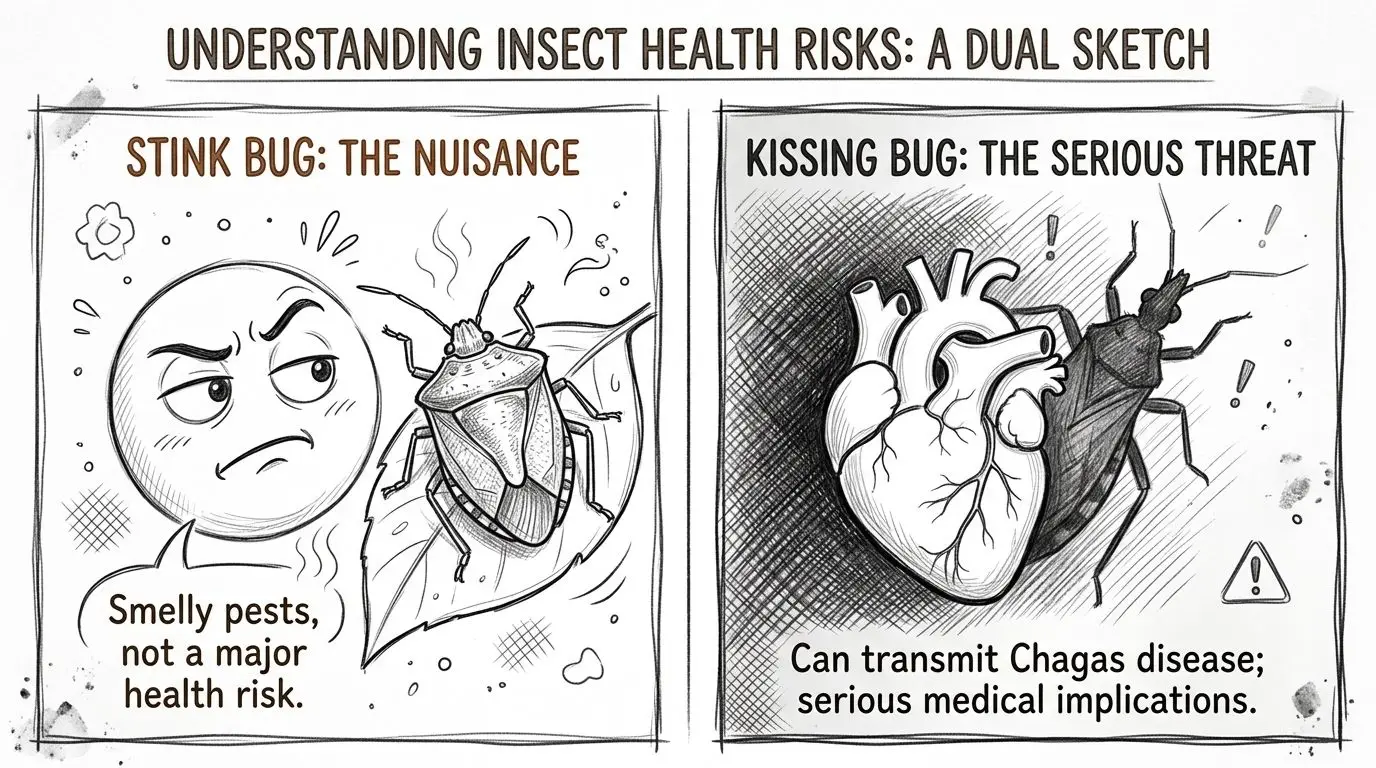
Stink bugs are unpleasant houseguests. They get into wall voids, cluster around windows, and release a strong smell if crushed or disturbed. That makes them a nuisance, especially during seasonal movement into sheltered areas.
For Texas homeowners, that usually means exclusion work, vacuum removal, and sealing entry points. It does not usually mean you are dealing with an insect tied to a disease concern.
A simple way to frame it is this. A stink bug is frustrating. A suspected kissing bug deserves caution.
Why Kissing Bugs Get a Different Response
Kissing bugs are linked to Chagas disease because they can carry the parasite Trypanosoma cruzi, as explained in Ohio State University's overview of the kissing bug. The part that trips people up is how transmission happens. The bite itself is not the problem in the same way a mosquito bite is. Risk comes from infected bug feces getting rubbed into broken skin, the eyes, or the mouth.
That detail matters in real homes across Southeast Texas. A bug found near a sleeping person, pet bed, or couch where someone dozed off should never be brushed off as "just another outdoor bug."
If someone in the house has a skin mark and you are trying to sort out whether it fits a kissing bug or something more common, this guide to bug bite identification and common bite patterns can help you compare the mark with what you found in the room.
What This Means for a Texas Household
This is not a reason to panic. It is a reason to handle the insect correctly.
Do not crush a suspected kissing bug with bare hands. Do not leave it where a child or pet can reach it. If you can do so safely, trap it in a container or sealed bag for identification. Then clean the area and wash your hands.
In Magnolia, The Woodlands, and the North Houston area, I would take the situation more seriously if the bug turned up in a bedroom, near dog kennels, around outdoor resting areas, or in a home with heavy night lighting and animal activity around the structure. Those are the kinds of conditions that justify a faster call to a professional.
A Practical Response Order
Use this field approach:
- Clear stink bug ID: Remove it carefully, avoid crushing it indoors, and focus on sealing entry points.
- Unsure what it is: Keep the specimen if possible and compare body shape closely before assuming it is harmless.
- Strong kissing bug match: Isolate the insect, limit contact, inspect sleeping and pet areas, and contact a North Houston pest professional for confirmation and next steps.
If you are tightening the home after a scare, Sparkle Tech's guide to screens is a useful reference for checking whether window and door screening is giving insects an easy path inside.
A short visual explainer can also help if you're sorting through the risk and appearance of common biting pests:
Bottom line: In a Texas home, a stink bug is usually a nuisance problem. A suspected kissing bug is a pest identification and health concern that deserves prompt, careful attention.
DIY Prevention Steps for Your Texas Home
The best prevention work is boring, consistent, and effective. Most homeowners in Magnolia and the North Houston area don't need fancy gear. They need tighter entry points and fewer hiding spots.
Start With the Openings
Small gaps around doors, windows, utility penetrations, and foundation lines give insects easy access. Walk the outside of the house in daylight and look for visible cracks, worn weatherstripping, loose trim, and screen damage.
If your window and door screens need attention, Sparkle Tech's guide to screens is a helpful reference for understanding what a good screen setup should do and where homeowners usually miss problem areas.
Make the House Harder to Enter
Use a checklist and take it one zone at a time:
- Doors first. Replace damaged sweeps. Check side gaps and make sure exterior doors close tightly.
- Window screens next. Patch tears, replace loose corners, and make sure frames sit snugly.
- Garage edges. A garage door with daylight showing underneath is an open invitation.
- Attic and vent areas. Look for damaged coverings and loose edges around penetrations.
Most bug prevention fails at the edges. Corners, thresholds, vents, and screen frames are where insects win.
Reduce What Attracts Them Outdoors
Some bugs come inside by accident after being drawn to the home exterior. Others move in because the structure gives them cover.
Try these practical changes:
- Trim back clutter. Keep leaf litter, stacked wood, and dense debris away from the foundation.
- Watch outdoor lighting. Bright exterior lights near entry doors can pull in nighttime insects.
- Check pet and animal areas. Shelters, stored supplies, and neglected corners around outbuildings can give pests a place to hide.
- Keep window ledges and wall lines clean. Insects often settle where dust, webs, and sheltered edges collect.
Think Like a Pest, Not a Person
Homeowners usually focus on rooms. Insects use transition zones.
That means soffits, eaves, garage margins, crawlspace access, fence lines near the home, and the shaded side of the structure matter just as much as the kitchen or bedroom. If you want a broader home-hardening checklist, this guide on pest-proofing your home gives a solid overview of the habits that reduce a wide range of indoor pest issues.
When to Call a Pest Professional in North Houston
One stray stink bug on a window doesn't usually call for a panic response. A bug you suspect might be a kissing bug is different. That's the point where confident identification matters more than guessing from a phone photo.
Call for Help When the Risk Is Unclear
You should consider professional help if any of these apply:
- The bug has a long, narrow body and a cone-shaped head.
- You found it near a bed, couch, pet sleeping area, or inside a bedroom.
- You've seen more than one similar bug indoors.
- Someone in the home was bitten and you also found an unknown insect nearby.
A local technician doesn't just identify the insect. They also inspect how it got in, what conditions around the property may support repeat sightings, and whether you're dealing with a one-off invader or a broader exclusion problem.
Why Local Experience Matters in Southeast Texas
North Houston area pest patterns aren't the same as what you'd expect in cooler regions or drier parts of the country. Homes in Conroe, Kingwood, Spring, and Magnolia deal with warm weather pressure, varied vegetation, and a long season of insect activity.
That local context matters when a homeowner says, “I found this on the wall near the back door,” or “I saw one in the bedroom after dark.” A technician who regularly works in Southeast Texas can separate common seasonal invaders from bugs that need more careful handling.

Specific Service Area Locations Including Magnolia, Texas
For homeowners who want a nearby North Houston option, FullScope Pest Control serves communities across the region, including Conroe, Kingwood, and Magnolia. FullScope also operates a dedicated service location in Magnolia, Texas 77355, at 30225 Tudor Way Suite A, where it provides daily pest control services to the Magnolia community, including termite elimination, rodent exclusion, bed bug remediation, and mosquito misting systems, as listed on its Magnolia service page.
That specific Magnolia location matters if you want service from a team that already works in the area instead of dispatching from far outside the community. For a homeowner in Southeast Texas, that usually means faster recognition of local pest issues and more practical recommendations for the structure and surroundings.
If you're deciding whether to call, use this rule. A stink bug is often a nuisance issue. A suspected kissing bug is an identification issue first, and a pest control issue immediately after.
If the bug is clearly a stink bug, prevention and exclusion may be enough. If there's real doubt, especially in a bedroom or other resting space, get a North Houston professional involved and don't leave it to guesswork.
If you've found a bug in your home and you're not fully confident about the ID, that's the right time to act. For homeowners in North Houston, including Magnolia, Conroe, and Kingwood, a local inspection can quickly determine whether you're dealing with a simple nuisance or a bug that needs a more serious response.