1500+ reviews

Bleach can kill the few termites you see on contact, but it has zero capability to eliminate a colony. It also can't reach the 90-100% of a typical infestation that stays hidden, so the termites causing significant damage keep feeding out of sight.
If you found winged insects near a window, mud tubes along a foundation, or soft wood that suddenly feels hollow, grabbing a bleach bottle is a very human reaction. You want to do something right now. I understand that impulse. But with termites, the fastest-looking fix is often the one that costs you time, creates safety risks, and lets the colony stay active.
You Found Termites and Grabbed the Bleach Here's Why to Stop
Most homeowners don't discover termites during a calm, scheduled inspection. They find them while moving storage in the garage, replacing trim, or cleaning up after rain. You see a few pale insects, maybe some discarded wings, and your mind goes straight to whatever is under the sink.
Bleach feels strong, so it feels useful. That's the trap.
With termites, surface action and real control are not the same thing. Killing a handful you can see doesn't mean you've touched the problem that matters. In a house, termite activity is usually hidden in wood members, wall voids, crawlspaces, or soil contact points. A reactive spray can make the visible evidence disappear while the colony keeps working.
Practical rule: If a product only reaches the termite you can see, it probably isn't solving the termite problem you actually have.
I've seen homeowners treat termite evidence the same way people treat water damage or mold stains. They clean what's visible and assume the issue is handled. That's why AMPM Restoration Services' expert advice is so relevant here. Hidden damage almost always matters more than what's on the surface.
There's also a second problem. Bleach can push you into a false sense of control. Once the insects disappear from view, many people delay the inspection they should have scheduled first. By the time a technician evaluates the structure, the colony has had extra time to spread and feed.
If you want a good example of how quick DIY choices can create bigger pest issues, FullScope has a useful breakdown of DIY pest control gone wrong. The short version is simple. Strong household chemicals are not the same as a termite treatment plan.
What to do in the first hour
- Stop spraying random products: Don't add bleach, vinegar, borax, foaming cleaners, or anything else just because it's available.
- Leave evidence in place: Mud tubes, wings, damaged trim, and swarmers help a technician identify what species you're dealing with and where activity may be centered.
- Protect people first: If you already used bleach, ventilate the area and keep children and pets away until the fumes dissipate.
Contact Kill vs Colony Elimination
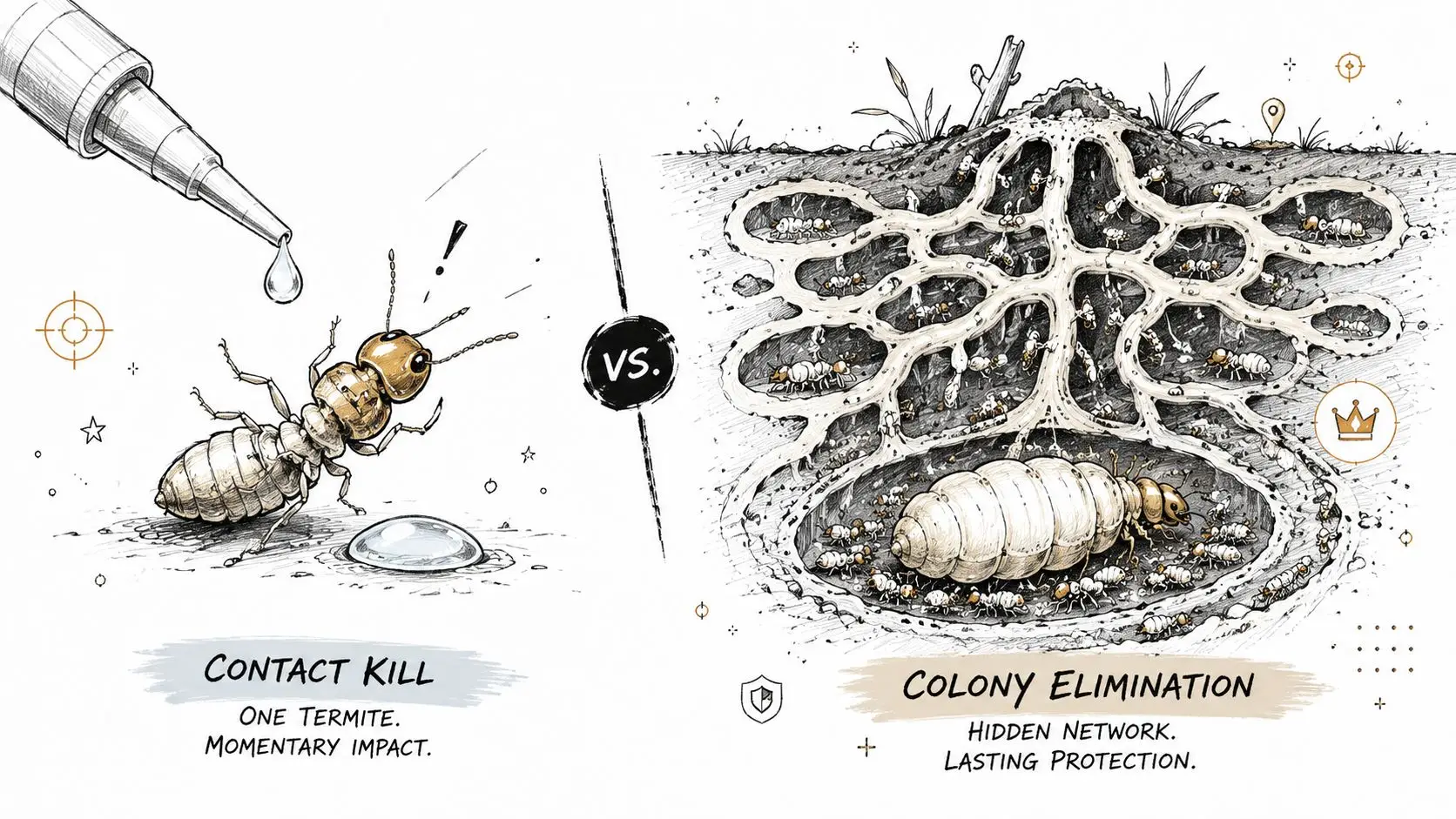
The most important thing to understand is the difference between contact kill and colony elimination.
A contact kill means the product only affects the termite it physically touches. Colony elimination means the treatment reaches the hidden population that keeps the infestation alive. Those are not close to the same outcome.
What bleach actually does
Bleach can kill individual subterranean termites on direct contact by denaturing proteins and disrupting cell membranes, but it has zero capability to eliminate a colony or reach termites hidden within wood or soil structures. It also can't penetrate deep into the 90-100% of a typical home infestation where termites reside, and even if visible wood is soaked, the core colony of 50,000 to 1 million termites can remain untouched and active, as described by FullScope Pest Control's termite guidance.
That's why the homeowner experience is so misleading. You spray. A few termites die. The wood still sounds hollow next week.
Consider pulling one dandelion leaf while leaving the root system underground. The top changes. The source doesn't.
Why the colony survives
A termite colony is organized to protect its reproductive members and workforce. The termites you notice are usually the least important part of the problem. The queen, developing young, and the majority of workers stay protected in places surface sprays can't reach.
Bleach is especially poor at termite control because it doesn't move through soil as a barrier treatment, and it doesn't get carried back through the colony the way a bait toxicant can. That's the difference between a household cleaner and a purpose-built termite system.
Surface kill is visible. Colony control is what protects the house.
If you want to understand what an actual colony-level approach looks like, this explanation of how termite baiting disrupts entire colonies lays out the core principle well. The treatment has to reach the population you can't see.
The practical takeaway
Here's the decision point that matters:
- If you saw one or two exposed termites: Bleach may kill those specific insects.
- If you have an infestation: Bleach won't eliminate it.
- If you want protection: You need a treatment that reaches hidden galleries, soil entry points, or the colony itself.
That's why professionals talk less about killing termites and more about intercepting, transferring, or isolating termite activity at the structure.
More Than Just Ineffective It's a Real Risk
The problem with bleach isn't only that it fails. It's that it can make the situation worse.
A lot of homeowners think of bleach as a strong all-purpose answer. In termite work, that mindset creates three separate hazards. You expose yourself to fumes, you risk damaging building materials, and you delay the treatment that could have stopped the infestation earlier.
It creates avoidable safety issues
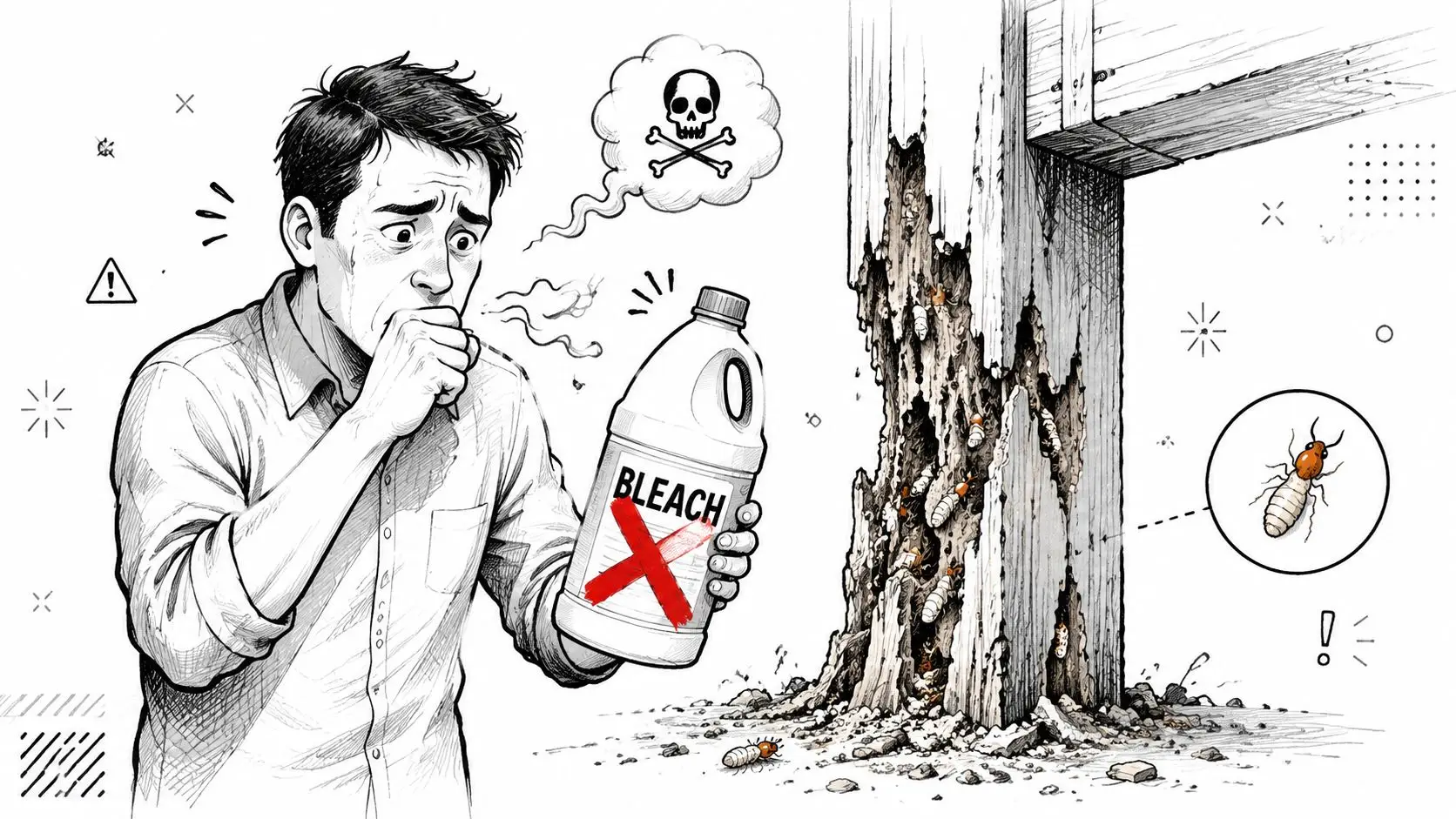
Bleach acts as a contact-only killer that disrupts the termite exoskeleton and clogs respiratory spiracles, but it fails to penetrate beyond the outer 1–2 mm of wood. Its potency also wanes within minutes and it has no residual toxicity, so surviving termites can resume feeding with no long-term protection, according to Proof Pest's explanation of bleach and termites.
That alone makes it a poor termite tool. The bigger concern for many homeowners is misuse. People often spray bleach in enclosed utility areas, under sinks, in closets, around baseboards, or near HVAC return paths. That raises exposure to fumes right where families live.
If someone has also been cleaning with other products, the risk climbs fast. Household chemical mixing mistakes happen in real homes, not just in warning labels.
It can harm the materials you're trying to save
Bleach isn't gentle on finishes, metal, or surrounding surfaces. On painted trim, stained wood, fasteners, and nearby fixtures, it can create cosmetic damage and corrosion while still missing the termites deeper in the structure.
That matters because termite repair is already a building issue. You don't want to add chemical damage on top of insect damage. For homeowners trying to stay ahead of expensive structural problems, Northpoint Construction's maintenance advice is worth reading. The general principle applies here. Early, correct intervention is cheaper than reactive cleanup.
Safety note: If a product isn't designed and labeled for structural termite protection, don't treat it like a substitute for one.
The most expensive risk is false confidence
This is the part that costs people the most. Bleach kills what's exposed, and exposed termites disappear. The homeowner relaxes. Meanwhile, hidden termites keep feeding.
That delay can affect trim, framing, flooring transitions, door casings, and other vulnerable wood components before anyone verifies the extent of activity. If you want a clearer picture of what termite activity can do to a structure, FullScope's overview of the top ways termites harm your home is a helpful reference.
The right response to termite evidence is not stronger bleach. It's better diagnosis.
How Professionals Protect Your Home from Termites
Professional termite control works because it's built around the way termites live. The treatment isn't aimed at the insect you happen to see. It's aimed at the hidden traffic pattern, the colony, and the structural entry points.
Bleach is structurally incapable of penetrating the 2-3 inches of wood typically required to reach termite feeding galleries, which means it can't address the 99% of an infestation that remains hidden from surface view. By contrast, professional bait systems such as Sentricon are designed to eliminate the colony, and current industry practice relies on fumigation, liquid termiticides, or baiting systems for effective termite control, as described earlier from FullScope's guidance.
The three methods that actually matter
Liquid soil treatments
With subterranean termites, one of the strongest options is a liquid termiticide applied in the soil around the structure. This creates a treated zone where termites travel.
A proper trench-and-treat application is not a casual spray around the foundation. It requires targeted placement, label compliance, and an understanding of where the termites are likely entering. Done correctly, it gives the structure a defensive barrier that bleach can't imitate.
Baiting systems
A bait system works differently. Instead of relying on direct contact at the wood surface, it places a monitored food source where foraging termites find it and carry the active ingredient back through the colony.
This is why baiting makes sense for long-term management. The termites do the distribution work themselves. If you're evaluating a property or planning repairs, it also helps to know what inspectors look for. Bulls Eye Repair's guide for home inspection red flags can help homeowners think more critically about early warning signs.
Fumigation and localized wood treatment
For certain infestations, especially where activity is widespread in inaccessible wood, fumigation or targeted professional wood treatment may be the right path. The key is matching the method to the species, the structure, and the extent of activity.
That's the piece DIY skips. Good termite control is not one product. It's diagnosis first, treatment second.
DIY Bleach vs. Professional Termite Treatments
| Method | How It Works | Effectiveness | Reach | Long-Term Protection |
|---|---|---|---|---|
| Bleach | Kills termites only on direct contact at the surface | Limited to exposed insects | Poor reach into wood and colony sites | None after the product dissipates |
| Liquid termiticide | Creates a treated soil zone where termites travel | Built for structural termite control | Reaches entry pathways around the home | Strong ongoing protection when properly applied |
| Bait system | Uses termite foraging behavior to transfer control through the colony | Targets colony-level activity | Extends beyond visible surface evidence | Strong monitoring and ongoing management value |
| Fumigation | Treats severe or widespread structural infestations | Useful in the right conditions | Reaches concealed spaces inaccessible to surface sprays | Depends on the infestation and follow-up plan |
Why this difference matters
A homeowner usually asks, “What kills termites fastest?” The better question is, “What stops them from still being there next month?”
That's where professional methods win. They're built to reach hidden termites, not just react to visible ones.
A Termite Action Plan for North Houston Homeowners
You spot mud tubes along the garage wall in Humble or a swarm near a window in Kingwood. The first impulse is often to spray, wipe, or pour something on it. Hold off. The best next step is protecting the evidence and getting the right inspection before hidden activity spreads further into the structure.
This matters in North Houston because termite pressure is steady, moisture is common, and many homes have slab edges, expansion joints, mulch beds, or wood-to-soil contact that give termites a quiet entry point.
Step 1 Leave the evidence in place
Do not scrape off mud tubes, sand damaged wood, or soak the area with bleach or another cleaner.
A licensed technician can learn a lot from what is still visible. Swarmers near a window, shelter tubes on the foundation, blistered trim, and soft wood all help show where termites are entering and how active they may be. Once that evidence is disturbed, the inspection gets harder and the treatment plan gets less precise.
If you already sprayed bleach, ventilate the area and stop applying products. That does not solve the infestation, but it can create odor, surface damage, and a less accurate inspection.
Step 2 Schedule a WDI inspection
Ask for a Wood-Destroying Insect inspection if you need to confirm termite activity, document damage, or prepare for a sale or purchase.
A proper inspection in Conroe, Porter, The Woodlands, and nearby North Houston communities should go beyond the room where you first noticed the problem. The inspector should check the foundation line, exterior walls, garage edges, plumbing penetrations, attached fences, crawlspace or pier-and-beam sections if present, and moisture sources around the structure.
If you are not sure whether you found termites or ants, schedule the inspection anyway. Misidentification is common, and the treatment path changes depending on the insect.
Step 3 Match the treatment to the house
Termite control works best when the method fits the structure.
In this area, one home may need a liquid soil treatment around slab entry points. Another may be a better fit for a baiting system that monitors activity over time. A home with additions, heavy landscaping against siding, chronic drainage issues, or wood contact near the foundation may need a broader correction plan that includes both treatment and moisture control.
Before recommending treatment, a technician will usually look at:
- Entry points: slab joints, utility lines, foundation cracks, and wood touching soil
- Moisture conditions: leaks, poor grading, wet mulch, dense flower beds, or irrigation hitting the house
- Construction details: slab-on-grade, pier-and-beam sections, attached structures, and inaccessible voids
- Evidence pattern: whether activity appears isolated or spread across multiple areas
If you want a local starting point, this video gives a useful overview before service is scheduled:
Step 4 Work with a local termite specialist
North Houston termite work is not generic pest control. Soil type, moisture patterns, construction style, and year-round termite pressure all affect how a home should be treated and monitored.
A local specialist can inspect the full structure, identify the likely entry pattern, and recommend a treatment plan that fits the house instead of relying on a one-product answer. That gives you a clear next step, reduces guesswork, and focuses on stopping the infestation at the source rather than chasing visible termites room by room.
Common Questions About Termites and DIY Treatments
Can vinegar or borax work better than bleach
Not for colony elimination. Homeowners often rotate from bleach to vinegar, borax, orange oil, or another DIY option once the first attempt fails. The same limitation usually shows up again. Surface contact is not the same as structural control.
Some direct-application products can have value in very limited, accessible situations, but hidden termite activity is the reason DIY usually breaks down. A true infestation has to be treated at the colony or structural pathway level.
What if I already sprayed bleach
Open the area for ventilation and stop applying more products. Don't mix in another cleaner to “boost” the effect. If bleach contacted finished wood or metal, wipe and clean the surrounding surfaces according to the product label and monitor for damage.
Then schedule a termite inspection. The bleach doesn't prevent a proper evaluation, but it also doesn't replace one.
How do professionals get better results
Professional pest management relies on liquid soil-applied termiticides and baiting systems that achieve 95–99% mortality across entire colonies by interfering with chitin synthesis during molting, a standard bleach can't meet because it doesn't penetrate deep into infested wood. One example is bistrifluron, which produced 99% mortality over 60 days in drywood termites, as summarized by ScienceDaily's report on colony-level termite control.
That's the dividing line. Bleach kills on contact. Professional treatments are designed for colony-level impact.
How can I tell termites from flying ants
A quick field check helps, even if it's not a substitute for inspection.
- Termites: Straight antennae, wings roughly equal in length, thicker-looking body
- Flying ants: Bent antennae, front wings longer than hind wings, narrower waist
If you found piles of discarded wings indoors, mud tubes on walls or piers, or wood that sounds papery when tapped, termites move higher on the list.
Don't worry about being perfect on identification. Worry about getting the right inspection.
Should I replace damaged wood first
Usually no. Confirm active or inactive infestation first. If you replace trim or framing before treatment, you can hide evidence and make the technician's job harder. In some homes, visible damage is only a small part of the affected area.
Is there any safe DIY step that actually helps
Yes. Good DIY prevention is about conditions, not home chemistry.
- Reduce moisture: Fix leaks, improve drainage, and keep water from collecting near the foundation.
- Remove wood-to-soil contact: Don't let siding, trim, lattice, or stored lumber create easy termite access.
- Keep inspection paths visible: Avoid piling mulch, debris, or dense vegetation tight against the house.
These steps support treatment and prevention. They do not replace a termite control program if activity is already present.
If you found termites and were about to reach for bleach, stop there. The right move is an inspection and a treatment plan that targets the colony, not just the insects on the surface. For homeowners in Kingwood, Conroe, Porter, Humble, and nearby North Houston communities, FullScope Pest Control can help with professional termite inspection and treatment.