1500+ reviews

You've scheduled pest control for your Magnolia home, and the appointment is suddenly close. The kitchen is full of small appliances, the children's toys are scattered across the floor, pet bowls are still out, and there's a damp corner beneath the sink. You don't need to panic or deep-clean every room. You need to remove the conditions that let pests feed, drink, hide, and return.
The practical answer to how to prepare house for pest control is to focus on food, water, shelter, and access. In humid Southeast Texas, that means treating the inside and outside as one connected system. A clean countertop won't solve much if a leaking pipe, leaf pile, or unsealed utility opening continues to support pest activity.
Why Preparation Makes Pest Control Work Better
A Magnolia homeowner once showed me a kitchen where the counters were spotless, but the lower cabinet under the sink was packed with cleaning supplies, paper bags, and damp material from a slow leak. Ants were traveling behind the cabinet. Roaches had hiding space near the plumbing. The room looked clean from standing height, but the conditions pests needed were still in place.
That's why preparation isn't just tidying up before a technician arrives. The EPA's room-by-room home checklist recommends sealed plastic or glass food containers, tightly covered garbage cans, regular trash removal, repaired plumbing leaks, and no pet food or water left out overnight. It also recommends sealing openings around cabinets, baseboards, and pipes with caulk, steel wool, or wire mesh.
Practical rule: Remove what attracts pests, expose where they travel, and preserve access for the inspection.
What technicians need to see
Clutter gives pests shelter and gives technicians fewer opportunities to identify trails, droppings, nests, moisture damage, and entry points. Alberta Health Services' checklist asks homeowners to look for spilled food, moisture, clutter, and debris in kitchens, storage areas, and hallways, while also keeping food products off the floor for inspection. California IPM guidance makes the same broader point through sanitation, repairs, clutter reduction, and weatherproofing.
That approach is called integrated pest management, or IPM. It places sanitation and structural exclusion before chemical treatment. The sequence matters because products can't solve an ongoing food source, standing water, or an open route into the structure.
For a useful explanation of the factors that influence results, review this guide to what makes pest control successful. Homeowners comparing providers can also consult general professional pest help from South Mountain for additional context, then apply the same preparation logic to local conditions.
In Magnolia, moisture and exterior harborage deserve special attention. Humid weather, shaded vegetation, leaf debris, and damp foundations can keep pressure on the house even after an interior application. Preparation works best when it reduces those conditions instead of making the home look merely presentable.
What to Do Before Your Technician Arrives in Magnolia
Use a short countdown rather than trying to do everything at once. The most effective order is identify, remove, seal, and communicate.
Before the day of service
Start by recording where you've seen pests. Note the room, time of day, visible trails, droppings, damaged materials, unusual odors, or gaps where activity appears to begin. Don't spray over those areas immediately. A technician gets better information from undisturbed evidence than from a freshly treated surface.
Next, remove the obvious resources:
- Food: Put pantry goods, snacks, and pet food in sealed containers. Wipe crumbs and spills, and remove trash.
- Water: Fix leaking faucets or plumbing, empty standing water, and avoid leaving pet water out overnight.
- Shelter: Reduce cardboard, paper stacks, floor clutter, and debris near walls or appliances.
- Access: Seal practical openings around pipes, wires, vents, thresholds, and baseboards when you can do so safely.
These priorities follow IPM guidance that places inspection, sanitation, harborages, and exclusion before treatment. Nevada extension material identifies skipped identification, persistent moisture, clutter, food, leaks, and unsealed gaps as conditions that can allow pests to persist or rebound. FullScope Pest Control serves Magnolia in Montgomery County and the greater north Houston area, including ZIP codes 77354 and 77355, with nearby service relationships that can include Conroe, Kingwood, and Porter.
On the appointment day
Confirm that the technician can enter every area connected to the complaint. Open gates, garages, utility rooms, crawlspace access, and storage areas if those locations need inspection. Move vehicles or outdoor items that block foundation access, and keep children and pets away from work areas until the provider gives re-entry instructions.
Tell the technician about leaks, renovations, previous products, allergies, pregnancy, asthma, pets, fish tanks, and any rooms that must remain occupied. Product labels and application methods determine the final safety directions, so honest information is more useful than guessing.
Interior Preparation Room by Room Without Overdoing It
The best interior preparation creates visibility without creating extra work. You're not trying to empty the house. You're clearing the places where pests hide, feed, travel, or enter.
Kitchen and pantry
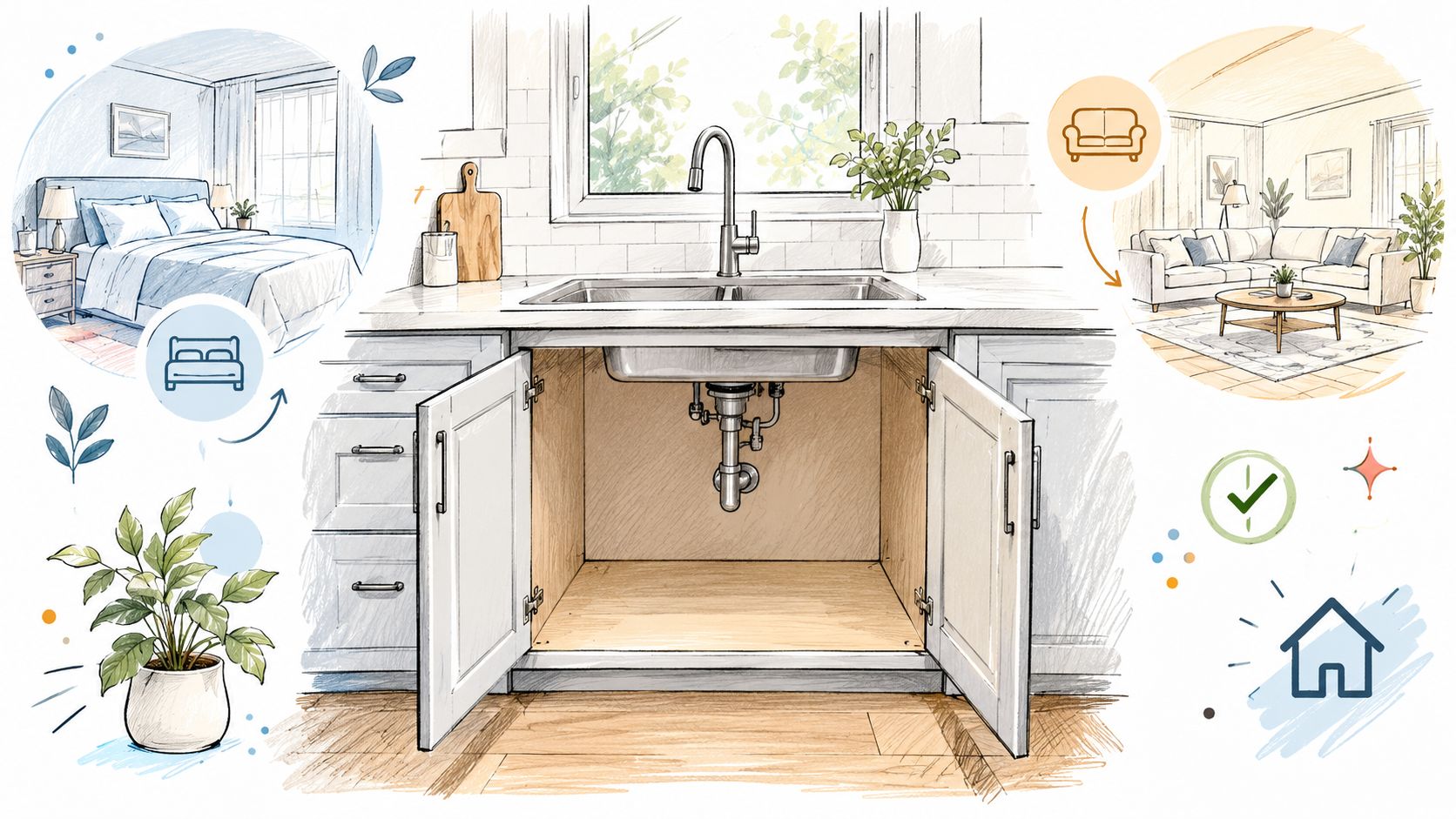
Begin under the sink. Remove bottles, bags, sponges, paper products, and anything that hides the cabinet floor or plumbing penetrations. This lets the technician inspect for moisture, droppings, trails, and gaps without handling your belongings.
Store open food in sealed containers made from plastic or glass. Remove dishes, cookware, utensils, and small appliances from surfaces that may need inspection or treatment. Pull the trash, clean crumbs and grease, and check behind accessible appliances for food debris. You don't need to dismantle a refrigerator or stove unless the technician specifically requests it.
For additional kitchen-specific context, use this guide to pest control in the kitchen basics. If fleas are part of the concern, carpet preparation may require a different approach than a general perimeter service. Review this step-by-step flea powder application, and follow the product label and professional advice rather than applying extra material on your own.
Living rooms and bedrooms
Reduce floor clutter around baseboards, closets, pet resting areas, and furniture legs. Move smaller furniture slightly away from walls when practical, but don't stack belongings in the center where they block walking paths or force treatment around them.
In bedrooms, lift clothing, toys, shoes, and storage bins off the floor. Keep mattresses, bedding, and upholstered items arranged according to the service instructions. For storage zones, remove cardboard and paper piles first. These materials can create sheltered spaces and make inspection difficult, especially in garages, closets, utility rooms, and under-stair areas.
The following video provides a visual reference for organizing rooms before service:
What not to overdo
Deep-cleaning every wall, emptying every cabinet, and moving heavy furniture without direction often wastes time. Over-preparation can also hide the very evidence the technician needs, or leave items piled where they obstruct baseboards and access points.
Focus on the pest zone. If activity is limited to the kitchen, pantry, bathroom, and adjacent walls, prioritize those areas first. Keep a clear route to plumbing, thresholds, baseboards, cabinets, and utility penetrations. The technician needs a workable inspection environment, not an empty house.
Exterior and Yard Prep for Southeast Texas Homes
Indoor treatment can't compensate for an exterior that continually supplies moisture, shelter, and entry routes. Around Magnolia properties, start at the foundation and work outward.
Reduce harborage near the structure
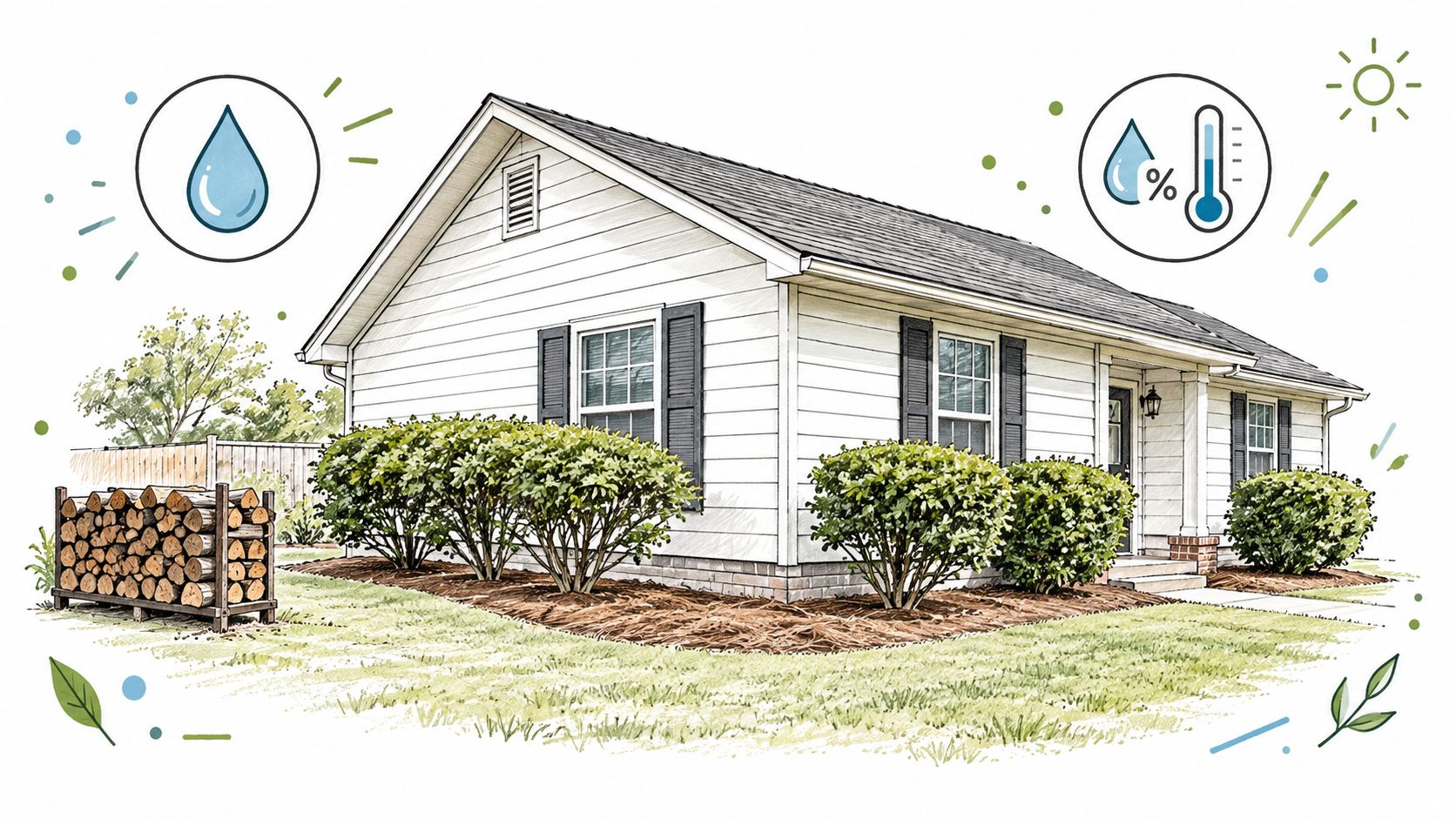
Trim shrubs, vines, and dense vegetation away from siding, doors, windows, and roofline contact points. Clear leaf litter, grass clippings, fallen branches, and other organic debris from the foundation. Move woodpiles, unused lumber, cardboard, and stored materials away from the house so the technician can inspect the wall base and surrounding soil.
Don't relocate debris to the other side of the same wall. Create a practical buffer around the structure, especially near doors, garages, patios, and shaded areas where moisture remains longer.
Control water before treatment
Inspect hose connections, outdoor faucets, irrigation components, gutters, downspouts, and low spots that collect water. Repair leaks and improve drainage where possible. Empty containers, toys, planters, and tarps that hold rainwater.
Inside, check the same issue at the foundation level. A damp crawlspace, wet sill, or plumbing leak can support activity that appears to be an insect problem but is a moisture problem with insects taking advantage of it.
Close the routes pests use
The Indiana IPM guidance recommends caulking cracks, using door sweeps, repairing screens, and sealing utility openings around pipes, wires, vents, and thresholds. For vent protection, it identifies about 1/4-inch hardware cloth as an appropriate rodent-resistant mesh in relevant applications. Rodent-focused recommendations also emphasize sealing openings up to five feet around mouse-prone structures, as described in the same integrated pest management guidance.
Use caulk for suitable cracks, steel wool or wire mesh where appropriate, and intact screens over vents and windows. Don't block required drainage, ventilation, or safety systems. If an opening involves gas equipment, electrical service, roofing, or structural damage, have the appropriate trade handle it.
Secure garbage in tightly covered cans and keep outdoor food sources controlled. The exterior objective is simple: remove enticements and make re-entry harder. That helps a targeted treatment work with the structure instead of against it.
Keeping Children Pets and Sensitive Occupants Safe
Safety preparation depends on the product, application method, room, and label directions. A general spray, bait placement, rodent exclusion visit, flea service, and treatment involving an aquarium won't have identical instructions, so ask the provider for written re-entry and ventilation guidance before the appointment.
Children should stay away from treatment areas during application and until the technician confirms that normal use can resume. Remove toys, bottles, snacks, bedding, and frequently handled items from rooms being treated. Store medicines and personal-care products away from application zones, and wash hands after re-entry if the technician recommends it.
Pets need the same level of planning. Remove dogs, cats, birds, and small animals from active work areas. Pick up food bowls, water dishes, toys, bedding, and litter supplies when instructed. Even when a product is intended for residential use, pets can contact wet surfaces or disturb bait placements, so keep them out until the stated conditions are met.
Aquarium and respiratory considerations
Aquariums need direct discussion before service. Some treatment plans call for covering the tank and turning off aerators, while others may require different protection or temporary relocation. Don't guess, because an aquarium's water, air exchange, and location affect the appropriate precautions.
If someone is pregnant or has asthma, allergies, or another respiratory sensitivity, tell the technician before treatment begins. Ask which rooms will be treated, whether ventilation is needed, and whether the occupant should leave the property. The pet-safe pest control guide for homeowners can help you organize questions, but the service provider's product-specific directions control the visit.
A useful low-disruption strategy is prevention. Seal food, remove pet food and water overnight, fix leaks, and eliminate standing water. These steps can reduce pest pressure without exposing the household to unnecessary applications.
After Treatment Care and When to Call FullScope Again
Don't immediately mop, scrub, or wash treated surfaces unless the technician tells you to. Cleaning too soon can remove a residual application or disturb bait placements. Follow the provider's drying, ventilation, and re-entry directions exactly, especially in kitchens, children's rooms, pet areas, and enclosed spaces.
Monitor activity without reacting to every sighting. Note the pest, location, time, and whether activity is increasing, decreasing, or appearing in a new area. Share that record with the technician so the plan can be adjusted based on evidence rather than assumptions.
Call for follow-up when activity continues in the same locations, new evidence appears after reasonable monitoring, or structural conditions remain unresolved. A recurring issue may need exclusion, moisture correction, a targeted inspection, or a different treatment strategy instead of repeated broad application.
For Magnolia and surrounding communities, FullScope's service footprint includes Atascocita, Cleveland, Conroe, Kingwood, Porter, and nearby Southeast Texas locations. Homeowners can ask about a one-time inspection, urgent response, or scheduled quarterly or biannual protection when recurring pressure justifies ongoing attention.
The preparation work pays off when it continues after service. Keep food sealed, garbage covered, leaks repaired, clutter controlled, and exterior entry points inspected. That routine protects the treatment and gives your technician the information needed for the next decision.
If pests are active in your Magnolia home, start by documenting where you see them, fixing obvious moisture sources, securing food, and clearing access around the affected areas. Then contact a qualified local technician serving Montgomery County, share your preparation concerns, and request product-specific instructions for your children, pets, aquarium, and sensitive occupants before the appointment.