1500+ reviews

You can walk through a Magnolia house, see a small drift of pale powder at the baseboard, and still talk yourself into waiting. The attic feels dry, the garage beam looks solid, and the holes are tiny, so it's easy to assume the mess is old. In Southeast Texas, that guess can cost you time, because wood-boring insects don't announce themselves the way a leaking pipe does.
Magnolia's housing stock gives these pests plenty of places to hide, from attic joists and stored lumber to porch timbers, trim, and furniture brought in from a humid garage. The right call is usually not a spray can from the hardware store, it's a closer look at hole shape, frass texture, and whether the damage is still active. If you're already comparing notes with a pro, a good starting point is call Pestless Inc. for a termite quote, because termite damage and wood-borer damage are often confused at the first glance.
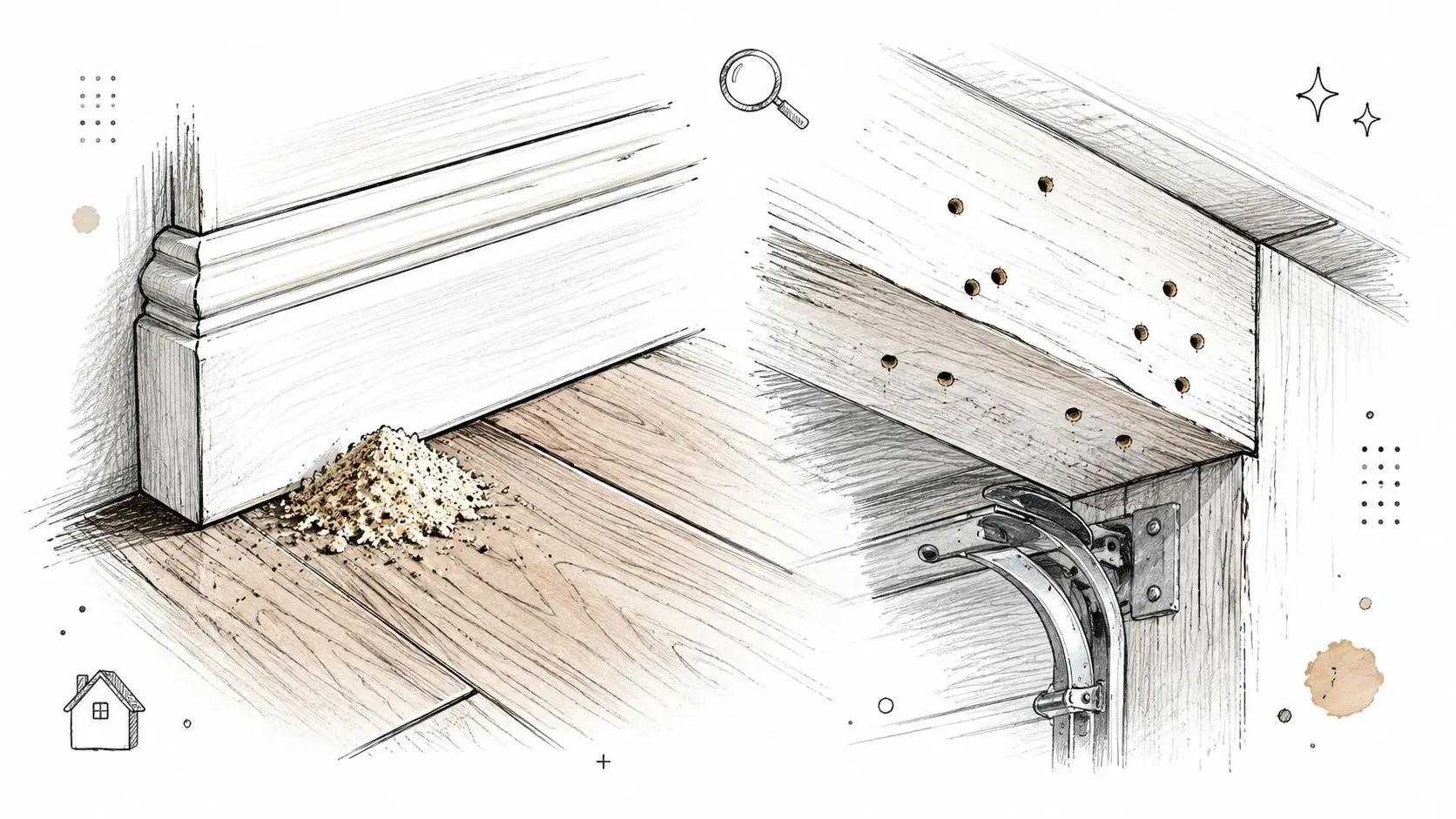
When Fine Powder Under the Baseboard Changes Everything
A Magnolia homeowner usually notices it the same way every time, a little pile under a baseboard, a scatter of tiny holes on a garage beam, or a faint dusting on the floor beneath a window sill. At first, it looks like construction dust that never got cleaned up right. Then you vacuum it, come back a week later, and the powder is back.
That's the moment wood borer identification stops being an abstract pest topic and turns into a home-maintenance problem. In East Texas, where heat, moisture, and older framing can all coexist in the same house, the signs can stay hidden until an adult beetle finally leaves through an exit hole. The earlier you separate fresh activity from old damage, the better your odds of avoiding a larger repair bill later.
Practical rule: if the powder returns after cleaning, don't treat it like decorative debris.
The challenge is that the first clue rarely tells the whole story. A few small holes in trim could mean a beetle group, or they could mean an older issue that's already dead. The job here is to show you how to read the evidence, which pests are most likely in Magnolia and Montgomery County, and where a specialist matters more than another round of DIY spray.
What a Wood Borer Is
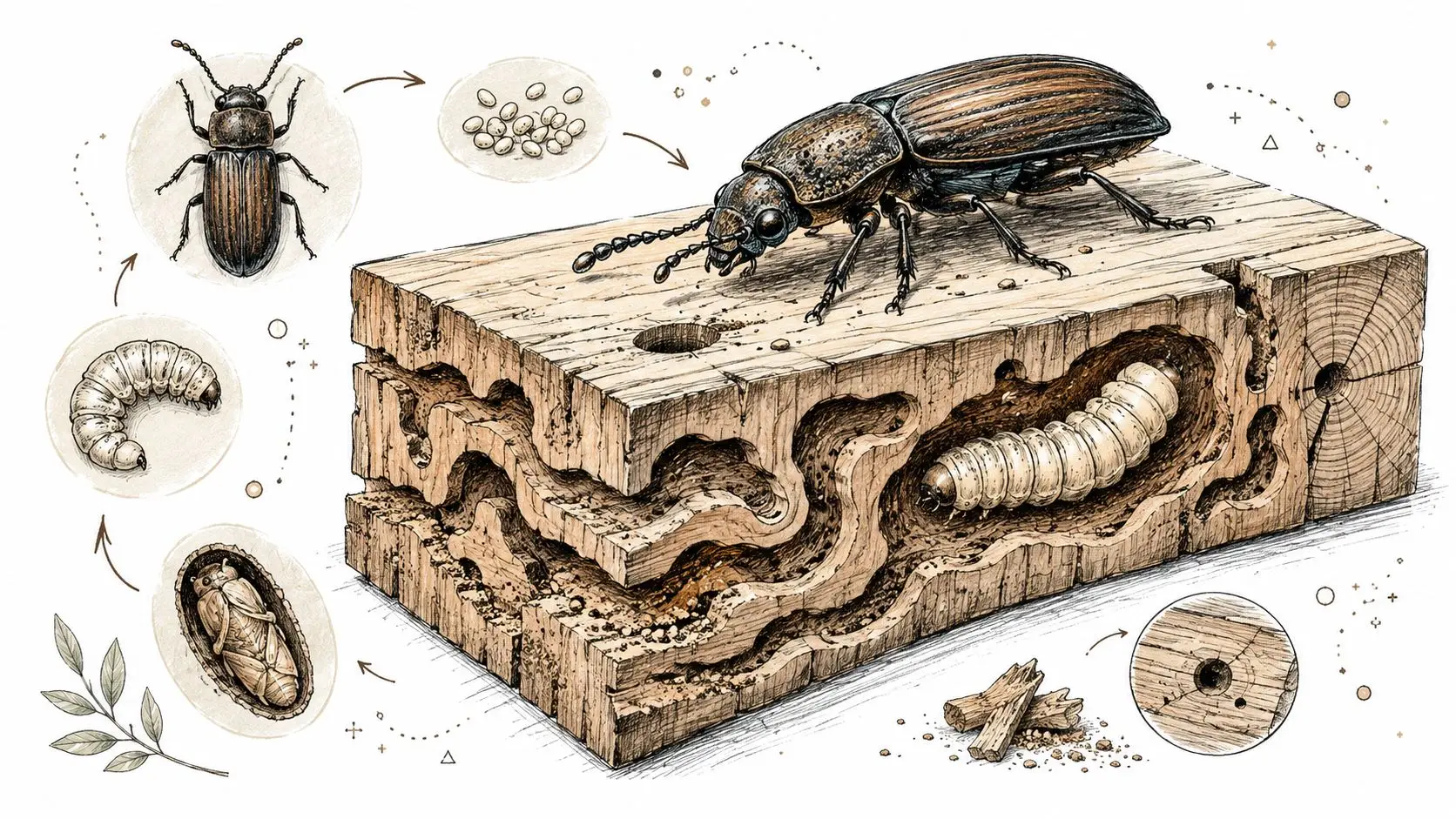
Wood borer is a practical label for insects that spend their immature stage inside wood and feed there while they tunnel. In a Magnolia house, that can mean trim, joists, flooring, cabinets, or even stored lumber in a garage. The adults are the ones that leave the neat little exit holes, but the work happens earlier, hidden in the board.
A clothes moth chews through a sweater from the outside. A beetle larva works from inside a beam, and the beam can still look sound on the surface for a while. That difference matters in East Texas homes, where a painted baseboard or a stained ceiling joist may hide the problem until the first dust falls out. For a moisture issue that overlaps with hidden wall damage, Eagle Restoration's mold removal guide is a useful companion, because mold and borer activity often show up in the same neglected spots near trim and baseboards.
The life cycle explains why identification takes patience. Eggs are laid in or near the wood, larvae feed and tunnel, pupae form close to the surface, and adults emerge by chewing an opening to get out. That is why frass, the sawdust-like debris pushed out of the wood, matters so much. You often find the trail before you ever find the insect.
Useful distinction: adults leave the hole, larvae create the damage.
Exit holes and dust need to be read together. A clean hole with fresh powder beneath it points to active feeding, while an old dark hole with settled debris may be leftover damage from a past problem. The hole is the footprint, the frass is the fresh track, and the condition of both tells you whether the wood is still in trouble.
For homeowners comparing what they see on the surface with what may be happening behind the paint, the wood itself tells the story. Some beetles prefer hardwood flooring, some work in framing, and some show up in stored lumber or furniture. A useful reference for the larger group of insects that damage wood in Texas is FullScope Pest Control's guide to wood-destroying insects in Texas.
The Borers Most Likely to Show Up in Magnolia Homes
The fastest way to narrow a sighting is to compare the suspects side by side. In Magnolia, the usual conversations are about small round holes, powdery dust, and wood that sounds a little hollow when tapped. The exact beetle group changes the details, though, especially the hole shape and the texture of the debris.
| Borer group | Typical exit hole | Frass texture | Likely wood |
|---|---|---|---|
| Powderpost beetles | Tiny, round pinholes | Very fine, flour-like dust | Hardwood flooring, trim, furniture |
| Old house borer | Oval to round, about 1/4 to 3/8 inch | Coarser debris, often with ragged material | Softwood framing, heartwood, stored lumber |
| Deathwatch beetles | Round holes, often with heavier bore dust | Coarser dust, sometimes dark and gritty | Older, damp hardwood |
| Metallic wood-boring beetles | Variable, often smaller and neat | Not always obvious from the surface | Stress-damaged or recently exposed wood |
Powderpost beetles are the ones homeowners usually notice first because their holes are tiny and the dust looks like spilled flour. Old house borers are harder to ignore once you know what to look for, because the holes are larger and the tunnels can run through heartwood. Deathwatch beetles are tied to older, damp timber, so they tend to show up where moisture has been ignored, not where the wood is new and dry.
Metallic wood-boring beetles are another category worth knowing, especially in trade-related wood and concealed material. They don't always announce themselves with dramatic dust piles, so the absence of obvious debris doesn't automatically rule them out. That's one reason a Magnolia homeowner shouldn't rely on hole size alone.
A practical local starting point is this Texas wood-destroying insect overview, because the Texas mix isn't the same as a generic national pest list. East Texas homes often combine older lumber, porch repairs, and new construction materials in ways that make the visual picture messy.
Borers or Something Else
A homeowner in Magnolia clears a little pile of dust under a baseboard and starts wondering whether the beam above it is full of borers, termites, or something else entirely. That first clue matters, but the wrong label sends the inspection in the wrong direction. Carpenter ants, carpenter bees, termites, and true wood-boring beetles can all leave damage that looks similar from a distance, especially in East Texas houses that mix older trim, porch repairs, and new lumber.
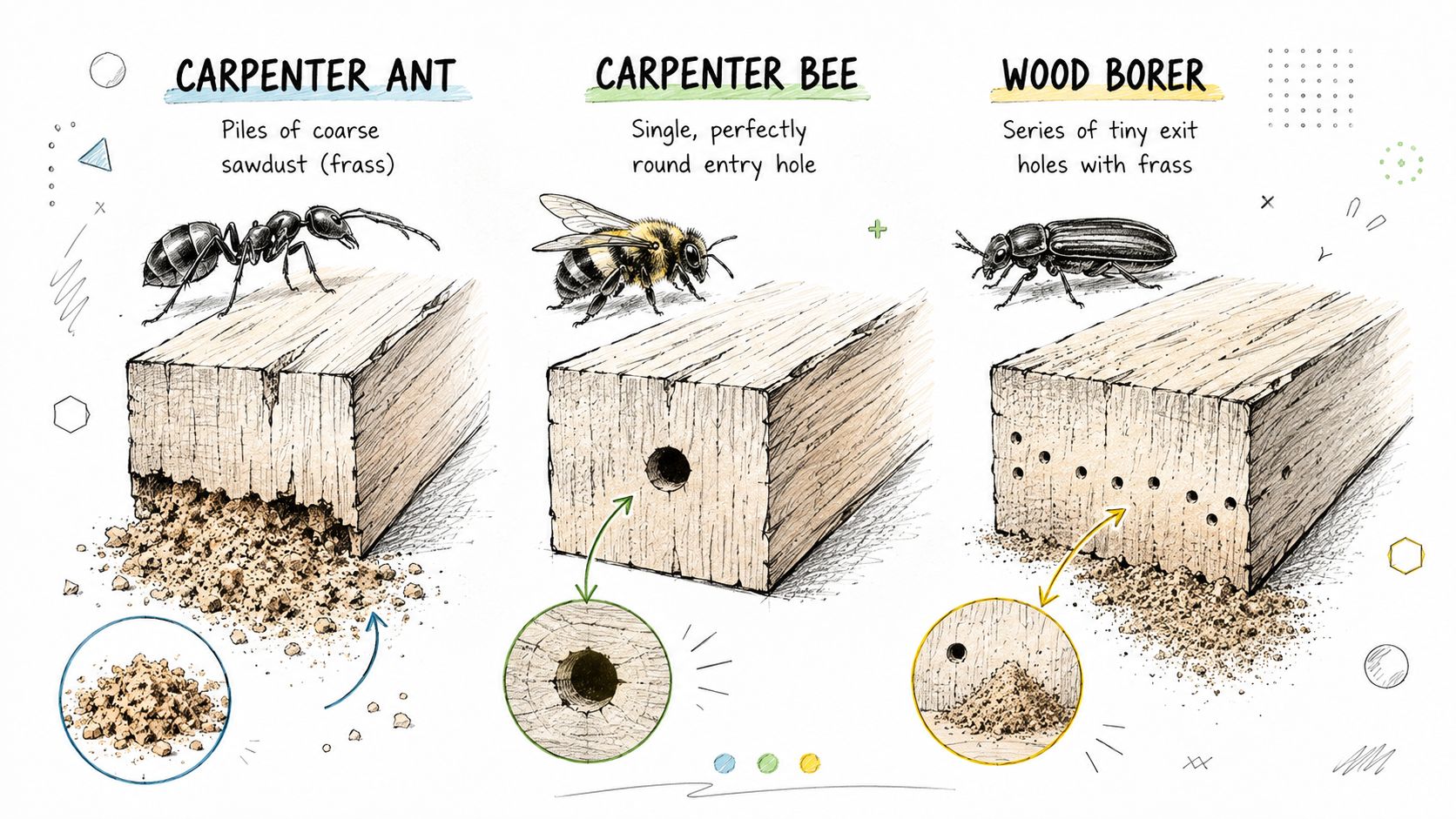
Carpenter ants hollow wood for nesting, so the debris usually looks like shavings and coarse scraps, not the fine frass that falls from beetle activity. Carpenter bees drill neat round holes in exposed soft wood, often under eaves or porch rails, then leave a mess below the entry point. Termites leave a different trail again, with concealed galleries and moisture-linked damage that often shows up in places where water has been working on the wood for a while. The IPPC guidance on exotic wood-boring and bark beetles notes that visual survey is currently the only viable option in many field situations, which is a good reminder that a first look helps, but it does not finish the job.
If the wood is damp and crumbling, don't assume every pest is the same problem.
That is where the common misstep starts. A homeowner sees damage, assumes termite, and treats for moisture or hidden soil contact while the actual issue is a dry wood-boring beetle in trim or flooring. The opposite mistake happens too, where a cabinet refinishing contractor blames old finish failure or surface wear when the problem is insect damage hiding under the coating.
A field rule keeps the search grounded. Frass from beetles is usually dry and granular or powdery, termite evidence is more about mud, tubes, or hidden galleries, carpenter ant debris looks like shavings, and carpenter bee debris falls from neat drilled holes. When the debris does not match the wood shape, the wrong pest gets blamed, and the repair plan starts off on the wrong foot.
A Room by Room Inspection Checklist
Start with the places that hold older wood and stay out of sight. In Magnolia, that usually means attic joists, ridge beams, garage rafters, and the lumber someone tucked into a corner because it seemed out of the way. Use a flashlight at a low angle across the surface instead of pointing it straight on, because side light makes tiny exit holes cast shadows and helps fresh frass show up.
Upstairs and out of the way
Check for holes clustered in one board or one beam, then see whether powder falls out when you tap the wood lightly. A hollow sound does not confirm a borer by itself, but it tells you to keep looking. Firewood stored near the living space needs the same attention, especially if adults already emerged from it and left behind new holes.
Baseboards, window sills, and the underside of furniture come next. That is where powderpost beetles and other small borers leave their easiest clues. Clean the area, mark the date, and come back later. As noted earlier, if powder returns after cleaning, treat it as active until proven otherwise.
The same approach applies to porch timbers, door trim, and hardwood floors. Finished surfaces can trap dust in seams, and a quick vacuum can make the problem look gone when it is still there. It only reset what you can see.
A clean note helps an inspector more than a vague story. Write down the room, the wood type, the hole shape, whether powder returned after cleaning, and whether the wood sounded hollow when tapped. A refinishing job can also expose old beetle evidence, so if you are comparing wood damage against a project schedule, a cabinet refinishing contractor can be part of the conversation when trim or cabinetry gets stripped and the true condition of the wood becomes visible. For a Magnolia-area home that may also need a formal inspection trail, this Texas WDI inspection and report resource is a practical way to see how visible findings get documented for lenders, buyers, and later repairs.
Why Texas Treats This as a Formal Report
Texas doesn't leave wood-destroying insect work to guesswork. The Texas Department of Agriculture's official WDI report form says Rule §7.176 requires a department-prescribed form for real-estate transactions covering the visible presence or absence of wood-destroying insects and conducive conditions, so this is a formal document, not a casual note in a repair file. The form is tied to what the inspector can see, which makes accurate location details matter right away.
That's why the instructions require the inspector to list the complete street address, city, and ZIP code of the structure being inspected. For Magnolia homeowners, that means the report has to match the exact property, not just the city name on the mailbox. The paper trail matters when a sale, refinance, or claim brings the house back under review later.
This Texas WDI inspection and report resource is useful when you need the process translated into practical terms, because the inspection has to cover visible insects, damage, and conducive conditions in a way a lender or buyer can use.
A buyer or seller should ask for a few things before signing anything:
- The completed WDI report: Make sure it names the inspected structure exactly.
- Any notes on conducive conditions: Moisture, wood-to-soil contact, or stored material near the home can matter as much as the holes.
- Photo documentation if available: Pictures help compare old damage against anything new that shows up later.
- Repair records: If wood was replaced, treated, or sealed, keep proof with the transaction file.
That's the practical consequence in Magnolia. What gets written today can shape how a closing conversation goes later, especially if the issue shows up again in another inspection cycle.
When DIY Identification Hits Its Limit
The surface clues are helpful, but they stop at a group name, not always a species. The big historical shift in wood borer identification came when research moved beyond damage-only diagnosis and into DNA barcoding. In a 2012 to 2015 study at six U.S. ports, researchers examined 338 longhorned beetles and 38 metallic wood-boring beetles, then identified 265 specimens to species or genus with barcodes. The integrated approach ultimately confirmed 275 cerambycids across 23 genera and 16 buprestids across 4 genera, and it produced novel barcodes for 7 species not already in public databases. That's a strong reminder that visual clues can narrow the field, but they don't always settle the case. The study in Scientific Reports is a good example of why lab confirmation still matters.
Decision points that justify a pro
A Magnolia homeowner doesn't need a lab on every loose dust pile. The line moves when the signs start stacking up.
- Multiple fresh holes across more than one piece of wood, which suggests the infestation isn't isolated.
- Frass that comes back after cleaning, which points to active emergence rather than an old problem.
- Structural members that sound hollow when tapped, especially if they're load-bearing.
- Hidden or inaccessible damage, because a closet trim issue is different from a problem inside framing.
The North America wood-borer literature also makes the practical point clear, larvae do the damage, adults create the holes, and control decisions depend on knowing whether the infestation is still active. In Magnolia, that matters even more because the city has grown fast enough to keep bringing in new materials, stored lumber, and remodel debris. Census data show Magnolia's population moved from 2,359 in 2020 to 5,320 in 2023 in the Census Reporter profile, which means more homes, more repairs, and more chances for hidden wood to get moved around.
If the signs are confusing, a second opinion is often smarter than a guess. This anti-DIY guide is a sensible next read when you're trying to decide whether the issue is cosmetic or structural.
Prevention, Interim Steps, and the FullScope Next Move
Keep the wood dry, keep the wood visible, and keep stored lumber away from the house. In a Magnolia attic or garage, that means improving airflow where you can, sealing raw wood when it's finished, and moving firewood out of the living envelope. If beetle activity is active, don't bury it under a surface treatment and assume the job is done.
The same advice applies to porch repairs and leftover boards from a remodel. If the wood is sitting against the wall, or stacked where moisture and shade linger, it becomes a better target for insects and a worse one for your own inspection. Clean the area, mark the date, and watch whether fresh frass returns.
Best next step: call in a licensed inspector before the problem becomes a report problem.
That matters most when a sale, refinance, or second opinion is on the table. A Magnolia-area WDI inspection should start with the exact property address, then move through the visible wood, the access points, and the conditions that make infestation more likely. FullScope Pest Control serves this part of Southeast Texas and offers wood-destroying insect inspections and reports, along with other pest services, so it's one option when the evidence needs to be documented rather than guessed at.
If you're in Magnolia, Texas, and you've got recurring powder, fresh holes, or a beam that doesn't sound right, schedule an inspection before you patch, paint, or replace anything. Bring your photos, your notes, and the cleaning date. That gives the specialist a real starting point, and it gives you a clearer answer on what's chewing your wood and what needs to happen next.