1500+ reviews

Late at night, you flip on the bathroom light and something shiny darts across the floor toward the baseboard. It's fast, flat, and just strange enough to make you stop in your tracks. If you've had that moment in a Southeast Texas home, you're not imagining things, and you're not the only one.
A lot of homeowners first notice silverfish this way. One quick glimpse near a sink, under a vanity, around a laundry room, or even in a closet. The bug disappears before you get a good look, and then the questions start. Was that a roach? Is it dangerous? Why is it in my house? And why does it keep showing up when the weather already feels damp outside?
The good news is that silverfish bugs in house settings are a common, solvable problem. They don't bite, and they don't spread disease, but they can absolutely damage books, paper, fabrics, pantry goods, and stored belongings. In Southeast Texas, they're often less of a random bug problem and more of a moisture warning sign.
That Glimmer of Silver in the Dark
You head to the bathroom half asleep, flip on the light, and a tiny silver insect slips along the baseboard like a fish darting under a rock. That quick flash is often the first sign. In Southeast Texas, it also points to something many homeowners miss. The house may be holding moisture where it should be drying out.
Silverfish usually stay hidden until the room is dark, quiet, and humid enough for them to move around comfortably. That is why people often spot them in bathrooms, laundry rooms, hallway closets, and other tucked-away spaces with stale air. Around here, our long humid seasons give them a big advantage indoors, especially if a vent is underperforming, a pipe is sweating, or damp air keeps collecting behind walls.
The insect itself is unsettling, but the bigger issue is what attracts it. Silverfish feed on starchy materials like paper, glue, and some pantry goods, and they thrive in damp areas. In many homes, they act like a moisture clue. If they keep showing up in the same spot, it is smart to ask what is staying wet nearby.
Sometimes that answer is simple, like a cluttered cabinet under a sink. Sometimes it is more serious, like slow condensation, a plumbing leak, or hidden mold starting to build inside a wall cavity or behind stored boxes.
According to the National Pest Management Association's silverfish guide, silverfish do not bite or spread disease, but they can damage paper items, glue, clothing, and foods such as flour and oats. That makes them more than a harmless oddity. They are a nuisance pest with a habit of showing up where a home already has the conditions they like.
So if you have seen that glimmer of silver in the dark, do not panic.
Treat it as a clue. In Southeast Texas, silverfish are often one part bug problem and one part moisture problem. Fixing both is what gets real control.
What Exactly Are Silverfish Bugs
Silverfish are wingless insects known scientifically as Lepisma saccharina. They have a tapered body that narrows at the rear, long antennae at the front, and three tail-like appendages at the back. Their silvery color and wiggling movement are what give them their name.
If you only catch one out of the corner of your eye, the body shape is your best clue. A silverfish doesn't look round like a beetle or broad like a roach. It looks narrow, flattened, and pointed, almost like a tiny metallic carrot that can run.
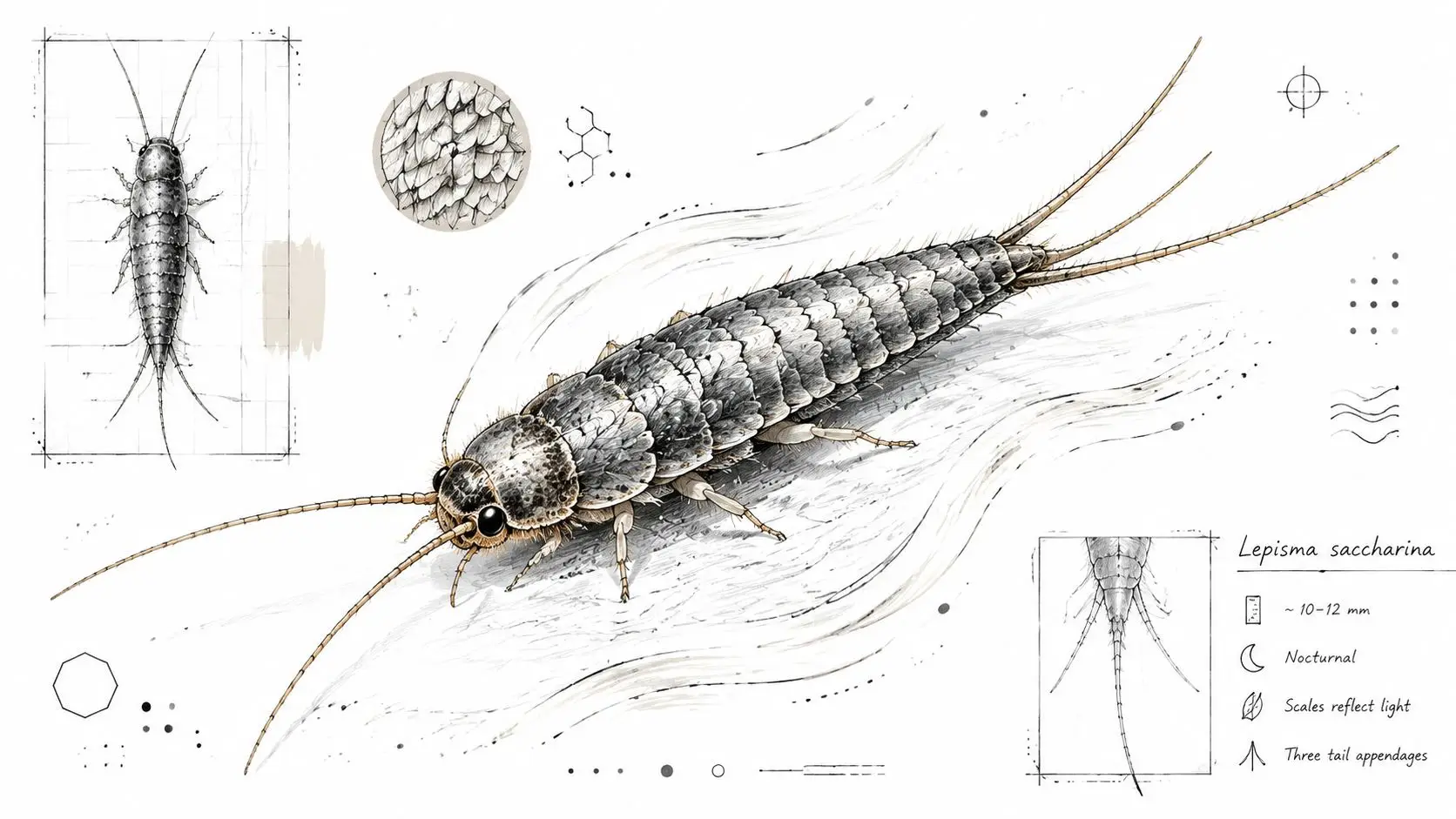
The features that help you identify one
A quick way to separate silverfish from other indoor pests is to look for these traits:
- Silvery body that reflects light when it moves
- Long antennae that extend forward
- Three rear bristles that trail behind the body
- No wings, even though it moves quickly
- A tapered shape that narrows toward the tail end
They're also secretive by nature. You'll usually find them in dark spaces, under stored items, behind baseboards, inside cabinets, or in cracks around trim and plumbing penetrations.
Why one sighting matters
Silverfish aren't just odd-looking insects. They're persistent indoor pests with biology that works in their favor. The University of Florida notes that silverfish require indoor relative humidity above 75% to breed, with optimal population growth between 72°F and 81°F, and females lay up to 100 eggs per batch in concealed crevices. If leaks, sweating pipes, or poor bathroom venting continue, infestations can build quickly, as explained in this University of Florida IFAS silverfish publication.
That matters in practical terms. They hide eggs where you can't see them. The young stay tucked into protected spaces. And because silverfish can live for several years, they don't automatically disappear because you killed the one you happened to notice on the tile.
Practical rule: If you've seen a silverfish in an active room of the house, assume more are hiding where moisture and paper meet.
They're also excellent climbers. That's one reason homeowners find silverfish bugs in house areas that seem unrelated, like bedrooms, bookshelves, attics, and linen storage.
Why Silverfish Invade Southeast Texas Homes
In Southeast Texas, silverfish don't need much encouragement. The climate already gives them what they want. Long humid stretches, warm indoor temperatures, wet building materials after leaks, and plenty of dark storage spaces create an inviting setup for them.
The usual advice says silverfish like moisture. That's true, but it's too vague to be useful. In this part of Texas, the bigger issue is that everyday home conditions can sustain them for months. A bathroom fan that doesn't vent well. An attic with trapped humidity. A plumbing leak inside a wall. A closet on an outside wall that always feels musty.
Moisture is the real invitation
Silverfish infestations are often found alongside other moisture-loving pests, which indicates that excess moisture is the underlying cause, not just the bug itself, as noted in this Waynes guide on silverfish control. That's why surface cleaning alone doesn't solve a recurring problem.
For homeowners in this region, humidity control has to be part of pest control. If you want a good general read on how humidity fuels indoor pest pressure, FullScope has a useful overview on the connection between humidity levels and pest proliferation.
Sometimes moisture problems start with plumbing trouble that seems minor. A slow drain leak under a vanity, a sweating pipe behind a wall, or a supply line drip around a washing machine can keep one hidden zone damp for a long time. If you suspect an urgent leak outside your area, this licensed emergency plumber San Antonio resource shows the kind of fast-response plumbing help that matters when moisture is feeding a pest problem.
The hidden mold connection people miss
Many generic articles fail to adequately explain that silverfish are mold-loving pests that thrive where there is fungal growth. A sighting, especially in an unusual place like a bed, can be a bio-indicator of a hidden mold issue that a dehumidifier alone won't fix, according to this Breda Pest explanation of why homes get silverfish.
That changes the way you should think about the pest.
If you see silverfish in a bedroom, near bedding, behind a headboard, or along baseboards in a room that doesn't seem “wet,” don't assume it's random. Start asking better questions:
- Does the room smell musty
- Has there been a roof leak or window leak
- Is an HVAC vent causing condensation
- Has the wall ever felt cool or damp
- Is there hidden mold behind trim, flooring, or drywall
A silverfish in an unexpected room often tells you to inspect the room, not just kill the insect.
In Southeast Texas, that mindset saves time. If you only treat the symptom, the house may keep producing silverfish.
Spotting the Signs of a Silverfish Infestation
A lot of homeowners never catch the insect itself. What they notice first is the aftermath. A favorite paperback has scraped-looking pages. A cardboard box in the closet feels dusty, but the dust includes tiny black specks. The wallpaper near a damp corner starts lifting and looks chewed along the edge.
Those clues matter because silverfish stay hidden in cracks, behind trim, under shelving, and inside quiet storage areas. In Southeast Texas, that pattern often points to more than a simple pest sighting. If the damage keeps showing up in one room, especially a muggy room or one with a musty smell, treat it as a moisture clue too. Silverfish often gather where humidity stays high enough to support mildew or hidden mold.
The material they target can seem random until you know what they are after. They feed on starches, glues, paper coatings, and other ingredients found in everyday household items. That is why the damage often shows up in places people rarely disturb. Old books, photo boxes, keepsake bins, wallpaper paste, craft paper, stored clothing, and even unopened paper goods can all become food sources.

What damage looks like
Silverfish damage looks messy. Pages may have shallow surface scraping, ragged holes, edge notches, or yellowed areas where the insect fed and traveled. Fabric and paper usually look grazed rather than cleanly cut.
That rough pattern helps separate silverfish activity from simple wear and tear. A book that has aged naturally may have brittle pages. A silverfish-damaged book often has irregular chew marks plus small dark pellets nearby. The same goes for cardboard boxes, labels, and wallpaper seams.
Where to check first
A quick inspection works best when you focus on quiet areas with stored materials and stale air. Start with:
- Bookshelves, filing boxes, and storage bins holding paper items that sit untouched for months
- Bathroom cabinets and linen closets where paper products, glue bindings, and humidity meet
- Closets with cardboard, old clothes, or musty corners
- Laundry rooms near baseboards, appliance hookups, and pipe openings
- Attics, garages, and utility spaces where heat and humidity build up
- Bedroom baseboards and behind furniture if that room smells musty or has had past leak issues
If you want a room-by-room checklist for sealing gaps and reducing hiding spots, this guide to pest-proofing your home is a good companion to your inspection.
Small clues people brush off
The easiest signs to miss are often the most useful:
- Tiny black pellets that look like pepper or grit
- Yellow staining on paper, fabric, or wallpaper
- Scraped or etched surfaces on glossy paper and book covers
- Damage grouped in one area instead of scattered all over the house
- Fresh feeding marks near a damp wall, vent, or closet floor
One silverfish on its own does not always mean a major infestation. Repeated signs in the same room usually mean the room is supporting them.
That is why location matters so much in Southeast Texas. A silverfish problem in a bathroom is common. A silverfish problem in a bedroom, hallway closet, or home office often deserves a closer moisture inspection. Those are the cases where a hidden leak, HVAC condensation issue, or mold growth behind drywall may be part of the story.
Humidity control helps with detection too. If you are not sure whether a room is staying too damp, this Tucson homeowners' guide to humidity reduction gives practical ways to check and lower indoor moisture.
If you keep finding fresh damage but rarely see the bug, that is normal. Silverfish are built for hiding. Their trail is usually easier to spot than the insect itself.
Your First Line of Defense DIY Control Methods
Good silverfish control starts with the environment, not the insecticide. If your home stays humid, any powder, trap, or spray will have limited success. In Southeast Texas, that's the first reality homeowners need to accept.
Effective control starts with reducing indoor relative humidity to below 50%, and chemical options like boric acid have limits because the powder loses effectiveness in high humidity, as explained in this Better Termite silverfish control guide.
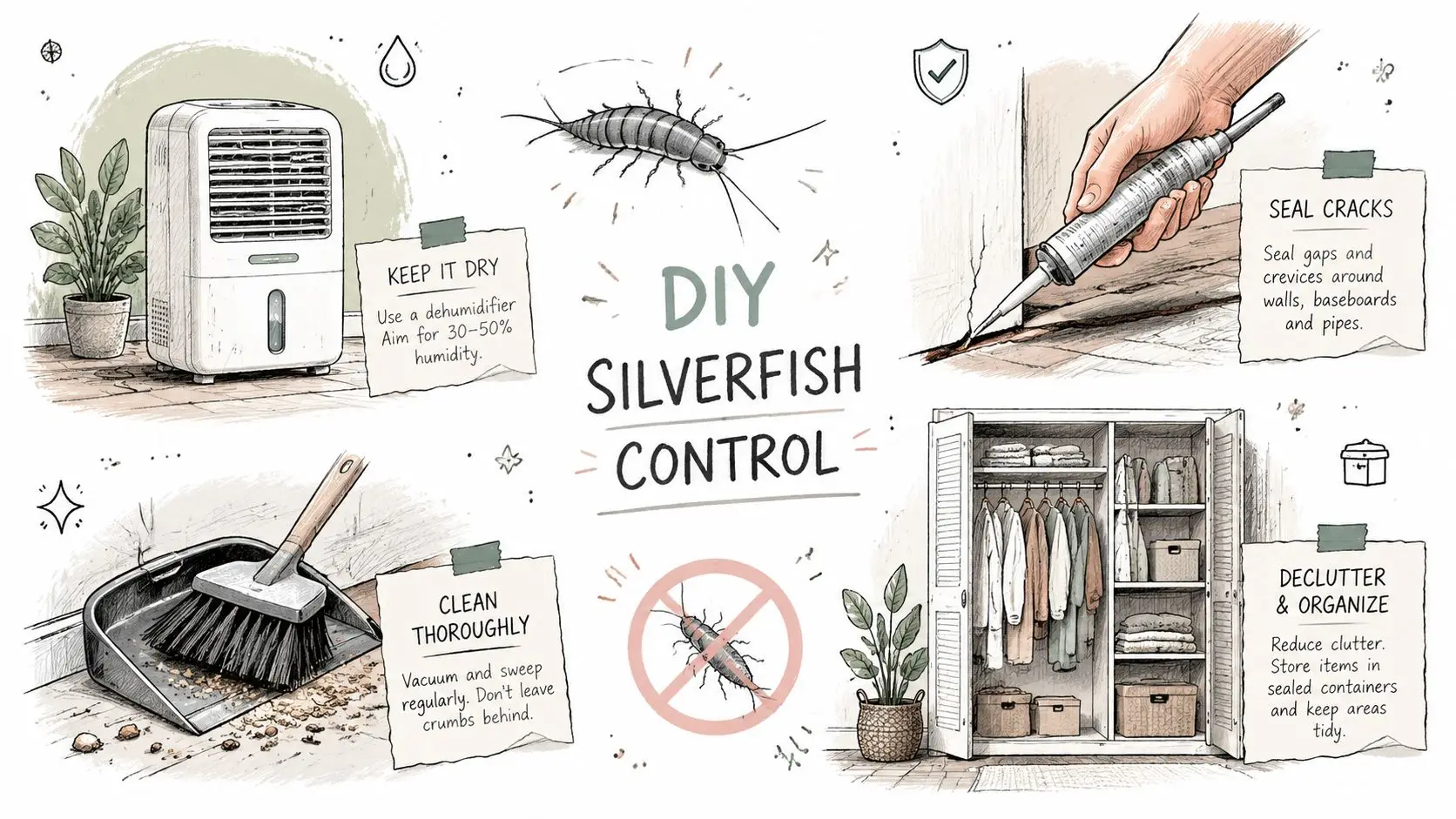
Start with moisture control
If you do only one thing this week, make it this. Lower the humidity in the rooms where silverfish show up.
Use dehumidifiers in damp rooms, especially basements, laundry areas, and closed interior spaces that stay muggy. Run bathroom exhaust fans during and after showers. Check around tubs, toilets, supply lines, and sink traps for slow leaks. If your closets or utility rooms feel stale, improve airflow.
For practical home comfort tips that overlap with pest prevention, this Tucson homeowners' guide to humidity reduction gives a good checklist you can adapt to humid indoor spaces.
Remove food and shelter
Silverfish don't need crumbs alone. They feed on paper, glue, cardboard, and starchy household items. That means storage habits matter.
Try this short cleanup list:
- Replace cardboard with plastic bins or sealed containers
- Vacuum often behind appliances, inside cabinets, and along baseboards
- Store pantry staples like flour and cereals in sealed containers
- Clear paper clutter from closets, shelves, and under beds
- Clean hidden dust in corners and storage rooms
FullScope also has a helpful homeowner resource on pest-proofing your home with practical exclusion steps.
Block entry points and hiding spots
Silverfish can enter through gaps around utility lines, damaged screens, foundation cracks, and worn frames. They can also move room to room through wall voids.
Check these areas carefully:
- Under sinks where supply lines pass through the wall
- Baseboard gaps in bathrooms and laundry rooms
- Window and door frames with worn seals
- Attic penetrations around venting or wiring
- Crawl space openings if your home has them
Caulk small gaps where practical. Replace torn screens. Don't leave damp paper products stacked in hidden spaces.
Here's a visual walkthrough of practical control ideas many homeowners find useful:
What DIY treatment can and can't do
A few home methods can help with light activity. Frequent vacuuming removes food particles and egg masses. A simple glass jar trap wrapped with tape on the outside can catch silverfish because they can climb the tape but can't escape the smooth inner glass. That method is useful for monitoring.
But DIY treatment has limits in a humid climate.
Homeowner note: If powders cake up, traps stay empty, and you're still seeing insects in multiple rooms, the problem is probably deeper than the surface.
That's especially true when silverfish are living in wall voids, under insulation, or behind built-ins where off-the-shelf products can't reach.
DIY vs Professional Silverfish Treatment When to Call for Help
A lot of homeowners do the right first steps. They clean up clutter, run a dehumidifier, toss old cardboard, and seal a few cracks. Sometimes that works. Sometimes it reduces activity but doesn't end it.
One common reason is that store-bought bait products often don't fit silverfish behavior very well. Bait traps are largely ineffective because silverfish forage for moist food sources like mold, not dry bait, and baits also fail to reach insects hiding in wall voids. Direct contact sprays aimed into cracks and hidden spaces are often necessary for real control, as explained in this industry video discussion on trap versus spray effectiveness.
DIY vs Professional Silverfish Control at a Glance
| Feature | DIY Methods | Professional Treatment (FullScope) |
|---|---|---|
| Main focus | Surface cleanup, humidity reduction, light monitoring | Inspection, hidden harborage discovery, targeted treatment |
| Access to wall voids | Limited | Direct treatment of cracks, crevices, and concealed areas |
| Best use case | Early, isolated activity | Widespread activity or repeat sightings |
| Trap performance | Often disappointing with silverfish | Usually paired with direct treatment, not relied on alone |
| Moisture diagnosis | Homeowner guesswork | Structured inspection of likely moisture-related conditions |
| Long-term control | Depends heavily on perfect follow-through | Better when treatment and prevention are combined |
When it's time to stop experimenting
You should strongly consider professional help if any of these sound familiar:
- Multiple rooms are affected and sightings keep moving around the house
- You've reduced humidity and cleaned thoroughly, but activity continues
- Books, paper goods, or fabrics are being damaged
- You suspect hidden mold or a wall leak
- You're seeing insects mostly at night and can't find the source
There's also a practical issue many people underestimate. Silverfish often hide where homeowners can't safely or effectively treat. Behind cabinets. Inside wall voids. Around insulation. Near plumbing penetrations inside enclosed spaces.
If you've reached that stage, it helps to read a straightforward decision guide like FullScope's anti-DIY guide on when it's time to call in pest control professionals.
Professional treatment isn't about doing more of the same. It's about treating the places DIY tools usually miss.
Partner with FullScope for Guaranteed Silverfish Control
When silverfish keep showing up, the core value of a professional service is diagnosis. You're not just paying for someone to spray. You're getting a trained inspection that looks for the conditions feeding the infestation in the first place.
That matters in Southeast Texas homes, where silverfish activity often overlaps with hidden humidity issues, entry gaps, and problem areas most homeowners never think to inspect. A local team understands which rooms stay damp in this climate, how seasonal moisture shifts affect indoor pests, and where silverfish commonly settle in homes around Kingwood, Conroe, Humble, Atascocita, Cleveland, and nearby communities.

What a solid professional process looks like
A quality treatment plan starts with a full inspection. That includes checking likely harborage zones, looking for moisture sources, identifying entry points, and noting what materials in the home are attracting activity.
From there, the treatment should be adapted to the structure, not copied from a generic checklist. FullScope Pest Control is a QualityPro certified provider using licensed technicians, integrated pest management, and low-toxicity options suitable for homes with children and pets. The company serves north Houston and nearby Southeast Texas communities with residential and commercial pest services, inspections, preventative plans, and urgent response.
Why local experience makes a difference
Silverfish control in this region isn't just about chemistry. It's about understanding the building patterns and moisture habits that make homes in Southeast Texas vulnerable.
A local provider can help you sort out questions like these:
- Is this a bathroom humidity issue or a hidden leak
- Are silverfish entering from outside gaps or breeding indoors
- Is cardboard storage in the attic feeding the problem
- Do you have one damp room or a house-wide humidity pattern
The best silverfish treatment solves the insect problem and the moisture problem together.
If you're tired of finding silverfish bugs in house areas where they shouldn't be, FullScope Pest Control can inspect the property, identify the source, and build a treatment plan that fits your home. That gives you a path to real control instead of another round of guesswork.