1500+ reviews

Only 36% of homeowners were familiar with common termite signs in a 2026 National Pest Management Association survey, which means many people are still learning what to look for before damage gets expensive. In Magnolia, Montgomery County, and nearby Kingwood or Conroe, that gap matters because the difference between a small clue and a serious repair often comes down to how early you recognize it.
Why Homeowners Miss the Earliest Warning Signs
Homeowners often act only after they find rotten joists, swarming insects, or obvious holes. In Magnolia and Montgomery County, the earlier signs of wood destroying insects are usually smaller: a faint line, loose debris, or a change in the wood that can resemble dust, moisture staining, or ordinary settling.
The harder task is deciding what the clue means. Shed wings near a window may indicate a swarm, while a thin mud tube on a foundation can show a route between soil and wood. A sawdust-like pile may point to boring insects, but old debris can remain after activity stops. Inspectors record visible evidence and its location in a Wood Destroying Insect Inspection Report, following HUD inspection guidance for visible WDI evidence.
Practical rule: clean the area, photograph the clue, and mark the date. If the mark, pile, tube, or hole returns, arrange a licensed inspection rather than assuming it is harmless.
Termite damage can create major repair costs. U.S. residents spend roughly $5 billion annually on termite control and repair, termites are estimated to damage about 600,000 U.S. homes each year, and average homeowner repair costs are often cited at about $3,000 termite damage and cost overview.
Early documentation gives Magnolia homeowners a useful choice: monitor a stable, old-looking clue or obtain professional evaluation before structural wood weakens. The same sign can represent active infestation or past damage, so timing and change matter as much as appearance.
Common Signs of Wood Destroying Insects to Look For
In Magnolia and across Montgomery County, the first visible clue is often debris rather than an insect. Check where wood meets masonry, windows, baseboards, and other edges that are easy to overlook. The hard part is interpreting whether the sign reflects current activity or damage left behind.
Read the debris first
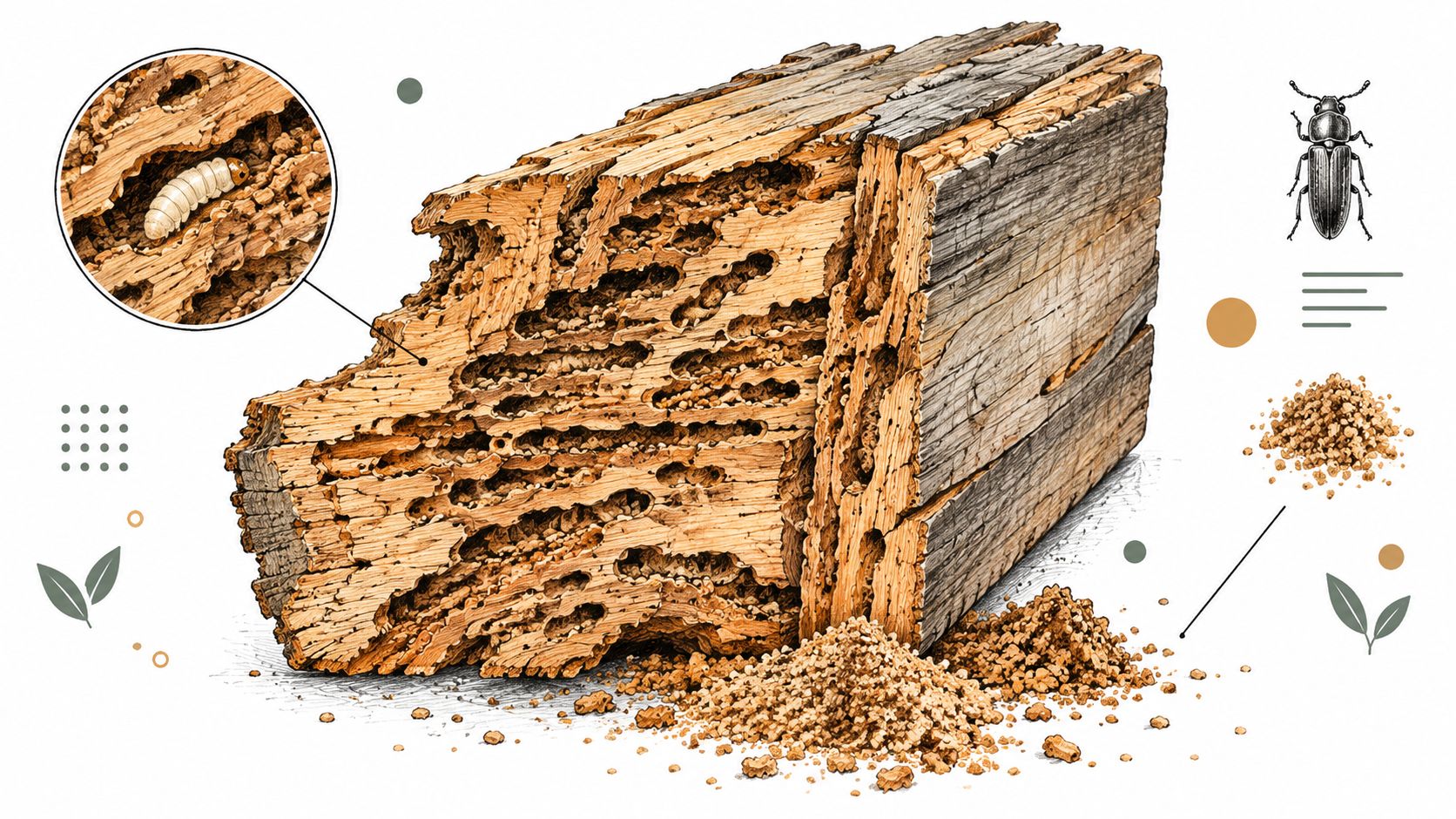
Frass is sawdust-like or pelletized material that collects below infested wood, near baseboards, or around small openings. Beetle frass may look like fine talc, coarse dust, or compacted pellets, depending on the beetle group and the wood. North Carolina State guidance on frass and exit holes explains why both its texture and location deserve attention.
Exit holes are often round or oval openings left when adult insects emerge. A hole alone cannot establish that the infestation is active. Clean the area, photograph it, and check whether new debris appears beneath it. Fresh material changes the assessment; an old hole in firm, unchanged wood may indicate past activity.
Mud shelter tubes on foundations, piers, or masonry walls show a possible route between soil and wood. Subterranean termites build these covered paths to retain moisture while traveling, making their location important during an inspection. Mississippi State termite signs guidance describes these tubes as visible evidence that warrants closer examination.
Don't ignore wings and hidden activity
Discarded wings near windowsills, light fixtures, spider webs, or doors can indicate a swarm event. They may appear before obvious damage, so record the location and date rather than sweeping them away. Live insects, recurring debris, or changes in nearby wood make the clue more urgent than isolated, aged wings.
Visible evidence matters because an inspection depends on what can be seen and reached without opening walls.
Hollow-sounding wood, frass, soil tubes, and repeated wing deposits justify a closer look. They do not prove severe damage, but they give homeowners in Magnolia a practical reason to document the area and arrange qualified evaluation.
How to Interpret Fresh Evidence Versus Old Damage
A hole in wood records an event, not necessarily a current infestation. In Magnolia and Montgomery County homes, the harder question is whether the evidence is changing now or only documenting an earlier problem.
Start with the surrounding material. New frass appears after cleanup, live insects remain nearby, or a previously quiet area develops fresh debris. Soft, hollow, or brittle wood raises concern, but probing alone cannot establish when the damage occurred. Galleries containing dried soil can support a termite assessment, while rot, moisture, and mechanical damage may produce a different explanation. Texas A&M AgriLife termite management guidance
What suggests the problem is active
Live termites, beetles, or termite alates on windowsills, in light fixtures, or in spider webs deserve prompt attention. Reappearing frass beneath wood and newly exposed exit holes also matter, particularly if the surrounding material continues to change. Record the location, clean away loose debris, and photograph the area with a date so an inspector can compare conditions.
Old exit holes, stained but firm wood, and dry, undisturbed tubes may reflect past activity. That lowers the urgency, but it does not prove the structure is clear. Moisture-prone crawlspaces, porches, and wall edges can support renewed activity later.
A Magnolia homeowner once found powder beneath an older porch beam after cleaning it twice. The beam looked solid, but the returning debris justified a licensed inspection. In another case, a single dusty hole beside unchanged, dry wood proved less urgent after documentation and monitoring.
The goal is accurate triage: preserve evidence, check for change, and avoid opening finished surfaces before the activity is understood. Fresh evidence calls for evaluation; stable marks call for records and follow-up.
Different Pests Leave Different Clues
Subterranean termites and wood-destroying beetles leave different evidence. In Magnolia and Montgomery County homes, the first task is to identify the clue, then decide whether it points to current activity or older damage. Texture, shape, location, and whether material returns after cleanup all matter.
Subterranean termites are commonly associated with mud shelter tubes and timber galleries containing dried soil. The tubes help maintain moisture as termites travel between soil and wood. Soil-packed galleries can support a termite assessment, but their presence still needs to be interpreted alongside moisture conditions, wood damage, and other findings.
Wood-destroying beetles produce a different pattern. Their exit holes may be round or oval, while frass can range from fine dust to coarse or pellet-like debris, depending on the beetle group and wood. Returning debris deserves more attention than a single dusty spot. Clean the area only after photographing it, then record whether fresh material appears again.
The types of wood destroying insects in Texas guide can help homeowners separate termite clues from beetle clues. For mobile-home owners, practical prevention steps to stop roaches and termites may also help reduce conditions that attract pests.
A Magnolia homeowner should avoid treating every hole, tube, or powder pile as proof of an active infestation. Termite evidence often warrants a faster professional response, while isolated beetle evidence may be monitored when the wood remains firm and debris does not return. If signs change, document the change and arrange a licensed inspection.
A Simple Inspection Routine for Magnolia Homeowners
In Magnolia and across Montgomery County, a quick inspection can show where to look next, but a sign alone does not prove current activity. Start outside at the foundation, piers, and areas where wood meets soil or masonry. Check for conditions that could support insects, then compare any evidence with the wood's firmness and nearby moisture.
Move indoors through accessible areas. Inspect windowsills, light fixtures, crawl-space or basement entrances, and exposed framing for wings, tubes, holes, or debris. Soft wood, staining, or buildup near a leak deserves a photograph before cleanup.
What to document
- Frass: Photograph the pile in place, especially below a beam, sill, or trim board. Note whether the material returns after the area is cleaned.
- Mud tubes: Take close-ups from several angles. Record whether a tube appears intact, recently repaired, or dry and broken.
- Hole size and shape: Record round, oval, or pin-sized openings, along with the wood's condition around them.
- Wing debris: Photograph discarded wings near windows, fixtures, or webs, and note whether they appear fresh or brittle.
A single hole or dusty patch may reflect old beetle damage. A repaired tube, recurring debris, or worsening softness deserves faster attention. Do not open walls or pry off finished trim. That can create damage and make the evidence harder to interpret.
Water intrusion changes the assessment because moisture can soften wood and attract insects. Keep dated photos and notes, then monitor stable evidence or arrange a licensed inspection when signs return, spread, or remain difficult to classify.
When to Request a Licensed WDI Inspection and Report
Request a licensed Wood Destroying Insect inspection when signs keep returning, appear to be changing, or occur alongside soft wood. In Magnolia and Montgomery County, the difficult question is often not whether you found a hole or tube, but whether it reflects an active infestation or damage left by an earlier problem.
A professional evaluation also makes sense during a real-estate transaction or when evidence remains difficult to classify. A licensed inspector can assess accessible areas and document observations without treating every mark as proof of current insect activity. That distinction can affect repair decisions, treatment, and negotiations.
Texas uses a state-prescribed WDI report form. It records visible insect presence and conditions that can support infestation, including wood in contact with the structure, fences in contact with the structure, and insufficient ventilation Texas WDI report form. The report therefore addresses both observed evidence and site conditions that may increase risk.
For a sale or rental property, written documentation gives buyers, sellers, and property managers a clearer basis for decisions. Homeowners can review licensed WDI inspection and report services when they need an evaluation tied to a transaction or uncertain findings.
A practical reference on pest-free property management tips can also help connect routine inspections with prevention and treatment choices.
A report does not replace prevention. It turns uncertain signs into a documented decision.
FullScope Pest Control offers WDI inspections and reports, termite control and prevention, monitoring, and targeted treatments. If tubes, frass, or wings continue appearing, a licensed evaluation is more useful than waiting for clearer damage.
Next Steps for Homeowners in Kingwood, Conroe, and Magnolia
In Magnolia and the wider Montgomery County area, location helps determine who can assess the problem and what conditions deserve attention. Kingwood, Conroe, and nearby Southeast Texas communities share the risk of hidden wood damage, but seeing a sign is only the first decision point. You still need to determine whether it reflects active insects or older damage.
Start with the evidence in front of you. Fresh frass, newly shed wings, growing tubes, soft wood, or live insects justify scheduling an inspection. If the material appears old and the surrounding wood is sound, photograph it, record the date and location, and monitor for new activity after cleanup.
Do not remove every trace before documenting it. An inspector can often learn more from the pattern, placement, and condition of the evidence than from a cleaned surface.
FullScope Pest Control serves north Houston and nearby Southeast Texas communities from locations in Cleveland, Kingwood, Conroe, and Porter. Its services include termite control and prevention, inspections, monitoring, and targeted treatments for wood-destroying insects, as well as residential and commercial pest work.
Homeowners who want to reduce repeat risk can review preventing wood destroying insects tips for homeowners after documenting the property. Prevention may involve correcting moisture, improving access for inspections, and separating wood from the structure.
Signs of wood destroying insects matter only when you interpret their age and activity correctly. In Magnolia, Kingwood, or Conroe, document what you find, then choose between continued monitoring, prevention work, or a licensed inspection. Early clarification preserves more repair and treatment options.
If frass, mud tubes, wings, or holes keep appearing in a Magnolia home, contact a licensed inspector and document the evidence before conditions change.