 1500+ reviews

Signs of Wood Destroying Insects: Early Warnings
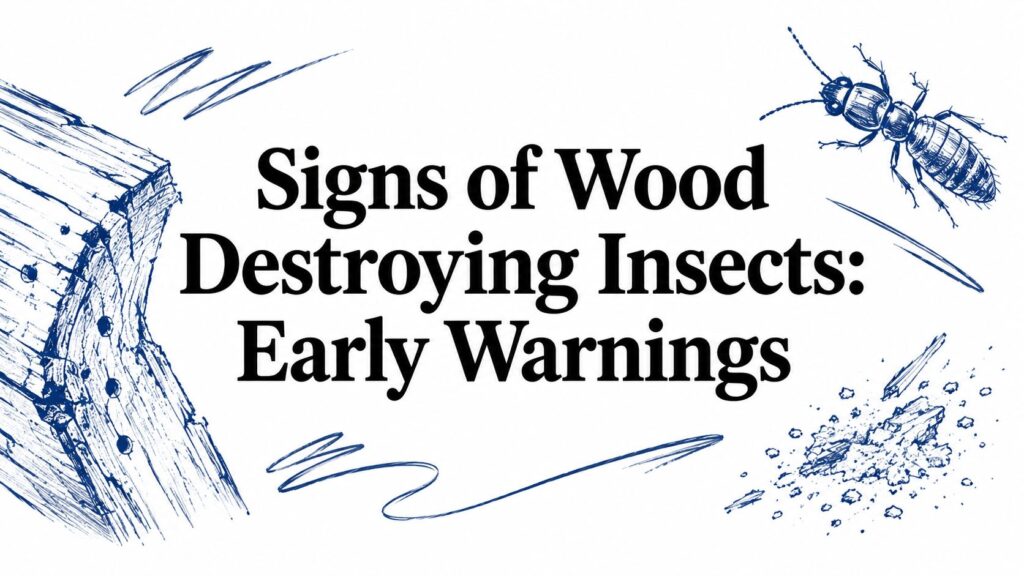
Only 36% of homeowners were familiar with common termite signs in a 2026 National Pest Management Association survey, which means many people are still learning what to look for before damage gets expensive. In Magnolia, Montgomery County, and nearby Kingwood or Conroe, that gap matters because the difference between a small clue and a serious repair often comes down to how early you recognize it. Why Homeowners Miss the Earliest Warning Signs Homeowners often act only after they find rotten joists, swarming insects, or obvious holes. In Magnolia and Montgomery County, the earlier signs of wood destroying insects are usually smaller: a faint line, loose debris, or a change in the wood that can resemble dust, moisture staining, or ordinary settling. The harder task is deciding what the clue means. Shed wings near a window may indicate a swarm, while a thin mud tube on a foundation can show a route between soil and wood. A sawdust-like pile may point to boring insects, but old debris can remain after activity stops. Inspectors record visible evidence and its location in a Wood Destroying Insect Inspection Report, following HUD inspection guidance for visible WDI evidence. Practical rule: clean the area, photograph the clue, and mark the date. If the mark, pile, tube, or hole returns, arrange a licensed inspection rather than assuming it is harmless. Termite damage can create major repair costs. U.S. residents spend roughly $5 billion annually on termite control and repair, termites are estimated to damage about 600,000 U.S. homes each year, and average homeowner repair costs are often cited at about $3,000 termite damage and cost overview. Early documentation gives Magnolia homeowners a useful choice: monitor a stable, old-looking clue or obtain professional evaluation before structural wood weakens. The same sign can represent active infestation or past damage, so timing and change matter as much as appearance. Common Signs of Wood Destroying Insects to Look For In Magnolia and across Montgomery County, the first visible clue is often debris rather than an insect. Check where wood meets masonry, windows, baseboards, and other edges that are easy to overlook. The hard part is interpreting whether the sign reflects current activity or damage left behind. Read the debris first Frass is sawdust-like or pelletized material that collects below infested wood, near baseboards, or around small openings. Beetle frass may look like fine talc, coarse dust, or compacted pellets, depending on the beetle group and the wood. North Carolina State guidance on frass and exit holes explains why both its texture and location deserve attention. Exit holes are often round or oval openings left when adult insects emerge. A hole alone cannot establish that the infestation is active. Clean the area, photograph it, and check whether new debris appears beneath it. Fresh material changes the assessment; an old hole in firm, unchanged wood may indicate past activity. Mud shelter tubes on foundations, piers, or masonry walls show a possible route between soil and wood. Subterranean termites build these covered paths to retain moisture while traveling, making their location important during an inspection. Mississippi State termite signs guidance describes these tubes as visible evidence that warrants closer examination. Don't ignore wings and hidden activity Discarded wings near windowsills, light fixtures, spider webs, or doors can indicate a swarm event. They may appear before obvious damage, so record the location and date rather than sweeping them away. Live insects, recurring debris, or changes in nearby wood make the clue more urgent than isolated, aged wings. Visible evidence matters because an inspection depends on what can be seen and reached without opening walls. Hollow-sounding wood, frass, soil tubes, and repeated wing deposits justify a closer look. They do not prove severe damage, but they give homeowners in Magnolia a practical reason to document the area and arrange qualified evaluation. How to Interpret Fresh Evidence Versus Old Damage A hole in wood records an event, not necessarily a current infestation. In Magnolia and Montgomery County homes, the harder question is whether the evidence is changing now or only documenting an earlier problem. Start with the surrounding material. New frass appears after cleanup, live insects remain nearby, or a previously quiet area develops fresh debris. Soft, hollow, or brittle wood raises concern, but probing alone cannot establish when the damage occurred. Galleries containing dried soil can support a termite assessment, while rot, moisture, and mechanical damage may produce a different explanation. Texas A&M AgriLife termite management guidance What suggests the problem is active Live termites, beetles, or termite alates on windowsills, in light fixtures, or in spider webs deserve prompt attention. Reappearing frass beneath wood and newly exposed exit holes also matter, particularly if the surrounding material continues to change. Record the location, clean away loose debris, and photograph the area with a date so an inspector can compare conditions. Old exit holes, stained but firm wood, and dry, undisturbed tubes may reflect past activity. That lowers the urgency, but it does not prove the structure is clear. Moisture-prone crawlspaces, porches, and wall edges can support renewed activity later. A Magnolia homeowner once found powder beneath an older porch beam after cleaning it twice. The beam looked solid, but the returning debris justified a licensed inspection. In another case, a single dusty hole beside unchanged, dry wood proved less urgent after documentation and monitoring. The goal is accurate triage: preserve evidence, check for change, and avoid opening finished surfaces before the activity is understood. Fresh evidence calls for evaluation; stable marks call for records and follow-up. Different Pests Leave Different Clues Subterranean termites and wood-destroying beetles leave different evidence. In Magnolia and Montgomery County homes, the first task is to identify the clue, then decide whether it points to current activity or older damage. Texture, shape, location, and whether material returns after cleanup all matter. Subterranean termites are commonly associated with mud shelter tubes and timber galleries containing dried soil. The tubes help maintain moisture as termites travel between soil and wood. Soil-packed galleries can
How To Keep Rodents Away As Temperatures Start to Drop
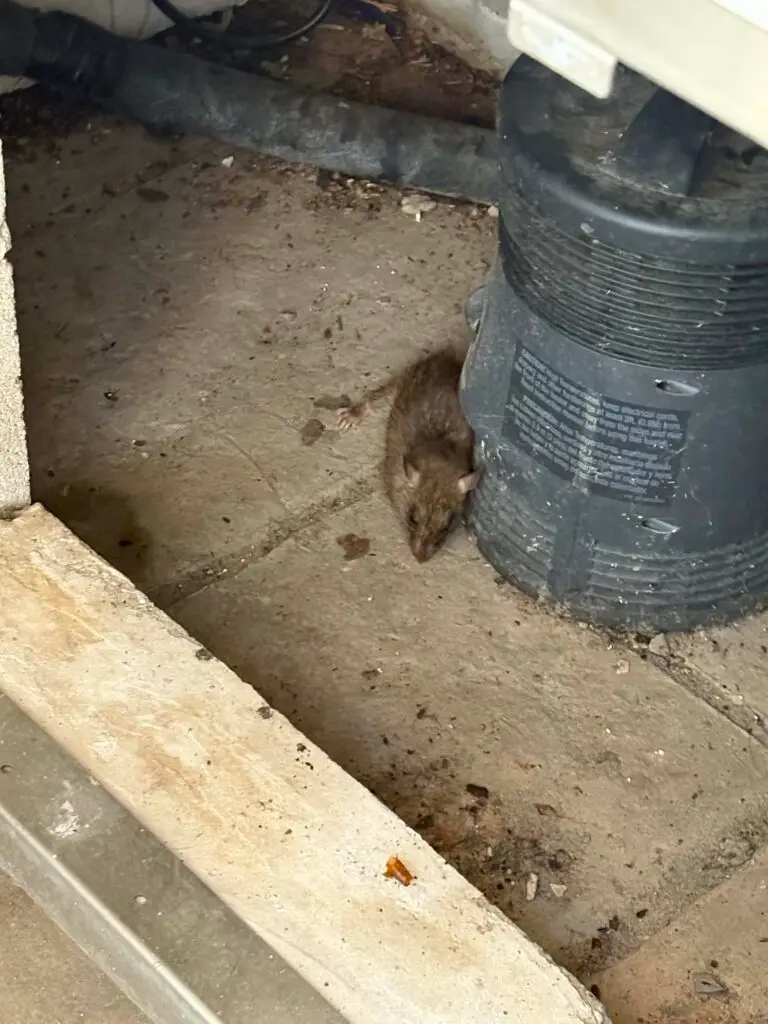
As temperatures begin to fall, rats and mice often shift their behavior in search of shelter. Homes offer stable temperatures, food, water, and protected nesting spaces. Garages, attics, wall voids, storage rooms, and crawl spaces can become attractive as outdoor conditions become less comfortable. Effective rodent control is not simply about reacting after a mouse or rat appears. A reliable approach identifies how rodents are getting close to the structure, where they may be entering, and what makes the property appealing. Addressing those factors early can help prevent seasonal movement from turning into a hidden infestation. Why Cooler Weather Increases Rodent Pressure Rodents remain active throughout the year, but falling temperatures can change where they spend their time. Outdoor food sources may become less predictable, vegetation can thin, and nighttime temperatures can make sheltered areas more valuable. A small opening that was ignored during summer may become a route indoors. Conditions that can increase fall and winter rodent pressure include: Rodents avoid open areas when possible. They prefer to travel along edges, behind objects, and inside protected spaces. One sighting may not show the full extent of activity. Scratching, gnawing, droppings, and rub marks can reveal movement before a nest is discovered. When activity reaches concealed structural spaces, the problem can become harder to trace. Learning about rats inside walls helps explain why noises behind drywall, unexplained odors, or recurring droppings near wall edges deserve closer attention. Entry Points And Shelter Matter More Than A Single Sighting Rodents can use surprisingly small structural openings. Mice need very little space to squeeze through, while rats may exploit damaged vents, roofline gaps, garage-door openings, or access points around pipes and cables. Once inside, they can move through areas that are rarely inspected. Professional inspection often focuses on: Shelter is just as important as entry. A home with quiet storage areas, undisturbed boxes, insulation, and nearby food can support rodents even when outdoor temperatures fluctuate. Rats and mice may establish nests in attics, wall cavities, garages, cabinets, or other low-traffic spaces. This is why seasonal rodent control should consider the entire structure rather than a single room. If one entry point is addressed while another remains active, rodents can continue moving through the property. A professional evaluation helps connect exterior access with interior evidence, which makes the control plan more precise. Once nesting begins, evidence may appear in several places at once. Understanding where indoor rat nests are commonly found can help homeowners recognize why shredded material, concentrated droppings, or repeated noises should not be treated as isolated signs. Early Warning Signs Should Be Taken Seriously Rodent activity often becomes noticeable through indirect evidence. Because rats and mice are mostly active when homes are quiet, homeowners may hear or find signs before seeing an animal directly. Repeated clues are especially important as temperatures continue dropping. Watch for signs such as: These signs can indicate that rodents are already using the structure regularly. Waiting for more obvious activity can allow nesting, contamination, and property damage to continue behind walls or above ceilings. Professional rodent control becomes valuable when evidence appears in multiple locations, when entry points are difficult to identify, or when activity continues despite changes around the property. Technicians can inspect travel routes, nesting areas, structural gaps, and environmental conditions together rather than treating each symptom separately. Long-term protection also depends on follow-up. Rodent pressure can change as weather shifts, landscaping changes, or new gaps develop. Monitoring known problem areas helps determine whether activity is declining or whether rodents have simply moved to another part of the structure. Acting before colder weather settles in gives homeowners a better chance to address vulnerabilities before rodents become established indoors. The goal is not only to remove current activity but also to reduce the access, food, water, and shelter that make a home attractive in the first place. Keep Cold-Weather Rodents Outside If you are noticing droppings, gnaw marks, nighttime noises, or suspected entry points, contact Fullscope Pest Control for professional rodent control focused on inspection, exclusion, monitoring, and long-term prevention.