1500+ reviews

You spot them after rain, crawling across the patio, gathering near the porch light, or appearing beside mulch in a Magnolia yard. They're dark, fast, and similar enough that “black beetle” feels like a reasonable identification. In Texas, though, that label describes a broad mix of insects, from harmless outdoor scavengers to fabric pests and blister beetles that deserve more caution.
The useful question isn't only, “What color is it?” Look at where the beetle is active, how it moves, what the body looks like, and whether you're seeing adults, larvae, or plant damage. Those clues can help homeowners in Magnolia, Conroe, Kingwood, and nearby north Houston communities decide whether they're seeing normal outdoor activity or a problem that needs inspection.
Why Black Beetles in Texas Are Harder to Identify Than They Look
A Magnolia homeowner might find several dark beetles beneath a flowerpot and assume they came from one nest. In reality, the insects could belong to unrelated groups with different food sources and life cycles. Texas hosts a very large and diverse beetle fauna, and an authoritative Texas field guide lists at least 100 blister beetle species in the state, including the black blister beetle, Epicauta pennsylvanica Texas A&M AgriLife's blister beetle guide.
Other dark beetles occur across Texas as well. The Texas black phanaeus, Phanaeus triangularis texensis, is a distinct Texas taxon whose documented range includes Texas and Coahuila, Mexico. That range is a reminder that Texas beetle populations form part of a broader Southwest ecology, not one uniform household pest population.
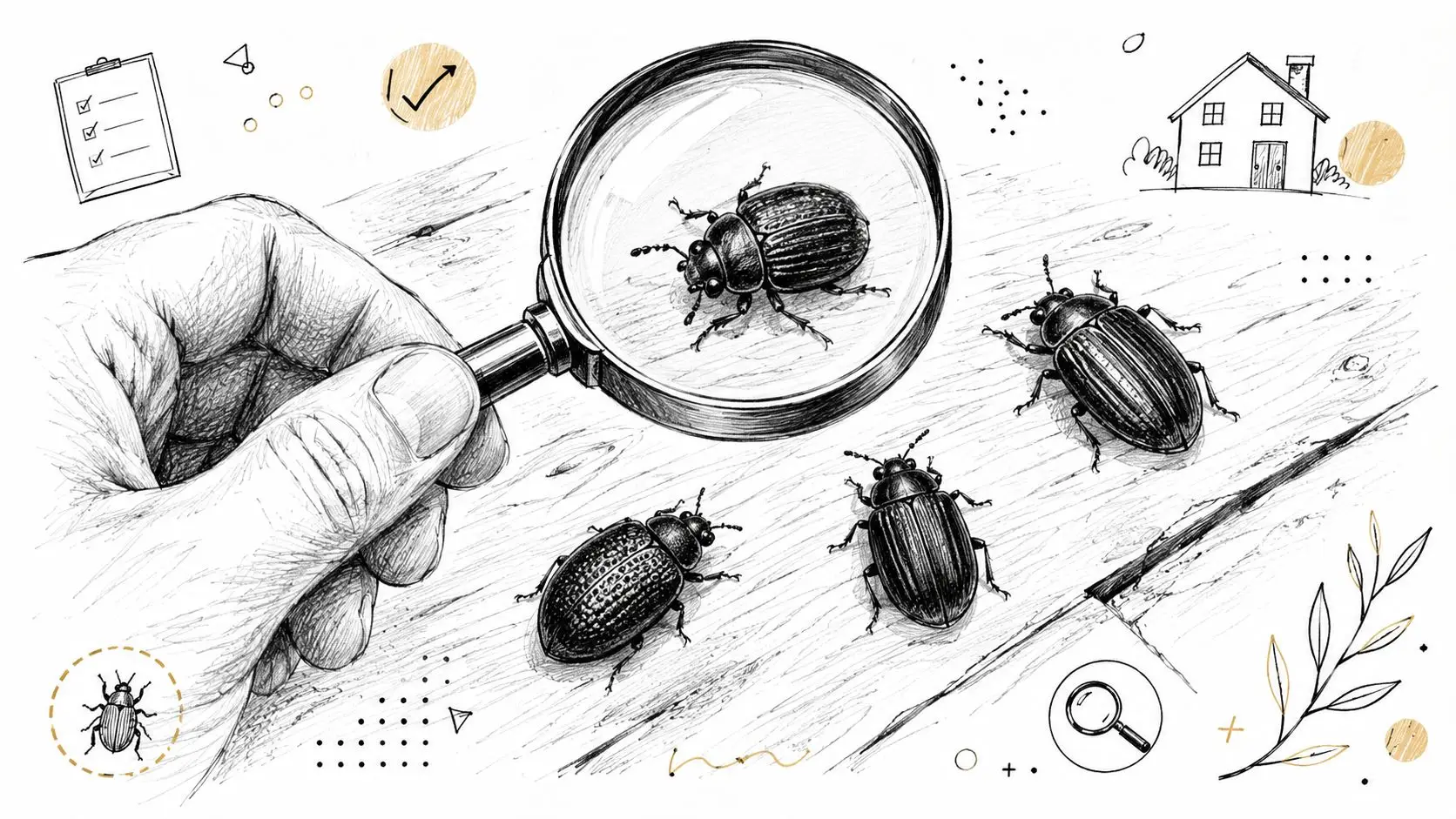
Color is a starting clue, not an identification
A shiny black beetle walking across a driveway may be an outdoor scavenger. A small beetle found in a closet may be a carpet beetle, with the damaging stage hidden among fabrics. A beetle emerging from turf can point toward a soil-associated scarab, where the larvae matter more than the adults.
Texas references track these beetles separately because their habitat, seasonal activity, and risk to people or property differ. Treating every dark insect around a home as the same pest can lead to unnecessary perimeter applications and missed evidence of a genuine indoor or root-zone problem.
Start with the basics:
- Location: Is it in a closet, kitchen, attic, lawn, mulch bed, pasture, or beneath a light?
- Movement: Does it run, jump, burrow, fly toward lights, or remain still when disturbed?
- Body form: Is it narrow and elongated, rounded, heavily built, hairy, or visibly armored?
- Damage: Are you finding damaged fabrics, declining turf, chewed leaves, or no damage at all?
For photo examples and a broader reference point, compare your observation with the FullScope pest library. A clear photograph beside a ruler or familiar object can help an inspector avoid guessing from color alone.
Common Black Beetles in Texas and What They Look Like
Several beetle groups commonly overlap in a homeowner's description of “black beetles in Texas.” Their differences become easier to see when you compare shape, setting, and damage rather than trying to memorize every species.
Darkling and ironclad beetles
Darkling beetles, including Eleodes species, are often encountered outdoors on soil, beneath debris, or around landscaped areas. Texas entomology records list at least 31 known Eleodes darkling beetle species Texas beetle records. They're generally associated with scavenging or feeding on organic material, and many sightings don't indicate a structural infestation.
Ironclad beetles are also recognized for hardened body surfaces and a slow, deliberate appearance. Their armored look can make them seem threatening, but appearance alone doesn't establish that they're damaging the home. A beetle found outdoors near leaf litter is a different concern from larvae repeatedly appearing in stored materials.
Blister beetles
Blister beetles may be black, dark, or banded, and their importance isn't limited to household nuisance status. The black blister beetle is listed among Texas' common blister beetles in the Texas A&M reference cited above. Avoid handling an unknown blister beetle with bare hands, especially when children or pets are nearby, because this group is medically relevant.
Carpet beetles
Carpet beetles are usually a more relevant indoor concern than large outdoor darkling beetles. Adults may be small and difficult to notice, while larvae can damage wool, fur, feathers, stored fabrics, and other materials. Look for shed larval skins, irregular fabric damage, and activity in quiet areas rather than assuming a large black adult beetle is responsible.
Scarab beetles
Scarab beetles vary widely in appearance and habitat. Texas records include 471 scarab species, and identification may depend on features such as body length, toothed or scalloped front tibiae, and lamellate antennae Texas screening information on scarab beetles.
Some scarabs are beneficial decomposers. The dung beetle Onthophagus gazella, introduced by USDA scientists in the 1970s, is now common throughout Texas. In parts of the state, it can remove 80 percent of cattle droppings Texas A&M's dung beetle guide. That example shows why identification matters. A dark beetle in pasture may support sanitation and soil cycling, not require treatment.
If a beetle is associated with wood rather than soil or fabrics, use a separate wood-borer identification guide before assuming it belongs to one of these outdoor groups.
When and Why Black Beetles Appear in Texas Yards and Homes
Black beetle sightings often rise when outdoor conditions become favorable, not because every nearby property has developed a hidden infestation. Moisture, decomposing organic material, turf conditions, and outdoor lighting can all influence where beetles move and where homeowners notice them.
After rain, beetles may leave soil, mulch, or plant debris and become more visible on walkways and exterior walls. Damp leaf litter creates shelter and food for some scavenging species. Decomposing material can also attract beetles that participate in breakdown, especially in gardens, wooded edges, compost areas, and pasture environments.
Lighting changes what residents see. Exterior fixtures draw flying insects and can concentrate beetles or other insects near doors, windows, and walls. A beetle beside a porch light may just be responding to the light, while repeated beetles inside a room suggest that entry points, nearby habitat, or stored materials deserve closer attention.
Local conditions matter more than a statewide label
Texas monitoring demonstrates how strongly beetle activity can vary by location and trapping conditions. One Texas study using black-light traps at seven turfgrass sites collected 23,345 scarab beetles in weekly samples, showing that local abundance can differ substantially rather than following one statewide infestation pattern Texas turfgrass beetle study.
For a homeowner, that means a sudden appearance around Magnolia or north Houston may reflect a nearby lawn, drainage pattern, wooded margin, light source, or recent weather shift. The practical distinction is simple:
- Mostly outdoors, no damage: Monitor and reduce attractants before considering treatment.
- Near turf with thinning or root-zone injury: Investigate soil and larvae, not just adult beetles.
- Repeatedly indoors: Check screens, door sweeps, utility penetrations, closets, and stored fabrics.
- Associated with pasture or manure: Consider beneficial decomposer activity before applying control products.
A seasonal wave can fade as conditions change. Persistent indoor activity or continuing plant damage calls for a more specific diagnosis.
DIY Prevention and Initial Control Steps Homeowners Can Take
Start with habitat and entry management. These steps reduce encounters without automatically targeting harmless outdoor beetles.
-
Inspect the foundation line. Remove excess leaf litter, fallen branches, and heavily decomposed material from right beside exterior walls. Keep door sweeps, screens, and weather stripping in good condition so outdoor insects have fewer routes inside.
-
Manage mulch thoughtfully. Mulch supports healthy outdoor areas, but thick, damp layers beside siding can provide shelter for ground-active beetles. Pull mulch back from doors and vulnerable wall junctions, and correct irrigation that keeps the foundation area persistently wet.
-
Adjust exterior lighting. Where practical, move bright fixtures away from doors or use downward-facing, shielded lighting. The goal isn't to eliminate outdoor lighting. It's to avoid creating a concentrated insect gathering point at the entry you use most.
-
Monitor before treating. Place a light-colored sheet or container near the sighting area, photograph the beetle, and record whether activity follows rain, irrigation, mowing, or evening lighting. Note the room or area feature where you find it.
For detached garages and storage buildings, homeowners can also review this practical resource on how to pest-proof your shed. Good sealing, organized storage, and removal of damp debris can make those structures less attractive to outdoor invaders.
Practical rule: If you can't connect the beetle to damage, repeated indoor activity, or a vulnerable life stage, don't begin with a broad chemical treatment.
More detailed exclusion ideas are available in this guide to pest-proofing your home. If you do use a pesticide, follow the product label, protect children and pets, and avoid treating flowering plants or beneficial insect habitat without a clear reason.
Which Black Beetles Actually Require Professional Pest Control
Professional help makes sense when the evidence points to a recurring source, concealed life stage, structural concern, or repeated indoor entry. A single beetle on a porch doesn't establish an infestation. A pattern deserves more attention.
Look for these decision signals:
- Repeated indoor sightings: Beetles continue appearing in living areas, closets, window tracks, or upper rooms despite basic exclusion.
- Material damage: You find irregular fabric damage, shed larval skins, or beetles emerging from stored items.
- Turf decline: Grass thins, lifts easily, or shows root-zone injury while adult scarabs appear nearby.
- Unclear identity: The insect may be a blister beetle, a wood-associated beetle, or a harmless decomposer that shouldn't receive the same treatment.
- Hidden access: Beetles appear beneath flooring, around wall voids, in crawlspaces, or near utility penetrations.
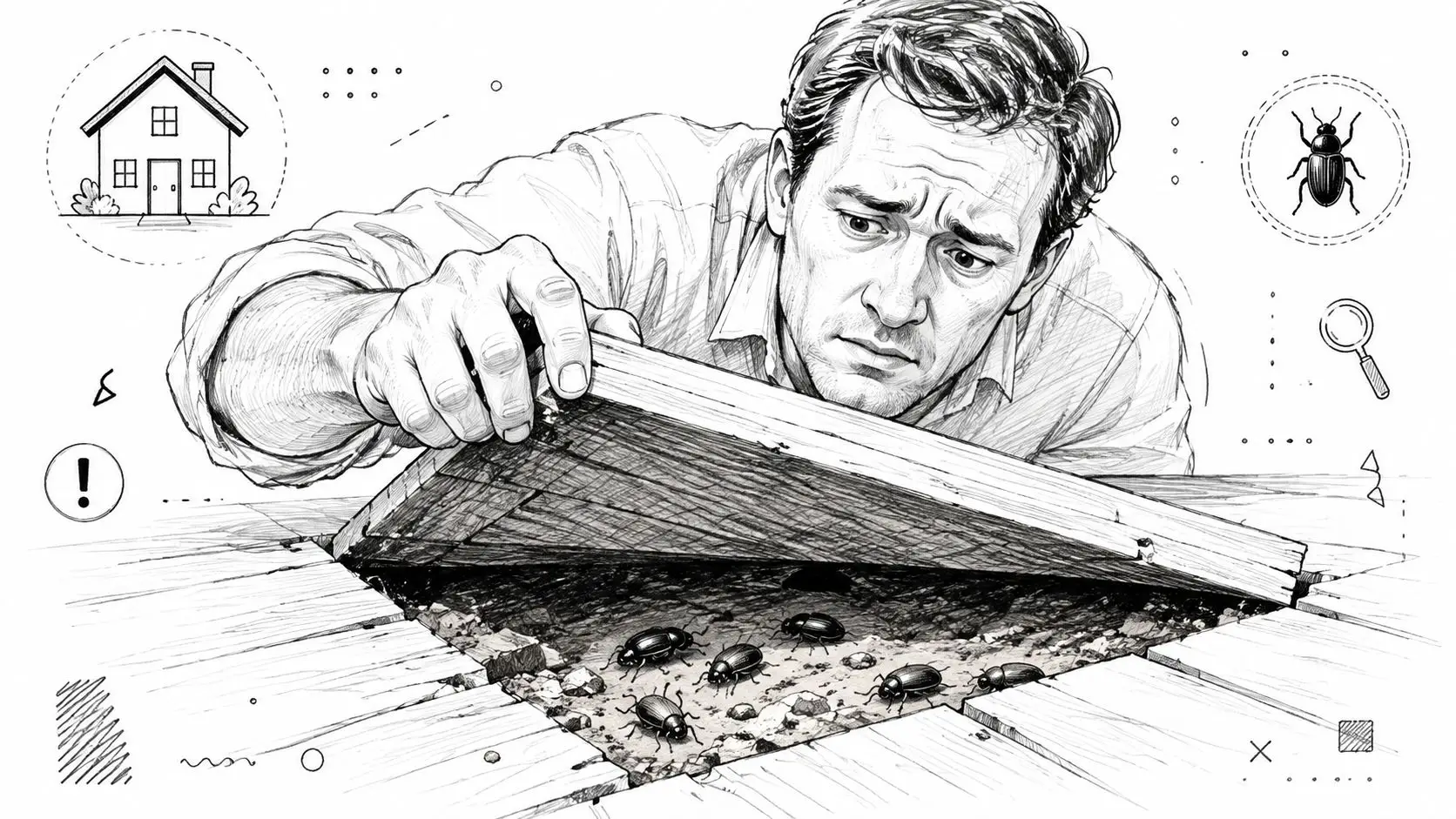
Match the treatment to the life stage
Technicians shouldn't rely on adult sightings alone. Texas scarab identification can require close examination of body length, leg structures, antennal clubs, and other diagnostic features. The Texas screening guide notes that final species identification may require a trained coleopterist using diagnostic structures Texas scarab screening guide.
That distinction affects control. If adults emerge from soil and turf is declining, inspecting the top root zone for larvae is more useful than spraying visible adults. Conversely, indoor carpet beetle activity requires inspection of fabrics, lint, dead insects, nests, and other hidden food sources.
The same careful logic applies to other household pests. If you're dealing with a suspected flea issue rather than beetles, a separate flea removal guide for UK homes illustrates why source identification and cleaning matter before choosing a response.
Use the video below as general visual context, but rely on a local inspection for a species-specific decision.
A responsible inspection should document the insect, locate the active habitat, determine whether larvae or adults are causing the issue, and recommend the narrowest practical treatment.
Getting Local Help from FullScope Pest Control in Magnolia and Southeast Texas
Magnolia needs precise service-area language. The City of Magnolia states that its incorporated city limits cover approximately 5 square miles, with an Extra Territorial Jurisdiction extending a half mile beyond those limits City of Magnolia area service information. A Magnolia mailing address can cover a much larger area than the city boundary, and Magnolia sits in southwest Montgomery County Magnolia area map.
That matters when you're looking for help. A property described as Magnolia may be near FM roads, rural edges, wooded lots, newer subdivisions, or communities closer to Conroe and north Houston. The surrounding habitat can influence whether dark beetles are arriving from turf, mulch, pasture, drainage areas, or exterior lighting.
For persistent sightings, ask for an inspection that answers practical questions:
- What beetle group is present?
- Is it entering from outdoors or developing indoors?
- Is there fabric, wood, turf, or root-zone damage?
- Are beneficial decomposers being mistaken for pests?
- What exclusion, sanitation, monitoring, or targeted treatment is appropriate?
FullScope Pest Control offers residential and commercial pest services, inspections, termite protection, lawn-related treatments, and service coverage in Magnolia-area communities including Conroe, Kingwood, Porter, Montgomery, New Caney, Spring, and Willis. Its service locations also include Cleveland, Kingwood, Conroe, and Porter, which can help homeowners clarify coverage when their mailing address doesn't match the incorporated city boundary.
If black beetles keep returning indoors, turf damage continues, or you can't identify the insect confidently, schedule a local inspection with the beetle specimen or clear photographs available. Ask the technician to explain the identification, the source, and the reason for every recommended treatment before work begins.
Contact FullScope Pest Control to arrange a beetle inspection for your Magnolia, Conroe, Kingwood, or nearby north Houston property. Share where you found the beetles, whether sightings follow rain or lighting, and any visible turf, fabric, or structural damage so the technician can build a targeted plan instead of treating color alone.