1500+ reviews

Termites do not typically bite people, and they are not known to spread disease to humans. The problem is hidden structural damage, plus the risk of making a bad situation worse if you spray the wrong way in a home with kids, pets, or asthma.
That's the part Magnolia homeowners need to hear first. Termites are usually a property threat, not a medical one, but the response you choose can create a safety problem all by itself if you treat the wrong wood, use the wrong product, or wait too long.
The Short Answer and Why It Matters
The straight answer to are termites dangerous to humans is no, not in the direct medical sense. Major pest references say they're not known to spread disease to people, and bites are rare enough that they usually only happen if someone handles a termite directly. That means termites are not a venom issue, not a blood-feeding issue, and not a disease-spread issue. The risk is mostly hidden, slow, and structural, which is why homeowners should stay calm but take the problem seriously.
What matters in Magnolia is how termites behave inside a house. They chew cellulose in wood, so the danger shows up in floors, walls, support beams, and other load-bearing parts of the structure. That kind of damage can sit out of sight until the wood is already compromised. If you want a concise homeowner primer, this termite facts guide covers the basic behavior without the scare talk.
Practical rule: if you see termite evidence, don't start with panic and don't start with spray. Start with a careful inspection of the structure and the moisture conditions around it.
For a Magnolia homeowner, that distinction changes everything. A colony in the wall is a property problem. A bottle of hardware-store pesticide used carelessly can become a household safety problem. That's especially true in north Houston homes where humidity, crawl spaces, slab edges, and older wood framing can give termites exactly the conditions they want.
So the right mindset is simple. Don't ask whether termites are “dangerous” in the abstract. Ask whether they're active in your home, where the moisture is coming from, and what response keeps your family safe while the colony is being eliminated.
The Four Real Risks Termites Pose to Your Household
Structural damage is the main threat
Termites become a real problem when they eat through the parts of the house that hold weight. A joist, subfloor, or wall stud can look solid from the outside while the inside is already weakened. That is how a homeowner ends up with a soft spot in the floor, sagging trim, or a doorway that no longer closes the way it should.
The damage does not have to look dramatic to matter. A small colony can keep feeding inside hidden channels, and by the time the problem shows up, repairs may already be costly. In the U.S., termites damage about 600,000 homes each year, and residents spend an estimated $5 billion annually on control and repair, with a commonly cited average repair bill of $3,000 per affected homeowner. For a clearer breakdown of how that damage shows up in a house, see these top 3 ways termites are harmful to your home (Today's Homeowner termite statistics).
Dust, debris, and irritated airways
Termite debris can bother sensitive people. WebMD notes that breathing termite dust from damaged wood or disturbed colonies may trigger allergies or respiratory irritation, and fine particulates from tunneling, shed wings, and frass can make coughing, sneezing, itchy eyes, or asthma-like symptoms worse in susceptible occupants (WebMD on termites). That is not the same as a major health threat, but it is still an indoor air quality problem.
If someone in the house already has asthma or allergies, do not disturb suspected wood damage casually. Wear protection, keep dust from spreading, and get the area inspected before you start pulling off trim or baseboards.
A damaged wall cavity can be both a pest problem and a breathing problem. Do not treat it like only one of those.
Trip and collapse hazards
Termite damage also creates physical safety risks that people miss because the house still looks normal. Bubbling paint, warped trim, hollow-sounding steps, and soft spots in flooring can lead to slips, missteps, or even a stair failure if the wood underneath has been eaten away. That matters in older Magnolia homes with mixed construction, where one damaged support can affect a larger section of the floor than you would expect.
A child running down a hallway or a guest stepping on a weakened stair tread does not care how minor the infestation seemed last month. If wood feels spongy, pay attention now.
Treatment mistakes can be worse than the termites
The least discussed risk is chemical exposure during a DIY response. Some termite pesticides can be harmful when they are used incorrectly, and trying to get rid of termites can create more risk for children, pets, and anyone with asthma if the product, placement, or ventilation is wrong (TLC Inspectors). That is the tradeoff Magnolia homeowners need to take seriously.
The safest response is not just killing insects. It is controlling the colony without turning the house into a chemical hazard, especially in Magnolia and the greater north Houston service corridor where families, pets, and older homes are often dealing with the same tight indoor spaces.
Termite Species Common in Southeast Texas
Subterranean termites are the usual Magnolia problem
For most Magnolia homes, subterranean termites are the species to respect first. More than 2,500 termite species exist worldwide, but only a minority cause major structural damage, and subterranean termites are the ones most homeowners in Southeast Texas run into. They live in the soil, move through hidden tubes, and enter a house where wood meets moisture and ground contact.
That behavior fits our local housing conditions. Magnolia sits in the greater north Houston service corridor, where humidity and soil contact make termite prevention part of routine home care. A house with a slab edge, pier-and-beam areas, or moist landscaping against the foundation gives subterranean termites a practical path in.
Formosan termites are the faster, more aggressive version
Formosan subterranean termites deserve special attention because they're known for larger colonies and aggressive feeding. You don't need a biology lesson to understand the homeowner takeaway. If a colony is large and hungry, it can do serious damage faster than someone expects, especially if the home already has moisture issues or old wood access points.
That's why a “small sign” should never be dismissed just because the house still looks solid. In Southeast Texas, hidden activity often starts long before anyone sees serious structural damage.
Drywood termites stay inside the wood
Drywood termites behave differently. They don't need soil contact, and they work inside wood members, furniture, and attic framing. The telltale sign is frass, the small pellet-like debris they leave behind, which shows up near sills, trim, or attic wood. If you're comparing species by behavior, drywood termites are the ones that can seem almost invisible until debris gives them away.
The most practical local guide is this termite species overview, because it helps Magnolia homeowners match the damage pattern to the type of termite they're dealing with.
What to look for around a Magnolia house
- Mud tubes on foundations or piers point toward subterranean activity.
- Pellets near wood surfaces point more toward drywood termites.
- Spring swarms after warm rain usually mean a mature colony is nearby.
- Moisture around bathrooms, kitchens, or exterior walls gives termites the edge they need.
If you can match the sign to the behavior, you're already ahead of most homeowners.
Warning Signs Magnolia Homeowners Should Not Ignore
A Magnolia homeowner usually doesn't discover termites by seeing the insects first. They find the evidence. The first sign is often a pile of discarded wings near a window or door after a spring swarm, especially after a warm rain. That tells you a colony is mature enough to send out reproductives, and it's close enough to the house to matter.
The signs, ranked by urgency
Highest urgency: active mud tubes, live swarmers indoors, or wood that feels soft when pressed.
Mud tubes along the foundation, piers, or exterior walls are direct travel routes for subterranean termites. If you break one open and the tube is rebuilt later, that's a strong sign the colony is active. Soft or hollow-sounding wood, especially around bathrooms, kitchens, and exterior doorframes, means damage may already be advanced.
Frass is the next clue. Those tiny, uniform pellets near window sills, attic wood, or trim suggest drywood termite activity. Don't ignore them just because they look like dust. Dust doesn't usually come in neat piles.
A real Magnolia scenario
A homeowner in Magnolia notices a door sticking in the afternoon, assumes it's humidity, and waits a few months. Then they see bubbled paint on the nearby trim and a few wings near the window. That combination usually means moisture and wood damage are already working together. The termite issue may not be the only problem, but it's probably part of the problem.
The final clue is the one people shrug off too easily, warped trim or floor movement that seems minor. It's minor right up until the wood underneath is no longer carrying weight the way it should.
A quick rule helps here. If the sign is visible only once and doesn't involve active insects or damaged wood, you can inspect carefully. If the sign repeats, spreads, or involves soft wood, call right away.
Why DIY Termite Treatment Often Makes Things Worse
The common mistake is thinking a spray can from the hardware store is the cheapest way to solve the issue. It usually isn't. Most over-the-counter termite products don't reach the colony deep enough to solve the underlying problem, and a partial treatment can leave the hidden activity intact while making the homeowner feel like they've handled it.
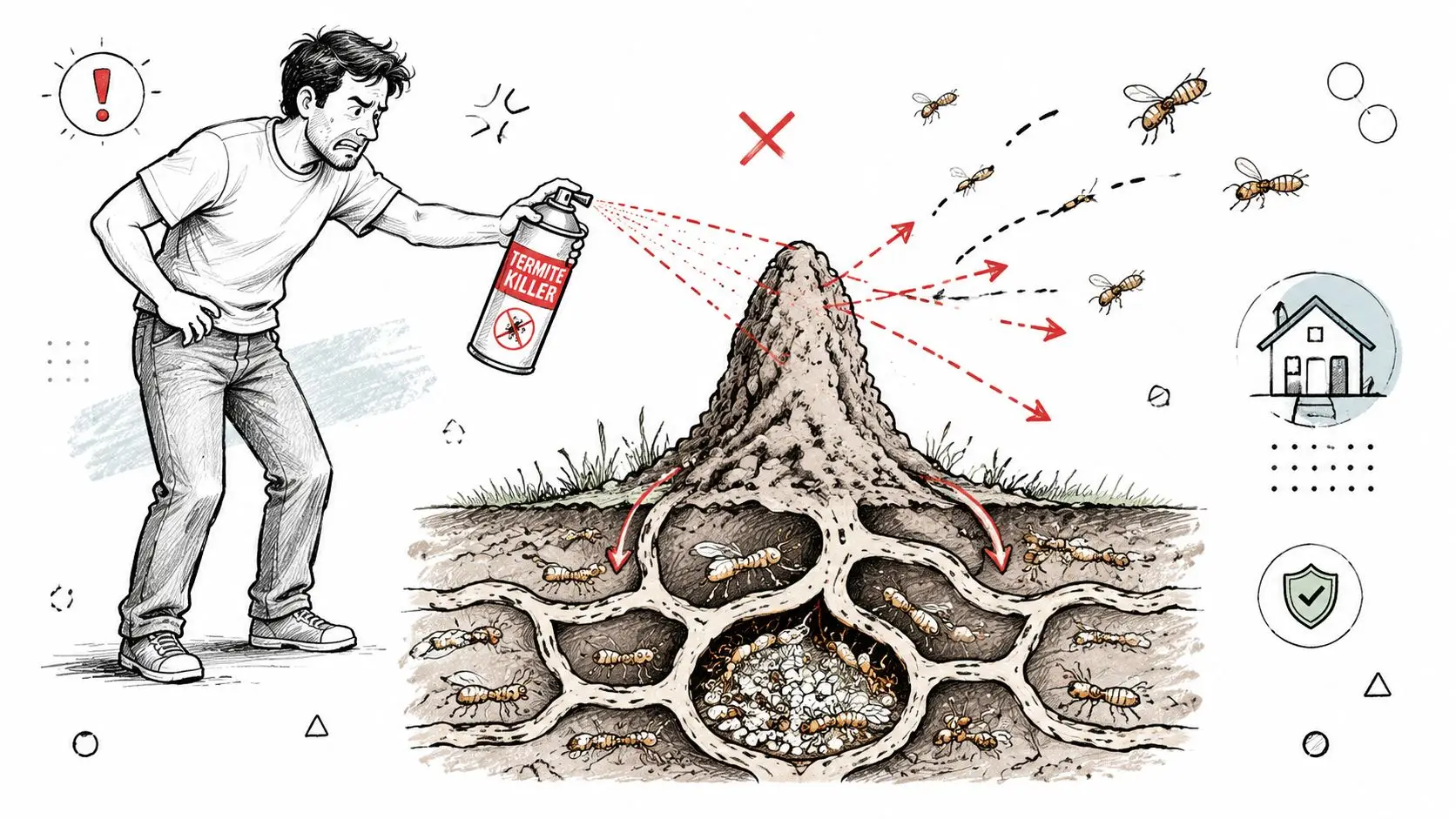
That's the trap. The surface gets treated, but the colony stays active below or inside the structure. In some cases, a rushed DIY job can push termites deeper into hidden wood, which delays the proper fix and keeps damage going longer than it should.
The bigger risk is to the household
If you've got crawling kids, curious pets, or an asthma-sensitive family member, the treatment method matters as much as the target. The issue isn't just whether termites die, it's whether the product is applied safely, ventilated properly, and kept away from places where people live. That's why the question shouldn't be “How do I kill termites myself?” It should be “How do I keep my household safe while the colony is being eliminated?”
A professional treatment plan can include targeted, lower-toxicity, or eco-friendly options rather than a broad indoor chemical dump. FullScope Pest Control offers termite control and prevention with inspection-based treatment planning, which is the kind of approach that makes sense when a home has children, pets, or air-quality concerns.
Watch the sequence, not the sales pitch
- Confirm activity. Don't treat a guess.
- Identify the species. Subterranean, drywood, and Formosan termites don't behave the same.
- Choose the least disruptive control method. Targeted beats scattered.
- Protect the family during treatment. That includes ventilation, access control, and product placement.
DIY can work for garden pests. Termites living inside your structure are a different job.
Prevention, Inspections, and the WDI Report Explained
Build the house so termites have less to work with
Prevention in Magnolia starts with moisture control. Keep soil graded away from the foundation so water doesn't pool where wood and concrete meet. Fix plumbing leaks quickly, keep mulch and firewood off the slab, and make sure crawl spaces are vented properly when the home has them. Termites and excess moisture go hand in hand, so every dry corner you create makes the house less attractive.
A simple monthly walk-around helps. Look at the foundation line, the mulch bed, hose bibs, and any spot where water could soak wood or soil. If the area stays damp, treat it as a termite risk until proven otherwise.
Know the difference between routine inspection and a WDI report
A standard pest inspection is about finding current activity and risk conditions. A Wood-Destroying Insect report, or WDI report, is the form that usually matters during a real estate transaction. It documents visible evidence of termites or other wood-destroying insects and helps buyers, sellers, and agents understand whether the home needs treatment or repair.
| Inspection type | Best for | What it covers | Typical trigger |
|---|---|---|---|
| Routine pest inspection | Ongoing prevention | Active signs, moisture issues, entry points | Annual check or suspicious signs |
| WDI report | Real estate deals | Visible evidence of wood-destroying insects | Listing, purchase, refinance, or lender request |
| Targeted termite re-check | Known history or prior treatment | Follow-up on a specific area or repair | Post-treatment verification |
For landlords and property managers, pest prevention rental properties is a useful reference point because termite and moisture management are part of keeping a unit rentable, not just reacting after damage shows up.
Use Magnolia timing, not generic timing
In the greater north Houston corridor, annual inspections make sense because the climate keeps termite pressure active. If you're in Magnolia, Conroe, Spring, Willis, Kingwood, Porter, or nearby communities, don't wait for obvious damage. An annual inspection is cheaper than discovering a compromised sill plate after the fact.
When to Call a Licensed Termite Professional
If you've seen active mud tubes, discarded wings indoors, soft wood, or repeated moisture-related warning signs, call within days, not weeks. If you're buying or selling a home, request a WDI report. If you're just trying to stay ahead of the problem, schedule an annual inspection before swarm season shows up at your windows.
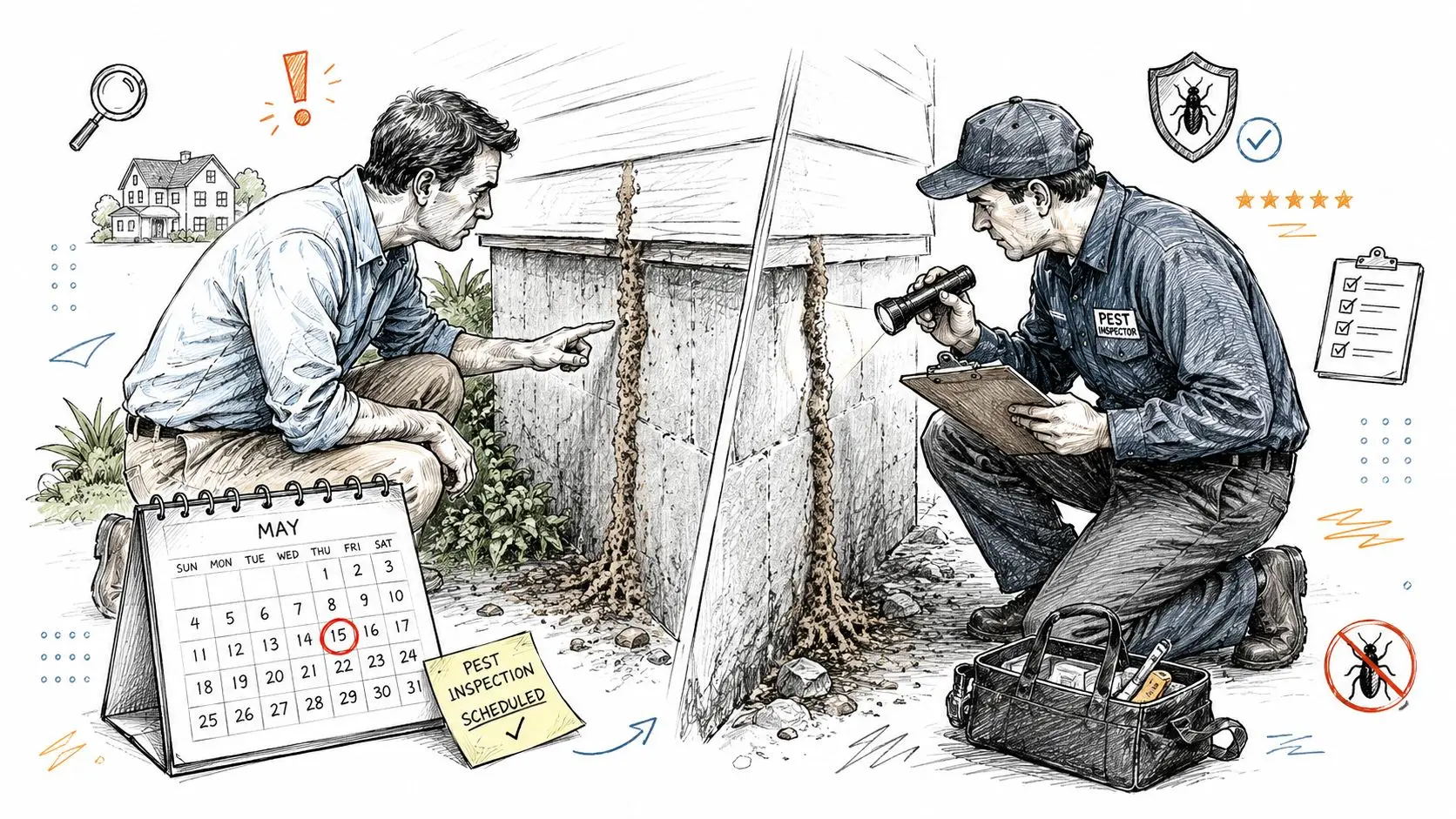
A proper Magnolia-area termite visit should include a full exterior and interior walk, moisture readings, identification of the likely species, and a written treatment plan. Depending on what's found, that plan may call for localized treatment, baiting, or a broader protection strategy around the structure. The point is to match the response to the infestation, not guess.
The best termite call is the one you make before the floor starts feeling soft.
FAQ, since homeowners ask the same three questions every time.
Do termites usually bite people? No. Bites are rare and usually happen only if a termite is handled.
Are termites dangerous if I don't see them? Yes, because hidden damage can keep spreading long before the signs become obvious.
Should I spray first or inspect first? Inspect first. Spraying without a plan can create more risk than relief.
If you're in Magnolia or anywhere in the greater north Houston service corridor and you've found termite evidence, don't wait for the damage to declare itself. Schedule a professional inspection, protect the house, and keep your family out of the path of a bad DIY decision.