1500+ reviews


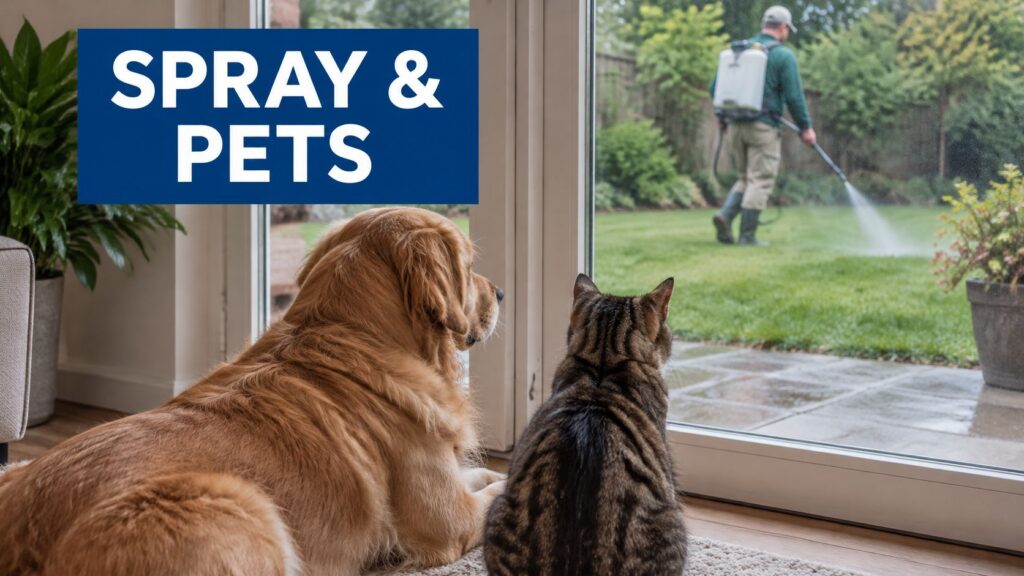
No mosquito spray is automatically safe for pets. The closest thing to a safe spray is an EPA-registered product used exactly as its label directs, and those labels commonly keep animals off treated areas until the application has dried, usually about 1 hour.
So why is every concentrate, can and door-hanger card sold as pet-friendly? Because marketing answers a different question than the label does. A label states the species, the site, the drying time and the maximum number of applications. Packaging copy states how the buyer is supposed to feel.
That gap is where pets get exposed: a dog-only product dabbed on a cat, a fogger run on a breezy afternoon, a dog let back onto slick grass twenty minutes after the sprayer left. "Mosquito spray safe for pets" describes a conclusion about one product, one yard and one animal. It was never a product category.
Which Mosquito Sprays Are Safe for Pets and When
A spray's suitability depends on its formulation, where it is applied, the label's re-entry instructions, and the animals in the household. The National Pesticide Information Center's pyrethrins fact sheet says mosquito adulticides used according to label directions do not harm people, pets, or the environment. Labels commonly require people and animals to stay off treated areas until the application is dry. Follow the specific product's instructions, including its limits on how often it can be applied.
Active ingredients matter, but they do not tell the whole story. Professional adulticides may include plant-derived pyrethrins or synthetic pyrethroids, such as permethrin, sumithrin (d-phenothrin), and deltamethrin. These ingredients affect the insect nervous system. Check the product label for its active ingredient, registration number, permitted species and sites, and re-entry time. FullScope offers mosquito control barrier spray and yard mosquito control; ask which product and label instructions apply to your treatment.
The Label Beats the Word Natural
The NPIC fact sheet notes that pyrethrins are used in more than 2,000 registered pesticide products. So “pyrethrin-based” alone does not tell you whether a particular application fits your pet or yard. The same fact sheet warns that exposure through swallowing, breathing, or a high dose can cause drooling, tremors, poor coordination, breathing difficulty, or seizures in dogs. The route and amount of exposure matter, as do the label's directions.
Practical rule: If a product is described as “natural” or “low toxicity,” find its registration number and re-entry instructions before letting a pet into the treated area.
Mosquito treatments differ in how pets may encounter them. Residual barrier sprays leave product on foliage and fence lines. Automated misting systems release treatments through positioned nozzles on a timer. The EPA's guidance on residential misting systems says these systems commonly use pyrethrins or permethrin, and notes that exposure can occur through direct spray, treated surfaces, or inhalation. Fogging puts adulticide into the air for a short period. The EPA says it does not expect risks of concern to people when misting systems are used according to their labels, while cautioning that no pesticide is entirely risk-free.
| Spray type | Typical active ingredients | How pets are exposed | Key pet precaution |
|---|---|---|---|
| Residual yard barrier spray | Pyrethrins, permethrin, or other pyrethroids | Walking on treated grass or shrubs, or licking wet surfaces | Keep pets off treated areas until dry, following the label |
| Automated misting system | Pyrethrins or permethrin, as described by the EPA | Breathing mist or contacting nozzles and treated plants | Keep pets away during cycles and check that the product label permits the use |
| Fogging or adulticide treatment | Pyrethrins, sumithrin, or deltamethrin | Breathing airborne product or encountering drift | Bring pets indoors and follow the provider's re-entry instructions |
Before treatment, move animals away from the application area. Bring food and water bowls, toys, and bedding indoors so they do not collect spray or become objects pets chew. Keep pets from wet surfaces, including foliage and outdoor furniture, until the product is dry and the label allows re-entry.
Fish and other aquatic animals need separate consideration. Some insecticides can harm aquatic life, even when an outdoor application is suitable for land pets. Ask how to protect ponds, and keep indoor tanks away from airflow from treated areas.
Dogs, Cats and Other Pets Need Different Rules
Say a household has a twelve-year-old lab mix and a two-year-old cat, and someone treats the dog with a permethrin spot-on bought for dogs. Two days later the cat is twitching and unsteady. Nothing was sprayed in the yard. The exposure traveled through the dog.
Veterinary references identify permethrin-containing dog formulations as inappropriate for cats because cats are unusually susceptible to pyrethroid toxicosis, with reported effects including muscle fasciculations, tremors and seizures, as the Merck Veterinary Manual's page on mosquitoes of animals sets out. Residue routes matter as much as bottles: a treated dog that grooms or sleeps against a cat transfers product, and a cat walking across a patio sprayed an hour earlier picks it up on its paws and then cleans them.
A product labeled for dogs is a dog product. It is not a pet product, and it never becomes one by dilution, by age, or by how long it's been on the shelf.
Human repellents are their own trap. DEET should not be applied to dogs or cats, and the Merck Veterinary Manual's guidance on ectoparasiticides used in small animals reports that DEET use in pets has caused weakness, paralysis, liver disease and seizures. A pesticide goes onto an animal only where the label names that species and that application site, and some labels exclude puppies younger than 12 weeks outright. Small or thin-skinned dogs sometimes develop temporary itching or redness at a topical application site even with an appropriate product.
| Pet | Main risk | What to do |
|---|---|---|
| Dogs | Pyrethroid sensitivity to direct or topical product, temporary skin reactions in small or thin-skinned breeds | Use only products labeled for dogs and follow the drying time |
| Cats | Pyrethroid toxicosis from dog-only products or residue from groomed dogs | Never use dog-only permethrin products; keep cats indoors during treatment |
| Puppies under 12 weeks | Some labels exclude this age group | Confirm the label allows the product before any exposure |
| Dogs and cats, any product | DEET linked to weakness, paralysis, liver disease and seizures | Do not apply human DEET repellents to animals |
| Birds | Inhalation and contact with treated surfaces | Remove birds or cover cages during application and until dry |
| Fish and aquatic animals | Insecticides can be hazardous to aquatic life | Cover ponds and keep aquatic animals away from drift |
If you're comparing spot-on products for a dog, the weight bands on the carton decide the dose, which is a useful reminder of why one tube can't serve two animals; this walkthrough of Advantix flea control, weight bands and timing shows how the packaging handles it. Before any yard treatment, tell the applicator about every species in the house, plus ages, medications and where each animal sleeps.
How to Protect Pets Before, During and After Treatment
Most exposure calls trace back to preparation, not to the product. A bowl left out, a cat let out the back door, a dog walked across still-wet turf because the appointment ran long. Here's the sequence that closes those gaps.
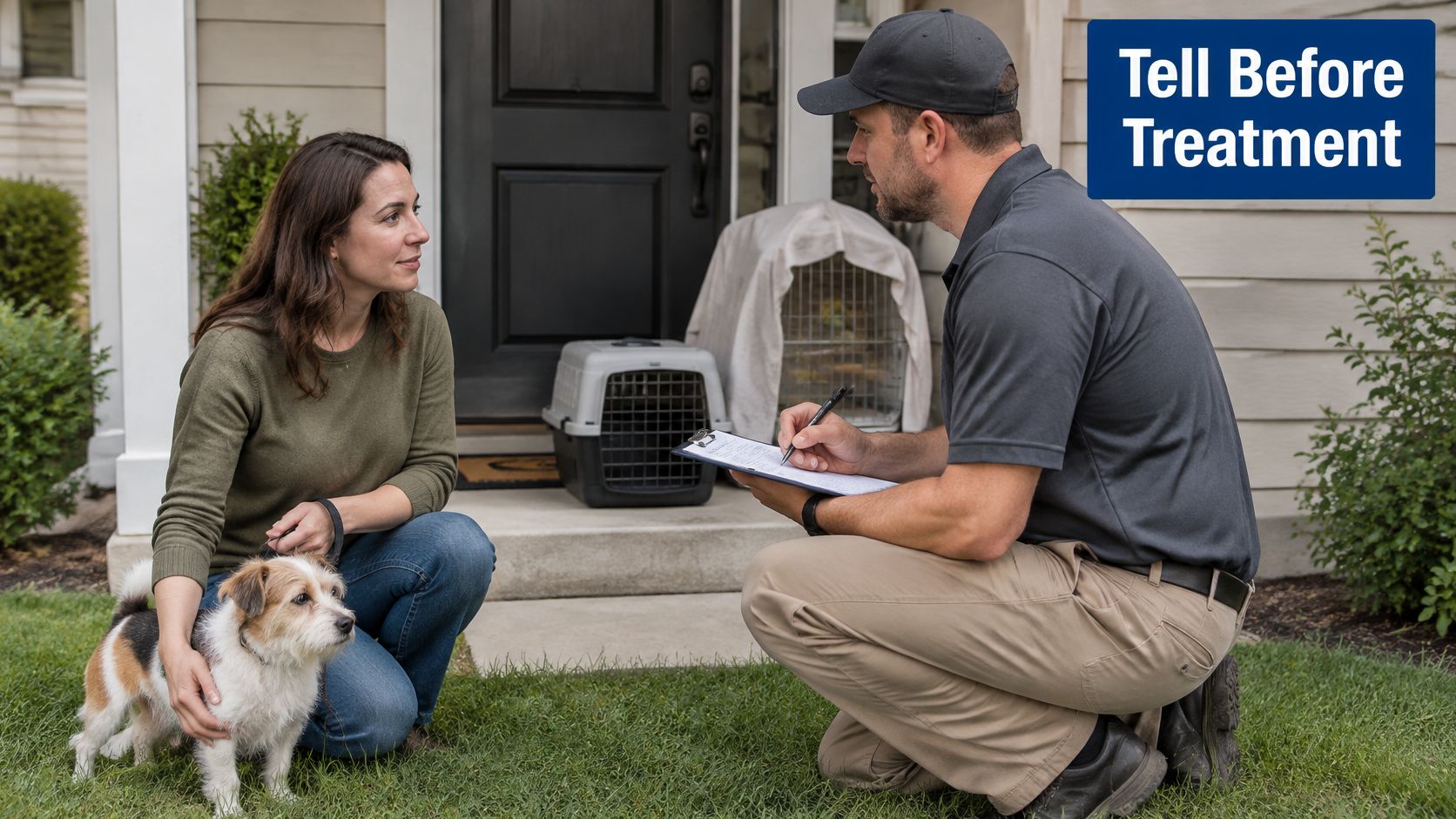
- Name every animal before the visit. Mention the cat, the birds, the pond fish and any pet on medication, not just the dog that meets the technician at the door. Species and health status change which product is appropriate and where it can be placed.
- Move animals out, or into a closed room away from the work area. Dogs, cats and birds leave the treated zone before the sprayer starts. Birds are especially vulnerable to anything airborne, and a closed interior room with the door shut is the fallback when a pet can't leave the property.
- Bring bowls, toys, bedding and litter boxes inside. A water bowl left on the patio collects overspray, and a pet that drinks from it gets a dose the label never intended.
- Cover what can't move. Outdoor furniture, grills and pet shelters get a sheet or get shifted into the garage. Anything left uncovered gets rinsed before use.
- Keep pets off wet grass, leaves and fur. Use a leash and a dry route for the first few hours, and wipe paws and belly with a damp cloth once surfaces are dry, if the label allows it.
- Wait for dry, not for the clock. The hour on the label is an estimate for normal summer conditions. Shade, humidity and a cool morning stretch it, so if the foliage still feels slick, the window isn't over.
- Secure ponds and aquatic animals. Cover the pond, pause pumps that splash, and keep indoor tanks out of the drift path until the yard is dry.
Texas public health guidance supports that routine. The Texas Department of State Health Services states that when EPA-registered products are applied according to label directions by a licensed professional, aerial mosquito spraying does not pose a health risk to people, pets or the environment in the treated area, and it describes the application volume as approximately 1 to 2 tablespoons of insecticide per acre, per DSHS guidance on aerial mosquito control. The same guidance still tells residents to bring pets, pet-food dishes and children's toys indoors, cover outdoor furniture and grills, and rinse uncovered items before use.
The indoor side of preparation follows the same logic, and our guide to how to prepare your house for pest control covers the rooms and surfaces people usually forget.
What to Do If a Pet Is Exposed
Most exposures aren't dramatic. An oversprayed coat. A cat licking a treated patio. A dog snatching a mouthful of wet grass. A pet standing near a nozzle during a misting cycle. What happens in the next ten minutes matters more than the product's marketing.
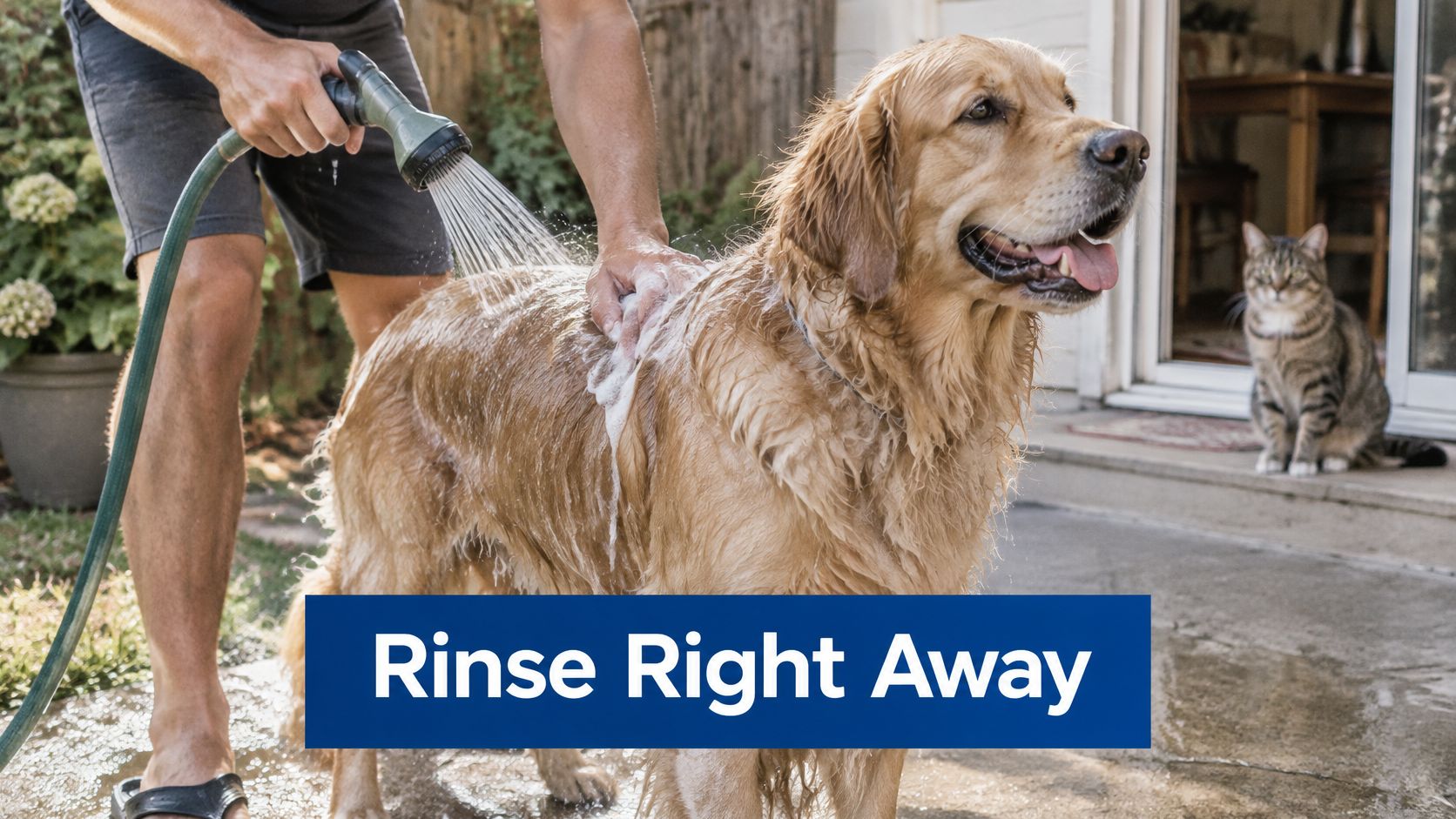
Move fast, in this order:
- Get the pet to fresh air and away from the treated area. Distance stops the exposure from continuing, whether the route was inhalation, skin contact or a wet coat.
- Stop the licking. Rinse contacted skin gently with lukewarm water and don't scrub, since a scrubbed coat drives residue into the skin and encourages more grooming.
- Keep the label. Product name, active ingredient and registration number are what a veterinarian needs, which is why the EPA's guidance on reading the pesticide label before use around pets also tells owners to store products in their original containers.
- Call a veterinarian or an animal poison-control resource. Describe the product, the route and the time that has passed.
- Don't improvise. No induced vomiting, no home remedies, no dish-soap bath on a cat, unless a professional tells you to do it.
Signs that need same-day veterinary care: tremors, seizures, breathing difficulty, marked weakness, persistent vomiting or heavy drooling. Mild itching or redness on a small dog can follow topical contact and still deserves a call, because the reaction is easier to judge with the label in hand.
Skip the internet remedies and call the provider who applied the product. They can read you the active ingredient, the dilution and the re-entry time off the label used on your yard, which is more precise than a forum thread about a different product in a different state.
Lower-Toxicity Options to Discuss With Your Provider
Lower toxicity doesn't mean chemical-free. It means fewer actives, narrower placement and less residue left where a pet walks, sniffs and licks.
The lowest-chemical step is water management. Montgomery County Mosquito Control describes an approach that combines multiple control methods alongside surveillance and public health support, and its guidance emphasizes eliminating standing water around homes and businesses because breeding sites form in very small containers. A county precinct page makes the scale concrete: mosquitoes can develop in water as small as a bottle cap, and a 6-inch puddle can produce more than 1,000 mosquitoes in one week. Emptying the plant saucers, the tarp, the bucket and the gutter does more for a pet household than moving to a stronger product.
| Option | Chemical use | Question to ask the provider |
|---|---|---|
| Source reduction (emptying containers, clearing drainage) | None | Which breeding sites on this property need attention first? |
| Targeted spot treatment of resting areas | Limited to shaded vegetation and fences | Can treatment be confined away from pet paths and water bowls? |
| Barrier spray with a label-listed species | Residual product on yard surfaces | Which species does the label allow and what is the drying time? |
| Automated misting system | Timed mist through nozzles | Where are nozzles placed relative to pet areas and how often does the system run? |
Four questions worth asking before anything is applied:
- Which active ingredient and which registration number appear on the label of the product proposed for your yard?
- Which species does that label permit, and does it allow the product on the surfaces where your animals spend time?
- What is the printed re-entry time, and how will the technician confirm dry conditions on the day?
- Would a spot treatment of shaded resting sites cover the same mosquito pressure with less product across open lawn?
FullScope Pest Control selects products and application methods to be safe around gardens, pets and livestock when applied correctly, and we'd rather explain the label than have you guess at it.
Confirm Your Magnolia Service Area Before Booking
Magnolia is its own city in southwestern Montgomery County, inside the Houston metro area, and it isn't the same place as the unincorporated communities and neighboring county towns around it. The city's official economic development profile reports 5,836 residents in 2024 and a municipal area of approximately 5.7 square miles, according to Magnolia's community profile.
The growth curve explains why yards differ so much from street to street. US Census QuickFacts lists Magnolia's 2010 Census population as 1,393 and a July 2025 estimate of 8,095, per Census QuickFacts for Magnolia city. Newer subdivisions beyond the historic center often sit on different drainage, different lot grading and different standing-water problems than the older blocks do.
FullScope Pest Control serves Magnolia and surrounding communities in southwestern Montgomery County, subject to address-level scheduling and technician availability. That's not a claim of identical coverage for every address in the wider county, and you can check mosquito control availability near you before you book.
Confirm five things, in this order:
- The street address is inside the current service area, not a nearby community with a Magnolia mailing address.
- Every animal in the house is named, including cats, birds and fish, along with where each one stays during treatment.
- The method proposed for your property is described specifically, not as a generic yard spray.
- Containers, gutters and drainage on that lot are addressed alongside any spray, since water is where the next generation starts.
- The plan arrives in writing, with the drying time stated, before anyone touches a nozzle.
If you'd rather have someone walk the yard with you than decode a label alone, FullScope Pest Control offers a Mosquito Control Barrier Spray and MistAway automated misting systems, with products and application methods chosen to be safe around gardens, pets and livestock when applied correctly. Tell us the full animal count when you call, including the cat and the pond fish, and we'll give you the re-entry time before anything goes in the tank. You can book a mosquito inspection in Magnolia and surrounding Montgomery County communities, and have the drying window in writing before the truck arrives.