 1500+ reviews


How to Get Rid of Pack Rats: A Step-by-Step Plan
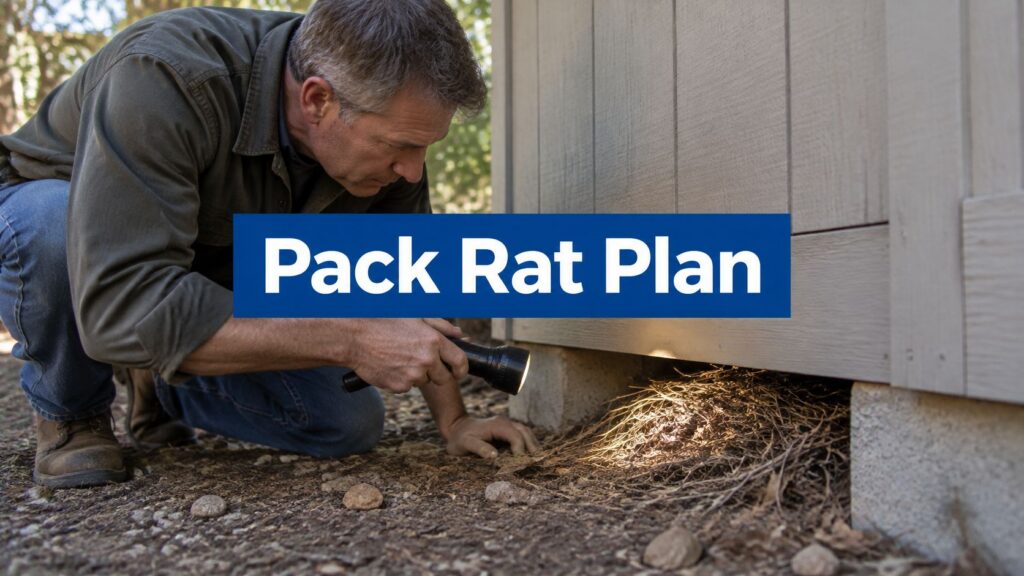
You hear it around two in the morning: a slow shuffle across the ceiling, then a clunk, like something small has dropped a stick on the drywall. Come daylight there's a heap of twigs and shredded insulation behind the water heater, a chewed extension cord, and a garage smell that won't air out. That sequence is the standard opening of a pack rat problem in Southeast Texas, and the animal behind it isn't the rat many people picture. Most homeowners grab a box of poison or a few mouse traps and lose a week to it. The order that works is fixed: identify the animal, strip out the food and shelter it depends on, trap whatever is active, then seal the building so the next one can't move in. Skip that last step and you'll be running the same routine again next season. Tell Pack Rats Apart from Other Rodents The first useful question isn't "what kills rats," it's "which animal is in the building." Pack rats are woodrats, a different animal from the roof rats and Norway rats that share attics and crawlspaces across the Houston area, and that difference changes everything about where you set hardware and where you seal. Go by sign, not by the blur you catch at midnight. Sign Pack rat (woodrat) Roof rat Norway rat Nest Stick and debris pile, often outdoors or in attics Shredded material in attics, wall voids or shrubs Burrows and runways at ground level Droppings Larger pellets grouped in piles near the nest About 1/2 inch, spindle-shaped About 3/4 inch, blunt-ended Typical location Crawlspaces, sheds, rock piles, dense landscaping Attics, rooflines, tree canopy Basements, ground floors, sewer lines Hoarded items Shiny objects, bones and debris stored in the nest Food caches only, rarely objects Food stored in the burrow, not collections The nest settles most arguments. A woodrat hauls sticks, seed pods, foil, bolts and bones into one spot and builds a midden that hardens over months. Roof rats shred insulation and gnaw fruit in the tree canopy, and Norway rats dig burrows along the foundation and travel the same ground-level runways every night. What to document before you touch anything Photograph and map these five things, because they tell you whether you're chasing an animal that lives indoors or one that commutes from the brush: Nest architecture: sticks and debris mean woodrat, shredded insulation means roof rat. Droppings and gnaw marks: photograph both next to a coin or a tape measure for scale. Night sounds: scratching at dusk and just before dawn points to a nocturnal rodent working a defined route. Entry points: every gap at roofline, soffit, vent, foundation and utility penetration. The active zone: indoors, attic level, or outdoors in brush, rock piles and sheds. That outdoor habit is the part generic rat advice misses. The EPA's rodent identification and prevention guidance pairs exclusion with removing food, water and nesting opportunities, and that framing fits woodrats better than an indoor trapping campaign does. Write it down before you move anything: a photo of the midden, the droppings and the gap you found is the only record you'll have once traps and sealant are in place. Pulling one nest out of a shed almost never ends the problem. If the brush pile behind the fence, the fallen pears under the tree and the gap above the garage door stay put, another woodrat claims the space within weeks. Remove the Food, Water and Nesting Cover They Need Traps catch the rat that's there now. Habitat work decides whether a replacement shows up, which is why I'd spend the first afternoon on attractants instead of hardware. Woodrats follow shelter and food, and both are usually close to the building, within easy reach of the burrows and runways you mapped during inspection. Start in the yard Fallen fruit: pick up what drops under citrus, pear and fig trees, because a ground-level food supply makes the yard a permanent territory. Brush and rock piles: clear them within a few feet of the foundation, since those piles are prime nest sites. Firewood and lumber: stack it off the ground and away from the wall, not against the siding. Dense shrubs and vines: trim them back so nothing touches the roofline or soffit, because woodrats climb. Shut off the water A dripping hose bib, an air conditioner condensate line, a pet bowl left out overnight and standing water in pots, tarps or clogged gutters all support a rat population through a dry Texas summer. Fix the washers, redirect the condensate, and empty the bowls at dusk. That last point matters more than people expect. A rat that has to cross open ground every night to reach water is a rat considering the neighbor's shed instead. Then tighten up indoors Pantry goods and pet food go into hard-sided containers with lids that latch. Cardboard boxes, fabric scraps and old insulation in the attic are nesting material, so bag them and get them out. Check stored equipment, riding mowers and vehicles parked for weeks, because pack rats hoard shiny objects and chew wiring in engine bays and stored appliances. Garbage deserves its own line. Open bins and overflowing bags feed rats and the insects they eat, so household trash needs lidded, latching containers rather than open cans. Larger sites handling real volume need purpose-built containment like these covered trash bins for venues rather than open containers. This week, do three things: clear one yard zone completely, seal one feed source in a latching bin, and log what you removed. That gives you a baseline to compare against when you recheck the area. Trap Active Pack Rats and Clean Up Safely Walk the active zone with a flashlight before you set anything. You're looking for runways marked by droppings, greasy rub marks along walls, and nest material dragged into a corner, because those routes repeat night after night. Buy rat-sized snap traps, at least six of them. Mouse traps are too small and too weak
What Attracts Rats to Your Yard: Food, Water and Shelter
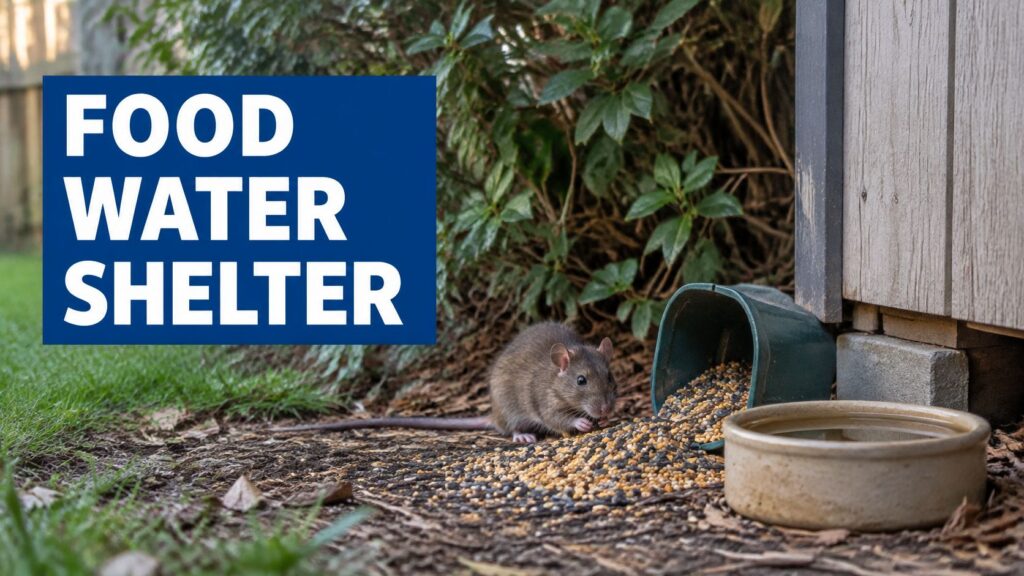
You've mowed the lawn, closed the trash lid, and cleared the patio, but a rat still darts along the fence at dusk. Before you assume the yard needs another cleanup, look beneath the bird feeder, beside the hose connection, and behind the shed. A property can look well maintained while still supplying everything a rat needs. Understanding what attracts rats to your yard means looking beyond the animal you spotted. For homeowners in Magnolia, Texas, and surrounding Southeast Texas communities, the useful question is whether the property provides dependable meals, moisture, protected hiding places, or access to a building. Four Things That Draw Rats Into Your Yard Rats come to a yard for food, water, shelter, and access to protected spaces. Food brings them to a feeding spot, water and cover help them remain nearby, and structural gaps can connect outdoor activity with indoor nesting areas. Yard attractants and the first fix for each Attractant Common yard example First fix Food Open trash, spilled birdseed, pet bowls, grill grease Lidded metal or thick plastic bins and daily cleanup Water Leaking hose bibs, clogged gutters, pet water, pooled water under pots Repair leaks, clear gutters, and drain containers Shelter Brush piles, woodpiles, stacked lumber, dense ground cover Remove debris, raise woodpiles, and cut back brush Access Gaps under sheds, foundation cracks, utility openings, burrows Seal structural gaps and arrange appropriate control before blocking active burrows These conditions often sit close together. A trash container beside dense shrubs, for example, provides a meal near a concealed retreat. A leaking faucet beside a shed adds another resource without creating an obvious mess. Look for the combination, not just the most noticeable problem. A tidy yard can still supply meals Say your lawn is short and your garbage stays contained, but a feeder drops seed into a flower bed and a pet bowl remains outside overnight. A rat can feed without opening a trash bag or disturbing the patio. If nearby storage provides cover, the property offers more than an occasional snack. Practical rule: Remove the condition that supports repeated visits, not just the animal you happened to see. That distinction explains why partial fixes disappoint homeowners. Trimming shrubs won't secure animal feed, and closing a foundation gap won't remove a meal beneath the feeder. Treat the yard as a connected feeding and nesting system. Before buying a deterrent or starting a major landscaping project, walk the property with a notepad. Mark where food, water, shelter, and access overlap, then choose work that breaks those connections. Food Sources That Keep Rats Coming Back A single open trash can can support a rat colony for weeks. The EPA's rodent-prevention guidance points to accessible garbage and exposed food as the conditions worth correcting first, because refuse that stays reachable keeps drawing rats back to the same feeding spot. The pattern holds in any setting: where waste is easy to reach, rat activity builds around it. Inspect the ground around the container as carefully as the lid. At home, the menu runs wider than garbage. Barbecue grease, discarded meat, fallen produce, overflowing bins, exposed compost scraps, birdseed, and pet food all count. Reliability matters more than volume: a small meal available every night gives rats a reason to return to the same location, while a one-time spill that gets cleaned up does not. Remove the food rather than relocate it The EPA recommends tightly closed kitchen-garbage containers, covering newly added compost material, cleaning accessible food and water sources, and temporarily stopping bird feeding during an infestation. Apply that advice to every feeding area on the property, not just the kitchen bin. Secure stored food: Use metal or thick-plastic containers with tight-fitting lids for seed and animal feed. Finish pet feeding: Remove uneaten food afterward and don't leave bowls accessible overnight. Keep necessary drinking water available to pets in a protected location. Clean the spill zone: Collect fallen produce, spilled seed, and food beneath outdoor furniture daily. Degrease cooking areas: Empty and clean grill grease trays and remove residue around the cooking station. Moving a feeder away from a window doesn't eliminate the seed already on the ground beneath it. During active rat trouble, pause feeding entirely rather than shifting the feeding station. Use this video alongside your inspection of outdoor feeding and waste areas. If residue remains around your garbage storage, follow our guide to cleaning trash bins so they don't attract pests. Backyard poultry keepers face the same problem inside the coop: Pure Grubs' guidance on how to stop rats stealing chicken feed offers a focused resource for checking the coop's food supply. Water and Shelter That Let Rats Settle In Start with outdoor moisture because many sources are straightforward to locate and correct. Check hose bibs, irrigation overspray, clogged gutters, drainage depressions, pet-water bowls, ponds, air-conditioner condensate discharge, and water trapped in plant saucers. CDC technical guidance on rat habitat identifies food, water, and shelter as the primary habitat elements governing rat population density. Reliable water reduces the distance animals need to travel, while protected cover limits their exposure to people and predators. A leak beside stored wood combines both resources in a compact space. Work outward from persistent moisture Check water sources while the irrigation is running and again after it stops. A connection that looks dry during a casual walk may leak only under pressure. Empty unnecessary water-holding containers, clear gutters, and correct drainage without directing runoff toward the foundation. Then examine harborage, the protected spaces where rodents hide or nest. Dense vegetation, brush piles, stacked lumber, discarded materials, crawl-space openings, and burrows beneath foundations deserve attention. Look behind objects rather than judging the yard from the patio. Use a zone-by-zone work order: Repair moisture problems first: Fix leaking connections and identify where runoff repeatedly collects. Remove or raise stored materials: Discard unused items and arrange useful materials so the ground beneath them remains visible. Open the building edge: Keep grass short, cut back dense brush, and trim plants touching walls. Clear
Mosquito Spray Safe for Pets: A 2026 Buyer’s Guide
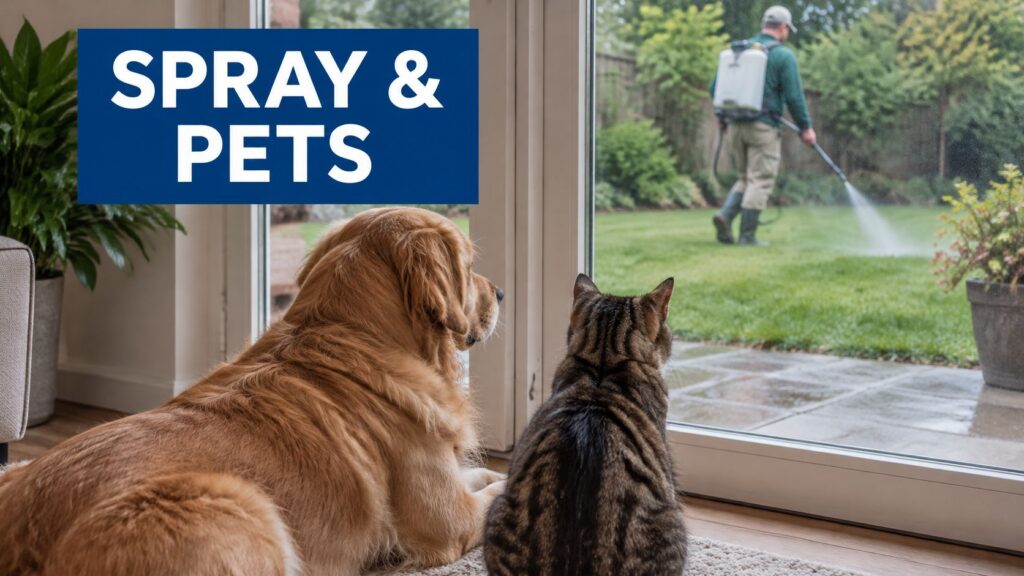
No mosquito spray is automatically safe for pets. The closest thing to a safe spray is an EPA-registered product used exactly as its label directs, and those labels commonly keep animals off treated areas until the application has dried, usually about 1 hour. So why is every concentrate, can and door-hanger card sold as pet-friendly? Because marketing answers a different question than the label does. A label states the species, the site, the drying time and the maximum number of applications. Packaging copy states how the buyer is supposed to feel. That gap is where pets get exposed: a dog-only product dabbed on a cat, a fogger run on a breezy afternoon, a dog let back onto slick grass twenty minutes after the sprayer left. "Mosquito spray safe for pets" describes a conclusion about one product, one yard and one animal. It was never a product category. Which Mosquito Sprays Are Safe for Pets and When A spray's suitability depends on its formulation, where it is applied, the label's re-entry instructions, and the animals in the household. The National Pesticide Information Center's pyrethrins fact sheet says mosquito adulticides used according to label directions do not harm people, pets, or the environment. Labels commonly require people and animals to stay off treated areas until the application is dry. Follow the specific product's instructions, including its limits on how often it can be applied. Active ingredients matter, but they do not tell the whole story. Professional adulticides may include plant-derived pyrethrins or synthetic pyrethroids, such as permethrin, sumithrin (d-phenothrin), and deltamethrin. These ingredients affect the insect nervous system. Check the product label for its active ingredient, registration number, permitted species and sites, and re-entry time. FullScope offers mosquito control barrier spray and yard mosquito control; ask which product and label instructions apply to your treatment. The Label Beats the Word Natural The NPIC fact sheet notes that pyrethrins are used in more than 2,000 registered pesticide products. So “pyrethrin-based” alone does not tell you whether a particular application fits your pet or yard. The same fact sheet warns that exposure through swallowing, breathing, or a high dose can cause drooling, tremors, poor coordination, breathing difficulty, or seizures in dogs. The route and amount of exposure matter, as do the label's directions. Practical rule: If a product is described as “natural” or “low toxicity,” find its registration number and re-entry instructions before letting a pet into the treated area. Mosquito treatments differ in how pets may encounter them. Residual barrier sprays leave product on foliage and fence lines. Automated misting systems release treatments through positioned nozzles on a timer. The EPA's guidance on residential misting systems says these systems commonly use pyrethrins or permethrin, and notes that exposure can occur through direct spray, treated surfaces, or inhalation. Fogging puts adulticide into the air for a short period. The EPA says it does not expect risks of concern to people when misting systems are used according to their labels, while cautioning that no pesticide is entirely risk-free. Spray type Typical active ingredients How pets are exposed Key pet precaution Residual yard barrier spray Pyrethrins, permethrin, or other pyrethroids Walking on treated grass or shrubs, or licking wet surfaces Keep pets off treated areas until dry, following the label Automated misting system Pyrethrins or permethrin, as described by the EPA Breathing mist or contacting nozzles and treated plants Keep pets away during cycles and check that the product label permits the use Fogging or adulticide treatment Pyrethrins, sumithrin, or deltamethrin Breathing airborne product or encountering drift Bring pets indoors and follow the provider's re-entry instructions Before treatment, move animals away from the application area. Bring food and water bowls, toys, and bedding indoors so they do not collect spray or become objects pets chew. Keep pets from wet surfaces, including foliage and outdoor furniture, until the product is dry and the label allows re-entry. Fish and other aquatic animals need separate consideration. Some insecticides can harm aquatic life, even when an outdoor application is suitable for land pets. Ask how to protect ponds, and keep indoor tanks away from airflow from treated areas. Dogs, Cats and Other Pets Need Different Rules Say a household has a twelve-year-old lab mix and a two-year-old cat, and someone treats the dog with a permethrin spot-on bought for dogs. Two days later the cat is twitching and unsteady. Nothing was sprayed in the yard. The exposure traveled through the dog. Veterinary references identify permethrin-containing dog formulations as inappropriate for cats because cats are unusually susceptible to pyrethroid toxicosis, with reported effects including muscle fasciculations, tremors and seizures, as the Merck Veterinary Manual's page on mosquitoes of animals sets out. Residue routes matter as much as bottles: a treated dog that grooms or sleeps against a cat transfers product, and a cat walking across a patio sprayed an hour earlier picks it up on its paws and then cleans them. A product labeled for dogs is a dog product. It is not a pet product, and it never becomes one by dilution, by age, or by how long it's been on the shelf. Human repellents are their own trap. DEET should not be applied to dogs or cats, and the Merck Veterinary Manual's guidance on ectoparasiticides used in small animals reports that DEET use in pets has caused weakness, paralysis, liver disease and seizures. A pesticide goes onto an animal only where the label names that species and that application site, and some labels exclude puppies younger than 12 weeks outright. Small or thin-skinned dogs sometimes develop temporary itching or redness at a topical application site even with an appropriate product. Pet Main risk What to do Dogs Pyrethroid sensitivity to direct or topical product, temporary skin reactions in small or thin-skinned breeds Use only products labeled for dogs and follow the drying time Cats Pyrethroid toxicosis from dog-only products or residue from groomed dogs Never use dog-only permethrin products; keep cats indoors during treatment Puppies under 12 weeks
Rodent Control Cost in Magnolia, Texas: What to Expect
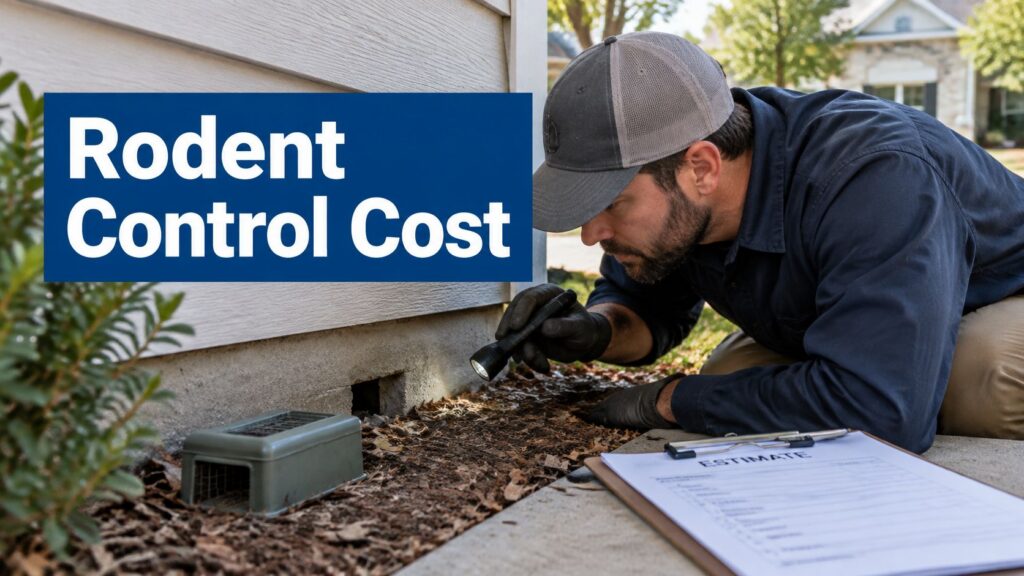
A rodent inspection can cost nothing, while the damage an undiscovered entry point causes keeps growing. Professional exclusion and trapping usually run far below what untreated rodent damage can demand in repairs, and the cost table below lays out the reference figures. Magnolia quotes shift with home size, access, and the number of entry points, so treat those ranges as budgeting guidance rather than a local price guarantee. The key question is what the inspection uncovers: the opening, the nesting area, or the compromised material that decides your next bill. Judge rodent control cost by the problem the work resolves. Typical Rodent Control Costs at a Glance For Magnolia and Southeast Texas homeowners, the sensible starting point is an inspection, followed by a written scope for trapping and sealing. At FullScope Pest Control, we offer a free rodent control estimate, and our rodent and wildlife process begins with a free inspection and assessment before we recommend solutions. That distinction matters: an estimate should describe what your property needs, not assume every house needs the same treatment. Typical rodent control costs by service step Service Typical cost What it covers Free inspection and estimate Free Entry-point, activity and nesting check Professional exclusion and trapping $200-$600 Trapping and sealing of entry points Untreated repair damage $500-$5,000 or more Insulation, wiring and structural repair if signs are ignored Emergency after-hours visit Quote only Urgent response outside routine hours Quarterly maintenance plan Quote only Recurring visits and monitoring The paid treatment and repair figures are national housing-cost reference ranges, not Magnolia price lists. Emergency response and maintenance need separate quotes because neither has a supported local price range here. Read the table from the inspection downward. A free assessment helps establish whether you're dealing with an active infestation, an old entry route, or damage that requires another trade. The exclusion-and-trapping allowance describes pest work, not an automatic commitment to replace insulation or repair electrical wiring. Repair damage belongs in a separate budget category. You shouldn't assume a pest-control proposal includes attic restoration just because the technician inspected the attic. Build a budget around the scope Use our pest-control cost guide to distinguish general treatment pricing from work that needs a property-specific estimate. A difficult roofline, inaccessible crawlspace, or long list of openings can change the labor requirement substantially. Budgeting rule: Plan for an inspection plus a sealing visit, with a repair contingency if signs extend into the attic or wall voids. Before approving work, make sure the estimate names the areas to be sealed and identifies what's excluded. An allowance for trapping isn't the same as a complete building-envelope repair proposal. What Drives Rodent Control Prices Up or Down Access and exclusion labor usually explain more than the price of traps. A technician can place a trap quickly; locating a concealed opening behind a utility chase or reaching a damaged soffit takes more preparation. Check these drivers against your house Inspection time. A large footprint, crowded attic, or tight crawlspace increases the work needed to locate droppings, gnaw marks, entry routes, and nesting. Exclusion labor. Rooflines, vents, utility penetrations, door bottoms, and concealed gaps require different materials and access equipment, so the number and position of openings affect the bill. Trapping and bait. These target rodents already present, but replenishing bait doesn't repair the route they used to get inside. Sanitation. Removing nesting material, treating contaminated surfaces, and correcting food or water access adds work beyond animal removal. Follow-up visits. Continued activity requires checking trap placement, investigating missed access routes, and distinguishing remaining animals from new entry. Emergency timing. Nights, weekends, and urgent dispatch can carry a premium, which should be confirmed before scheduling. Species and removal method. Our service scope includes controlling and excluding mice, rats, other rodents, squirrels, and raccoons in homes or businesses; attic wildlife removal isn't necessarily priced like mouse trapping. The labor difference isn't theoretical. A controlled apartment mouse-management study estimated combined interior and exterior exclusion at $247 per apartment, compared with approximately $16 per apartment for traps and rodenticide bait alone. Those aren't residential Magnolia rates, but they illustrate why sealing shouldn't be treated as a token add-on. A tall exterior elevation can require ladder work even when the indoor activity looks minor. Pets and children also affect trap placement and the choice of low-toxicity options, while stored belongings can limit safe access. Questions that explain different quotes Where are the openings? Ask for locations, not merely a total. Where is nesting suspected? Attic and wall activity can require different access. Is the evidence fresh? Current activity needs a different response from abandoned signs. Those answers explain why neighboring Magnolia homes can receive very different proposals. Plans, Callbacks and Emergency Fees Compared One-time service, quarterly maintenance, and exclusion-only work solve different purchasing problems. A defined infestation with accessible entry points may suit a one-time scope. Recurring activity may justify a maintenance plan, while a house with numerous gaps may need a dedicated exclusion project. Our residential packages are priced for homes under 2,999 square feet, with some restrictions, and are serviced quarterly. House size determines package eligibility and pricing assumptions; it doesn't, by itself, establish that a homeowner needs recurring rodent service. One-time service versus ongoing options Option Best fit How it is priced Follow-up terms One-time rodent service One active infestation with clear entry points Quoted after a free inspection Confirm callback terms before booking Quarterly pest control plan Recurring activity or eligible homes under 2,999 square feet Priced per plan and serviced quarterly Retreat at no extra cost if pests return between treatments, subject to the agreement's coverage Exclusion-only project Repeat entry through many gaps Priced by labor and number of penetrations Confirm warranty terms for sealed openings before booking Our pest-control service plans provide the starting point for comparing ongoing options. New customers purchasing a pest-control plan save $100 on pest control, excluding Bed Bug Treatments. Confirm rodent-service eligibility before subtracting that offer from your budget. Compare the full year, not just the first
Carpenter Ant Treatment Cost in 2026: Prices and Factors

Carpenter ant treatment costs about $250 to $500 for an accessible nest, while severe or hidden-nest cases can reach about $1,500. Structural repairs add more and aren't necessarily included in the extermination quote. The bigger financial risk is confusing a treatment price with the price of solving the entire problem. A technician may eliminate the ants while a separate contractor repairs a leak, replaces damaged framing, or restores an opened wall. To compare estimates fairly, you need to know what the technician found, what the quoted work will reach, and how control will be verified. What Carpenter Ant Treatment Costs by Scope A carpenter ant treatment quote covers only part of the potential expense. The work may also involve inspection, access to concealed nests, follow-up, and repairs to damaged or damp wood. Planning ranges help compare scopes, but they are not fixed prices for Magnolia homes. Carpenter ant treatment cost by scope of work Scope of work Typical cost When it applies Inspection and diagnosis Provider-set fee; ask whether the visit is free Locating the nest and checking for conditions that support activity Localized nest or trail treatment $250 to $500, the standard treatment estimate published by The Pest Control Brief An accessible nest outside or near the foundation Interior void dusting or drilling Within the publication's $250 to $1,500 severe-case planning range A concealed nest inside wall voids Severe or multi-nest treatment Up to about $1,500 under the same severe-case estimate Several nests or extensive treatment work Recurring monitoring $40 to $70 per month, as estimated by The Pest Rangers, or an annual contract priced separately Ongoing monitoring after initial treatment Structural and moisture repairs Assessed after inspection; depends on the extent of framing damage and needed moisture correction Damaged framing or wet wood The table separates pest-control work from repairs. A treatment quote may cover locating and treating ant activity, while a separate assessment is needed to determine whether wood repairs or moisture corrections are required. FullScope Pest Control offers free estimates and inspections, which can clarify the proposed treatment scope. For a straightforward case, the quoted work may focus on an accessible nest or trail. Concealed activity can require added access work, while multiple nests may broaden the treatment area. Each added task should correspond to inspection findings. Separate treatment from the surrounding work Recurring monitoring is a different service from eliminating an active colony. Ask whether a maintenance agreement includes carpenter-ant treatment or only ongoing inspections and applications. Repair costs also depend on what an inspection finds. The amount of damaged framing and the work needed to correct moisture conditions determine the repair scope. For more context on comparing ant service estimates, see this guide to ant pest-control costs. Match the quote to the findings, then ask what supports any additional work. Cost Factors That Move the Final Bill Diagnostic work and access often matter more than the insecticide itself. A technician who can trace a trail to an exposed nest has a different assignment from someone investigating intermittent activity behind finished walls. Iowa State University Extension's historical guidance reports professional prices of approximately $25 to $1,000, with extensive wall-void drilling, dusting, and monthly service at the high end. Because that guidance dates from 1993, its range isn't a current local quote; its useful finding is the relationship between scope, labor, and price. Inspection should establish which wood-destroying insect is present before the technician prices treatment. Cost factors and how they change the bill Cost factor Lower-cost case Higher-cost case Nest accessibility Visible nest reachable from outside Nest inside wall voids, roof, or crawl space Infestation extent One colony with a single satellite nest Multiple satellite nests or workers across floors Structural access Open garage or accessible crawl space Finished walls that need drilling and patching Moisture condition Dry, sound wood Decayed or water-damaged framing Termite overlap Carpenter ants only Termite activity requiring a separate program Visits required One treatment and one check Several visits over several weeks Nest accessibility determines how much investigation precedes application. For example, an exterior nest may be directly reachable, while a roof-space nest requires access arrangements and additional inspection. Infestation extent changes the search area. Workers upstairs and downstairs don't automatically prove separate nests, but they do justify tracing activity rather than pricing only the first visible trail. Translate each finding into a line item Structural access is distinct from nest location. A colony may be located precisely yet remain expensive to reach because a finished wall needs drilling, protection of nearby surfaces, and later patching. Moisture condition adds building work rather than more pesticide. Termite overlap adds a separate diagnosis and control proposal, not an unspecified surcharge to the ant treatment. Finally, visits represent technician time for evaluation, replenishment, or retreatment. Ask the estimator to distinguish included verification from separately billed additional work. Estimate test: Every higher-cost recommendation should connect an observed condition to a named task. Iowa State's guidance cautions that extensive wall-void work can be proposed even where activity hasn't been confirmed. Ask which factors apply to your house, what evidence supports them, and which line item each adds to the bill. Localized Treatment Versus Whole-Structure Treatment Localized treatment targets a confirmed nesting area or activity route. A whole-structure program investigates and treats a broader network of interior voids, entry points, and moisture-prone locations. Targeted foundation work illustrates why an application can involve several methods without becoming a whole-house project. Texas A&M AgriLife Extension states that carpenter ants in Texas rarely cause significant structural damage and advises weighing control costs against the expected benefit. A few workers or an occasional swarm therefore shouldn't, by themselves, become the justification for an extensive treatment program. A foundation-level job versus concealed interior activity Consider a hypothetical trail running from a garden bed to an accessible nest beside the foundation. A technician might place perimeter bait stations, apply an appropriate foundation treatment, treat the nest directly, and seal the garage-threshold opening used by the ants. No wall needs opening, so