1500+ reviews


A rodent inspection can cost nothing, while the damage an undiscovered entry point causes keeps growing. Professional exclusion and trapping usually run far below what untreated rodent damage can demand in repairs, and the cost table below lays out the reference figures.
Magnolia quotes shift with home size, access, and the number of entry points, so treat those ranges as budgeting guidance rather than a local price guarantee.
The key question is what the inspection uncovers: the opening, the nesting area, or the compromised material that decides your next bill. Judge rodent control cost by the problem the work resolves.
Typical Rodent Control Costs at a Glance
For Magnolia and Southeast Texas homeowners, the sensible starting point is an inspection, followed by a written scope for trapping and sealing. At FullScope Pest Control, we offer a free rodent control estimate, and our rodent and wildlife process begins with a free inspection and assessment before we recommend solutions.
That distinction matters: an estimate should describe what your property needs, not assume every house needs the same treatment.
Typical rodent control costs by service step
| Service | Typical cost | What it covers |
|---|---|---|
| Free inspection and estimate | Free | Entry-point, activity and nesting check |
| Professional exclusion and trapping | $200-$600 | Trapping and sealing of entry points |
| Untreated repair damage | $500-$5,000 or more | Insulation, wiring and structural repair if signs are ignored |
| Emergency after-hours visit | Quote only | Urgent response outside routine hours |
| Quarterly maintenance plan | Quote only | Recurring visits and monitoring |
The paid treatment and repair figures are national housing-cost reference ranges, not Magnolia price lists. Emergency response and maintenance need separate quotes because neither has a supported local price range here.
Read the table from the inspection downward. A free assessment helps establish whether you're dealing with an active infestation, an old entry route, or damage that requires another trade. The exclusion-and-trapping allowance describes pest work, not an automatic commitment to replace insulation or repair electrical wiring.
Repair damage belongs in a separate budget category. You shouldn't assume a pest-control proposal includes attic restoration just because the technician inspected the attic.
Build a budget around the scope
Use our pest-control cost guide to distinguish general treatment pricing from work that needs a property-specific estimate. A difficult roofline, inaccessible crawlspace, or long list of openings can change the labor requirement substantially.
Budgeting rule: Plan for an inspection plus a sealing visit, with a repair contingency if signs extend into the attic or wall voids.
Before approving work, make sure the estimate names the areas to be sealed and identifies what's excluded. An allowance for trapping isn't the same as a complete building-envelope repair proposal.
What Drives Rodent Control Prices Up or Down
Access and exclusion labor usually explain more than the price of traps. A technician can place a trap quickly; locating a concealed opening behind a utility chase or reaching a damaged soffit takes more preparation.
Check these drivers against your house
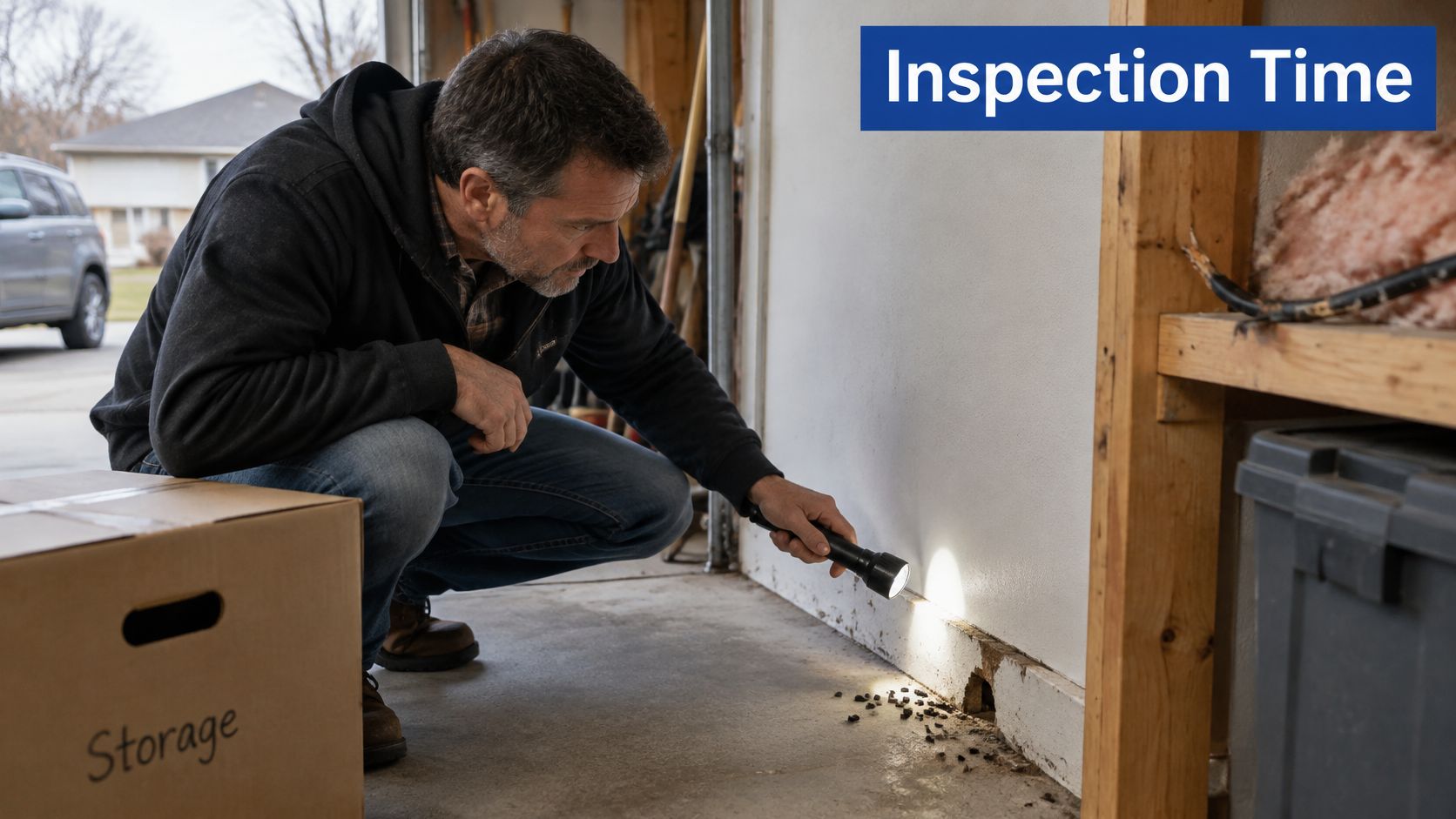
- Inspection time. A large footprint, crowded attic, or tight crawlspace increases the work needed to locate droppings, gnaw marks, entry routes, and nesting.
- Exclusion labor. Rooflines, vents, utility penetrations, door bottoms, and concealed gaps require different materials and access equipment, so the number and position of openings affect the bill.
- Trapping and bait. These target rodents already present, but replenishing bait doesn't repair the route they used to get inside.
- Sanitation. Removing nesting material, treating contaminated surfaces, and correcting food or water access adds work beyond animal removal.
- Follow-up visits. Continued activity requires checking trap placement, investigating missed access routes, and distinguishing remaining animals from new entry.
- Emergency timing. Nights, weekends, and urgent dispatch can carry a premium, which should be confirmed before scheduling.
- Species and removal method. Our service scope includes controlling and excluding mice, rats, other rodents, squirrels, and raccoons in homes or businesses; attic wildlife removal isn't necessarily priced like mouse trapping.
The labor difference isn't theoretical. A controlled apartment mouse-management study estimated combined interior and exterior exclusion at $247 per apartment, compared with approximately $16 per apartment for traps and rodenticide bait alone. Those aren't residential Magnolia rates, but they illustrate why sealing shouldn't be treated as a token add-on.
A tall exterior elevation can require ladder work even when the indoor activity looks minor. Pets and children also affect trap placement and the choice of low-toxicity options, while stored belongings can limit safe access.
Questions that explain different quotes
- Where are the openings? Ask for locations, not merely a total.
- Where is nesting suspected? Attic and wall activity can require different access.
- Is the evidence fresh? Current activity needs a different response from abandoned signs.
Those answers explain why neighboring Magnolia homes can receive very different proposals.
Plans, Callbacks and Emergency Fees Compared
One-time service, quarterly maintenance, and exclusion-only work solve different purchasing problems. A defined infestation with accessible entry points may suit a one-time scope. Recurring activity may justify a maintenance plan, while a house with numerous gaps may need a dedicated exclusion project.
Our residential packages are priced for homes under 2,999 square feet, with some restrictions, and are serviced quarterly. House size determines package eligibility and pricing assumptions; it doesn't, by itself, establish that a homeowner needs recurring rodent service.
One-time service versus ongoing options
| Option | Best fit | How it is priced | Follow-up terms |
|---|---|---|---|
| One-time rodent service | One active infestation with clear entry points | Quoted after a free inspection | Confirm callback terms before booking |
| Quarterly pest control plan | Recurring activity or eligible homes under 2,999 square feet | Priced per plan and serviced quarterly | Retreat at no extra cost if pests return between treatments, subject to the agreement's coverage |
| Exclusion-only project | Repeat entry through many gaps | Priced by labor and number of penetrations | Confirm warranty terms for sealed openings before booking |
Our pest-control service plans provide the starting point for comparing ongoing options. New customers purchasing a pest-control plan save $100 on pest control, excluding Bed Bug Treatments. Confirm rodent-service eligibility before subtracting that offer from your budget.
Compare the full year, not just the first visit
Bills rise after an initial treatment when the agreement doesn't include later visits, new openings need repair, or the homeowner requests urgent attendance. Our policy is to retreat at no additional cost if pests return between treatments, but you should confirm that your specific rodent work falls within the agreement.
For a hypothetical callback comparison, add the fees for a pair of expected paid return visits and compare that total with the cost of sealing the identified entry route first. If the sealing visit costs less and addresses the actual cause, it may be the better purchase. It won't prevent every possible future intrusion, so don't treat exclusion as an unlimited guarantee.
A maintenance plan shouldn't substitute for a repair that the inspection has already identified.
If sealing is completed and monitoring confirms activity has ended, one-time service may be enough. Repeated seasonal sightings favor a discussion about ongoing monitoring, while visible gaps favor an exclusion scope.
When urgent service makes sense
Rodents in food-storage areas, droppings near cooking surfaces, nesting beside heat sources or electrical boxes, and possible contamination exposure involving a child or pet warrant prompt attention. Suspected electrical damage also requires an electrician; a pest visit doesn't establish that wiring is safe.
Before booking, get clear answers to these questions:
- Emergency rate: What premium applies outside routine hours?
- Callback policy: Which return visits are included?
- Initial scope: Does the first visit include entry-point exclusion?
A single sighting without an identified route calls for inspection, not an automatic annual commitment.
Hidden Damage Costs That Quotes Often Miss
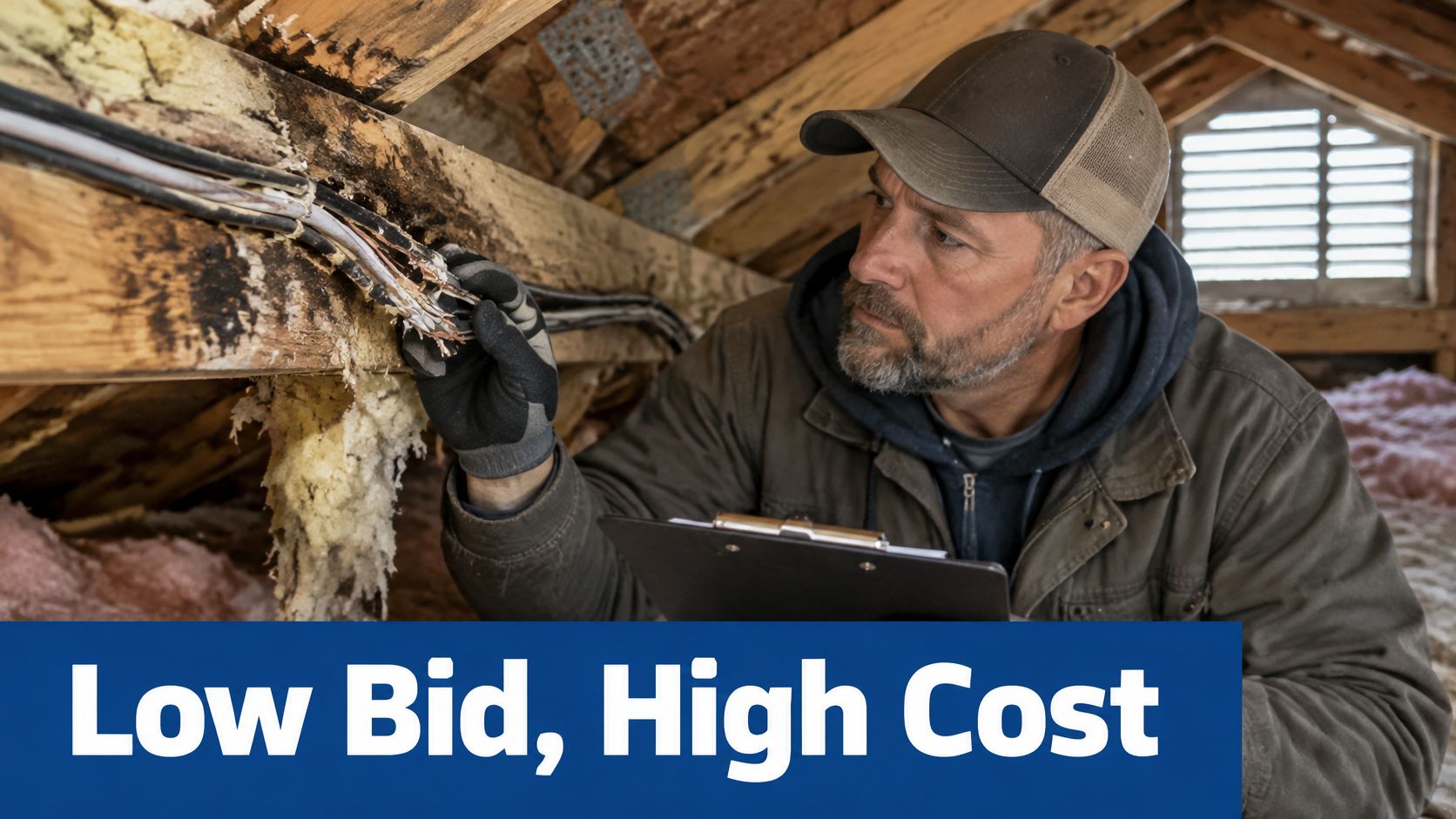
The cheapest quote may produce the most expensive outcome if it leaves damage unaddressed. The Homes.com homeowner pest-control guide cites housing figures showing 15.7 million of 133.2 million occupied U.S. housing units reported mice or rats inside during the prior year, and gives reference estimates of $200 to $600 for professional exclusion and trapping versus $500 to $5,000 or more for potential untreated repairs.
The practical issue is what the treatment quote leaves out. Contaminated insulation, damaged wiring, attic remediation, and structural repairs can require separate estimates and different contractors.
Match restoration to the evidence
Fresh droppings justify investigating current activity. Established nesting, soiled material, and repeated contamination justify a closer assessment of removal and cleanup needs. Neither finding automatically proves that the entire attic requires restoration.
Likewise, isolated chewing on stored cardboard isn't the same as damaged energized wiring. Suspected wire damage is a fire-safety issue for an electrician, not something to conceal with new insulation.
Localized contamination may support targeted cleanup. Widespread exposure across insulation requires a broader scope, with photographs and a clear explanation of which material cannot reasonably remain.
Say a technician identifies an active entry beside an attic vent. Sealing that route and controlling the animals may avoid a much larger cleanup later. By contrast, an isolated droppings sighting in a garage doesn't justify whole-attic replacement without evidence upstairs.
Require photographs and a defined removal area before approving major attic restoration.
Carry these questions into every quote conversation
- Cleanup: Is cleanup included, and which surfaces or materials does it cover?
- Insulation: Is damaged insulation removal and replacement priced separately?
- Follow-up: What guarantee applies to treatment and sealed openings?
- Responsibility: Who pays under the lease or homeowner insurance policy?
Don't assume insurance covers either infestation or resulting damage. Terms differ, so check the actual policy with your insurer and document findings before authorizing repairs.
How to Cut Costs Without Skipping Exclusion
The most useful savings come from reducing avoidable work and buying a complete scope. A low trapping price offers little benefit if you still need to arrange the entry repairs separately.
Prepare the property and the proposal
- Request itemized pricing. Separate inspection, exclusion labor, materials, trapping, cleanup, and follow-up so you can compare equivalent work rather than unrelated totals.
- Remove accessible food. Pick up pet dishes after feeding, store pet food in sealed containers, clean spilled seed, and keep trash lids closed. These actions reduce attraction without adding a pest-service charge.
- Handle only suitable small gaps yourself. For inactive, accessible gaps around pipes or vents, steel wool secured with caulk can serve as a limited repair; durable exterior work may need corrosion-resistant metal mesh or flashing. Don't obstruct ventilation, seal electrical equipment, or close an active runway before a technician assesses animal movement.
- Use integrated pest management. We use Integrated Pest Management, with the lowest level of insecticide and baiting needed to resolve the problem. Ask how sanitation, exclusion, monitoring, and targeted control fit together for your property.
- Coordinate sealing with trapping. Arrange the sequence before work begins so animals aren't trapped inside inaccessible spaces. Some openings can be secured during control, while active routes may need a staged closure.
- Compare annual spending. Measure a quarterly plan against the one-time calls you're otherwise likely to purchase, using the actual written prices and included services.
Our rodent-exclusion frequently asked questions can help you prepare questions about the repair scope before the assessment.
Know where DIY stops
Don't place DIY bait in attics or wall voids. Hidden placements complicate inspection and can leave you unable to retrieve a carcass or confirm what consumed the product.
Don't cut necessary entry-point sealing or justified attic cleanup. Scale cleanup to documented contamination, but don't leave affected material to make the initial invoice look smaller.
Magnolia Service Area and Local Pricing
A homeowner requesting service in Magnolia, Montgomery County, Texas, shouldn't have to settle for a vague greater-Houston service description. Magnolia is an incorporated city in southwest Montgomery County within the Houston metropolitan area, distinct from Conroe, Tomball, and The Woodlands.
The U.S. Census Bureau recorded 2,359 Magnolia residents on April 1, 2020, as reported in the Magnolia community profile. That's a dated census count, not a current population estimate or a count of properties needing treatment.
Confirm the address before scheduling
Our listed service locations are Cleveland, Kingwood, Conroe, and Porter. Our coverage list includes Conroe, Humble, Spring, and Willis, but it doesn't name Magnolia. This article does not establish Magnolia coverage; confirm that your exact address is served before arranging a visit.
For example, a Magnolia homeowner may have easy garage access but a difficult attic roofline. The address establishes scheduling eligibility; the building conditions establish the scope.
- Location check: Provide the full street address, not just a nearby city.
- Pricing check: Supply home size, attic or crawlspace access, and known openings.
No published Magnolia price list is established here. A written property-specific quote is the reliable basis for your budget.
Book an Inspection and Compare Quotes
Once address eligibility is confirmed, request the free residential quote and free inspection. Identify the property specifically as Magnolia, Montgomery County, rather than relying on a regional description; the U.S. Census Bureau's Magnolia city profile distinguishes the municipality.
Prepare useful evidence
- Sightings: Record dates, rooms, sounds, and whether activity occurred indoors or outside.
- Photographs: Capture droppings, gnaw marks, and visible openings without disturbing contaminated material.
- Access and occupants: Describe attic entry, stored belongings, pets, and children so the assessment can be planned appropriately.
When proposals arrive, compare the work included, not just the total. Each should identify inspection, exclusion, trapping, cleanup, and follow-up, with exclusions stated plainly. Get emergency charges and callback terms in writing before authorizing an urgent visit.
Timing recommendation: If signs are fresh, book an inspection this week. If signs appear old, arrange assessment and necessary sealing before the next season begins.
Don't wait for another sighting before calling. You don't need proof of a large infestation to justify an inspection, and an early assessment can distinguish a manageable opening from a more involved repair.
Contact FullScope Pest Control with your exact Magnolia address to confirm service availability and request your free residential quote and rodent inspection. Have your photographs and activity notes ready, and request a written scope that separates animal control, entry repairs, cleanup, and follow-up before you approve the work.