1500+ reviews

Yes, cockroaches can enter through drains, but the route usually opens only when a P-trap has dried out, a drain assembly is damaged, or a pipe penetration is unsealed. In Magnolia, Texas, a single failed water seal can make a bathtub or utility-room drain look like proof of an infestation when the underlying problem is a specific plumbing gap.
You turn on the bathroom light and see a large brown roach beside the shower drain. It disappears behind the toilet before you can grab a towel. After a storm, another one appears near the utility-room floor drain, and the obvious question follows: did it come up through the plumbing?
The practical answer is yes, sometimes, especially with American and Oriental cockroaches. But a roach near a drain didn't necessarily travel through the drain opening. It may have come through the connected sewer line, slipped around a pipe where it passes through a wall or floor, or entered through a door, window, vent, crack, or utility conduit before moving toward moisture.
That distinction matters in Magnolia, Texas, where humid conditions, heavy rain, and homes connected to either municipal sewer systems or septic systems can create different plumbing and moisture patterns. Effective control starts by identifying the route, then correcting the water seal, opening, or structural condition that allowed the insect inside.
Why Magnolia Homeowners Ask This Question
A flashlight catches movement beside the bathtub late at night. The insect is too large to look like the small roaches usually associated with kitchen cabinets, and its location makes the drain seem guilty. In another home, a homeowner finds a dark cockroach near a utility-room floor drain after a heavy rain and assumes the sewer pushed it directly indoors.
That assumption can be right, but it needs testing. American cockroaches, often called sewer roaches, can enter through drain traps from sewer systems. Oriental cockroaches are strongly associated with sewers, damp plumbing, basements, crawl spaces, and floor drains. Extension guidance from the University of Arizona and Utah State University treats plumbing as one possible route among several, not as the explanation for every sighting.
Why the local setting matters
Magnolia homes don't all interact with plumbing in the same way. A property on municipal sewer may connect to a broader network of shared lines, while a home on septic still has traps, drain assemblies, venting, and pipe penetrations that can fail independently. Neither system makes drain entry automatic, and neither system eliminates the need to inspect floor-level drains and plumbing gaps.
Humidity also changes what happens after a roach enters. Sink traps, tubs, toilet bowls, leaking faucets, drain pipes, appliance drip pans, and condensation can provide water. A dry, warm indoor space may not hold the insect for long, but a damp bathroom, laundry area, crawl space, or utility room can support repeated activity.
Practical rule: Treat the drain as a possible access point, not a confirmed source. The location of the sighting tells you where to inspect, not automatically where the roach entered.
A drain-focused inspection should therefore cover the floor drain, nearby traps, leaks, pipe penetrations, sewer odors, and moisture accumulation. It should also examine exterior doors, garage openings, windows, vents, wall voids, food storage, clutter, and adjacent rooms. A nationally representative U.S. household study published in Environmental Health Perspectives detected cockroach allergen in at least one sampled location in an estimated 63% of homes, but that study measured exposure, not drain entry, and it didn't establish plumbing as the source. The finding supports careful inspection, not a conclusion that every bathroom roach came from the sewer. (Environmental Health Perspectives study)
How Roaches Actually Use Plumbing to Move
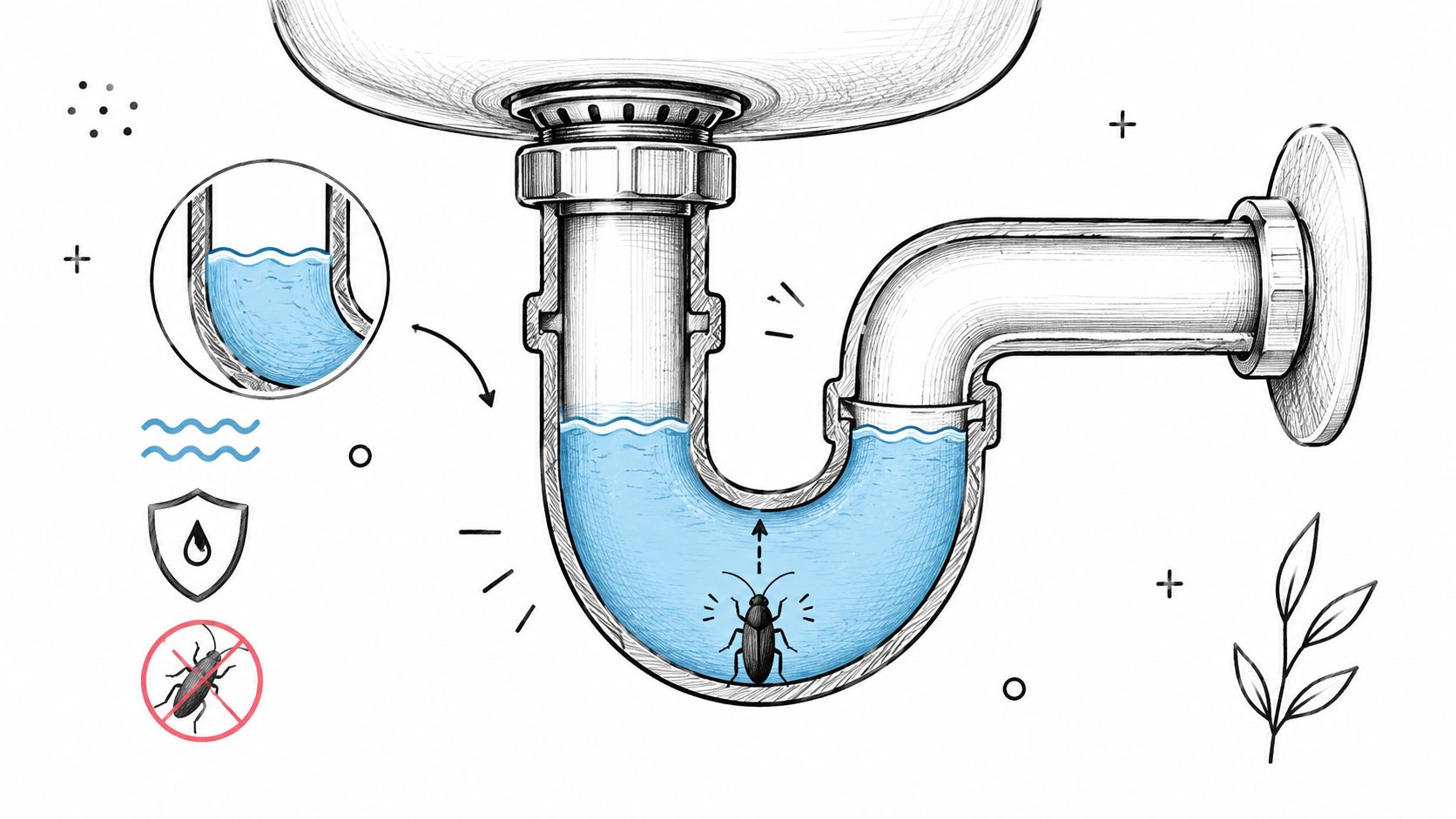
A functioning P-trap is the main reason most regularly used drains aren't open passageways. The trap is the curved section of pipe beneath a sink, tub, shower, or floor drain. It holds water, creating a hydraulic barrier between the drain line and the occupied room.
Think of that water as a moat around a castle. A cockroach in the sewer may be able to reach the pipe, but a full trap blocks the final approach. If the water evaporates in an unused guest bathroom, rarely used floor drain, vacant property, or utility room, the moat disappears. A cracked trap, disconnected fitting, or poorly sealed drain can produce a similar failure.
The species most likely to use drains
American cockroaches are associated with warm, moist locations and sewer environments. They may move indoors during hot weather or flooding and can appear around sewer drains, bathtubs, sinks, and boiler or furnace rooms. The species is sometimes called the “sewer roach” because sewer systems can provide shelter and a route through connected plumbing.
Oriental cockroaches favor damp, dark conditions. They're frequently associated with sewers, basements, crawl spaces, leaky pipes, faucets, and floor drains. Utah State University reports that they very commonly emerge from floor drains, which makes a recurring sighting at a Magnolia floor-level drain more suspicious than an isolated sighting beside a sealed sink.
A plumbing pipe can also act as a travel route within a structure or between connected areas. Cockroaches may move alongside pipes through openings in cabinets, floors, walls, and foundations rather than coming through the drain opening itself. Texas A&M AgriLife Extension identifies dried water-holding traps as a key failure point and recommends keeping traps filled while sealing gaps around plumbing.
If a bathroom has a persistent sewer odor as well as insect activity, the odor deserves separate attention. A useful overview of possible causes is Eagle Restoration's explanation of sewage odors, but odor alone doesn't prove cockroach entry. For species identification and practical differences between common household roaches, use this guide to the difference between American and German roaches.
The deciding question is simple: does the drain have a working water seal, and are the surrounding penetrations closed? If the answer is yes, look beyond the opening itself.
Every Entry Route Beyond the Drain Itself
A roach beside a sink or bathtub often traveled a route that homeowners don't see. There are three separate pathways to evaluate: the drain opening, the connected sewer line, and gaps around plumbing penetrations.
Route one, through the drain opening
This route becomes plausible when a P-trap is dry, damaged, or poorly installed. It matters most for infrequently used floor drains, basement drains, utility-room drains, guest bathrooms, and vacant homes. A drain cover can block the opening, but it won't restore a missing water seal or repair a damaged trap.
Route two, through connected plumbing
Cockroaches can move through sewer-associated plumbing and connected pipes. In multi-family buildings, commercial facilities, and structures with shared drainage infrastructure, activity in one area can coincide with movement through another. A municipal sewer connection can provide continuity to a wider network, while a septic home still has internal plumbing routes that require inspection.
This route is especially plausible after a sewer disruption, flooding, or heavy rain when insects leave saturated or disturbed shelter. It doesn't mean the entire house is infested. It means an overlooked opening may allow a temporary visitor to reach an interior room.
Route three, around pipe penetrations
This is the route many treatments miss. Supply lines, drain stubs, dishwasher hoses, washing-machine connections, electrical conduits, and plumbing stacks often pass through cabinets, floors, walls, or foundations with gaps around them. A roach can use those gaps even when the visible drain is covered and the sink trap contains water.
Pouring drain gel into a sink won't seal an opening behind the dishwasher. Bleach won't close an escutcheon gap under the bathroom vanity. The correction must match the route.
| Entry Route | Most Likely When | Quick Fix |
|---|---|---|
| Drain opening | A floor drain or rarely used fixture has a dry or damaged trap | Refill the trap and install a closable cover or suitable screen |
| Connected sewer line | Heavy rain, flooding, sewer disruption, or shared plumbing coincides with sightings | Check every trap and arrange a plumbing-path inspection if activity recurs |
| Pipe penetrations | Roaches appear under sinks, behind appliances, near wall edges, or around utility connections | Seal gaps with durable caulk or suitable backer material and sealant |
Baseboards and exterior openings also deserve attention, especially when sightings cluster near the garage, front door, windows, vents, or foundation. In those cases, a drain explanation may distract from the actual entry point.
Signs the Roach Actually Used the Drain
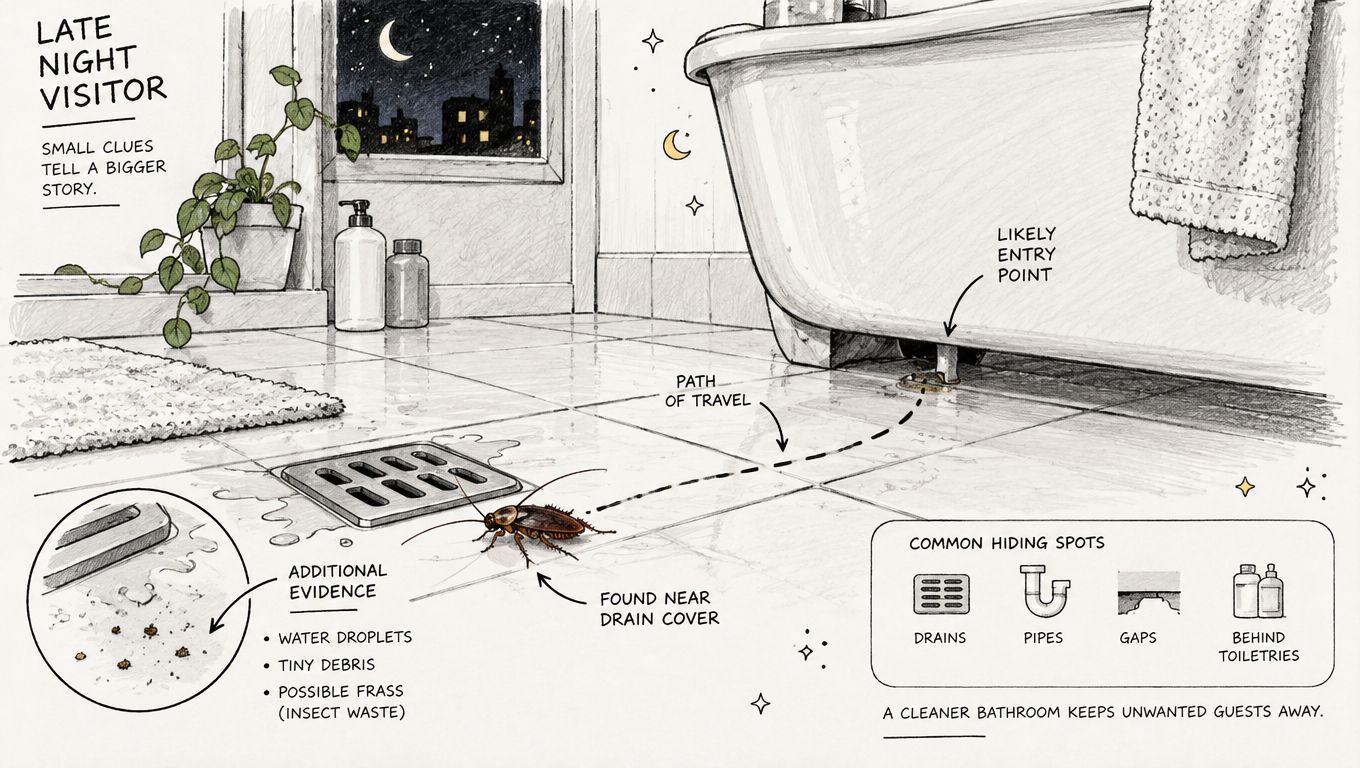
Start with location and timing, not spray. A single large roach found beside a shower drain at night is more consistent with drain-associated activity than one found beside a pantry or patio door, but it remains a working hypothesis.
Look for a pattern across several nights. Floor drains, tubs, toilets, and utility rooms deserve closer attention when sightings repeatedly occur there. Droppings or smear marks along a drain edge, beneath a sink cabinet, or on the wall behind plumbing can support the idea that the insect is using that damp zone, although those signs don't identify the exact entry route by themselves.
A practical inspection sequence
Check the trap. Look at nearby floor drains, sink traps, shower drains, and rarely used fixtures. Add water to a dry trap and note whether the sighting pattern changes.
Inspect the perimeter. Use a flashlight under the vanity, behind the toilet, beside the washing machine, and around the dishwasher. Search for gaps where pipes pass through walls, floors, cabinets, or foundations.
Place sticky monitors. Put monitors beside floor drains, under sinks, along wall edges, near appliances, and by exterior doors. The capture location can show whether activity is concentrated around plumbing or coming from another part of the house.
Record weather and timing. Note whether sightings follow heavy rain, flooding, hot weather, plumbing work, or a sewer odor. Event-linked activity points toward a temporary access problem, while sightings across several rooms may indicate a broader issue.
A roach that vanishes down a drain when the light comes on is suggestive, but it still doesn't prove it entered through that opening. It may have approached from a nearby pipe gap or wall void. Conversely, a roach near a bathtub may have entered through a door or vent and moved toward water.
For help identifying the evidence, this guide to what roach droppings look like can help distinguish droppings from ordinary dust or debris.
The following video provides another visual reference for bathroom hiding places and entry points:
If sightings occur near the front door, garage, kitchen windows, vents, or foundation rather than plumbing fixtures, prioritize exterior exclusion. A drain inspection can still be useful, but it shouldn't replace checking the most likely route.
Prevention and Mitigation That Actually Work
The most reliable response combines water-seal maintenance, physical exclusion, moisture control, monitoring, and targeted treatment. One product rarely solves a route problem by itself. A weekend inspection can eliminate several common failures before you decide whether professional service is necessary.
Start with the water seals
Walk through the home and identify every rarely used drain. Include guest bathrooms, utility rooms, garage or basement floor drains, laundry areas, and vacant portions of the property.
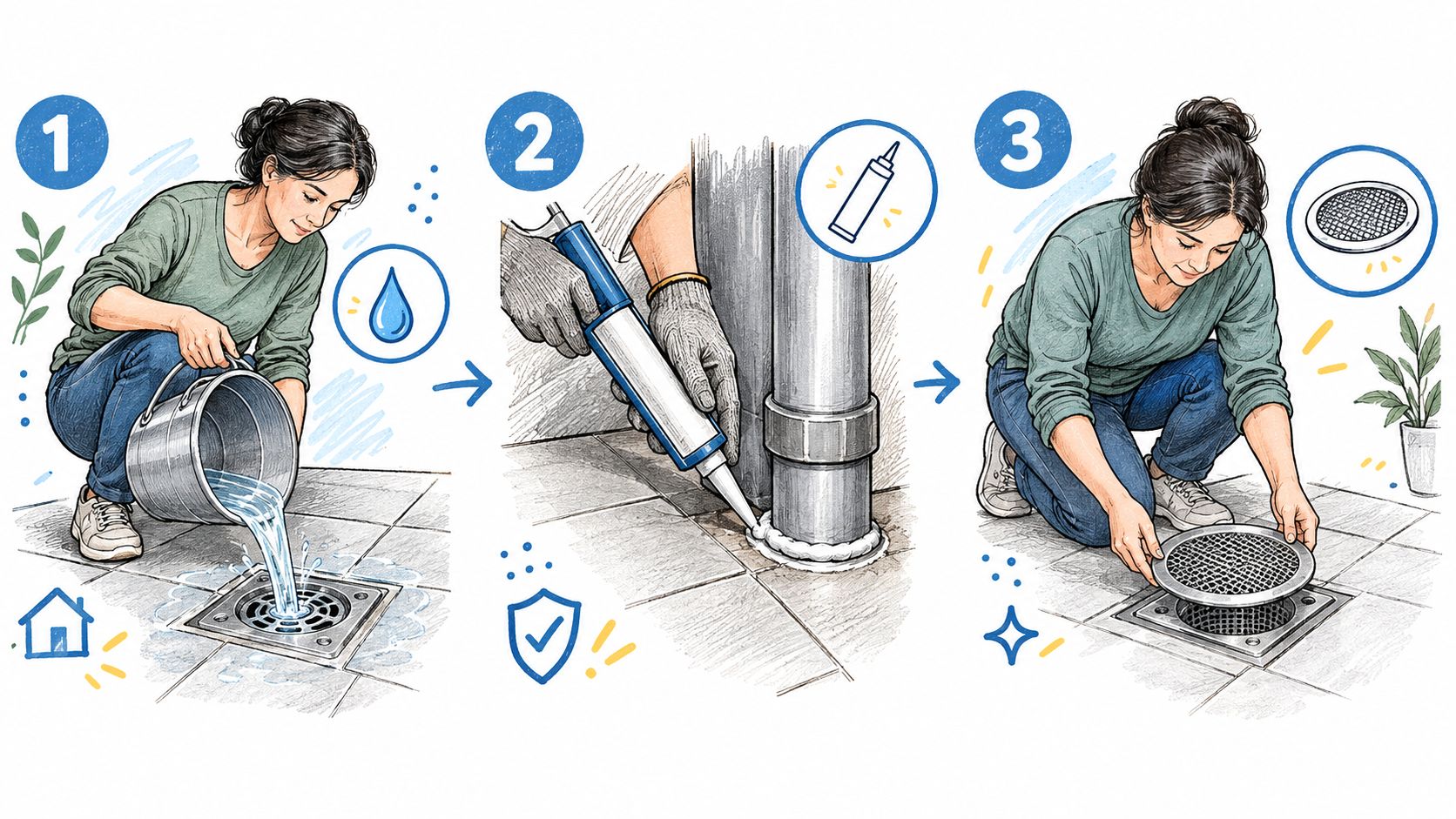
Refill unused traps: Add water to every dry trap, then run water through infrequently used fixtures regularly. Texas A&M school integrated pest-management guidance recommends flushing seldom-used drains weekly with approximately a gallon of water. (Texas A&M AgriLife guidance)
Check for failure: If a trap won't hold water, suspect a damaged component, siphoning, evaporation, or a plumbing defect. A plumber should evaluate the fixture rather than relying on repeated chemical treatment.
Use covers where appropriate: Fit closable covers on garage, basement, utility, and other floor drains that don't need to remain open. Rubber drain covers or metal screens can add a physical barrier to shower and tub drains, provided they don't interfere with safe drainage.
Seal the routes beside the pipes
Remove stored items from under sinks and inspect the back and floor of each cabinet. Seal gaps around sink traps, dishwasher supply lines, washing-machine hoses, toilet connections, and visible wall or floor penetrations with a durable bathroom-grade caulk. Larger openings may need suitable backing material before the sealant is applied.
The same principle applies in crawl spaces, garages, and utility rooms. Look for pipe sleeves, conduit openings, gaps around drain stubs, and cracks where plumbing enters the foundation. A drain screen blocks the opening, while sealant blocks movement around it. You may need both.
Remove the conditions that support activity
Repair dripping faucets, leaking traps, loose supply connections, and sweating pipes. Improve ventilation in bathrooms and laundry rooms, address condensation, and reduce moisture in crawl spaces with appropriate drainage or dehumidification. Clean drain interiors according to the fixture manufacturer's guidance, because residue and organic buildup can provide moisture and shelter even when the drain isn't the entry route.
What works: Restore the water seal, close adjacent gaps, remove moisture, monitor activity, and treat confirmed harborages.
What doesn't: Rely on drain gel, one spray application, or a decorative grate while leaving a dry trap and an open pipe penetration.
If a plumbing emergency involves a blockage, backup, or damaged drain, use a qualified plumbing service rather than trying to solve the insect problem with repeated chemicals. An emergency drain service may be appropriate for the plumbing defect, while pest control addresses the insect activity and surrounding conditions.
For a broader household exclusion plan, review how to prevent a cockroach infestation. If activity continues after traps are restored, covers are installed, leaks are repaired, and gaps are sealed, arrange an inspection that traces the plumbing path and checks exterior entry points. Repeated treatment without diagnosis can suppress visible roaches while leaving the access route active.
Magnolia Conditions That Change the Risk
Drain entry in Magnolia is often event-driven, not constant. A home can be clean and free of an established indoor population yet experience a temporary increase in sightings after heavy rain, flooding, hot weather, or a nearby sewer disruption.
Sewer-associated cockroaches can travel through connected networks. In a Malaysian sewer study, 22.4% of recaptured marked adults moved between manholes, with most movements covering 2 to 20 meters and one recorded movement reaching 192 meters. (Malaysian sewer movement study) That research doesn't predict what will happen in a Magnolia home, but it supports the principle that sewer movement can cover meaningful distances and that a storm can change local pressure without creating a whole-house infestation.
Municipal and septic homes need different questions
A municipal connection raises questions about shared sewer infrastructure, street-level disruption, and neighboring connections. A septic property shifts attention toward the home's tank, drainfield, venting, internal traps, cleanouts, and pipe penetrations. In both settings, the interior barrier still depends on sealed plumbing and functioning traps.
Magnolia homeowners should perform a post-storm check of floor drains, utility drains, crawl-space plumbing, drain screens, and pipe penetrations. Pay attention to sightings that begin immediately after intense rainfall or continue whenever weather changes. One isolated insect after an event may indicate a failed seal. Repeated sightings after every storm suggest a defect, an overlooked opening, or a moisture source that needs professional investigation.
The objective isn't to prove that the sewer caused every roach. It's to separate per-event risk from ongoing infestation risk and respond to each appropriately.
Answers to the Questions Magnolia Residents Ask Most
Does drain gel or bleach stop cockroaches?
Usually not. These products don't refill a dry P-trap, repair a cracked fitting, or seal a gap around a pipe penetration. Restore the water seal, install an appropriate cover, repair leaks, and seal openings first. Use chemical products only according to their labels and never mix cleaning chemicals.
Does one roach mean there are dozens hidden?
Not necessarily. A single large roach can enter after a storm or through one failed drain seal. Multiple sightings across rooms, daytime activity, droppings, egg cases, or repeated captures on monitors increase concern about an established population. Species identification and inspection matter more than guessing a hidden count.
Are sealing and treatment methods safe around pets and children?
Physical measures such as drain covers, caulk, and plumbing repairs don't create pesticide exposure, but covers must remain secure and not create a trip or drainage hazard. For any pesticide treatment, keep children and pets away as directed on the product label and ask the technician about treated areas, reentry, ventilation, and bait placement.
How often should a professional inspect the plumbing path?
There isn't one schedule that fits every Magnolia property. Add a plumbing-path inspection to routine pest service when the home has recurring drain sightings, unused floor drains, storm-related activity, plumbing odors, a history of leaks, or shared-building connections. A one-time inspection may be enough after a corrected seal failure, while recurring events call for follow-up monitoring.
Contact a licensed Southeast Texas pest provider that can inspect drains, plumbing penetrations, moisture sources, and exterior entry points instead of treating only the visible roach.
If a roach appeared in your Magnolia bathtub or utility room, schedule a route-focused inspection with FullScope Pest Control or another licensed local provider, and have the technician check the trap, drain opening, connected plumbing, pipe penetrations, moisture sources, and exterior gaps before recommending treatment.