 1500+ reviews

Can Cockroaches Enter Through Drains in Magnolia, TX?

Yes, cockroaches can enter through drains, but the route usually opens only when a P-trap has dried out, a drain assembly is damaged, or a pipe penetration is unsealed. In Magnolia, Texas, a single failed water seal can make a bathtub or utility-room drain look like proof of an infestation when the underlying problem is a specific plumbing gap. You turn on the bathroom light and see a large brown roach beside the shower drain. It disappears behind the toilet before you can grab a towel. After a storm, another one appears near the utility-room floor drain, and the obvious question follows: did it come up through the plumbing? The practical answer is yes, sometimes, especially with American and Oriental cockroaches. But a roach near a drain didn't necessarily travel through the drain opening. It may have come through the connected sewer line, slipped around a pipe where it passes through a wall or floor, or entered through a door, window, vent, crack, or utility conduit before moving toward moisture. That distinction matters in Magnolia, Texas, where humid conditions, heavy rain, and homes connected to either municipal sewer systems or septic systems can create different plumbing and moisture patterns. Effective control starts by identifying the route, then correcting the water seal, opening, or structural condition that allowed the insect inside. Why Magnolia Homeowners Ask This Question A flashlight catches movement beside the bathtub late at night. The insect is too large to look like the small roaches usually associated with kitchen cabinets, and its location makes the drain seem guilty. In another home, a homeowner finds a dark cockroach near a utility-room floor drain after a heavy rain and assumes the sewer pushed it directly indoors. That assumption can be right, but it needs testing. American cockroaches, often called sewer roaches, can enter through drain traps from sewer systems. Oriental cockroaches are strongly associated with sewers, damp plumbing, basements, crawl spaces, and floor drains. Extension guidance from the University of Arizona and Utah State University treats plumbing as one possible route among several, not as the explanation for every sighting. Why the local setting matters Magnolia homes don't all interact with plumbing in the same way. A property on municipal sewer may connect to a broader network of shared lines, while a home on septic still has traps, drain assemblies, venting, and pipe penetrations that can fail independently. Neither system makes drain entry automatic, and neither system eliminates the need to inspect floor-level drains and plumbing gaps. Humidity also changes what happens after a roach enters. Sink traps, tubs, toilet bowls, leaking faucets, drain pipes, appliance drip pans, and condensation can provide water. A dry, warm indoor space may not hold the insect for long, but a damp bathroom, laundry area, crawl space, or utility room can support repeated activity. Practical rule: Treat the drain as a possible access point, not a confirmed source. The location of the sighting tells you where to inspect, not automatically where the roach entered. A drain-focused inspection should therefore cover the floor drain, nearby traps, leaks, pipe penetrations, sewer odors, and moisture accumulation. It should also examine exterior doors, garage openings, windows, vents, wall voids, food storage, clutter, and adjacent rooms. A nationally representative U.S. household study published in Environmental Health Perspectives detected cockroach allergen in at least one sampled location in an estimated 63% of homes, but that study measured exposure, not drain entry, and it didn't establish plumbing as the source. The finding supports careful inspection, not a conclusion that every bathroom roach came from the sewer. (Environmental Health Perspectives study) How Roaches Actually Use Plumbing to Move A functioning P-trap is the main reason most regularly used drains aren't open passageways. The trap is the curved section of pipe beneath a sink, tub, shower, or floor drain. It holds water, creating a hydraulic barrier between the drain line and the occupied room. Think of that water as a moat around a castle. A cockroach in the sewer may be able to reach the pipe, but a full trap blocks the final approach. If the water evaporates in an unused guest bathroom, rarely used floor drain, vacant property, or utility room, the moat disappears. A cracked trap, disconnected fitting, or poorly sealed drain can produce a similar failure. The species most likely to use drains American cockroaches are associated with warm, moist locations and sewer environments. They may move indoors during hot weather or flooding and can appear around sewer drains, bathtubs, sinks, and boiler or furnace rooms. The species is sometimes called the “sewer roach” because sewer systems can provide shelter and a route through connected plumbing. Oriental cockroaches favor damp, dark conditions. They're frequently associated with sewers, basements, crawl spaces, leaky pipes, faucets, and floor drains. Utah State University reports that they very commonly emerge from floor drains, which makes a recurring sighting at a Magnolia floor-level drain more suspicious than an isolated sighting beside a sealed sink. A plumbing pipe can also act as a travel route within a structure or between connected areas. Cockroaches may move alongside pipes through openings in cabinets, floors, walls, and foundations rather than coming through the drain opening itself. Texas A&M AgriLife Extension identifies dried water-holding traps as a key failure point and recommends keeping traps filled while sealing gaps around plumbing. If a bathroom has a persistent sewer odor as well as insect activity, the odor deserves separate attention. A useful overview of possible causes is Eagle Restoration's explanation of sewage odors, but odor alone doesn't prove cockroach entry. For species identification and practical differences between common household roaches, use this guide to the difference between American and German roaches. The deciding question is simple: does the drain have a working water seal, and are the surrounding penetrations closed? If the answer is yes, look beyond the opening itself. Every Entry Route Beyond the Drain Itself A roach beside a sink or bathtub often traveled a route that homeowners don't see.
How Long Does Flea Treatment Take to Work in Magnolia, TX

Adult fleas can begin dying within hours after a quality spot-on or oral pet treatment, but a fully clear home in Magnolia usually takes 3 to 8 weeks because pupae protected in cocoons keep emerging after the initial application. A controlled NexGard study recorded fleas beginning to die after 4 hours, with effectiveness exceeding 99% at 8 hours, but those results apply to that approved product under defined study conditions, not every flea treatment (DailyMed product information). You treat the dog, vacuum the living room, wash the bedding, and still see a flea jump near the sofa a week later. That scene is common in Magnolia homes, especially where dogs and cats move between shaded yards, porches, and air-conditioned rooms. The first adult fleas can disappear quickly, while the protected stages already scattered through carpet, upholstery, cracks, and outdoor resting areas continue developing. The practical question isn't only “is the product working?” It's which stage of the flea life cycle is active today, and whether the pet, home, and yard are being managed together. Why Fleas in Magnolia Homes Outlast the First Spray A Magnolia homeowner recently treated the family dog, applied a household product to the carpet, and vacuumed the rooms where the dog sleeps. Six days later, one flea appeared beside the sofa. The homeowner assumed the treatment had failed, but the flea had likely emerged from a protected cocoon rather than survived direct exposure as an adult. Fleas complete four stages, egg, larva, pupa, and adult, and a female can lay approximately 40 eggs per day, according to Cornell Veterinary Medicine's flea management guidance. Eggs fall from the animal into carpet fibers, pet bedding, floor cracks, and shaded resting places. A treatment that kills exposed adults can't automatically remove every immature stage already hidden around the property. Practical rule: A flea sighting during the first few weeks is evidence that the cycle is still unwinding, not automatic proof that the treatment failed. Two clocks run at once The first clock measures adult-flea suppression on the pet. A suitable oral or topical product can begin reducing feeding adults the same day. The second clock measures household control, which depends on eggs, larvae, and pupae developing and emerging in sequence. Magnolia's Gulf Coast conditions can keep that second clock active. Warm, humid conditions and shaded soil around porches, decks, crawlspace edges, and pet resting areas create more favorable shelter than a dry, exposed environment. The result is often a fast drop in adult activity followed by scattered sightings as new adults emerge. That distinction matters when you're evaluating flea activity inside your home. Seeing fewer fleas on the pet but an occasional jumper indoors can mean the treatment is reducing the feeding population while the premises still contain earlier life stages. A one-time spray may improve the visible problem, but it doesn't rewrite the biology of fleas. In Magnolia, a coordinated response has to account for suburban pets with yard access, multiple indoor resting sites, and the possibility that protected pupae will emerge after the first application. The Flea Life Cycle and Why It Sets the Timeline A flea problem moves between the animal and the environment. The pet supplies blood meals and transportation, while the home and yard hold most of the developing stages. Understanding that division explains why a single application rarely produces an instantly empty house. From egg to larva Eggs are laid on the animal but readily drop into the Magnolia living-room carpet, bedding, upholstery, and gaps along the floor. Larvae stay out of direct light and feed on organic debris, including flea dirt, in protected fibers and crevices. Vacuuming can physically remove some eggs and larvae, while cleaning disrupts the places where they develop. The timing varies with conditions. University of Missouri Extension reports that a cat-flea life cycle can finish in as little as 20 to 35 days under normal conditions. It lists egg hatching at 2 to 14 days, larval development at 8 to 24 days, and a pupal stage of 5 to 7 days, though the pupal period can extend to about 1 year when conditions are unfavorable (University of Missouri Extension). The protected pupa The pupa is the stage that most often surprises homeowners. A larva spins a cocoon in carpet, beneath furniture, near baseboards, or in shaded outdoor soil. That cocoon shields the developing flea from many environmental stresses and makes this stage harder for surface insecticides to reach. Vibration, body heat, and carbon dioxide from people or pets can stimulate an adult to emerge. A professional interior application may kill exposed adults and use an insect growth regulator to interfere with eggs and larvae, but protected pupae can still produce new adults later. Yard treatment has the same limitation if cocoons sit in sheltered, undisturbed areas. Adult emergence Once an adult emerges, it looks for a host, feeds, and can continue the cycle. A pet treatment targets this feeding stage, while vacuuming and premises work reduce the environmental reservoir. No single tool reaches every stage equally well, which is why the clock starts with treatment but ends only after repeated exposure and follow-up interrupt the cycle. Realistic Timelines for Each Type of Treatment A Magnolia homeowner may see fewer fleas on a treated dog the same day, then find adults jumping near a sofa or patio several days later. Gulf Coast humidity, shaded yards, and pets moving between the house and grass keep the infestation active after the first visible improvement. Treatment type affects the first result, but the property determines how long control takes. As noted in the introduction, a controlled NexGard study found rapid adult-flea kill under approved study conditions. That result applies to the treated animal, not the carpet, crawl spaces, or shaded yard. In Magnolia homes where pets re-enter humid outdoor areas daily, an on-animal kill window does not shorten the environmental tail. Plan for premise follow-up rather than judging success by the pet alone. Flea treatment timelines at a glance Treatment Type
How To Reduce Mosquito Breeding Around Your Property
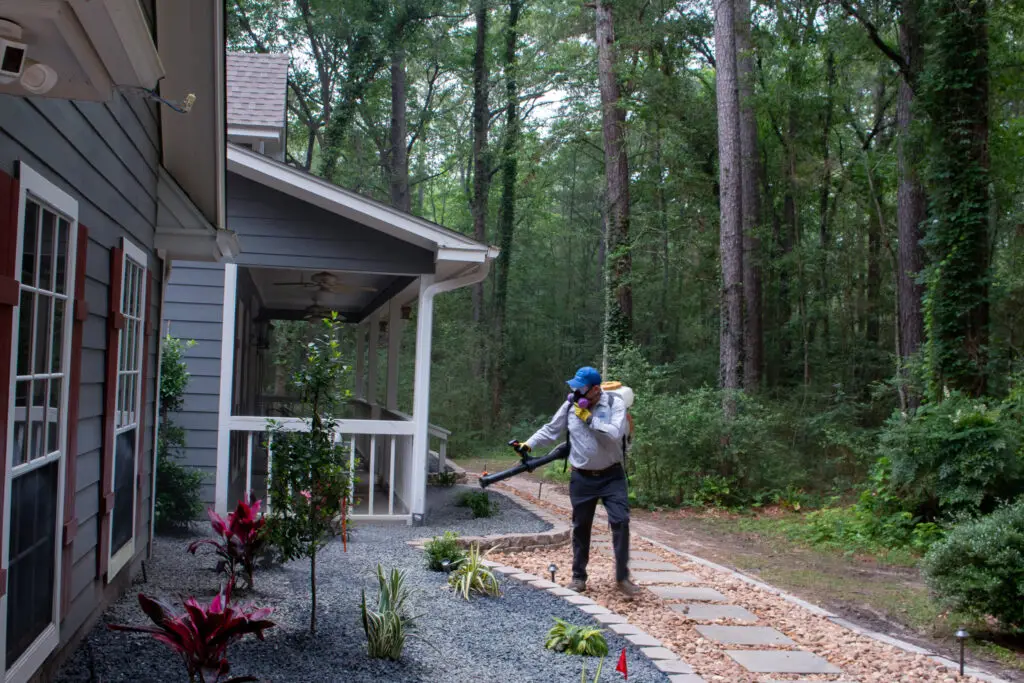
Mosquito activity around a property usually starts with a simple resource: water. In North Houston and surrounding communities, warm temperatures, seasonal rain, irrigation, dense vegetation, and shaded yards can create conditions where mosquitoes breed and rest close to homes. Even small amounts of standing water can support development, especially when containers or drainage problems are easy to overlook. Our team approaches mosquito control by looking at the property as a complete system. Breeding sites, adult resting areas, drainage, vegetation, and high-use outdoor spaces all influence how much mosquito pressure a yard experiences. The strongest results come from reducing breeding opportunities first, then matching professional treatment to the places where adult mosquitoes are most likely to rest and return. Start By Finding Where Water Collects After Rain Or Irrigation Mosquitoes do not need a large pond to reproduce. Water can remain in gutters, planters, low spots, yard features, containers, and other small depressions long enough to become a breeding source. After rain or irrigation, these areas may stay unnoticed because they sit behind sheds, beneath vegetation, or along property edges. Our guide to post-summer pest prevention reinforces the value of checking moisture, drainage, and exterior conditions as seasons change. For mosquitoes, that means identifying where water lingers instead of assuming visible puddles are the only concern. Areas that deserve attention include: These conditions should be evaluated as part of a broader mosquito-control plan. Removing or correcting one obvious source may help, but recurring activity can indicate that smaller breeding sites remain elsewhere on the property. Reduce Resting Areas That Keep Adult Mosquitoes Close Breeding is only part of the mosquito problem. Adult mosquitoes often spend daytime hours resting in cool, shaded, protected areas before becoming more active later. Dense shrubs, tall vegetation, shaded fence lines, the underside of decks, and other sheltered spaces can provide favorable resting sites. Our technicians consider these areas when deciding where professional treatment should be focused. Barrier applications are intended for mosquito resting zones rather than every exposed surface in the yard, which makes accurate placement important. Key conditions we review include: Changing these conditions can reduce the amount of shelter available, but treatment may still be needed when adult pressure remains high. Professional mosquito control helps connect resting-site management with targeted applications and follow-up instead of relying on one broad response. Use Professional Treatment To Support Long-Term Source Reduction Residential mosquito service works best when source reduction and treatment support each other. Our residential mosquito control guidance describes an integrated approach that can include breeding-site reduction, barriers, targeted larval control, and adult mosquito treatment depending on the property. Our team may recommend barrier sprays, mosquito misting systems, or other professional strategies based on yard design, drainage, shade, nearby vegetation, and recurring pressure. No single option fits every property, and treatment needs can change after heavy rain, plant growth, irrigation changes, or shifts in seasonal activity. A professional plan may include: This layered approach is more dependable than treating adult mosquitoes without addressing where new ones are developing. It also helps our technicians avoid unnecessary applications in areas that are not contributing meaningfully to the problem. Mosquito control should also account for how the property is used. Patios, play areas, walkways, entrances, and outdoor gathering spaces may need greater attention because frequent mosquito activity there has a direct effect on comfort. A shaded corner at the edge of the yard may require a different strategy than a patio surrounded by dense landscaping and nearby standing water. Long-term reduction depends on repeated evaluation because mosquito pressure can return quickly when conditions change. A storm may create new water pockets, summer growth may thicken vegetation, or drainage may slow after debris accumulates. Professional monitoring helps determine whether activity is coming from an existing source, a newly created breeding site, or pressure moving in from nearby areas. The goal is not to promise a completely mosquito-free yard. It is to reduce breeding opportunities, suppress adults in the places they rest, and keep treatment aligned with the conditions that are actually sustaining activity. Make Your Yard Less Welcoming To Mosquitoes If mosquitoes keep returning around patios, landscaping, or other outdoor spaces, contact Fullscope Pest Control for professional mosquito control focused on source reduction, targeted treatment, monitoring, and long-term prevention.