1500+ reviews

Mosquito activity around a property usually starts with a simple resource: water. In North Houston and surrounding communities, warm temperatures, seasonal rain, irrigation, dense vegetation, and shaded yards can create conditions where mosquitoes breed and rest close to homes. Even small amounts of standing water can support development, especially when containers or drainage problems are easy to overlook.
Our team approaches mosquito control by looking at the property as a complete system. Breeding sites, adult resting areas, drainage, vegetation, and high-use outdoor spaces all influence how much mosquito pressure a yard experiences. The strongest results come from reducing breeding opportunities first, then matching professional treatment to the places where adult mosquitoes are most likely to rest and return.

Start By Finding Where Water Collects After Rain Or Irrigation
Mosquitoes do not need a large pond to reproduce. Water can remain in gutters, planters, low spots, yard features, containers, and other small depressions long enough to become a breeding source. After rain or irrigation, these areas may stay unnoticed because they sit behind sheds, beneath vegetation, or along property edges.
Our guide to post-summer pest prevention reinforces the value of checking moisture, drainage, and exterior conditions as seasons change. For mosquitoes, that means identifying where water lingers instead of assuming visible puddles are the only concern.
Areas that deserve attention include:
- Gutters or downspouts that hold water after rainfall
- Planters, buckets, toys, or containers that collect water
- Low-lying lawn sections with slow drainage
- Birdbaths or decorative features with stagnant water
- Irrigation zones that remain wet longer than surrounding areas
- Shaded spots where water evaporates slowly
These conditions should be evaluated as part of a broader mosquito-control plan. Removing or correcting one obvious source may help, but recurring activity can indicate that smaller breeding sites remain elsewhere on the property.
Reduce Resting Areas That Keep Adult Mosquitoes Close
Breeding is only part of the mosquito problem. Adult mosquitoes often spend daytime hours resting in cool, shaded, protected areas before becoming more active later. Dense shrubs, tall vegetation, shaded fence lines, the underside of decks, and other sheltered spaces can provide favorable resting sites.
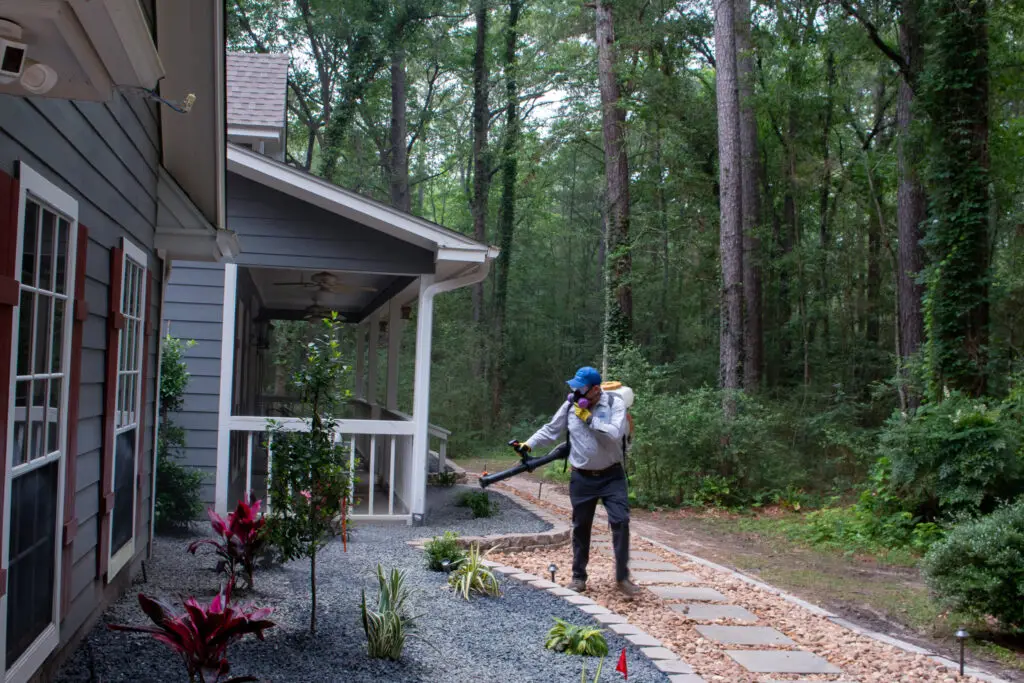
Our technicians consider these areas when deciding where professional treatment should be focused. Barrier applications are intended for mosquito resting zones rather than every exposed surface in the yard, which makes accurate placement important.
Key conditions we review include:
- Dense shrubs close to patios, doors, or windows
- Shaded vegetation that stays cool through the day
- Areas beneath decks, pergolas, or outdoor structures
- Overgrown landscape edges with limited airflow
- Yard sections near wooded or heavily vegetated boundaries
- High-use outdoor areas where mosquito activity repeatedly concentrates
Changing these conditions can reduce the amount of shelter available, but treatment may still be needed when adult pressure remains high. Professional mosquito control helps connect resting-site management with targeted applications and follow-up instead of relying on one broad response.
Use Professional Treatment To Support Long-Term Source Reduction
Residential mosquito service works best when source reduction and treatment support each other. Our residential mosquito control guidance describes an integrated approach that can include breeding-site reduction, barriers, targeted larval control, and adult mosquito treatment depending on the property.
Our team may recommend barrier sprays, mosquito misting systems, or other professional strategies based on yard design, drainage, shade, nearby vegetation, and recurring pressure. No single option fits every property, and treatment needs can change after heavy rain, plant growth, irrigation changes, or shifts in seasonal activity.
A professional plan may include:
- Inspecting the property for active and potential breeding sites
- Identifying shaded foliage where adult mosquitoes rest
- Targeting treatment to high-pressure outdoor zones
- Reviewing drainage and irrigation patterns that support standing water
- Monitoring activity after treatment to identify recurring hot spots
- Adjusting service as rainfall, vegetation, and seasonal conditions change
This layered approach is more dependable than treating adult mosquitoes without addressing where new ones are developing. It also helps our technicians avoid unnecessary applications in areas that are not contributing meaningfully to the problem.
Mosquito control should also account for how the property is used. Patios, play areas, walkways, entrances, and outdoor gathering spaces may need greater attention because frequent mosquito activity there has a direct effect on comfort. A shaded corner at the edge of the yard may require a different strategy than a patio surrounded by dense landscaping and nearby standing water.
Long-term reduction depends on repeated evaluation because mosquito pressure can return quickly when conditions change. A storm may create new water pockets, summer growth may thicken vegetation, or drainage may slow after debris accumulates. Professional monitoring helps determine whether activity is coming from an existing source, a newly created breeding site, or pressure moving in from nearby areas.
The goal is not to promise a completely mosquito-free yard. It is to reduce breeding opportunities, suppress adults in the places they rest, and keep treatment aligned with the conditions that are actually sustaining activity.
Make Your Yard Less Welcoming To Mosquitoes
If mosquitoes keep returning around patios, landscaping, or other outdoor spaces, contact Fullscope Pest Control for professional mosquito control focused on source reduction, targeted treatment, monitoring, and long-term prevention.