1500+ reviews


If you remove a spider but leave everything that brought it inside, what stops the next one from taking its place? When you're asking, “Why are there spiders in my house?” the most useful answer starts with the conditions around the sighting, not just the spider itself.
A spider near a window, beneath a sink, or beside a garage door can offer a clue. Follow that clue toward food, moisture, shelter, and entry routes, and you can choose a fix that does more than clear the current web.
Why Spiders Come Indoors and What Draws Them In
Spiders come indoors because houses provide prey, shelter, and suitable moisture. They aren't looking for your pantry food. As Colorado State University Extension explains, spiders prey on insects and other arthropods, making nearby insect activity an important clue when they appear indoors.
The location can help you narrow the cause. A window web calls for a different check than a spider beneath a leaking kitchen sink.
What draws spiders indoors and how to check it
| Attraction | Why it draws spiders | Quick check |
|---|---|---|
| Insects such as flies, moths and mosquitoes | Spiders hunt them, so prey signals food | Look near windows, light fixtures and drains |
| Damp areas like bathrooms, kitchens and basements | Moisture supports springtails, flies and roaches | Check under sinks and look for condensation |
| Dark, undisturbed corners | Offers shelter for webs and hunting | Inspect closets, attics and crawl space corners |
| Clutter and stored boxes or firewood | Creates refuge and prey habitat | Check garages, cardboard piles and wood stacks against walls |
| Porch and exterior lights | Draw insects toward doors and windows | Note which fixtures stay on after dark |
| Vegetation or mulch against siding | Bridges outdoor spiders to the wall | Look for branches or mulch touching the foundation |
| Gaps around doors, screens and vents | Physical route into the house | Look for daylight or cracks around thresholds |
Follow the attraction before choosing a treatment
Start with the food supply. Flies around a window, moths around a fixture, or mosquitoes entering through a damaged screen can make a location useful to a hunting spider. Understanding what spiders eat and why it matters helps you look beyond the visible web.
Next, check damp rooms. Moisture can support the small arthropods spiders hunt, while dark corners provide protected places to wait or build webs. Stored cardboard and firewood add hiding places that are easy to overlook during routine cleaning.
A windowsill can combine several clues, including shelter, insect activity, and a nearby opening.
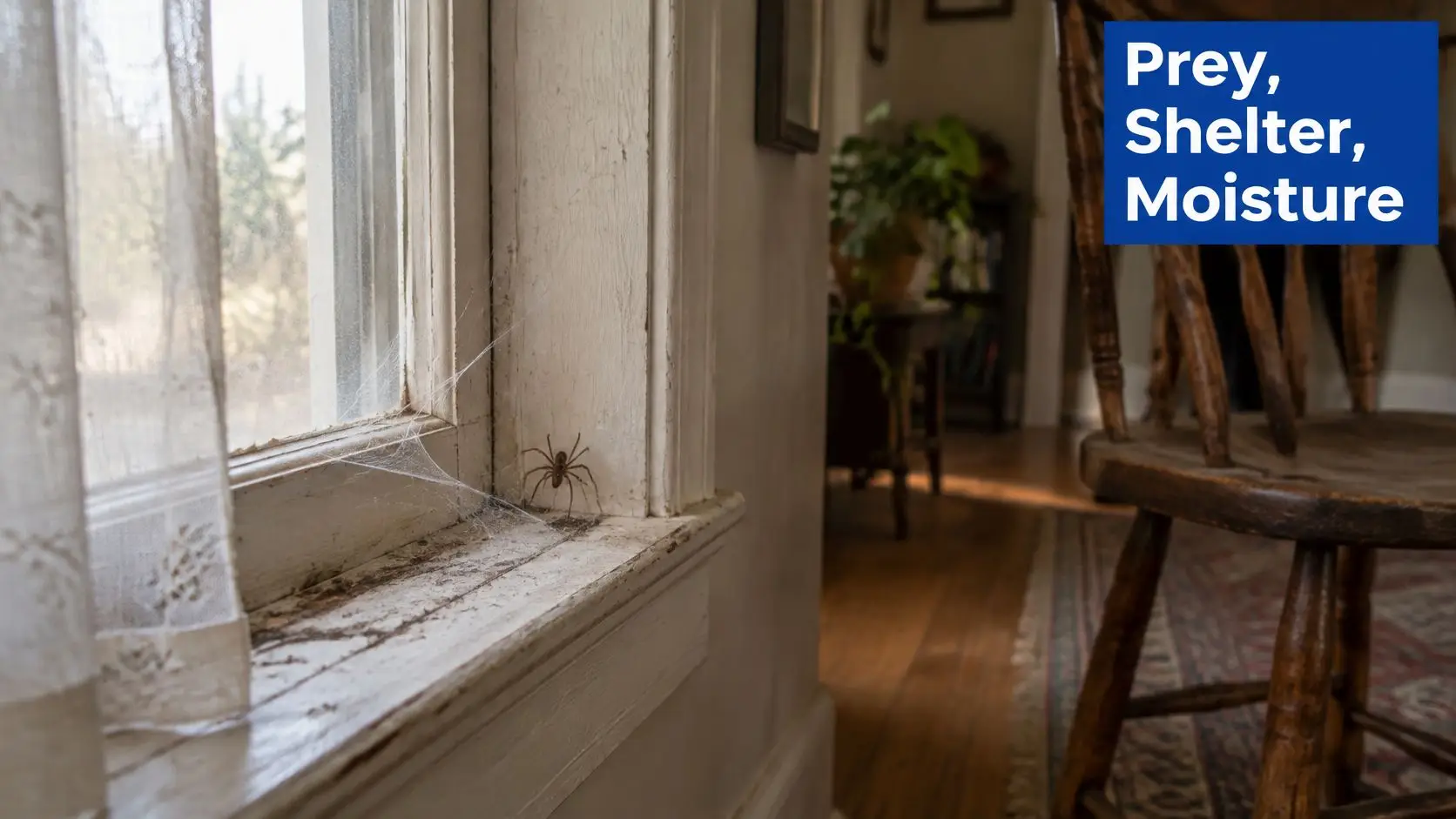
Outside, porch lights can concentrate insects near an entrance. Plants touching siding and mulch against the foundation give spiders protected approaches to the wall. An opening around a door, screen, or vent completes the route indoors.
The chain is straightforward: exterior conditions support insects, insects gather near the structure, and spiders follow the food. An indoor spider doesn't necessarily mean it originated indoors.
Practical rule: When you find a spider, check what makes that location useful before reaching for a spray.
The better question isn't only how to kill the spider. It's what keeps attracting spiders to that particular spot.
Where Spiders Get In and How to Seal the Gaps
A house can look sealed from the driveway and still have openings beneath door sweeps, around pipes, or behind loose screens. Many spiders are outdoor hunters that enter through these small routes rather than establishing themselves inside first.
The University of Arizona's spider guidance identifies structural openings and items carried indoors as important entry routes. Check foundation cracks, poorly fitted windows, vents, and utility penetrations, but also inspect firewood, cardboard, stored equipment, and plants before bringing them inside.
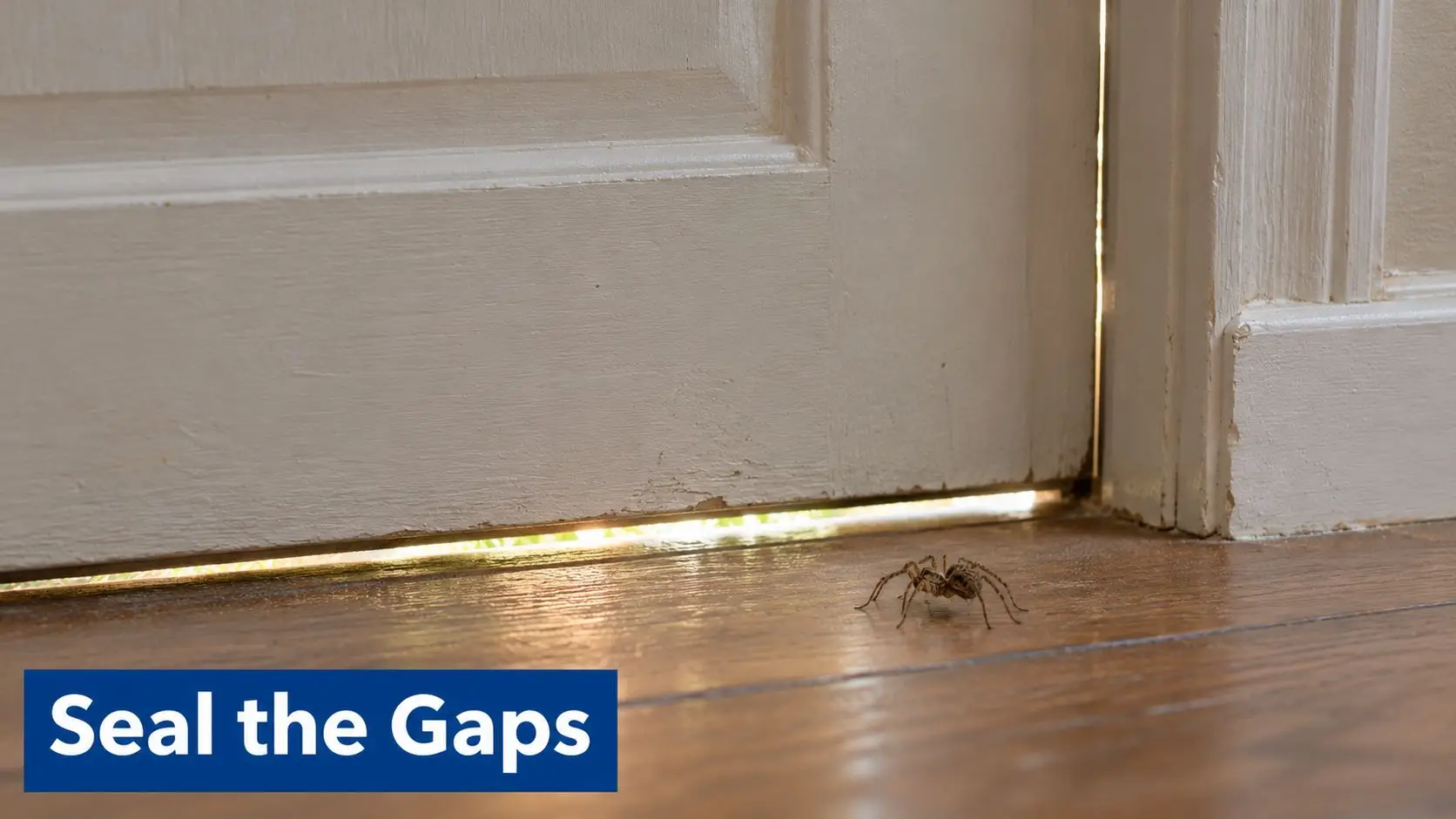
A door threshold deserves close inspection, especially where the sweep no longer touches evenly.
Use a systematic sealing routine
Walk the exterior at dusk with a flashlight. Turn on interior lights and mark visible gaps with painter's tape so you can find them again. Light leakage helps reveal openings, but don't assume a dark joint is sealed without inspecting it closely.
Check thresholds and replace worn weather stripping. Close each exterior door and inspect the bottom and side edges for uneven contact. The common slip is repairing the front door while leaving the garage threshold open.
Repair screens and fit appropriate vent covers. Secure loose screen edges as well as obvious tears, because an intact mesh panel won't help if its frame has a gap. Use purpose-made vent screening without restricting required airflow or covering exhaust outlets.
Seal appropriate foundation and trim openings. Clean and dry sound joints before applying a compatible exterior sealant. Don't caulk over drainage openings, weep holes, or movement joints that need a different repair.
Clear the foundation edge and entrances. Move firewood, mulch, and debris away from the wall, and reduce unnecessary lighting beside doors. Sealing a gap while leaving insect-attracting conditions immediately beside it misses part of the problem.
Vacuum existing webs and egg sacs, then recheck. Use a crevice attachment and dispose of the contents promptly without handling spiders directly. Set a follow-up check for two weeks later rather than judging success from a freshly cleaned room.
Check whether the repair worked
A sound pest exclusion approach closes usable routes while preserving the building's ventilation and drainage. Avoid forcing foam or caulk into every opening just because it's visible.
Use the following video as an additional visual resource while planning your checks.
Success means fewer fresh webs and no repeated sightings at the repaired gap. If activity shifts elsewhere, extend the inspection rather than repeatedly treating the original corner.
Clearing Moisture, Clutter and Hiding Spots
A dry-looking room can still contain a damp cabinet base, condensation behind stored materials, or a slow leak around plumbing. These small pockets matter because spiders can persist where prey, moisture, and shelter overlap.
Moisture doesn't directly attract every spider species. Its effect is often indirect: damp conditions support springtails, flies, cockroaches, and other prey, while undisturbed storage provides refuge. Colorado State University Extension's guidance on spiders in the home supports managing these conditions alongside removing spiders and webs.
Remove the conditions, not just the web
- Repair leaks first. Check sink traps, supply connections, roof leaks, and stained cabinet bases. Drying the visible surface won't solve a continuing water source.
- Improve bathroom and kitchen ventilation. Use exhaust fans and check that ventilation equipment works properly. Lingering condensation deserves attention even when there's no obvious plumbing leak.
- Dehumidify persistently damp spaces. Where appropriate, use a dehumidifier in a basement or crawl space and arrange reliable drainage. Don't substitute it for repairing water intrusion.
- Correct exterior drainage. Clear blocked gutters and check where downspouts discharge. Water should move away from the foundation rather than collect beside it.
- Reorganize stored materials. Move firewood, boxes, and cardboard away from walls and off garage floors. Shelving and lidded storage bins make hidden corners easier to inspect.
- Separate plants and mulch from siding. Cut back touching vegetation and remove material piled against the wall. Keep the foundation edge visible enough to check.
- Clear neglected corners. Vacuum beneath shelving and behind movable storage, including prey insects and old webs. Don't move the same clutter to another dark corner.
A musty smell is a reason to investigate moisture, not proof of a spider problem. Sweet Home Cleaning Service's guide to remove musty odors from your house offers a useful cleaning reference once you've identified and corrected the dampness.
A room that smells fresher but still has a leak hasn't had its underlying moisture problem fixed.
These repairs make the space less suitable for both spiders and their prey. If spider numbers stay high after moisture, clutter, and entry routes are corrected, look for hidden insect activity. A deeper inspection may need to include cabinet voids, plumbing penetrations, and inaccessible storage edges rather than another round of surface cleaning.
Which Spiders Show Up and Why Sightings Spike
Household spiders have different habits, and the group plus the season helps distinguish a wandering visitor from persistent indoor activity. A sudden increase isn't automatically a cleanliness problem.
Oregon State University Extension explains that insects and spiders may seek warm, protected indoor shelter as cooler weather arrives. Seasonal movement can make spiders noticeable even when you haven't changed anything inside.
Match the spider's habits to the timing
| Spider group | Pattern you may notice | What to record |
|---|---|---|
| Wandering spiders | Movement indoors in early fall as temperatures cool | Floor-level sightings and nearby exterior doors |
| Funnel-web spiders | Frequent household encounters in late summer and early fall | Web shape and its sheltered location |
| Cellar spiders | Cobwebs in basements, crawl spaces, and cluttered corners | Undisturbed storage and returning webs |
| Common house spiders | Greater autumn activity associated with breeding | Whether sightings stay localized |
| Garden spiders | Spring entry associated with rural surroundings | Nearby vegetation and outdoor access |
Timing isn't universal. Research from Belgian homes found that garden spiders entered more often in rural settings and mainly in spring, while common house spiders were most numerous in autumn, when many were breeding, according to the Ghent University-hosted study. Those findings describe the homes studied, not a fixed calendar for Southeast Texas.
Indoor ecology also helps explain why neighboring houses can have different experiences. Access to the outdoors influences which arthropods enter, and clutter is associated with a higher occurrence of cellar spiders. A garage with frequently opened doors and crowded shelving offers different opportunities than a closed, lightly furnished room.
Read the location as well as the season
Homes near rivers, lakes, or fields can encounter more spiders because surrounding habitat supports abundant insect prey. In Kingwood, Conroe, and nearby communities, evaluate the immediate property rather than assuming every seasonal sighting means spiders are breeding throughout the house.
Indoor surveys describe a Malaise trap effect, in which homes act as accidental traps for arthropods moving through the environment. At a brightly lit entrance, insects may gather around the light, pass through an open door, and remain inside. Spiders can become concentrated near that same location.
Use a focused check:
- At a porch or doorway, note overnight lighting and gaps around the closed door.
- Along exterior walls, look for vegetation touching siding and nearby wood storage.
- Inside the garage, inspect cardboard piles, shelving edges, and the threshold.
- Across living spaces, record whether sightings involve similar spiders or several different types.
Our guide to common Texas spiders and how to manage them can help you compare habits, but don't handle an unfamiliar spider to identify it.
Record the web shape, room, and month, and take a clear photograph from a safe distance. Activity that stays near an entrance and fades after you remove the local trigger is consistent with seasonal visitors. Sightings that continue across rooms over successive weeks deserve a full diagnosis of species, prey, moisture, and access.
Magnolia Service Area and Coverage Check
Magnolia homeowners should confirm coverage for their actual address rather than assume a general Houston-area description includes their property. Magnolia is a distinct city in southwestern Montgomery County, Texas, within the Houston metropolitan area.
The City of Magnolia's official 2025 overview describes the city as approximately 40 minutes from Houston and covering 5.5 square miles. That makes a specific address more useful for scheduling than describing a home as being near Houston.
Check the property and the address
The City of Magnolia's demographic information reports population growth of 66% from 2020 to 2022, 12% from 2022 to 2023, and 18% from 2023 to 2024, with a listed 2024 population of 5,836. The 2020 U.S. Census counted 2,359 Magnolia residents.
Those figures describe community growth, not spider activity. For a newer home or recently altered property, inspect the actual construction and landscaping details rather than assuming its age makes it pest-proof.
- Garage thresholds: Check whether the bottom seal contacts the slab across the opening.
- Utility penetrations: Inspect finished openings around pipes, cables, and air-conditioning lines.
- Fresh planting beds: Look for mulch against siding or branches already touching the wall.
- Porch lighting: Note whether fixtures remain on after dark and whether insects gather beside the entrance.
Confirm Magnolia coverage before booking
Our listed FullScope Pest Control service locations are Cleveland, Kingwood, Conroe, and Porter, Texas. A listed location isn't a guarantee of coverage for every surrounding address.
If your property is in Magnolia, Texas, confirm the address directly with us before arranging a visit. Include the street address and whether the concern is limited to a garage or entrance, or involves recurring sightings throughout the home.
Choose DIY or a Professional Inspection
Choose your next step based on the pattern of activity and your confidence in identification, not just how unsettling the spider looks. Mild sightings around a visible gap call for a different response than repeated encounters in several rooms.
Control options and what each one covers
| Option | Best for | What it covers |
|---|---|---|
| DIY sealing and cleaning | Few entry points and mild sightings | Gaps, screens, webs and egg sacs |
| Moisture and clutter repairs | Recurring sightings in damp rooms | Leaks, ventilation, dehumidification and storage |
| Professional inspection | Sightings in several rooms or unknown species | Entry points, moisture, hiding areas and prey |
| Ongoing preventive service | Persistent prey or repeated activity | Scheduled visits that catch new activity early |
When a self-check makes sense
An occasional seasonal visitor near an obvious opening is a reasonable starting point for DIY work. Use a flashlight, a vacuum crevice attachment, replacement screen material, and suitable weather stripping to address accessible problems.
Keep a record of what you cleaned and repaired. That gives you a way to distinguish an old web you missed from new activity, without relying on memory.
Sprays alone rarely resolve recurring sightings when the food source and access routes remain. Don't repeatedly apply a product to the same corner just because another spider appeared there. Any pesticide you use must be labeled for the pest, location, and application method, and kept away from children and pets as directed.
When professional inspection is the better choice
Arrange an inspection when you notice:
- Regular activity in multiple rooms, rather than an isolated visitor near an entrance.
- Large or repeatedly rebuilt webs in ceiling corners or activity around suspected wall voids.
- No identifiable entry route after checking accessible doors, windows, and penetrations.
- An unfamiliar species, especially when you can't obtain a safe, clear identification.
- A suspected black widow or brown recluse, which warrants prompt professional handling and extra care around children and pets.
Don't reach into a suspected hiding place, dismantle a wall, or handle a spider to improve a photograph. Keep children and pets away while you arrange identification.
Decision point: Start with a self-check this week if sightings are occasional and the gap is visible. Book an inspection if activity recurs across rooms, the route remains unclear, or identification is uncertain.
At FullScope Pest Control, our inspections examine entry points, moisture problems, and hiding areas to find what keeps pest activity going. A thorough assessment also considers the prey supporting the spiders rather than treating each sighting as an unrelated event.
We're a licensed company, and our residential service treats spiders, including brown recluse and black widows. Recurring visits are often quarterly, with frequency set by the property and pest risk; regular checks let our specialists track changes, detect fresh activity, and adjust treatment before the problem builds back up.
Photograph the sighting from a safe distance, note the room and date, and call FullScope Pest Control with those details. Tell us whether webs return after cleaning and whether you've found a gap or moisture problem. For a Magnolia, Texas, property, provide your full address so we can confirm coverage before booking an inspection.