1500+ reviews

Have you ever watched a trail of tiny ants cross your kitchen counter and assumed the only question was how to kill the ones you can see? In Magnolia, Texas, the more useful question is what kind of ant found the route, why your home is attracting it, and whether the address is within the service area you intend to call.
“Sugar ant” is a broad homeowner label, not one precise species. Small ants may enter around kitchens, sinks, pantries, patios, and foundation gaps, especially where sweet food and moisture are available. Their bites are usually a nuisance rather than a serious injury, but correct identification still matters because fire ants and certain indoor-nesting species require a different response.
Magnolia service coverage also needs a geographic check. Magnolia is in southwest Montgomery County, and commonly used ZIP coverage includes 77353, 77354, and 77355, while city limits and the surrounding extraterritorial jurisdiction are not identical areas, as shown by the City of Magnolia maps and GIS resources. Before scheduling any pest visit, verify your street address rather than relying only on the city name printed on your mail.
What Sugar Ants Are and Why They Show Up in Kitchens
A line of tiny ants crossing the counter usually begins with one worker, not an army. That worker is scouting for food, water, and shelter. Once it finds syrup, juice, honey, fruit, crumbs, or pet food, it can mark the route with pheromones, chemical signals that guide other workers to the same location.
Think of the trail as a highway built on invisible ink. The first scout creates the route, and later ants reinforce it as they travel. A few ants can therefore become a steady procession without a new nest appearing overnight.
The name covers more than one species
Homeowners use “sugar ant” for several small, sweet-feeding ants. In cooler regions, the label may refer to banded sugar ants, while southern homes can also have pharaoh ants, odorous house ants, pavement ants, Argentine ants, and other species that search for sugary foods. The name alone doesn't tell you which insect is present.
A pest professional looks at size, color, body shape, antennae, and waist structure. That distinction matters because a visible kitchen trail may come from an outdoor nest, a hidden wall void, or several nearby colonies.
The life cycle follows the familiar ant pattern. Eggs develop through immature stages before becoming adult workers, while the colony depends on workers to forage, feed developing ants, and maintain the nest. You don't need to identify every stage to understand the practical issue: killing visible workers may remove the symptom while leaving the colony active.
Why Magnolia kitchens become attractive
Warm, humid Southeast Texas conditions can make indoor food and moisture especially inviting. Rain can disturb outdoor nesting areas and push workers toward protected edges around doors, windows, plumbing penetrations, and foundations. Summer humidity can also keep damp areas attractive near sinks, bathrooms, laundry spaces, and dripping faucets.
Treat the trail like a neighborhood watch. One scout reports a useful food source, and the rest of the colony follows the report. Wipe the counter, seal the food, and remove moisture, but also watch where the ants reappear. That route often points toward the entry gap or nesting area.
The important safety point is simple. Sugar ants are generally low-risk biters, and a medical overview from Cleveland Clinic explains ant bites and defensive behavior, including sugar ant workers measuring 2 to 15 millimeters and defending themselves with head pinchers rather than a painful sting. Their bites aren't usually painful, although sensitive people can experience allergic reactions.
Do Sugar Ants Actually Bite or Sting
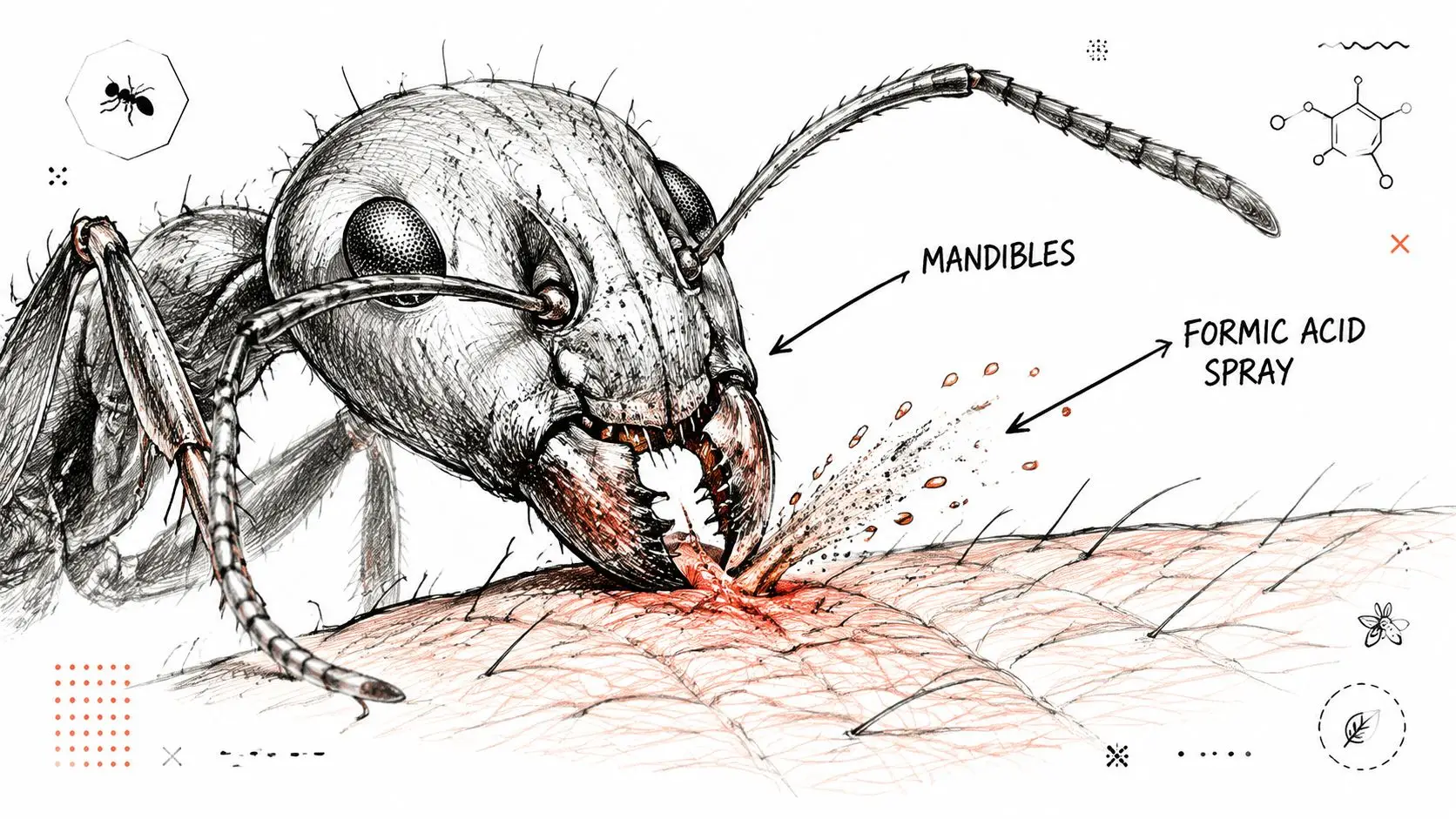
The words bite and sting describe different tools. An ant bites by closing its mandibles, the small jaws near its head, to grip skin. Some ants can also use defensive chemicals after biting. A sting requires a stinger that injects venom, a feature associated with groups such as fire ants rather than the small household ants people commonly call sugar ants.
A useful analogy is the difference between a clothespin and a needle. A sugar-ant-type species may act like a tiny clothespin, producing a pinch if handled. A fire ant acts more like a clamp followed by a sharp injection, which is why its reaction feels much more intense.
Species don't all behave alike
Banded sugar ants can deliver a mild pinch, but they rarely pierce human skin. Pharaoh ants have underdeveloped mouthparts and are generally unable to bite people in a meaningful way. Odorous house ants and Argentine ants may nip, yet the contact typically doesn't draw blood.
Pavement ants can also be mislabeled as sugar ants when they wander indoors for food. Their presence around a Magnolia kitchen doesn't automatically mean the household faces a dangerous pest. It does mean the insects have located a route worth repeating.
Fire ants are the clear contrast. They can bite to hold on and sting with venom, producing a burning sensation and sometimes a white pustule. If the pain is sharp, the area develops pustules, or multiple spots appear after disturbing a mound, fire ants are a more plausible explanation than a small sugar-feeding indoor ant.
Practical distinction: A barely noticeable pinch points toward a low-risk household ant. Burning pain followed by a pustule deserves fire-ant precautions and closer attention.
Most sugar-ant contact causes brief irritation, if anything. Sensitive people can react more strongly, so don't dismiss hives, breathing difficulty, or rapidly worsening symptoms because the ant was small. The next step is to match the skin reaction to sensible first aid instead of guessing from size alone.
How to Tell Sugar Ants Apart From Other Household Ants
Identification starts with the whole insect, not just its color. At close range, note the approximate size, color pattern, body shape, antenna segments, and the number of nodes in the waist, called the pedicel. Those features help a technician separate a genuine identification from the loose household term “sugar ant.”
A single-file trail is one of the most useful clues. It usually indicates a strong pheromone route to food. Chaotic movement may suggest pharaoh ants, which can maintain multiple queens and spread through connected indoor spaces. Behavior doesn't replace physical identification, but it tells you how cautiously to approach control.
| Species | Size & Colour | Key Body Feature | Typical Trail Behaviour | Bite or Sting Risk |
|---|---|---|---|---|
| Banded sugar ant | Small, orange-brown with a dark band | Distinctive banding and small waist | Often follows an organized food trail | Mild pinch possible, usually low risk |
| Pharaoh ant | Tiny, yellow to reddish | Small, uniform workers and underdeveloped mouthparts | May scatter or form shifting indoor trails | Generally unable to bite meaningfully |
| Odorous house ant | Dark brown to black | Recognizable odor when crushed | Organized trails near food and moisture | May nip, usually without blood |
| Pavement ant | Small, dark brown to black | Compact body and defined waist nodes | Commonly follows pavement-to-indoor routes | Usually low-risk contact |
| Argentine ant | Small, light to medium brown | Slender body and narrow waist | Often forms long, continuous trails | May nip, generally mild |
For a basic home check, place a single ant on clear tape without handling it directly, then examine it under a magnifier. Don't crush it if odor is part of the clue. Compare the markings and body form with a trusted FullScope ant identification guide before deciding whether a spray is appropriate.
Magnolia homeowners should also record where the trail begins and ends. Note whether it follows a window frame, cabinet edge, plumbing line, patio crack, or foundation. An address labeled Magnolia may fall within city limits, an ETJ area, or nearby Montgomery County territory, so location details help a service provider evaluate both the insect and the route into the home.
Recognizing Sugar Ant Bite Symptoms and First Aid Steps
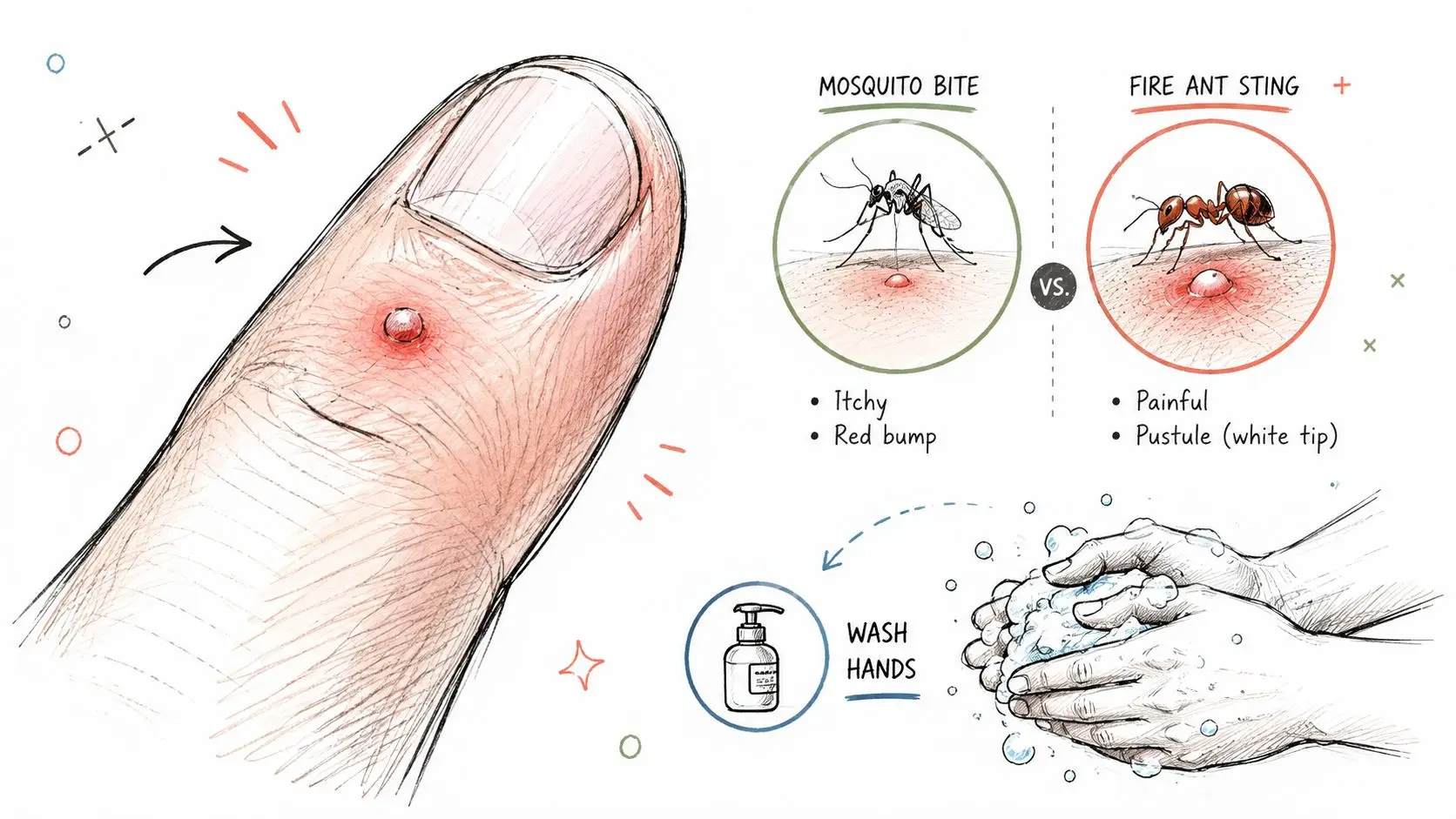
A sugar ant bite is usually easier to recognize by its mildness than by a dramatic mark. You may feel a brief pinch or mild burning during contact, followed by a small red bump. Significant swelling is less likely unless the person is sensitive or the skin has been irritated by scratching.
That pattern differs from common alternatives. Mosquito bites tend to itch without an immediate pinching sensation. Fire-ant reactions are often more painful and may develop pustules. A small red bump alone doesn't identify the insect, so consider where the contact happened and whether ants were present nearby.
A calm first-aid sequence
Clean the area. Wash with soap and cool water to remove residue and reduce irritation. This is also useful when the insect has crawled through kitchen, patio, or soil debris.
Cool the skin. Apply a cold compress for ten minutes. Wrap the cold source in cloth rather than placing ice directly against the skin.
Reduce local itching. Hydrocortisone or calamine can help with a limited itchy bump. Follow the product label, especially for children or broken skin.
Use an oral antihistamine when appropriate. Persistent itching may respond to an over-the-counter antihistamine, provided the person can safely take that medication.
For more help separating bites from stings and other insect reactions, use this bug bite identification resource. Don't scratch repeatedly, because damaged skin can create a separate infection concern.
Know when the reaction changes category
Spreading redness, hives, facial swelling, dizziness, or difficulty breathing requires medical attention. Seek urgent care for breathing problems or signs of a severe allergic response.
In Montgomery County yards, a painful reaction with pustules is more consistent with fire ants than the low-risk sugar-ant pattern described above. If the exposure occurred near a mound, avoid disturbing the area again and have the insect or location identified safely.
Preventing Sugar Ants From Coming Back
Prevention works best as a repeatable household routine, not a single deep clean. Magnolia homes can face outdoor pressure from soil, mulch, vegetation, patios, and tree cover, while indoor kitchens offer the exact food and moisture ants seek. The practical target is to remove the reason for returning and make entry harder.
Start with the indoor food check
Keep pantry items in sealed containers, wipe counters after preparing drinks or fruit, and rinse sticky bottles before recycling them. Run the dishwasher overnight instead of leaving food residue on dishes in the sink. Pet bowls deserve the same attention, particularly when ants appear near feeding areas.
Then inspect low-visibility spots. Look beneath small appliances, along cabinet seams, around trash containers, and beside the refrigerator. A counter can look clean while a thin syrup film remains beneath an appliance edge.
Moisture control comes next:
- Repair drips: Fix leaking faucets, supply lines, and appliance connections.
- Dry hidden areas: Check sink traps, cabinet floors, and laundry spaces for dampness.
- Reduce humidity: Improve airflow where Southeast Texas summer moisture lingers.
- Watch wood: Address damp trim or damaged areas that provide shelter near entry points.
Close the routes from outside
Caulk gaps around window frames and seal openings where utility lines enter the structure. Replace damaged weather stripping around exterior doors. Trim vegetation away from the foundation, and store firewood off the ground rather than directly against the house.
Use bait stations instead of relying on quick-contact sprays when the goal is colony control. Foraging ants can carry bait back along the route, while spraying only visible workers may leave the hidden source untouched. Follow every product label, and place bait where children and pets can't access it.
Late-summer activity can increase around the Piney Woods region as outdoor conditions shift. A Magnolia homeowner who checks trails, moisture, and foundation gaps weekly is more likely to catch a small route before it becomes a persistent indoor pattern.
Field rule: If cleaning removes the ants for a short time but the same line returns from the same gap, treat the entry route and possible colony source as the problem, not just the countertop.
When to Call a Professional in Magnolia and the SE Texas Region
A manageable trail usually has a clear food source, a limited route, and no repeated activity after sanitation and sealing. Professional help becomes more useful when the pattern suggests that ants are nesting inside the structure or entering from several points.
Schedule an inspection when:
- Trails return after cleanup: The same route reappears even after food and moisture sources are removed.
- Multiple rooms show activity: Ants in the kitchen, bathroom, laundry area, or bedrooms may indicate more than one route.
- The problem persists: Activity continuing beyond a sustained cleanup effort deserves species identification.
- Wall voids seem involved: Ants emerging around outlets, trim, cabinets, or plumbing penetrations can point to concealed nesting.
- DIY spraying changes the pattern: New trails in unexpected locations may mean the colony has been disturbed rather than eliminated.
Magnolia, Conroe, and Kingwood homes can experience persistent ant activity because warm regional conditions support outdoor activity for much of the year. Dense tree cover, grassy lots, mulch, and connected patios also create more potential entry points, especially around homes bordered by mature vegetation.
Retail sprays can create a misleading result. They may kill visible workers while leaving pharaoh ants or pavement ants active elsewhere. Pharaoh ants are particularly troublesome when homeowners mistake scattered indoor activity for a single outdoor trail, while pavement ants can continue entering from cracks around hardscape and foundations.
FullScope Pest Control serves north Houston and nearby Southeast Texas communities, with listed locations including Cleveland, Kingwood, Conroe, and Porter. Its broader service footprint includes communities such as Magnolia, Montgomery, New Caney, Splendora, Spring, and Willis, but verify your street address before booking because Magnolia city limits, Magnolia mailing addresses, and nearby Montgomery County communities aren't interchangeable.
The right trigger is a combination of persistence, spread, hidden emergence, or uncertain identification. Gather photos, note the rooms involved, and provide the exact street address so coverage and routing can be confirmed accurately.
Choosing the Right FullScope Service Plan for Your Situation
The right plan depends on what the ants are doing, not just on how many you see. A first-time homeowner in Kingwood with an isolated pantry trail may need a focused response. A Conroe property beside mature tree lines or recent construction may face recurring entry pressure that calls for continued monitoring.
Use the service comparison below as a starting point, then match it to the inspection findings and your address.
| Plan Name | Best For | Frequency | Key Benefit |
|---|---|---|---|
| One-Time Treatment | A limited, recent trail with a clear source | One visit | Targets the current activity and may include perimeter granules |
| Three-Plus | Homes needing repeated protection after initial control | Scheduled recurring visits | Supports follow-up treatment and ongoing monitoring |
| AllergyShield Plus | Properties with recurring pest pressure or broader household concerns | Quarterly | Provides a continuing protection schedule for changing conditions |
A One-Time Treatment can make sense when the issue is new, localized, and linked to an obvious entry point. It isn't the right assumption if ants keep appearing from several rooms or if the species may be pharaoh ants with concealed activity.
The Three-Plus option fits homeowners who want recurring service without treating every visit as an emergency. AllergyShield Plus is more suitable when seasonal pressure, tree cover, moisture, or repeated outdoor entry makes prevention a continuing need. Ask what each visit covers, how technicians handle bait and exclusion, and whether follow-up is included for the specific issue.
You can also review FullScope's pest control plans before contacting the company. For a broader perspective on household protection services, the HomeProBadge protection overview can help you think through maintenance, response, and coverage questions beyond one ant trail.
The most practical choice is the plan that matches the evidence. Light sightings with no recurrence call for a narrower response. Repeated trails, hidden emergence, and a property surrounded by favorable outdoor conditions justify asking about ongoing protection.
If you're in Magnolia, Kingwood, Conroe, Porter, or a nearby Southeast Texas community, photograph the ants, note where the trail starts, and verify your full street address before you call. Use those details to request an inspection and a service recommendation based on the actual species, entry route, and coverage area, rather than guessing from the phrase “sugar ants bite.”