1500+ reviews

That noise isn't just the house settling. You're lying in bed in your The Woodlands home, and you hear a light scratching over the ceiling, then a quick scurry that stops as soon as you listen for it. In neighborhoods around Spring, Conroe, and Kingwood, that's often how attic rodent problems first show up. You usually hear them before you see them, because rodents tend to be most active when the house is quiet and the attic is dark.
The good news is that attic infestations usually leave a trail. Droppings, odor, gnaw marks, disturbed insulation, and entry gaps all tell a story about how long the problem has been going on and how urgent the next step should be. Some signs mean, "Schedule an inspection soon." Others mean, "Stop poking around and get a pest and electrical professional involved today."
If you're trying to sort out whether you're dealing with a minor issue or an established attic problem, this guide will help. It covers the most important signs of rodent infestation in The Woodlands attic, assigns a practical severity level, and explains what you can check yourself before calling for help. If you're also comparing prevention options, it's worth reviewing Airtight Spray Foam rodent solutions alongside professional exclusion work so you understand what insulation can and can't do by itself.
1. Droppings and Fecal Matter
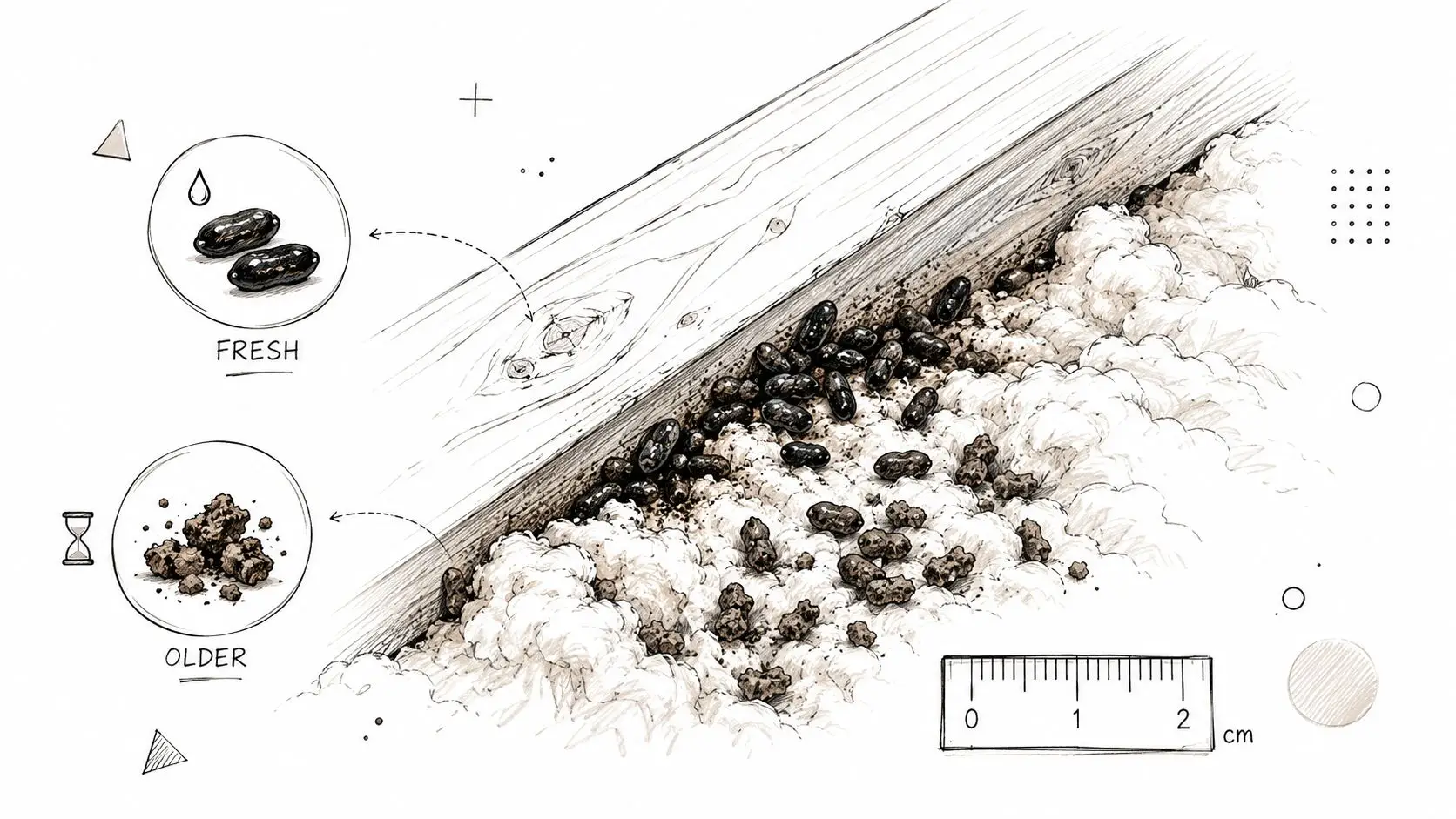
A lot of attic calls in The Woodlands start with a homeowner spotting a few dark pellets near a box of holiday decorations or along the top of a ceiling joist. That find matters because droppings usually show where rodents are traveling, feeding, or bedding nearby. In local attics, I look for them along framing, near pipe and conduit penetrations, beside attic access openings, and at the perimeter where rooflines meet the structure.
The size and shape help with early identification. The Centers for Disease Control and Prevention guide to cleaning up after rodents notes that mouse droppings are small and pointed, while rat droppings are larger. That distinction helps with triage. Smaller scattered droppings often point to mice. Larger droppings usually mean rats, and in attics around Spring, Kingwood, and The Woodlands, that often means more contamination and a harder exclusion job.
Severity level and what it means
I rate visible attic droppings as moderate to high severity.
A few dry, dusty droppings in one corner can mean past activity. Fresh, dark droppings in multiple spots usually mean the problem is active right now. If you also notice odor, fresh tracks in insulation, or repeated nighttime noise, treat it as an active infestation until an inspection shows otherwise.
This is also where context matters. During a WDI inspection for a home sale, a small amount of old droppings may only call for verification, cleanup, and a careful check for entry gaps. In an occupied home, fresh clusters near the attic hatch or around stored items usually justify a full rodent inspection, trapping plan, sanitation recommendations, and exclusion work.
Practical rule: Do not sweep or vacuum droppings dry, and do not pick them up with bare hands. Photograph what you found, note the location, then limit attic traffic until the area can be assessed safely.
Before you call, a few homeowner checks can help without turning a small contamination issue into a bigger one:
- Check high-traffic edges: Look along joists and the outer attic perimeter for repeated droppings in a line.
- Inspect around penetrations: Plumbing, electrical, and HVAC openings often collect droppings because rodents use them as travel lanes.
- Look for concentration, not just presence: A few pellets matter. Heavy buildup in one pocket usually points to a resting or nesting area nearby.
- Know when to stop: If you find widespread droppings, strong odor, or signs near wiring, get professional help rather than disturbing the area further.
For homeowners trying to sort out whether they are dealing with mice, rats, or a broader indoor issue, FullScope's guide on how to eliminate mice and rats from your home gives a solid overview of what treatment and exclusion usually involve. If the droppings are fresh or widespread, that is the point to schedule an inspection, not keep guessing.
2. Gnaw Marks on Wood, Insulation, and Wiring
Fresh gnawing changes the urgency fast. Rodents chew because they have to, and in an attic they don't care whether that's a beam corner, a duct edge, stored decorations, or electrical wiring. In real service calls around Conroe and The Woodlands, this is the point where a nuisance problem becomes a property-risk problem.
A technical attic inspection source specifically identifies damage to infrastructure, especially chewed wiring and disturbed insulation, as a high-risk indicator that justifies immediate exclusion, sanitation, and repair rather than baiting alone in this attic rodent damage overview. That's exactly right. If wiring is involved, this stops being a wait-and-see situation.
What fresh damage looks like
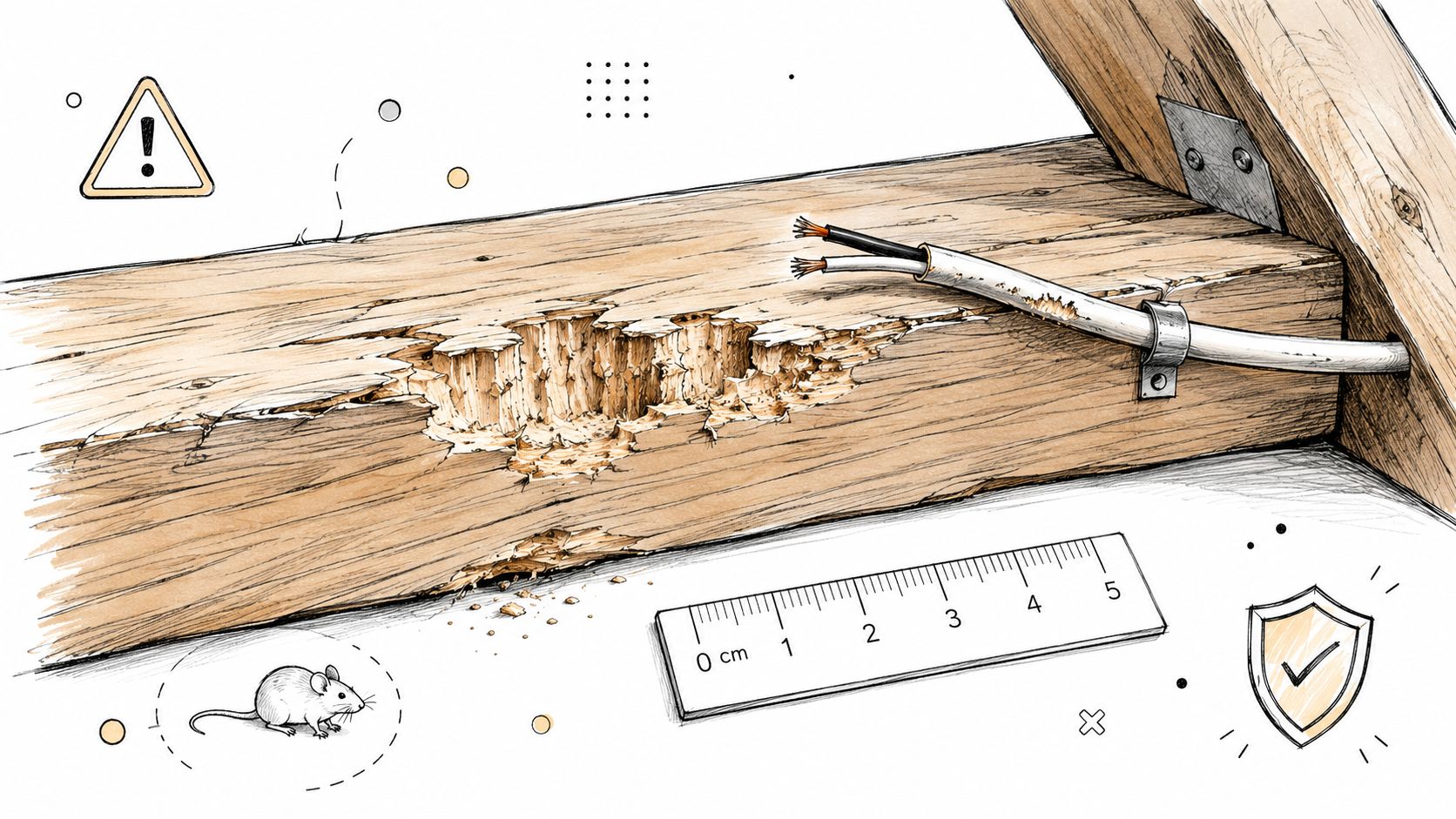
Sharp, lighter-colored gnaw marks often suggest recent chewing. Older damage tends to look darker, worn, or dirty from attic dust. Parallel grooves on wood and torn insulation around the attic perimeter are common. Exposed wire is the one that gets immediate attention.
A Conroe homeowner might go into the attic to check holiday storage and notice insulation pulled back with bite marks on the jacketed wire nearby. At that point, I wouldn't recommend setting a couple of store traps and hoping for the best. I would recommend a same-day pest inspection and an electrician if conductor damage is visible.
Chewed wiring is a same-day follow-up issue. Don't assume the lights still working means the line is safe.
Use this sign as a decision point:
- Wood only: Serious, but usually manageable through inspection and exclusion.
- Insulation and ducts: Strong sign of established movement and nesting behavior.
- Any wiring damage: Highest urgency. Bring in a professional immediately.
For homeowners looking at next steps after damage is confirmed, FullScope explains practical control options in its guide on how to eliminate mice and rats from your home.
3. Urine Stains and Ammonia Odor
A homeowner in The Woodlands will often notice this sign before seeing anything in the attic. The smell shows up upstairs first. It may hit when you open a hall closet, walk into a guest room, or turn on the attic access light after a humid afternoon.
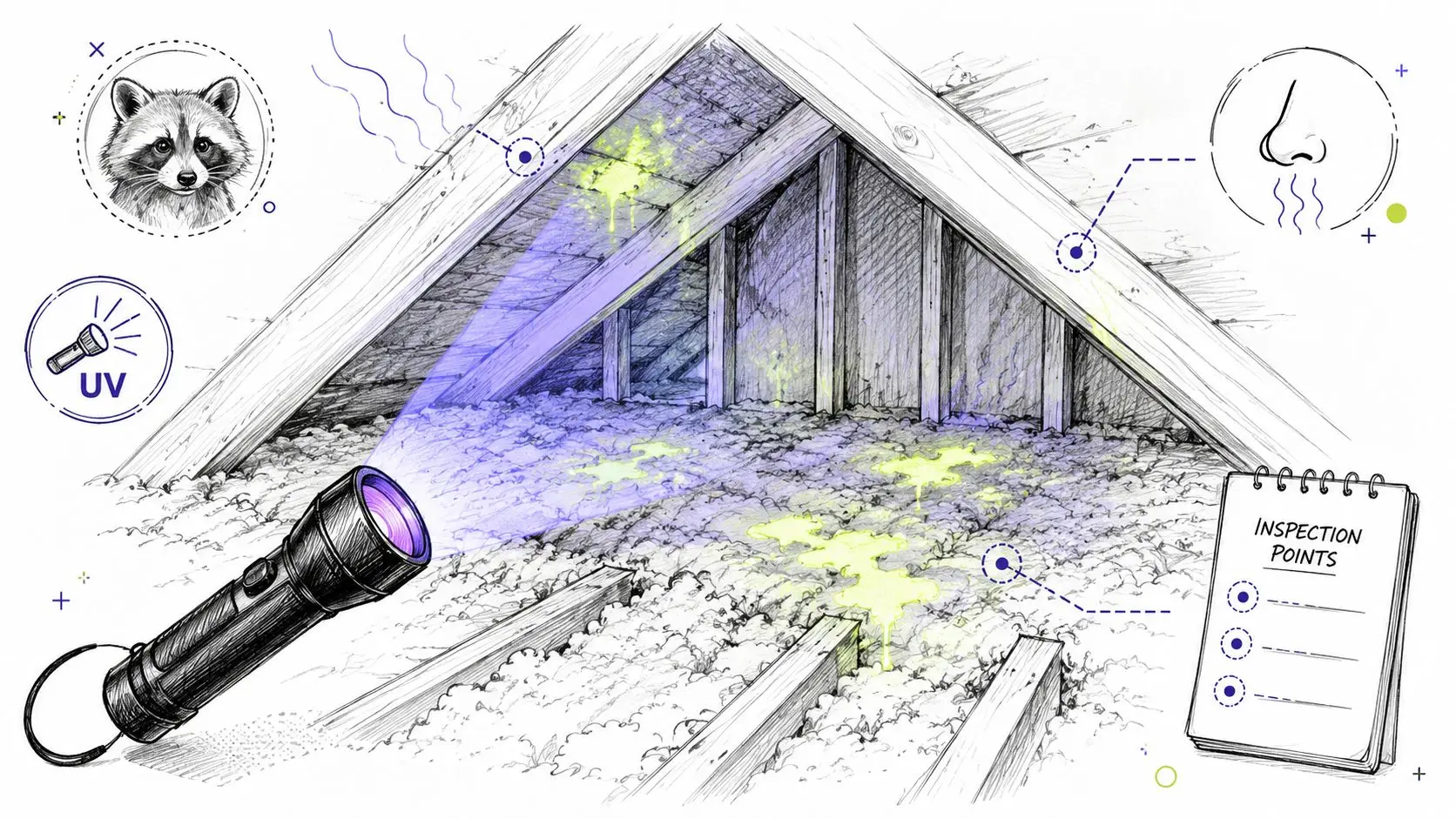
Rodent urine leaves a sharp ammonia-type odor that gets stronger in warm attic conditions. In our area, that matters because attic heat builds fast for much of the year, and even a small contaminated zone can start affecting the rooms below. If you also notice yellowed staining on framing, insulation, or ceiling drywall near the access point, treat that as active evidence, not just an old attic smell.
Severity level and when to escalate
I rate persistent urine odor and visible staining as high severity. A light smell one day out of the month can come from older contamination. A recurring odor, especially one that gets stronger in the evening or after hot weather, usually means the attic has an active use area nearby.
This sign also changes the cleanup conversation. Once urine has soaked into insulation, surface treatment rarely solves it. The U.S. Environmental Protection Agency notes that contaminated insulation and other absorbent materials often need to be removed because they cannot be fully disinfected once affected by rodent urine and droppings, as explained in its guidance on cleaning up after rodents.
A practical DIY check helps here. Use a flashlight and inspect around insulation low spots, corners near the eaves, and areas around stored boxes. Look for matted insulation, darkened patches, or repeated staining on the same run path. Do not stir up dusty material or start vacuuming it dry.
Use these triggers to decide your next step:
- Mild odor only, no other signs: Moderate concern. Schedule a close attic inspection soon.
- Visible staining or concentrated smell in one area: High concern. Active contamination is likely.
- Odor coming into living space: High concern with sanitation implications. A professional inspection should move up the list.
- Odor plus a household member with respiratory sensitivity: Treat it as urgent and limit attic disturbance.
Homeowners around The Woodlands sometimes try odor bombs, scented sprays, or a little spot cleaning at the hatch. That usually wastes time. The better order is inspection, removal or exclusion, then sanitation and material replacement where needed. If FullScope Pest Control finds urine saturation during an attic inspection or WDI inspection, the next step is to map the contaminated zones and determine whether exclusion alone will solve the problem or whether insulation removal is also justified.
4. Nesting Materials and Debris Accumulation
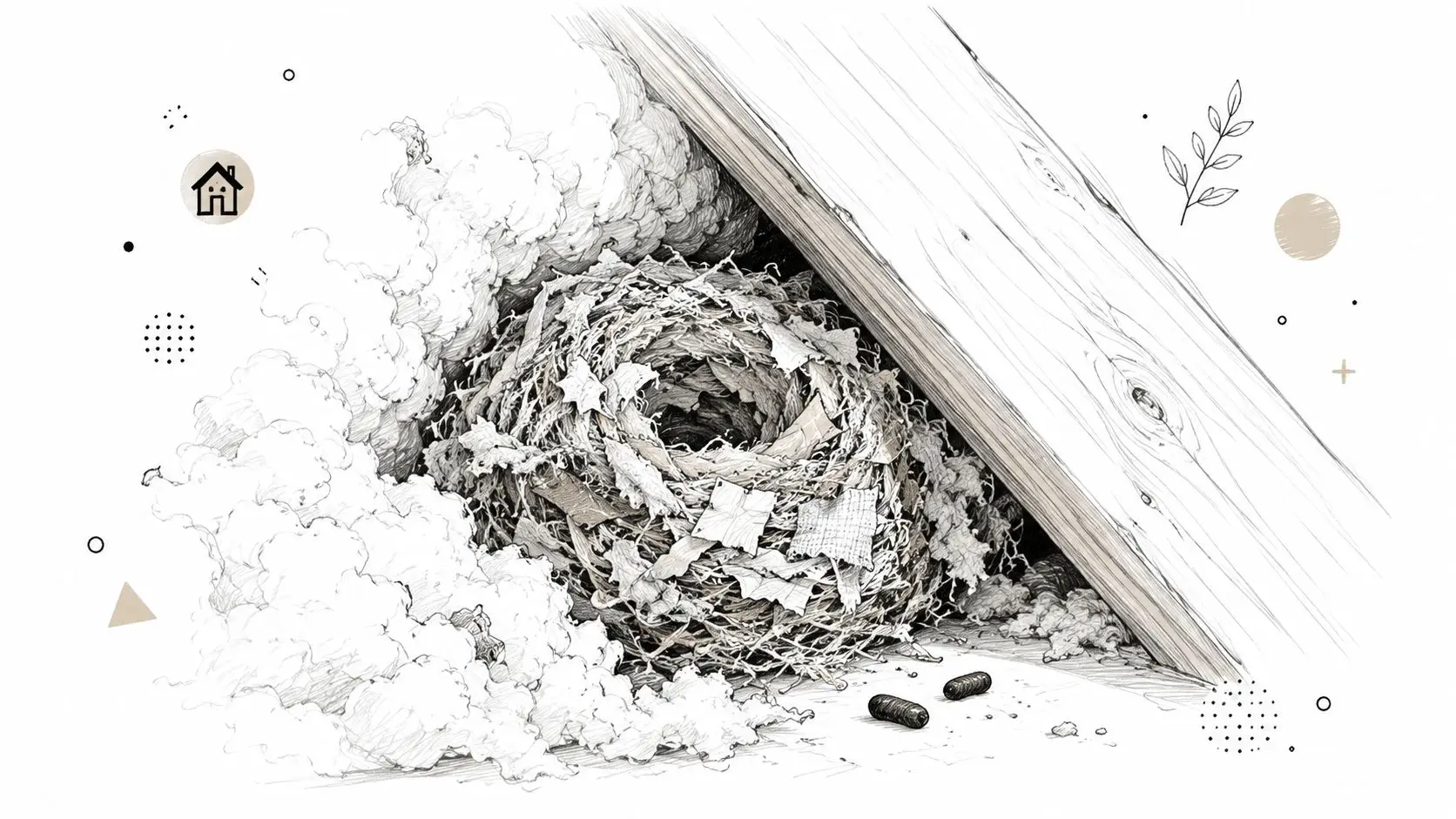
Once you find a nest, you're past the "maybe" stage. Rodents build nests from what's available, and attics provide plenty of options: shredded insulation, paper, cardboard, fabric, and soft storage contents. In homes around The Woodlands, I often see nests tucked into lower corners near the eaves, behind stored items, or carved directly into insulation.
The important distinction is this. Loose debris by itself can mean attic airflow or old construction mess. A compact pocket of shredded material with droppings, odor, or runways means animals have settled in.
What a nest tells you
A nest changes the severity level to high, because it shows the attic is being used as shelter, not just as a pathway. In practical terms, that means trapping alone usually won't solve the whole problem. You need removal, exclusion, and sanitation planning.
A Spring real estate inspector might find dense nesting material in one attic corner during a WDI inspection. A Kingwood property manager might discover shredded holiday boxes with nesting tucked inside. Those are different properties, but the interpretation is the same. Rodents are comfortable there, and they will keep returning if the access points stay open.
If you can identify a nest from the attic hatch without touching anything, that's enough. Don't pull it apart to "see how bad it is."
Use these checks carefully:
- Look near quiet corners: Eaves, beam intersections, and storage edges are common.
- Check disturbed boxes: Seasonal bins and cardboard are favorite nesting material.
- Watch for multiple sites: More than one nest usually means a broader control job.
What doesn't work is removing the nest first and worrying about the rest later. That often pushes surviving rodents deeper into the structure. The better sequence is inspection, trapping or removal strategy, full entry-point review, then cleanup under controlled conditions.
5. Scratching, Scurrying, and Nocturnal Sounds
You hear it around 1:00 a.m. A quick run above the ceiling, then a pause, then scratching near one corner of the attic. In The Woodlands, that pattern gets dismissed all the time as house settling, branches on the roof, or HVAC noise. Sometimes it is. Repeated sound in the same area at night deserves a closer look.
Noise is usually an early sign, not a final diagnosis. Mice tend to sound lighter and faster. Rats often create steadier movement, heavier footfalls, or short dragging sounds. I would not identify species from sound alone, but the pattern helps narrow where to inspect and how urgently to act.
Risk level based on sound pattern
I rank attic noise in three levels so homeowners can decide whether to monitor, inspect, or call for help.
- Low: One-off scratching after a cold front, storm, or sudden temperature change.
- Medium: Scurrying or scratching on multiple nights, especially after the house gets quiet.
- High: Consistent nightly noise in the same zone, or noise paired with droppings, odor, or visible disturbance near the attic hatch.
That severity scale matters in this area. Homes in The Woodlands, Spring, and nearby neighborhoods often have complex rooflines and long attic runs, so sound can travel and seem farther away than it really is. A noise over the guest room may start near a soffit line or garage transition instead.
A simple homeowner check works well here. Stand still under the area where you heard movement, note the time, then check the attic the next day for fresh droppings, rubbed paths through insulation, or disturbed storage. If you keep hearing the same pattern for two or three nights, write down the location. That gives a technician a much faster starting point.
Do not start chasing the sound blindly. Banging on drywall, tossing bait into the attic, or sealing gaps before confirming activity often creates harder problems, including rodents dying in inaccessible voids or shifting into another part of the house.
If the sound repeats, the next step is inspection and a plan that includes trapping, sanitation, and sealing the access route. FullScope handles that type of attic work regularly in this area, and our guide to preventing rodent entry points around the home explains why sound alone is only part of the job.
6. Entry Points, Gaps, and Holes in Attic Structure
A lot of attic infestations in The Woodlands start before a homeowner ever hears a sound. A squirrel-sized opening gets attention fast, but rodents usually use smaller flaws: a loose soffit panel, a gap around a line set, a corner where roof decking and fascia no longer sit tight. In neighborhoods with mature trees, heavy shade, and layered rooflines, those access points are common.
I rate visible entry points as medium to high severity. A minor construction gap with no other signs may only need monitoring. An opening with greasy rub marks, fresh droppings nearby, or disturbed insulation below it usually means active traffic and needs to be addressed soon.
Start outside. That is where the pattern usually makes sense.
Walk the perimeter and look up at the roof-to-wall transitions, attic vents, eaves, and garage roof connections. Then check the attic side of those same areas during daylight. If you see daylight where it should be closed, insulation pushed back near the perimeter, or dark smudge marks along framing, treat that as a real lead. Rodents do not need a dramatic hole to get into an attic.
The spots I check first on Woodlands-area homes are usually the same:
- Soffits and roof edges: Watch for lifted panels, soft wood, bent trim, or damaged vent screening.
- Utility penetrations: Cable, plumbing, electrical, and HVAC lines often leave irregular gaps that widen over time.
- Garage-to-attic connections: These transitions are easy to miss and often give rodents a protected route upward.
The trade-off here matters. Sealing too early can force rodents deeper into the structure or into a wall void. Waiting too long leaves the route open and turns one entry point into repeated activity. The right sequence is inspection first, then trapping or removal as needed, then exclusion with the right materials for that specific opening.
Homeowners can do a basic check safely from the ground, from a ladder only if they are comfortable, and from the attic hatch with a flashlight. Anything higher-risk, anything near wiring, or anything that requires material matching on the exterior should be handled by a technician. FullScope deals with this type of exclusion work regularly in The Woodlands, and our guide to preventing rodent entry points around the home explains what to look for before sealing starts.
If you find one suspicious gap, keep looking. In this area, the problem is often two or three smaller access points instead of one obvious hole. That is also why a WDI inspection or a focused rodent inspection can save time. It helps confirm where activity started, what damage is already in play, and whether simple sealing will solve the issue or just cover it up.
7. Damaged Insulation and Contaminated Attic Materials
A homeowner in The Woodlands often notices this sign late. The attic still looks “insulated” from the hatch, but once you get a better angle with a flashlight, you can see travel lanes pressed into the blown insulation, darkened areas around runways, and shredded spots where rodents have nested or turned the material over while moving through it.
Insulation records activity differently than droppings or noise. It shows where rodents have been traveling, where they settled in, and whether the problem stayed light or turned into contamination. In this area, I pay close attention to the outer attic edges, around duct boots, near wiring penetrations, and along the top plates over garages and second-floor rooms. Those are common movement zones in homes around The Woodlands and nearby Spring.
I rate this sign as medium severity when insulation is only flattened or tunneled. I rate it high severity when it is wet with urine, mixed with droppings, or packed into nesting pockets. At that point, the issue is no longer limited to removal. It becomes a cleanup and restoration decision too.
A practical attic damage overview from LunsPro points out the same real-world problem technicians run into all the time. Rodents can be gone and the attic can still be unhealthy to leave as-is.
That trade-off matters. Full removal and insulation replacement costs more than trapping alone, but leaving contaminated material in place can leave odor behind, keep the attic dirty, and reduce insulation performance. Compressed insulation also stops doing its job well, so homeowners sometimes feel the issue first as uneven room temperatures or higher HVAC strain.
A safe DIY check is simple. Look from the hatch or from a secure walkway if your attic has one. Use a bright flashlight. Watch for matted paths, gray or brown staining, shredded paper or fabric mixed into the insulation, and spots where the depth suddenly changes. Do not kneel in insulation or disturb suspect material without gloves, a mask, and stable footing.
When to call a pro is clearer here than in some other categories:
- Call soon if you see clear tunneling or repeated compression in multiple areas.
- Call promptly if insulation is stained, smells foul, or contains droppings and nesting debris.
- Call immediately if contamination is near HVAC components, bathroom vent terminations, or exposed wiring.
The correct order is straightforward. Confirm active rodent activity, remove or control it, close the entry points, then decide how much insulation needs to come out. Scheduling cleanup first is a common mistake. If the attic has not been fully inspected and sealed, new insulation can be contaminated again. In The Woodlands, where attic systems often connect through multiple small gaps instead of one obvious opening, that sequence saves money and prevents repeat work.
This is also where a focused rodent inspection or WDI inspection can help. FullScope Pest Control uses those findings to separate cosmetic disturbance from material that should be removed, and to determine whether the attic needs light cleanup, targeted insulation removal, or a broader exclusion and sanitation plan.
7-Point Comparison: Signs of Rodent Infestation in The Woodlands Attic
| Warning Sign | 🔄 Implementation Complexity | ⚡ Resource Requirements | ⭐ Expected Outcomes | 📊 Ideal Use Cases | 💡 Key Advantages |
|---|---|---|---|---|---|
| Droppings and Fecal Matter | Low to detect; safe handling needed | Gloves, mask, flashlight, camera; pro biohazard cleanup if extensive | High detection accuracy; limited population sizing | Initial inspection, pre‑purchase checks, homeowner alerts | Easy to spot; indicates recent activity; directs inspection |
| Gnaw Marks on Wood, Insulation, and Wiring | Moderate, inspection + electrical/structural assessment | Photo documentation; electrician/professional repairs as needed | High for confirming active damage and urgency | When wiring/structural damage suspected; insurance or real‑estate cases | Clear visual evidence; prioritizes repairs; compelling documentation |
| Urine Stains and Ammonia Odor | Moderate, detection may need UV and olfactory checks | UV (blacklight), PPE, decontamination supplies; possible insulation replacement | High for contamination mapping; odor may persist after removal | Suspected contamination, health complaints, poor ventilation | Early odor alert; UV reveals hidden stains; differentiates rodents |
| Nesting Materials and Debris Accumulation | Moderate–High, handling hazard; indicates breeding | PPE, removal tools, disposal, exclusion and treatment services | Very high indicator of established infestation and reproduction | Confirmed nests, multiple nests, long‑standing infestations | Confirms breeding; locates activity hubs; guides exclusion strategy |
| Scratching, Scurrying, and Nocturnal Sounds | Low to detect; locating source can be complex | Homeowner reports; borescope/listening devices for pros | Good early warning; low locational specificity | Early‑stage detection; prompt investigation trigger | Often first noticed sign; prompts rapid professional response |
| Entry Points, Gaps, and Holes in Structure | High, requires exterior/structural assessment and sealing | Sealants, rodent‑resistant materials, skilled technicians | Very effective prevention when properly sealed | Post‑treatment exclusion, preventative maintenance, property upgrades | Cost‑effective long‑term prevention; prevents reinfestation |
| Damaged Insulation and Contaminated Materials | High, remediation and replacement required | Professional decontamination, insulation contractors, disposal | High impact on health/energy; typically requires replacement | Significant contamination, energy loss, insurance claims | Reveals infestation severity; replacement restores efficiency and safety |
Protect Your Attic and Home With FullScope
If you've found even one of these signs, don't talk yourself out of it. Rodent problems in an attic rarely stay contained. They spread from noise to contamination, from contamination to material damage, and in some cases from gnawing to real electrical risk. The earlier you identify the pattern, the easier it is to stop the problem before repairs grow.
A few DIY checks make sense. Listen for nighttime movement. Look for droppings along framing. Inspect soffits, vents, and utility penetrations. Take photos. Make notes. That's useful information for the technician and it can shorten the inspection process.
Still, there are clear points where a homeowner shouldn't go further alone. Chewed wiring needs same-day follow-up. Strong ammonia odor usually means contamination, not just animal presence. Nesting in insulation often means the job will involve more than traps. If you're buying or selling a home, a rodent issue can also overlap with documentation needs, especially when a WDI inspection is part of the transaction.
For The Woodlands, Kingwood, Conroe, and nearby Southeast Texas communities, local experience matters because the same trouble spots show up again and again. Rooflines, soffits, garage corners, and utility penetrations are common. So are attic layouts that let rodents travel unseen until the signs become obvious inside the home.
FullScope Pest Control is one local option for homeowners and property managers who need inspection, rodent control, exclusion, and related service coordination. The company serves north Houston and nearby communities and offers rodent services along with WDI inspections and other pest management work. If you want to protect the home after cleanup, it's also smart to think beyond pests alone and review understanding indoor air quality for homeowners, especially when odor or contaminated insulation has been part of the issue.
The goal isn't panic. It's a clear sequence. Confirm the signs, assess the severity, stop the entry, remove the activity, and clean up the attic the right way. That's how you get your peace and quiet back, and keep it.