1500+ reviews

If you're hearing scratching above the bedroom at 2 a.m., finding black droppings along the garage wall, or smelling that stale, musky odor near the attic hatch, you're probably dealing with more than a one-off nuisance. In Magnolia, Kingwood, Conroe, Porter, and the surrounding Southeast Texas communities, roof rats move fast through roofs, trees, and utility lines, and they don't usually stop at one opening. The frustrating part is that the obvious fix, sealing a hole, can make the problem worse if rats are still inside.
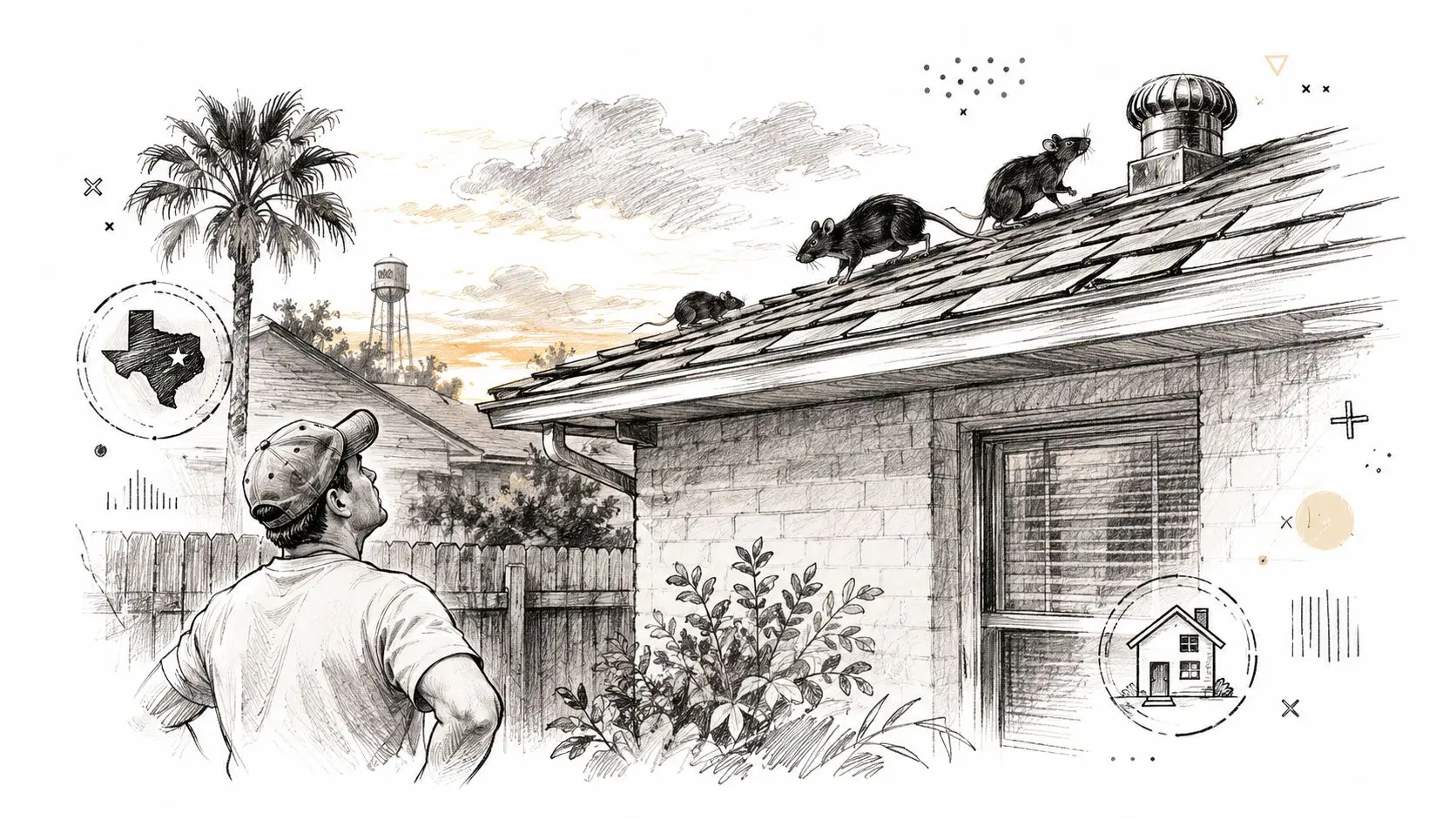
That's why roof rat removal in Southeast Texas has to be handled as a sequence, not a guess. Roof rats thrive in warm markets with dense vegetation and easy food, and modern activity reports show the pressure isn't fading. A 2024 rodent activity report found that Texas, Oklahoma, New Mexico, and Arizona saw a 25% increase in reported rodent activity year over year, while the West overall rose 27% and the Southeast rose 39%; Houston also ranked 7th in the United States for rat activity in a 2026 report cited by a local pest-control source, and Texas recorded a 23% increase in rodent-related service calls (Foods Safety News coverage of the report). That's consistent with what technicians keep seeing on roofs, attics, and soffits in newer subdivisions and older neighborhoods alike.
The pattern isn't new. In an Orange County, California urban control program, public agencies answered 7,281 rat complaints in 1985, and the program documented a 3% to 20% increase over the following 10 years, which is a reminder that rat pressure can persist even under active control efforts (historical control data). The practical lesson is simple, roof rats are a systems problem involving structure, habitat, and food sources, not just a trap on the floor.
Why Roof Rats Are a Growing Problem in Southeast Texas
A lot of homeowners first notice the problem the same way. They hear movement above the ceiling after dark, then find droppings near the pantry, or chew marks on the attic insulation. In Magnolia, that often starts in homes with mature trees close to the roofline. In Kingwood and Conroe, the call usually comes after rats have already used soffits, vents, or utility runs to get inside.
Warm climates, heavy cover, and easy travel routes
Roof rats favor high travel routes. They move along trees, roofs, and utility lines, so a property with branches touching the structure or dense cover right against the wall gives them what they need. That's why Southeast Texas homes with fruit trees, thick shrubs, and attic gaps keep showing up in service calls.
Practical rule: if a rat can get from a tree to the roof without touching the ground, your exterior setup is helping it.
The complaint data and market trend matter because they show this isn't a temporary spike. Roof rat pressure tends to stay high where development, vegetation, and food waste overlap. That's especially true in fast-growing suburbs where new construction meets older tree cover, because the rats get both shelter and easy access.
For a quick primer on which rodents show up most often in local homes, the most common rodents in Houston breakdown is useful background. Roof rats are a different problem from ground burrowers, and that distinction changes the entire removal plan.
Why one fix rarely solves it
A trap by itself only handles the rats that happen to encounter it. Sealing one visible hole only helps if you've found all the access points and confirmed the rats are out. In Southeast Texas, where roofs, trees, and utility lines create multiple entry routes, the issue usually keeps cycling until the structure, yard, and food sources are all addressed together.
That's why the most reliable mindset is not “how do I kill one rat?” It's “how do I make this home hard to use?”
How to Inspect Your Property for Roof Rat Activity
Start outside, not in the attic. Walk the perimeter at dusk or early morning and look for the places roof rats use, not just the spots that seem suspicious. The key routes are roof edges, vents, utility penetrations, tree limbs touching the structure, and clutter near the foundation.
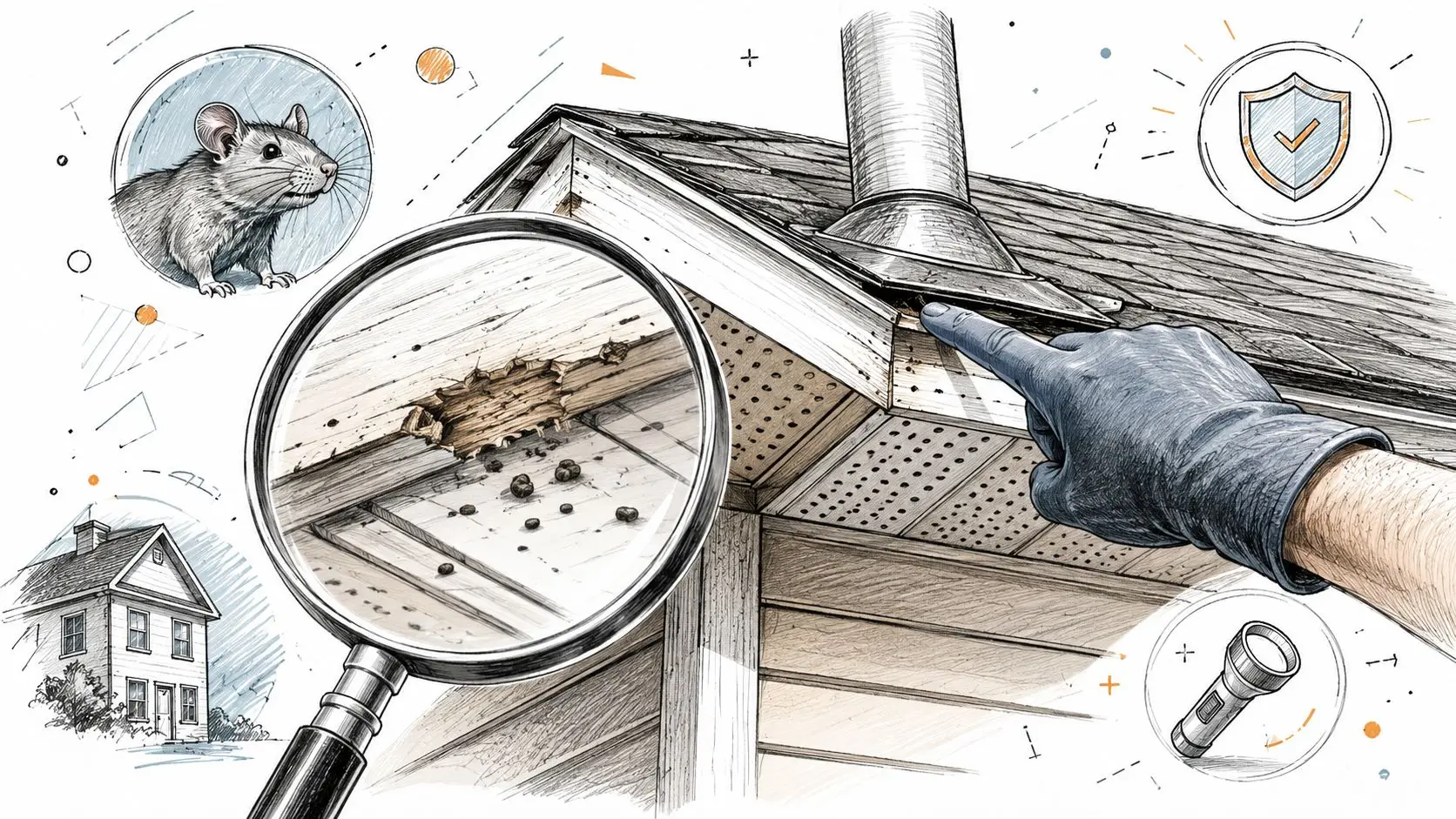
On the ground, check for droppings near trash cans, pet feeding spots, garage corners, and under fruit trees. Roof rat droppings are often found higher up than Norway rat droppings, because roof rats spend more time in attics, rafters, and rooflines. Look for grease marks, runways in dusty insulation, and chewed edges on wood, wiring, or flexible vent covers.
What to inspect first
A clean exterior inspection usually follows the same order:
- Tree and shrub contact: branches touching the roof, fence, or utility lines.
- Roofline openings: soffits, fascia gaps, vent screens, and torn flashing.
- Utility entry points: cable, conduit, and pipe penetrations where gaps are visible.
- Ground attractants: birdseed, pet food, fallen fruit, compost, trash, and standing water.
- Attic evidence: droppings, nesting material, gnawing, and runway marks along beams.
Roof rats are strongly neophobic, so they don't always show themselves right away around traps or lights. That means signs often matter more than sightings. Scratching overhead at night, sudden rustling in the attic, or repeated chewing in one area usually tells you more than trying to watch for the animal itself.
A good inspection ends with a map. Mark every likely entry and every active runway. If you skip this step and go straight to sealing, you're guessing.
The video below is worth watching if you want a visual of how roof rat access points and activity zones are typically found.
One detail gets overlooked constantly. Roof rats don't need a huge opening. The technical benchmark for rodent-accessible gaps is greater than 1/2 inch (1.3 cm), so a tiny break in fascia, a loose vent screen, or a gap around a pipe can matter just as much as a hole that looks obvious from the ground (Iowa State roof rat prevention and control methods).
Trapping and Exclusion Techniques That Actually Work
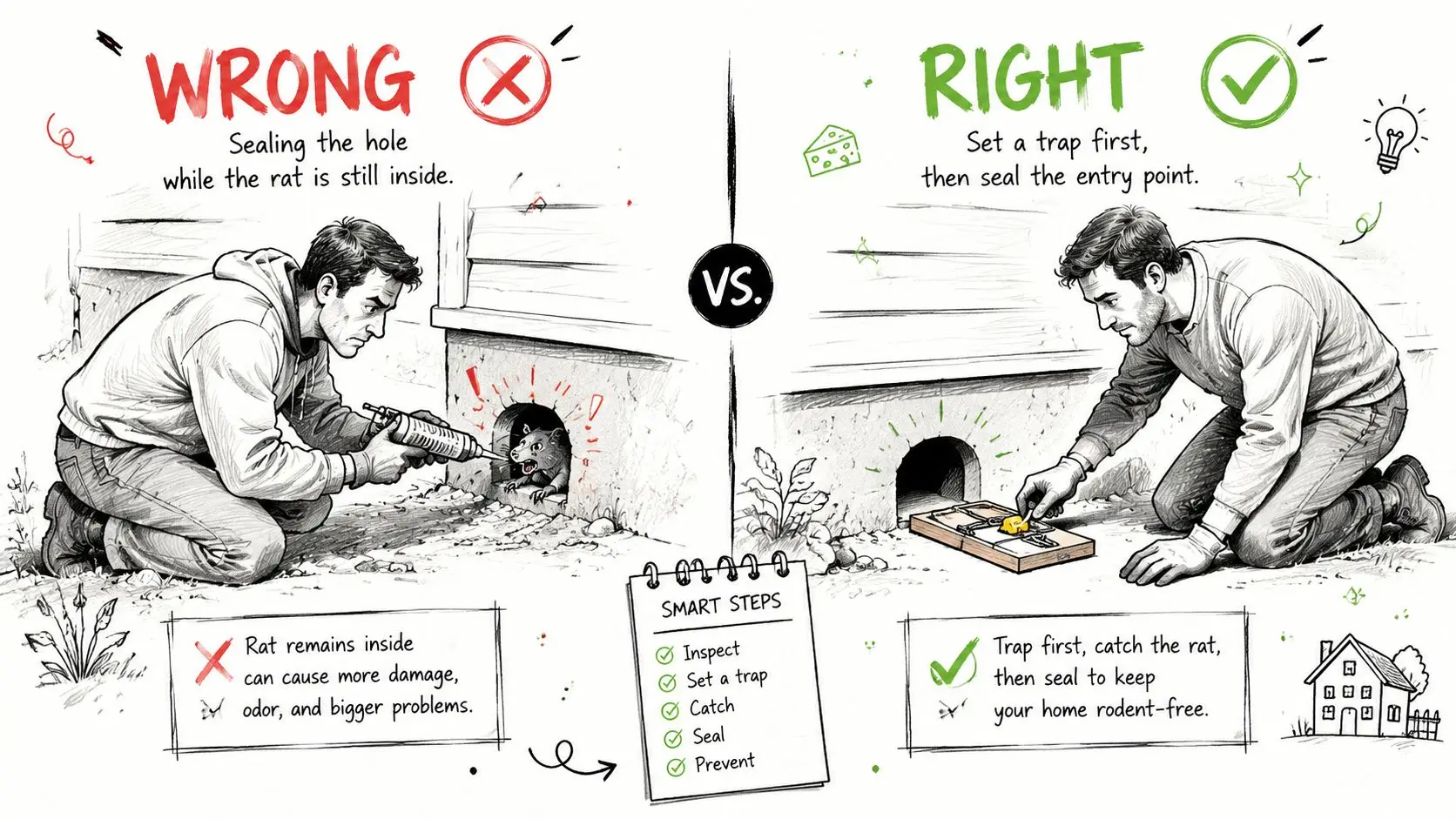
The money-saving mistake is to seal everything first and hope the rats disappear. If any rats are still inside, that setup can trap them in walls or attic voids, which creates odor, contamination, and secondary insect problems. The safer workflow is inspection, exclusion preparation, baited knockdown or trapping, then monitoring, with final sealing only after activity has stopped.
How to trap roof rats without wasting time
Roof rats are wary. They often avoid a trap that looks out of place, smells wrong, or gets moved around too much. Place traps along runways, walls, rafters, and the edges of attic framing, where rats naturally travel, not in the middle of open space.
The best practical habits are straightforward:
- Pre-bait when needed: let the rats get used to the trap before setting it.
- Use enough traps: one trap rarely solves an attic problem.
- Check daily: reset, remove catches, and keep going until no new activity appears.
- Watch for access changes: if bait disappears or droppings shift location, your setup is working but the rats are still active.
A controlled field study of roof-rat management in citrus found that raised bait stations with 0.005% diphacinone-treated oats produced a 73% mean population reduction and a 87% median reduction across treatment periods, which exceeded the 70% threshold used by the U.S. to define successful knockdown in that context (PMC field study). That doesn't mean every home should use the same approach, but it does show that strategic knockdown works better than casual trap placement.
For homeowners who want to compare trap setup styles and placement logic, this guide to catching a rat is a useful reference point.
What permanent exclusion looks like
Once the active rats are reduced, seal every opening larger than 1/2 inch with durable materials. The materials that hold up are concrete mortar, steel or copper wool, metal flashing, and 1/2-inch hardware cloth (roof rat prevention guidance). Soft fillers and quick patch jobs usually fail in the first season.
The sequence matters most at roofline gaps. University of Arizona guidance says rodent-proofing should focus on the roof and roofline, and the Integrated Crop Management site similarly recommends sealing roofline access points and using rat guards on overhead utility wires (University of Arizona rodent-proofing guidance). If you close every visible gap before you've confirmed the attic is clear, you can create a hidden problem that's much harder to fix later.
Roof rat exclusion works best when it's done with patience, not optimism.
Keep traps in place during the transition. Watch for fresh droppings, gnawing, or runway use before you call the job finished. If any of those signs continue, the home isn't fully clear yet.
Sanitation and Landscape Management to Prevent Reinfestation
Trapping and sealing don't hold if the yard still feeds the rats. In Southeast Texas, the recurring offenders are usually fruit trees, bird food, pet food, open trash, and outdoor water sources. Cleanup matters, but cleanup alone won't solve an active rat pattern if the outdoor environment still gives them shelter and moisture.
Rank the attractants by what keeps rats coming back
The strongest reinfestation drivers I see are the ones that stay available every day. Food sources come first, especially fallen fruit, unsecured pet bowls, birdseed, and trash. Next comes water, which a lot of homeowners undercount, especially in irrigated neighborhoods where leaky sprinkler heads, birdbaths, pet water bowls, and overspray keep the area damp.
Then comes cover. Dense hedges, stacked debris, brush piles, and tree limbs touching the roofline all make movement easier and reduce exposure. For Southeast Texas yards, this combination can keep roof rats active long after the attic itself looks quiet.
The landscaping side deserves its own attention. A practical rundown of how plants, cover, and layout shape pest pressure is covered in this landscaping and pest activity guide, and it matches what happens on rat-heavy properties. Roof rats aren't just eating in the yard, they're using it as a route and a refuge.
Cleanup after removal
After the rats are gone, the attic still needs work. Droppings, nesting material, and contaminated insulation can hold odor and keep a property attractive to new rats. If insulation is heavily fouled, replacement is often the cleaner long-term move than trying to patch around it.
Outdoor sanitation helps too. One overlooked clue is a rat in a swimming pool, because it often means the property has both water access and a travel route nearby. This practical pool-side rat article is a good reminder that water features, drains, and adjacent vegetation can keep rodents circulating even when the attic seems quiet.
The goal isn't a sterile yard. It's a yard that doesn't reward rats for staying.
When to Handle Roof Rat Removal Yourself Versus Calling a Professional
DIY makes sense only when the problem is small, early, and visible. If you have one or two clear entry points, light attic activity, and the time to inspect and monitor every day, you can sometimes manage it yourself. That means being disciplined about trap placement, repeated checks, and final sealing only after the attic is quiet.
DIY fits best when
- You found the issue early: fresh signs, but not a full attic infestation.
- The access points are reachable: you can inspect roofline gaps safely.
- You can commit to follow-up: daily monitoring isn't optional.
- There's no heavy contamination: the attic isn't loaded with droppings or nesting.
Professional help makes more sense when the signs stack up. Multiple entry points at height, rats inside wall voids, recurring activity after prior sealing, or major attic contamination all raise the risk of doing partial work and making the problem harder. Homes with children or pets also need a tighter safety plan because traps, bait, and access points have to be managed carefully.
What you're actually paying for
A professional service usually covers the parts homeowners struggle to keep consistent. That includes inspection, entry-point mapping, exclusion materials, trap placement, monitoring, and follow-up. A quality provider should also understand integrated pest management, not just put out a few traps and leave.
For local homeowners in Magnolia, Kingwood, Conroe, Porter, Cleveland, and nearby Southeast Texas communities, FullScope Pest Control offers rodent services that include inspection, exclusion, sanitation guidance, and trapping. That's the kind of scope that matters when the issue involves rooflines, attic access, and recurring pressure rather than a single indoor sighting.
If you've already sealed a few gaps and the rats are still active, don't keep guessing. The longer roof rats stay in a structure, the more they teach you where the weak points are.
Professional Inspection and Ongoing Exclusion Plans
A real professional plan starts with a roof-to-foundation inspection, not a sales pitch. The technician should map entry points, identify active runways, and decide whether the job needs trapping first, exclusion first, or a staged combination. That order matters because every house is different, and roof rats exploit whatever route is easiest that day.
What a strong service plan includes
A solid plan usually has four pieces. First is the inspection and mapping. Second is the treatment plan, which may include traps, bait stations, or both depending on the site. Third is the exclusion work, using durable materials around roofline and utility gaps. Fourth is follow-up, because a sealed house still needs confirmation that the activity is over.
Why ongoing exclusion is worth it
Roof rats don't care that a home was treated last season. If the vegetation grows back, a branch touches the roof, or a new gap opens around a vent, they'll try again. Ongoing exclusion plans reduce that repeat cycle by combining seasonal inspections with yard maintenance guidance and rapid response when new activity appears.
If you're comparing roofing-related access issues during a rat problem, the Paletz Roofing and Inspections portfolio is a useful visual reminder of how many roof details can affect pest entry. Small flaws in flashing, vents, or edges can become big rat problems.
For homeowners in Southeast Texas, the best long-term choice is a provider that treats rodent control as prevention, not just removal. Look for clear documentation, follow-up policies, and materials that hold up in attic heat and humidity. That's what keeps one rat call from turning into a seasonal routine.
If you're hearing attic scratching, finding roofline droppings, or spotting chew marks around vents in Magnolia or anywhere in the north Houston area, schedule a roof rat inspection now and insist on the right sequence, inspect, trap, exclude, then monitor. The sooner the entry points are mapped, the less likely you are to trap rats inside the walls and end up paying for the same problem twice.