1500+ reviews


No rat poison sold for home use is safe for pets. A severe bromethalin exposure can kill a dog in about 10 hours, and an anticoagulant bait can cause internal bleeding that only shows up several days later, so "pet-safe" describes packaging and placement, never the chemistry inside the box.
If you want rat poison safe for pets, you're really asking a better question: which product is least dangerous around my dog or cat, and what do I do if one of them gets into it? The honest answer is that there's no product category you can buy your way into. Safety depends on the active ingredient, the dose, the formulation, the size of the animal, and whether a pet can physically reach the bait. A box labeled for household use is not automatically safe around a curious Labrador.
What follows sorts the four major rodenticide families by how they injure pets and how fast the damage shows, then walks through the first hour after a suspected exposure, what a veterinarian does, how to place bait so pets can't reach it, and which control methods carry the least risk in a home with animals. Names and phone numbers of poison services are on your vet's website, not in the fine print of a bait label.
Which Rat Poisons Harm Pets Most and How
No rat poison labeled for household use is safe for pets. Safety turns on the active ingredient, the dose, the formulation and whether an animal can reach the bait, so the words on the front of the package tell you nothing about what happens if your terrier digs a block out of a garage corner. The Merck Veterinary Manual's rodenticide guidance states plainly that there's no universally pet-safe rat poison, and veterinary toxicologists name anticoagulant rodenticides such as warfarin and related compounds as the most frequent cause of rodenticide poisoning in pets.
Anticoagulants work by breaking the clotting cascade. Because the body keeps using up the clotting factors it already has, a poisoned pet can look fine for a day or two and then develop anemia, gastrointestinal bleeding, nosebleeds, bleeding into the lungs or blood in the urine. Owners often notice pale gums, bruising on the belly, or a pet that tires on a normal walk before they notice any blood at all.
How the Other Three Families Hurt a Pet
Bromethalin is not an anticoagulant. It is neurotoxic, causing brain and spinal cord swelling. Severe dog exposures produce tremors, seizures, abnormal reflexes, central nervous system depression and death in approximately 10 hours, while lower exposures may cause vomiting, depression, incoordination and tremors 1 to 4 days later. It's the family that punishes a wait-and-see approach hardest.
Cholecalciferol is a vitamin D3 compound. It pushes calcium and phosphorus to dangerous levels and injures the kidneys, sometimes with soft-tissue mineralization. Zinc phosphide reacts with stomach acid to release phosphine gas, which is why its signs show up early and include both vomiting and neurologic changes.
Rodenticide types and their danger to pets
| Type | How It Harms Pets | Typical Signs | When Signs Appear | Vet Treatment |
|---|---|---|---|---|
| Anticoagulants (e.g., warfarin, brodifacoum) | Blocks blood clotting | Nosebleeds, blood in urine, bleeding into lungs, anemia | Often delayed for several days | Vitamin K1 for appropriate anticoagulant exposures |
| Bromethalin | Neurotoxic, causes brain swelling | Tremors, seizures, weakness, incoordination | Severe dog cases in about 10 hours; lower exposures 1 to 4 days later | Supportive care, no vitamin K antidote |
| Cholecalciferol (vitamin D3) | Severe high calcium and phosphorus | Vomiting, depression, kidney injury | Can be delayed | Decontamination, fluids, serial calcium and phosphorus monitoring |
| Zinc phosphide | Releases phosphine gas in the stomach | Early vomiting and neurologic signs | Early, after exposure | Supportive care guided by a veterinarian |
The one rule that matters most. Vitamin K1 is an antidote for anticoagulants only. It does nothing for bromethalin, cholecalciferol or zinc phosphide, and reaching for it at home delays the call that actually helps.
Anticoagulants aren't a rare corner case. A 2024 retrospective study of canine anticoagulant poisoning identified 349 confirmed anticoagulant-rodenticide intoxication cases in dogs from 1999 through 2022, averaging 15 ± 9 cases per year, which lines up with what veterinarians describe as the dominant rodenticide problem in practice.
Before any bait goes down, read the active ingredient line on the package and photograph it. If you can't identify what's in a station left by a previous owner or a landlord, treat it as dangerous. For a broader household safety checklist alongside this one, the Setterfrens dog safety roundup gathers hazards worth walking through room by room.
What to Do Right Now After a Suspected Exposure
A pet that looks completely normal after eating bait still needs a call now. Visible symptoms are a poor screening tool because the injury starts long before the behavior changes. Rodenticides represented 7% of pet toxin exposures in 2024, up from 6.5% in 2023, according to the ASPCA Animal Poison Control Center's toxin rankings, which places them among the leading reported pet toxin categories.
Why Looking Fine Proves Nothing
The timing differs by chemistry. Anticoagulant-related bleeding may not become apparent for several days. Bromethalin may produce weakness, tremors or seizures after a delay. Cholecalciferol damages kidneys, and zinc phosphide tends to cause early gastrointestinal and neurologic signs. None of that gives you a safe window to observe.
This isn't only a pet problem. In 2024, U.S. poison centers logged 8,452 single-substance rodenticide exposure cases, including 5,416 involving children aged five or younger, according to America's Poison Centers figures. Bait that ends up in a garage corner reaches toddlers as easily as it reaches beagles.
The First-Hour Steps, in Order
- Move the animal and any dead rodents away from the bait and close off the area so a second pet can't repeat the mistake while you're on the phone.
- Keep the package or photograph the label. The active ingredient line is what tells a veterinarian which treatment to prepare for.
- Write down the estimate. Amount possibly eaten, time of exposure, your pet's weight, and any vomiting or unusual behavior. Guesses recorded immediately beat a vague memory three hours later.
- Call your veterinarian or an animal poison service now, even if the pet is bouncing around the kitchen. Veterinary toxicology guidance recommends identifying the ingredient and combining treatment approaches when the product is unknown, rather than assuming every bait responds to vitamin K.
- Don't induce vomiting or try home remedies unless a professional tells you to. With zinc phosphide, forcing vomiting can be its own hazard.
- Bring the package and your notes to the appointment and mention other pets or children in the home so the clinic can advise on them too.
- Once the pet is safe, clean up properly. Gloves on, remove remaining bait and carcasses, seal everything in a bag out of reach of other animals, then wash your hands.
Do not test a plant or a bait by waiting. The same logic that makes owners wait on rat poison shows up with household plants, which is why a guide to the risks of dried hydrangea stems makes the same point: the call comes first, the symptom hunt comes later.
Vitamin K1 belongs to the anticoagulant conversation and nowhere else. It isn't a universal antidote for bromethalin, cholecalciferol or zinc phosphide, and a bottle of it in the cupboard is not a substitute for the phone call. If you handle your own bait stations, these safety precautions while doing pest control are worth reading before the next round goes down.
What Veterinary Treatment Involves and How Pets Recover
Say a two-year-old retriever ate bait an hour ago and the package is in your hand. The clinic visit follows a predictable order, and knowing it makes the appointment less frightening. The MSD Veterinary Manual's rodenticide section is explicit that no rodenticide should be described as safe for pets and that suspected ingestion needs immediate veterinary or animal poison control guidance rather than home treatment.
First comes decontamination, removing bait that's still in the stomach before it's absorbed, which may include inducing vomiting under direction and giving activated charcoal when appropriate. Next is fluid therapy to support circulation and kidney function. From there the plan splits by ingredient: vitamin K1 for appropriate anticoagulant exposures, supportive care for bromethalin since there's no vitamin K antidote, and serial calcium and phosphorus monitoring for cholecalciferol because hypercalcemia and hyperphosphatemia can progress to kidney injury and soft-tissue mineralization.
Bring the product name, the active ingredient, your estimated amount and a timeline. Ask three questions at the desk:
- How long will monitoring last? For anticoagulant cases, bleeding signs and clotting checks may continue for several days as the veterinarian directs.
- What should make me call back tonight? Ask for the specific signs: new weakness, pale gums, coughing, blood in the urine.
- What does recovery look like from here? Get a recheck date in writing rather than a vague "watch him."
Home treatment never replaces veterinary care, and a pet that seems fine at hour six can still be in trouble at hour forty-eight.
How Bait Stations Protect Pets and Where to Place Them
The protection comes from a properly selected and secured tamper-resistant station, not from a "pet-safe" sticker. According to EPA rodenticide safety guidance, compliant stations must resist destruction by dogs and young children, stay locked or sealed, limit access through species-appropriate rodent entry points, minimize spillage and bait tracking, and resist displacement or bait release when moved.
The regulatory history shows why. EPA rules require consumer mouse and rat poisons to be sold in bait stations, and loose bait is no longer permitted in consumer products; the agency also recorded that dogs accounted for more than 80% of reported exposures of nontarget animals to commensal rodenticides, per the EPA's label improvement program for commensal rodenticides.
EPA bait station tiers for homes with pets
| Station Tier | Resists Dogs and Young Children | Weather Resistant | Placement Rule |
|---|---|---|---|
| Tier 1 ready-to-use stations | Yes | Yes, indoors or outdoors within 50 feet of buildings | Place where pets cannot manipulate them |
| Tier 2 stations | Yes | No | Keep sheltered from weather and out of pet reach |
| Lower tiers | Not assumed | No | Only in areas inaccessible to pets and young children |
A Placement Checklist You Can Use Today
- Anchor anything that can move. A station a dog can nose across the garage floor is a station a dog can open.
- Inspect after storms and after pet activity. Look for cracks, chewed edges and spilled bait, and replace a damaged unit rather than taping it.
- Remove dead rodents promptly. Secondary exposure is real, and a carcass in the yard is an invitation.
- Keep the label or a photo of the packaging. It tells a veterinarian exactly what they're treating within seconds.
Pet-Conscious Rodent Control Options Compared
Poison is one tool in a set, and in a home with animals it's rarely the first one to reach for. When you install a door sweep or seal a foundation gap, you're removing the route a rodent uses to bring bait problems indoors in the first place.
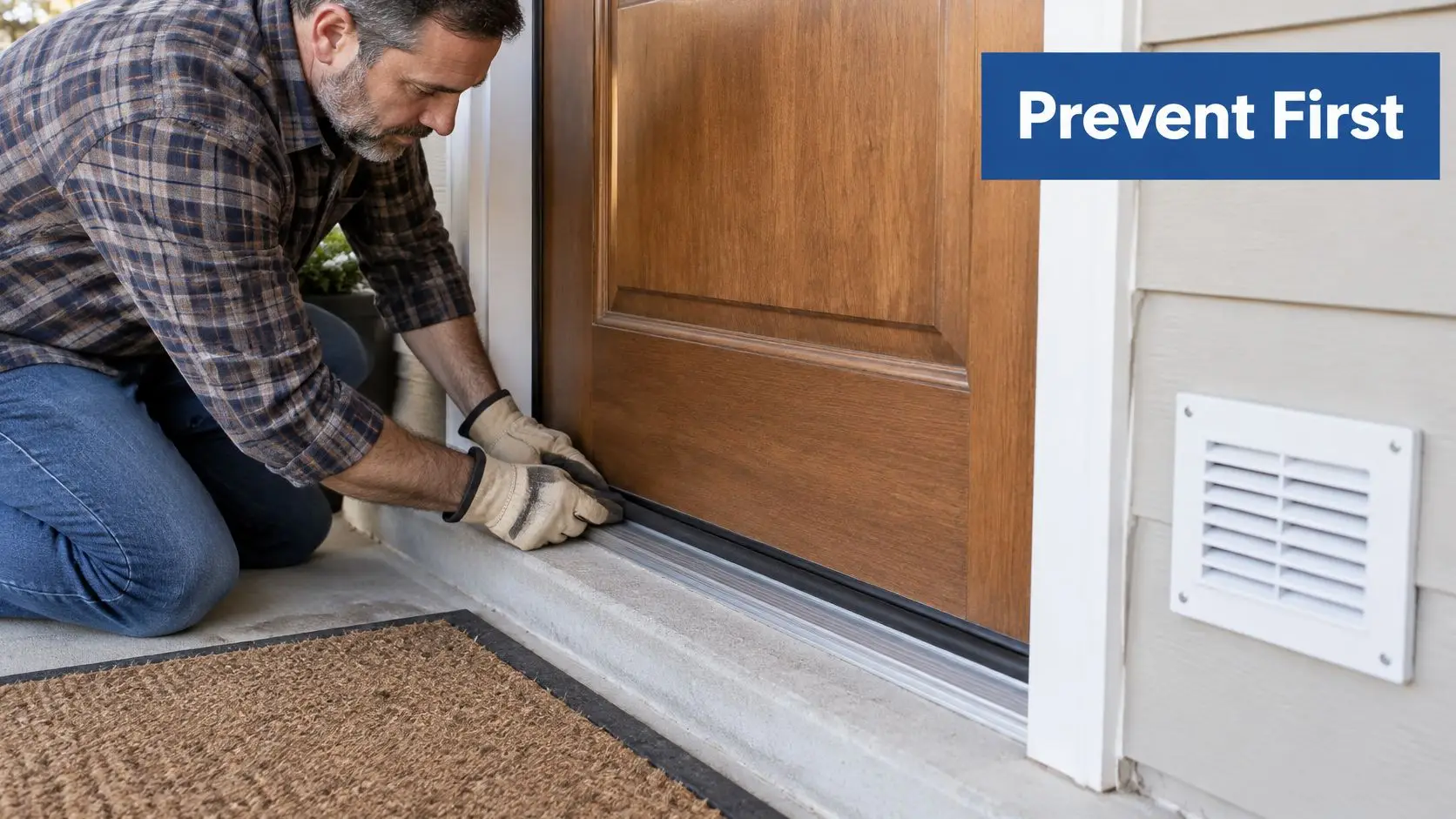
The misleading idea worth retiring is that a bait labeled "pet-safe" is harmless. As the EPA's comparison of rodent control safety notes, U.S. consumer rodenticides must generally be sold as solid blocks or paste inside stations built to resist tampering by children and pets, and that packaging reduces access without making the active ingredient nontoxic. The four chemical categories cause different injuries and need different veterinary responses, which is why "which one is safest for my dog" has no single answer.
Rodent control methods compared for pet homes
| Method | Pet Risk | Best For | Main Limit |
|---|---|---|---|
| Exclusion (sealing gaps around doors, vents and foundations) | None from poison | Stopping new entry | Must find every entry point |
| Sanitation (securing food, pet food and trash) | None from poison | Removing what draws rodents | Rarely clears an established infestation alone |
| Snap or live traps placed out of pet reach | Low when pets cannot reach them | Small indoor activity | Needs frequent checking and safe disposal |
| Professionally secured bait stations | Low when Tier 1 and placed correctly | Active infestations | Needs correct placement and follow-up to remove carcasses |
Dogs, cats and wildlife can all encounter a poisoned rodent, so carcass removal belongs in the plan, not in a footnote. That said, not every formulation carries the same secondary-poisoning risk, and treating all baits as identical leads homeowners to the wrong conclusion in both directions.
Here's how the decision usually shakes out. Start with exclusion and sanitation in any home with a pet, because those two steps carry no poison risk and reduce how often you need the other two. Add traps where activity is small and contained. Move to secured stations only when an active infestation needs a bait program, and pair it with follow-up visits. The mix depends on your pets, your children and the layout of the house.
For a fuller walkthrough of low-risk options, this homeowner's guide to pet-safe pest control solutions covers what to ask before anyone treats your property.
Get Pet-Safe Rodent Control Help in Magnolia, Texas
Magnolia is an incorporated city in southwestern Montgomery County, inside the Houston metropolitan area, which places it in the north Houston and Southeast Texas region FullScope Pest Control covers rather than a separate distant market. Coverage depends on the street address, not the city name alone.
The city is associated with ZIP Code Tabulation Area 77354, and ZIP geography extends past the incorporated limits, so an address in that area may sit outside Magnolia proper according to the Magnolia ZIP code and city profile. City population counts shift with the year and method too: the Census Bureau's QuickFacts for Magnolia lists 2,359 residents in the 2020 Census and 8,095 in its July 1, 2025 estimate. That's another reason an address check beats a population figure when you're working out whether a truck will reach you.
A rodent visit covers controlling and excluding mice, rats, rodents, squirrels and raccoons in homes or businesses, with products and application methods selected to be safe around gardens, pets and livestock when applied correctly. Urgent infestations get a prompt response, and technicians explain where bait goes relative to your animals. Request rodent control in Magnolia, TX by sending your full street address or ZIP code, the pets in the home, the rodent signs you've seen and any bait already in use.
If you've found droppings behind the water heater or heard scratching in the attic at 2 a.m., the safest next step isn't a box of bait from the hardware store. Send your address and what you're seeing to FullScope Pest Control, tell us about the dog, the cat and the toddler in the house, and book an inspection. You'll get a written plan that starts with exclusion and sanitation, uses tamper-resistant stations only where they're needed, and keeps the poison where your pet can't reach it.