1500+ reviews

You spray the baseboards. The bugs disappear for a few days. Then they show up again in the pantry, around the back door, or under the sink. Many homeowners and facility managers in Southeast Texas get stuck in that cycle. The treatment feels active, but the problem keeps rebuilding in the background.
That's where integrated pest management practices change the conversation. Instead of asking, “What should I spray next?” IPM asks better questions first. What pest is it? Why is it here? What conditions are helping it survive? What's the least disruptive way to bring it back under control and keep it there?
For a homeowner in Magnolia, Texas, that shift matters. Warm weather, humidity, dense vegetation, sudden rain, and long pest seasons create a setting where ants, roaches, mosquitoes, rodents, and termites don't need much encouragement. A smarter plan has to fit the local environment, not just the label on a can.
Beyond the Spray A Smarter Approach to Pest Control
A lot of pest control advice still sounds like a duel between people and bugs. See pest. Spray pest. Repeat as needed. That approach misses the core issue. Most recurring infestations aren't caused by a lack of product. They're caused by access to food, moisture, shelter, and entry points.
Integrated pest management treats pest control as property management. It's an ecosystem-based approach that combines biological, physical, cultural, and chemical methods instead of relying on one tool alone. In practice, that means sealing gaps, correcting moisture problems, improving sanitation, monitoring activity, and using pesticides only when they're necessary.
That mindset isn't fringe anymore. The global Integrated Pest Management market was valued at USD 25.06 Billion in 2024 and is projected to reach USD 42.41 Billion by 2032, growing at a Compound Annual Growth Rate of 6.80%, according to Data Bridge Market Research on the global IPM market. That tells you something important. Professionals across agriculture, commercial properties, and residential settings aren't moving toward IPM because it sounds nicer. They're using it because it has become a practical operating standard.
Why spraying alone often disappoints
The old spray-first model usually fails for three reasons:
- It treats symptoms: Killing visible insects doesn't remove nesting sites, water sources, or access points.
- It misses timing: If treatment happens before a pest pressure point or long after activity is established, control gets harder.
- It applies pressure broadly: Non-specific treatments can disrupt the environment without solving the exact cause.
Practical rule: If the same pest keeps returning to the same area, the structure or landscape is helping it, and the treatment plan needs to change.
That's why IPM works well for families, businesses, and property managers who want more than a temporary knockdown. It's built around prevention, observation, and targeted intervention. If you're comparing lower-impact options for homes with children or pets, this guide to eco-friendly pest control that works safe solutions for homes with kids and pets gives a useful example of how that philosophy plays out in real service decisions.
Understanding the Four Pillars of IPM
Think of IPM like defending a house the way a castle would be defended. You don't fire every weapon the moment you hear a noise outside the wall. You decide whether there's a real threat, figure out where it's coming from, strengthen weak points, and choose the least disruptive response that works.

A science-based IPM framework starts with action thresholds, then moves through monitoring and identification, prevention, and control. This approach has been shown to reduce pesticide use by 30 to 50 percent while maintaining effective control, as summarized by County Health Rankings on IPM for agriculture and outdoor use.
Action thresholds
This is the alarm system. An action threshold is the point where pest activity becomes serious enough to justify intervention.
For a homeowner, that isn't about crop loss. It might be repeated roach sightings in the kitchen, rodent droppings in a pantry, or a mosquito population that makes the yard difficult to use. The threshold gives you a reason to act, not just a reason to worry.
Monitoring and identification
This is scouting the problem before choosing a response. You check sticky traps, inspect door thresholds, look for frass, note where ants are trailing, or confirm whether the “tiny brown bugs” are pantry pests or something else.
Correct identification matters because different pests behave differently. A drain fly problem and a German cockroach problem can both show up near sinks, but they don't need the same fix.
Prevention
Prevention is the wall, moat, and locked gate. IPM's primary value is derived from this.
A few examples:
- Exclusion: Sealing gaps around utility lines, replacing door sweeps, repairing torn screens
- Sanitation: Storing food in sealed containers, cleaning grease under appliances, reducing clutter in storage rooms
- Moisture control: Fixing leaks, drying out crawl spaces, improving drainage near the slab
- Habitat adjustment: Pulling mulch away from the foundation, trimming shrubs, reducing standing water
Control
Control comes last. That doesn't mean “do nothing until it's terrible.” It means use the right tool at the right time.
Here's a simple way to think about it:
| IPM pillar | Practical question | Home example |
|---|---|---|
| Threshold | Is this enough activity to require action? | A steady ant trail, not one stray scout |
| Monitoring | What pest is it, and where is it coming from? | Traps under sink cabinets |
| Prevention | What conditions are helping it? | Leaky pipe, crumbs, door gap |
| Control | What's the least disruptive fix that works? | Bait in targeted spots instead of broad indoor spray |
Good IPM isn't passive. It's selective.
How to Decide When Pest Control Is Necessary
Obvious infestations are generally understood. The hard part is the gray area. One ant on the counter. A roach in the garage. Mosquitoes after rain. Is that normal, or is it the start of a larger problem?
For homes and facilities, an action threshold is less about economics and more about health, safety, and tolerance. The EPA notes that homeowner guidance often refers to thresholds without defining them in practical terms, which leaves people unsure when to escalate from prevention to treatment. That gap is described in the EPA overview of integrated pest management principles.
A simple residential threshold test
Use three questions:
Is the pest occasional or repeating?
A single winged ant near a light may be incidental. A recurring line of ants to pet food is a pattern.Does it affect health, safety, or property?
Roaches in food areas, rodents in attics, and termites near structural wood need a faster response than a harmless occasional outdoor insect.Can you identify the source?
If you know the cause and can correct it, monitor first. If the source is hidden or growing, act sooner.
Examples that make thresholds easier
A threshold doesn't need to be a rigid number to be useful. It needs to be specific enough to guide your next step.
- Ants: One or two random ants can be a monitoring issue. A daily trail from a wall void to a sugar source has crossed the threshold.
- Roaches: A single large roach in a garage after rain may suggest outdoor pressure. Repeated sightings in kitchens, bathrooms, or utility rooms deserve intervention.
- Mosquitoes: A few at dusk might be expected outdoors. Ongoing biting pressure around entry doors, shaded patio areas, or standing water zones points to a site problem.
- Rodents: One dropping is not “wait and see” if it appears in a pantry, under a sink, or near stored food.
If activity is repeatable, linked to a resource, and occurring where it shouldn't, you've likely crossed the action threshold.
Where homeowners get stuck
People often overreact to harmless occasional activity and underreact to concealed pests. That's why threshold thinking helps. It creates a filter.
Don't ask, “Did I see a pest?” Ask, “Did I see evidence of a problem that can grow if I leave it alone?” That small shift leads to better decisions and fewer unnecessary treatments.
Your First Line of Defense Against Pests
The most effective IPM work often looks boring. Caulk. Screens. Drainage. Storage bins. Door sweeps. But that's exactly why it works. Pests usually enter and settle because the property makes survival easy.
Start with the structure itself.
Close off entry points
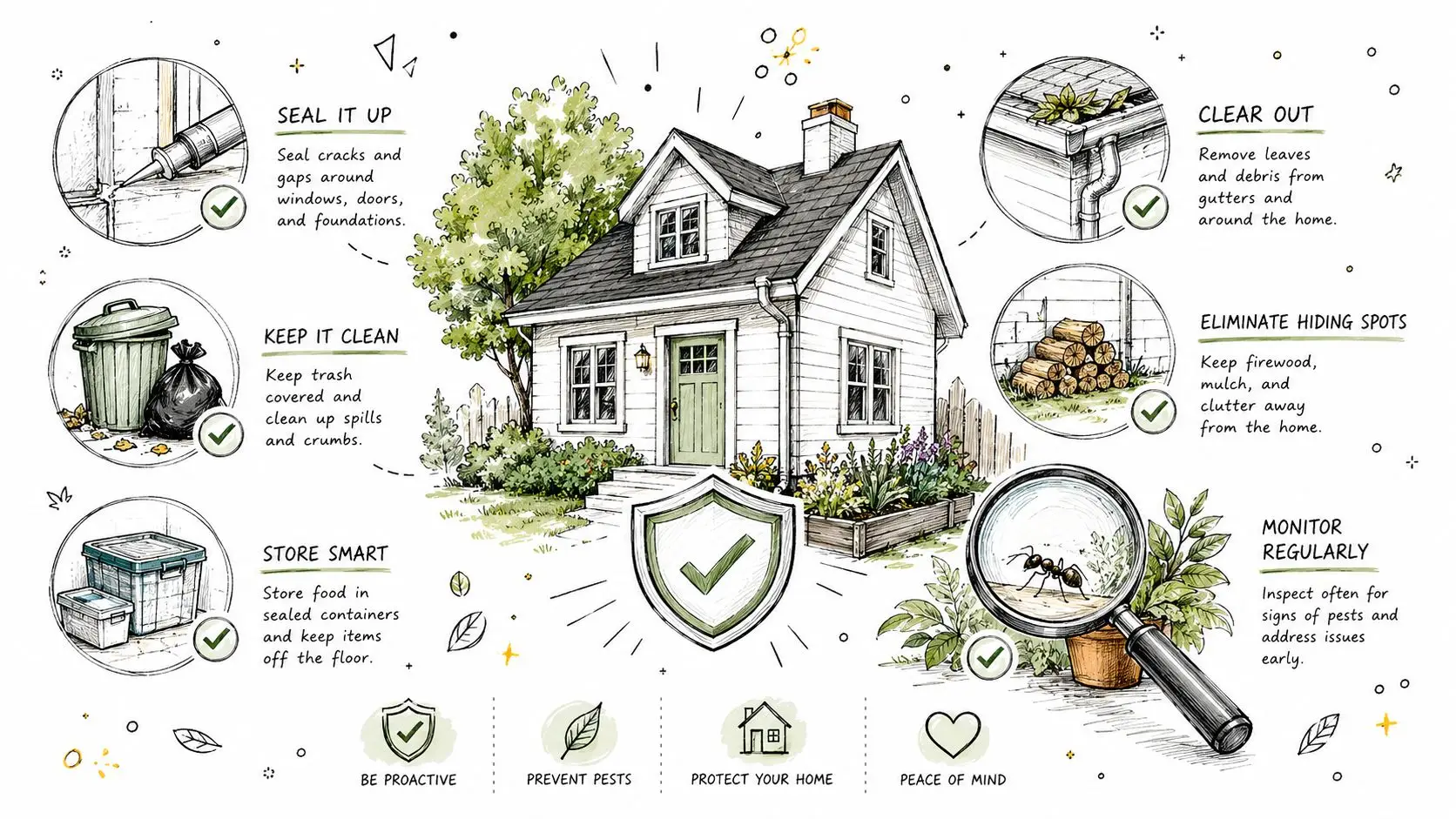
A well-sealed home is harder for ants, roaches, rodents, and occasional invaders to use.
- Check doors: Install or replace worn sweeps, especially on garage and back doors.
- Inspect utility penetrations: Look around pipes, cable lines, and AC line entries.
- Repair screens: Even small tears matter during mosquito season.
- Seal cracks: Focus on window frames, slab expansion joints, and gaps where siding meets trim.
If you want a room-by-room walkthrough, this guide to pest proofing your home a comprehensive guide covers the main weak spots homeowners tend to miss.
Remove what pests need
Pests don't need much. A little moisture under a sink. Grease under a stove. Cardboard in a damp garage. Pet food left overnight.
Use this quick prevention checklist:
- Food sources: Store dry goods in sealed containers, wipe up spills quickly, and keep trash lids closed.
- Water sources: Fix drips under sinks, empty plant saucers, and correct drainage that keeps soil wet near the slab.
- Shelter: Reduce clutter in attics, closets, and storage rooms. Cardboard and paper create cover for many pests.
- Exterior pressure: Trim branches and shrubs away from the exterior. Keep mulch and dense vegetation from pressing directly against the foundation.
Garden areas need similar thinking. If you're dealing with outdoor plant pressure, Leaves & Soul has a practical piece on pest prevention for thriving plants that fits well with the same IPM logic used around homes.
Monitor before the problem grows
Monitoring doesn't need specialized equipment. It needs consistency.
Place sticky traps in low-disturbance areas such as under sinks, behind toilets, near pantry kick plates, and along garage walls. Check them on a routine schedule. You're looking for trends, not just catches.
A simple pest log can be more useful than memory alone. Write down:
- Where you saw activity
- What time of day it happened
- Whether weather changed recently
- What attracted the pest
Here's a practical walkthrough of household prevention habits in action:
Build a weekly pest patrol
Choose the same day each week and check a short route through the property. Kitchen. Utility room. Bathrooms. Garage. Exterior doors. Foundation line.
Field note: The first sign of a pest problem is often not the pest. It's grease dust, moisture damage, gnawing, droppings, frass, or a gap that wasn't there before.
That habit turns pest control from a reaction into a routine.
Choosing Effective and Responsible Treatments
Once a threshold is crossed, treatment should match the problem. IPM doesn't reject pesticides. It rejects lazy pesticide use.
The difference matters. A broadcast application tries to cover everything just in case. A targeted IPM treatment aims at the pest's biology, location, and behavior.
Compare broad treatment with targeted treatment
Here's the practical contrast:
| Approach | How it works | Main drawback or benefit |
|---|---|---|
| Broadcast spray | Large-area application to many surfaces | May miss the real source if the pest is nesting in a void, drain, or harborage |
| Mechanical control | Traps, vacuuming, exclusion, removal | Good for immediate reduction and low exposure |
| Biological control | Uses natural enemies or biologically based tools | More common in larger systems, landscapes, and specialized programs |
| Targeted chemical control | Baits, growth regulators, crack-and-crevice products, selective materials | Focuses pressure where the pest actually lives or feeds |
Start low and narrow
For many indoor pests, lower-risk methods make sense first.
- Rodents: Snap traps, exclusion repair, and sanitation usually belong in the first wave.
- Ants: Baits often outperform random contact sprays because workers carry the active ingredient where the colony is.
- Cockroaches: Targeted bait placements and crack-and-crevice treatment usually make more sense than spraying open floor space.
- Stored product pests: Disposal of infested goods and vacuuming shelves can matter more than chemical treatment.
The best treatment is the one that reaches the pest while disturbing the rest of the environment as little as possible.
Where advanced IPM fits
In more advanced programs, professionals may combine biological controls with selective chemistries. According to the review hosted by PMC on IPM specifications and implementation, programs that integrate biological control agents and selective pesticides such as pheromones that disrupt mating can achieve pest suppression comparable to conventional methods while reducing pesticide residues by up to 40%.
That principle applies even when the exact tools differ in a home or commercial account. The lesson is the same. Match the treatment to the pest. Use precision when possible. Reserve broader chemistry for situations that require it.
One local option that follows this style is FullScope Pest Control, which uses integrated pest management and targeted chemistry for residential and commercial pest issues in North Houston area communities.
Adapting IPM for Southeast Texas Climate and Pests
Southeast Texas doesn't give pests much off-season. Heat arrives early, humidity lingers, rain can be intense, and vegetation grows fast. That combination changes how integrated pest management practices should be applied around homes, offices, warehouses, and multifamily properties.

What Magnolia properties deal with
In Magnolia, Texas, common pressure points often include:
- Mosquitoes: Shaded yards, drainage issues, and containers that hold water
- Roaches: Moisture, mulch-heavy areas, garages, and utility penetrations
- Ants: Exterior nesting near foundations, patios, and property edges
- Termites: Moist soil, wood-to-ground contact, and seasonal swarming
- Rodents: Shelter-seeking movement into attics, garages, and wall voids
A local IPM plan should reflect those conditions. That means checking outdoor moisture after storms, watching for swarm activity in spring, reducing dense ground cover near the slab, and inspecting door seals before cooler weather pushes pests inward.
Season by season pressure
Different times of year shift the work:
- Spring: Watch for termite swarmers, increased ant foraging, and early mosquito breeding after rain.
- Summer: Focus on standing water, overgrown vegetation, and roach pressure tied to heat and moisture.
- Fall: Inspect attics, garages, and utility entries as rodents and occasional invaders look for shelter.
- Winter: Keep monitoring. Pests slow down, but hidden indoor activity can continue.
For Magnolia specifically, local coverage matters because pest behavior changes with soil, rainfall patterns, housing style, and vegetation density. FullScope Pest Control operates a dedicated service location at 30225 Tudor Way Suite A, Magnolia, TX 77355 to address termites, mosquitoes, and other nuisance pests in Magnolia and the North Houston region, as described on the Magnolia pest control location page.
Be specific about service area locations
If you're in or near Magnolia, pest management support in this part of Southeast Texas isn't limited to one neighborhood. The company's service coverage explicitly includes Magnolia, Cleveland, Kingwood, Conroe, Porter, Atascocita, New Caney, Splendora, and the greater North Houston area, according to FullScope service area information for Southeast Texas communities.
That local spread matters for facility managers and homeowners who move between properties or manage sites across the region. Conditions in Magnolia may overlap with Conroe or Kingwood, but each location still needs inspection and threshold decisions based on that property's layout, drainage, landscaping, and construction details.
When to Partner with an IPM Professional
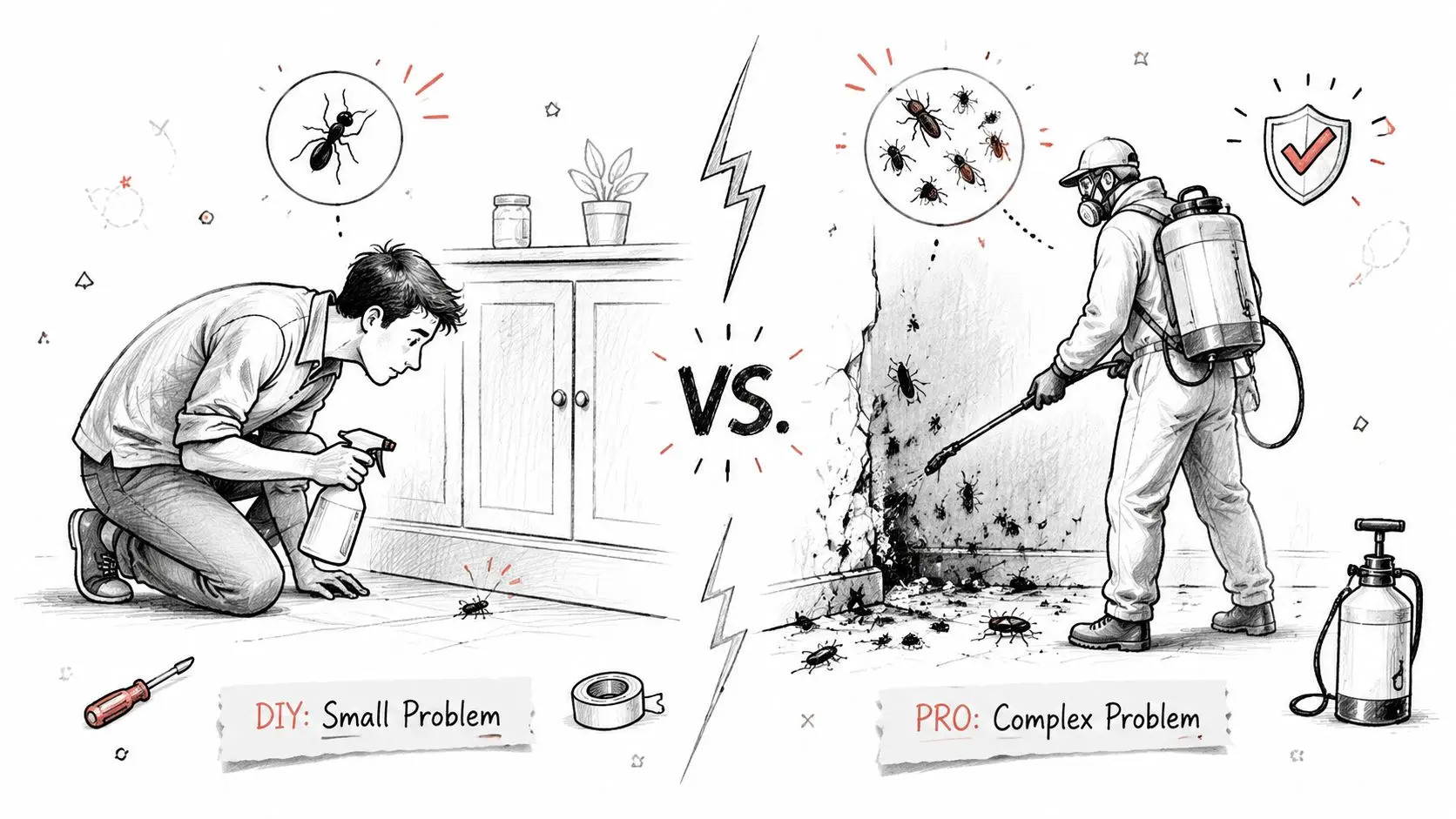
DIY steps can solve a lot. They're especially useful for early-stage issues, sanitation corrections, exclusion work, and routine monitoring. But some pest problems move beyond what a homeowner or onsite staff can safely identify, access, or manage.
Signs you've outgrown DIY
Call for professional help when the issue involves:
- Hidden structural risk: Termites, carpenter ants, or wood-destroying insects
- Health-related pests: Rodents, cockroaches, or persistent biting pests
- Inaccessible harborage: Wall voids, crawl spaces, attics, rooflines, or commercial utility zones
- Repeat failures: You've cleaned, sealed, trapped, and monitored, but activity keeps returning
- Multi-unit or commercial complexity: Shared walls, food handling areas, tenant turnover, or compliance needs
A professional IPM program should start with inspection, not product. It should identify the pest, define where pressure is building, note contributing conditions, and document a plan that combines correction, monitoring, and treatment.
Why that partnership helps
For larger or stubborn problems, a trained technician brings three things individuals often lack: identification experience, access to targeted tools, and a system for follow-up. That's especially useful when the threshold has clearly been crossed but the source is still hidden.
FullScope's broader operating footprint also helps if you need support across nearby communities. Its Magnolia location serves the local area, and the Magnolia center is listed with operating hours of Monday through Friday from 8:00 AM to 5:00 PM and Saturday from 9:00 AM to 1:00 PM on the Magnolia business listing with local hours. For homeowners comparing DIY against ongoing service, this article on why professional pest control is more effective long term than diy strategies lays out the difference in practical terms.
Professional IPM should reduce guesswork, not add mystery. You should understand what the pest is, why it's there, what changed on the property, and what happens next.
Integrated pest management works best when it's treated as a habit of observation and correction, not a one-time event. In Magnolia and across Southeast Texas, that habit starts with thresholds, continues with prevention, and gets stronger when the right expertise steps in at the right time.