1500+ reviews

If your Magnolia backyard looked fine last weekend and now it feels like mosquitoes are waiting at the back door, you're dealing with a Gulf Coast pattern, not bad luck. A storm leaves water in low spots, shade keeps the ground damp, and the next evening's cookout turns into a swatting contest. The fix is rarely one product. It's a routine built around source reduction first, then drainage, then targeted treatment where the yard still needs help.
Why Magnolia Yards Need a Mosquito Plan Before Summer
A Magnolia yard can look manageable on a dry afternoon, then turn into mosquito territory after one storm. On Southeast Texas properties, that sequence is predictable. Clay-heavy soil slows drainage, water settles in low spots, and our long warm season gives mosquitoes plenty of time to cycle from egg to biting adult.
Dense tree cover makes the problem harder to see. Shade slows evaporation, gutters stay damp longer, and the spots that seem harmless from the back porch can hold water just long enough to keep the cycle going. That is why how to prevent mosquitoes in yard has to be treated as a property habit, not a one-off cleanup.
The source is usually standing water somewhere on the property, often in places homeowners walk past every day.
A practical plan starts with source reduction, then drainage fixes, then targeted treatment in the spots that still need help. That order matters because sprays do not stop mosquitoes from being produced in the first place, and they do not solve a yard that keeps collecting water after every storm. If you skip the water issue, you end up treating the symptom and leaving the breeding site in place.
Cornell's evidence-based mosquito control guidance says water should not be left to sit for more than 2 days, and the American Mosquito Control Association and the EPA recommend emptying water-holding items at least once a week to interrupt the life cycle (Cornell's evidence-based mosquito control guidance). That lines up with what shows up on Magnolia jobs after a rain, a gutter overflow, a flower pot saucer, a low patch beside the fence, or a downspout that dumps water where the soil already stays wet.
If you want the yard usable before summer settles in, start with the water the property keeps holding. For Magnolia homeowners, that often means a repeatable inspection routine, plus a decision on whether the yard needs professional barrier sprays or a MistAway-style misting system for the spots that keep producing mosquitoes even after the obvious fixes. FullScope Pest Control's guide to common mosquito breeding grounds in Texas shows why those hidden pockets matter so much.
The Weekly Yard Inspection That Catches Breeding Sites
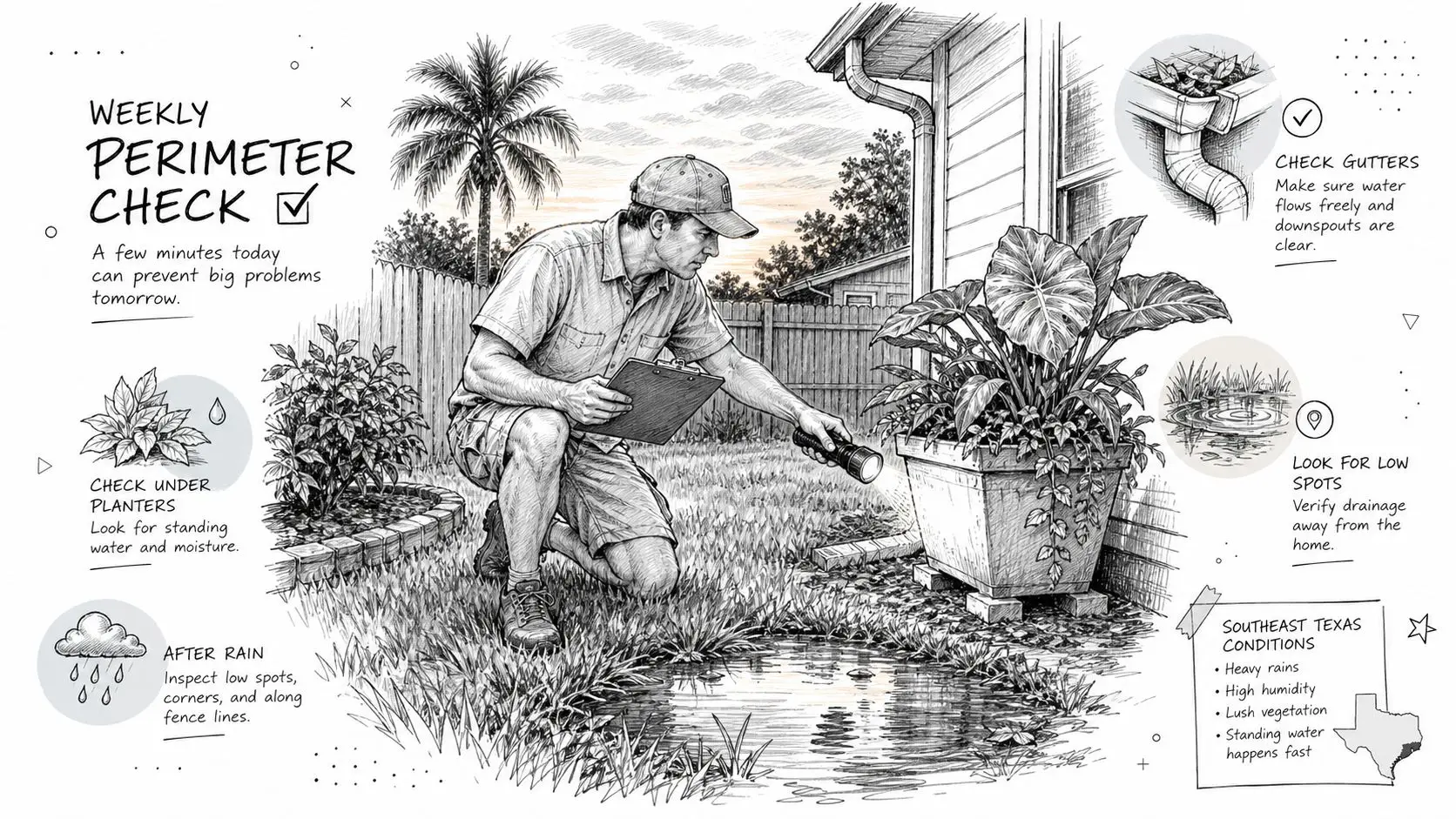
A 5 to 10 minute perimeter walk each week catches more breeding sites than expected, and it should happen again after any meaningful rain. The CDC recommends a weekly check, which fits Magnolia yards where a small pocket of water can form fast and stay active long enough to matter (CDC home mosquito control guidance). The job is simple. Find standing water before larvae finish developing, then clear it or correct the cause.
Start with the places homeowners miss most
Use the same path every time so nothing gets skipped. Check gutters, corrugated downspouts, tarps over woodpiles or boats, tire swings, plant saucers, birdbaths, buckets under decks, kiddie pools, and any low pocket in the lawn that stays damp after the rest of the yard dries. The EPA's integrated mosquito control guidance points to the same problem areas, including clogged gutters, drainage ditches, corrugated downspouts, tree holes, and poorly drained low spots (EPA integrated mosquito control approach).
One Magnolia side yard shows how easy it is to miss the source. A shaded tarp sagged just enough to hold a shallow puddle after a storm, and that pocket stayed wet long enough to become a mosquito source for the whole area. The homeowner had already looked at flowerpots and birdbaths. The missed problem was water trapped in fabric.
A lot of mosquito trouble comes from the items nobody thinks to inspect twice.
Turn the inspection into a repeatable routine
Take photos of anything that holds water, stays muddy, or sags after rain. Add a note so you can check the same spot again next Saturday. If the same location keeps collecting water, stop watching it and fix it, drain it, or treat it. That is the point where a homeowner decides whether the problem is a quick DIY correction or something that needs outside help, especially if the same wet pocket keeps coming back after storms.
A simple workflow keeps the walk focused:
- Look high and low: gutters and roof runoff above, low spots and shaded soil below.
- Lift and flip: buckets, toys, tarps, plant saucers, and anything light enough to move.
- Listen for hidden water: clogged downspouts and settled gutters often show it before you see it.
- Check after storms: Southeast Texas rain can re-seed the yard fast, so a post-storm pass matters as much as the weekly one.
- Match the fix to the site: if the same corner of the yard keeps holding water, compare a quick cleanup with more durable help, including landscape drainage solutions for property managers when grading or runoff keeps defeating surface cleanup.
For a deeper field guide on what tends to breed mosquitoes around local properties, this mosquito breeding grounds in Texas guide is a useful companion. The main thing is consistency. A yard can look clean and still produce mosquitoes if one forgotten pocket of water keeps surviving from week to week.
Landscaping and Drainage Fixes for Clay-Heavy Soil
A Magnolia yard with clay-heavy soil often needs more than cleanup. It needs water to move. When the same strip stays wet after rain, the pooling at that fence line usually starts as a grading issue, with mosquitoes showing up because the water has nowhere to go. That means the yard has to be treated like a water-management system, with plants, lawn, and hard edges all affecting where moisture sits.
Fix the places where water lingers
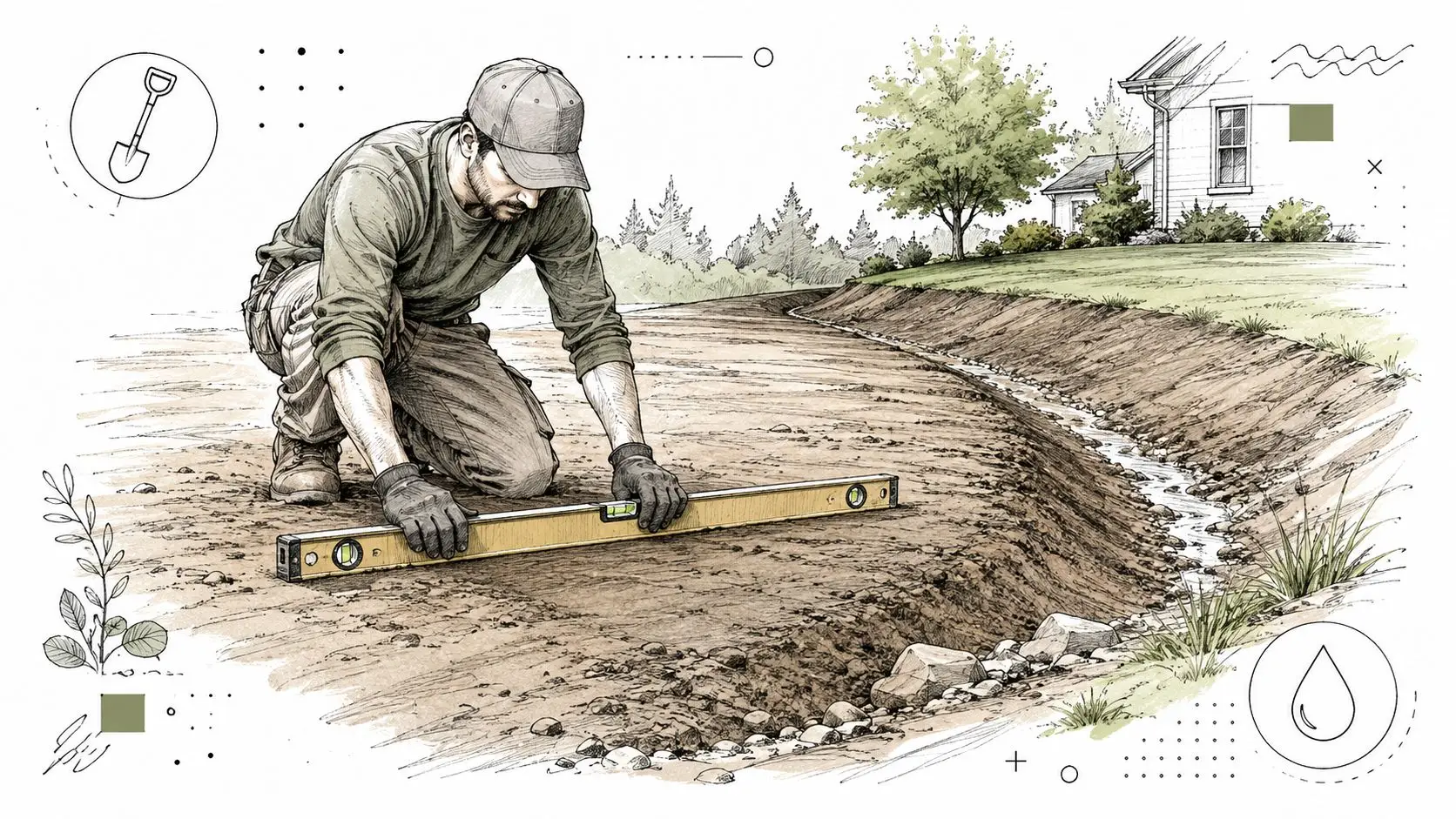
Start with the simplest changes. Extend downspouts away from the foundation, clear gutters so they do not overflow, and keep drainage ditches and swales free of leaves, cut grass, and debris. Colorado State Extension says ditches need to stay clear so water can drain quickly, and yards should be graded or backfilled where necessary to prevent drainage problems (Colorado State Extension home mosquito control fact sheet). Iowa State Extension also points out that clogged gutters, low areas, and overwatering create mosquito habitat when water sits for several days after rain.
Clay soil makes that worse in Southeast Texas. It holds water longer, so a small dip can stay wet well past the time a sandy yard would dry out. In a shaded Magnolia lot, that extra drying time gives mosquitoes a better place to breed.
Match the fix to the job
Some repairs are weekend work. Clearing gutters, extending a downspout, trimming vegetation out of a swale, and dialing back irrigation timers are realistic homeowner jobs. Regrading a persistent low spot, correcting a trench that does not drain, or adding a French drain is different. Those are the moments where a drainage contractor or yard crew makes more sense than another afternoon with a hose and a bucket.
If you manage a larger property or a shared site, it helps to compare options with a drainage-focused service like landscape drainage solutions for property managers from Prestonwood Commercial Landscape Services. That kind of resource is useful when the issue is repeated pooling, not just a few scattered containers.
I also see a lot of homeowners overwater in spring because the lawn looks thirsty after a dry spell. That can create exactly the habitat they are trying to avoid. The more humid and storm-prone the weather gets, the more important it is to let the soil dry between watering cycles.
Lawn aeration can help a dense yard dry more evenly, especially where clay soil stays tight after rain. For a practical look at how it fits into mosquito control work, this lawn aeration and mosquito reduction guide is worth a look. Aeration does not replace drainage work, but it can help standing water clear faster in compacted turf.
DIY Treatments and Products That Help
The best DIY products treat the water, not the air around your chair. That is the quick rule I use on Magnolia properties. If a product addresses a real water source, it has a place. If it mostly tries to make the patio smell nice, the effect is usually narrow and short lived.
What helps, and what mostly markets a feeling
Bti dunks and bits are the clearest example of a useful DIY tool. They are meant for standing water that cannot be drained, such as rain barrels, ornamental ponds, and some tree-hole situations. The logic is simple, larvae hatch in the water, and Bti targets them before they become biting adults. That makes it a better fit than products that only try to repel mosquitoes after they have already emerged.
Citronella candles and similar fragrance-based products can be part of a patio setup, but they do not solve breeding pressure in the yard. Outdoor fans help more than people expect because they make it harder for mosquitoes to land in one spot, so they are useful around seating areas. Repellent plants, by contrast, are often oversold. Extension guidance does not treat ornamental plants or scented plantings as a substitute for source reduction, and that is the right way to think about them.
If it treats water, it usually helps. If it only treats the air, the benefit is small and local.
Here is a simple comparison.
| DIY Mosquito Control Methods Compared | Where It Works | Effectiveness | Safety Notes |
|---|---|---|---|
| Bti dunks or bits | Rain barrels, ornamental ponds, tree holes, any standing water that cannot be drained | Strong for larval control in treated water | Good for targeted use near managed water features, follow label directions |
| Outdoor fans | Patios, seating areas, covered porches | Helpful in the immediate zone where people sit | Good near kids and pets because it does not leave residue |
| Citronella candles | Small seating areas | Limited and local | Keep flame safety in mind around children and dry mulch |
| Repellent plants | Beds around the yard | Low practical value as a mosquito control method | Fine as plants, but not a replacement for drainage or larvicides |
| Fresh water changes for birdbaths and pet bowls | Small containers | Very helpful when done consistently | Good near gardens and pollinator areas because no chemical residue remains |
The safest routine around vegetable beds, pollinator plants, and pets is still the least dramatic one. Empty what can be emptied, change water often, and use targeted larval control only where you cannot remove the water. That is more reliable than building a patio around scent, and it is much closer to what public guidance supports, including the Iowa State Extension mosquito control guidance.
When Professional Barrier Sprays and Misting Systems Make Sense

DIY works well when the yard is simple and the standing water problems are obvious. It starts to fall short when the lot is bigger, the canopy is thick, or the family uses the backyard so often that every missed breeding site becomes a comfort issue. That's where recurring professional service starts making sense.
A professional barrier spray is a residual treatment applied to the places mosquitoes rest, such as shrubs, eaves, and shaded under-porch foliage. It does not replace cleanup or drainage work. It helps suppress adult pressure so the yard stays usable while the homeowner continues source reduction.
For homeowners who want a recurring service option in the area, FullScope Pest Control offers mosquito management with barrier sprays and MistAway automated misting systems in Southeast Texas communities. That kind of service matters most when the yard is being used often and the mosquito pressure keeps outrunning weekend cleanup.
Why a misting system changes the equation
A MistAway-style misting system is most useful when the property needs ongoing, automated coverage. It's a better fit for homeowners who host outdoors regularly, have hard-to-reach foliage, or want a system that can support a dense lot without constant manual spraying. Installation usually makes the most sense when there's already a stable drainage plan in place, because misting is a treatment layer, not a fix for standing water.
If you're comparing options, think in terms of use pattern:
- Occasional backyard dinners: DIY inspection plus selective larvicides may be enough.
- Frequent evening use: a recurring barrier spray can be worth it.
- Daily outdoor living or a larger lot: an automated misting system becomes more attractive.
Safety still matters. Homes with kids, dogs, or beehives need a plan that respects reentry timing, product label directions, and spray placement. The best service providers rotate products appropriately and avoid treating areas that don't need it. Mosquito control should lower risk around the home, not create another one.
The cleanest decision rule is simple. If you've already done the inspections, fixed the drainage issues you can see, and mosquitoes still take over the yard after storms or before events, professional help usually pays off in quality of life. That's especially true in Magnolia, where long warm periods give mosquitoes plenty of time to come back unless the yard is actively managed (FullScope's mosquito misting system overview).
A Southeast Texas Mosquito Calendar by Season
Late winter is cleanup season. Gutters get cleared, tarps get tightened, rain barrels get checked, and low spots that stayed wet through the cooler months get marked for repair. It's also a good time to reset irrigation so the lawn isn't being watered into a soggy edge that will matter once temperatures rise.
Spring is when the yard starts telling on itself. One storm fills the fence line, another leaves the downspout area wet, and a birdbath that was harmless in January becomes a breeding site by April. This is the best time to establish the weekly inspection habit, because the inspection rhythm now will prevent a heavier mosquito buildup later.
Summer is maintenance season. The weekly check stays in place, but treatment decisions become more important because outdoor use goes up and the warm-season mosquito window stays open. If recurring evening gatherings are part of the family routine, this is when barrier sprays or a misting system start earning their keep.
Fall brings another drainage test. Leaves, clogged gutters, and storm runoff can create fresh standing water just as many homeowners assume the worst is over. That's the time to keep checking fence lines, swales, and shaded corners that stay damp after rain.
Winter is the reset. The yard should be easier to inspect, but that's exactly why it's the right time to prepare for the next season. Fix the drainage issues now, and spring starts from a better place.
Your Printable Inspection Checklist and Service Decision Flow
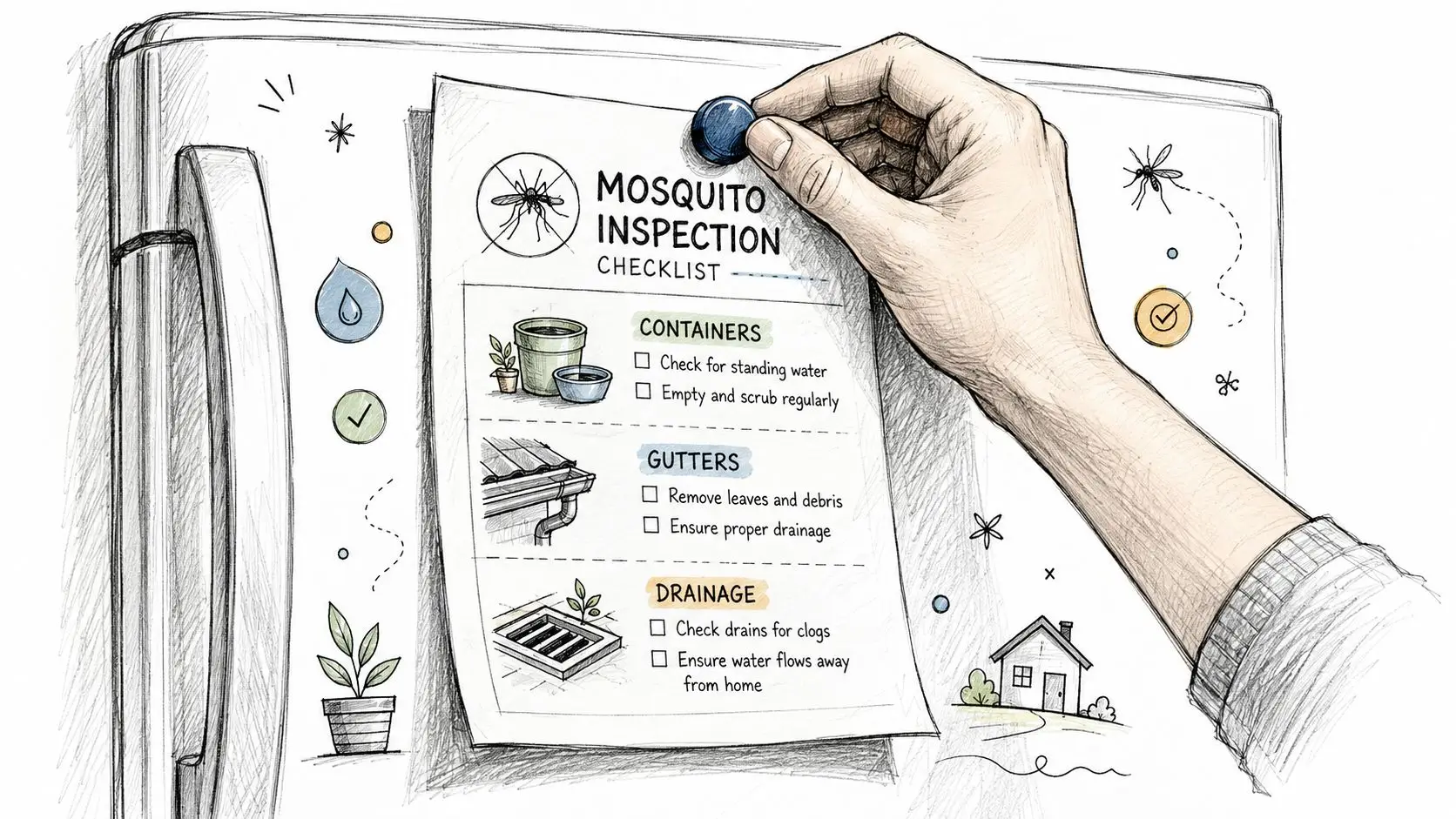
Keep this checklist on the fridge or in your phone:
- Birdbaths, pet bowls, and plant saucers: empty or refresh them.
- Buckets, toys, and kiddie pools: dump water and store them upside down.
- Gutters and downspouts: clear debris and check for standing water.
- Tarps and covered equipment: look for sagging pockets after rain.
- Fence lines and lawn low spots: note any area that stays wet.
- Irrigation and drainage: make sure neither is creating puddles.
The decision flow is just as straightforward. Start with inspections for two weeks. If pressure stays manageable, keep the DIY routine. If mosquitoes spike after storms or special events, add a professional barrier spray. If the yard gets heavy daily use all summer, or the lot is large and shaded, look at a MistAway-style system with source reduction underneath it.
Magnolia and nearby Southeast Texas communities don't need guesswork. They need a routine that matches the weather, the soil, and the way the yard gets used. If you're ready to compare inspections, barrier treatments, or misting system options, contact FullScope Pest Control for service in Magnolia and surrounding Southeast Texas communities, and ask for a plan built around your property's drainage and outdoor-use pattern.