1500+ reviews

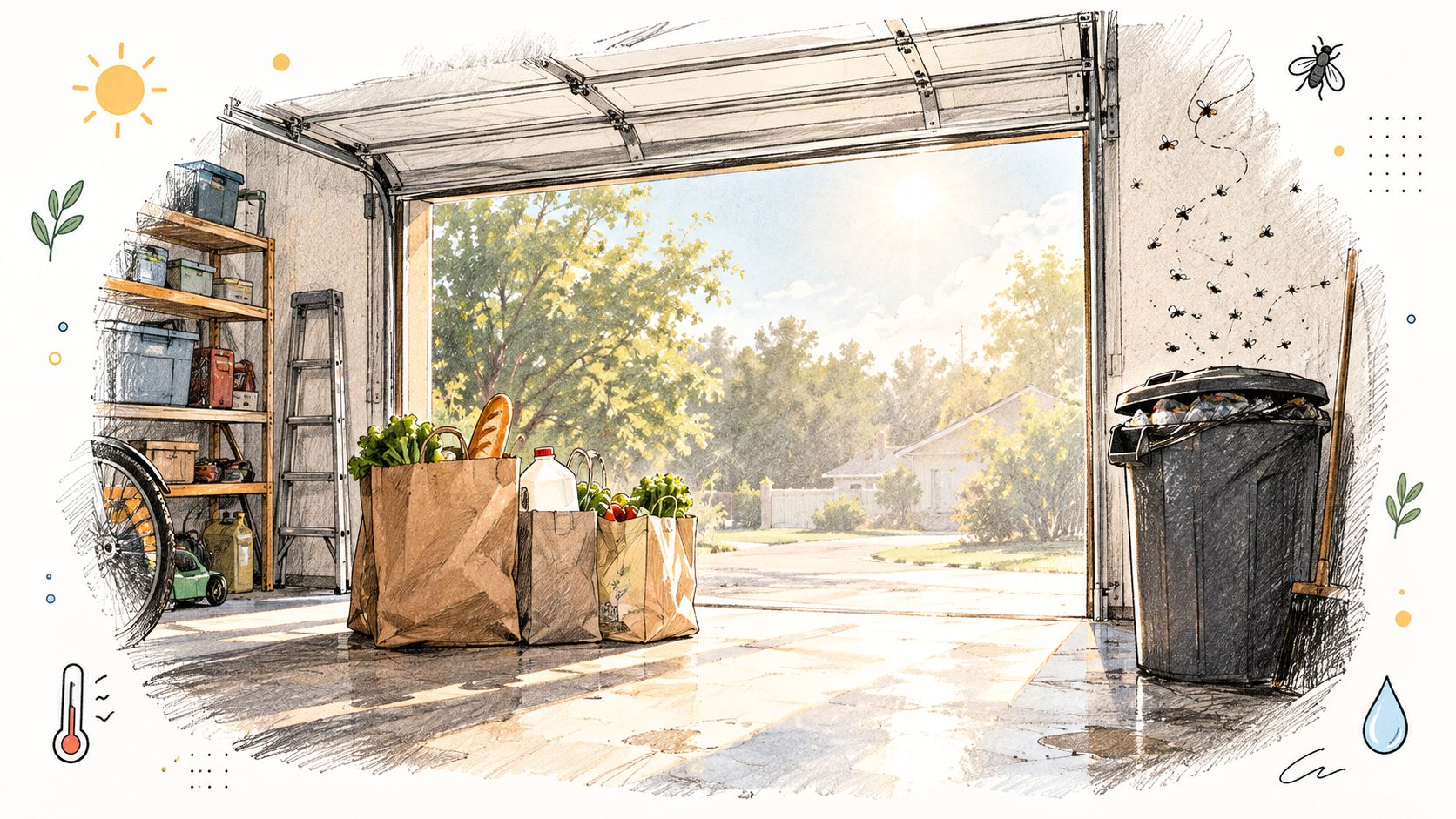
You've just unloaded groceries in a Magnolia garage, the overhead door is still open, and a cloud of flies rises from the trash can when sunlight reaches the floor. In Southeast Texas, warm air, moisture, yard debris, and easy access can turn that brief nuisance into a persistent garage problem.
The practical answer to how to get rid of flies in a garage isn't a stronger spray by itself. You need to identify the fly, remove whatever supports breeding, block entry, and maintain the changes. House flies can complete their life cycle in as little as 7 to 10 days under warm conditions, and 10 to 12 generations may occur in one summer, according to CDC technical guidance on house-fly biology. That's why a small hidden source deserves attention immediately.
Why Your Garage Attracts Flies and What to Do First
In a Magnolia garage during a hot August afternoon, the overhead door can turn the space into an open invitation. Attached garages also receive warm air from the house, the concrete slab may sweat during humid weather, and storm-driven leaves, grass, and soaked mulch can collect near the back or side door. Those conditions give flies odor, moisture, and access in the same place.
Flies follow smells and air currents, and many enter while the garage door is open, as PestWorld's garage fly guidance explains. The first move should be inspection, not shopping. Set a timer for ten minutes, take a flashlight, and look behind the trash can, under shelving, around the freezer, beside the water heater, and along the garage perimeter.
Start with the four-part fix
- Identify the fly. A fuzzy insect near a drain suggests a different source from a metallic fly near a window.
- Remove breeding material. Take away garbage, pet waste, damp organic debris, spilled food, and wet cardboard.
- Exclude the structure. Close the overhead door promptly, repair the bottom seal, screen windows, and seal utility gaps.
- Maintain the routine. Keep bins clean, control moisture, and inspect again after heavy rain.
Female house flies typically lay 75 to 150 eggs per batch and roughly 500 eggs during a lifetime, according to the CDC source on house flies. That biology explains why one forgotten bag of trash or damp pile of grass clippings can produce a quickly growing problem.
If you find maggots, a strong odor, or flies emerging from a wall or ceiling, stop treating only the adults. A homeowner can handle basic cleanup and exclusion, but hidden voids, inaccessible drains, and suspected dead animals call for a licensed Southeast Texas provider.
Identifying the Fly Type Behind Your Garage Infestation
A fly's appearance and behavior can point toward the source. Don't assume every garage fly is a house fly. House-fly identification and control information can help confirm what you're seeing, but a close inspection of the garage often provides the first useful clue.
House flies are usually the familiar gray flies that move quickly between trash, windows, lights, and food odors. Drain flies are smaller and appear fuzzy or moth-like, with weak flight near floor drains, condensate lines, or damp utility areas. Blow flies often have a darker or metallic appearance and may cluster near a wall, attic access, forgotten cooler, or exterior location where an animal could have died. Stable flies resemble house flies but commonly bite and rest on walls or vertical surfaces near wet grass, hay, manure, or decaying vegetation.
| Fly Type | Size & Appearance | Where You See It | What It Signals |
|---|---|---|---|
| House fly | Familiar gray body, quick flight | Trash cans, recycling, windows, lights | Garbage, pet food, droppings, or decaying debris |
| Drain fly | Small, fuzzy, moth-like appearance | Floor drains, damp corners, condensate areas | Organic buildup or drain biofilm |
| Blow fly | Often dark or metallic, active around odors | Walls, windows, freezers, ceiling areas | Dead animal, decaying material, or exposed waste |
| Stable fly | House-fly-like body, often rests on vertical surfaces | Doors, walls, stored yard material | Wet hay, grass clippings, manure, or rotting vegetation |
Government guidance identifies wet, decaying matter and drain biofilm as conditions that can support fly development, while University of Kentucky guidance on flies emphasizes finding and correcting the breeding source. The distinction matters in Magnolia garages because a slimy floor drain requires a different response from a dead rodent in a wall void.
Diagnostic rule: Match the fly to the place where it gathers before choosing a control product.
If you misidentify the insect, you can spend a weekend spraying adults while the larvae continue developing in a drain, trash residue, wet mulch, or hidden carcass. The source determines whether cleaning, plumbing maintenance, wildlife removal, exclusion, or pest treatment belongs at the top of the list.
Eliminating Breeding Sources Through Garage Sanitation
A technician doesn't begin by fogging the entire garage. The first pass removes anything that can feed larvae or hold fly-attracting odors. In Magnolia, that usually means working from obvious food sources toward hidden moisture.
Remove food and waste first
Pull every garbage bag, recycling container, and pet-food sack out of the garage. Store waste in a sealed bin, not an open can on the concrete floor, and rinse containers that have food residue. Move pet bowls outside the garage or cover them between feedings, including water bowls that may spill and keep the slab damp.
Next, inspect drains and plumbing points. Floor drains, AC condensate outlets, utility sinks, and traps can hold organic film. Scrub accessible surfaces and use an enzymatic or biological drain cleaner according to its label. Don't combine cleaning chemicals, especially bleach with other products.
Chase moisture into the corners
Drain flies can develop in the organic film inside drains, which is why killing the adults rarely ends the problem. Check the floor drain, condensate line, water-heater area, wet mop, and any low spot where stormwater sits. A guide to common fly attractants also reinforces the practical importance of removing food, waste, and moisture instead of relying on adult control alone.

Soaked cardboard, a wet door mat, and sweating concrete can keep the area attractive even after the trash is gone. Dry the slab, discard saturated materials, repair leaks, and improve airflow where practical. A portable fan can help dry a corner, but it won't replace fixing the moisture source.
Search behind what you rarely move
Slide the freezer forward. Look beneath shelving, behind lawn equipment, along the back wall, and underneath stored bags of soil or manure. Leaves and grass clippings often collect where the garage door meets the slab, especially after a Gulf storm. Check the door sweep for gaps that allow soaked mulch and organic debris to push inside.
Most homeowner cleanup can be handled with gloves, sealed bags, a stiff brush, a shop vacuum, and a flashlight. Call a licensed provider if you find maggots in an inaccessible location, a persistent animal odor, contamination in a wall void, or a drain problem that cleaning doesn't resolve.
DIY Traps and Safe Insecticide Options That Actually Work
Traps work best as a layered control system. They reduce adult activity and show where flies travel, but they can't remove a breeding site hidden behind a freezer or inside a drain.
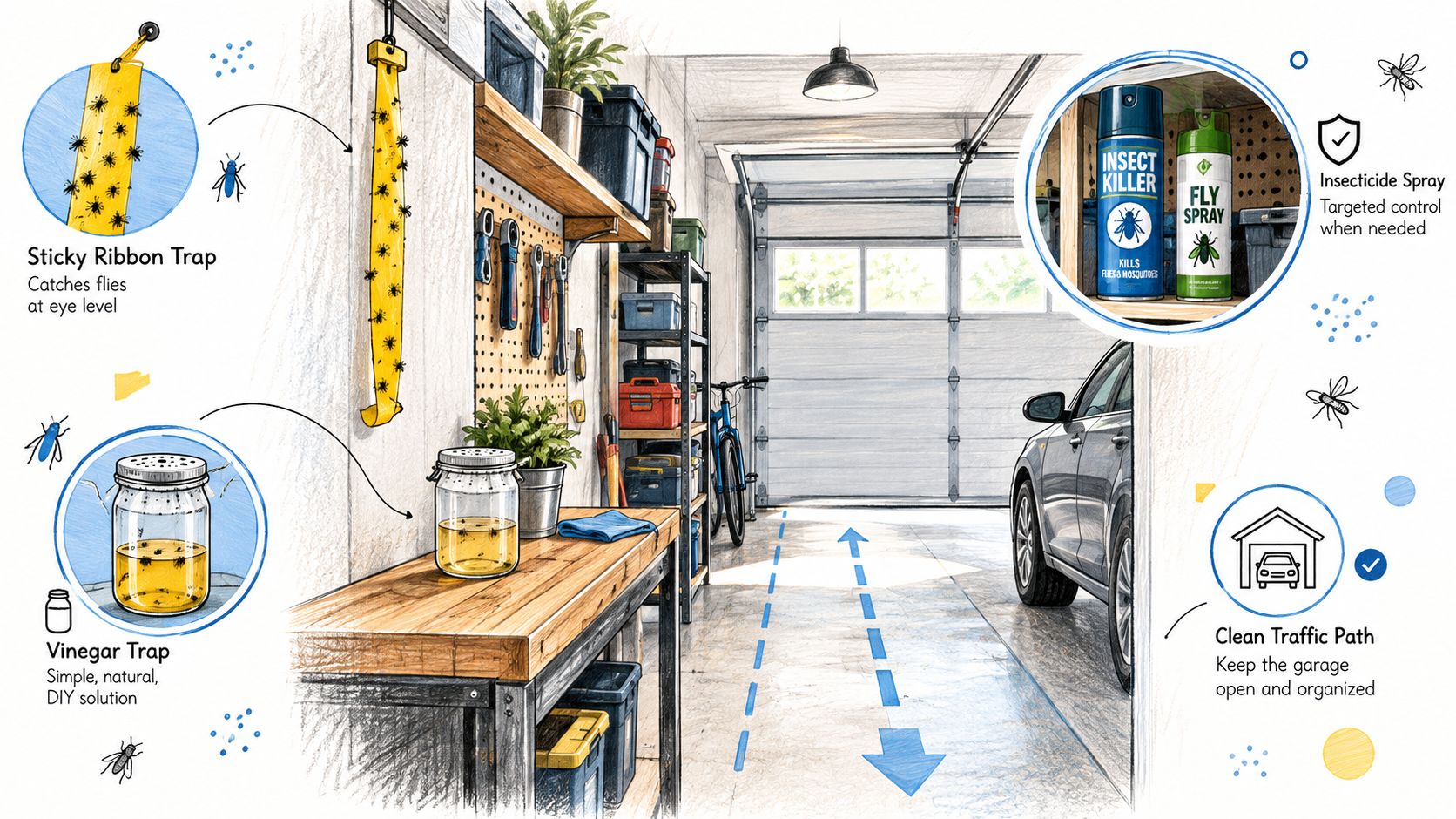
Hang sticky ribbons along the garage traffic path, near windows, or beside the trash area. Place them where people won't brush against them, and replace them when they become covered with insects or dust. Treat the ribbon as a population gauge. If it catches flies every day, the source or entry route remains active.
A jar trap with apple cider vinegar, sugar, and a drop of dish soap can attract house flies inexpensively. Keep it away from children, pets, stored food, and work surfaces. Commercial bait traps can also reduce adults, but the evidence isn't uniform. A review found no definitive studies proving water bags control house flies, while one trap study recorded a commercial trap capturing about 83% of released house flies in 24 hours, compared with 100% for a comparison trap, as reported in University of Kentucky's fly-control review. Those results support using traps as supplemental control, not as proof that the infestation is solved.
A UV-light zapper can help in a fully enclosed garage, especially when competing outdoor light is limited. Its value drops sharply when the overhead door stays open because insects have more light sources and entry routes to follow.
Use sprays only on suitable resting surfaces
For adult flies, a labeled pyrethrin-based aerosol may knock down insects on contact when applied exactly as the product label allows. Target door frames, window mullions, rafters, and other resting surfaces. Keep sprays away from pet food, children's items, stored food, and anything that can be contaminated. Ventilate the space as directed.
Skip insecticide foggers and broad premise sprays for a source-driven garage infestation. They can create the appearance of action while leaving larvae, wet debris, and drain film untouched. Homeowners who need to dry a large work area may also compare portable fan sprayers for shops as equipment guidance, but airflow equipment isn't a substitute for pest diagnosis or labeled pesticide use.
This video offers a visual look at fly-control approaches. Use it as general education, then follow the label on any product you apply.
If sanitation, exclusion, and traps don't bring activity down, a licensed provider can inspect inaccessible breeding areas and apply professional-use products where appropriate. Don't keep escalating DIY spray volume when the source remains unknown.
Sealing Entry Points and Cutting Off Door-Open Time
In an attached Magnolia garage, door-open time often matters more than homeowners expect. Flies follow outdoor odors and air movement, so unloading groceries, yard equipment, or feed with the overhead door raised gives them a direct route inside.
Keep the door closed whenever you aren't actively moving something through it, especially during the warmer part of the day. The practical target is simple: open it for the task, then close it rather than leaving it raised while you work inside.
Inspect the large opening first
Look for daylight beneath the overhead door. Replace a compressed or missing bottom seal, and use a brush-style threshold strip when the gap needs more coverage. Add self-adhesive foam weatherstripping along the side jambs, then check whether the rubber gasket seals evenly when the door closes.
A homeowner can usually replace basic weatherstripping with a tape measure, utility knife, screwdriver, and the correct replacement profile. For a useful visual reference, see this Cleveland homeowners draft seal guide from Danny's Garage Door Repair. If the door is misaligned, binds, or leaves uneven gaps, use a garage-door professional rather than forcing the seal into place.
Don't overlook the personnel door
The pedestrian door is often the second major leak, particularly when the garage serves as a household pass-through. Add a properly fitted screen door or magnetic self-closing curtain, and screen operable windows with standard fiberglass mesh.
Seal gaps around conduit, hose bibs, dryer vents, and other utility penetrations. These openings can move air and carry odors even when they look too small to matter. A homeowner can caulk minor stationary gaps, while damaged vents, wiring penetrations, and structural openings may require a qualified contractor.
When to Call a Professional in Magnolia and Southeast Texas
DIY cleanup is reasonable when you've found an obvious trash, pet-food, or moisture source and the flies respond after removal. Call a licensed provider when activity plateaus, the source is inaccessible, or the insects point beyond ordinary garage sanitation.
A representative Magnolia call might involve flies continuing to appear around a clean trash area after the homeowner has removed waste and used traps. During a professional inspection, the technician checks the garage perimeter, drains, condensate equipment, stored materials, wall edges, attic access, and nearby exterior conditions. The visit should identify the breeding source, distinguish adult resting areas from the actual origin, and recommend exclusion changes that fit the door configuration.
Persistent sightings after two weeks of sanitation and trapping, recurring maggots, or blow flies appearing inside the home justify escalation, according to guidance on when to hire pest control. A separate professional guide advises seeking help when activity exceeds 10 to 15 flies per hour or when maggots appear in drains or wall voids, but treat that threshold as a practical screening point rather than a replacement for inspection. University extension guidance also emphasizes thorough drain and pipe cleaning for drain-fly control.
FullScope Pest Services serves Magnolia and nearby Montgomery County communities, including the core ZIP coverage of 77354, 77355, and 77362, with inspection, targeted treatment, exclusion recommendations, and maintenance options. Magnolia is in southwestern Montgomery County, within the Houston metropolitan area, and commonly described as about 45 miles northwest of Houston and roughly 25 miles southwest of Conroe, according to Magnolia's community profile. Service planning can also account for Magnolia's ZIP codes, 77353, 77354, and 77355, as listed by ZIP code directory data.
Your Garage Fly Action Checklist and Next Steps
Use the checklist to attack the source before the symptoms.
- Today: Bag trash, remove pet food, sweep visible debris, and place a sticky trap where flies gather. The goal is to remove immediate attractants and measure activity.
- This week: Scrub drains, dry damp areas, clear storm debris, inspect behind storage, and install or repair door weatherstripping. This interrupts breeding and reduces entry.
- This month: Recheck the garage after the next rain cycle, replace or rotate traps, and consider seasonal exterior treatment if flies return.
If the breeding sources are clean but flies persist within 48 hours, the activity may have moved beyond the garage. Contact a licensed Magnolia-area technician to inspect the attic, soffits, wall voids, drains, and exterior perimeter across 77353, 77354, and 77355. Schedule an inspection with FullScope Pest Services or another licensed Southeast Texas provider before the next warm-weather cycle gives the infestation more time to grow.
Before publishing, verify the final checklist image URL against the supplied asset.