1500+ reviews

A single female house fly can lay 75 to 150 eggs per batch, often producing about 500 eggs over her lifetime, so flies in a house usually come from moisture combined with organic debris acting as a nursery, often within a few feet of where you see the adults. The source may be a drain, trash liner, pet waste, condensate tray, crawlspace, or another damp hiding place rather than a visibly dirty kitchen.
You wipe the counters, empty the trash, and spray the flies circling over the sink. By the next morning, more are resting on the window. That pattern frustrates homeowners in Magnolia, Kingwood, and throughout Southeast Texas because the visible insects are usually the final symptom, not the original problem.
House flies and related indoor flies are strongly associated with wet, decaying organic matter, including garbage, manure, rotting plant material, pet waste, clogged drains, and concealed debris. University of Missouri Extension guidance identifies sanitation and moisture reduction as major controls because removing waste and drying breeding material eliminates the habitat larvae need.
The practical question isn't only, “What attracts flies?” It's, “Where are they developing?” That distinction changes the inspection. A clean countertop can sit directly above a contaminated garbage disposal, a slow drain, or a damp cabinet base that continues producing adults.
Why Flies Keep Appearing Despite Your Best Cleaning Efforts
You scrub the counters, remove fruit, take out the trash, and kill every fly near the sink. By the next morning, more are circling the kitchen or resting by the back door. In Southeast Texas homes, that pattern often points to a hidden moisture zone, not poor housekeeping. Condensate trays, crawlspaces, and deep drain biofilm can keep supplying flies after routine surface cleaning is finished.
House fly eggs develop in wet garbage, animal manure, rotting plant debris, and similar organic material. Sanitation and drying reduce the habitat larvae need, as noted in LSU AgCenter guidance. The practical inspection question is, “Where are they developing?” A clean countertop may sit above a contaminated disposal, slow drain, damp cabinet base, or HVAC pan.
Surface cleaning versus source removal
Spraying adults improves the room briefly, but it leaves eggs, larvae, and breeding material in place. Wiping a sink basin also misses the organic film coating the drain walls. That buildup can remain below the waterline, where a normal sponge cannot reach it.
Check these overlooked sites:
- Under garbage liners: Leaking bags leave food residue at the bottom of the can.
- Behind appliances: Produce and sticky spills can stay damp beneath a refrigerator or range.
- Mops and cleaning tools: A wet mop stored on the floor retains moisture and residue.
- Pet areas: Feces, damp bedding, spilled food, and water around bowls can support flies.
- Condensate equipment: HVAC trays and lines may hold water mixed with dust and organic debris.
- Crawlspaces and drains: Plumbing leaks, standing moisture, and deep biofilm can remain outside normal cleaning access.
The trade-off is straightforward. Killing adults is fast, while finding and drying the breeding material takes inspection and sometimes disassembly. Source removal is the step that stops continued emergence.
Practical rule: If adults keep appearing after visible insects are removed, search for wet organic material before applying more spray.
Outdoor sources also matter. Dumpsters, neglected garbage, dead rodents, manure, and decaying vegetation can produce flies that enter through doors, screens, and gaps. Inspect accessible breeding material, moisture, and entry points together rather than blaming one indoor surface.
The Rapid Life Cycle Behind Common Indoor Infestations
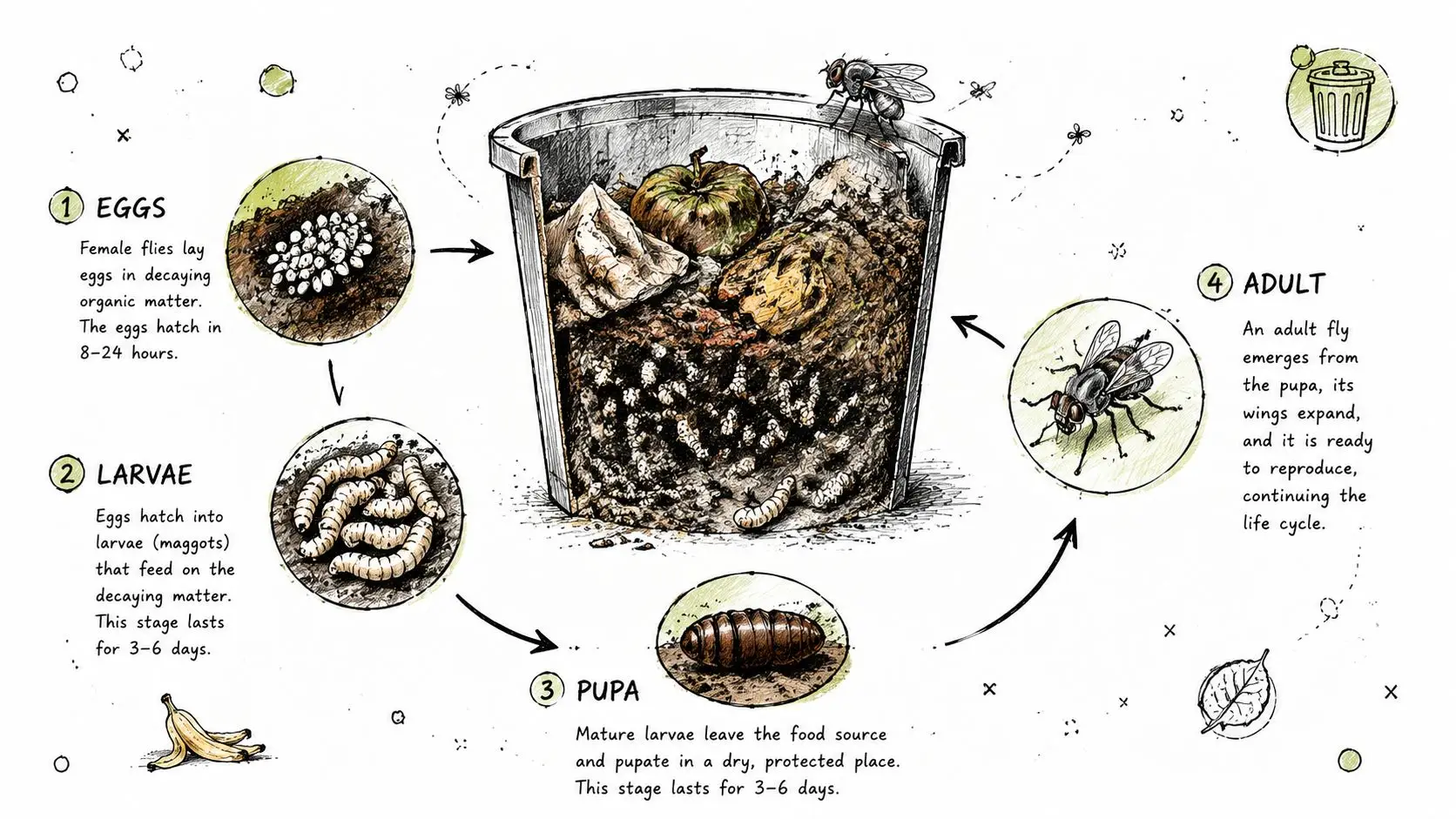
A few flies around the kitchen can become a recurring indoor problem before the breeding source is obvious. House flies reproduce quickly. A female may lay 75 to 150 eggs per batch, produce 5 to 6 batches in her lifetime, and lay about 500 eggs total. Other extension references give a broader lifetime range of 350 to 900 eggs. These figures are summarized in LSU AgCenter's house fly guidance.
Why warm conditions change the response time
In warm conditions, eggs may hatch in 12 to 24 hours, larvae may develop in 3 to 7 days, and the entire life cycle may take as little as 6 days. A small amount of wet organic material can therefore produce repeated waves if it remains undisturbed.
That timing matters in Southeast Texas. A condensate tray, crawlspace leak, or deep drain biofilm may support development even when counters and floors look clean. Removing adult flies gives quick relief, but it does not remove eggs or larvae. House flies from damp waste require a different inspection from drain flies developing in plumbing residue.
For more context on adult survival and seasonal behavior, see this guide to how long flies live. The practical control step is to remove breeding material, dry the area, and restrict access to the source.
Breeding sites can also sit near the structure. Flies may enter from outdoor garbage, dead animals, or other moist organic material, as noted by the LSU AgCenter. Check garage edges, patio waste areas, trash storage, crawlspace entrances, and door thresholds when indoor sightings do not match an obvious kitchen source.
A short life cycle also explains why spraying can appear to work, then fail. Adults may disappear while immature stages remain hidden. Their later emergence usually means the breeding material is still active, not necessarily that the treatment product failed.
Identifying the Specific Fly Culprit in Your Home
A fly repeatedly appearing in a clean Southeast Texas home often points to a hidden moisture zone, not neglected counters. Size, flight pattern, and location narrow the possibilities, while the breeding source confirms them. A large gray fly near a back door requires a different inspection from tiny flies hovering over a bathroom drain or plant pot.
Fly species comparison
| Species | Appearance | Primary Breeding Source |
|---|---|---|
| House fly | Larger, gray-bodied, fast-moving fly | Wet garbage, manure, pet waste, carcasses, rotting vegetation, and decaying produce |
| Fruit fly | Very small, often tan to brown, commonly noticed around food | Overripe or fermenting produce, sticky drink residue, recycling containers, and organic kitchen waste |
| Drain fly | Tiny, dark, fuzzy, moth-like appearance, weak flight | Biofilm and stagnant water inside drains and plumbing |
| Fungus gnat | Small, delicate, mosquito-like insect, often seen around plants | Moist potting soil and overwatered indoor plants |
| Cluster fly | Larger, slower fly that may gather near windows or upper rooms | Outdoor development, with adults entering structures through openings and voids |
House flies generally indicate a moist organic source. Eggs and larvae need suitable material, so a dry room cannot support continued development. Repeated sightings may mean the source is inside the home or close to its exterior, such as waste storage, a crawlspace opening, or a damp area near a door.
Fruit flies usually develop around aging produce, bottle or can residue, forgotten food, and damp buildup near kitchen fixtures. Inspect beneath appliances, inside recycling containers, and around garbage-can rims. A visible fruit bowl is only one possible source.
Drain flies need a separate diagnosis. University of Arkansas Extension explains that their larvae feed on soap scum and organic sludge, including algae, fungi, and bacteria, coating drain and plumbing interiors. Slow-draining or rarely used fixtures can retain that material. Condensate trays and deep drain sections may also stay wet and out of normal cleaning range.
Fungus gnats usually rise from moist potting soil, while cluster flies develop outdoors and enter through openings or wall voids. For larger, more mobile flies, consult this house fly identification and control resource. Correct identification determines whether to inspect waste, plumbing biofilm, soil, or structural entry points before treating adult insects.
Targeted DIY Fixes for Hidden Indoor Breeding Sites
Start where fly activity is strongest, then inspect adjoining areas. Effective control requires removing both moisture and organic residue. Cleaning only the visible surface often leaves the breeding site untouched.
Begin with drains and waste containers
Scrub sink and bathtub drains mechanically. Remove the stopper or strainer, pull out hair and residue, and use a stiff brush on reachable drain walls. Drain fly larvae develop in the organic biofilm lining the pipe, so flushing water through the drain or killing adult flies will not remove the source. The University of Arkansas Extension describes this buildup as material that can include soap residue, algae, fungi, and bacteria.
Inspect the garbage disposal, dishwasher connection, overflow channel, and the bottom and underside of the trash can. Wipe beneath garbage liners, rinse recycling containers, and replace leaking bags before food residue remains in standing moisture.
A jammed or leaking disposal may need plumbing attention rather than another insect treatment. Food debris lodged inside a fixture can keep feeding flies until the mechanical problem is corrected. This guide to San Antonio homeowners disposer repair shows the kind of plumbing support to seek when the disposal itself is contributing to the infestation.
Check the less visible water sources
Texas A&M AgriLife Extension identifies indoor fly sources where excess moisture and organic debris accumulate. Its indoor fly-control publication recommends cleaning drains, removing waste beneath liners, drying mops, and checking condensate lines and trays. The extension publication on indoor fly control also explains that larvae need water to develop.
Use this inspection order:
- Dry cleaning equipment: Hang mops so they dry completely instead of leaving them against a damp floor.
- Inspect HVAC condensate areas: Check the tray and line for standing water, sludge, blocked outlets, or damp insulation. These areas are often outside normal household cleaning.
- Check pet zones: Remove feces promptly, wash food dishes, and dry water spilled near bowls.
- Search hidden edges: Look beneath refrigerators, dishwashers, cabinets, and stored containers.
- Examine crawlspaces and utility areas: Damp soil, plumbing leaks, dead animals, and decaying debris can sustain activity that appears indoors.
For produce-related infestations, this guide to what causes fruit flies provides further cleaning and prevention guidance. Avoid pouring bleach or other harsh chemicals into a drain without checking plumbing or septic conditions. Physical removal of biofilm, followed by correction of the moisture source, is a safer starting point when the fly type or breeding site remains uncertain.
When to Call a Local Pest Professional in Southeast Texas
DIY work makes sense when you can identify and reach the source. A forgotten onion, dirty trash can, or accessible drain can often be corrected by the homeowner. Professional help becomes more valuable when flies continue appearing after those areas are cleaned, because persistence suggests an inaccessible source, an active exterior breeding site, or a structural moisture problem.
Signs the source is beyond routine cleaning
Watch for a pattern rather than a single adult fly:
- Repeated emergence from one wall or ceiling area: A dead rodent or organic material may be hidden in a void.
- Activity around attic or crawlspace access: Damp insulation, roof leaks, animal waste, or carcasses need a broader inspection.
- Flies concentrated at several fixtures: A shared plumbing problem or building-wide source may be involved.
- No indoor source after a careful search: Outdoor garbage, compost, animal waste, or a nearby carcass may be feeding the population.
- New adults appearing after every cleaning: The breeding material remains active somewhere you haven't reached.
House flies can mechanically carry bacteria between decaying material and household surfaces, which is one reason recurring activity deserves attention without resorting to scare tactics. Colonial Pest Control's discussion of house flies indoors highlights concealed sources such as pet feces, wet residue behind appliances, dead insects, and animal carcasses in wall or ceiling voids.
What a thorough inspection should include
A qualified technician shouldn't begin and end with a spray around windows. The useful work is source tracing:
- Interior inspection: Drains, disposals, trash containers, appliances, pantries, pet areas, utility rooms, and plant soil.
- Moisture investigation: Condensate trays, plumbing leaks, floor drains, crawlspaces, attic areas, and damp insulation.
- Exterior review: Garbage storage, compost, animal waste, dead vegetation, drainage, screens, doors, and perimeter gaps.
- Species confirmation: The treatment should match the fly rather than assume every small fly is a fruit fly.
- Exclusion and sanitation plan: The technician should explain what must be sealed, dried, removed, or repaired.
FullScope Pest Control serves communities across north Houston and Southeast Texas, including Kingwood, Conroe, Magnolia, and surrounding areas. Magnolia is in Montgomery County, within the Houston metropolitan area, and includes ZIP codes 77353, 77354, and 77355, as documented by Magnolia's city information. A neutral directory lists 77354 as Magnolia's primary ZIP and mailing address, according to Texas city-directory information. Service planning should account for the broader local area, not assume one compact postal zone. A demographics source identifies 77354 and 77355 as standard ZIP codes and notes a separate PO Box ZIP, with estimated populations of 40,625 in 77354 and 29,300 in 77355. ZIP code demographic information helps explain why local routing can span distinct residential areas.
Preventing Future Fly Intrusions Year-Round
Long-term prevention is a maintenance practice, not a single spray. The homes that stay comfortable manage three conditions together: moisture, organic material, and access. If one remains available, flies can return even after adults disappear.
Build a practical prevention routine
Keep the routine specific:
- Manage indoor moisture: Repair leaks, clear slow drains, empty condensate trays correctly, and don't leave standing water in utility areas.
- Control organic waste: Empty kitchen garbage before residue accumulates, rinse recyclables, clean disposal splash areas, and remove pet waste promptly.
- Protect food: Store aging produce carefully, discard decaying items, and check forgotten potatoes, onions, fruit, and spill residue behind appliances.
- Dry cleaning tools: Hang mops and cloths where air can circulate rather than leaving them damp on floors.
- Maintain drains: Run water through infrequently used fixtures and scrub drain surfaces when slime develops.
- Monitor plants: Avoid chronically wet potting soil, which can support fungus gnats even when the kitchen is spotless.
- Reduce exterior habitat: Keep outdoor garbage closed, remove fallen organic material, manage compost, and prevent animal waste from accumulating near doors.
Window and door maintenance also matters. Torn screens and poorly sealed thresholds give outdoor flies an easy route inside, especially when a nearby breeding source is active. For a practical guide on how clean screens can improve airflow with clean screens, use a soft brush and gentle cleaning method that won't damage the mesh.
Use sightings as an early warning
Don't wait for a swarm. One or two flies near a drain, trash container, plant, or back door can tell you where to begin checking, especially when the same location keeps attracting adults. Tape over a suspect drain with a loose air gap overnight, then inspect it for trapped insects in the morning. This isn't a complete diagnosis, but it can help narrow the search.
Inspection habit: Record the room, time, surface, and fly appearance. Repeated sightings in the same location are more useful than counting insects throughout the house.
For Magnolia residents, local service planning may involve 77353, 77354, and 77355, while nearby homeowners in Kingwood, Conroe, Porter, Humble, and other north Houston communities may face different property layouts and exterior sources. A seasonal inspection can identify moisture and exclusion issues before they become a recurring indoor nuisance.
If flies are returning despite a clean kitchen, contact a local pest professional serving your community and request a source-focused inspection. Ask the technician to check drains, condensate equipment, crawlspaces, attic voids, pet areas, waste storage, and exterior entry points, then schedule the repairs or sanitation work that removes the breeding habitat rather than relying on another temporary spray.
Contact FullScope Pest Control today to arrange a fly inspection for your home in Magnolia, Kingwood, Conroe, or a surrounding Southeast Texas community. Share where the flies appear, how long they've persisted, and what you've already cleaned so the technician can start with the most likely hidden moisture and organic-debris sources.