1500+ reviews

You hear scratching in the middle of the night, then you spot a flea on the dog, and the whole house suddenly feels like it's crawling. Most homeowners go straight after the pet and spray whatever's on the shelf, then wonder why the bites keep coming back a week later. The problem is usually bigger than the animal, and the fix has to be bigger too.
If you're dealing with how to get rid of fleas in house, start by assuming the visible flea is only the small part you can see. The bulk of the work is in the carpets, bedding, couch seams, floor gaps, and the pet areas where fleas keep rebuilding. In Magnolia, Texas, and across nearby Southeast Texas, that matters even more because warm conditions can keep flea pressure going long after a homeowner thinks the problem should be over.
Why Fleas Are Harder to Eliminate Than You Think
A lot of people think the infestation lives on the dog or cat. That's the trap. In reality, the pet is often just the moving vehicle, while the home is where the population is growing, hiding, and maturing out of sight.
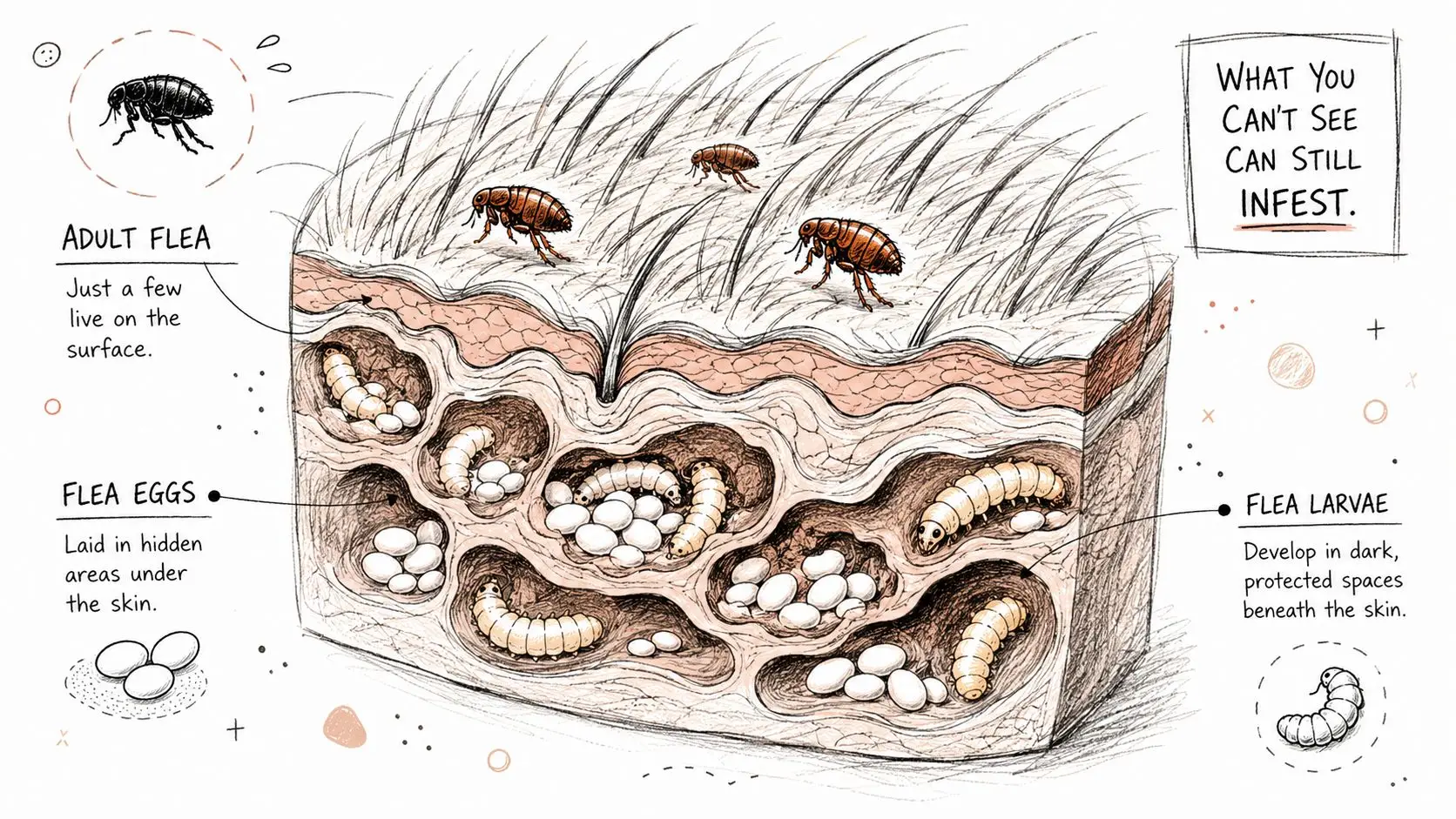
The hidden part of the infestation
The RSPCA says about 95% of flea eggs, larvae, and pupae live in the environment. Washington State University Extension breaks the home population down as about 50% eggs, 35% larvae, 10% pupae, and only 5% adults. That means the fleas you see are the smallest part of the problem, not the main one. The eggs drop into carpet fibers, the larvae move deeper into fabric and dust, and the pupae wait for the right conditions before emerging.
Practical rule: if you only kill adult fleas on the pet, you've treated the symptom, not the source.
That's why one spray rarely solves the issue. Even a good pet product can knock back the adults on the animal, but the hidden immature stages in the room can keep developing. One female flea can lay up to 50 eggs in a day and about 1,500 eggs in a lifetime, so a small surviving population can rebuild fast after cleaning if the rest of the house is ignored.
What that means in a real home
I've seen homeowners treat the dog, wipe down the floor once, and call it done. A week later, they're back where they started, because the remaining eggs and pupae kept the cycle alive. That's why flea removal has to be a whole-home, multi-stage process, not a one-time knockdown.
The visible adults matter, but the environment matters more. Carpets, bedding, upholstery, pet rests, and even small cracks along baseboards are where the work really happens. Once you accept that, the plan gets clearer and a lot less frustrating. The goal is to interrupt every stage at once, not just chase the fleas that jump.
Treating Your Pets to Stop the Source
Treating the pet still matters, because fleas often ride in on dogs and cats. The problem is that pet treatment by itself does not finish the job. If the house stays untreated, carpets, bedding, and furniture keep feeding the next wave.
What to use and how to use it
Veterinarian-recommended topical spot-on products can work well in many homes, especially when they are applied exactly as directed. Oral medications are another option, and they help when you need fast adult knockdown on the animal. Flea collars can help in some cases, but they do not solve an established home infestation. Medicated shampoos can give a quick clean-up, especially if a pet is covered in live fleas, but the effect is temporary unless the rest of the environment is treated too.
Treat all pets in the household at the same time. Missing one cat or dog lets the infestation keep moving from room to room. In a multi-pet home, one untreated animal can undo the work on the others.
Product choice matters less than correct use and species safety. Dogs and cats do not always use the same flea products safely, and small mammals need extra caution. Keep pets separated if a topical product needs time to dry, and do not stack multiple flea products without veterinary guidance.
Pets can keep scratching after treatment even when the live fleas are gone. Sometimes that comes from lingering flea allergy dermatitis, not from a failed treatment. If the skin stays irritated after the fleas are under control, the pet may need veterinary care.
For a practical walk-through on product use and timing, use this guide on treating fleas on dogs. If your dog is already stressed from itching, diet changes, or medication, some owners also look into dog probiotics as a supportive resource, but that does not replace flea control.
What homeowners often miss
Many homeowners overlook that treating pets alone leads to reinfestation from environmental reservoirs. Once treatment starts on the animal, the house has to be cleaned hard and repeatedly. Otherwise, the pet gets reinfested from the room, the couch, or the bedding.
Deep Cleaning and Indoor Treatment Protocol
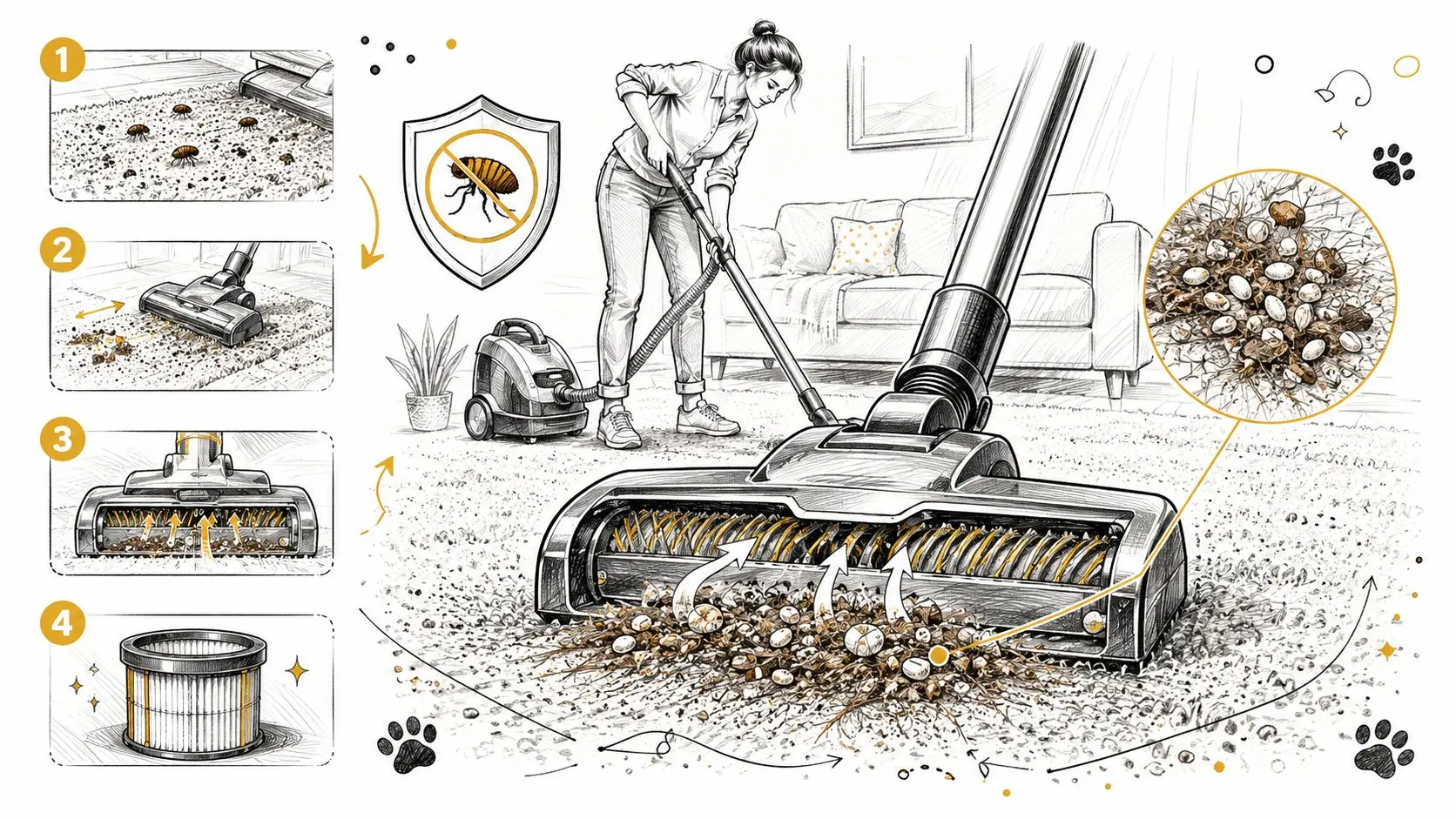
This is the stage that decides whether the infestation fades out or keeps cycling through the house. Adult fleas are the part you see, but most of the population is hidden in carpet, bedding, cracks, and upholstered furniture. EPA guidance says vacuuming is the best initial control method for an infestation, and that makes sense because it removes eggs, larvae, and debris before they can keep the cycle going.
Start with the surfaces fleas use
Vacuum floors, cracks, crevices, furniture, and pet-resting areas every day during the active cleanup period, then dispose of the vacuum contents immediately. Texas A&M AgriLife Extension specifically says to vacuum under furniture, cushions, chairs, beds, and along walls when controlling fleas. In real homes, that means carpet edges, baseboards, sofa seams, and bed frames matter more than the open center of the room.
Steam cleaning adds another layer. EPA guidance says steam cleaning can kill fleas in all life stages on carpets and upholstery when combined with soap and heat. That makes it a practical option for thick fabrics and soft surfaces where eggs and larvae can stay protected from a light surface spray.
Hot steam helps because fleas do not stay out in the open. They settle deep in fabric, dust, and seams.
Wash pet bedding and family bedding in hot, soapy water every 2 to 3 weeks. If old pet bedding is heavily infested or worn out, throwing it out can be the better call. Laundry is one of the simplest ways to remove the fabric reservoir that keeps feeding the house population.
If the room also has stains or old pet accidents, clean that problem at the same time. A practical guide to eliminate set-in urine odors can help you handle the odor layer without hiding the sanitation issue underneath.
Chemical control has a narrow job
Residual sprays and insect growth regulators, or IGRs, are useful when they are used where fleas hide, not just where they are easy to see. Baseboards, carpet edges, upholstery seams, and pet resting spots are the usual target zones. Follow label directions carefully, keep children and pets out of the area during application, and do not treat more than the product allows.
Use a homeowner checklist for flea treatment if you want a room-by-room way to keep the work organized. The point is consistency. One vacuum pass does not end an infestation, but daily removal plus heat and follow-up treatment can break the pattern.
Understanding the Flea Lifecycle Timeline
The timeline matters because fleas don't all respond to treatment the same way. Adults are the visible problem, but the eggs and pupae are the reason the problem comes back. The CDC says moderate to severe infestations can take months to control and usually require a four-step process for complete elimination.
What happens at each stage
A local government pest guide says fleas can go from egg to adult in 18 to 26 days, depending on temperature. That's fast enough to make a house seem clear and then suddenly active again if follow-up stops too soon. Eggs and pupae are also not affected by insecticides, which is why vacuuming, laundering, and repeat treatment matter so much.
| Flea Lifecycle Stages and Treatment Implications | |||
|---|---|---|---|
| Life Stage | Duration | Location | Effective Treatment |
| Egg | Not given in the verified data | Carpets, bedding, cracks, furniture | Vacuuming, laundering, source reduction |
| Larva | Not given in the verified data | Dust, fabric, protected indoor areas | Vacuuming, steam cleaning, sanitation |
| Pupa | Can remain dormant until conditions are right | Hidden in the environment | Continued cleaning, follow-up treatment |
| Adult | Visible when active | Pet, floor, fabric surfaces | Pet treatment, residual control, vacuuming |
Why the pupal stage fools people
Pupae are the stage that makes people think the infestation is over. The home can look clean, the pet can seem better, and then new adults emerge later. That isn't a fresh infestation, it's the old one finishing its cycle.
A good working calendar has repeat cleaning built into it. Vacuum daily during the active phase, keep laundering on schedule, and recheck treated rooms instead of assuming one round was enough. The CDC's four-step approach makes sense here because fleas are won by persistence, not by a single product.
The big takeaway is simple. If the timeline isn't respected, the infestation resets itself. If the timeline is respected, every round of cleaning and treatment knocks the population lower until it finally runs out of places to hide.
Yard and Outdoor Flea Control
Outdoor areas matter because fleas do not stop at the back door. If the yard keeps feeding fleas back to the pet, the pet keeps carrying them into the house. In Magnolia and the rest of Southeast Texas, warm, humid weather makes outdoor management matter more than many homeowners expect.
Prioritize the places fleas build up
Focus on shaded spots, under decks, pet runs, and areas where wildlife or stray animals pass through. Those are the places where fleas are more likely to survive longer and get picked up again by a pet. Short grass helps, but it is not enough by itself if the shaded edge beds, clutter, or animal resting spots stay untouched.
Treatment options usually include outdoor sprays, granular insecticides, and nematode-based biological controls. The right product depends on the layout of the yard and how much animal traffic you have. For a practical comparison of exterior cleaning approaches, Cultivate House Detailing's cleaning comparison is useful because it shows how different outdoor methods fit different surfaces, even though flea control itself still depends on targeted pest treatment.
If the infestation keeps returning in the yard, yard flea treatment guidance can help homeowners focus on the areas that keep feeding the cycle. That usually means treating the spaces pets use, along with the darker, sheltered edges where fleas survive longer between hosts.
Timing and reinfestation control
Apply yard treatments when rain is not about to wash them away, and after mowing when the turf is trimmed down enough to expose hiding spots. That keeps treatment where it belongs instead of losing it to runoff or tall grass. If you have pets that sleep outside or spend long periods in one area, those zones deserve extra attention.
Wildlife can keep reintroducing fleas after treatment. Stray cats, raccoons, and opossums are common culprits around suburban yards, and they make exclusion important. Secure trash, remove food sources, and reduce the kinds of sheltered edge spaces animals use for nesting or resting.
A yard plan will not fix a house infestation on its own, but it can stop the cycle from restarting. When the outdoor source is handled, the indoor cleanup has a chance to hold.
When to Call Professional Pest Control
Some infestations are too established for home methods to handle efficiently. If you've treated the pet, vacuumed hard, washed bedding, and still keep seeing fleas, it's time to stop guessing. The problem isn't effort, it's that the infestation has too many hidden reservoirs.
Signs DIY has stopped being enough
Call in help when fleas keep returning after repeated cleaning, when multiple rooms are involved, or when the house has several pets and a lot of fabric surfaces. Large homes take more time to treat thoroughly, and missed zones give fleas room to rebound. Homes with kids, cats, dogs, and small mammals also need a more careful product selection than a one-product shelf solution can provide.
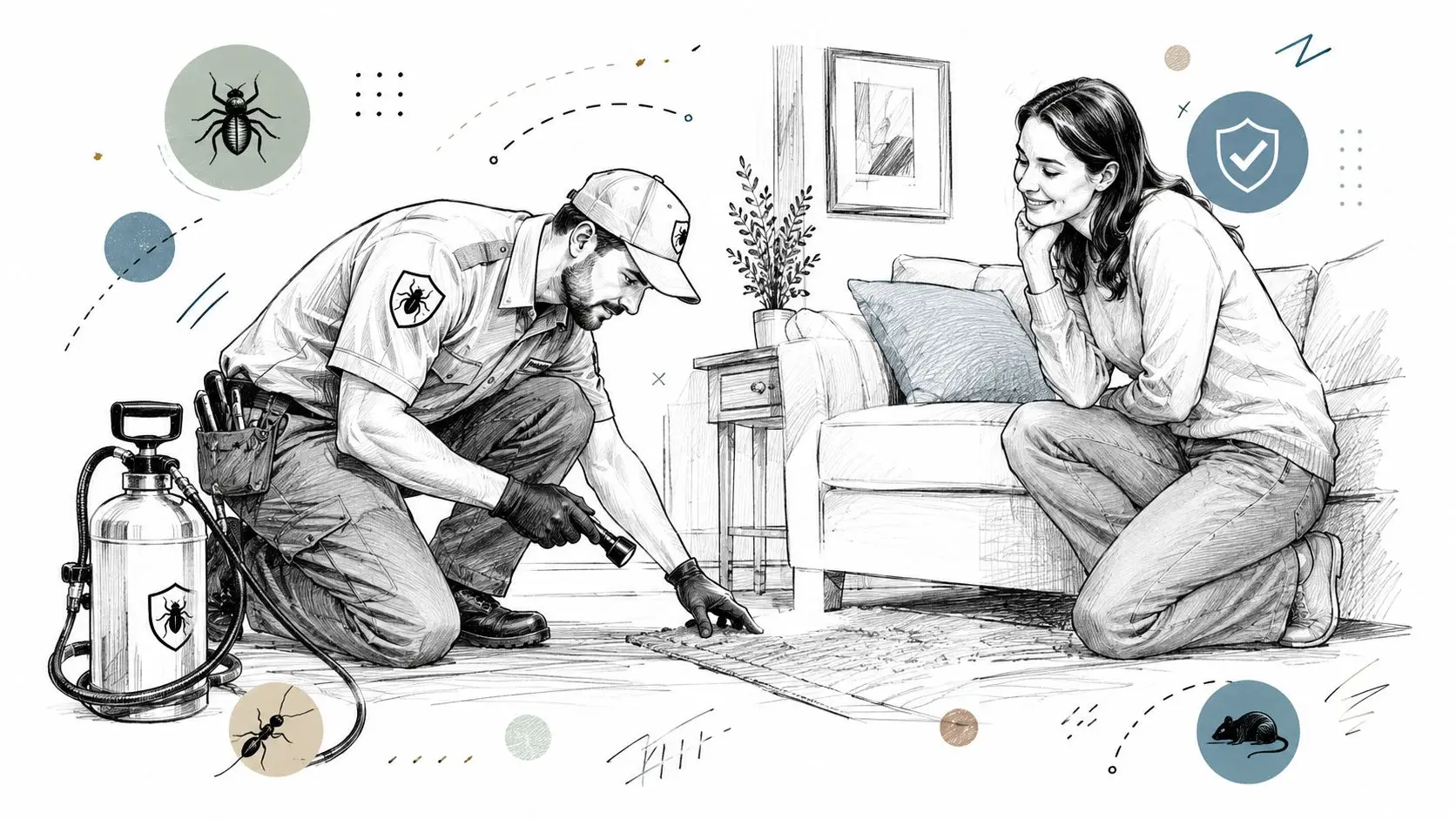
Professional treatment usually starts with inspection, then targeted chemistry, then follow-up. QualityPro certified providers bring trained technicians, integrated pest management, and low-toxicity options that fit homes with children and pets. That matters in Magnolia, Texas, and nearby communities where homeowners want the job done without turning the house upside down.
Local service context that matters
FullScope Pest Control serves nearby Southeast Texas communities, including Cleveland, Kingwood, Conroe, Porter, Atascocita, Coldspring, Huffman, Humble, Livingston, Montgomery, New Caney, Splendora, Spring, and Willis. That local coverage matters because flea pressure, yard conditions, and home layouts can vary across the service area. FullScope also offers residential pest control for fleas, along with one-time remediation and ongoing maintenance options.
For a stubborn infestation, a structured inspection and treatment plan usually beats another week of guesswork. The value isn't just the spray, it's the follow-up and the accountability. If the infestation has already moved beyond a simple pet problem, professional help saves time and usually saves frustration too.
Long-Term Prevention Strategies
Once the infestation is gone, prevention has to stay simple enough that you'll keep doing it. That means a few steady habits, not a giant maintenance project. The goal is to stop the next flea from ever turning into a house problem.
Build a light but consistent routine
Keep pets on monthly flea prevention from a veterinarian-recommended product. Continue periodic vacuuming of high-risk areas like pet beds, couch edges, and room corners, especially if animals spend a lot of time there. If you have a yard, keep the shady zones trimmed and clear so animal traffic doesn't turn them into nesting spots.
Don't wait for a full outbreak before you check the house again.
A flea comb is still useful even after the house looks clear. Run it through the pet regularly, especially around the neck, tail base, groin, and belly, then look for flea dirt or live insects. The white sock test also helps with early detection in yards, because it can reveal flea activity before your pet starts scratching hard.
Match the plan to the household
Households with visiting pets, outdoor animals, or a lot of foot traffic need a more active prevention routine. Smaller homes may get by with pet prevention and targeted vacuuming. Bigger homes or homes with carpets and upholstered furniture usually need more attention at the edges, where fleas like to hide first.
The best prevention plan is the one you'll follow after a long day, not the one that sounds perfect on paper. Keep it realistic, keep it repetitive, and check the pet and the problem zones before the infestation has time to rebuild.
If fleas keep coming back after you've treated the pet and cleaned the house, it's time to stop fighting the same cycle alone. Schedule a professional inspection, get the indoor and yard pressure assessed, and build a plan that fits your home in Magnolia, Texas, or the surrounding Southeast Texas service area.