1500+ reviews

You've probably seen it already. The dog comes in from the side yard, starts grooming, and an hour later somebody in the house is scratching ankles again. In Kingwood, Conroe, and Magnolia, that pattern usually means the lawn is doing more of the damage than the pet is.
A lot of homeowners treat fleas like they're a pet problem that wandered outside. In practice, the yard is the nursery, and the dog is just the moving meal source. That's why a quick spray on the animal or one pass across the grass keeps failing in Southeast Texas, especially where shade, moisture, and thick turf keep the flea cycle alive.
Why Your Yard Is the Primary Flea Problem
A homeowner in Kingwood can do the white-sock walk across a lawn and still come inside with bites on the ankles. The dog may be the one carrying fleas in, but the yard is where the population keeps rebuilding. That is the part people miss when they only chase what they can see on the pet.
The biology explains it. A pest-control reference commonly notes that most fleas are in the environment as eggs, larvae, or pupae, not on the animal itself. That means the pet is the food truck, but the yard is the nursery. If you only treat the dog, you keep killing the visible adults while the next wave develops in the grass, mulch, and shaded soil. The practical guide on flea infestation signs fits that same pattern, because scratching and flea dirt are just the clues that the cycle is already underway. The same problem shows up in livestock settings too, which is why a parasites in horses guide 2026 will also stress the importance of breaking the life cycle where pests are developing.
Why Southeast Texas makes this worse
Humidity changes the job. In Kingwood, Magnolia, and Conroe, dense shade under live oaks, packed St. Augustine thatch, and protected fence-line corners give fleas the damp shelter they need to keep developing. Sunlight helps, but only where it reaches the soil. Under decks, beside the foundation, and in mossy mulch beds, the flea nursery stays active far longer than people expect.
The hard part is that a single pass rarely reaches every hotspot. Fleas can keep hiding in the protected edges, then rebound after the surface dries out or after pets lay back down in the same cool spots. That is why flea treatment for yard flea infestation has to start where shade, moisture, and pet traffic overlap instead of spraying the open lawn and calling it done.
Practical rule: if the bites keep coming back, the problem is rarely the open lawn alone. It is usually the protected edges where pets rest and where the soil stays cool and shaded.
That is why a yard flea treatment is necessary if you want real control. The pet needs treatment too, but the yard has to be reduced to something fleas can no longer use as a breeding site.
How the Flea Lifecycle Shapes Your Treatment Plan
Fleas move through egg, larva, pupa, and adult stages, and each stage behaves differently in a yard. If the treatment only hits one stage, the rest keep the infestation going. That's why a good program in Southeast Texas looks like a sequence, not a single spray.
Match the tool to the stage
Eggs are the easiest place for a program to fail. They don't sit on top of the grass waiting to be sprayed, and many contact products won't stop them. That's one reason mowing and raking matter before treatment, because you're physically removing the litter and thatch where eggs collect. Oklahoma State University Extension specifically recommends mowing and raking thoroughly, then removing organic debris from flower beds, under bushes, and pet spots so the yard has fewer sheltered places for immature fleas to survive.
Larvae live close to the soil surface and in thatch, which is where insect growth regulators earn their keep. Products with pyriproxyfen are designed to interrupt development, and UC IPM specifically recommends treating outdoor sleeping areas with sprays containing pyriproxyfen when flea numbers are high. Nematodes can also help in moist, shaded soil because they target soil-dwelling stages that are otherwise protected from simple surface sprays.
Pupae are the hardest stage. The cocoon helps them resist pesticides, and that's why the CDC-linked guidance says moderate to severe infestations can take months to control and may need two or more follow-up treatments within five to 10 days of the first application. That follow-up window isn't upselling, it's biology. When eggs hatch after the first pass, the next treatment catches the new adults before they can restart the cycle.
Adulticides give faster relief because they knock down the biting population now, but they don't stop a rebound by themselves. A technician who skips the lifecycle is just cleaning up the visible part of the problem.
If you're also dealing with other animals, the same lifecycle logic shows up in broader parasite work. The parasites in horses guide 2026 is a useful reminder that timing and repeated control matter across species, not just in lawns.
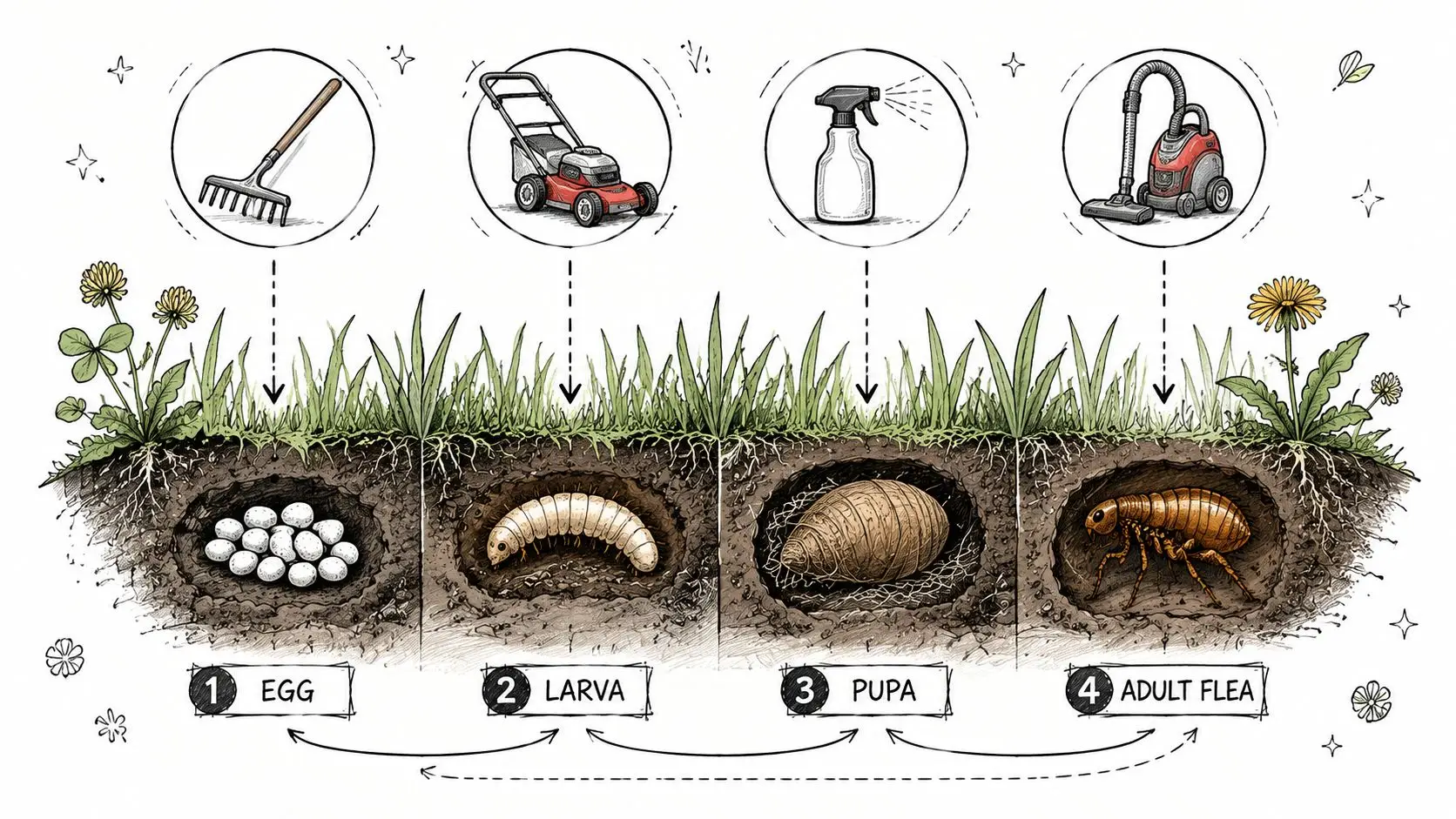
Practical takeaway: if you only want a one-day knockdown, use an adulticide. If you want the infestation to stop rebuilding, the yard needs an IGR-based plan with follow-up.
Prepping the Yard Before You Spray Anything
A lot of bad flea jobs start with a can in hand and no prep at all. In Magnolia and Porter, I've seen plenty of homeowners spray over tall grass, wet mulch, and leaf mats, then wonder why the bites came back fast. The product can't fix a bad environment by itself.
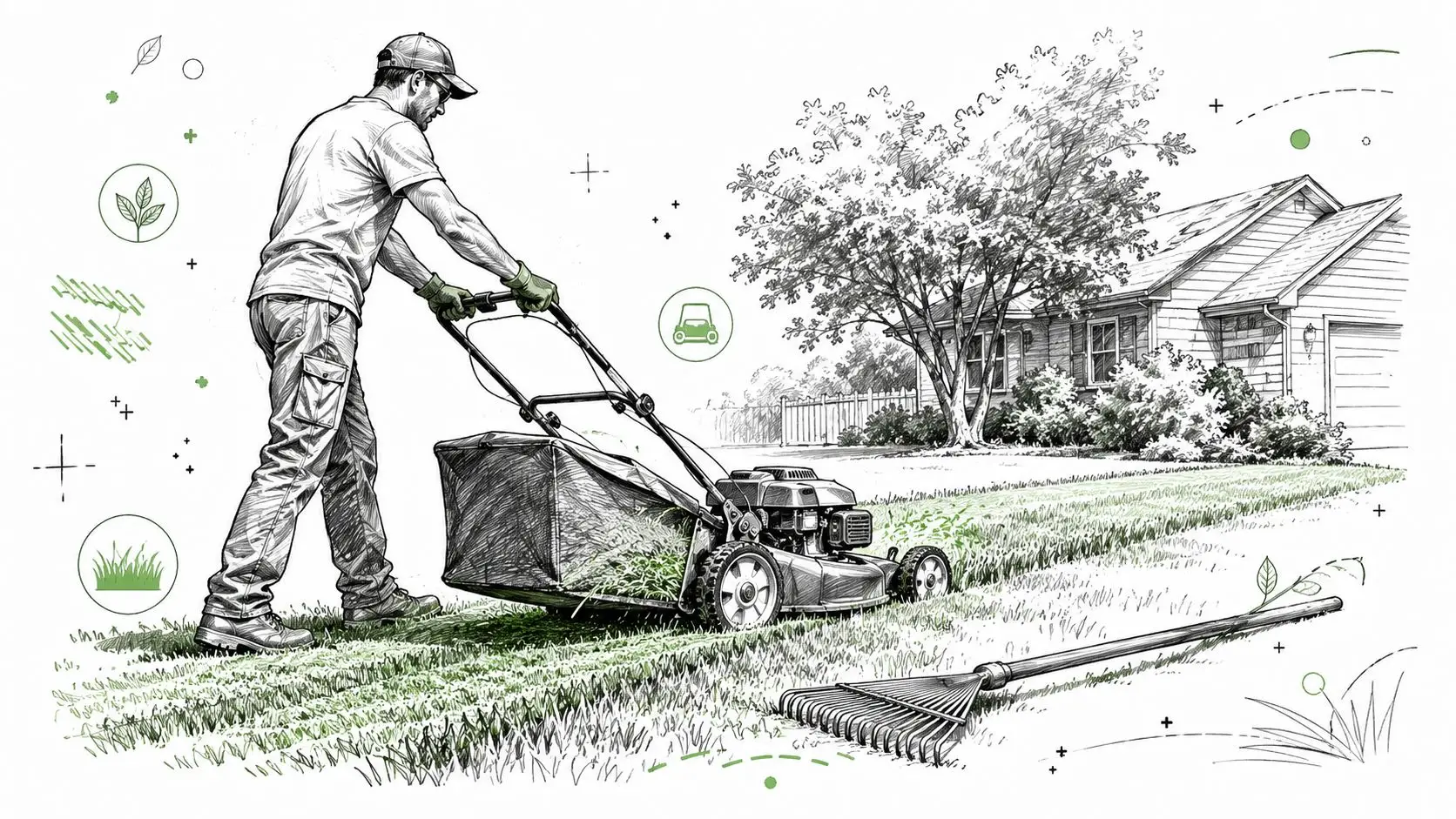
The prep checklist that actually matters
Mow the grass low. Shorter turf exposes more soil to sunlight, and fleas don't do as well in bright, dry conditions. Bag the clippings if the lawn is loaded with thatch or debris, because mulching can leave more shelter behind.
Rake out leaf litter and dead material. Pull leaves from fence lines, under shrubs, and out of flower beds. Oklahoma State Extension's guidance on removing organic debris matters because those sheltered piles stay humid longer than open lawn.
Thin dense growth near patios and foundations. Air movement dries the surface faster. That makes the yard less comfortable for immature fleas and helps any treatment settle into the places you need it.
Pull mulch back from the foundation where it's packed in too thick. Moist mulch is a flea-friendly pocket. In Southeast Texas, those foundation edges can hold humidity long after the sun is up.
Plan the application window 24 to 48 hours after prep. The yard should be dry enough for the product to land where it belongs, not on top of standing moisture or fresh clippings.
Keep kids and pets off treated areas until the surface is dry. If the yard gets tracked through early, the product ends up on paws, shoes, and patio floors instead of the shade zones where fleas are breeding.
This is also where irrigation timing matters. If you water too soon after treatment, you can wash product away from the soil surface or keep the area damp enough to favor the pest. Dry prep gives the treatment a fair shot at reaching the places fleas live.
Choosing the Right DIY Treatment for Your Lawn
A yard in Kingwood or Conroe can look calm in the afternoon and still be feeding fleas in the shade by nightfall. That's why the right DIY choice is less about shelf labels and more about where the pest is breeding, under decks, along fence lines, in mulch pockets, and in the damp edges that stay comfortable through a Gulf Coast stretch of humid weather.
Homeowners usually end up choosing between four real options, and the best mix depends on whether you need quick knockdown, longer control, or the more pet-conscious route. The common mistake is grabbing the loudest product at the store and ignoring the flea nursery sitting in the yard.
| DIY yard flea treatment options at a glance | Typical cost per 1,000 sq ft | Speed of kill | Reapplication interval | Pet and kid safety |
|---|---|---|---|---|
| Insect growth regulator granules or sprays | Varies by product | Slower on adults, strong on cycle control | Follow label, often with repeated passes | Generally lower-toxicity than broad adulticides, but still keep off until dry |
| Broad-spectrum adulticide sprays | Varies by product | Fast knockdown | Often short-lived outdoors | Requires stricter label handling and dry time |
| Beneficial nematodes | Varies by supplier | Not instant, best on soil stages | Needs evening or shaded application and moisture management | Pet-friendly when used correctly, but they only work under the right conditions |
| Diatomaceous earth | Varies by product | Works best where it stays dry | Reapply after moisture or disturbance | Low chemical concern, but outdoor reach is limited |
What each option really does
IGR granules and sprays are the backbone of most successful flea programs because they interrupt the lifecycle instead of only knocking down adults. In a yard, that matters because the next wave is already developing in the same shaded zones, under decks, and along fence lines where the flea nursery keeps restarting. If you are trying to slow the whole cycle, this is the tool that does the heavy lifting.
Adulticide sprays make sense when the bites are active right now and you need relief fast. The trade-off is simple, they wear off faster outdoors, so without a cycle-breaker behind them, the yard can rebound. In humid Southeast Texas, that rebound can happen quickly if the spray never reaches the protected spots where fleas are hiding.
Beneficial nematodes, especially Steinernema carpocapsae, fit better in moist, shaded soil than in hot, open lawn. They are one of the more natural options, but they need the right application timing, usually in the evening, and they work best where the soil stays alive enough to support them. That makes them a better fit for the damp edges of the yard than for sun-baked open turf.
Diatomaceous earth is useful in dry harborage spots, but it does not spread well through humid, protected yard zones. In Southeast Texas, that limits how much work it can do by itself. It can still help in the right dry pocket, but I would not rely on it alone for a yard that holds moisture.
If you want a broader pet-conscious approach, this guide to pest control birds is a useful side note, because natural pest pressure can help around the yard margins even though it will not solve an established infestation. For a fuller pet-conscious treatment philosophy, the pet-safe flea control eco-friendly solutions that work page lines up with the same idea, targeted control beats blanket overuse.
A simple decision rule
If the infestation is mild and you mainly want prevention, start with an IGR-based program. If the dog is miserable and everyone is getting bitten, stack a fast adulticide with the cycle breaker. If the yard stays damp and shaded, add nematodes where they can survive. If you are treating broad open lawn with no harborage, you are probably doing too much in the wrong place.
Common Mistakes That Let Fleas Bounce Back
We see the same missed steps every week in Porter and Splendora. The product goes down, the homeowner waits, and then the bites return because the yard still has the same shady, sheltered flea habitat it had before.
The failure points I see most often
Treating only the open lawn. Fleas prefer damp, shaded zones, so the action is usually under decks, along fence lines, in mulch beds, and where pets nap. If those spots don't get coverage, the open grass can look fine while the infestation keeps building at the edges.
Watering too soon after application. Granules need to settle and work where fleas develop. Heavy irrigation or a fast sprinkler cycle can move the active ingredient away from the surface and keep the area humid enough to help fleas survive.
Skipping the pets on the same day. Outdoor treatment and pet treatment need to happen together. If the animal keeps carrying adults back in, the yard gets reset before the program has time to work.
Stopping after one application. That's the biggest one. If eggs survive the first pass, larvae and adults can reappear later. The CDC-linked timing window for follow-up treatments exists for a reason, and moderate to severe infestations often need persistence rather than a single event.
The white-sock walk test helps more than people think. Put on white athletic socks, walk the problem zones slowly, and check what jumps on afterward. If you keep seeing activity in the same shaded corners, the program still isn't reaching the nursery.
Don't measure success by how quiet the lawn looks on day one. Measure it by whether the sock walk comes back clean in the spots where pets actually lie down.
When to Call a Professional and What to Expect
DIY starts to lose its edge when the infestation keeps rebounding after two solid treatments, when the house has multiple pets, or when allergies make every bite a bigger problem than it should be. Homes with deep shade, heavy irrigation, and dense plantings around Magnolia, Conroe, and Cleveland can also be harder to dry out and harder to control on a homeowner schedule.

A dedicated provider makes sense because flea work is usually a separate service, not just a casual add-on to general pest control. In the professional market, one survey found that 79% of pest-control companies offered flea control as a distinct service, only 13% included it in general pest control, and 8% bundled it with other yard-pest work such as mosquito or tick control, according to the service-mostly-separate-more-involved survey. The same survey reported an average residential flea job price of $233, typical jobs taking about 1.1 hours, and successful control usually requiring two or more treatments. Those numbers reflect what technicians see in the field, flea work is specialized, not casual.
What a real service visit looks like
A good local company starts with an inspection, then maps the shaded harborage zones, pet-resting areas, under-deck pockets, and fence lines. From there, the technician builds a treatment plan for the yard and, when needed, coordinates the pet and indoor pieces so the cycle doesn't keep feeding itself. FullScope Pest Control offers that kind of structured flea service in Magnolia, Cleveland, Kingwood, Conroe, Porter, and surrounding Southeast Texas communities, including Atascocita, Huffman, Humble, Montgomery, New Caney, Splendora, Spring, and Willis.
The company's flea service information is laid out on its flea pest control services page, and that's the right mindset to look for, a plan, not just a spray.
If your yard keeps bouncing back because the shade never really dries, or because the pets can't stay off the affected areas, it's time to bring in someone who does flea work as a dedicated job instead of treating it like a generic perimeter service. That's especially true in Magnolia and the surrounding pine-shade neighborhoods where the habitat can stay active longer than people expect.
A Seasonal Prevention Schedule for Southeast Texas Lawns
A flea-free yard in Southeast Texas usually comes from rhythm, not luck. Spring, summer, fall, and winter all change where fleas hide, so the work should change with them.
The year in practical terms
Spring is when the yard needs the hardest reset. Mow down the thatch, rake out old leaf litter, and start the first IGR-based treatment as temperatures rise. That's the best time to break the cycle before the shaded pockets get fully active.
Summer is the season for monitoring and targeted touch-ups. Walk the shady zones after major rains, check under decks and around fence lines, and re-treat where pets rest if activity returns. In the wetter pockets of the yard, nematodes can help where the soil stays consistently shaded and moist.
Fall is where a lot of homeowners get sloppy because the worst bites seem to fade. Fleas don't just disappear, and the better move is to stack an adulticide with cycle control before cooler weather pushes pests toward warmer harborage sites around the foundation and kennel areas.
Winter doesn't end the problem in Conroe or Magnolia. Focus on doghouse areas, under-deck zones, and places where rodents or wildlife may still be visiting the property. Sunny open lawn usually isn't the issue then, but protected zones can keep feeding the cycle.
Simple calendar rule: if pets use it, shade covers it, or moisture lingers there, it stays on the flea schedule.
Monthly checklist
- Inspect shaded corners after rain or irrigation.
- Mow before the grass gets dense enough to trap humidity.
- Rake debris from mulch beds and fence lines.
- Treat pets the same day as the yard when activity shows up.
- Recheck with the white-sock walk in the highest-risk zones.
- Watch doghouse, deck, and foundation edges more than the center of the lawn.
If the pattern keeps returning, don't wait for the next bite to prove it. Schedule a yard inspection, tighten up the habitat work, and call a local technician who can treat the nursery instead of just chasing the adults.