1500+ reviews

If your dog is still scratching after a flea collar, the kids are getting bites around the ankles, and you've started noticing tiny jumpers on the porch after rain, you're not dealing with a simple cleaning issue. In Magnolia, that pattern usually means the infestation has a foothold in the house, the yard, and the pets at the same time. That's why flea pest control services have to be handled as a structured job, not a quick spray from the hardware store.
Magnolia homes sit in a part of Southeast Texas where shaded lots, oak and pine cover, and humid weather keep flea pressure alive far longer than generic advice assumes. A one-and-done indoor fogger usually misses the core problem, because fleas don't live in one place. They move through pet bedding, carpet edges, furniture seams, and shaded outdoor harborage, which is exactly why a pro has to treat the whole system, not just one room.

If you're trying to spot the early warning signs before it turns into a full house problem, this guide on flea infestation signs is worth reading alongside what you're seeing at home.
Why Magnolia Homes Need a Real Flea Strategy
A Magnolia flea call usually starts the same way. The dog has already had a collar or topical treatment, the cat keeps licking, and someone in the house has a line of itchy bites after sitting on the couch or walking across the porch. That's the part homeowners see first, but fleas don't limit themselves to one surface or one season here.
Why Southeast Texas keeps the pressure up
Humidity changes the job. In a dry climate, a small flea problem may fade after a single treatment and some vacuuming. In Magnolia, shaded lawns, dense vegetation, and nearby woods keep outdoor harborage favorable much longer, so untreated pockets around the yard can keep feeding the cycle.
That's why store-bought foggers usually disappoint. They may knock down what's visible for a day or two, but they don't solve what's developing in carpet fibers, pet-resting zones, or shaded debris outside. Professional flea pest control services treat fleas as a three-front problem, pets, indoor space, and outdoor harborage, because missing any one of those fronts gives the infestation a place to rebound.
Practical rule: if the bites keep showing up after the first cleanup, the source is still active somewhere in the home or yard.
What a mature flea job looks like
The pest management market treats flea work as a specialized service category, not a minor add-on. In one survey, flea services generated an average of $26,900, or 4% of overall revenue, for pest management professionals in 2021, and 79% of companies offered flea control as a separate service, which shows the work had become operationally distinct enough to schedule and price on its own. That same survey found successful control usually required two or more treatments, and a typical residential job took about 1.1 hours on average to complete, which tells you something important about the service model, it's targeted, repeatable, and built around follow-through, not a single pass. PCT's flea control market survey summary
The right takeaway for a Magnolia homeowner is simple. This isn't a shame issue, and it isn't proof that you're not cleaning enough. It's a local pest pattern that needs local know-how, especially when pets still go outside every day and the yard itself keeps feeding the infestation.
What a Professional Flea Inspection Actually Covers
A real first visit doesn't start with a spray can. It starts with a technician walking the rooms where pets live, nap, and shed dander, because that's where fleas concentrate. I want to know where the dog sleeps, which chair the cat claims, whether the kids' playroom has carpet seams, and whether there's a shaded side yard where wildlife keeps coming through.
What gets checked inside and out
A solid inspection covers pet-resting zones, carpet edges, furniture seams, baseboards, rugs, and any concrete or hard-floor edges where fleas can still move through cracks and protected corners. Outside, it should include shaded grass, leaf litter, fence lines, porch areas, and any place where wildlife or stray animals have been crossing. The questions matter too, because pet movement, recent wildlife sightings, and prior treatments all change how the job has to be built.
The point of that inspection is not just to find “bugs.” It's to identify the development sites and the reintroduction points. If a technician skips the yard or ignores the couch where the pets sleep, that's a weak inspection, not a thorough one.
What the written plan should tell you
A homeowner should leave the first visit knowing what products will be used, where they'll be used, and what the timeline looks like. If the plan is vague, the service is usually vague too. With a structured provider, the process should move from inspection to treatment plan to ongoing protection, with the chemistry and placement specifically chosen for the house instead of sprayed everywhere by habit.
That's where integrated pest management thinking matters. The better providers don't guess, they match the treatment to the likely life stages and the home's risk points. A clear plan also tells you what you need to do at home, so the technician and the household aren't working at cross purposes.
How Flea Treatments Reach Pets, Indoors, and Outdoors Together
A flea job slips apart fast when the treatment only hits one piece of the cycle. In Magnolia, that happens a lot, because fleas do not stay confined to one spot. Adults ride on pets, immature stages hide in protected indoor places, and shaded, cluttered yards keep feeding the problem when humidity stays high and the lot stays active with wildlife.
The pet side has to move at the same time
Purdue University Extension describes flea control as two-pronged, treat cats and dogs to kill adult fleas and treat breeding sites to eliminate immature fleas. It also names pyrethroid insecticides such as permethrin for adults, and methoprene and pyriproxyfen as insect growth regulators that prevent eggs from hatching and larvae from pupating, but those growth regulators don't kill adults on their own, so they have to be used with an adulticide. Purdue University Extension on flea control
Every pet in the house needs treatment at the same time, with veterinary guidance when possible. If one animal keeps carrying fleas, the cycle keeps restarting, and the home never really resets. For homeowners sorting through pet-side product options, best flea products for dogs can help you compare choices before you coordinate with your vet and your pest pro. If you want a service approach that fits pets and the home together, FullScope Pest Control has a practical overview of pet-safe flea control and eco-friendly solutions that actually work.
Inside, vacuuming changes the chemistry
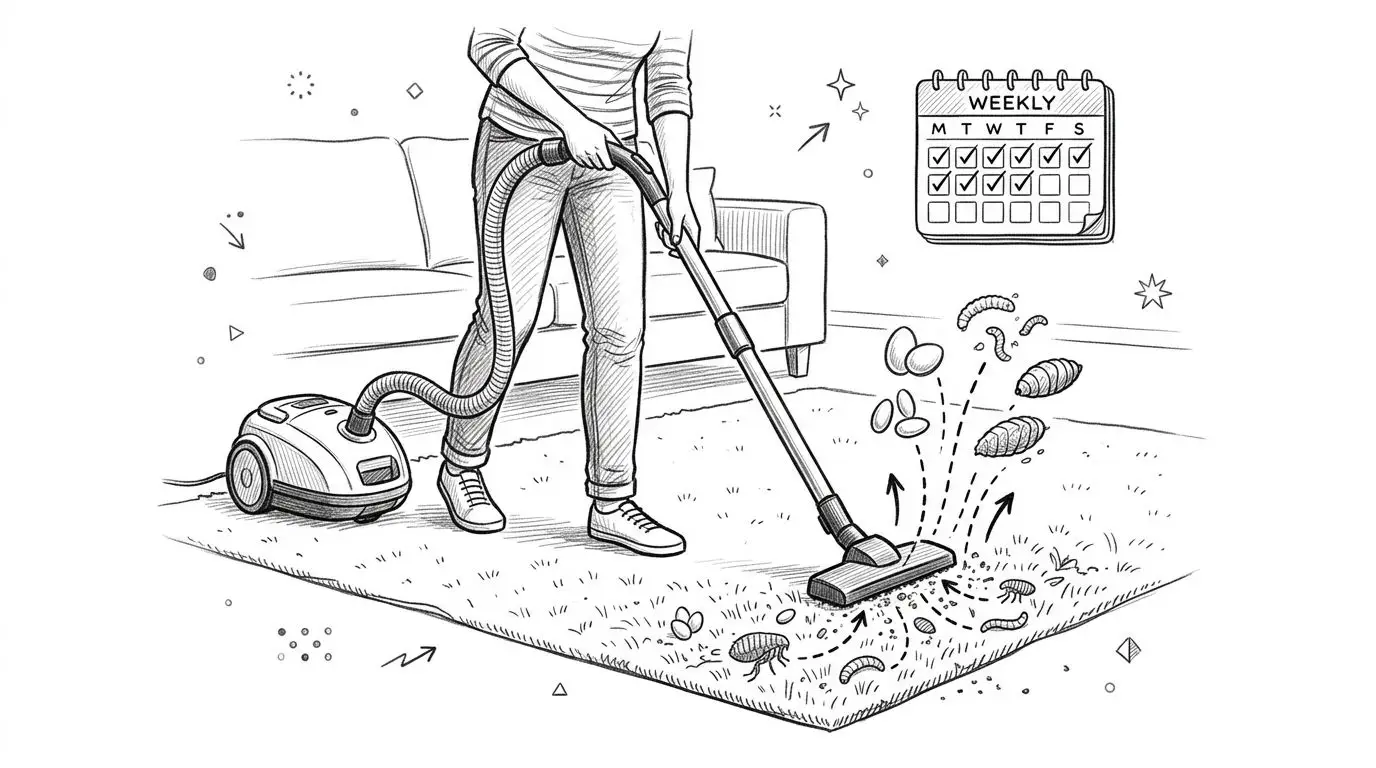
The indoor part is more than a spray on the carpet. The University of Kentucky notes that vacuuming removes eggs, larvae, and pupae, and it also stimulates fleas to emerge sooner from insecticide-resistant cocoons, which exposes them to treatment sooner. That is why technicians push vacuuming before and after service, not as a housekeeping suggestion, but as part of the control plan. University of Kentucky Entomology guide
For indoor product placement, guidance from the Michigan health department says microencapsulated insecticides are preferred on concrete surfaces for flea control, and treated areas should stay off-limits until fully dry and ventilated. A public-health source also advises vacating premises for 4–6 hours when pesticides are applied. Michigan health guidance on flea pest control
The yard is where Magnolia keeps the pressure alive
Outdoor work in Southeast Texas cannot be skipped. Oklahoma State University Extension says the pet, the home, and the yard all have to be addressed, and all pets should be treated simultaneously. It also recommends mowing and raking the yard thoroughly and removing organic debris from flower beds and under bushes, because that reduces harborage and exposes fleas to treatment. Oklahoma State University Extension flea control guide
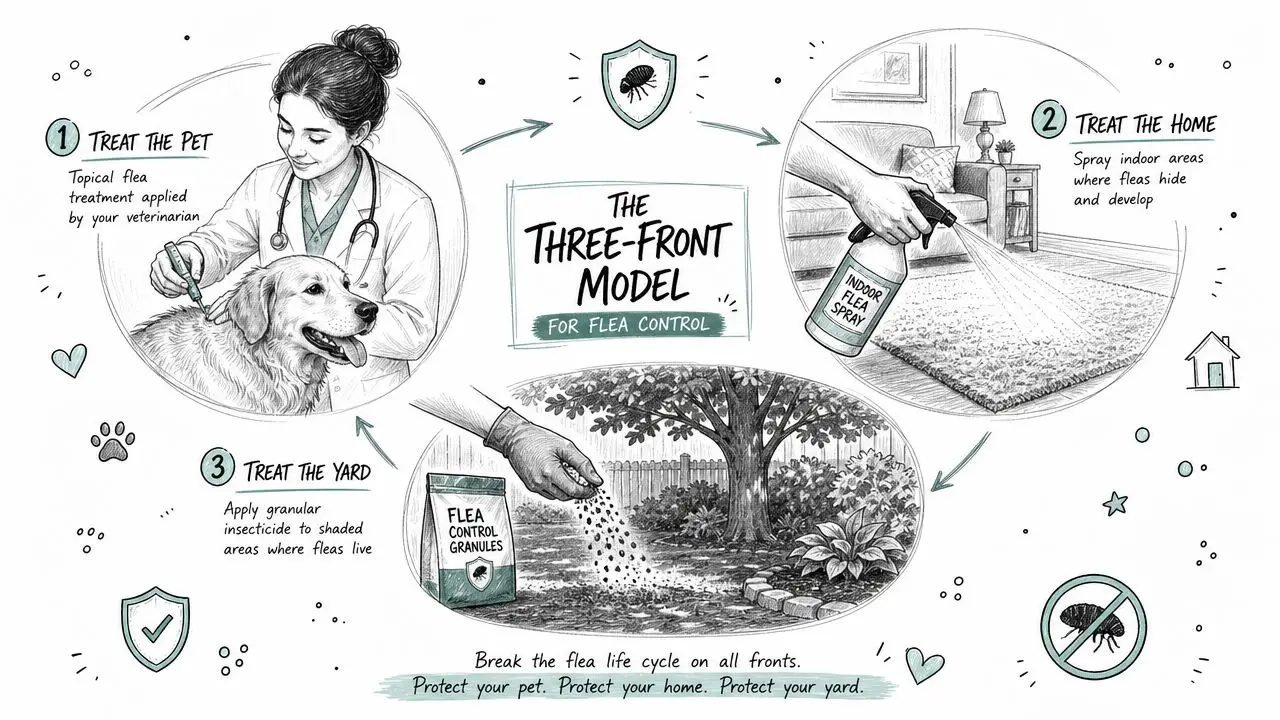
A solid Magnolia treatment treats the house as one connected system. If the dog gets treated but the shady side yard stays full of leaf litter, the pressure comes back. If the carpet gets treated but the pet bedding stays untouched, you are buying time, not control.
The right sequence is what makes the difference. One-front fixes seem cheaper, but they usually end with another appointment, more bites, and more frustration.
One-Time Treatment vs Ongoing Flea Plans
A Magnolia house near trees, shade, and pet traffic can hold flea pressure long after the first spray dries. A one-time treatment can still make sense when the problem has a clear trigger, such as fleas brought home after boarding, travel, or a short stay somewhere else. Ongoing plans fit better when pressure keeps coming from outdoor pets, shaded lots, or wildlife movement around the property.
The practical difference
A one-time visit usually includes an interior treatment and a follow-up appointment to check whether the job is holding. That works when the source is limited and the homeowner is also handling pet treatment the right way. Ongoing plans, whether quarterly, biannual, or seasonal, fit better when the property keeps getting re-seeded from the yard or nearby habitat.
Use the one-time option when the source is clear. Use the ongoing option when the source keeps coming back.
Industry pricing and guarantees match that pattern. A PCT survey reported an average residential flea control price of $233 and a guarantee rate of 75% among company locations, while an earlier survey put the average price at $210 and the guarantee rate at 76%. Those figures do not mean every company is identical, but they do show that follow-up and warranty language are a normal part of how this service is sold. PCT flea survey details The 2022 Zoecon white paper also reported an average mean charge of $210 for a typical residential flea job, which was $4 lower than in 2017, so flea control has stayed in a fairly narrow pricing band over time. Zoecon flea market white paper
| Plan Type | Typical Visits Per Year | Best For | Follow-Up Included |
|---|---|---|---|
| One-Time Treatment | One initial service, plus a return visit if needed | A single source event, like fleas brought in after travel or boarding | Usually yes, with a short follow-up window |
| Ongoing Flea Plan | Seasonal or recurring visits | Homes with outdoor pets, shaded lots, or repeated wildlife pressure | Yes, built into the schedule |
| Quarterly or Biannual Service | Regularly scheduled maintenance | Properties that need ongoing prevention and broader pest coverage | Yes, with scheduled rechecks |
A homeowner with one indoor cat may only need a lighter, tighter plan. A property manager with multiple units and outdoor pets in the Conroe or Porter corridor usually needs something more durable, because the risk repeats across tenants, animals, and shared landscaping. For a closer look at why short-term fixes often fall short, see why one-time treatments rarely solve persistent pest issues.
What Flea Pest Control Services Actually Cost
Magnolia homeowners usually want the same thing before they book, a straight answer on price. The honest answer is that flea control sits in a narrow but real range because the work is labor-heavy, repeat-sensitive, and tied to how much of the property has to be covered.
What the numbers say
Consumer cost guides commonly place the national average flea extermination cost around $270, with a common range of $75 to $400 for a single visit and $500 to $1,600 for quarterly maintenance. Earlier industry numbers land in the same general range, with a 2022 Zoecon white paper reporting an average mean charge of $210 for a typical residential flea job and a PCT survey reporting an average residential price of $233. Zoecon white paper PCT survey summary
Those figures fit the technical reality. Fleas are hard to eliminate in one pass because the treatment has to reach eggs, larvae, pupae, and adults in different places. A lowball quote often means a spray-only visit with little follow-up, and that is rarely a good match for a humid Magnolia property with pets, shade, and harborage around the yard.
What pushes a quote up or down
The main drivers are straightforward.
- Home size and layout: More carpet, more rooms, and more furniture seams mean more labor.
- Severity of the infestation: A light early problem costs less than a house that has been cycling for weeks.
- Number of pets: More animals usually means more coordination and more pressure on the treatment timeline.
- Yard inclusion: If the yard is part of the job, the tech has more ground to cover.
- Follow-up visits: Bundled returns raise the price, but they also raise the chance the problem stays down.
Houston-area pricing generally tracks national averages, but larger lots and heavy outdoor harborage can move the quote upward, especially in places like Magnolia where the environment itself keeps supporting flea activity. If the estimate does not spell out what is included, ask for a written breakdown before you agree to anything.
How to Choose a Qualified Flea Provider in Magnolia
A flea provider should be easy to vet. If they can't explain where the treatment goes, what they're using, and how they handle pets and kids, that's a warning sign before the first service even starts.
Credentials that matter in Texas homes
Start with the license. In Texas, the company should be operating under the Texas Structural Pest Control Service framework, and the technician should be able to talk plainly about product labels and placement. QualityPro certification is another useful signal, because it usually means the company is paying attention to process, training, and professionalism rather than just pushing volume.
The better questions are practical, not theoretical. Ask what gets used on carpet, what gets used on concrete, whether the company uses microencapsulated formulations where appropriate, and how long children and pets need to stay off treated surfaces while products dry. Those aren't small details in a house with toddlers, dogs, or a cat that ignores boundaries.
Ask for the treatment map before the technician leaves. If you can't tell what was treated, you can't judge whether the job was complete.
What a good Magnolia-area company should sound like
A competent provider should talk in terms of inspection, product placement, and follow-up, not just “we spray for fleas.” FullScope Pest Control is one local option that is licensed, QualityPro certified, and offers eco-friendly, low-toxicity options for homes with children and pets while serving north Houston and Southeast Texas, including Magnolia-area communities. That kind of service fit matters more than brand language, because flea control lives or dies on matching the plan to the property.
For Magnolia homeowners, the red flags are easy to spot once you know them. Vague treatment plans, no written guarantee, no follow-up window, and a technician who won't inspect the yard all suggest a rushed service model. The best providers don't promise magic. They explain where the fleas are likely hiding, what the schedule looks like, and what the household needs to do to help the treatment hold.
Prevention Between Service Visits in a Humid Climate
The weeks after treatment matter as much as the appointment itself. If the home goes back to the same habits, fleas can keep finding the same hiding places, especially in a climate that doesn't give you much breathing room.
Keep the indoor cycle from restarting
Vacuuming is the first habit I'd keep. It pulls eggs and larvae out of carpets and furniture seams, and it also helps prompt hidden pupae to emerge into treated areas, which is exactly what you want after service. Wash pet bedding regularly in hot water, and keep the vacuum contents sealed and disposed of outside so the fleas don't get a second chance.
The pet side has to stay consistent too. Keep all pets on a vet-recommended flea control product year-round, because Southeast Texas doesn't give you a reliable off-season. If you're comparing pet-side prevention options, browse tick prevention options alongside your veterinarian's recommendation so you're making the pet plan as carefully as the home plan.
Keep the yard from feeding the problem
Outside, the goal is to make the yard less comfortable for fleas. Mow and rake so shaded harborage gets exposed, clear leaf litter and clogged gutters, trim vegetation away from fence lines, and keep wildlife attractants under control, including unsecured feed. Those changes don't replace treatment, but they make treatment work harder in your favor.
The same logic applies around sheds, porch edges, and dog resting spots. If the tech treated a shaded area but the leaves pile up again, you've recreated the problem site. Magnolia homes do best when the homeowner and the pest pro are working the same flea cycle from two sides.
What to Do Next as a Magnolia Homeowner
If fleas are still showing up, stop treating it like a mystery. In Southeast Texas, the fix is a three-front system, not a single spray, and the right provider should bring local experience, licensed chemistry, and a written plan that fits your home.
Gather the details first, where the pets sleep, which rooms get the most traffic, whether wildlife has been in the yard, and what treatments you've already tried. Then ask a licensed Magnolia-area provider for a written inspection and treatment plan for the house, the pets, and the yard. After that, commit to the vacuuming, bedding, and yard steps that keep the cycle from restarting.
Flea control is solvable when the sequence is right. If you want the house to feel normal again, book the inspection, ask direct questions, and make sure the plan matches how Magnolia homes live.