1500+ reviews

Most Magnolia-area homeowners pay roughly $200 to $600 total for a professional flea job once the required two-visit treatment is included, with the first visit commonly running $150 to $400. The national average is about $270, but that headline number only matters if you understand what's inside the quote.
A flea problem usually starts the same way. You notice your dog or cat scratching more than usual, then you see one or two fleas, then you realize the carpet, the bedding, and maybe the yard are part of the same mess. That's when the phone calls begin, and that's when a flat “starting at” price stops being useful.
What Most Homeowners Actually Pay for Flea Extermination
A Magnolia homeowner usually starts with one question, and it is the right one, how much will this cost? The honest answer is that flea extermination cost is rarely a single number, because the job usually happens in stages, not in one quick spray. Pricing guides from The Global Statistics flea treatment cost overview and Angi's flea exterminator cost guide put the national average at about $270, with the first visit commonly landing between $75 and $400, and follow-up service often adding $75 to $200 more. That is why many real jobs end up around $200 to $600 total.
The quote that looks cheap usually isn't the full quote
A lot of homeowners get caught by the first number they hear. A company gives a low starting price, the customer feels relief, and then the second visit shows up because eggs hatch after the first treatment. HomeAdvisor's pricing page is direct about it, no pesticide destroys every egg, which is why the follow-up visit is part of the job, not an upsell. HomeAdvisor's flea exterminator pricing page spells out that second-service cost clearly.
Practical rule: if a quote only covers one visit, it is not the full project price.
For a Magnolia house, that means budgeting for the whole sequence instead of the headline number. A one-time indoor treatment can look manageable, but once you add the follow-up, the total changes fast. That is why smart shoppers compare the total job, not just the first technician visit.
For a local pricing frame tied to Southeast Texas service-area work, FullScope's pest control cost guide is a useful starting point.
Breaking Down the Full Flea Treatment Price
A flea job should be priced as a sequence, not as one quick visit. The bill usually starts with an inspection, moves to the first indoor treatment, then a follow-up after eggs hatch, and sometimes adds yard work if fleas keep cycling in from outside. That is why two Magnolia neighbors can hear very different numbers even when both say the same thing, “We've got fleas.”
What each part usually covers
Here is the part homeowners should look at closely:
| Treatment step | Typical cost range | What you get |
|---|---|---|
| Inspection | Often bundled, sometimes included in the first service | Technician checks the home, pet activity, carpeted areas, and likely entry points |
| First treatment | $75 to $400 | Interior application, targeted crack-and-crevice work, and residual control |
| Follow-up visit | $75 to $200 | Second treatment after eggs hatch and surviving fleas reappear |
| Yard service | Pricing varies by scope | Exterior treatment for shaded or high-pressure areas where fleas keep cycling back |
The first visit is never the finish line. Angi's flea exterminator article and this HomeAdvisor pricing page both point to the same basic problem, fleas do not disappear in one pass, so the follow-up is part of the job, not an extra luxury.
If you only look at the first service price, you can miss the actual budget by a lot. In plain terms, you are not buying a single spray. You are paying for a program that has to break the flea life cycle, and that means the second visit matters just as much as the first.
The final number is the one after the second visit, not the one in the ad.
For a routine house, that full sequence usually lands in the $200 to $600 range. Bigger jobs move higher fast, especially when the yard is part of the problem, several rooms need treatment, or the technician has to spend more time on stubborn hiding spots. A quote should say exactly how many visits are included, and if you want to see how a bad DIY attempt can stretch the job, this guide on DIY pest control gone wrong shows why the cheap route often turns expensive.
DIY Flea Control vs Hiring a Professional
DIY looks cheaper until you add up everything a homeowner buys. You're paying for pet treatment, laundry cycles, vacuum bags, sprays, foggers, and the time to repeat the process over and over. That can make sense for a light, contained problem, but it falls apart fast when fleas are spread through multiple rooms or are cycling through a yard.
What DIY is good for, and what it usually fails at
DIY can work if the situation is small, you've got one pet, and there's little carpet for fleas to hide in. It's a different story when there are multiple pets, untreated outdoor harborage, or an infestation that's already settled into the home. That's where a professional job in the $200 to $600 range starts to look less expensive than a month of half-finished cleanup and repeat reinfestation.
One practical resource for pet owners is ChowPow's look at flea collars for dogs. It's useful because collars can be part of a broader prevention routine, but they don't replace home treatment when fleas are already breeding inside the house.
Straight answer: if fleas are in the carpet, the furniture, and the pet bedding, DIY usually turns into a stall, not a solution.
A failed DIY round often costs more because the homeowner loses time before calling a pro. At that point, the infestation has had more chances to spread, and the professional has more areas to treat. That's why I tell people to be honest about the size of the problem on day one.
If you want a cautionary example of how homeowners can go sideways with do-it-yourself pest work, FullScope's warning on DIY pest control gone wrong is worth reading before you buy another fogger.
What Drives Your Flea Extermination Cost Up or Down
Two Magnolia homes can get wildly different estimates for the same reason two kitchens can take different amounts of repair work. One may have fleas in a single room and on one pet, while the other has carpet, multiple pets, and outdoor pressure feeding the problem back inside. The cost changes because the job changes.
The main variables that move the quote
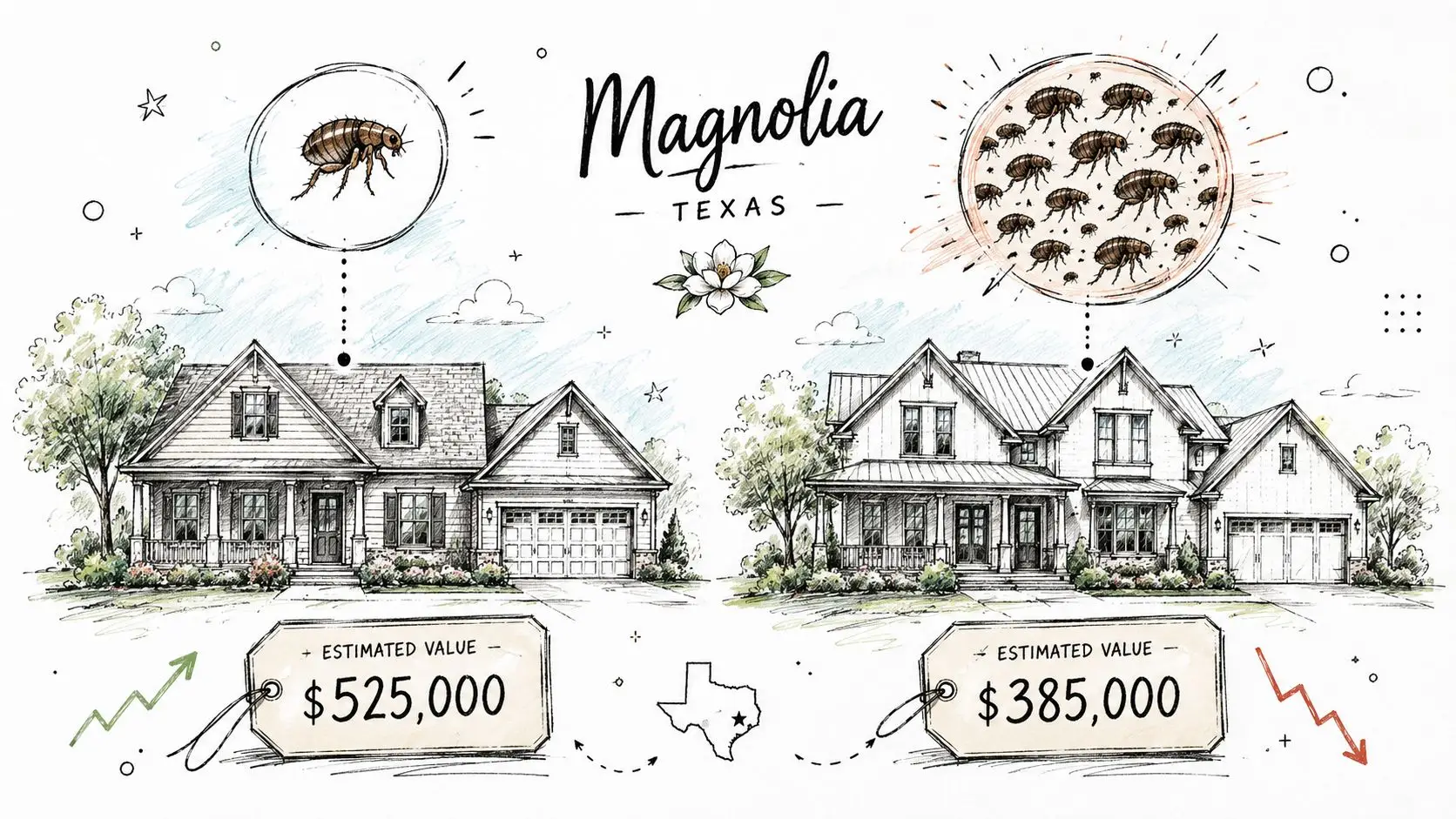
Infestation severity is the biggest swing factor. Standard professional treatment is often listed around $150 to $400 or $200 to $400 for a one-time visit, but severe cases can rise to $500+, and extreme fumigation scenarios can reach $1,000 to $8,000 depending on the method used. HomeGuide's flea exterminator cost guide shows how quickly severe treatments pull the price upward, and Rising Sun Arts Centre's 2026 cost guide ties that rise to larger treatment scope.
Square footage and room count matter because more space means more hiding places, more labor, and more chemical coverage. A small contained problem is faster to solve than a house with multiple bedrooms, carpets, and upholstered furniture.
Indoor versus indoor-plus-outdoor service also changes the bill. If fleas keep coming in from the yard, the technician has to treat more than the inside of the house, which adds labor and often extends the service plan. In Magnolia and nearby Southeast Texas, that outside pressure is a real part of the quote, not an add-on a company invented for fun.
Pets and follow-up visits matter too. More pets usually mean more potential reinfestation pressure, and the two-visit pattern is built into most pricing because eggs hatch after the first treatment. This Old House's flea exterminator pricing page also notes that cost varies by infestation severity and location, which is exactly how Magnolia quotes should be read. That's not theory; it's the normal shape of pest control billing.
How to Get an Accurate Quote and Save Money
Start every call with one question, how many visits are included in the price? If the company gives you a number without saying whether follow-up service is part of it, you're not comparing the full cost. Ask whether the first treatment includes inspection, whether the second visit is automatic or extra, and whether yard service is bundled or billed separately.
Questions that expose hidden fees
- How many visits are covered? A single treatment is not the same as the full job.
- What does the follow-up cost? Ask whether the second service is already included or priced separately.
- What do you need me to do for the pets? Good preparation matters because the technician needs the home ready for treatment.
- Is yard work included? Exterior pressure can change the entire project.
- Do you offer preventive scheduling? Quarterly or biannual plans can be a better fit than repeated emergency calls.
Written quotes matter because they force companies to spell out what they're selling. A package price and a one-time service price are not the same thing, and the cheaper one often costs more by the end.
Ask for the total project price, not just the first trip.
If you've had fleas before, a maintenance plan can save money over time because it lowers the odds of paying for an urgent, heavy treatment later. That doesn't mean every house needs ongoing service. It means repeated infestations are more expensive than prevention, and the quote should reflect that reality.
Why Treating Fleas Early Is Usually Cheaper Than Waiting
The cheapest flea job is the one you catch while it is still small. Once the problem spreads into multiple rooms, carpets, and outdoor harborage, the cost climbs fast, and the home moves out of the routine treatment bracket and into a more expensive category. A problem that might have stayed manageable turns into a much bigger bill.
A light infestation handled early usually stays in the lower total range when the normal two-visit process is done correctly. Let it sit, and you are more likely to land in the higher range, especially if the technician has to treat more square footage, more rooms, or the yard. In severe situations, fumigation or heat treatment can push the job far beyond routine pricing, with fumigation reported at $2,000 to $8,000 and heat treatment commonly at $300 to $500. HomeGuide's pricing guide captures those extremes clearly.
The timing decision that saves money
A homeowner who acts early usually pays for a contained visit and a follow-up. A homeowner who waits often pays for more labor, more product, and more chances for the infestation to spread.
That's not theory; it's the normal shape of pest control billing.
Prevention is cheaper than rescue work because rescue work is messier. Once fleas are established in bedding, carpet, and pet resting areas, the technician has to work harder to break the cycle. That is why ongoing maintenance plans exist in the first place, they are there to keep a small issue from becoming a big invoice.
What to Expect from FullScope Pest Control in Southeast Texas
FullScope Pest Control's flea extermination approach fits the kind of service sequence Magnolia homeowners should be asking about, inspection first, treatment plan next, and follow-up service when the job calls for it. The company is a licensed pest management provider serving north Houston and nearby Southeast Texas communities, with named locations in Cleveland, Kingwood, Conroe, and Porter, plus explicit coverage across communities including Atascocita, Coldspring, Conroe, Huffman, Humble, Kingwood, Livingston, Montgomery, New Caney, Porter, Splendora, Spring, and Willis. Magnolia sits in that broader north-Houston and Southeast Texas market context, but it is not explicitly listed in the service-area list, so callers should confirm direct coverage before assuming it.

The pricing logic still holds locally. A Magnolia-area homeowner should expect the quote to reflect the same sequence discussed above, inspection, first treatment, follow-up, and possibly outdoor work if the yard keeps feeding fleas back inside. That's the part that matters more than any single headline number.
FullScope also offers service packages on quarterly or biannual schedules, along with emergency response when needed. Those options affect flea extermination cost in a real way, because a planned schedule usually spreads out the expense, while urgent response often means you're paying to solve a problem that's already bigger than it should've been.
If you're in Magnolia and you want a quote that makes sense, ask any provider to state whether the estimate covers one visit or the full treatment sequence, and confirm whether the company serves your exact address before scheduling.
Frequently Asked Questions About Flea Treatment Pricing
A Magnolia homeowner usually wants three things answered fast, what the total cost is, whether the second visit is necessary, and whether pets make the bill worse. The straight answer is that a full flea job often lands around $200 to $600, and the second visit is common because eggs survive the first pass. More pets can make reinfestation control harder, which can push the quote up, and Angi's pricing guide and HomeAdvisor's flea exterminator page both point to that two-visit setup.
Do you always need two visits? No, but most households should plan on it. If the first treatment knocks down the adults and the follow-up catches the newly hatched fleas, the job gets done the right way.
Is a preventative plan worth it after one bad infestation? For some households, yes. If you've got pets and recurring pressure from the yard or neighboring properties, scheduled service can keep you from paying for another full-scale emergency treatment later.
If you're comparing Magnolia quotes right now, get two written estimates, ask how many visits are included, and confirm whether yard service is extra. Then pick the company that tells you the full price upfront, not the one that hides the second visit in fine print.