1500+ reviews

Bat removal in the U.S. typically falls between $232 and $752 for simpler jobs, and larger colonies can easily push the cost past $1,500. If you're in Magnolia, Texas, the final number depends less on a national average and more on what's happening in your attic, roofline, soffits, or chimney right now.
If you're hearing scratching above the ceiling at dusk, catching a musty odor in the attic, or spotting droppings near vents, your first question is usually the same: what is this going to cost me? That's a fair concern. Bat work isn't priced like spraying for ants. It's a detailed exclusion job, and in Southeast Texas, timing, structure design, and cleanup needs matter just as much as the animal itself.
Homeowners around Magnolia, The Woodlands, Spring, and Conroe often find out the hard way that the cost of bat removal isn't just about getting animals out. It's also about sealing re-entry points, handling guano safely, and doing the work at the right time of year so the problem doesn't come back.
That Scratching in Your Attic What It Really Costs
You hear scratching over the bedroom ceiling around dusk, then a quick flutter near the vent line. By the next morning, there are small droppings below the eaves, and the question gets very practical very fast. What is this going to cost?
In Magnolia, that answer depends on the house far more than a national average. I've seen one home need a straightforward exclusion around a single roof return, while the house next door needed multiple upper-level seals, vent corrections, and attic cleanup because bats had been using several gaps for months. The sound overhead is only the clue. The price comes from access points, roof design, contamination, and whether the work can legally be done at that time of year in Southeast Texas.
That local timing matters. Bat jobs here are not handled like a basic pest spray appointment. If young bats are present and cannot fly yet, removal work has to wait until exclusion can be done lawfully and correctly. Homeowners usually do not expect that delay, but it directly affects scheduling, labor planning, and sometimes the total scope if activity continues in the meantime.
A contained problem can stay reasonably manageable. A larger colony in soffits, wall voids, or attic insulation becomes a repair and sanitation project, not just an animal issue.
If you are still sorting out whether the noise is bats, start with these common signs that you may have bats in your home. Catching it early usually means fewer openings to seal and less mess to address.
Why Magnolia homeowners need a local lens
Homes across Magnolia, The Woodlands, Spring, and nearby communities are built differently enough that pricing can swing hard from one property to another. A simple roofline is faster to inspect and seal. A home with stacked gables, ridge vents, chimney intersections, aging fascia, or decorative trim takes more ladder work, more inspection time, and more detailed sealing. Southeast Texas humidity also tends to make guano odor and staining show up fast, which changes how urgent cleanup feels for a family living in the home.
What usually surprises homeowners
The biggest part of the bill is usually not “removing” bats by hand. Proper bat work relies on exclusion. Exclusion devices work like one-way doors. They let bats leave for their nightly flight but block them from getting back inside. After that, the remaining gaps have to be sealed with the right materials in the right order, or the colony merely shifts to another opening on the same house.
That is the trade-off. A low quote that skips detailed sealing often costs less up front and more later when bats return, odors worsen, or insulation cleanup gets bigger. A careful job costs more because it is solving the entry problem, not just reacting to the noise.
A Line-Item Breakdown of Your Bat Removal Quote
A solid bat quote should show where the money goes and why. In Magnolia, the difference between a fair quote and a cheap one usually comes down to how much of the house the company plans to inspect, seal, and clean, not whether they “remove” more bats.
The work is usually billed in stages. First, we confirm where the bats are getting in. Then we install one-way exclusion devices, seal every secondary gap that could become the next entry point, return to remove the devices, and address any guano or contaminated material left behind. If a quote skips one of those steps, ask why.
Typical Bat Removal Service Costs in Southeast Texas
| Service Component | Typical Price Range | What It Covers |
|---|---|---|
| Inspection | $75 to $400 | Identifying colony size, locating entry points, checking attic or wall void activity |
| Exclusion per entry point | $100 to $400 per entry point | Sealing gaps and vulnerability points in the building envelope |
| Standard residential exclusion project | $400 to $1,500 | Removal and sealing work for a typical home with a limited number of access areas |
| Larger exclusion project | $2,000 to $8,000 | More extensive sealing for larger colonies and more complex structures |
| Labor | $200 to $1,600 | Technician time for inspection, ladder work, installation, sealing, and follow-up |
| Equipment | $25 to $300 | Protective gear and project equipment |
| Disposal | $50 to $800 | Handling and disposal of contaminated waste |
| Guano remediation | $500 to $8,500 | Cleanup, disinfection, odor control, and disposal when droppings have accumulated |
What each line item actually means
Inspection is the part homeowners underestimate most. On a Southeast Texas home, that can mean checking ridge vents, soffit returns, chimney joints, fascia lines, dormer corners, and builder-made gaps that only show up from the right ladder angle. A quick attic peek does not tell you much if the bats are entering high along the roofline.
Exclusion devices are one-way exits. They work like a door with no outside handle. The bats fly out at dusk, but they cannot re-enter through that same opening. Once the colony is out, the device is removed and the final seal goes in. That process is explained in more detail in our professional bat removal service guide.
Sealing work is often the largest part of the quote. The obvious hole gets attention first, but the secondary gaps matter just as much. On many Magnolia-area homes, bats will shift a few feet down the roofline and use a trim gap, vent edge, or construction seam if those spots are left open.
Labor rises fast on taller homes and complicated rooflines. A single-story ranch with one active entry is a different job from a two-story house with multiple gables over a steep driveway. Same animal. Very different ladder time, safety setup, and sealing detail.
A low bid often means the company priced the visible opening and not the full structure.
Why cleanup can add so much
Guano cleanup is a separate cost because it is separate work. Light droppings near one roost may only need spot treatment and removal of a small amount of soiled material. Heavy buildup in insulation or along attic framing takes containment, bagging, disposal, and sanitation.
That is also where local conditions matter. In Magnolia and nearby parts of Montgomery County, heat and humidity can make odor show up fast, especially in attics with poor ventilation. Homeowners often call about “the bats” and are surprised to learn part of the estimate is really about restoring the attic after the colony is gone.
A good quote makes those trade-offs plain. You should be able to see what you are paying for, what gets sealed, whether cleanup is included, and whether a follow-up visit is part of the price.
Key Factors That Influence Your Final Bill
Some homeowners compare two bat quotes and assume one company is inflating the price. Sometimes that's true. Often, though, the difference comes down to what each inspector found and whether the quote reflects the actual scope of the job.
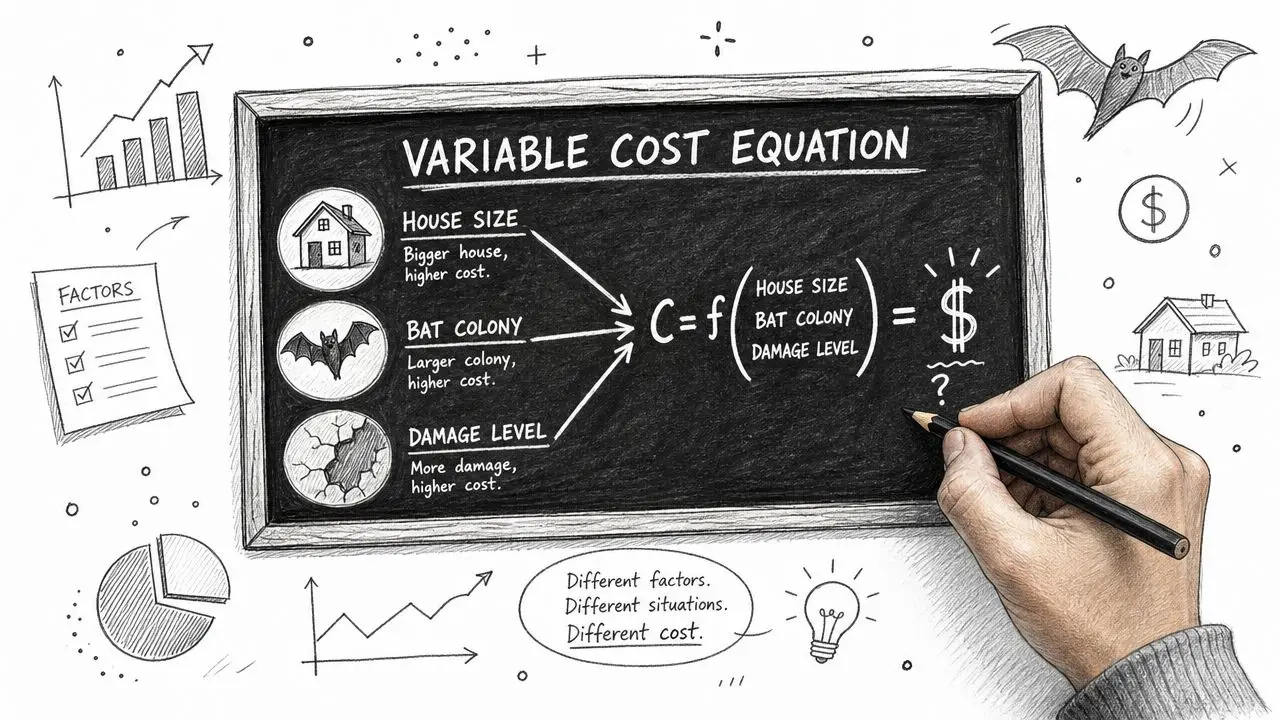
The biggest pricing variable is usually colony size. Removing fewer than 10 bats may cost $400 to $600, while larger infestations with guano cleanup and multi-point sealing can exceed $1,500 and may reach $9,000 in major structural cases, according to Today's Homeowner bat removal cost data. That spread isn't random. It reflects a completely different level of labor, cleanup, and repair exposure.
Colony size changes everything
A small group tucked behind one gable vent is one kind of project. A long-established colony spread across attic voids, ridge transitions, and soffit gaps is another. More bats usually means more active entry points, more droppings, more staining, and more follow-up work to secure the structure.
When a homeowner says, “I only saw two,” that doesn't tell you much. You may only be seeing the bats that happened to exit where you were standing.
House design matters more than most people think
A simple single-story home is usually easier to inspect and secure than a tall home with multiple roof intersections. Magnolia and surrounding Southeast Texas neighborhoods include newer builds, custom homes, rural properties, and older structures with additions. Every extra roofline transition creates another place to check and another place bats may exploit.
A few structural features that often affect price:
- Complex roof geometry increases inspection time and sealing labor.
- High or difficult access areas can require more setup and slower work.
- Decorative vents and trim gaps often hide secondary entry points.
- Older exterior materials may need repair before exclusion can hold.
Contamination level drives cleanup cost
Not every bat job needs major remediation. Some do. Once guano accumulates, the work shifts from wildlife exclusion into sanitation and restoration. Heavier contamination can mean removing affected material, controlling odor, and making the area safe to use again.
The bats leaving is only half the job. If the contamination stays, the smell and health concerns stay with it.
Roost location can complicate the project
Attics are common, but bats also use chimneys, wall voids, and tight transitions near roof framing. Those locations can make inspection and device placement more technical. They can also make it harder to confirm every animal has exited before sealing begins.
A good inspection explains these variables clearly. A vague quote usually skips the reasons, and that's where homeowners get surprised later.
Bat Removal Timing and Legal Rules in Southeast Texas
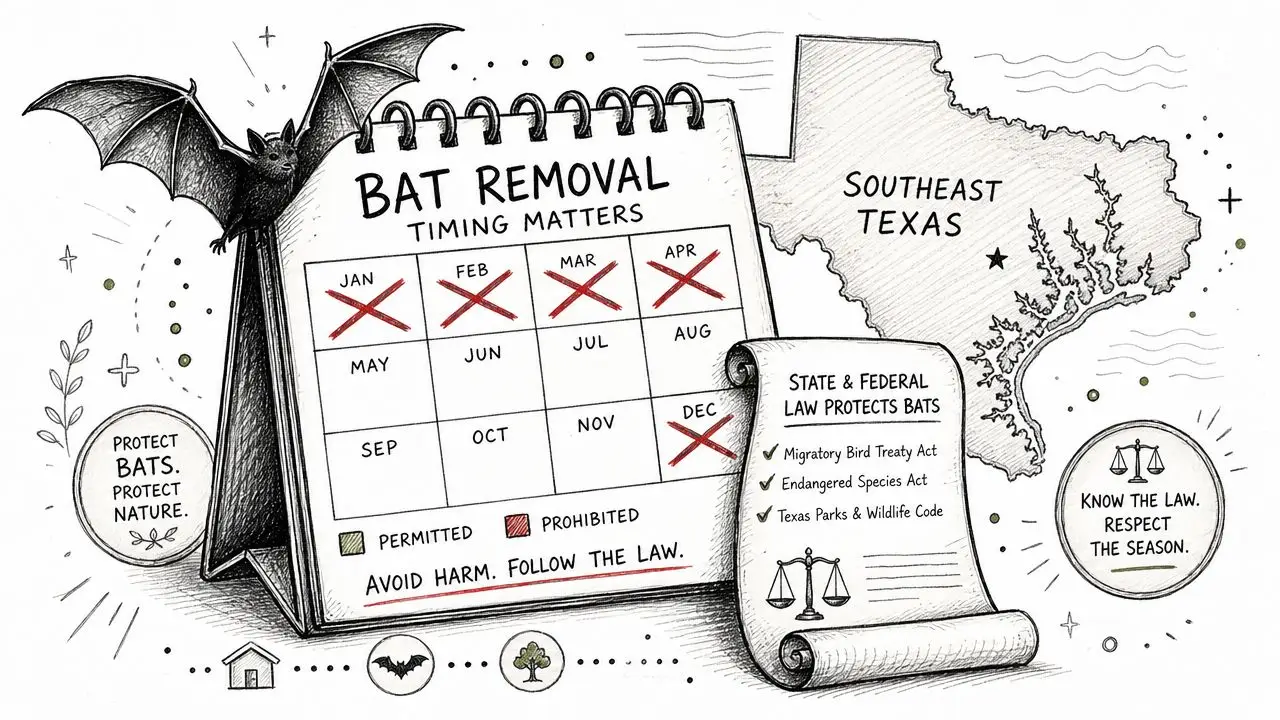
In Southeast Texas, timing matters almost as much as the work itself. You can't treat bats like a standard nuisance pest and just close everything up the moment you hear activity. If removal is done at the wrong time, the result can be inhumane, ineffective, and a bigger mess inside the home.
Why summer timing gets tricky
In Texas, bat work is commonly restricted during the maternity period, typically from May through August. During that window, young bats may be present and unable to fly. If someone seals the structure while pups are still inside, the adults leave and the young are trapped behind.
That creates several problems at once. It's inhumane. It can also leave homeowners dealing with odor, staining, and dead-animal cleanup inside walls or attics. Worse, the original exclusion still may not solve the issue if surviving bats continue trying to return.
What a responsible plan looks like
A proper bat plan in Magnolia, Conroe, or nearby communities starts with an inspection and a timing decision. Sometimes the right answer is immediate action. Sometimes the right answer is to schedule exclusion for the first legal and effective window after maternity season.
That wait can frustrate homeowners, especially when they can hear activity overhead. But rushing the job often makes the project harder and more expensive later.
A professional approach usually includes:
- Confirming active use of the structure and the likely exit points
- Checking seasonal timing before any one-way devices go up
- Holding off on final sealing until exclusion can be done legally and completely
- Planning cleanup and repairs after the colony is fully out
If a company offers to just seal the house immediately in the middle of maternity season, that's not a shortcut. That's a warning sign.
Local planning for Magnolia homeowners
In Magnolia, homeowners often want the issue solved before the hottest part of the year or before family events and travel. That's understandable. The smartest move is to call early, document the activity, and get on a schedule that fits the legal window. Good timing protects the bats, protects the home, and avoids paying for a preventable second round of work.
DIY Bat Removal vs Hiring a Licensed Professional
DIY usually starts with good intentions. A homeowner hears movement, searches online, buys a can of repellent or a bundle of foam, and tries to solve the problem over a weekend. With bats, that almost always makes the situation worse.
What DIY gets wrong
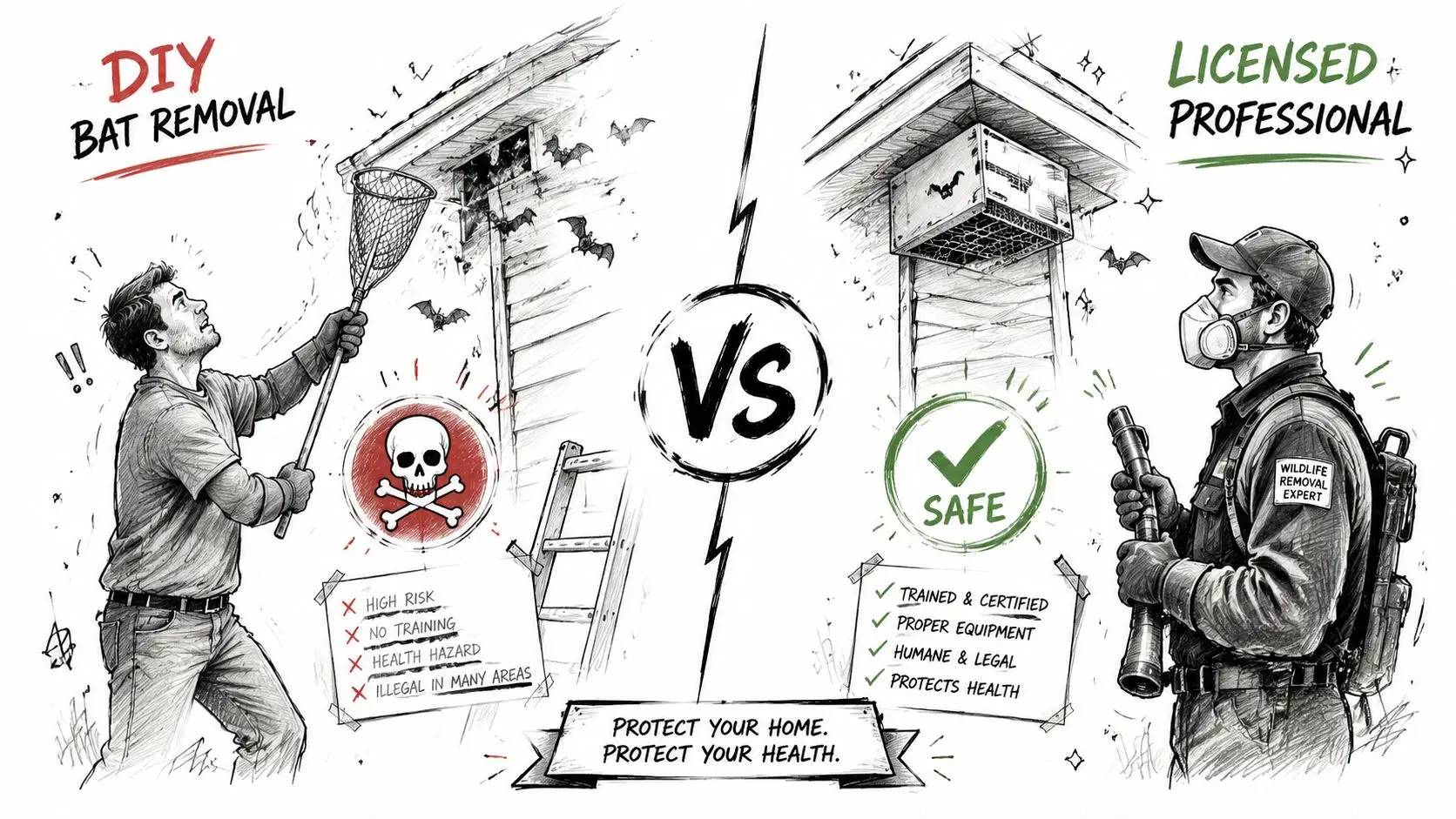
Most DIY efforts focus on the opening the homeowner can see. Bat colonies rarely limit themselves to one obvious gap. If you seal the main hole and miss secondary exits, bats shift inside the structure or start testing other weak points along the roofline.
Repellents also disappoint people. Strong smells, lights, and noise devices don't address why the bats chose the structure in the first place. If the roost is protected, warm, and easy to re-enter, the colony keeps working the same areas.
There's also the safety issue. Disturbing droppings in an attic without proper protection is a bad gamble. Handling a live bat or a grounded bat without training is worse.
Hidden costs that erase the savings
DIY looks cheaper because the receipt at the hardware store is smaller. But homeowners often end up paying for:
- Repeat attempts when the first seal-up fails
- Additional cleanup after bats get trapped in the wrong area
- Damage repair from sealed-in moisture, staining, or contamination
- Professional correction after an incomplete exclusion job
A lot of wildlife and pest issues follow the same pattern. The first attempt feels inexpensive, then the correction costs more because the original conditions got worse. That pattern shows up in plenty of home projects, and it's not unique to bats. This is exactly why so many situations end up in the category of DIY pest control gone wrong.
What professionals do differently
A licensed professional starts with inspection, not product. The work is methodical. Confirm use. Identify all likely access points. Install one-way devices in the right locations. Verify exit. Seal the structure. Handle guano and contaminated material safely.
This short video gives a useful look at how the process differs from a simple trap-and-remove mindset.
Hiring a pro isn't about convenience. It's about getting one clean exclusion instead of paying for several failed fixes.
The legal side matters too
Because bats are protected and timing matters, DIY puts homeowners at risk of doing the wrong thing at the wrong time. Even when the intention is just to “block them out,” bad timing can trap young bats inside and create a bigger animal welfare and home sanitation problem.
How to Choose the Right Pro in the Magnolia Area
Not every company that says it handles wildlife performs careful bat exclusion. Some offer general pest control and treat bats like another entry on a service list. That's not enough. You want a company that understands structure sealing, safe cleanup, and seasonal timing.
Questions worth asking before you sign
Ask direct questions and listen for direct answers.
- What method do you use to remove bats? You want to hear exclusion, one-way devices, and permanent sealing. You don't want vague language about spraying, trapping everything, or “chasing them out.”
- What does the inspection include? A proper inspection should account for the whole exterior envelope, not just the attic interior.
- How do you handle guano if you find it? Cleanup should be discussed separately from the animal removal itself.
- What happens if there are multiple entry points? Good companies expect that possibility and explain how they verify the structure.
- Will you address timing issues? If the answer brushes past seasonal restrictions, keep looking.
What a strong quote should show
A solid proposal usually breaks out the work clearly rather than burying everything under one flat charge. It should describe exclusion work, note any sanitation issues, and explain whether repairs or sealing are part of the number.
You should also expect proof of professional standing, including licensing and insurance. If a company offers a warranty, read what it covers. Some warranties only apply to a single sealed opening. Others are broader and tied to the exclusion work as a whole.
Why local experience matters in Magnolia
Magnolia has a mix of neighborhoods, wooded lots, and homes with very different roof designs. Local experience matters because the technician has to read the structure fast, understand common access patterns in Southeast Texas, and know how heat, weather, and construction style affect the job.
For homeowners who want someone established in the area, FullScope Pest Control's Magnolia service area page confirms Magnolia, Texas as a designated service location. That local footprint matters when you need timely inspection and someone familiar with nearby communities, not a distant dispatch model.
The best bat company isn't the one with the lowest first number. It's the one that can explain exactly how the house gets secured.
A quick screening checklist
Before you hire anyone, look for this:
- Licensed and insured operations
- Clear exclusion-based process
- Experience with attic and roofline access work
- Separate explanation for cleanup if needed
- Written scope, not verbal guesses
- A realistic schedule based on seasonal timing
Protecting Your Home and Health The Smart Investment
The cost of bat removal is rarely just a line item for “animal control.” It's a combination of inspection, exclusion, cleanup, and timing. When the work is done right, you're not only removing a colony. You're protecting insulation, air quality, roofline integrity, and your family's living space.
For some Magnolia homeowners, the expense is manageable because the colony is small and access is straightforward. For others, the project grows once contamination or repair needs show up. If roofline issues or exterior damage are part of the problem, it can also help to review broader home repair budgeting tools such as these roof financing options from America Roofing.
FullScope Pest Control was founded in 2018 and serves The Woodlands, Conroe, Spring, Magnolia, and nearby business corridors with trained local technicians, as noted on their local company overview. If you're hearing scratching in the attic or seeing signs around the roofline, the smart next step is a professional inspection and a clear exclusion plan. Contact FullScope Pest Control to get a quote built around your home, your timing, and the actual conditions on site.