1500+ reviews

You clean the kitchen counter at night, wipe away every crumb, and spray the ants marching beside the sink. By morning, the trail is back. A few days later, there are even more ants along the baseboard, around the pet bowl, or crossing the laundry room floor.
That pattern is common in Argentine ant control, especially around Magnolia and nearby Southeast Texas communities. The ants inside your home are often only a small part of a much larger colony network outside. A lasting solution depends on finding entry points, protecting bait trails, reducing moisture, and addressing reinvasion from surrounding properties instead of treating visible workers alone.
Why Argentine Ants Are Different From Other Ant Species
Argentine ants are easy to underestimate. Workers are small, dark brown, and fairly uniform in size, and they usually move in organized trails. They don't look as imposing as fire ants or as destructive as carpenter ants, but their colony structure makes them unusually persistent inside homes.
Argentine ants can belong to large, interconnected colonies with multiple queens. Neighboring colonies may cooperate rather than fight, creating what pest professionals often call a supercolony. USDA-linked guidance describes these colonies as capable of spreading through broad connected areas, which is why identifying the different ant species found in Texas matters before choosing a treatment.
Why a quick spray rarely solves the problem
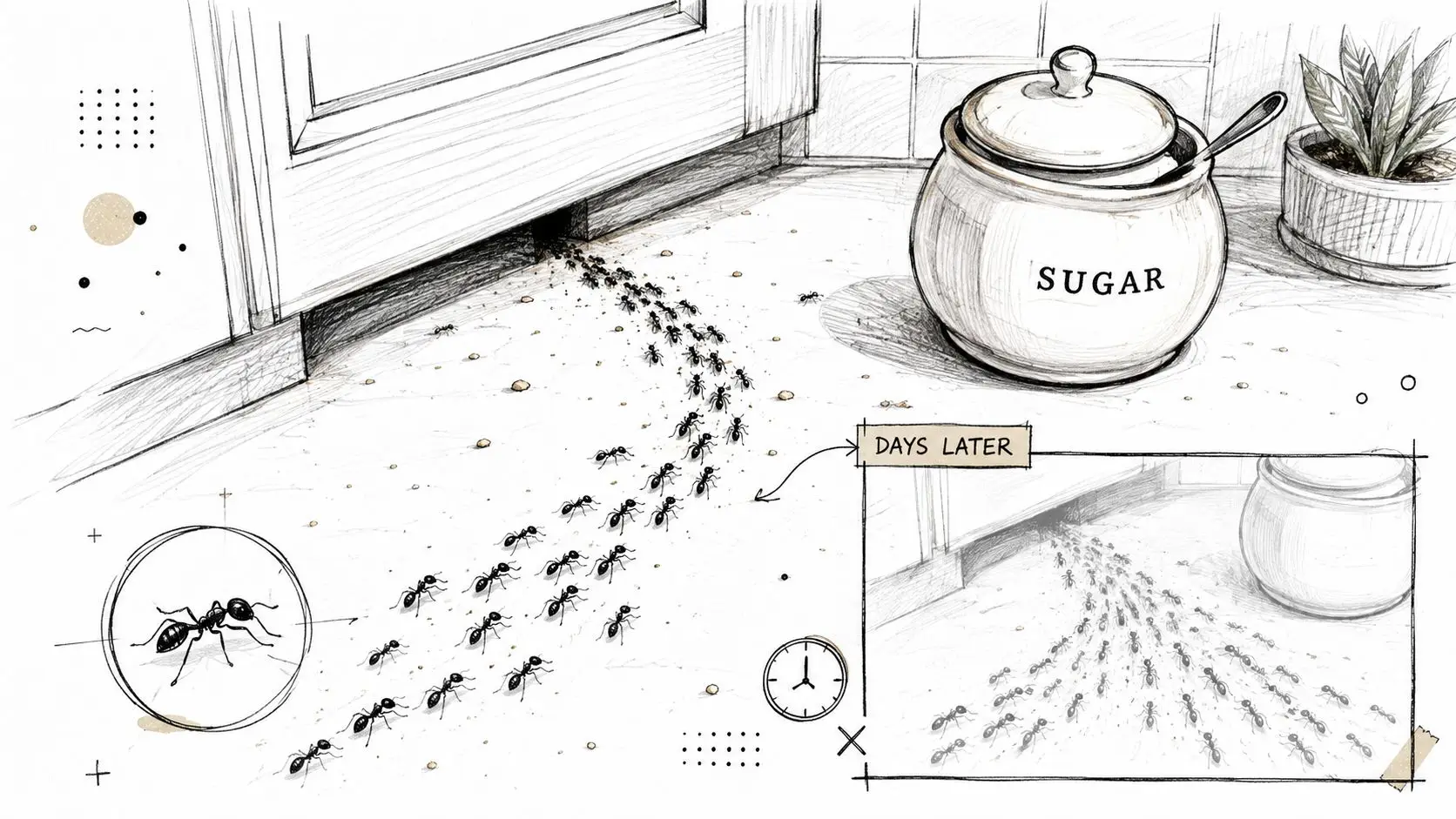
A contact spray can kill the ants you see. It usually doesn't reach queens, brood, or the connected nesting sites producing new workers. If the product repels ants or disrupts one trail, surviving workers may just use another route through the wall, under a slab, across landscaping, or through a utility opening.
That creates a frustrating cycle. The visible activity drops, the homeowner assumes the problem is over, and then a new trail appears after the colony finds another food or water source. Partial treatment has long been associated with fairly rapid reinfestation because residual liquids, granules, or baits are often applied to only part of the colony, as described in the annual review of Argentine ant management.
Practical rule: Kill fewer ants immediately if that allows more workers to carry bait back to the colony.
Argentine ants also respond differently to food availability than many people expect. A trail may be driven by sugar residue one week and moisture or protein needs later. That behavior makes bait acceptance, placement, and timing more important than choosing the strongest-smelling product on the shelf.
The right question isn't, “How do I kill these ants?” It's, “How do I move a properly selected treatment through the colony while preventing new workers from entering?”
Understanding Colony Structure and Reinfestation Patterns
A Magnolia property is rarely a sealed island. Argentine ants may nest in damp soil beside the foundation, under concrete, inside wall voids, beneath mulch or pavers, and around irrigation features. Workers can move between connected yards, fences, landscaping, and utility openings, so activity on one lot may be supplied from several nearby locations.
That changes the treatment plan. Guidance from New Zealand warns of a high risk of reinvasion within a month after baiting when nearby colonies remain untreated. It recommends treating neighboring properties and street frontages together through coordinated boundary control guidance. A treatment can reduce activity on your lot and still fail across the surrounding block.
What the trails tell you
Track ant movement at different times of day. A trail beginning at a patio edge and disappearing beneath siding suggests outside pressure. Ants emerging from a wall outlet, cabinet seam, or plumbing opening point to an interior route or concealed void. Trails that return after cleaning usually mean the colony still has access to moisture or a protected travel path.
Southeast Texas conditions keep those routes active. Humid weather supports foraging around damp soil, mulch, irrigation lines, and shaded foundation edges. Activity often becomes more noticeable during spring and fall. Winter may slow movement without ending it, while hot, dry periods can drive workers toward indoor water sources such as sinks, condensation, pet bowls, and laundry areas.
Why the block may be the actual treatment unit
Researchers and pest technicians measure success in different ways, but the field pattern is consistent. Broad, carefully targeted treatment performs better than a narrow application aimed only at visible trails. Residential testing summarized by the University of California found that a perimeter spray combined with broadcast granules produced a 93% reduction in ant activity after 8 weeks. A sweet-water bait containing 0.001% imidacloprid produced about an 80% reduction for one month. The results appear in the University of California management review.
Fast reinvasion after a strong initial reduction calls for a boundary check. Inspect the property line, shared fence, street trees, neighboring mulch beds, and irrigation zones. One untreated yard can continue supplying workers to treated homes.
Speak with neighbors before treatment. Compare trail locations, identify shared pressure points, and schedule work close together when several properties are connected by the same ant routes. For Magnolia and nearby communities, coordinated neighborhood action often determines whether a treatment lasts.
Complete Inspection Checklist for Southeast Texas Homes
Treatment should begin with a map, not a spray bottle. Walk the outside of the home first, then inspect the rooms where ants appear. Mark every trail, moisture source, structural gap, and exterior feature that could support movement.
Magnolia homes vary in construction and landscaping, but Argentine ants repeatedly exploit the same practical routes. A brick veneer may offer access around weep holes. A slab foundation may have cracks or joints that connect to damp soil. Irrigation systems, mulch, shaded beds, and utility penetrations can all provide protected travel lanes.
Exterior inspection checklist
Use this list with a phone camera, flashlight, painter's tape, and a notepad:
- Foundation edges: Check cracks, expansion joints, slab gaps, and areas where soil touches the structure.
- Brick veneer: Inspect weep holes, mortar gaps, and transitions around doors and windows.
- Utility penetrations: Look around pipes, electrical conduits, cable entries, hose bibs, and air-conditioning lines.
- Mulch and plant beds: Pull mulch back from the foundation and inspect damp soil, leaf litter, pavers, and decorative stones.
- Irrigation access points: Examine sprinkler valves, hose connections, drip lines, and oversaturated areas.
- Roof and wall pathways: Note branches, vines, trellises, and other routes that contact siding or roof edges.
- Outdoor food sources: Check trash containers, pet feeding areas, sweet residue, and plants supporting honeydew-producing insects.
Follow the busiest trail in both directions. Don't disturb it until you've observed where workers enter, where they disappear, and whether they carry food. Moist soil near foundations, spaces beneath concrete, and wall voids are common protected locations, but the trail's endpoint is more reliable than a guess.
Interior inspection checklist
In the kitchen, inspect sink plumbing, cabinet corners, backsplashes, dishwasher gaps, pantry shelves, and pet food areas. In bathrooms, check around toilets, vanities, tubs, and pipe penetrations. Laundry rooms deserve close attention because leaks, condensation, and floor drains create dependable water sources.
Photograph entry points and label them by room. A simple map helps you compare activity after bait placement and prevents you from treating random locations without knowing whether the main route has changed. For practical exclusion work, use this home pest-proofing guide alongside your inspection notes.
Step-by-Step DIY Treatment Protocol
In Magnolia, a clean kitchen and a few bait stations may reduce ants for a while, then trails can return from a neighboring yard, sidewalk, or shared landscaping. DIY control works best as a coordinated process. Keep ants foraging along predictable routes, use bait to move the active ingredient through the colony, then seal access points after feeding declines. A single-property treatment may suppress activity without stopping reinvasion.
Days 1 through 3, remove competition
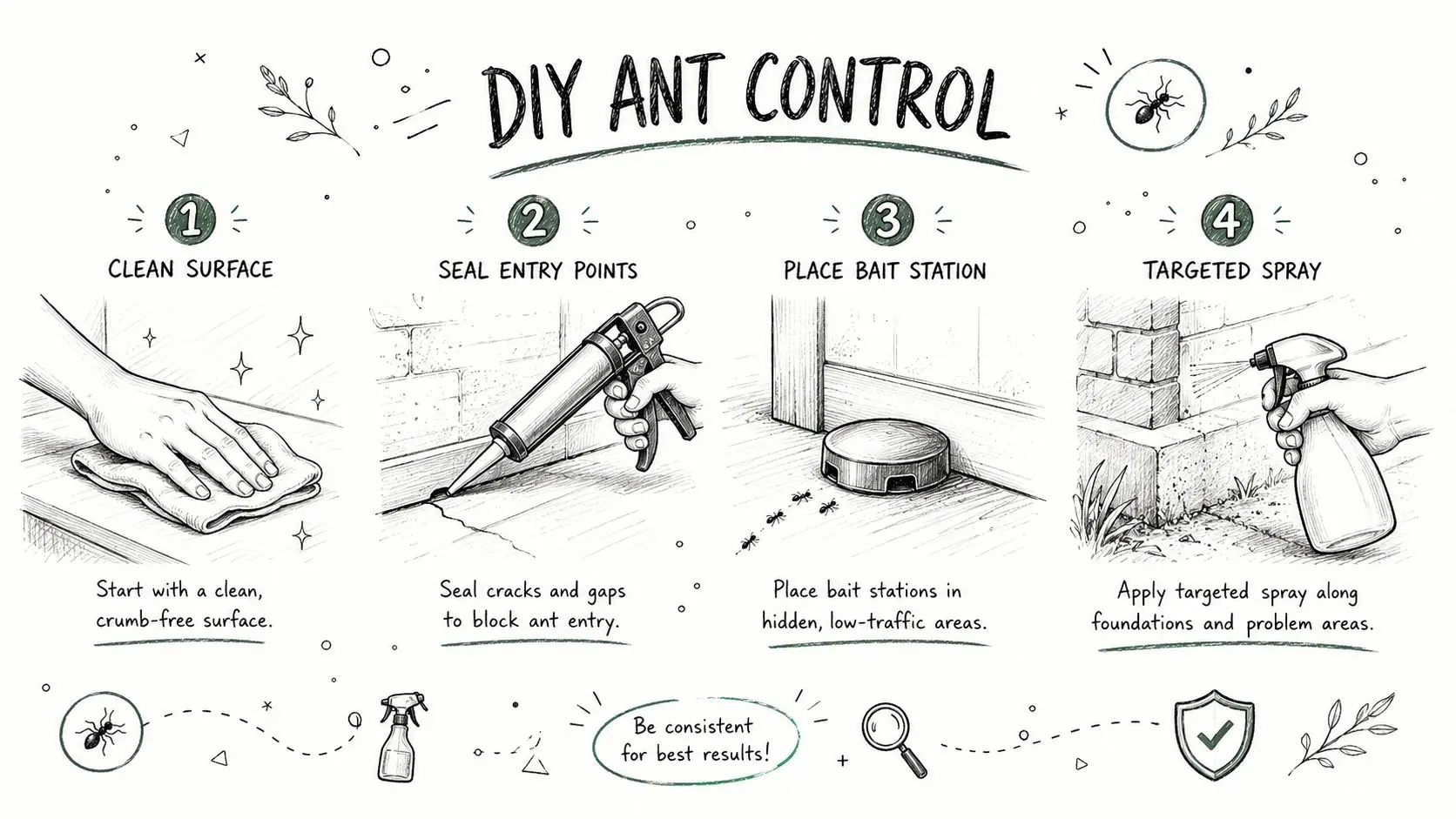
Clean syrup, grease, crumbs, and spilled drinks from counters and floors. Store sugar, cereal, pet food, and ripe fruit in sealed containers. Empty indoor trash, rinse recycling, repair leaks, dry wet sinks, and move pet water slightly away from active trails when possible.
Avoid spraying during this stage. Workers need to keep using the route so bait can be placed where they already travel. Choose a commercial product labeled for ants, and read the label before placing it near food preparation areas, children, or pets. This DIY ant-control guidance from FullScope explains how useful baiting differs from products that only knock down visible workers.
Days 3 through 10, bait the route
Place small bait stations or label-approved placements beside active trails, rather than directly in the traffic lane. Cover separate routes without filling the area with competing products. Workers must find the bait, feed, and carry it back before they die.
Slow-acting formulations generally support colony-level control better than fast-kill contact products because workers have time to distribute the material. If acceptance is uncertain, test sweet and protein formulations in separate locations. Feeding preferences can change with conditions, so bait ignored during one period may be accepted later.
Leave accepted bait in place according to the label. Do not erase the trail as soon as feeding begins. If activity shifts, follow the new route and add a fresh placement instead of spraying across the original bait path.
A field trial in five California homes found that twice-applied 0.0001% thiamethoxam alginate hydrogel bait reduced Argentine ant populations by about 42% at 1 week, 68% at 4 weeks, and 80% at 8 weeks. The results are reported in this peer-reviewed hydrogel bait study. That timeline shows why baiting should not be judged after only a day or two.
Use this video as a visual refresher for the cleaning, exclusion, baiting, and perimeter stages:
Days 10 through 21, exclude and target the exterior
After bait acceptance is established and indoor activity starts to decline, seal cracks with suitable exterior caulk. Install or repair door sweeps and weatherstripping. Close gaps around pipes and cables, but confirm that activity has fallen before sealing a route that could leave ants trapped inside a wall.
For exterior liquid treatments, use only a product labeled for Argentine ants and the surface you intend to treat. Follow the label's dilution, application rate, reentry instructions, and restrictions around drains, wells, gardens, children, and pets. Keep people and animals away until reentry is allowed. Never increase the concentration because an infestation appears severe.
A UC residential study recorded mean ant reductions of 71% to 91% at week 1 and 80% to 95% at week 8, depending on the treatment program, according to the 2019 University of California field summary. Treat those results as a patience benchmark, not a promise for a particular Magnolia property. If nearby homes remain untreated, discuss synchronized baiting and exterior source reduction with neighbors, because Argentine ant trails can cross property lines and restart activity after a successful treatment.
When to Call Professional Pest Control Services
DIY treatment fits a limited infestation when trails are easy to follow, activity appears concentrated outdoors, and the household can maintain bait placements and sanitation. Call for professional help when the same trails return after consistent work, or when ants appear throughout the home.
Escalate treatment under these conditions:
- Persistence: Activity continues after 3 to 4 weeks of consistent treatment.
- Rapid return: Ant numbers fall briefly, then rebuild soon afterward.
- Multiple rooms: Kitchens, bathrooms, bedrooms, and laundry areas show activity at the same time.
- Hidden access: Trails emerge from walls, slabs, utility penetrations, or inaccessible areas on neighboring properties.
- Shared pressure: Ants cross fences, sidewalks, landscaping boundaries, or connected commercial and residential properties.
- Treatment limits: Children, pets, ponds, gardens, or sensitive landscaping restrict product choices.
Professional service adds structure that is difficult to maintain with a single-property approach. A technician can inspect the entire structure, distinguish Argentine ants from other species, trace likely nesting and travel routes, select products according to label requirements, and schedule follow-up checks. In Magnolia and nearby Southeast Texas communities, lasting control may also require discussing untreated yards, shared landscaping, and exterior food or moisture sources with neighbors. Otherwise, ants can leave one property and return through the same connected routes.
Treatment design matters as much as product selection. Field results have shown that application pattern and coverage can produce different levels of reduction near a house and in the yard. Use those findings as a reminder to match the treatment method to the site, rather than treating every exterior surface the same way.
FullScope Pest Control serves Magnolia-area customers along with Kingwood, Conroe, and surrounding Southeast Texas communities. Its integrated pest management process combines inspection, targeted treatment, exclusion recommendations, and follow-up protection. The service provides more than chemical application. It reduces guesswork, documents activity, supports safer placement decisions, and creates a plan for recurring pressure across property lines.
Seasonal Treatment Timing and Long-Term Monitoring
Argentine ant control in Southeast Texas works better as a calendar than as an emergency response. Activity commonly increases during spring and fall, remains possible during winter, and shifts with humidity, rainfall, irrigation, and indoor moisture.
A practical monitoring calendar
- Spring: Inspect foundation edges, refresh exterior exclusion, and watch for new trails before activity spreads indoors.
- Summer: Check irrigation, hose bibs, mulch, shaded beds, and air-conditioning condensation. High humidity can support outdoor foraging, while hot dry conditions may drive ants toward indoor water.
- Fall: Recheck entry points and bait acceptance as colonies adjust food use and prepare for cooler conditions.
- Winter: Continue monthly checks around kitchens, bathrooms, laundry rooms, and sheltered foundation areas. Reduced activity doesn't mean the colony is gone.
During active seasons, perform a weekly visual inspection. During cooler months, a monthly check is a practical minimum. Photograph the same foundation corners, record the room and entry point, note whether ants are feeding on bait, and mark changes on your property map.
Don't rotate products randomly. Test whether the colony accepts the bait, follow the label, and change formulation only when feeding behavior indicates the current option is being ignored. In larger areas, research has linked bait station density and formulation to control performance, while a fipronil-infused hydrogel trial reported more than 99% ant-density reduction within 7 days under its field conditions, as described in the agricultural research record.
Coordinate with neighbors before peak activity. Treating connected yards, shared boundaries, and street-front areas within the same management window gives reinvasion fewer untreated routes.
If Argentine ants are returning in Magnolia, Conroe, Kingwood, or a nearby community, schedule a property inspection with FullScope Pest Control. Bring your trail photos and treatment notes, ask whether adjacent sources may be involved, and request a plan that covers baiting, exclusion, follow-up monitoring, and safe exterior application.