1500+ reviews

Most moths aren't dangerous to people, and adult moths don't bite or sting. A key risk for Texas homeowners is that a few moths can damage clothes and stored food, and some people can react to larvae, scales, or infestation debris.
If you're reading this after spotting a moth in the pantry, closet, or flying around a lamp in Houston or Kingwood, take a breath. One moth near a porch light usually isn't a health emergency. In Southeast Texas, a lot of moth activity is just part of living with warm weather, bright outdoor lighting, and long humid seasons.
Where homeowners get tripped up is the word dangerous. They think about bites, poison, or disease. Most of the time, that's not the issue. The more useful question is this: Is this moth just an outdoor visitor, or is it the kind that can infest my food or fabrics?
That distinction matters a lot in our area. Gulf Coast humidity makes closets, laundry rooms, pantries, and pet-food storage more inviting when conditions are right. Add seasonal clothing, wool rugs, birdseed, dry goods, and a few overlooked corners, and a small moth problem can grow into a cleanup project.
Answering the Question Are Moths Dangerous
For most homeowners, the honest answer is no, moths aren't dangerous in the way people usually mean. Adult moths don't bite or sting, and most species aren't out to hurt you. According to WebMD's guide to household moths, most moths are not dangerous to humans, and adult moths do not bite or sting.
That said, your concern isn't silly. If you've ever found one fluttering across the bedroom at night or drifting around a kitchen light, it's normal to wonder whether it can hurt your family or pets. The problem is that moth trouble often gets mistaken for the wrong thing.
What people usually fear
Many people assume a rash or itchy skin spot came from a moth bite. But adult moths aren't biting. The bigger health concern comes from larvae and their debris, not the adult moth flying around the room. WebMD notes that some larvae can cause systemic and skin reactions, which is one reason moth complaints sometimes get misread as bites.
Practical rule: If you see a flying moth, don't focus only on the wings. Look for where it may have come from, such as wool items, stored dry goods, pet food, or dark corners of a closet.
The Texas version of the problem
In the Houston area, I tell homeowners to think about moths in two buckets. One bucket is harmless outdoor moths that wandered in through an open door or around a lighted entry. The other bucket is indoor pest moths that signal a problem in fabrics or food storage.
That second group is where your attention belongs. A clothes moth can ruin a sweater, area rug, or upholstered item. A pantry moth can turn a shelf of dry goods into something you no longer want in your kitchen.
So when someone asks, are moths dangerous, the best answer is: usually not to your body, but sometimes very much to your belongings and household comfort.
Property Damage vs Health Risks From Moths
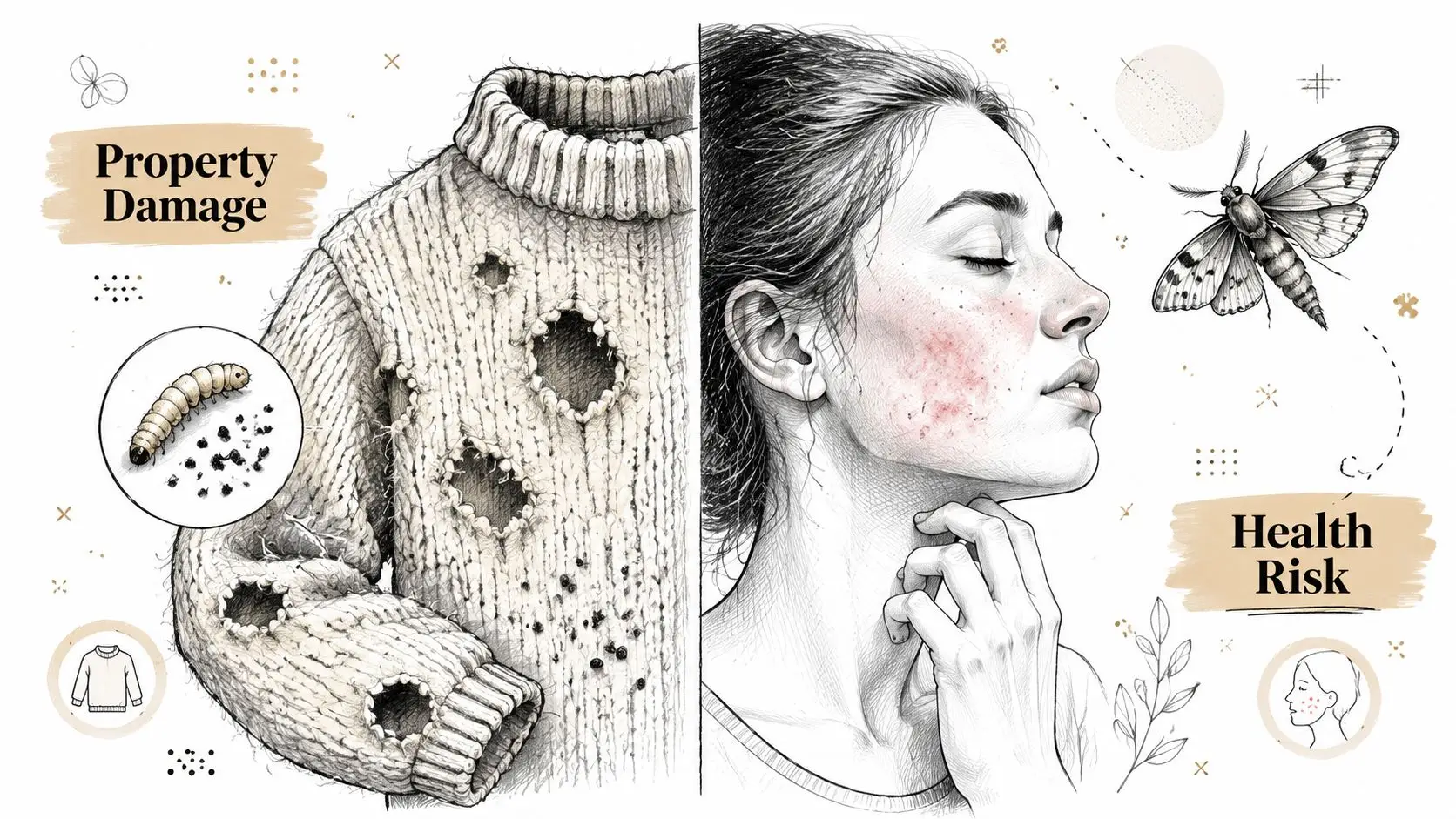
When homeowners say a moth is "dangerous," they're usually talking about one of two things. Either it can damage property, or it can create a health irritation problem inside the home. Those are separate issues, and it's helpful to keep them separate.
Property damage is usually the bigger problem
In Texas homes, the most common practical damage comes from larvae, not the adult moth itself. Clothes moth larvae feed on natural fibers like wool, silk, fur, feathers, and sometimes fabric blends if those items have body oils, dust, or food residue on them. Pantry moth infestations spoil flour, cereal, grains, nuts, spices, baking mixes, and pet food.
That's why a single moth in the air doesn't tell the whole story. The primary concern is whether eggs or larvae are already tucked into something you own. If you're sorting out damaged garments, professional delicate fabric cleaning can help with salvageable items after you've removed the source of infestation.
If the damage seems focused on garments, rugs, or closet contents, it's also worth reviewing examples of pests that infest clothes so you don't blame every hole on moths alone.
Health concerns are usually indirect
The health side is more subtle. According to Responsible Pest Control's explanation of moth risks, the main technical health risk is indirect exposure through allergenic proteins in scales and waste, which can trigger reactions in sensitive people and contaminate food or fabrics during an infestation.
That means the issue isn't venom or disease spread. It's exposure to the mess they leave behind.
A homeowner might notice:
- Skin irritation after handling infested items
- Sneezing or respiratory discomfort when disturbing dusty closet or pantry areas
- Contaminated food that should be discarded
- Lingering irritation from scales, waste, or larval material in neglected storage spaces
The moth you see is often just the messenger. The infestation is the real problem.
Why this matters in Houston homes
Humidity changes the conversation. In drier climates, stored items may sit with fewer issues. Around Houston, moisture in the air can make enclosed storage spaces feel less stable, especially in garages, utility rooms, and closets that don't get much airflow. That doesn't make moths aggressive. It makes your stored items more vulnerable if an infestation starts.
Identifying Problem Moths in Your Texas Home
Not every moth in your house deserves panic. In Southeast Texas, plenty of large moths drift indoors by accident, especially after dark. They bounce off windows, collect near porch lights, and die out without causing indoor damage.
The moths you need to identify are the small, persistent ones tied to fabrics or stored food.
The two indoor troublemakers
Clothes moths are small and easy to miss. Homeowners often don't notice them until they find damage. They prefer dark, quiet places like closets, folded wool items, rug edges, stored blankets, and the underside of upholstered furniture.
Pantry moths are more likely to show up in the kitchen. You may see them near dry food shelves, dog food bins, or a cupboard where flour and grains sit for too long. They're the type that turns "I saw one little moth" into "Why is there webbing in my cereal?"
According to Moth Prevention's overview of moth dangers, moths themselves aren't toxic if accidentally ingested, but their infestation contaminates stored food. The same source explains that what many people call "moth dust" is shed wing scales, which aren't poisonous but can act as an allergen or irritant for some people.
Common Texas Moths At a Glance
| Moth Type | Appearance | Where You'll Find It | Primary Risk |
|---|---|---|---|
| Clothes moth | Small, pale buff or tan, avoids light | Closets, wool items, rugs, stored fabrics, upholstery | Fabric damage from larvae |
| Pantry moth | Small, often seen near kitchen storage | Pantries, dry goods, cereal, flour, pet food, birdseed | Food contamination |
| Large outdoor moth | Bigger body, often drawn to lights | Porches, entryways, garages, near windows | Usually nuisance only |
| Unidentified small indoor moth | Tiny and easy to overlook | Could be closet, pantry, or nearby storage | Needs inspection to find source |
How to tell if it's really a moth problem
Behavior matters more than perfect identification. Ask yourself:
- Does it avoid light? Clothes moths often stay hidden instead of circling lamps.
- Is it near food? Pantry moths usually point you toward shelves, bins, or bags.
- Is it showing up repeatedly indoors? One accidental visitor is different from a pattern.
- Is there damage nearby? Holes, webbing, or clumped dry goods matter more than the moth itself.
If you're seeing damage on rugs or natural-fiber items, don't overlook other pests with a similar calling card. This guide on how to know if you have carpet beetles is helpful because homeowners often confuse the two.
If the moth is large and came in from the porch, it's probably just lost. If it's small and keeps appearing from the same closet or cupboard, start investigating.
Texas-specific clues
In Houston-area homes, pantry moth issues often show up where people store bulk items. Think rice, flour, snack bins, pecans, birdseed, and dry pet food. Clothes moth issues tend to build subtly in guest rooms, seasonal storage, and closets that stay shut most of the week.
That local pattern matters because our climate lets problems stay active for longer stretches of the year than many homeowners expect.
Signs and Symptoms of a Moth Infestation
Most infestations announce themselves through evidence, not through dramatic swarms. Homeowners usually notice the aftermath first.
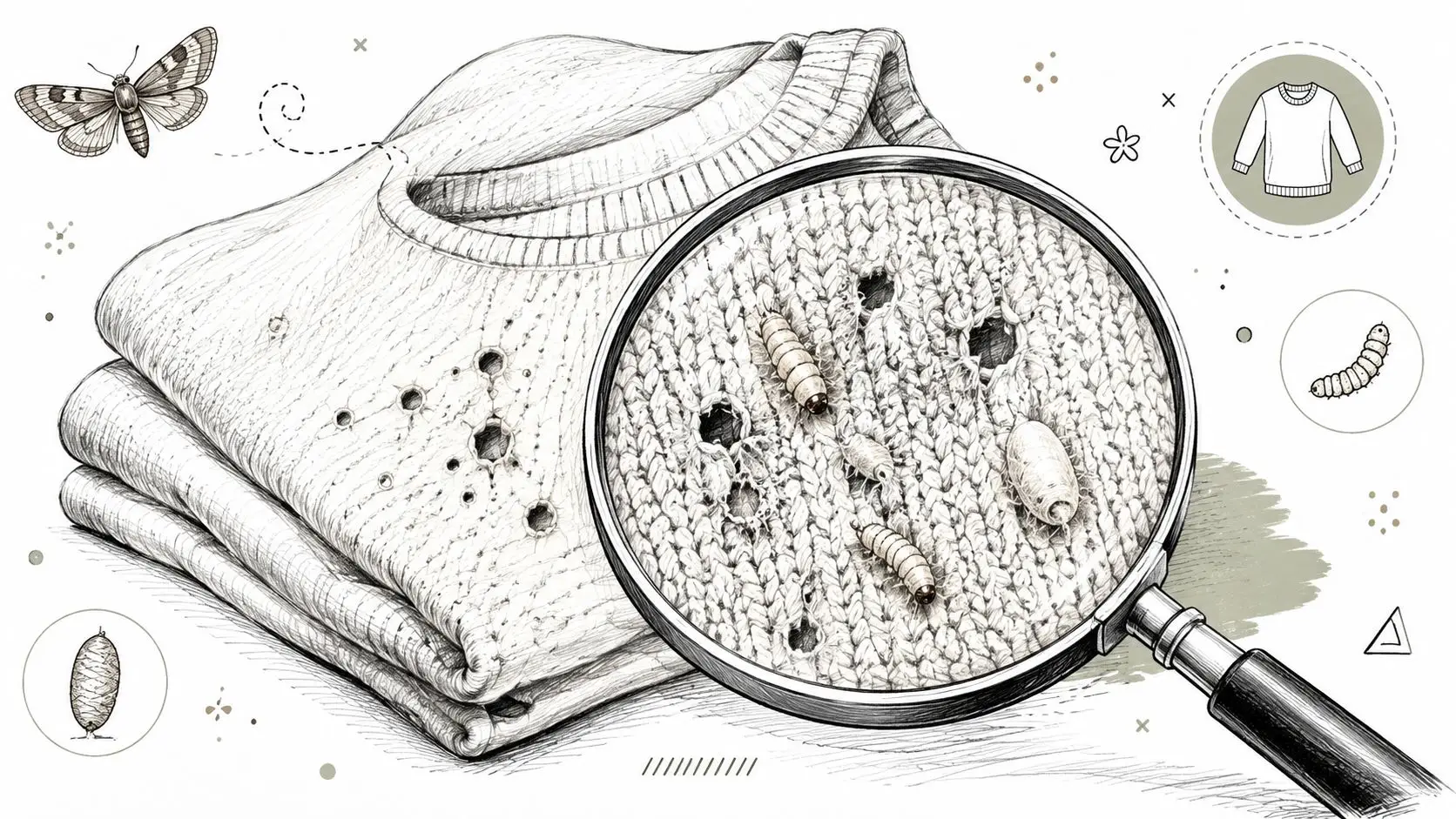
For clothes moths, the "crime scene" often starts in a closet. You pull out a wool sweater and see small, irregular holes. Not clean circles. Not tearing along a seam. Just scattered damage that looks random and frustrating. Then you notice a faint silky film in a dark corner, or a small casing stuck near a shelf edge.
Closet signs that deserve attention
Look closely at items that sit untouched for months.
- Uneven holes in natural fibers such as wool scarves, blankets, sweaters, and rugs
- Silky webbing in corners, folds, or along baseboards inside closets
- Tiny larval casings or grain-like debris on shelves
- Damage in low-traffic areas like guest room closets or the back of a linen cabinet
Pantry signs that point to moth activity
Kitchen infestations tend to feel more unsettling because they affect food. You open a bag of flour or cornmeal and find fine webbing inside. A box of cereal looks clumped. A bag of pet food has little silk threads near the top seam. Sometimes you spot small pale larvae crawling on a shelf or near the ceiling line.
Common pantry clues include:
- Webbing inside packages
- Clumping in grains or powders
- Larvae in or near stored dry goods
- Repeated moth sightings near one cabinet or shelf
Don't trust the front row of your pantry. Pull items off the shelf and inspect corners, seams, and the back edge of the cabinet.
What homeowners often miss
People focus on the moth flying around and miss the source. In a closet, that source might be a wool coat, a felt hat, or an area rug folded in storage. In a pantry, it could be an opened bag of birdseed, a forgotten baking mix, or dry dog food in its original paper sack.
If you only swat the adults and never remove the infested material, the cycle keeps going.
DIY Moth Prevention and Control Strategies
The best moth control plan for a Texas home is boring on purpose. Clean storage, sealed containers, regular inspection, and fewer overlooked hiding spots. That's what works.

Start with storage
Houston humidity makes prevention more important because enclosed spaces can stay muggy and still for long periods. That doesn't create moths by itself, but it helps neglected spaces stay inviting.
Use this checklist:
- Seal pantry goods well: Move flour, cereal, grains, nuts, dry pet food, and birdseed into airtight containers.
- Protect natural fibers: Store wool, silk, and specialty fabrics in sealed garment bags or bins after cleaning.
- Wash before storage: Moths are more attracted to items with sweat, skin oils, food stains, or dust.
- Rotate forgotten items: Open and inspect seasonal bins, guest-room closets, and stored linens.
Clean for the life cycle, not just the mess
Vacuuming matters because it removes more than dust. It can help remove eggs, larvae, casings, and debris from closet edges, rug borders, pantry cracks, and baseboards. Be especially thorough under shelves, under furniture, and along wall-floor seams.
Natural repellents like cedar and lavender can play a supporting role, but they aren't magic. They may help freshen storage spaces and discourage activity, yet they won't solve an active infestation hidden in a sweater stack or food package.
If you're also trying to reduce insects entering around windows and doors, well-fitted screens help with general pest pressure. Homeowners comparing options may find this guide on window screens from Sparkle Tech Window Washing useful for tightening up entry points around the home.
Know the limits of mothballs and shortcuts
A lot of people reach for mothballs first because the name sounds definitive. They aren't a cure-all, and they don't replace inspection, cleaning, and source removal. If you've heard unusual claims about what mothballs can handle, this article on whether mothballs repel mice helps clear up the confusion.
For a quick visual refresher on prevention habits, this video gives a simple overview:
A practical routine that works
Try this monthly routine:
- Inspect one closet and one pantry zone
- Vacuum edges, corners, and shelf seams
- Discard suspicious dry goods
- Rewash or dry clean vulnerable fabrics before long-term storage
- Check pet food and birdseed containers
Small, regular checks beat one big panic cleanup after damage spreads.
When to Call a Professional Pest Control Expert
Some moth problems stay small. Others keep coming back because the source isn't obvious. That's when a professional inspection saves time and frustration.

Signs DIY may not be enough
Call for help if any of these sound familiar:
- You keep seeing adult moths every day even after cleaning
- Damage shows up in multiple rooms instead of one clear source
- The infestation returns season after season
- You can't tell whether it's moths, carpet beetles, or another fabric pest
- Pantry contamination keeps popping up after you throw items away and wipe shelves down
A trained technician doesn't just treat the visible moths. They inspect where the activity starts, identify what species group is involved, and look for conditions that let the problem continue. That matters in larger homes, multi-room infestations, and properties with attic storage, guest rooms, or bulk food storage.
Why local experience matters
Southeast Texas homes deal with a mix of climate issues, storage habits, and seasonal pest pressure that isn't always obvious from generic internet advice. A local pest professional is more likely to recognize the pattern in a Houston pantry, a Kingwood closet, or a Conroe utility room.
If you're comparing service expectations in other markets, even a general resource like this GTA residents' pest control guide can show how inspection scope and recurring pest issues affect what homeowners need from a provider.
If you've cleaned thoroughly, removed suspect items, and the moths are still showing up, stop chasing adults and get the source professionally identified.
A professional Integrated Pest Management approach is often the right next move. That means inspection first, targeted treatment second, and prevention steps that fit the way you actually live and store things.
If moths are damaging clothes, contaminating pantry items, or showing up again after DIY cleanup, it's time to get a clear answer from a local expert. FullScope Pest Control serves north Houston communities including Conroe, Kingwood, Cleveland, and Porter with inspections, targeted treatment plans, and ongoing pest protection built for Southeast Texas homes.