1500+ reviews


You've mowed the lawn, closed the trash lid, and cleared the patio, but a rat still darts along the fence at dusk. Before you assume the yard needs another cleanup, look beneath the bird feeder, beside the hose connection, and behind the shed. A property can look well maintained while still supplying everything a rat needs.
Understanding what attracts rats to your yard means looking beyond the animal you spotted. For homeowners in Magnolia, Texas, and surrounding Southeast Texas communities, the useful question is whether the property provides dependable meals, moisture, protected hiding places, or access to a building.
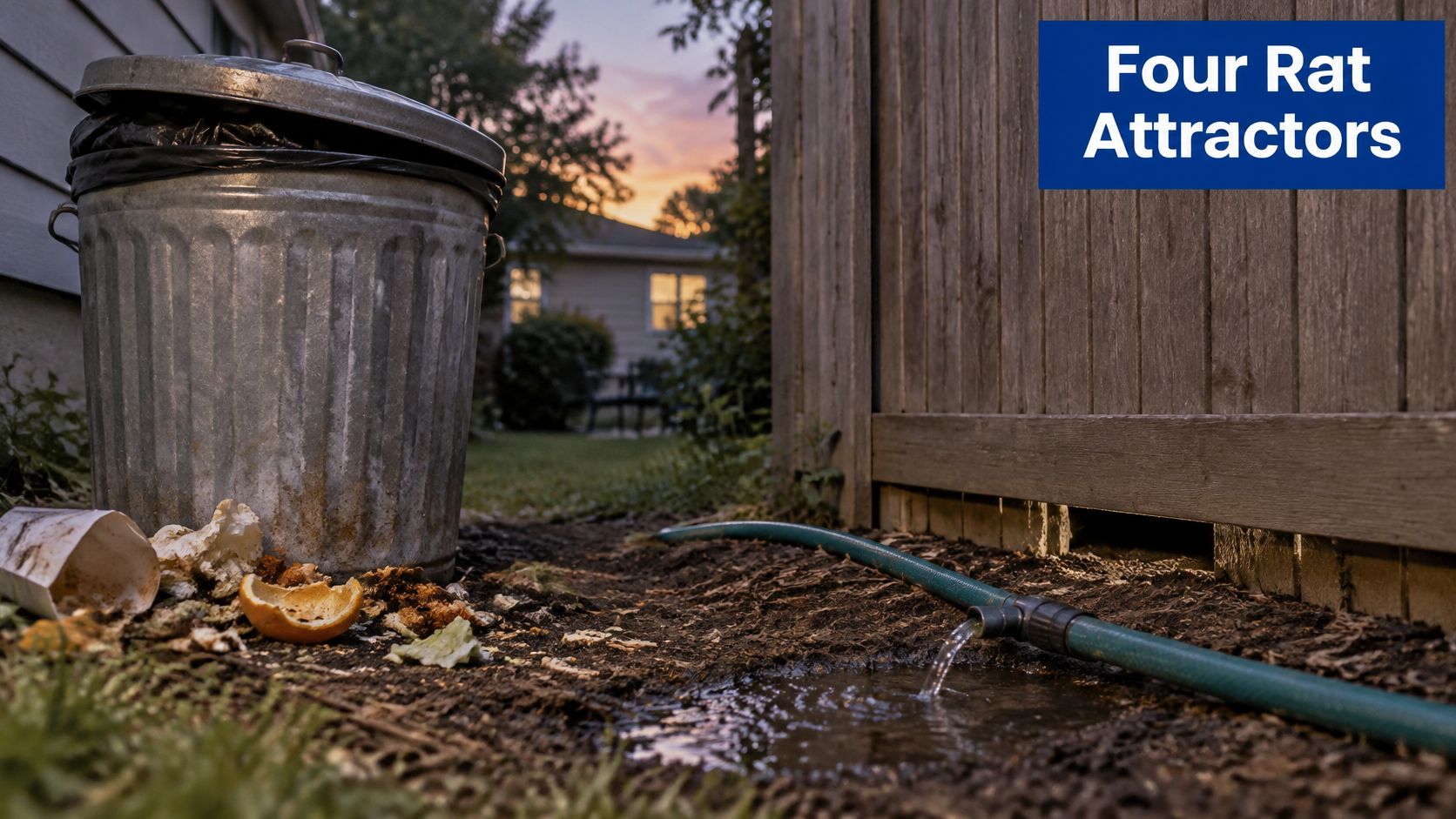
Four Things That Draw Rats Into Your Yard
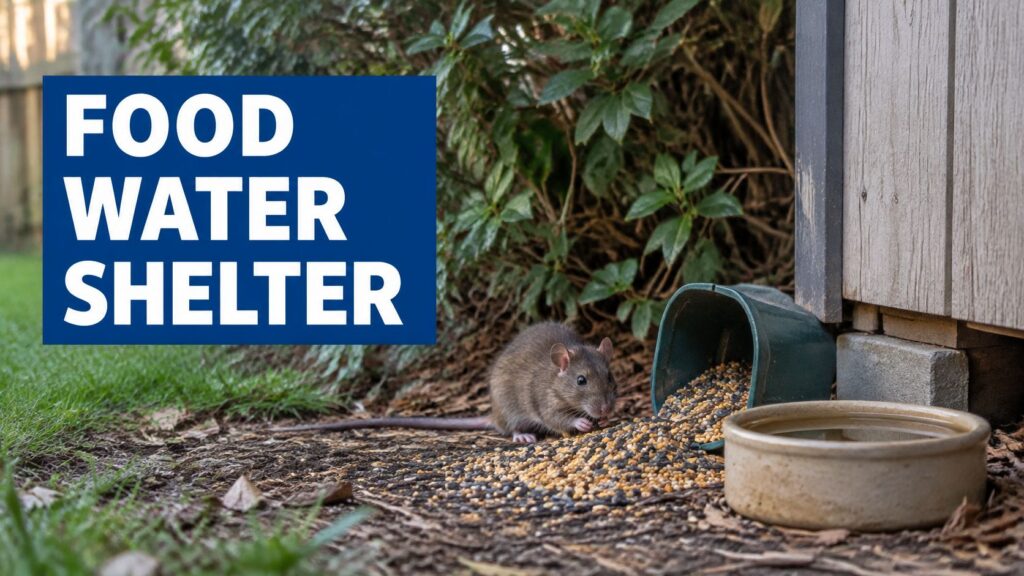
Rats come to a yard for food, water, shelter, and access to protected spaces. Food brings them to a feeding spot, water and cover help them remain nearby, and structural gaps can connect outdoor activity with indoor nesting areas.
Yard attractants and the first fix for each
| Attractant | Common yard example | First fix |
|---|---|---|
| Food | Open trash, spilled birdseed, pet bowls, grill grease | Lidded metal or thick plastic bins and daily cleanup |
| Water | Leaking hose bibs, clogged gutters, pet water, pooled water under pots | Repair leaks, clear gutters, and drain containers |
| Shelter | Brush piles, woodpiles, stacked lumber, dense ground cover | Remove debris, raise woodpiles, and cut back brush |
| Access | Gaps under sheds, foundation cracks, utility openings, burrows | Seal structural gaps and arrange appropriate control before blocking active burrows |
These conditions often sit close together. A trash container beside dense shrubs, for example, provides a meal near a concealed retreat. A leaking faucet beside a shed adds another resource without creating an obvious mess.
Look for the combination, not just the most noticeable problem.
A tidy yard can still supply meals
Say your lawn is short and your garbage stays contained, but a feeder drops seed into a flower bed and a pet bowl remains outside overnight. A rat can feed without opening a trash bag or disturbing the patio. If nearby storage provides cover, the property offers more than an occasional snack.
Practical rule: Remove the condition that supports repeated visits, not just the animal you happened to see.
That distinction explains why partial fixes disappoint homeowners. Trimming shrubs won't secure animal feed, and closing a foundation gap won't remove a meal beneath the feeder. Treat the yard as a connected feeding and nesting system.
Before buying a deterrent or starting a major landscaping project, walk the property with a notepad. Mark where food, water, shelter, and access overlap, then choose work that breaks those connections.
Food Sources That Keep Rats Coming Back
A single open trash can can support a rat colony for weeks. The EPA's rodent-prevention guidance points to accessible garbage and exposed food as the conditions worth correcting first, because refuse that stays reachable keeps drawing rats back to the same feeding spot. The pattern holds in any setting: where waste is easy to reach, rat activity builds around it.
Inspect the ground around the container as carefully as the lid.
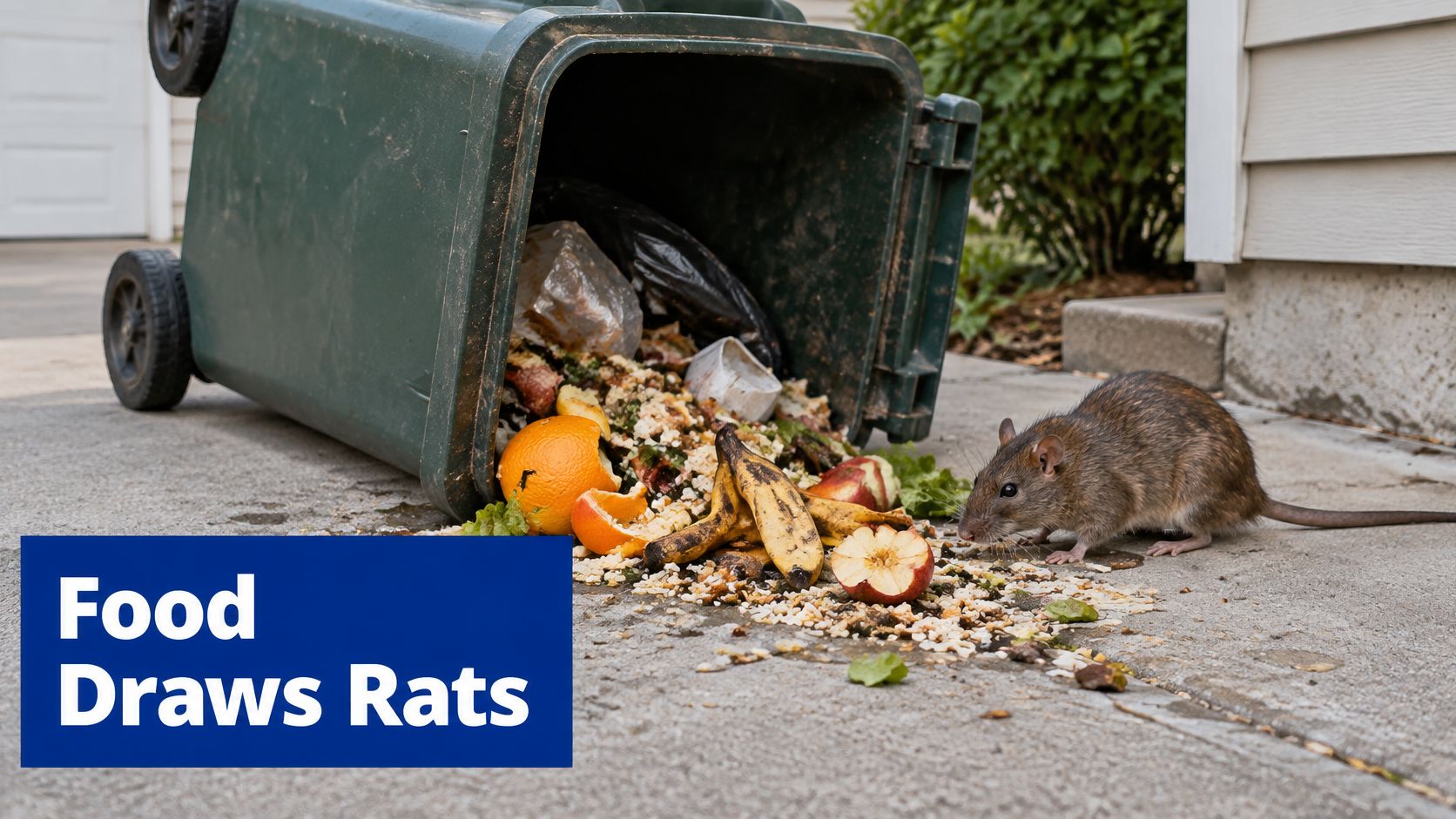
At home, the menu runs wider than garbage. Barbecue grease, discarded meat, fallen produce, overflowing bins, exposed compost scraps, birdseed, and pet food all count. Reliability matters more than volume: a small meal available every night gives rats a reason to return to the same location, while a one-time spill that gets cleaned up does not.
Remove the food rather than relocate it
The EPA recommends tightly closed kitchen-garbage containers, covering newly added compost material, cleaning accessible food and water sources, and temporarily stopping bird feeding during an infestation. Apply that advice to every feeding area on the property, not just the kitchen bin.
- Secure stored food: Use metal or thick-plastic containers with tight-fitting lids for seed and animal feed.
- Finish pet feeding: Remove uneaten food afterward and don't leave bowls accessible overnight. Keep necessary drinking water available to pets in a protected location.
- Clean the spill zone: Collect fallen produce, spilled seed, and food beneath outdoor furniture daily.
- Degrease cooking areas: Empty and clean grill grease trays and remove residue around the cooking station.
Moving a feeder away from a window doesn't eliminate the seed already on the ground beneath it. During active rat trouble, pause feeding entirely rather than shifting the feeding station.
Use this video alongside your inspection of outdoor feeding and waste areas.
If residue remains around your garbage storage, follow our guide to cleaning trash bins so they don't attract pests. Backyard poultry keepers face the same problem inside the coop: Pure Grubs' guidance on how to stop rats stealing chicken feed offers a focused resource for checking the coop's food supply.
Water and Shelter That Let Rats Settle In
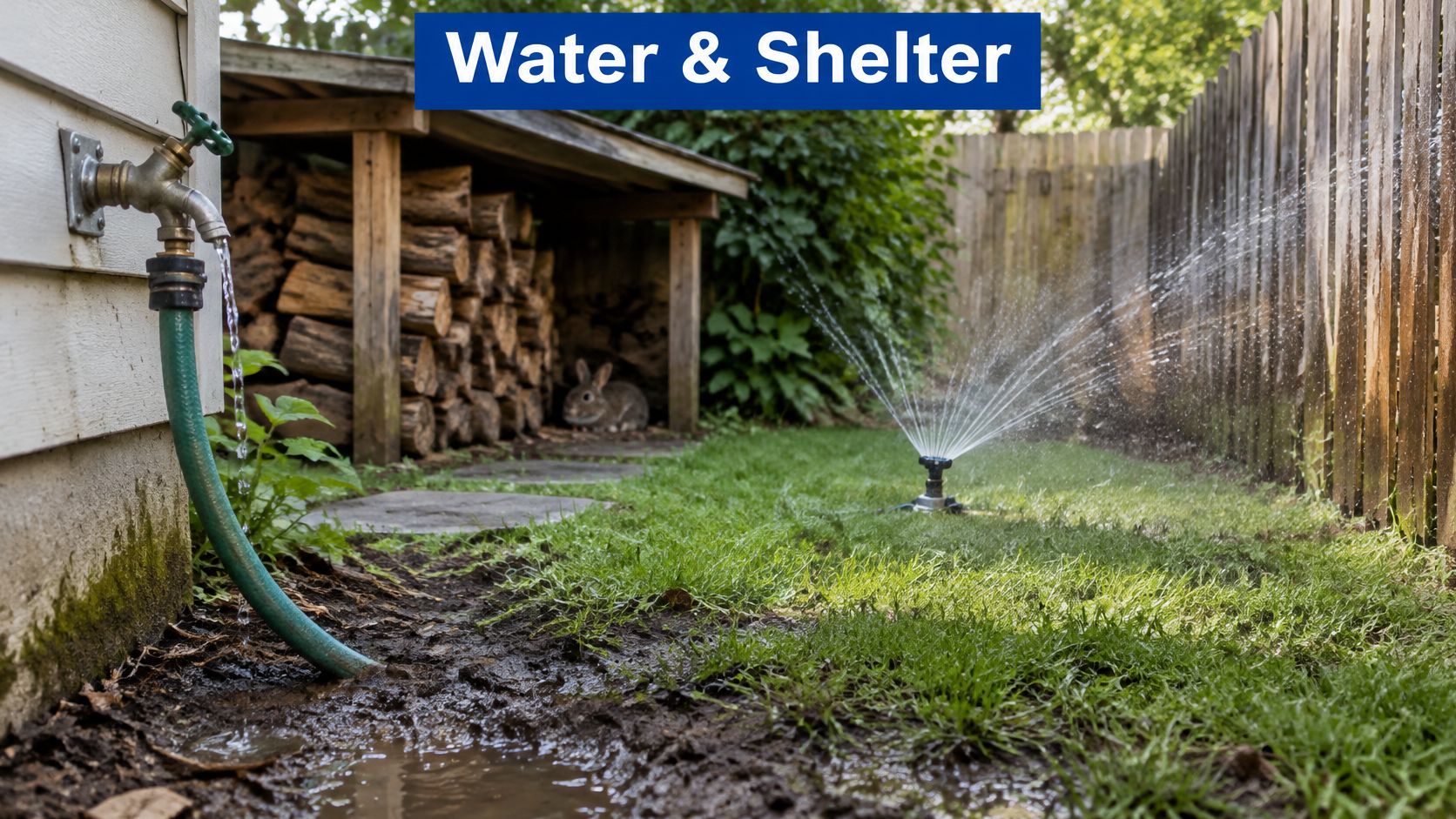
Start with outdoor moisture because many sources are straightforward to locate and correct. Check hose bibs, irrigation overspray, clogged gutters, drainage depressions, pet-water bowls, ponds, air-conditioner condensate discharge, and water trapped in plant saucers.
CDC technical guidance on rat habitat identifies food, water, and shelter as the primary habitat elements governing rat population density. Reliable water reduces the distance animals need to travel, while protected cover limits their exposure to people and predators.
A leak beside stored wood combines both resources in a compact space.
Work outward from persistent moisture
Check water sources while the irrigation is running and again after it stops. A connection that looks dry during a casual walk may leak only under pressure. Empty unnecessary water-holding containers, clear gutters, and correct drainage without directing runoff toward the foundation.
Then examine harborage, the protected spaces where rodents hide or nest. Dense vegetation, brush piles, stacked lumber, discarded materials, crawl-space openings, and burrows beneath foundations deserve attention. Look behind objects rather than judging the yard from the patio.
Use a zone-by-zone work order:
- Repair moisture problems first: Fix leaking connections and identify where runoff repeatedly collects.
- Remove or raise stored materials: Discard unused items and arrange useful materials so the ground beneath them remains visible.
- Open the building edge: Keep grass short, cut back dense brush, and trim plants touching walls. Clear vegetation several feet around structures where space allows.
- Inspect sheltered edges: Look beneath decks, beside sheds, and along slab edges for burrows or concealed routes without reaching into openings.
Separate storage from the house
The CDC's rodent-prevention brochure recommends keeping compost bins and other potential shelter away from buildings, including a 100-foot separation for compost where feasible. On a compact lot, don't treat an unattainable distance as a reason to do nothing. Choose the greatest practical separation and keep the intervening space inspectable.
Removing cover can expose activity without eliminating the resources that brought rats there.
A cleared brush pile isn't a complete solution if a leaking faucet and accessible feed remain beside it. Finish each zone by checking the adjacent food supply and building edge, rather than treating landscaping as an isolated task.
Gaps and Openings That Let Rats Inside
A rat does not need an open door. It needs cover outside, a reason to keep crossing the slab edge, and one defect it can test night after night. A gap beside food works like a loose gate latch: once it moves, traffic finds it. That is why a tidy yard with a feeder or pet bowl can still end in a wall void.
Treat size as an inspection cue and shape as the second clue. A common rodent-proofing cue is to seal gaps about one-quarter inch (6 millimeters) or larger, and even a dime-sized opening deserves a closer look because mice and small or young rats can use holes an adult rat may only enlarge. A round pipe gap, a chewed corner, and a warped door edge do not present the same risk.
Inspect foundation joints, utility penetrations, hose and cable lines, door sweeps, dryer and bath vents, shed bases, drainage cuts, and slab edges. Prioritize defects near a protected route or feeding area, since access beside reliable food is more likely to be reused than an isolated crack on an open wall.
Opening size, rodent access and sealing method
| Opening size | Who can pass | Sealing method |
|---|---|---|
| Dime-sized hole | Possible mouse or small-rat access; treat as active until inspected | Pack with steel wool, then lock it in with caulk or cement |
| About 1/4 inch (6 mm) or larger | Potential rodent access; size alone leaves adult-rat fit uncertain | Secure metal mesh, then finish with compatible cement or caulk |
| Smaller than 1/4 inch | Size alone leaves doubt; chewed or irregular edges still count | Seal sound cracks with caulk or fine metal mesh matched to the surface |
Match the repair to the building
Walk the perimeter at ground level with a flashlight, inspection mirror, and pencil or flags. Mark defects so they stay visible after you stand up. Check the condition of the surrounding material before filling anything.
Steel wool alone is only a temporary plug. It needs a compatible sealant to hold it in place, and larger damaged areas need mechanically secured metal mesh, flashing, or replacement building material. Keep ventilation, drainage, and required weep openings clear.
- Check for occupancy: If rats may already be inside, coordinate exclusion with control rather than trapping animals in the structure.
- Repair sound edges: Fasten exclusion materials to intact surfaces, never to crumbling trim or rotten siding.
- Reinspect the repair: Return after a week as a practical follow-up and check for chewing, displacement, or reopened edges.
Our guide to identifying and sealing common rodent entry points helps organize the perimeter check. If damaged siding requires reconstruction rather than patching, Home Pro's Remodeling & Repairs provides a resource to compare exterior siding repair costs before arranging the building repair.
How to Audit Your Yard for Rat Attractants
Use a seven-day homeowner audit to separate suspected attractants from the places where activity occurs. This is an observation schedule, not a reason to postpone an obvious leak repair or leave accessible food in place.
Pay particular attention to intentional animal feeding. CDC rodent-prevention recommendations call for removing accessible pet and wild-animal food supplies and avoiding bird feeders near the home. A clean waste area won't tell you whether those separate feeding locations remain active.
Record one clear task each day
Day 1, photograph feeding areas. List bird feeders, pet bowls, compost, poultry feed, livestock feed, and food set out for wildlife. Photograph the ground underneath, not just the container, and note when food is normally available.
Day 2, inspect waste containment. Check that lids fit and close fully. Record overflow, torn bags, scattered scraps, and residue around the storage area, especially anything left accessible overnight.
Day 3, map protected routes. From a safe position, look beneath decks, sheds, and woodpiles for burrows, worn runways, and droppings. Mark observations on a simple yard sketch without disturbing nests or reaching into concealed spaces.
Day 4, trace outdoor water. Inspect hose connections, irrigation, gutters, bowls, plant saucers, and low spots. Note whether moisture comes from regular use, a persistent leak, or rainfall.
Day 5, examine stored supplies. Look for chewing or disturbance around compost bins and animal-feed containers. Check lids, bases, and the space behind storage shelves rather than inspecting only the visible front.
Day 6, compare locations. Group the observations by where they occur. Signs beside feed suggest a feeding location; signs along a foundation or penetration warrant closer entry inspection, but neither pattern alone proves where rats nest.
Day 7, rank the fixes. Review the photos and choose the top three attractants to correct. Prioritize accessible recurring meals, persistent moisture, and any route into occupied buildings.
Choose work by evidence
Give priority to a resource with nearby signs over an untidy-looking corner with no evidence of use. Also flag tasks beyond safe homeowner work, such as inaccessible openings, damaged construction, or suspected occupied cavities.
Useful distinction: A photo records what was present. A dated note records whether it keeps happening.
Keep the original pictures and add new ones after corrections. That comparison helps you avoid spending a weekend clearing the wrong corner while the active feeding area remains untouched.
What Magnolia, Texas Yards Should Watch For
Magnolia, Texas, is in southwestern Montgomery County within the Houston metropolitan area, and the Texas Municipal League lists it in Region 14, the San Jacinto–Houston Area, as described in the Magnolia city overview. Use the specific city and property address when discussing an inspection rather than referring only to the broader Houston area.
Magnolia counted 2,359 residents in the 2020 Census, compared with 1,393 in 2010, an increase of 966 residents, or approximately 69.3%, according to the U.S. Census Bureau's Magnolia QuickFacts. The same page lists an 8,095-resident estimate for July 1, 2025, but uses a different 2020 estimates base of 3,003. Treat those series as evidence of growth, not as directly interchangeable head counts.
A maintained garden still needs inspection at feeding stations and building edges.
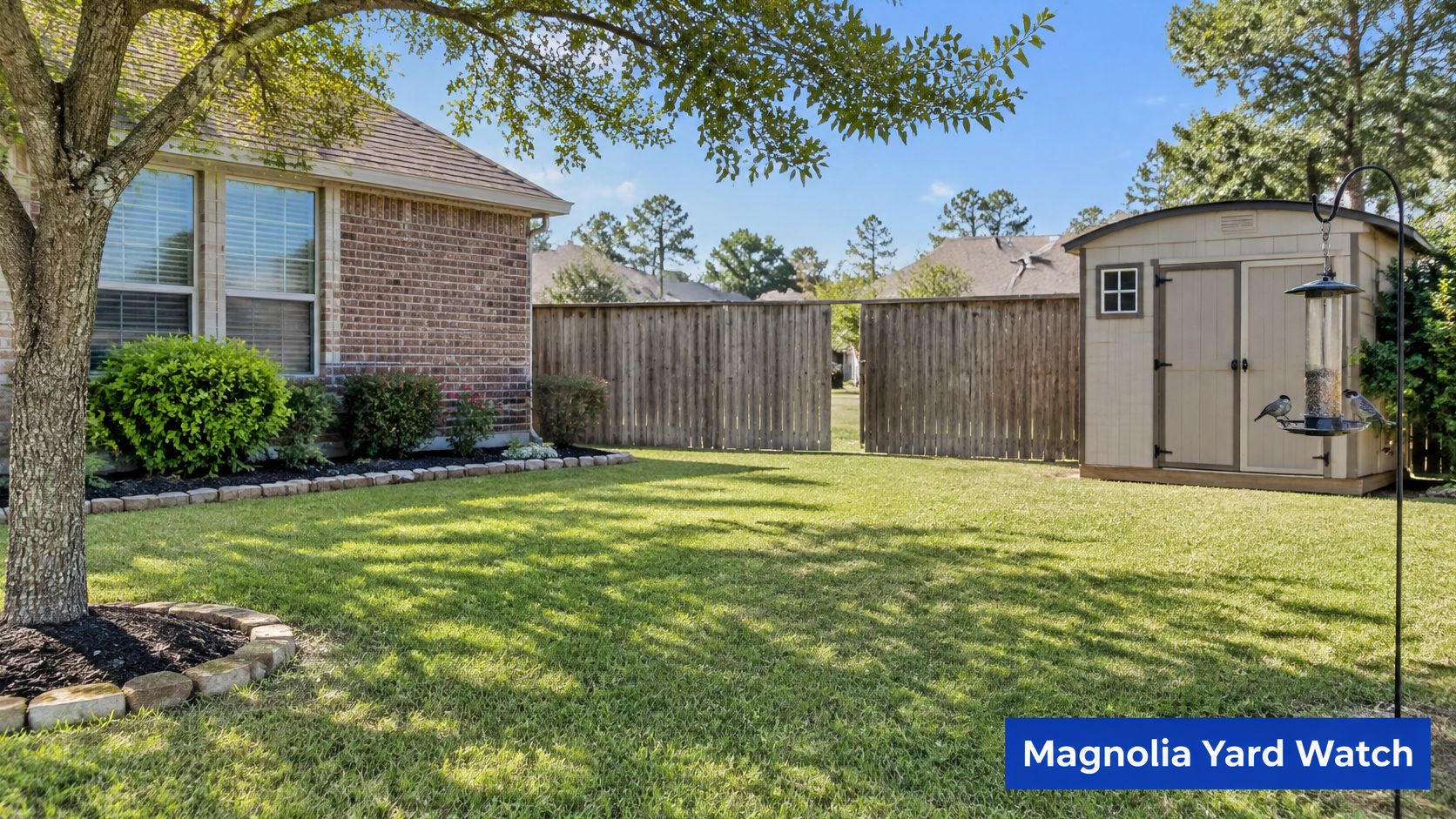
Check changing property conditions
Growth can add yards, construction storage, dumpsters, and new landscaping where attractants accumulate. That doesn't establish a local increase in rats. It means homeowners should inspect temporary conditions as carefully as permanent features.
After heavy rain, check drainage depressions and containers. After storms or flooding, inspect debris piles and damaged structures because displaced rodents may encounter different food and shelter locations. Around new construction, watch for ground-level lumber storage and landscaping that conceals the foundation edge.
- Keep foundation edges visible: Pull mulch back from direct contact and maintain inspectable planting beds.
- Store materials off the ground: Arrange lumber and supplies so you can see beneath and behind them.
- Check drainage after rain: Identify where water remains and correct the cause rather than repeatedly emptying the same spot.
When to Book a Professional Rodent Inspection
Book an inspection if your seven-day audit identifies food, water, shelter, or entry problems you cannot resolve within a week. Signs of indoor activity, damage in inaccessible spots, or heavy droppings and urine contamination all justify calling sooner, because each one points to a yard already supporting rats rather than a single animal passing through.
At FullScope Pest Control, rodent and wildlife work begins with a free inspection and assessment, and recommendations follow from what the inspection finds. The visit examines entry points, moisture problems, and hiding areas to identify what keeps the problem going. The company also offers a free rodent control estimate, so you can weigh the findings against the fix before committing to anything.
Prepare for a focused visit
A useful inspection starts with evidence, so bring the observations that connect activity to the conditions on your property:
- Audit notes: Include feeding schedules, recurring moisture, and corrections already completed.
- Dated photographs: Show feeding areas, water sources, stored materials, and protected cover.
- A simple yard sketch: Mark suspected entry points, burrows, and places where signs cluster.
The guide on when to call professionals for wildlife and rodent control helps you recognize situations beyond routine maintenance. Arriving with notes and photos lets the inspector begin with your highest-ranked concerns instead of reconstructing the basics.
Contact FullScope Pest Control to request your free rodent inspection and estimate, and share your audit notes and marked photos when you schedule. The more clearly you describe what draws rats to the yard, the faster the visit can move from finding attractants to recommending how to remove them.