1500+ reviews


You notice a sharp, stale smell near the kitchen wall, spray the room, and think you've handled it. Then the odor returns when the air conditioner starts or the room has been closed up. That pattern usually means the source is still there, even if you can't see it.
To get rid of mouse smell, remove contaminated material, disinfect safely, and check that rodents aren't still getting inside. Fragrance can make a room seem fresher for a while, but it won't clean urine from insulation or remove a mouse from a wall cavity.
Why That Lingering Smell Is Not Going Away on Its Own
A musty, ammonia-like odor around a pantry or baseboard can be easy to dismiss as stale air. But mouse smell is a clue, not a diagnosis by itself. Urine and droppings may be tucked behind an appliance, nesting material may be inside a cabinet void, or a dead mouse may be hidden in a wall. If the smell is recurring, the important question isn't which deodorizer to try next. It's where the odor is coming from.
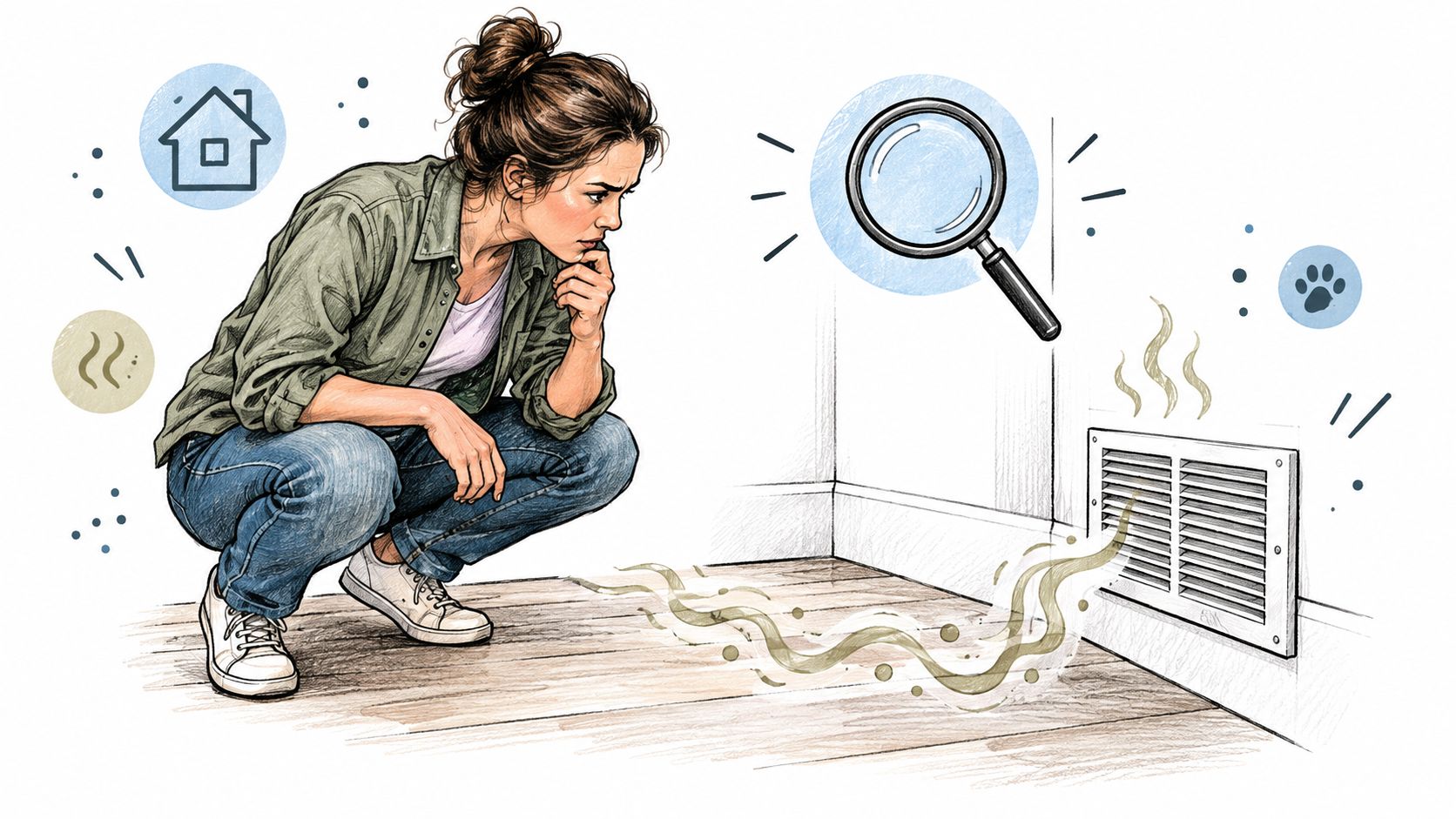
Mouse urine can leave a sharp, stale odor, while a carcass has a more decomposing, sickly smell. Those descriptions can help you decide where to inspect, but they can't confirm the source. Odors can overlap with other household problems, so look for physical signs such as droppings, gnaw marks, nesting material, or a concentrated smell along a wall or inside a cabinet.
Humidity and airflow can make an existing odor more noticeable. A closed room may hold the smell, and an HVAC cycle can move air from a concealed contamination spot into the living area. Opening windows helps freshen the space, but ventilation alone won't remove residue from porous materials or resolve active rodent activity.
Practical rule: A faint smell limited to one accessible area may be manageable with careful cleanup. If it's spreading across rooms, getting stronger, or coming from a wall or air return, stop masking it and investigate the source. A technician can help locate hidden contamination when safe access is uncertain.
Candles and sprays can briefly compete with the odor, but they don't verify that the problem is gone. The useful endpoint is a clean area with the source removed and no fresh evidence of rodent activity.
Safe Cleanup Using the CDC Disinfection Protocol
Treat droppings and urine as contaminated material. The mistake I see most often on a cleanup call is someone reaching for a broom or a shop vacuum first. Dry removal sends the dust you cannot see straight into the air you are breathing. The CDC's rodent cleanup guidance calls for wet cleanup instead: disinfect the material before touching it, then remove it without stirring anything up.
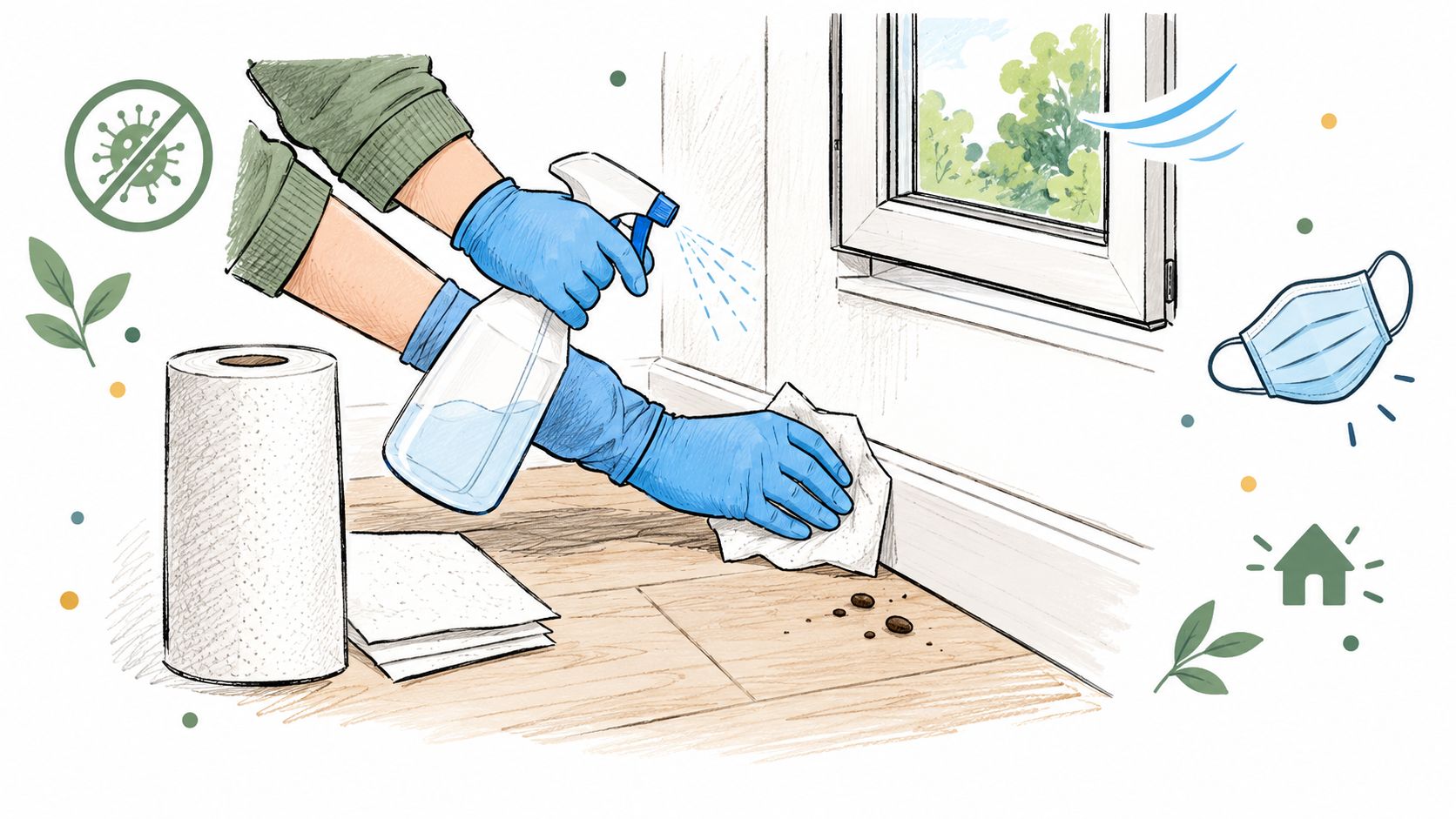
Open windows and let the space air out before you start. National Park Service guidance recommends ventilating a rodent-contaminated area for at least 30 minutes before cleaning begins (NPS cleanup guidance). Put on disposable or household rubber gloves before handling anything in the area. If contamination is heavy, or you cannot reach it without tearing into material, stop and get professional advice rather than improvising around the hazard.
For the disinfectant itself, use an EPA-registered household product according to its label, or mix the CDC's bleach solution: 1.5 cups of household bleach in 1 gallon of water, roughly a 1:10 dilution. Never combine bleach with other cleaning products. Spray droppings, urine, and nesting material until everything is thoroughly wet, then leave it undisturbed for 5 minutes before wiping it up with paper towels.
- Wet first. Do not sweep, brush, or vacuum dry droppings, urine, or nesting material.
- Wipe and discard. Pick up the soaked material with paper towels, bag the waste, and follow local disposal requirements.
- Clean the surface. Mop or sponge hard surfaces with disinfectant once the contaminated material is out.
- Handle porous items. Throw out contaminated cardboard. Launder washable fabrics, and replace insulation or other absorbent material that stays soiled or still smells after cleaning. In Southeast Texas humidity, absorbent material dries slowly and tends to hold contamination deeper than a surface wipe can reach.
- Finish carefully. Gloves off, hands washed, and keep food, dishes, and prep surfaces protected until the area is done.
For heavier contamination, the same NPS guidance noted above calls for a longer disinfectant contact time of at least 10 minutes, compared with the CDC's general 5-minute wait.
Cleanup also works as your first verification step. If the smell is still there after the contaminated material is gone, the source has not been found yet.
If the droppings you have found could be rat rather than mouse, this rodent-dropping identification guide walks through the differences in size and shape. Identification does not change the wet-cleanup method, and dry material still needs to be soaked before removal.
Hunting Down the Source When You Cannot See It
Visible droppings are easy to clean, but they may not be the part causing the strongest smell. Track the odor gradually. Start at the spot where it's most noticeable, then compare nearby surfaces and spaces rather than searching the whole home at random.
Follow the strongest odor
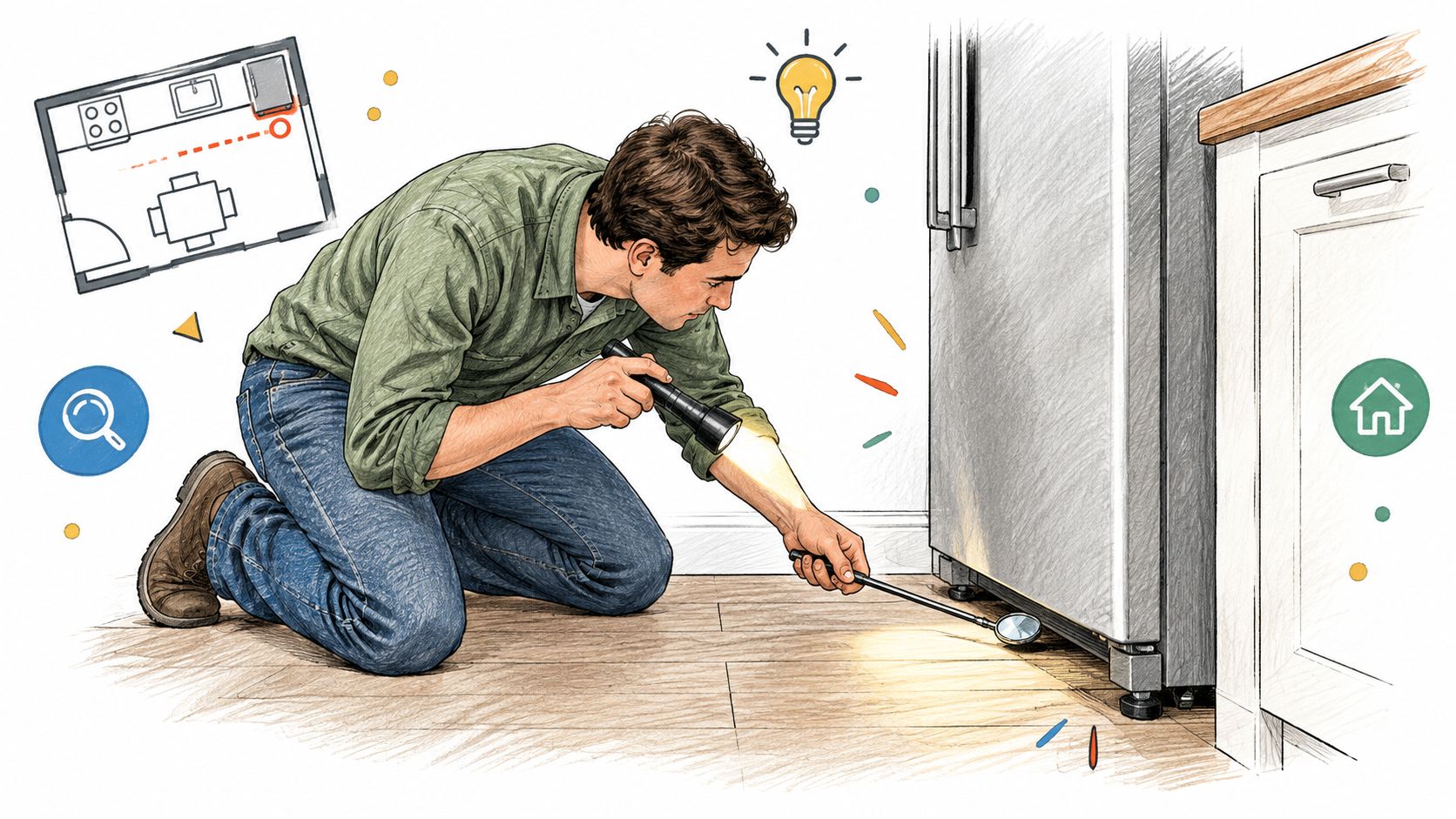
Check along baseboards and cabinet backs, then inspect behind the refrigerator and beneath the dishwasher. A flashlight and inspection mirror can reveal droppings, nesting material, or staining in spaces you can't see from standing height. If you can safely remove a kitchen sink toe-kick, inspect the cavity behind it as well.
In the attic or crawlspace, look along the edges and around utility routes, where a mouse can move while remaining out of sight. A mirror can help inspect an awkward corner, but don't enter a space that feels unsafe or disturb a nest or carcass you can't handle properly. A guide to how mice get into walls can help explain why sounds or smells may seem to come from a wall even when there's no visible opening in the room.
Wall cavities and spaces around HVAC returns can hide nesting material or a carcass. If you suspect a concealed source, a technician may use a borescope through an existing opening or a carefully placed inspection hole. Pulling an air-return grate may reveal material near the opening, but it won't necessarily show what's farther inside the duct or wall.
Distinguish a hidden carcass from ongoing activity
A carcass inside a wall can produce a strong odor that changes as decomposition progresses. That smell alone doesn't prove there's a larger infestation. Look for other signs nearby, such as droppings, gnawing, nesting material, or sounds in the wall.
For a crawlspace or similar area, an overview of conditioned crawl spaces can help explain why inspection and moisture management matter in concealed parts of a home. If access is tight or contamination is extensive, don't cut into a wall or insulation without a plan. Map where the smell is strongest, note what you find, and get help if the source remains out of reach.
Why the Smell Keeps Coming Back
When an odor returns after surface cleaning, treat that recurrence as a diagnostic signal. It may mean that urine or nesting material remains in an inaccessible place, a porous item absorbed contamination, or a mouse is still entering the home. Repeating the same wipe-down won't tell you which explanation is right.
Start a simple odor log. Note where the smell is strongest and whether it changes when the HVAC runs or after a room has been closed. Then check wall-adjacent areas, cabinets, crawlspaces, attic insulation, and HVAC intake areas for new droppings, gnaw marks, or nesting material.
The CDC says droppings that appear again after cleanup are evidence of active rodent presence. That's different from an old stain continuing to smell: fresh droppings mean the source may still be active, so cleanup needs to be paired with finding how rodents are getting in.
A recurring smell is useful information. Follow the pattern before reaching for stronger fragrance.
Airflow can complicate the search by carrying odor away from its source. If the smell gets stronger near a vent when the system runs, inspect the intake area and nearby accessible spaces. CDC guidance specifically advises removing nesting material and changing an air filter when nesting material is found in an air-intake system. Don't assume a new filter alone solves the problem if contamination remains inside the system.
Fragrance and ozone can create a false sense of resolution while leaving the contamination and entry route untouched. An odor log and a follow-up inspection are more useful than relying on a fixed number of days for the smell to disappear. How long it lasts depends on whether contamination reached absorbent contents, insulation, drywall, or ductwork.
Consider the issue unresolved until you've addressed the source, checked for fresh activity, and inspected likely entry points. For landlords and facility managers, recording what was cleaned, what was removed, and what evidence was found makes it easier to distinguish masking from confirmed remediation.
Deodorizing Methods That Actually Neutralize the Smell
Once the contaminated source has been removed, deodorizing can help with residual odor. It can't substitute for cleanup. Scented candles and air fresheners add fragrance, but they don't remove urine residue or absorbent material that's holding odor.
Match the method to the surface
On a clean, sealed hard surface, an enzyme-based cleaner may help break down remaining organic residue. Follow the product label and test an inconspicuous area first, especially on finished wood or other materials that may be damaged by a cleaner. Don't apply an enzyme product over contaminated material that hasn't been safely removed and disinfected.
For small enclosed spaces, activated charcoal can help absorb lingering airborne odor. Baking soda in an open, shallow pan is another low-effort option for passive absorption, though it won't fix a smell coming from inside a wall. Washable soft goods should be laundered; items that remain contaminated or retain odor may need replacement.
White vinegar can serve as a light follow-up wipe on compatible surfaces, but it isn't a substitute for disinfecting rodent waste. Check material-care guidance before using it, and don't combine it with bleach or other cleaning products.
For a general comparison of how consumer odor products are presented, see this overview of how to choose a car odor eliminator. A product designed for vehicle odors isn't automatically suitable for rodent contamination at home, so use only products labeled for the surface and purpose.
Treat ozone with caution
An ozone generator isn't a routine homeowner cleanup tool. Ozone can pose a respiratory hazard if used incorrectly, and it doesn't remove the contaminated source. A trained professional may consider it for an unoccupied, ventilated space after the source has been addressed, but don't run an ozone machine in an occupied home or treat it as a replacement for sanitation.
Here's a useful demonstration to consider alongside the written guidance. It doesn't replace product-label directions or safe rodent cleanup practices.
Choose the method based on what remains: enzyme cleaner for compatible hard surfaces, laundering or replacement for affected soft goods, and ventilation plus time for room air after the source is gone. If the odor persists, revisit the inspection rather than layering on more scent.
Sealing Entry Points and Stopping the Cycle in Magnolia Homes
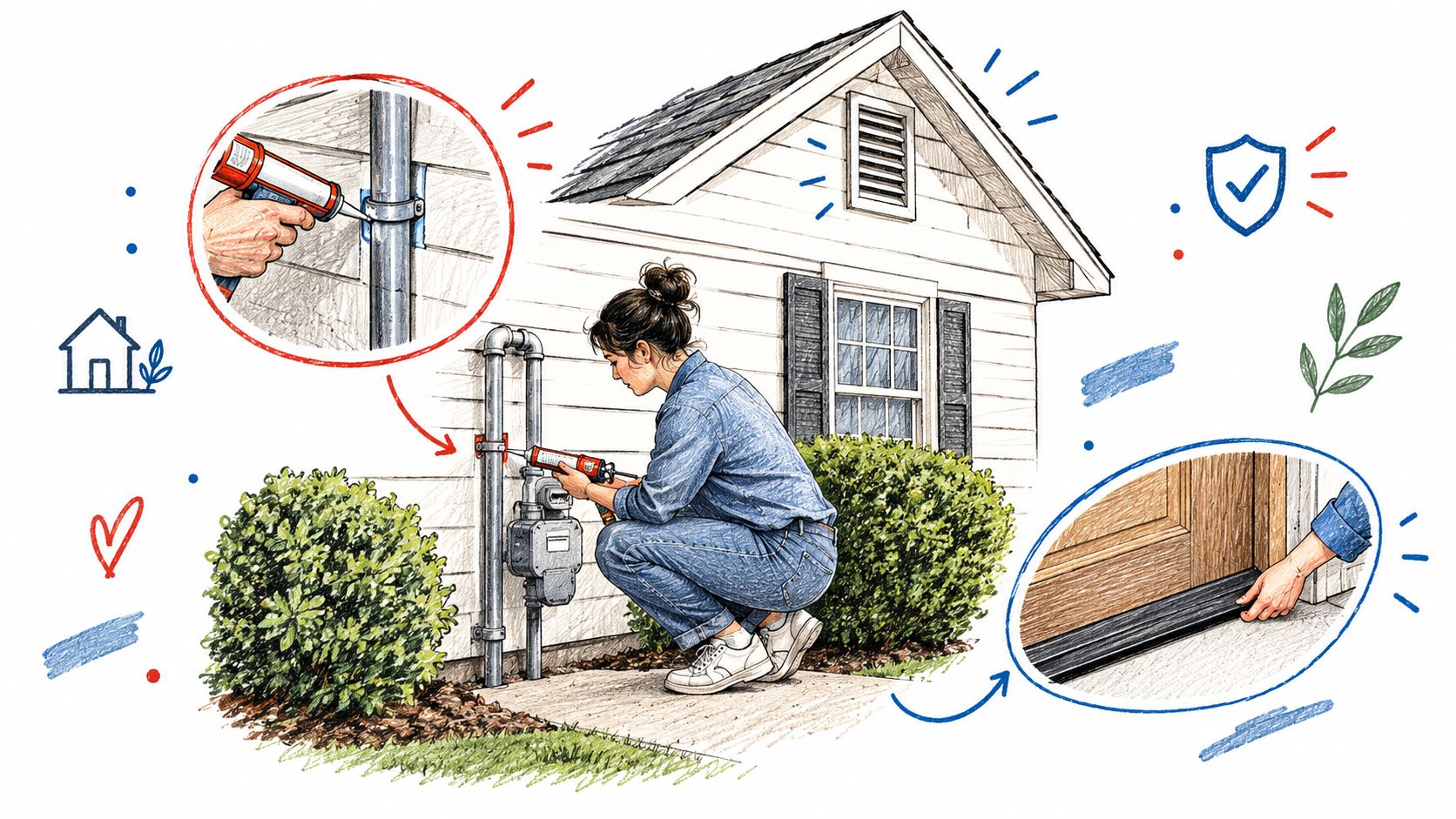
Cleaning removes the mess; exclusion helps prevent another one. Walk the outside of the home and inspect gaps around pipes, foundation openings, doors, vents, and utility lines. A rodent entry-point sealing guide can help you plan where to look and what kinds of openings need attention.
Make the outside less accessible
Seal suitable gaps around utility penetrations, fit door sweeps where there's daylight under an exterior or garage door, and check that attic vents are screened. Store pantry goods and pet food in closed containers, clear food scraps promptly, and reduce clutter where it offers rodents cover. Keep vegetation from crowding the structure so it doesn't hide openings or create easy access to the exterior.
Magnolia is in southwestern Montgomery County at the junction of FM 1774 and FM 1488, about 45 miles northwest of Houston and 25 miles southwest of Conroe. The greater Magnolia area extends roughly 12 miles in all directions, according to the City of Magnolia's location information. That makes Magnolia a distinct service area for homeowners looking for local odor assessment and rodent help, rather than treating it as central Houston.
Know when DIY has reached its limit
A homeowner can often handle accessible, limited contamination. But hidden material in an attic, crawlspace, wall, or HVAC-adjacent area can make both cleanup and exclusion more complicated. If safe access requires specialized equipment, or you've cleaned repeatedly and the odor or rodent signs return, a licensed professional can inspect the source, identify entry routes, and recommend sanitation, exclusion, or trapping.
FullScope Pest Control provides rodent services that include inspection, exclusion, sanitation guidance, and trapping. Its service locations include Magnolia, Cleveland, Kingwood, Conroe, and Porter. That's a practical option when you need help locating concealed contamination or confirming whether rodents are still getting inside.
Don't judge success by how strongly a room smells of cleaner. Check for fresh droppings, renewed odors, and openings that still need to be sealed. Keep a record of what was removed and what you inspected, then arrange a professional assessment if the evidence points to hidden contamination or continuing activity.