1500+ reviews

A rat can leave an odor in a wall or attic for up to two weeks or longer after it dies, depending on temperature and ventilation. The smell usually won't disappear until the carcass dries fully or the source is removed.
You may notice it first when you open a closed room in your Magnolia home. The odor can smell sour, stale, or ammonia-like, then seem to move when the air conditioner runs. A quick spray may soften it briefly, but rat odor removal starts with diagnosis, not deodorizer.
For homeowners in Magnolia, Texas, the key question is whether you're dealing with a contaminated surface, active rodent traffic, or a carcass hidden in an attic, wall void, or crawl space. Those problems need different responses. Magnolia sits in southwestern Montgomery County within the Houston metropolitan area, and homes across the area can have different access points, ventilation patterns, and construction details. The same smell might come from a cabinet void in one house and insulation in another.
Recognizing the Smell and Risk Pattern
A Magnolia homeowner may first blame a trash can, a drain, or a forgotten piece of food. Then the odor returns after the room has been aired out. If it seems strongest beside one wall, near a ceiling, under cabinets, or below an attic hatch, the location matters more than the exact description of the smell.
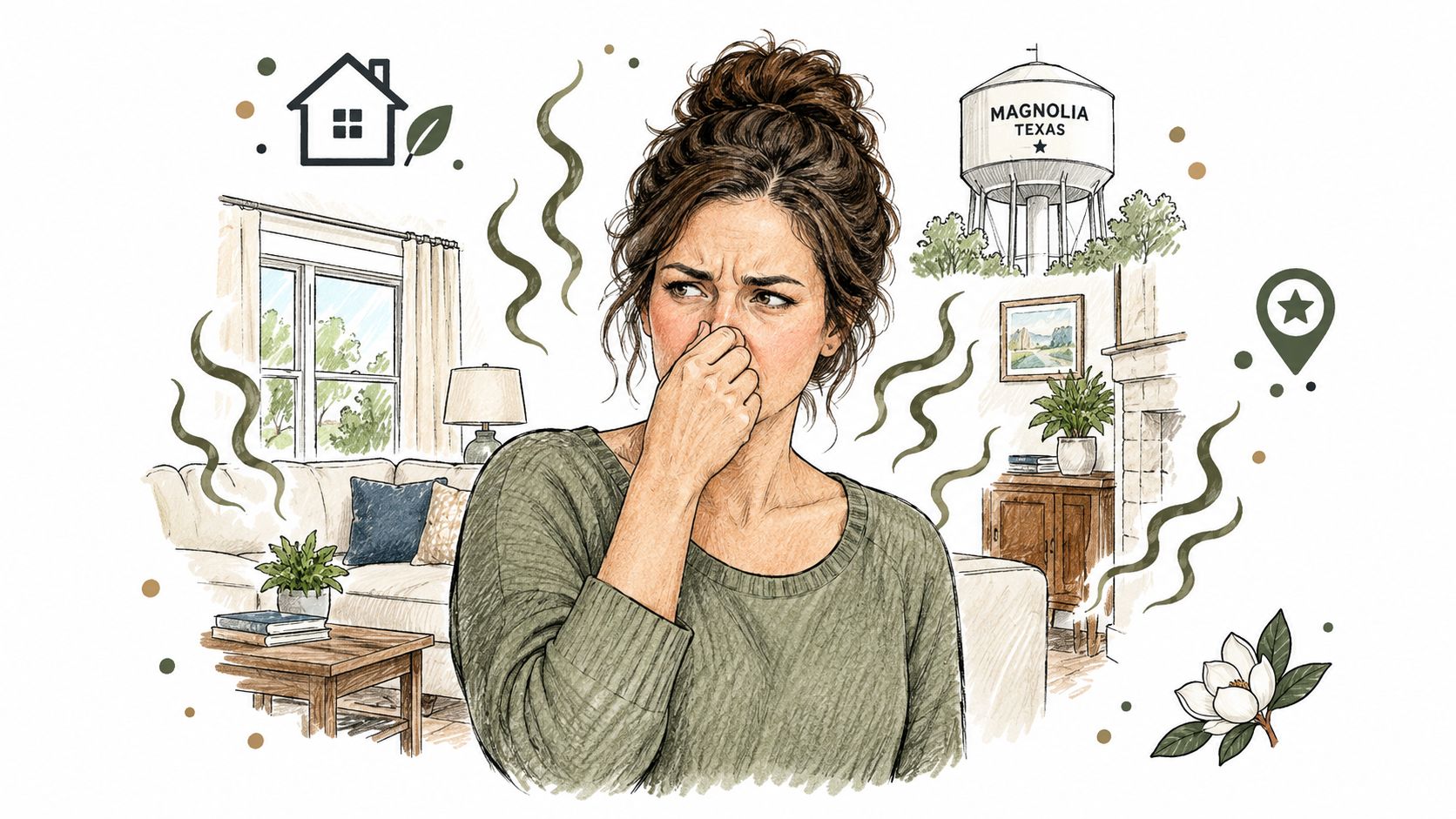
A sharp ammonia odor often points toward urine contamination or repeated rodent traffic. A heavier, sour smell that develops in one concentrated area can indicate a decomposing animal. Odor that appears in several rooms, especially alongside droppings, gnaw marks, scratching, or nesting material, suggests an ongoing access problem rather than one isolated carcass.
The smell can also change with the room. Warmth and humidity speed decomposition, while cooler, poorly ventilated areas slow it down, according to practical guidance on neutralizing dead rodent smells. That explains why an attic may smell different in the morning than it does after the roof space heats up.
Read the pattern, not just the odor
Use the following clues to form an initial working diagnosis:
- One concentrated location: Suspect a hidden carcass or a heavily contaminated nesting site.
- Several travel routes: Look for continuing urine and fecal contamination along walls, cabinets, stored materials, and utility penetrations.
- A smell that keeps returning: Assume the source remains active, embedded, or inaccessible until inspection proves otherwise.
- A recent sound followed by odor: Treat a wall or ceiling cavity as a likely source, especially if the smell is strongest there.
A useful visual and odor inspection can reveal more than guessing based on smell alone. Compare what you find with these signs of mouse and rodent infestation before you disturb contaminated material.
Practical rule: If the odor has a precise location and keeps intensifying, don't cover it with fragrance. Find out whether the source is still inside the structure.
Locating the Source Safely
Source-finding should be methodical, and it shouldn't put you in direct contact with rodent waste. Start by opening accessible windows and doors if weather and security allow. Keep children and pets away, wear disposable gloves and eye protection, and use a bright flashlight rather than reaching blindly into a cavity.
Follow the strongest path
Begin where the odor is most noticeable, then check adjacent spaces. In a Magnolia home, that may mean the attic, crawl space, garage, kitchen cabinet void, utility chase, or an interior wall near plumbing and wiring. Move slowly and compare the smell at floor level, wall level, and ceiling level. A carcass in an upper cavity may be more obvious near a light fixture, attic hatch, or ceiling penetration than directly below it.
Look for clusters rather than a single sign:
- Droppings and nesting: These point toward a place rodents have used, not necessarily the exact location of a carcass.
- Grease marks: Dark rub marks along edges can reveal regular travel routes.
- Gnawing: Damaged wiring, wood, cardboard, and insulation indicate access or nesting behavior.
- Entry gaps: Check around pipes, vents, roof intersections, garage doors, and foundation transitions.
- Staining: Discoloration or odor in insulation, drywall, and unfinished wood suggests porous contamination.
Don't sweep or vacuum what you find. Dry disturbance can aerosolize contaminated particles, which is why public-health cleanup guidance requires wet treatment before removal. If you need background on how rodents establish concealed nesting areas, review this guide to a rat nest in a house.
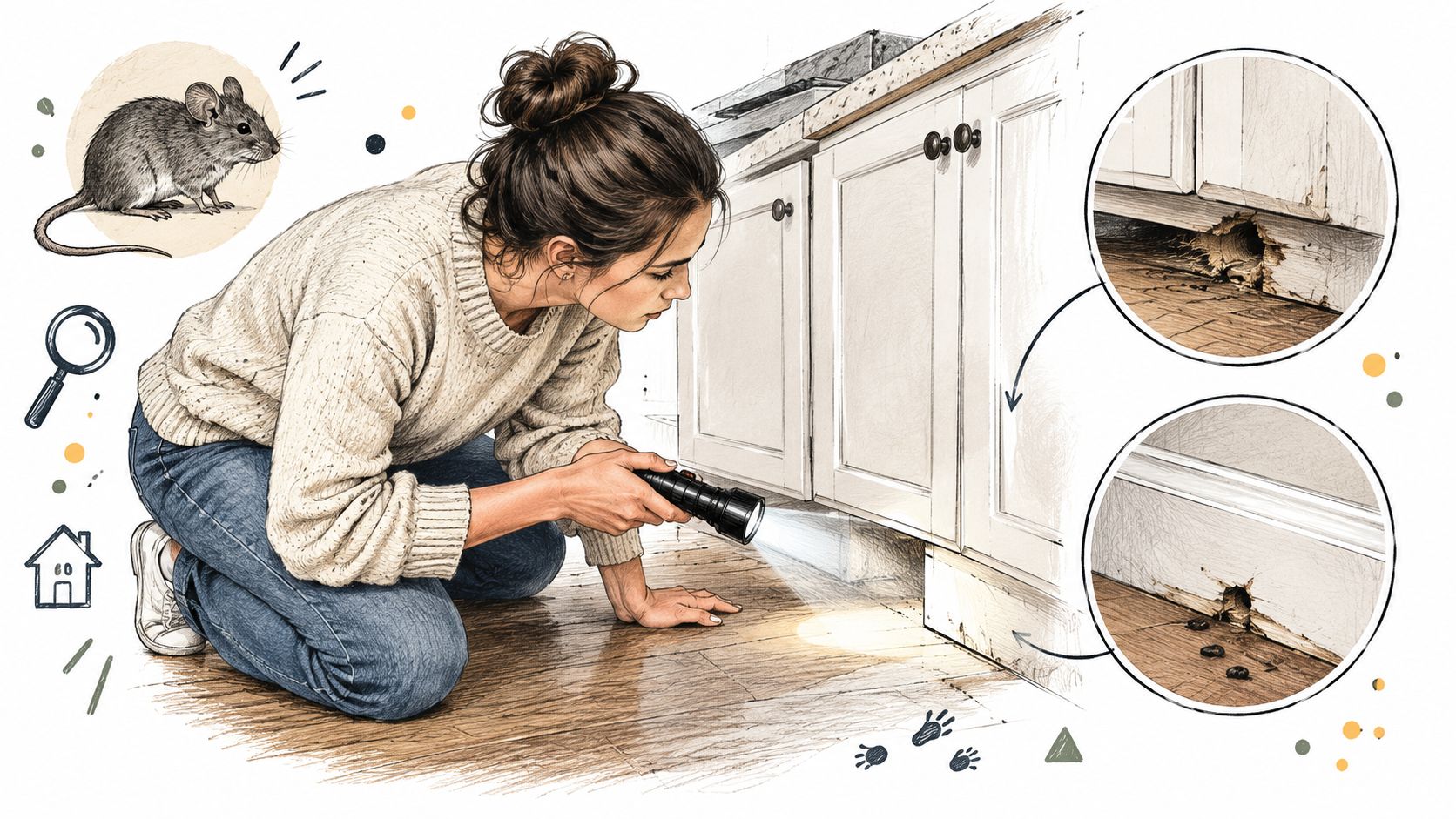
When the source isn't visible, the inspection needs to narrow the area without opening walls unnecessarily. Note where the odor is strongest, whether it changes with airflow, and whether fresh signs appear nearby. A single odor event with no new droppings may indicate one carcass. New contamination in more than one location points toward active rodents and an entry route that still needs correction.
This short visual guide can help homeowners understand the inspection process before deciding whether the space is safe to enter:
Cleaning Contaminated Areas the Right Way
Cleaning rodent contamination isn't the same as wiping a dusty shelf. Wet disinfection controls the material before removal, while dry sweeping or vacuuming can put contaminated particles into the air. The CDC's rodent cleanup guidance supports a careful, wet workflow.
Use a controlled cleanup sequence
- Ventilate first. Open windows and doors where practical, and leave the area undisturbed long enough for fresh air to circulate.
- Protect yourself. Wear gloves and eye protection. Avoid handling droppings, nesting material, or a carcass with bare hands.
- Saturate the contamination. Apply a bleach solution or an EPA-registered disinfectant until the material is very wet. Don't mist it lightly and start wiping.
- Allow contact time. Keep the disinfectant in place for about 5 minutes, as CDC guidance recommends.
- Remove with paper towels. Pick up the softened waste and place it into a covered bin or sealed waste bag.
- Disinfect again. Mop or sponge the hard surface with disinfectant after the visible material is gone.
- Finish carefully. Remove gloves without touching the contaminated exterior, then wash your hands thoroughly.
Never mix bleach with ammonia, acids, or other cleaning products. Follow the label for the product you use, and use ventilation appropriate to that product.
Know when cleaning isn't enough
Urine and decomposition odors can soak into insulation, wood, cardboard, drywall, carpet, and fabric. Those materials can continue releasing odor after the visible surface looks clean, so guidance on removing rat urine smell correctly treats sanitation and material removal as separate decisions.
Hard, nonporous surfaces usually respond better to thorough wet disinfection. Porous insulation or nesting material may need removal, and a contaminated cavity may need more than one treatment. Don't carry loose insulation or nesting debris through the home. If the material is extensive, inaccessible, or located in a poorly ventilated space, stop and arrange professional cleanup.
The purpose of this process isn't just to make the room smell better. It removes the biological material that keeps producing odor and reduces exposure during the work.
Choosing Effective Odor Control Methods
Odor control works best after the carcass, nesting material, urine, and droppings have been addressed. A deodorizer applied first may make the room seem improved while the source continues to release odor. Choose the treatment based on the material involved and whether the home is occupied.
| Method | Where it fits | Main limitation |
|---|---|---|
| Ventilation | Open, accessible areas after source removal | It can't remove contamination embedded in materials |
| Enzyme cleaner | Organic residue on suitable surfaces | It needs extended contact, not a quick spray |
| Baking soda | Small enclosed spaces after cleaning | It absorbs residual odor but doesn't disinfect |
| Activated charcoal | Cabinets, closets, and closed void-adjacent spaces | It works as an absorber, not a source-removal method |
| Ozone or hydroxyl equipment | Specialized treatment after removal | Product use requires careful safety decisions, especially in occupied homes |
Commercial enzyme cleaners need substantially longer contact than ordinary disinfectants. One expert guide recommends keeping the affected surface wet for 2 to 3 hours to support enzymatic breakdown, rather than wiping it away after a few minutes. Always follow the product label and keep children and pets away from treated areas.
Match the remedy to the failure
If the smell is on a sealed hard surface, cleaning and ventilation may be enough. If it returns from insulation, drywall, wood cavities, or carpet padding, the problem is probably embedded contamination or an undiscovered source. Baking soda and activated charcoal can help absorb residual odor in closed spaces, but neither replaces sanitation or carcass removal.
Ozone and hydroxyl treatments deserve caution. They may have a role after source removal, but they aren't a shortcut for finding a carcass, and their suitability depends on the equipment, the space, and whether people or animals remain inside. Don't run unfamiliar odor equipment in an occupied home just because the smell is strong.
For broader facility situations, this resource on how to eliminate facility odors offers useful context on matching odor treatment to the environment. In a residence, the same principle applies: remove first, neutralize second, ventilate throughout.
When Odor Points to Structural Issues
A smell that remains after proper surface cleaning often indicates a building-material problem. Rodent urine and decomposition residue can become embedded in insulation, wood, cardboard, fabric, and other porous materials, as explained in rodent contamination cleanup guidance. The surface may look acceptable while the material underneath continues to release odor.
Watch for these escalation signs
- Attic odor with stained insulation: The affected insulation may need controlled removal rather than another deodorizer.
- A wall-specific smell: A carcass or nesting site may be inside the cavity, where ordinary cleaning can't reach.
- Crawl-space recurrence: Repeated odor, droppings, or nesting indicates ongoing access or contamination below the living area.
- Damage around penetrations: Gnawing near pipes, vents, cables, or ductwork can show how rodents enter and move through the structure.
- Odor after ventilation: If fresh air helps only briefly, the source is likely still present or firmly embedded.
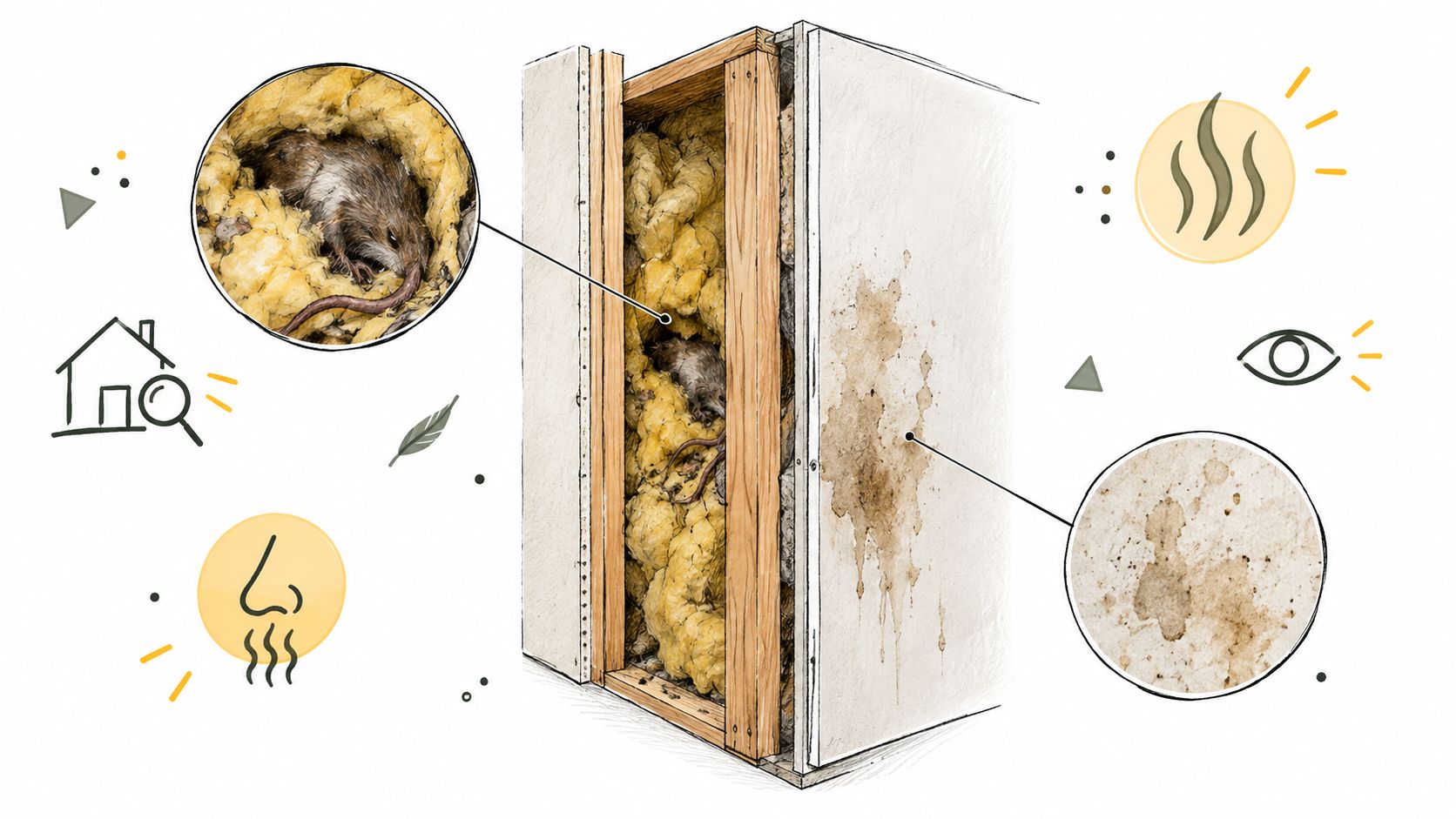
An attic or crawl space can hold more than one problem at once. A carcass may explain the sudden odor, while contaminated insulation and an unsealed entry point explain why the problem returns. Removing only the visible animal leaves the surrounding material and access route untreated.
A persistent smell behind a finished wall isn't a cleaning failure. It may be a location and access failure.
Professional remediation may involve removing contaminated insulation, cleaning exposed framing, replacing damaged porous materials, sealing voids, and repairing entry points. Cutting into a wall without knowing the cavity layout can create unnecessary damage and spread contamination, so homeowners should avoid exploratory demolition unless the area is clearly safe and accessible.
Hiring Local Pest Control in Magnolia
DIY cleanup has a reasonable boundary. If you can identify a small, accessible area and follow wet disinfection practices, you may manage limited hard-surface contamination. The boundary arrives when the source is hidden, the odor returns, insulation is involved, or rodents are still entering.
A licensed local pest management company should begin with an inspection, not a generic odor spray. The technician should identify likely entry points, inspect accessible attic and crawl-space areas, look for activity patterns, and explain whether the work involves trapping, exclusion, sanitation guidance, or contaminated-material removal.
Questions to ask before work begins
- Where do you believe the odor originates? Ask whether the conclusion is based on visible evidence, odor mapping, or both.
- Will you address entry points? Removing a rat without exclusion leaves the structure vulnerable to another intrusion.
- How will contaminated materials be handled? The provider should explain wet treatment, bagging, and disposal procedures.
- What happens if the carcass is inside a wall? Clarify whether the company performs access work or coordinates with another contractor.
- Will you provide follow-up guidance? You need a plan for monitoring, sealing, and responding if odor returns.
Magnolia's primary ZIP code is 77354, and the city is also served by 77353 and 77355 (ZIP code service information). Nearby communities include Stagecoach, about 5 miles southeast, and Todd Mission, about 6 miles northwest; Pinehurst, Conroe, Montgomery, The Woodlands, and Spring are also within roughly 15 miles (nearby community information).
FullScope Pest Control is one local option offering rodent inspection, exclusion, trapping, and sanitation guidance, with operations in nearby Texas locations including Conroe and Porter. Compare providers on licensing, inspection detail, cleanup scope, and exclusion work rather than choosing based only on a promised odor product.
Next Steps for Ongoing Protection
Once the source has been removed and the affected area treated, don't judge success only by whether the room smells better that afternoon. A proper result means the odor source is gone, contaminated materials have been addressed, and the structure no longer offers an easy route back inside.
Use a simple follow-up checklist:
- Confirm the source: The technician or homeowner should be able to identify what produced the odor and where it was located.
- Check adjacent materials: Inspect insulation, wood, cardboard, drywall, and fabric near the source for embedded contamination.
- Verify access repairs: Look at roofline gaps, vents, utility penetrations, garage transitions, and foundation openings.
- Monitor for fresh evidence: New droppings, gnaw marks, nesting, scratching, or a returning ammonia smell deserve prompt attention.
- Keep food and waste secured: Store pantry goods and pet food in closed containers, and keep attractants away from rodent travel areas.
- Reduce concealment: Clear unnecessary cardboard, clutter, and nesting material from garages, attics, and storage spaces.
- Choose the right follow-up: A one-time event may need targeted remediation, while recurring signs call for ongoing pest management and exclusion review.
A returning odor doesn't automatically prove that another rat has died. It can mean an old residue remains in porous material, or it can signal active rodents using the same route. The right response is to compare the odor location with new physical evidence and escalate quickly when both appear.
For residents in Magnolia, Stagecoach, Todd Mission, Conroe, Montgomery, Pinehurst, The Woodlands, Spring, and surrounding Southeast Texas communities, arrange a local rodent inspection when the source is hidden or the smell persists after safe cleaning. Contact a licensed provider, describe where the odor is strongest, and request a plan that covers source removal, sanitation, exclusion, and follow-up, not masking alone.
If a rat odor is affecting your Magnolia home, contact FullScope Pest Control to schedule an inspection covering the suspected source, accessible attic or crawl-space areas, entry points, and the cleanup steps needed to restore the space safely.