1500+ reviews

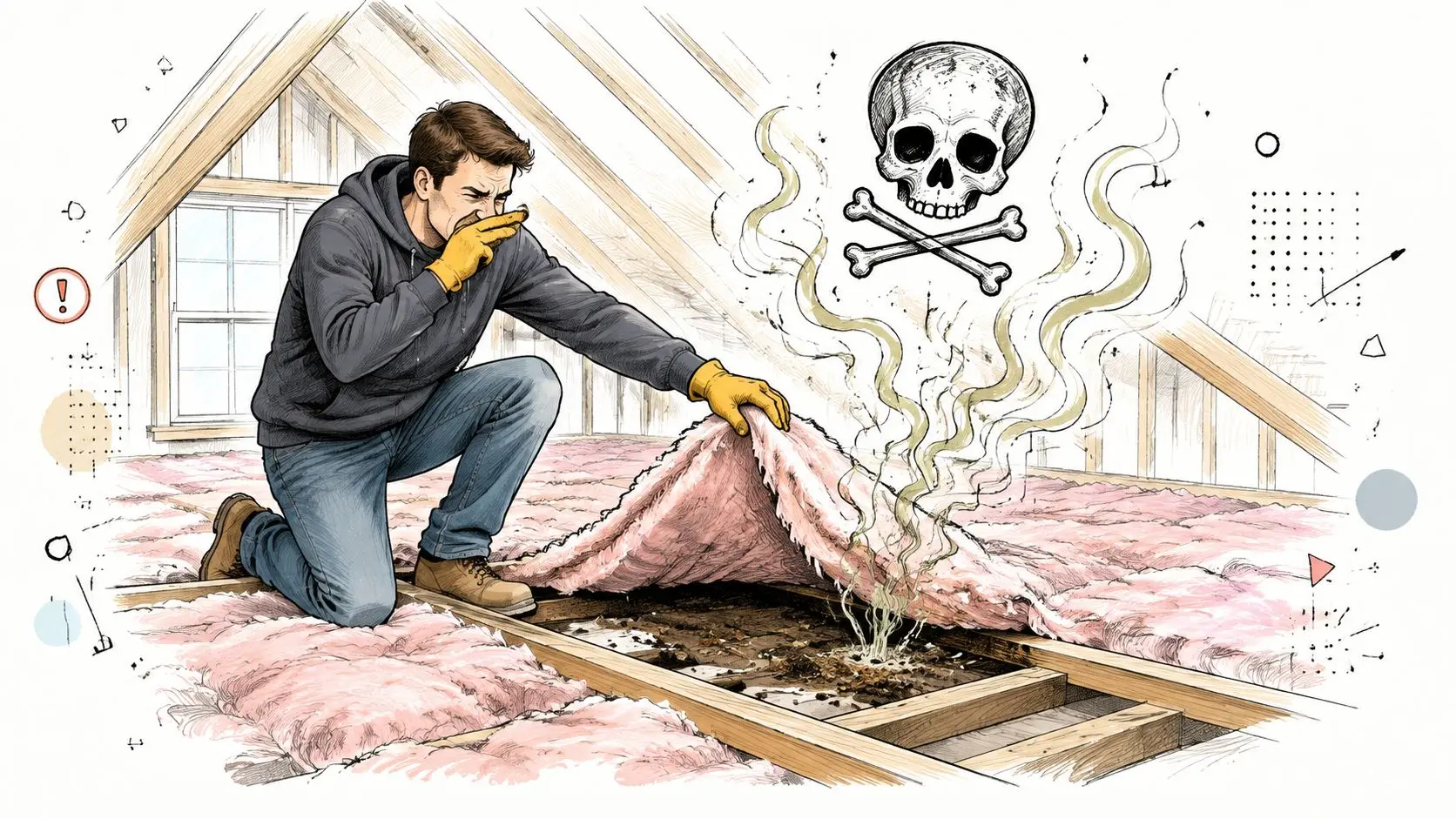
You pull back a section of attic insulation in your Magnolia, Texas home and the odor hits immediately, sharp ammonia over a stale, musky base. Maybe you first noticed it near a return vent, behind a kitchen cabinet, or after hearing movement above the ceiling. Air freshener may soften the room for a few hours, but it won't remove urine soaked into insulation, plywood, drywall, or hidden framing.
How to get rid of rat urine smell starts with treating the contamination safely, then finding how far it traveled, removing materials that can't be saved, and stopping the rats from returning. In Southeast Texas homes, pier-and-beam subfloors, attic insulation, and HVAC runs can carry odor well beyond the original deposit. The smell is a sanitation warning before it's a cosmetic problem.
What Rat Urine Odor Really Signals in Your Home
A homeowner in the Magnolia area may discover the problem during an attic renovation. The insulation looks ordinary until it's lifted, then a concentrated odor rises from the joists. A recent rodent sighting can explain the sharp ammonia note, while the heavier musk often points to older deposits that have soaked into surrounding material.
That distinction helps determine the scope of cleanup. Fresh urine can remain on the surface of framing or flooring, but repeated activity may saturate attic joists, insulation, subflooring, cabinet bases, and HVAC pathways. A return-air system can pull odor from an attic or wall-adjacent cavity and distribute it through rooms that never had visible staining.
In a pier-and-beam home, the trail may run below the living space. Rats can travel around plumbing penetrations, settle near the subfloor, and leave contamination where access is cramped. In slab homes, gaps around utility lines, brick veneer transitions, and kitchen base cabinets can create similar hidden reservoirs.
Why odor belongs in the health conversation
Infected rodents can shed the bacteria responsible for leptospirosis through urine, and the CDC clinical overview of leptospirosis advises cleaning and disinfecting contaminated surfaces while using protective equipment. New York City health officials also warned about rat urine and materials contaminated with rat urine after documenting a continued increase in leptospirosis cases in 2024, as reported in the same CDC-linked public-health context.
That doesn't mean every odor indicates disease transmission. It does mean you shouldn't treat persistent rat urine as a fragrance issue. The contamination may require full-surface disinfection, repeat treatment, material removal, and rodent exclusion.
Before cleaning, inspect for the broader signs of mouse and rodent infestation. Droppings, rub marks, nesting material, gnawing, and fresh activity change the job from odor cleanup to active rodent remediation.
Field rule: If the smell returns after the room has been cleaned, assume the source is hidden or the rodent entry route is still open.
Safety First and the CDC Disinfection Protocol
The safest cleanup is wet disinfection before wiping. The CDC says to spray rodent urine and droppings with a bleach solution or an EPA-registered disinfectant until the material is very wet, allow it to soak for 5 minutes, then remove it with paper towels and disinfect the area again. The CDC rodent cleanup protocol also says not to sweep or vacuum dry urine and droppings.
Start by clearing people and pets from the work zone. Wear gloves, eye protection, protective footwear, and a properly fitted respirator suitable for dusty contamination. Disposable coveralls reduce the chance of carrying residue into the living area, while washable clothing should go directly into a hot wash after the work.
The wet-cleaning sequence
Ventilate carefully. Open suitable windows and doors where possible, but don't point a fan across dry droppings or stains. In an enclosed attic, a remediation crew may use controlled exhaust or negative pressure to keep contaminated air from moving into occupied rooms.
Prepare the disinfectant. For the CDC bleach mixture, use 1 and 1/2 cups of household bleach in 1 gallon of water, following the CDC hantavirus disinfection guidance. Never combine bleach with ammonia, acids, enzyme products, or other cleaners.
Soak the contamination. Spray until urine, droppings, nesting debris, and nearby hard surfaces are thoroughly wet. Leave the solution in place for 5 minutes before disturbing anything.
Wipe, bag, and repeat. Use paper towels or damp towels, place waste in heavy-duty plastic bags, and disinfect the area again. The CDC recommends cleaning hard surfaces throughout the affected area, including floors, countertops, cabinets, and drawers, rather than stopping at the visible spot.
Many homeowners make the dangerous mistake of reaching for a shop vacuum. Dry sweeping, brushing, or vacuuming can stir contaminated particles into the breathing zone before disinfection has reduced the hazard.
For broader pest-control safety precautions, use the same conservative approach. If dust is substantial, the attic is confined, or insulation must be disturbed, stop instead of improvising with household equipment.
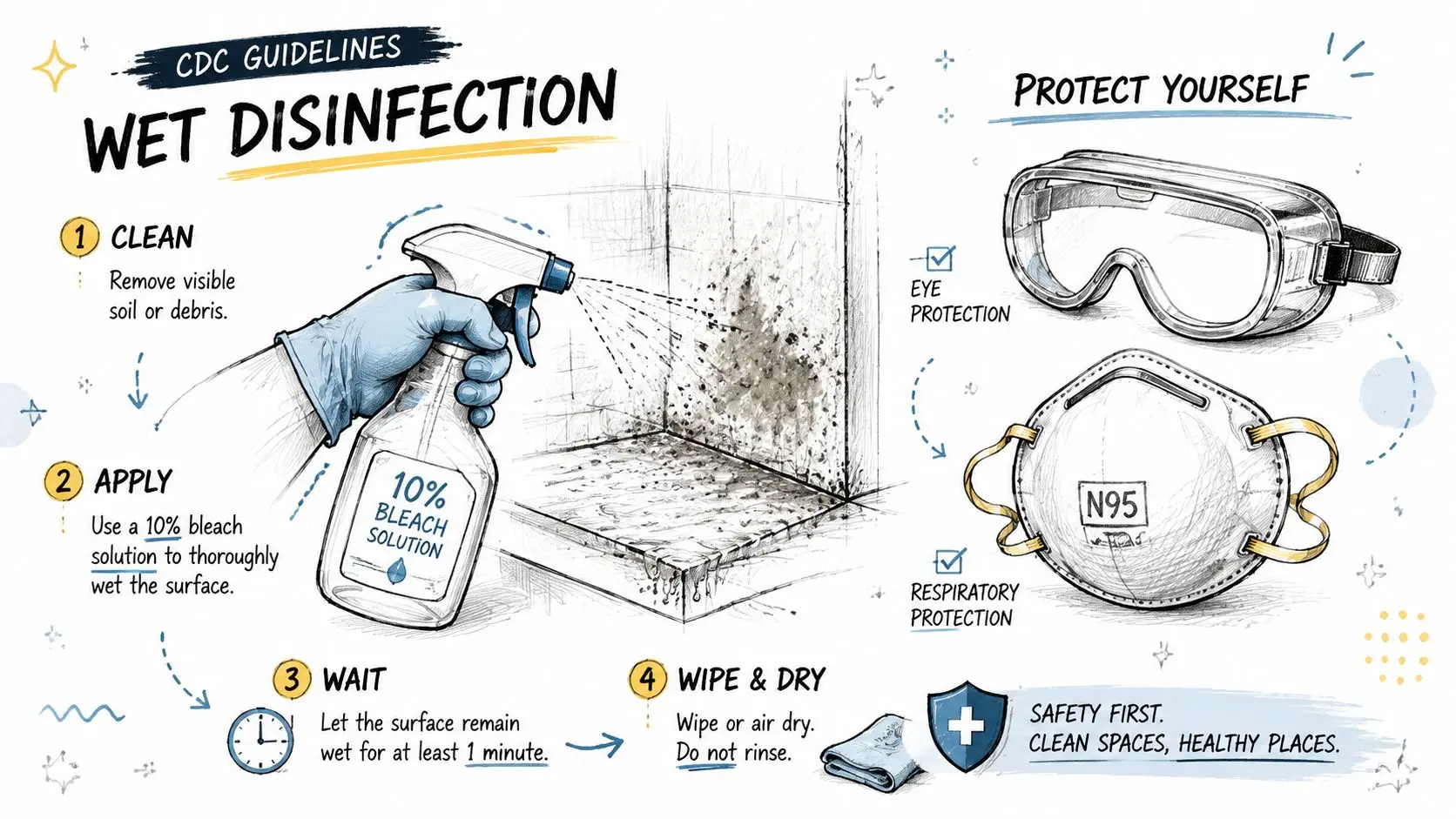
Bleach is appropriate for many hard, non-porous surfaces, but it can damage fabrics, unfinished wood, metals, insulation, and painted materials. Once the contamination has been safely disinfected, enzyme treatment becomes the more suitable odor-removal step for many remaining residues.
How Enzyme Cleaners Break Down the Smell
Disinfectant and enzyme cleaner perform different jobs. Disinfectant reduces contamination on suitable surfaces. An enzyme product targets the organic residue that continues releasing odor after urine dries.
As urine dries, it can leave behind uric acid crystals. Ordinary soap, fragrance sprays, and many general-purpose cleaners may remove visible dirt or mask the smell without breaking down those crystals. A neutral guide to removing rat-infestation odor identifies powerful enzymes as the substantive mechanism for breaking down the compounds responsible for lingering odor and recommends liberal application with a 2 to 3 hour treatment period.
Apply enough product to reach the deposit
Lightly misting the surface isn't enough when urine penetrated wood, carpet pad, or insulation. Apply the enzyme cleaner liberally, keeping the affected area wet for at least 2 to 3 hours. If the surface dries early, reapply. The solution needs contact with the residue, not just the surrounding air.
Don't mix enzyme products with bleach or quaternary ammonia cleaners. Those chemicals can deactivate the biological action that makes enzyme treatment useful. Let the disinfected surface dry as directed, then use the enzyme product separately.
| Surface | Minimum Dwell Time | Application Method | Expected Outcome |
|---|---|---|---|
| Sealed tile or finished flooring | 2 to 3 hours | Wet the stained area, maintain contact, then wipe or rinse | Strong odor reduction when contamination remains near the surface |
| Finished wood or accessible plywood | 2 to 3 hours | Apply along seams and stained grain, then remove residue | Improvement, though deep saturation may remain |
| Carpet or carpet pad | 2 to 3 hours | Saturate fibers and pad where urine traveled | Partial to substantial improvement, depending on depth |
| Batt insulation | 2 to 3 hours | Treat only when the material is safe and realistically salvageable | Limited result if urine soaked through the batt |
| Drywall or wall cavities | 2 to 3 hours | Treat exposed contamination only | Surface improvement, with removal often needed for deep saturation |
Pet-odor enzyme products can be a practical substitute when a dedicated rodent urine formula isn't available locally. They still won't make unsalvageable insulation or heavily contaminated wallboard reusable. Porous materials often hold odor below the treated surface, so repeated spraying can waste time while leaving the true reservoir in place.
Removing Contaminated Materials You Cannot Save
The key decision is simple: treat what can be reached, remove what has absorbed contamination beyond practical recovery. A small isolated area on accessible plywood may respond to disinfection, enzyme treatment, and an odor-blocking sealer. Fiberglass batts soaked with rat urine in a Magnolia attic usually belong in the disposal category, not the cleaning category.
Cellulose insulation is especially difficult because loose fibers hold contamination throughout the material. Fiberglass can sometimes be evaluated, but saturated sections still create a disposal problem. Carpet pad, heavily contaminated fabric, nesting material, and porous debris often cost less to replace than to repeatedly treat.
Use a controlled tear-out method
Wear at least an N95 respirator, gloves, eye protection, and a disposable Tyvek-style suit. Wet the material before moving it so the work doesn't create unnecessary dust, then place it into 6 mil contractor bags. Double-bag the waste and keep it sealed until disposal rules for your area are confirmed.
The most hazardous moment is often tear-out, not the final deodorizing pass. Moving contaminated insulation or breaking open a stained cavity can release residue that had been sitting undisturbed.
A homeowner may reasonably remove a single accessible insulation batt or a small section of carpet pad if there is no heavy dust, no confined-space concern, and no need to open structural assemblies. That work still requires wet handling and protective equipment.
Know when the structure changes the job
HVAC duct cleaning is professional territory when urine or nesting material is inside the ductwork, return chase, or near an evaporator coil. Cleaning one register won't solve contamination inside the system, and aggressive brushing can distribute debris.
Pier-and-beam subfloor work also deserves caution. Removing saturated plywood below a home involves tight access, structural support, electrical and plumbing hazards, and contaminated dust. Wall cavities create the same problem after insulation removal. Hantavirus and leptospirosis concerns make controlled containment more important than finishing quickly, especially when the affected area is broad or occupants already report irritation.
Comparing Odor-Neutralizing Products and Methods
No single odor product handles every rat urine situation. Enzymes are the direct treatment for accessible organic residue, charcoal helps with airborne odor, ozone is a specialized approach with serious occupancy restrictions, and sealing primers are a finishing measure after the source has been removed or treated.
| Method | How It Works | Best Surface | Limitations | Approx. Cost |
|---|---|---|---|---|
| Enzyme cleaner | Breaks down urine residue through enzymatic action | Accessible hard surfaces, wood, carpet fibers | Needs saturation and a 2 to 3 hour dwell; weak choice for deeply soaked insulation | Varies by product and treatment area |
| Activated charcoal bags | Passively adsorb odor molecules from the air | Closed attics, crawl spaces, small rooms | Doesn't remove contamination or stop active odor production | Varies by product and quantity |
| Ozone generator | Oxidizes odor compounds in treated air | Unoccupied, controlled spaces after source removal | People and pets must be out; poor reach inside insulation and wall cavities | Varies by rental or service |
| Sealing primer | Locks residual odor into a substrate | Dry plywood, framing, or drywall that remains in place | Won't fix active contamination or wet materials | Varies by product and coverage |
Match the method to the surface
For a hard floor or cabinet base, disinfect first, then apply an enzyme cleaner with enough dwell time. For an attic or crawl space with a mild residual smell after source removal, activated charcoal can reduce airborne odor while the structure dries. It won't replace sanitation.
Ozone is not a shortcut for a contaminated attic. It requires an unoccupied home, careful control, and a source that has already been removed. Odor trapped inside insulation can remain outside the generator's effective reach.
On plywood or drywall that has been cleaned and dried but still smells, a sealing primer such as KILZ Original or B-I-N shellac-based primer may be the appropriate final layer. Don't seal over wet wood, active urine, or unresolved rodent access.
Homeowners often confuse odor remediation with unrelated surface restoration. If hard-water marks on nearby glass need attention after the pest work, a guide to professional window stain solutions can help, but window cleaning won't address rat urine contamination.
Direct recommendation: Use enzymes for reachable residue, remove saturated porous materials, use charcoal for residual air odor, and reserve sealing primer for clean, dry substrates.
Exclusion and Sanitation to Prevent a Return Visit
Odor returns when rats return. In Magnolia and surrounding Montgomery County homes, inspect the places where building materials, utilities, and ventilation create small but usable openings.
Start outside and work inward. Check the brick veneer transition, slab edges, attic vents, plumbing penetrations under pier-and-beam homes, and the opening around the HVAC line set where it enters the wall. Look for rub marks, gnawing, droppings, disturbed insulation, and daylight visible from inside.
Seal according to the opening
Small gaps can often be packed with steel wool and secured with expanding foam. Larger openings need hardware cloth fastened firmly, followed by exterior-grade sealant around the edges. Foam alone isn't a reliable barrier where rats can chew or where movement separates the repair from the surrounding material.
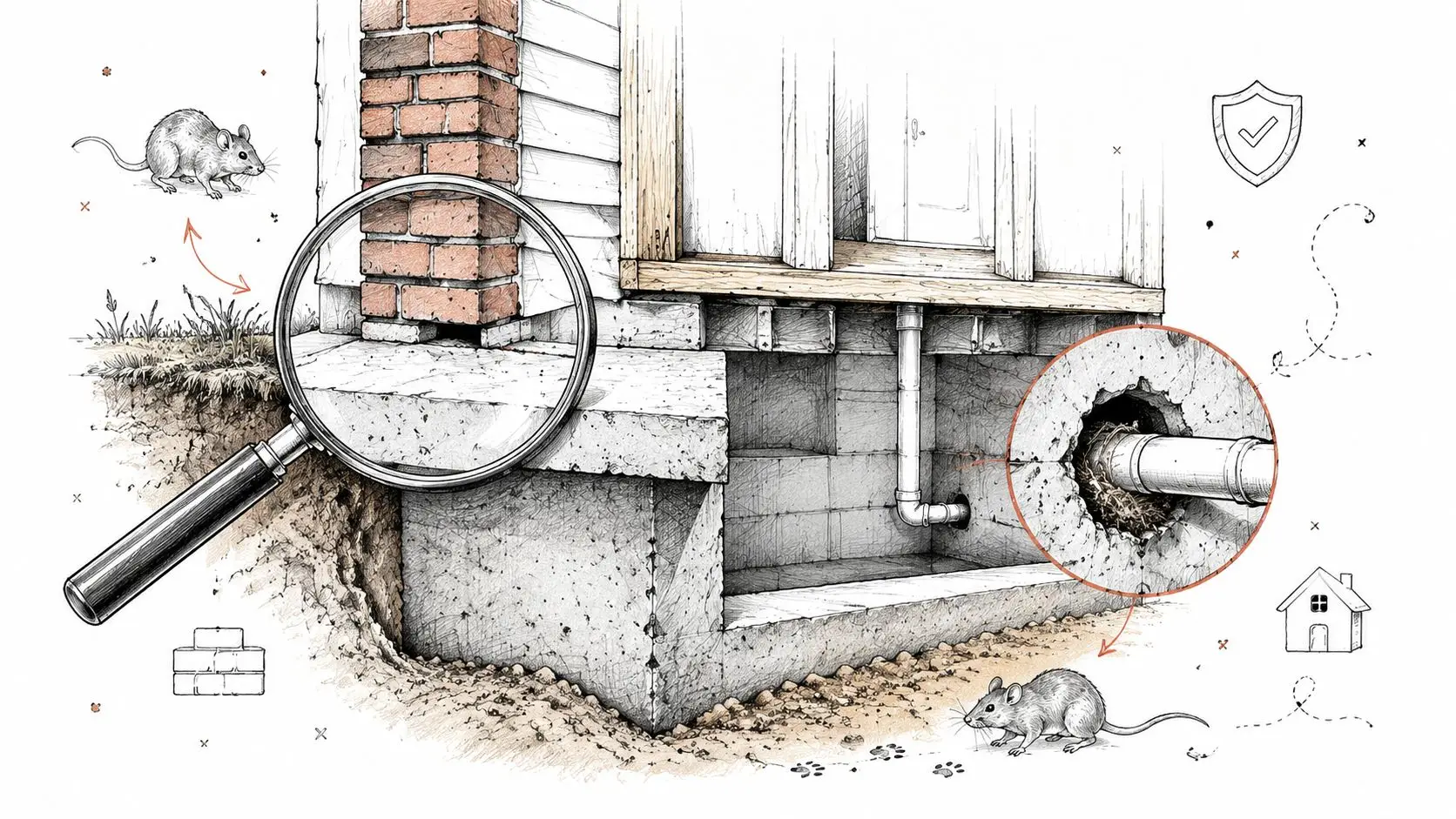
The common signs of rats in your home can help you decide whether an opening is still active. Don't permanently seal a route before confirming that animals aren't trapped inside. Exclusion should follow inspection, trapping or removal, and sanitation.
For a more detailed entry-point review, use this guide to identifying and sealing common entry points for rodents.
Remove the attractions
Sanitation works best when it addresses what drew the rats there:
- Pet food: Store it in metal containers instead of leaving a dependable food source accessible overnight.
- Bird feeders: Keep them at least twenty feet from the structure so spilled seed doesn't create a feeding zone beside the walls.
- Compost: Position compost bins away from the foundation and keep lids secured.
- Gutters: Clean debris so moisture doesn't remain against fascia and create a damp travel or nesting area.
These changes won't clean existing urine, but they reduce the conditions that support another infestation. In a Magnolia property with dense vegetation, crawl-space access, and humid seasonal weather, exclusion and sanitation need to accompany odor treatment.
When to Call FullScope Pest Control in Magnolia and Beyond
DIY cleanup ends when the odor source is hidden, widespread, or connected to building systems. Call for professional help when the smell returns within two weeks of cleaning, spreads through vents, or becomes stronger after the HVAC runs. Recurring odor usually means the original deposit wasn't reached, contaminated material remains, or rodents are still active.
Professional evaluation is also appropriate when urine has reached ductwork, evaporator coils, wall cavities, or subflooring. A soaked attic patch may look manageable until insulation is moved and the contamination extends across joists. Under a pier-and-beam home, saturated subfloor removal can combine biological exposure with structural, electrical, and plumbing hazards.
Practical triggers for escalation
- Recurring odor: The smell comes back after careful wet disinfection and enzyme treatment.
- HVAC contamination: Odor enters supply or return air, or nesting material is visible near the system.
- Broad insulation damage: More than a small attic patch is affected, especially where cellulose or fiberglass is saturated.
- Structural saturation: Plywood, wallboard, or framing continues to smell after cleaning and drying.
- Occupant symptoms: People report respiratory irritation or flu-like symptoms after exposure. Leave the area and seek appropriate medical advice rather than continuing cleanup.
A professional rodent remediation visit may include inspection with UV and moisture mapping, safe removal of contaminated building materials, hospital-grade disinfection, enzyme treatment, odor-neutralizing sealing, and exclusion work. FullScope Pest Control offers rodent inspection, exclusion, trapping, and sanitation guidance, making it one service option for properties in Magnolia, Conroe, The Woodlands, Kingwood, and nearby Southeast Texas communities.
The service area includes Magnolia, Texas, an incorporated Montgomery County city with postal codes 77353 through 77355, as documented by Magnolia location information. That matters when a homeowner needs a technician familiar with local construction patterns rather than a generic odor product recommendation.
If the smell keeps returning, the source is inside the HVAC system, or structural drying and material removal are required, contact FullScope Pest Control for an inspection serving Magnolia and surrounding Montgomery County communities. Describe where the odor is strongest, whether it changes when the HVAC runs, and whether you found droppings or contaminated insulation so the technician can plan the right response.
Don't keep covering rat urine odor with fragrance. Schedule a rodent inspection and remediation assessment when contamination is hidden, structural, or recurring, and address both the source and the damaged materials before the smell cycles back through your home.