1500+ reviews

Integrated pest management is a science-based decision system that combines inspection, monitoring, prevention, and the least-toxic effective controls to manage pests while reducing economic, health, and environmental risks. If you're in Magnolia and keep finding ants near the back door, IPM asks why they're getting there, how much activity exists, and what combination of repairs, monitoring, and targeted treatment will solve the problem without spraying everything in sight.
That question matters in Kingwood, Conroe, Cleveland, and nearby Southeast Texas communities. Humidity, mild winters, dense vegetation, and homes built near wooded or rural edges can keep pest pressure active through much of the year. A good IPM program doesn't begin with a product. It begins with evidence.
What Integrated Pest Management Actually Means
A Magnolia homeowner may wipe away an ant trail in the kitchen, only to find another line along the patio the next morning. A conventional response might be to spray the visible ants. An IPM response starts by inspecting the back door, checking for gaps, looking for moisture, identifying the ant species, and tracing where the trail begins.
The EPA's principles of integrated pest management describe IPM as a system of evaluations, decisions, and controls that uses inspection, monitoring, and reporting to select economical controls with the least possible hazard to people, property, and the environment. In plain language, IPM is a process, not a bottle of pesticide.
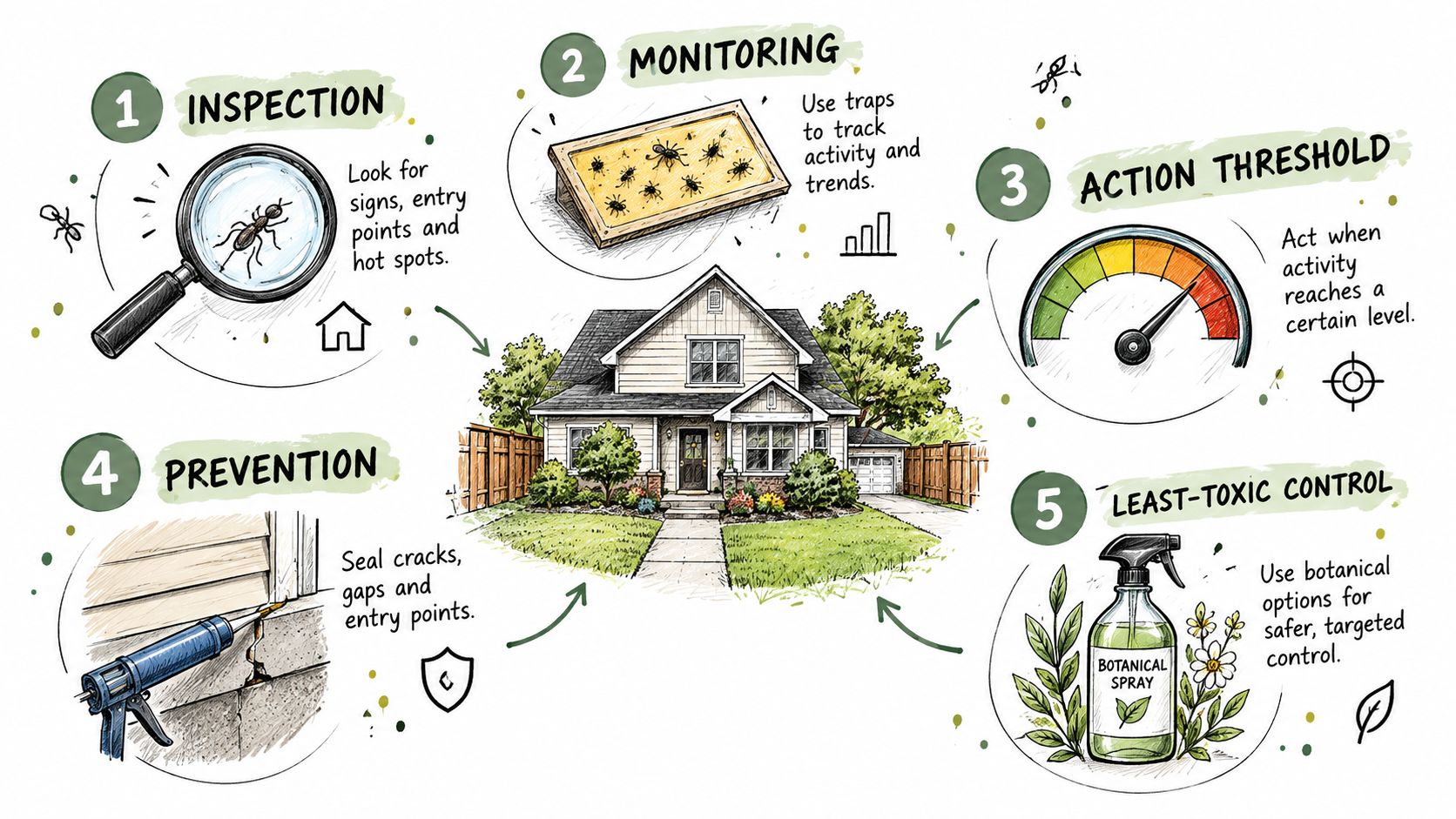
The process has four practical parts:
- Inspection: Find the pest, its entry route, food source, water source, shelter, and conditions helping it survive.
- Monitoring: Use observations, traps, glue boards, stations, or other tools to determine whether activity is occasional or established.
- Prevention: Correct the conditions that invite pests, such as leaking plumbing, unsealed gaps, clutter, standing water, or vegetation touching the structure.
- Least-toxic effective control: Choose the least intensive option that can reasonably solve the verified problem. That might be sanitation, exclusion, trapping, biological control, bait, or a targeted pesticide application.
A useful comparison is medical triage. A doctor doesn't prescribe the strongest medication before checking symptoms, history, and likely causes. Rest and hydration may be enough for a minor problem, while a more serious condition requires a specific treatment. IPM follows the same logic, but the patient is a building, outdoor area, crop, or facility.
Practical rule: Don't ask only, “What kills this pest?” Ask, “What keeps this pest here, and how will we know the solution worked?”
The approach is especially useful in Southeast Texas because conditions can support ants, roaches, mosquitoes, rodents, termites, and other pests across changing seasons. IPM doesn't promise that pests will never appear. It creates a repeatable way to identify risk early, respond proportionately, and reduce the chance that the same issue keeps returning.
How IPM Became the Standard Approach
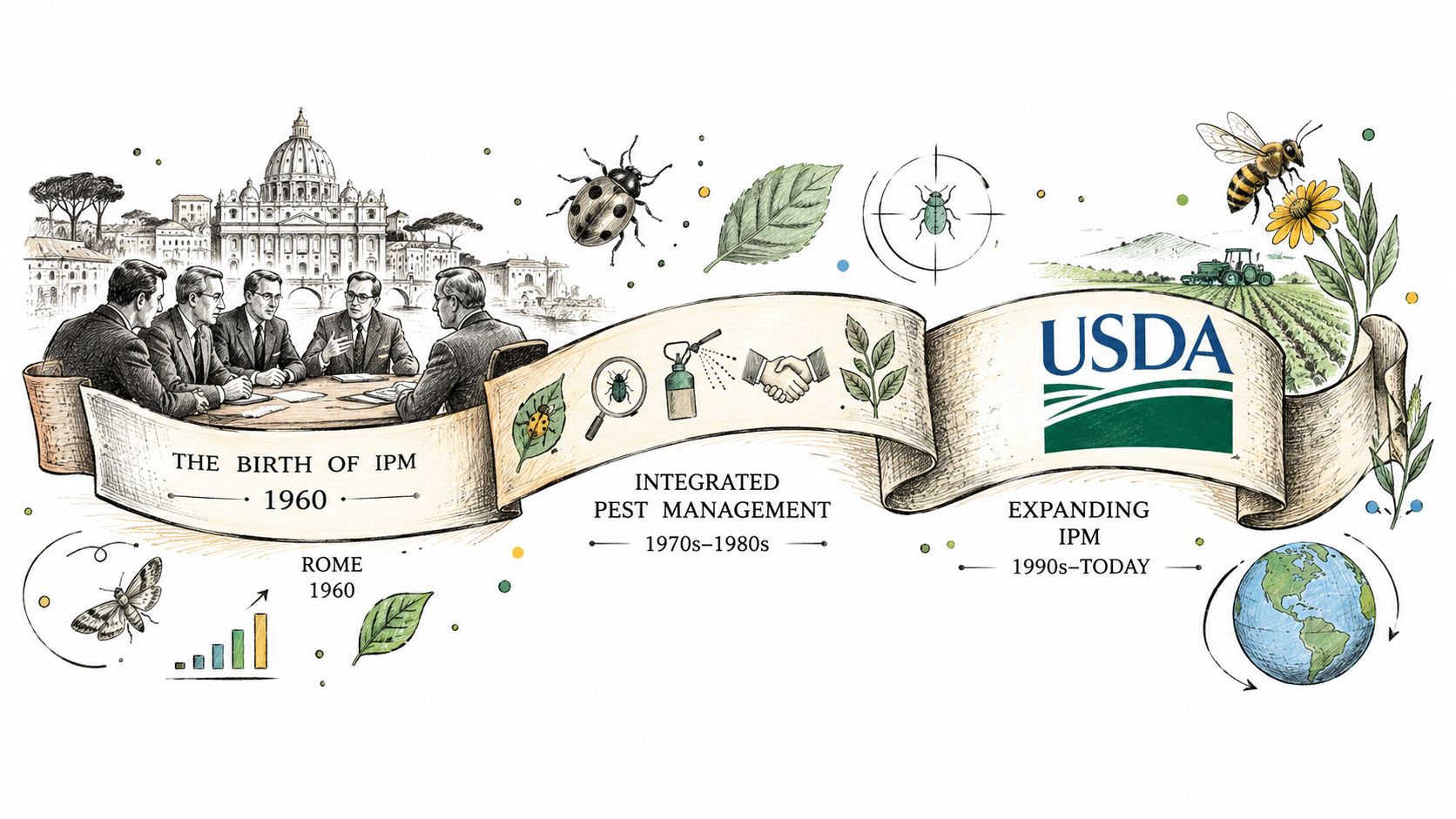
A pest problem in a Southeast Texas home can look like a request for stronger chemicals. IPM changed that starting point. In 1965, a Food and Agriculture Organization symposium in Rome formally defined the approach. The meeting included 87 delegates from 34 countries and 7 international agencies, according to the historical overview published by SciELO.
The important shift was practical. Pest control began moving beyond automatic pesticide use toward decisions based on observed conditions. Biological, cultural, physical, and chemical tools could be combined according to the situation, much like choosing the right repair after finding the source of a leak rather than painting over the stain.
IPM later expanded from agriculture into human health, animal health, and urban and rural structures. The same historical overview reported IPM on more than 50% of crop acreage in fruits, nuts, vegetables, and field crops for at least one major pest category. It also reported adoption on 54% of grape acres, 64% of orange acres, and 54% of almond acres, as covered in that historical overview. Those figures illustrate how a crop-protection framework became a standard management strategy in high-value production systems.
The framework also gives professionals a repeatable process. USDA-linked guidance describes an 11-step implementation process involving objectives, monitoring, action thresholds, documented decisions, and outcome evaluation. That structure applies whether a technician is addressing ants in a Magnolia home, rodents in a Cleveland business, or crop pests elsewhere.
IPM is therefore a management discipline, not a chemical menu. Its consistent rule is simple: prevent conditions that invite pests, monitor activity, and intervene when evidence supports action.
The Core Principles of IPM Explained
A damp crawlspace in a Kingwood home shows how integrated pest management works in practice. A homeowner may notice ants, silverfish, or an occasional roach indoors. That observation starts an investigation, not an automatic decision to spray every room. The technician looks for moisture, wood-to-soil contact, plumbing leaks, foundation gaps, and other conditions that could support pest activity.
Inspection finds the conditions behind the symptom
Inspection is a structured review of the property. The technician checks the foundation, doors, utility penetrations, crawlspace, attic, plumbing areas, landscaping, drainage, and sheltered locations where pests can enter or remain.
In this Kingwood example, the inspection could find damp soil under the crawlspace, a loose screen, and vegetation touching the exterior wall. The insects are the visible symptom. Those property conditions help explain why the home continues to attract them.
What you can verify: A useful service report identifies locations and conditions, rather than just stating that pests were present.
Monitoring shows whether activity is persistent
One insect does not establish an infestation. Monitoring separates an isolated intruder from a continuing pattern by collecting observations over time. Glue boards, rodent stations, insect monitors, visual checks, and homeowner reports can all contribute evidence.
A technician might place monitors near the crawlspace entrance, garage, kitchen plumbing, and exterior foundation. Follow-up checks show where activity continues, whether it shifts to another area, and whether the initial corrections changed the pattern. The Texas A&M's IPM Program presents monitoring as part of a decision process that connects observed pest activity with appropriate management.
Monitoring turns a guess into a decision.
Action thresholds prevent unnecessary treatment
An action threshold is the point at which pest presence, damage, or risk makes control reasonable. The threshold depends on the property and the pest. A few ants near a garage may justify observation and exclusion, while repeated roach activity in a kitchen calls for faster action because sanitation and health concerns are different.
The decision should come before the treatment. A provider first defines what evidence would justify intervention, then selects a response suited to that evidence. Treating first and deciding afterward whether treatment was needed removes the framework that makes IPM accountable.
What you can verify: Ask what findings will trigger treatment, what response will be used, and what evidence will show that treatment is no longer necessary.
Prevention changes the property
Prevention makes the structure less favorable to pests. In the crawlspace example, corrective work could include addressing moisture, improving drainage, sealing gaps, replacing damaged screens, trimming vegetation, and keeping stored materials away from walls.
Small repairs can have a direct effect. A door sweep, repaired pipe, dry crawlspace, or sealed utility opening may remove an entry route or condition that allows pests to remain.
Least-toxic controls finish the job when needed
If monitoring confirms activity above the agreed threshold, treatment may be appropriate. The method should match the pest, location, and level of risk. A targeted bait, contained station, trap, botanical product, or carefully placed application may fit better than a broad broadcast treatment.
IPM does not prohibit chemical tools. It places them within a sequence of inspection, monitoring, prevention, and review, with a documented reason for their use. The EPA's school IPM guidance describes pesticides as one possible tool alongside prevention and monitoring, while reducing economic, health, and environmental risks.
What you can verify: Before applying anything, a professional should explain the target pest, treatment location, product category, reason for selection, and precautions.
IPM in Homes and Commercial Settings
The principles stay the same in a Magnolia home and a restaurant kitchen. The difference is the tempo, documentation, and tolerance for risk.
A single-family home often needs a practical program built around inspection, exterior prevention, and follow-up. A technician may review doors, windows, plumbing penetrations, attic access, garage edges, and the foundation perimeter. For a property dealing with fire ants, mosquitoes, or occasional rodents, the plan may combine outdoor vegetation management, exterior monitoring, exclusion, bait stations, trapping, and targeted applications. The homeowner's records may be simple service notes, photographs, recommendations, and a record of completed corrections.
Commercial accounts operate under tighter controls. A restaurant may need monitoring devices positioned around food storage, receiving areas, waste handling, drains, and equipment. Insect light traps and pheromone monitors can provide ongoing information without relying on routine chemical applications. Service tickets may record device counts, sanitation findings, pest sightings, corrective actions, product details, and follow-up responsibilities.
| Setting | How IPM is applied |
|---|---|
| Magnolia residence | Inspect entry points and moisture, monitor activity, correct conducive conditions, and use contained or targeted controls when evidence supports them. |
| Restaurant kitchen | Coordinate pest monitoring with sanitation, food protection, facility repairs, service records, and audit requirements. |
| Multi-site facility | Standardize reporting while adjusting thresholds and response plans for each building's use, construction, and pest history. |
A commercial program may also align with a facility's HACCP plan, health-department expectations, and brand standards. That doesn't mean every account needs the same number of visits or the same products. It means the provider must show what was found, what was done, what remains unresolved, and who owns the corrective action.
For homeowners evaluating service options, FullScope's integrated pest management services describe a model that combines inspection, prevention, monitoring, and targeted control. The useful question isn't whether a provider uses the phrase IPM. Ask whether the service records demonstrate those activities.
The commercial lesson is straightforward. A restaurant can't manage pests by treating only when someone complains, and a homeowner shouldn't accept a program that treats without checking conditions. In both settings, reliable control comes from connecting observations to decisions.
Thresholds, Compliance, and Common Misconceptions
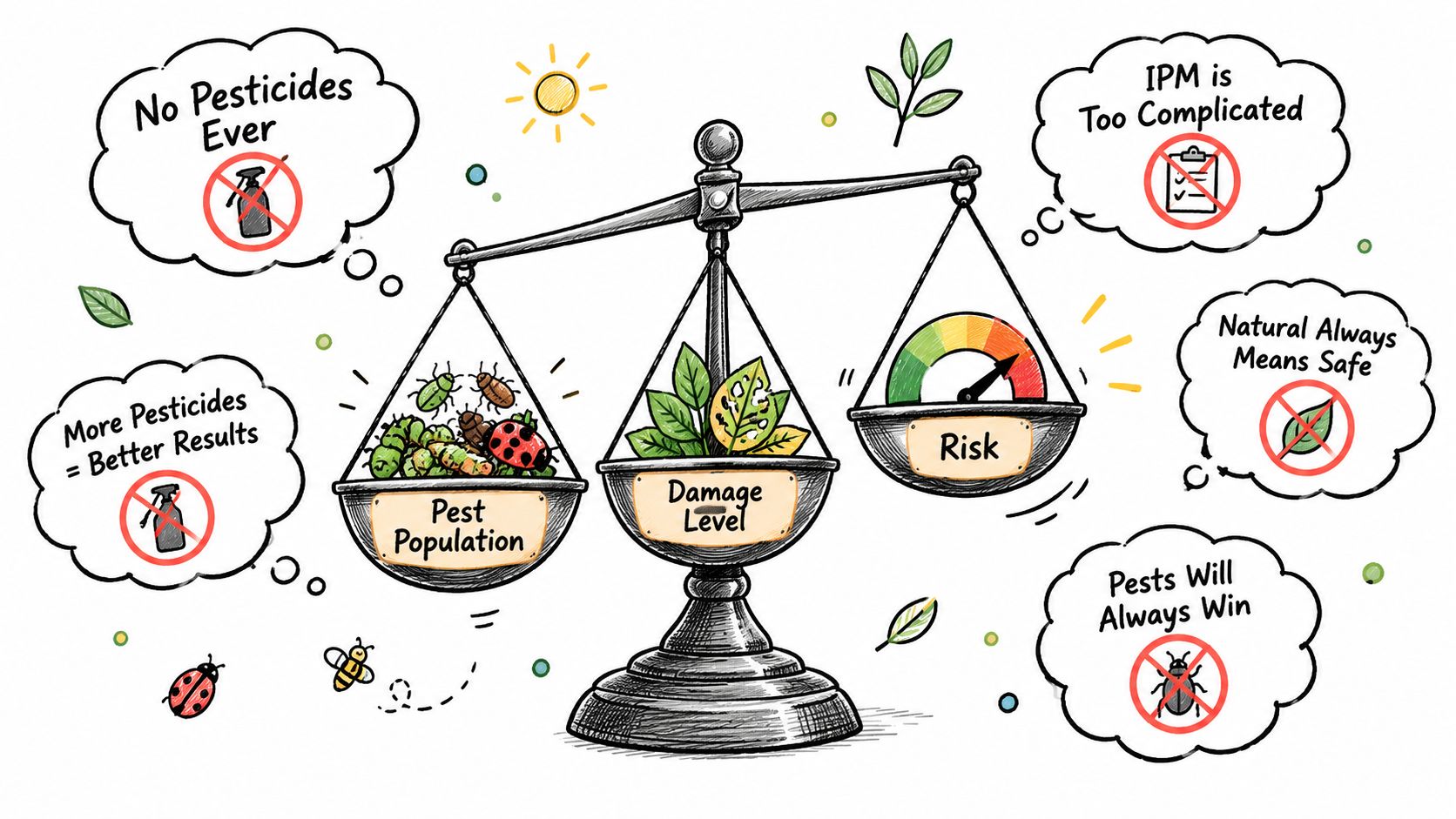
The most persistent misunderstanding is that IPM means no pesticides. It doesn't. The EPA defines IPM as a sustainable approach that combines biological, cultural, physical, and chemical tools while minimizing economic, health, and environmental risks, as explained in its verifiable school IPM definition.
A threshold is the point at which treatment becomes sensible. That point may involve pest numbers, visible damage, contamination risk, structural risk, or the vulnerability of people using the space. Crossing a threshold doesn't justify a calendar spray across the whole property. It supports a targeted response aimed at the confirmed problem.
A school, restaurant, home, and warehouse may therefore have different thresholds. A food-service account can require rapid action after evidence of activity near food-handling areas. A homeowner may monitor a minor outdoor issue while addressing a rodent entry point immediately because exclusion protects the structure and indoor environment.
Where compliance enters the picture
USDA programs provide a structured roadmap for objectives, monitoring, thresholds, documentation, and evaluation. EPA guidance applies the same logic to sensitive settings such as schools. In Texas, structural pest control work also operates within state licensing and regulatory requirements, so a provider should be able to explain who performs the work and how records are maintained.
Wood-destroying insect inspections add another practical layer for buyers, sellers, and agents. During a Southeast Texas real estate transaction, a WDI inspection and report can document visible evidence, conducive conditions, and findings relevant to the property. It isn't the same as a general pest spray, and it shouldn't be treated as one.
You may also hear that IPM is slower or automatically more expensive. A poorly managed program can be inefficient, but a properly documented decision system can reduce repeated guesswork, unnecessary retreatments, callbacks, and avoidable product exposure. The value comes from solving contributing conditions instead of repeatedly treating the visible symptom.
For food-service operators, commercial food-service pest control should include clear monitoring records and corrective-action communication, not merely a visit schedule. A treatment calendar is not an IPM program unless observations and decisions accompany it.
How FullScope Applies IPM in Southeast Texas
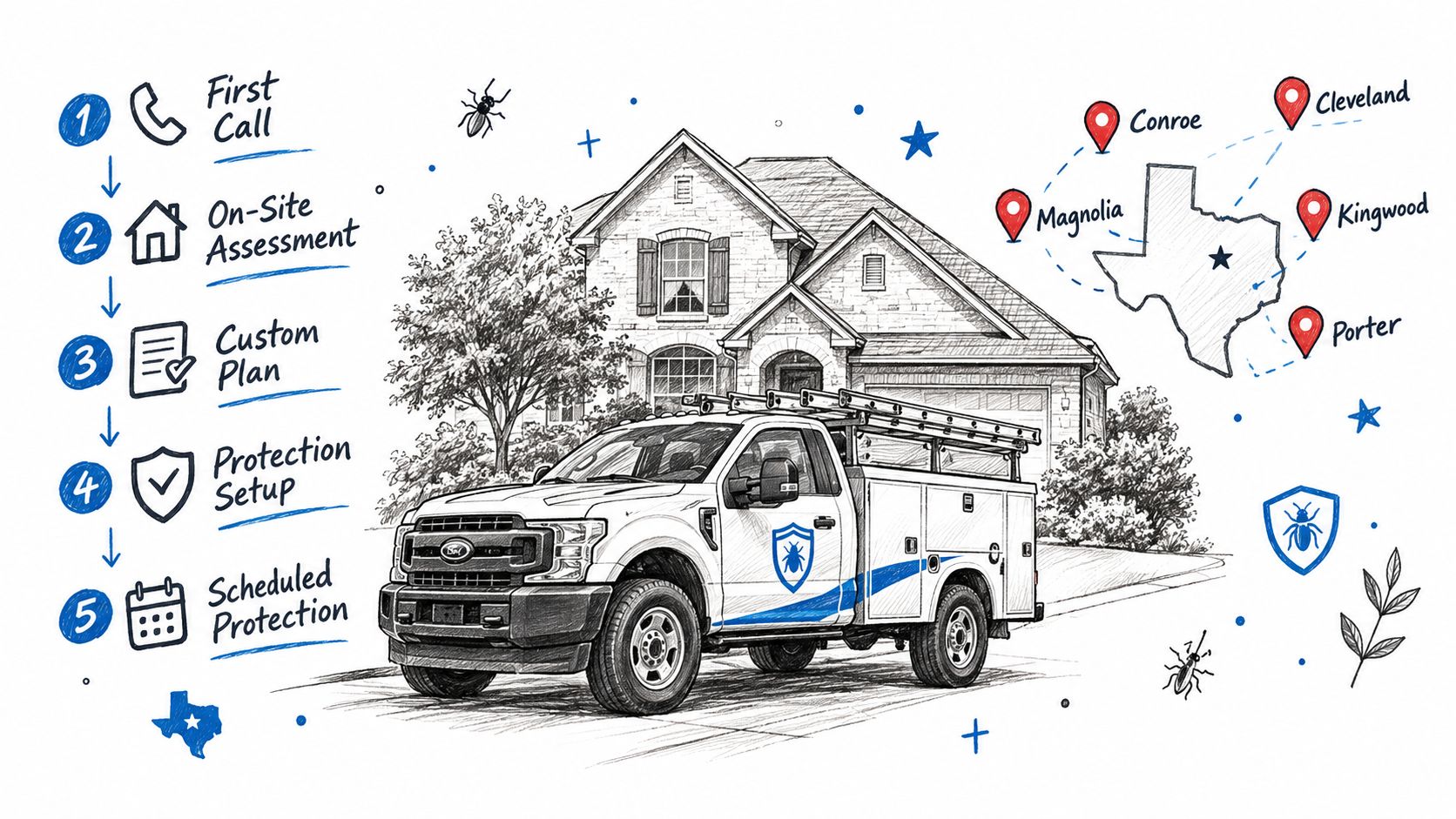
A representative account begins with a call from a homeowner in Magnolia, a property manager in Conroe, or a facility operator serving Cleveland, Kingwood, or Porter. The first visit should answer basic questions before treatment begins: What pest is present? Where is it entering? What conditions support it? Is the concern active, historical, or based on a single sighting?
The opening inspection may document door gaps, utility penetrations, roofline openings, vegetation contact, drainage, moisture readings, crawlspace conditions, droppings, nesting material, and signs of wood-destroying insects. A technician can then separate the work into immediate controls, property corrections, monitoring needs, and follow-up questions.
Monitoring produces the account's evidence
The next phase uses tools suited to the risk. Glue boards can help confirm crawling-insect activity. Rodent stations can show whether rodents are traveling along a structure. Insect monitors can help locate activity in garages, kitchens, utility rooms, or commercial storage areas.
The findings should feed back into the service plan. If monitors remain clear and conducive conditions have been corrected, the account may need maintenance and observation rather than more intensive interior treatment. If activity persists in a defined location, the provider can narrow the response to that area and document why.
integrated pest management practices from FullScope fit the operating model described above. Exclusion, sanitation guidance, monitoring, follow-up, and targeted chemistry work together instead of competing as separate services.
Seasonal pressure changes the emphasis
Gulf Coast weather changes which risks deserve attention. Warmer, humid periods can increase concern about mosquitoes, fire ants, ants, and moisture-related pests around homes and facilities. As temperatures drop, rodents may seek shelter inside structures, making exclusion and monitoring more important.
That doesn't mean every account follows a rigid seasonal script. A home beside heavy vegetation may need a different plan from a newer subdivision property. An older Kingwood home may require more attention to roofline gaps, crawlspaces, and aging seals. A commercial facility may need monitoring tied to receiving schedules, waste handling, and sanitation routines.
Documentation keeps the program accountable
A useful service record identifies what the technician inspected, what evidence was found, what treatment occurred, what recommendations remain open, and what should happen next. Homeowners need clear instructions, while facility managers may also need detailed service tickets for internal review or audits.
FullScope Pest Control is one local option that offers residential and commercial pest management, termite protection, mosquito management, rodent services, and WDI inspections across communities including Cleveland, Kingwood, Conroe, Porter, and Magnolia. The important evaluation point is not a promise of universal results. It's whether the provider can connect inspection findings to monitoring, treatment choices, and follow-up communication for your specific property.
Choosing an IPM-Minded Pest Partner
A provider can use IPM language without practicing IPM consistently. Before accepting a proposal in Magnolia, Conroe, Kingwood, Cleveland, or Porter, ask questions that reveal how the company makes decisions.
- Inspection habits: Does the technician inspect both interior and exterior areas, or arrive ready to spray without identifying entry points and conducive conditions?
- Thresholds: Can the provider explain what evidence justifies treatment, especially for recurring ants, rodents, termites, or cockroaches?
- Documentation: Will you receive service notes showing findings, products or control methods used, recommendations, and follow-up needs?
- Treatment transparency: Does the technician explain why a bait, station, exclusion repair, trap, or targeted application is appropriate?
- Regional knowledge: Does the plan account for fire ant pressure around Conroe, WDI inspection needs during Porter or Cleveland real estate closings, and rodent exclusion concerns in older Kingwood housing?
- Correction responsibility: Does the company identify what it will handle and what the property owner, tenant, or facility manager must repair?
Be cautious with flat-fee spray guarantees that don't explain inspection or follow-up. Vague product descriptions, pressure for immediate interior treatment, and recommendations that ignore moisture or entry points are warning signs. A responsible provider should be able to discuss risks, precautions, monitoring, and alternatives in plain language.
The right partner treats pest management as ongoing risk control, not a one-time chemical event. Ask for a written plan, review the first service report carefully, and make sure every recommendation has a clear reason.
If you're in Magnolia, Kingwood, Conroe, Cleveland, or Porter and want a property-specific IPM assessment, contact FullScope Pest Control to schedule an inspection. Ask the technician to document entry points, moisture and sanitation conditions, monitoring needs, action thresholds, and the least-intensive effective control plan for your home or facility.