1500+ reviews

You're a few days from closing. The lender has already cleared most of the file, the title company is sending updates, and then one more item lands in your inbox: the termite letter.
A lot of buyers glance at it, look for a clean result, and move on. That's where confusion starts. A termite inspection report for closing isn't a casual pest note, and it isn't a promise that the home will stay termite-free. It's a transaction document tied to timing, signatures, and lender rules. If the report is incomplete, too old, or shows conditions that raise risk, closing can slow down fast.
That matters even more around north Houston, where buyers in Magnolia and nearby communities are often juggling inspection windows, financing deadlines, and seller repairs at the same time. A report can look harmless on page one and still create work for the buyer, seller, agent, or lender before the deal can move forward.
Introduction Why This Report Can Make or Break Your Closing
A common closing-week scenario goes like this. The home inspection is done. Appraisal is in. Insurance is bound. Then your lender asks for the termite report, or asks for an updated one because the file sat longer than expected.
Buyers get tripped up because they assume this is just another version of the home inspection. It isn't. A home inspector may point out visible damage, but in Texas a TREC-licensed home inspector may not say termite infestation exists. That call belongs to a licensed wood-destroying insect inspector under the Texas rules discussed later in this article. If you want a practical homeowner-level primer on why these inspections matter in Texas conditions, this overview on why termite inspections matter for Texas homeowners is a useful starting point.
Why buyers misread the report
A binary yes or no answer is expected. Clean or not clean. Approved or failed.
That's not how lenders and title teams use it. They use it as a point-in-time risk screen. The report documents visible evidence, or the lack of visible evidence, on the inspection date. It helps the people handling the loan decide whether there's a current issue, a past issue, visible damage, or conditions that make future activity more likely.
A clean-looking report can still create closing work if the date is too old, the form is wrong, or the findings suggest treatment or repair before funding.
Why timing matters as much as findings
Even a favorable report can become a problem if the calendar slips. Buyers often focus on what the inspector found and ignore when the report was issued. Lenders usually care about both.
That's why this document can make or break closing. It sits at the intersection of pest evidence, lender underwriting, and plain old scheduling. In Magnolia, Texas and the north Houston area, where multiple parties are trying to coordinate inspections, signatures, and final loan conditions, that timing piece matters as much as what the inspector checked on site.
What a Termite Inspection Report for Closing Actually Is
The formal name in Texas is usually a wood-destroying insect report, often shortened to WDI report. That wording matters because the report isn't limited to termites alone. It covers visible evidence of termites and other wood-destroying insects, plus related conditions that increase risk in the structure.
A medical screening. It doesn't promise what will happen next year. It records what a trained professional can see right now, in accessible areas, and flags signs that deserve attention.
The four findings that drive real decisions
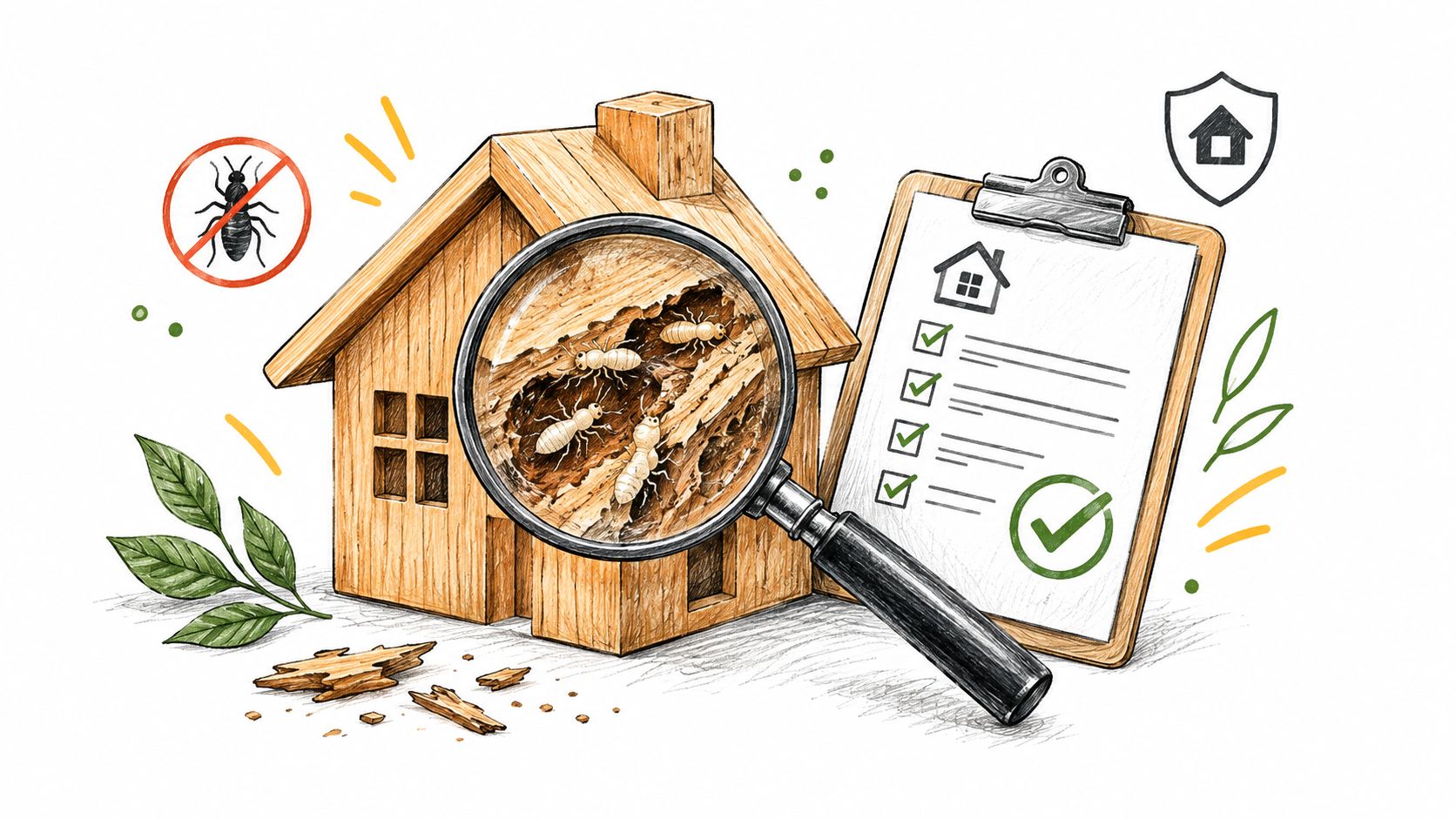
The report is more useful when you stop reading it as pass or fail and start reading it in four parts. Independent guidance on WDI reporting highlights these categories and explains why they matter in lending decisions, especially the category called conducive conditions, such as wood-to-soil contact, excess moisture, and wood debris near the foundation. Those conditions can increase future termite risk even when no live insects are visible, which is why a lender may still ask for corrective action based on the report's structure and findings in those categories in this WDI inspection guidance.
Here's the simple version:
- Active infestation means the inspector saw evidence that points to current insect activity.
- Previous infestation means the home shows signs of an older issue, even if no current activity is visible.
- Damage means wood or related structural components show visible harm that should be documented and may need further evaluation.
- Conducive conditions means the house has features or moisture patterns that make future activity more likely.
Why conducive conditions confuse first-time buyers
People get stuck. They read “no active termites” and assume the deal is done.
But if the report also notes excess moisture, wood touching soil, or wood debris near the foundation, the transaction may still need a fix. Those conditions are like seeing standing water next to a foundation before mosquito season. You may not see the problem itself at that exact moment, but you can see why the risk is higher.
If you want to compare how home inspections and specialized property checks are discussed more broadly, Restore Heroes has a library of home inspection content that helps readers see where general inspection ends and specialty reporting begins.
Who can say what in Texas
In Texas, scope matters. A general home inspector and a licensed WDI inspector do not have the same authority on this issue.
That distinction protects buyers. It keeps a major transaction document in the hands of someone licensed to identify visible evidence of wood-destroying insect activity on the state-prescribed form, instead of leaving that determination to a broader home inspection report.
Inside the Texas Official Form and What Each Section Means
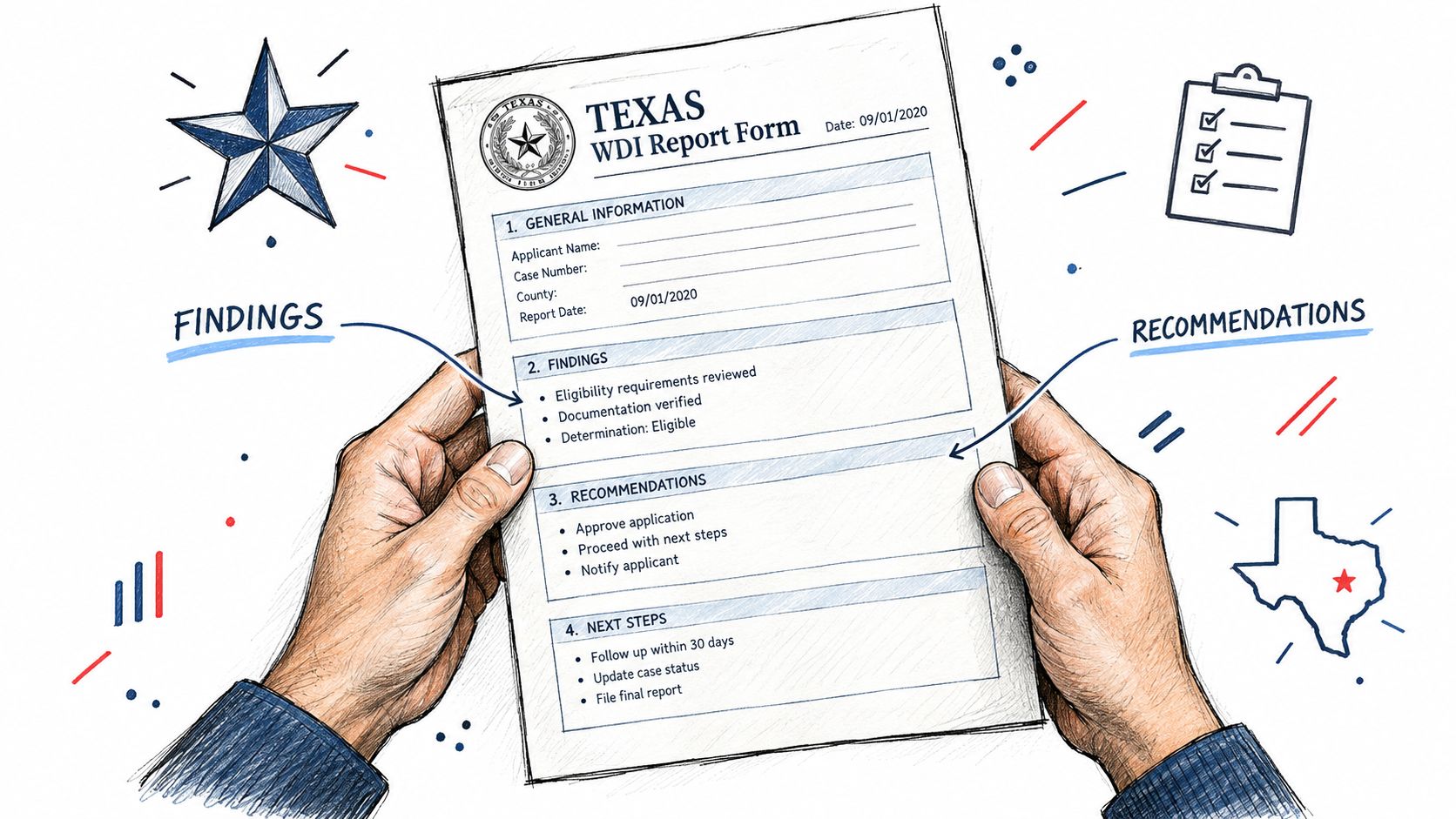
Texas treats this report as a regulated record, not a homemade checklist. State rules require inspection reports on visible termite presence, other wood-destroying insects, and conducive conditions to use a department-prescribed form, and each completed report must be prepared for both the person who ordered the inspection and the business files of the licensed issuer. The Texas Department of Agriculture form was revised on 09/01/2020, which reinforces that this is a standardized state document rather than a private template, and Texas guidance also notes that the purchaser's signature may be obtained at the time of inspection but is typically signed at closing on the official Texas form and guidance.
Start with the form itself
Before you read the findings, confirm you're looking at the official Texas WDI report. If someone sends over a simple invoice, a handwritten “clear letter,” or a generic inspection summary, that may not satisfy the parties handling the transaction.
The official report commonly includes a diagram of the structure and written findings on visible evidence of termites and other wood-destroying insects, as described in Texas-focused WDI reporting guidance for real-estate use here in this Texas WDI overview.
A practical detail many buyers overlook is format. If your agent or lender sends the report over for initials, signatures, or review, tools that let you fill out PDF forms online can make the paperwork side easier, especially when several people need to review the same document quickly.
What each section is doing
Read the form in this order:
Property and client information
This ties the report to the exact property and transaction party.Inspection findings
The visible evidence, or absence of visible evidence, is recorded.Diagram or marked structure layout
The diagram helps connect written findings to actual locations on the home.Recommendations or corrective items
If treatment, repair, or follow-up is needed, you'll often see the practical next step.Signature blocks
These matter more than buyers think. The form is part inspection record and part transaction document.
Practical rule: If a report has findings but no clear property identification, missing signatures, or no location diagram when one is expected, ask questions before the lender does.
For buyers and agents who want a transaction-focused service page showing how these reports fit into closings, this overview of wood-destroying insect inspections and reports is a useful example of how the report is positioned for real-estate use.
Why the state keeps the line sharp
Texas draws a bright line between home inspection and WDI determination. A TREC-licensed home inspector may report visible damage but may not declare termite infestation. The licensed wood-destroying insect inspector carries that responsibility on the prescribed form.
That's not bureaucratic trivia. It helps keep legal and lending decisions tied to the right license and the right document.
The video below gives a helpful visual frame for how people often approach inspection paperwork and what to pay attention to when reviewing closing documents.
Timing Validity and Lender Requirements That Affect Your Closing Date
The report can be accurate and still be unusable for closing if it's too old.
For mortgage and settlement purposes, HUD states that a termite or WDI report becomes invalid if it is older than 90 days from the inspection date, which creates a firm scheduling limit for closings and for any re-inspection needed after remediation under the HUD NPMA-33 guidance.
Why buyers hear different date rules
Confusion shows up in real transactions. Some parties talk about the hard outer window. Others talk about their own preferred underwriting window.
Several closing guides note that lenders often want the inspection dated within about 30 days of closing, while other guidance says acceptance may run from 30 to 90 days depending on the lender and state. That's why buyers hear different answers from different people, and why a report that was fine last month can become a problem when underwriting changes or the closing date moves as described in this closing-focused termite report discussion.
Report Validity Windows for Closing
| Requirement Source | Validity Window | Impact on Closing |
|---|---|---|
| HUD mortgage or settlement use | 90 days from inspection date | After that point, the report is invalid for mortgage or settlement use |
| Many lender preferences | About 30 days before closing | A lender may ask for a newer inspection even if the report is still within a broader acceptance window |
| Lender and state variation | 30 to 90 days depending on the file | Buyers may need an update, clarification, or re-inspection if the transaction timeline changes |
What happens when the date slips
A delayed closing can turn a clean report into dead paperwork. That's the part most buyer checklists miss.
If treatment happens after the first report, the lender may also need an updated inspection showing the current visible condition after remediation. If signatures are still outstanding, that can add another layer of delay because the parties have to coordinate document handling, not just the inspection itself.
The report isn't just about what the inspector found. It's also about whether the document will still be acceptable on the day funds are ready to move.
A better scheduling approach
Try to time the inspection so it's recent enough for the lender but not so late that there's no room to react.
A practical sequence often looks like this:
- Ask the lender early: Confirm whether they want the report close to closing or within their accepted window.
- Coordinate with the agent and title company: Texas guidance notes the purchaser signature is typically obtained at closing, so document flow matters.
- Leave space for follow-up: If the inspector recommends treatment, repairs, or another look after corrections, you'll want calendar room.
- Recheck the date if closing moves: A postponed signing date can affect an otherwise acceptable report.
How to Read Findings and Negotiate Repairs or Treatment
The report turns into money, timing, and leverage.
Buyers often ask, “Is this bad?” A better question is, “What does this finding usually require before the lender, seller, and buyer can move forward?” The answer changes depending on whether the report shows active infestation, previous infestation, visible damage, or only conducive conditions.

A simple way to read each finding
Use this as a decision guide, not a legal rulebook.
| Finding on Report | What it usually means in practice | Common next move |
|---|---|---|
| Active infestation | Current visible evidence needs attention before everyone is comfortable closing | Treatment, then updated documentation if required |
| Previous infestation | The home has a history, but the current question is whether activity is visible now | Clarify treatment history and ask whether any follow-up is needed |
| Visible damage | The pest issue and the building issue may be separate decisions | Repair discussion and, if needed, further evaluation |
| Conducive conditions | Risk factors are present even without live insects being seen | Correct moisture or contact issues, then document completion |
How negotiation usually works
If the report shows active infestation, buyers usually have the strongest basis to ask for treatment before closing. The seller may pay for treatment directly, offer a credit, or negotiate another solution that still satisfies the lender and keeps the file moving.
If the report shows previous infestation with no current visible activity, the conversation shifts. Now the buyer wants treatment records, repair context, and a clear explanation of what is old versus what is current.
If the report notes damage, the key is not to force the WDI report to do a structural engineer's job. The report documents visible damage. The transaction may still need another professional to evaluate the extent and repair approach.
Why conducive conditions matter more than buyers expect
This category causes the most surprise. A buyer reads “no active termites” and expects no further action. Then the lender or agent asks for correction of moisture issues or wood-to-soil contact.
That's not overreaction. It's risk management. A house can have no visible live activity today and still present the exact setup termites prefer.
If a report shows conducive conditions, talk about correction the same way you'd talk about a roof leak. You're addressing the environment that allows the problem to start or return.
Practical language for buyer conversations
Keep your requests plain and specific:
- Ask for documented treatment: If active evidence is visible, ask for treatment records and any follow-up inspection paperwork.
- Separate repair from pest findings: If damage appears visible, ask for the right evaluation instead of arguing over labels.
- Request correction of conditions: If moisture or wood contact is listed, ask the seller to correct those items or credit the cost.
- Review control choices carefully: If treatment is part of the discussion, buyers who want context on methods can compare common termite control options before agreeing to next steps.
Magnolia Texas Service Area and How FullScope Supports Closings
Magnolia buyers often need speed and local routing more than they need a long lecture. The practical geography matters here. Magnolia is in southern Montgomery County in the Houston metro area, uses ZIP code 77354, and sits roughly 30 miles northwest of downtown Houston, which aligns it closely with north Houston and nearby Southeast Texas pest-service routes in this Magnolia service-area description.

Why Magnolia location affects closing logistics
In real estate, local coverage can matter as much as technical knowledge. Buyers in Magnolia are often coordinating with lenders, agents, and title companies working across the north Houston area, not just inside one small town.
That's why service footprint matters. A Magnolia-focused business listing for FullScope Pest Control shows the company explicitly serves Magnolia, Texas as part of its local coverage footprint, which supports that Magnolia is within the practical service area for termite inspections and closing-related reports in this Magnolia-area listing.
Local workflow for a closing report
For a Magnolia transaction, the useful questions are simple:
- Can the provider reach Magnolia quickly? Local routing across north Houston communities helps when a lender asks for the report late in the file.
- Can the provider issue the Texas-prescribed WDI form? That's the document the transaction needs.
- Can the inspection connect to next steps? If findings appear, buyers need treatment, documentation, or follow-up without losing days.
FullScope Pest Control is one local option in that workflow. The company serves Magnolia along with Cleveland, Kingwood, Conroe, Porter, and surrounding communities including Atascocita, Humble, Spring, and others. Its published service model includes inspections, treatment planning, ongoing protection, WDI reports for real-estate transactions, and recurring quarterly or biannual programs, with urgent response available when timing is tight.
What that means for buyers and agents
For Magnolia closings, the value isn't just the inspection itself. It's being able to move from report to correction to updated paperwork without rebuilding the whole process from scratch.
That's especially relevant when the report includes the diagram of the structure and transaction-ready findings lenders expect to review. In a delayed file, local coverage can be the difference between a manageable update and a scramble.
Final Checklist to Keep Your Closing on Track
A termite inspection report for closing works best when you treat it like a timed legal document, not a casual pest letter.
Use this short checklist before signing day:
- Order it at the right time: Don't wait until the last minute, but don't schedule so early that the report ages out before closing.
- Confirm the right form: In Texas, make sure the report is the official state-prescribed WDI form, not a generic note.
- Check the basics on page one: Property details, findings, diagram, and signatures should all be complete.
- Read beyond active termites: Previous activity, visible damage, and conducive conditions can all affect negotiations.
- Ask the lender about date requirements: Some files move under a tighter window than buyers expect.
- Plan for follow-up if treatment happens: A clean close may still require updated documentation after remediation.
- Coordinate with everyone handling the file: Agent, lender, title company, and inspector all touch this document in some way.
The biggest mindset shift is simple. This report is a regulatory record and scheduling tool. It helps document visible conditions at a specific moment, and it helps the closing team decide whether the transaction can move forward as-is.
If you're buying in Magnolia, Texas, act early. A local WDI inspection scheduled with enough room for corrections and document review is much easier than trying to fix an expired or incomplete report during closing week.