1500+ reviews

You hear scratching above the ceiling after dark. The next morning, there are droppings behind the refrigerator, a musty smell near the water heater, or a pile of shredded insulation tucked into a quiet corner. In a Magnolia or Kingwood home, that combination deserves more attention than a single rat seen crossing the driveway.
A rat nest in house changes the problem. You aren't dealing only with an animal that wandered indoors. You may be dealing with a protected nesting site, established travel routes, contaminated material, and an opening that other rodents can keep using. Safe control starts with identifying the evidence, protecting your household from exposure, removing the active population, and closing the route that allowed entry.
Why a Rat Nest Inside Your Home Is Different
A homeowner in Magnolia may first notice the problem behind the refrigerator, where droppings collect along the wall and the compressor creates a warm, sheltered gap. Someone in Kingwood may hear movement in the ceiling at night but never see a rat. In both situations, the important clue isn't the missing sighting. It's the pattern of repeated activity in a protected part of the structure.
Outdoor rat activity is much more common than indoor activity. England's national housing surveys found that 0.3% of dwellings had rats inside in 2001, compared with 2.9% that had rats outside, and a later 15-year survey found indoor prevalence ranging from 0.28% to 0.46%, while rats around dwellings ranged from 2.09% to 3.92% in the national housing survey data. Those figures don't mean a Texas home is immune. They show why an indoor nest carries more meaning than a rat moving through the yard.
A nest signals usable conditions
Rats remain indoors when the structure offers some combination of food, water, shelter, and dependable travel routes. A nest made from insulation, paper, fabric, or other soft material usually sits near a route to those resources. The animal may move through wall voids, utility chases, attics, crawlspaces, or gaps behind appliances while remaining invisible during the day.
A single sighting can be difficult to interpret. A nest accompanied by droppings, grease marks, gnawing, or repeated nighttime sounds is different. It suggests that the home has supported ongoing use, even if the household has only just discovered it.
That distinction also affects the response. Spraying a room, placing one trap in an open area, or removing visible nesting material without locating the entry point may change what you see without solving the cause. The correct path is identify, assess risk, remove safely, and prevent re-entry.
A nest means an established indoor problem, not a passing rat.
How to Find and Identify a Rat Nest
Inspection should follow evidence, not guesswork. Rats are nocturnal and often remain hidden, so daytime sightings aren't required for an active nest. Fresh droppings, repeated rub marks, and disturbed insulation can tell you more than a brief glimpse of the animal.
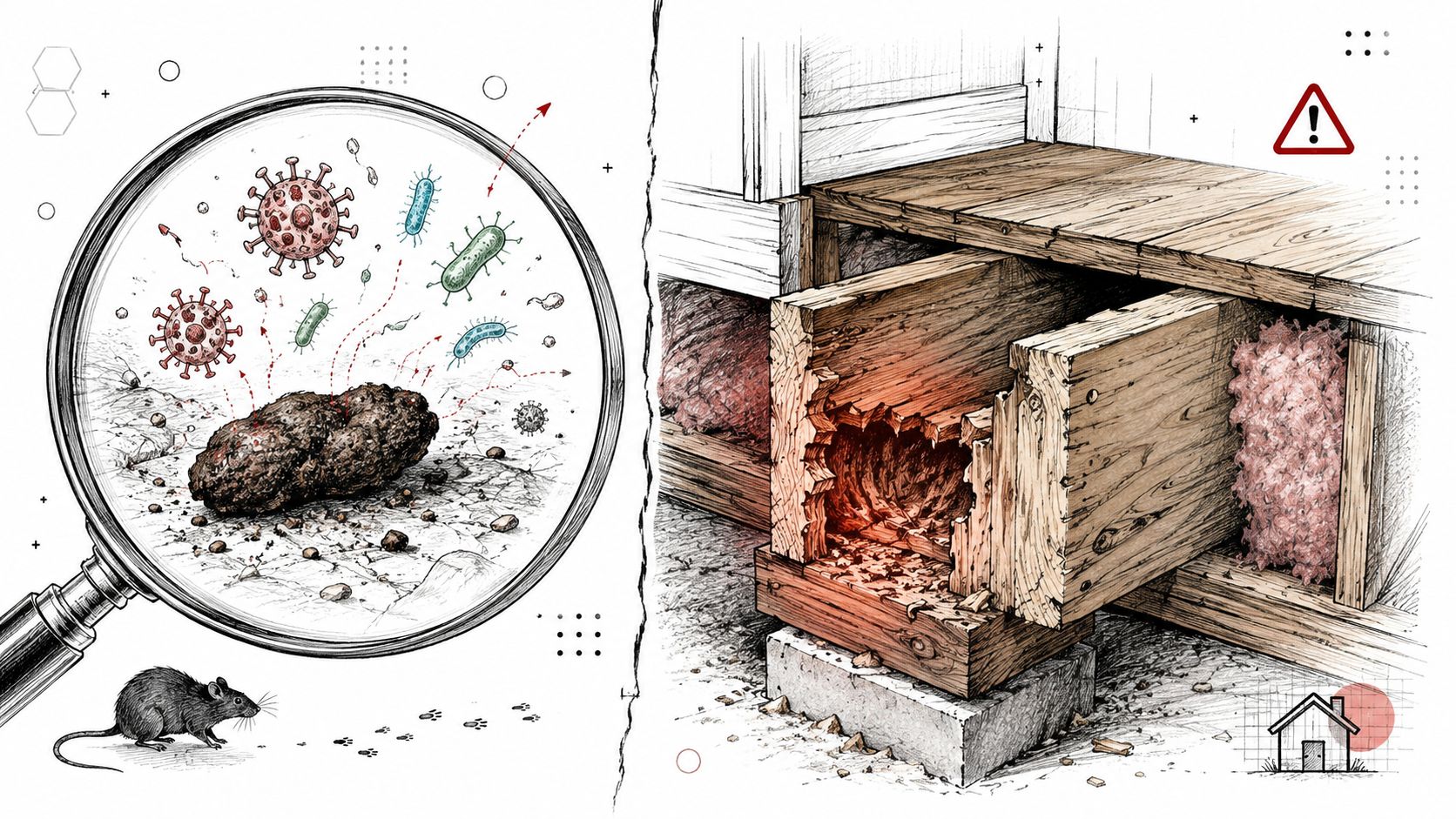
Start with the signs. Droppings often appear along walls, behind appliances, near stored food, or beneath a suspected nesting area. Fresh feces may look darker and softer, while older material can become dull and brittle. Don't handle it bare-handed, and don't sweep it into the air.
Gnaw marks on wood, plastic, food packaging, or wiring indicate that a rat is feeding or maintaining access. Look for paired tooth marks, roughened edges, and damage around openings. Grease rubs appear as dark smudges where a rat's body repeatedly brushes baseboards, pipes, rafters, or other edges. A stale, musty, or ammonia-like odor becomes more noticeable in enclosed spaces.
Search according to rat behavior
Species changes the inspection priority. Roof rats prefer higher nesting sites, including attics and ceilings, while Norway rats more often use lower spaces, such as wall voids, burrows, crawlspaces, and ground-level areas, as described in this rodent behavior guidance. That distinction matters because sealing an attic vent won't address a Norway rat entering near a foundation, and filling a low foundation gap won't solve a roof rat using a damaged soffit.
In warm, humid Southeast Texas homes, inspect places that stay dark and undisturbed:
- Attic spaces: Check insulation, roof penetrations, rafters, soffits, and the edges near vents.
- Wall voids: Listen near plumbing walls and utility chases, then look for droppings where pipes enter cabinets.
- Kitchen areas: Inspect behind the refrigerator, range, dishwasher, and lower cabinets.
- Water-heater areas: Examine insulation, pipe penetrations, and the wall or floor behind the unit.
- Crawlspaces: Look around foundation penetrations, debris, insulation, and perimeter vents.
- Storage zones: Check cardboard, fabric, clutter, and cabinets that provide nesting material.
Don't tear open every wall immediately. First, map the signs. Mark where droppings are fresh, where grease marks continue, and where scratching is loudest at night. That map helps distinguish a travel route from the nest itself and helps a technician choose trap locations.
For more visual guidance on recognizing evidence, compare your observations with this guide to rodent infestation signs. Identification is complete only when the evidence points to both where the rats travel and where they shelter.
Health and Structural Risks of an Indoor Rat Nest
Removing a nest isn't ordinary housekeeping. Droppings, urine, saliva, nesting material, and contaminated dust can expose people when they disturb an infested area. The American Lung Association's rodent guidance warns that disturbed particles in poorly ventilated indoor spaces create a serious hantavirus exposure concern, and rodent allergens can trigger or worsen asthma, particularly in children.
The risk rises when someone opens a wall void, pulls apart insulation, or sweeps dry droppings from a confined attic. A mask intended for ordinary dust, bare hands, and a household broom don't provide a reliable cleanup protocol. Keep children and pets away from the area, avoid unnecessary disturbance, and treat the nest as contaminated material until it's properly managed.
Rodent exposure affects many households. A large U.S. housing survey found that nearly 14.8 million American homes reported seeing rodents, and one urban household study found rodent signs in 63% of case households compared with 35% of control households. Burrows, runs, and fecal droppings significantly predicted infestation risk in that study, as documented in this housing and rodent research paper.
The damage isn't limited to contamination
Rats can gnaw wiring, plastic, wood, and other building materials. Damaged electrical insulation deserves prompt attention because you can't judge the seriousness of wiring damage from the surface alone. A nest can also foul attic insulation, stain drywall, contaminate cabinet voids, and leave persistent odor in porous materials.
A clean-looking room doesn't prove that the structure is safe. Rats may travel behind walls or above ceilings, leaving evidence in places the household never sees. If droppings continue after visible material is removed, the remaining population or an inaccessible nest still needs attention.
The practical conclusion is simple. Removing the rat and cleaning the contamination are separate jobs. A household can eliminate the visible nest and still leave allergens, odor, damaged wiring, and an active route through the building.
Safe Nest Removal and Cleanup Procedures
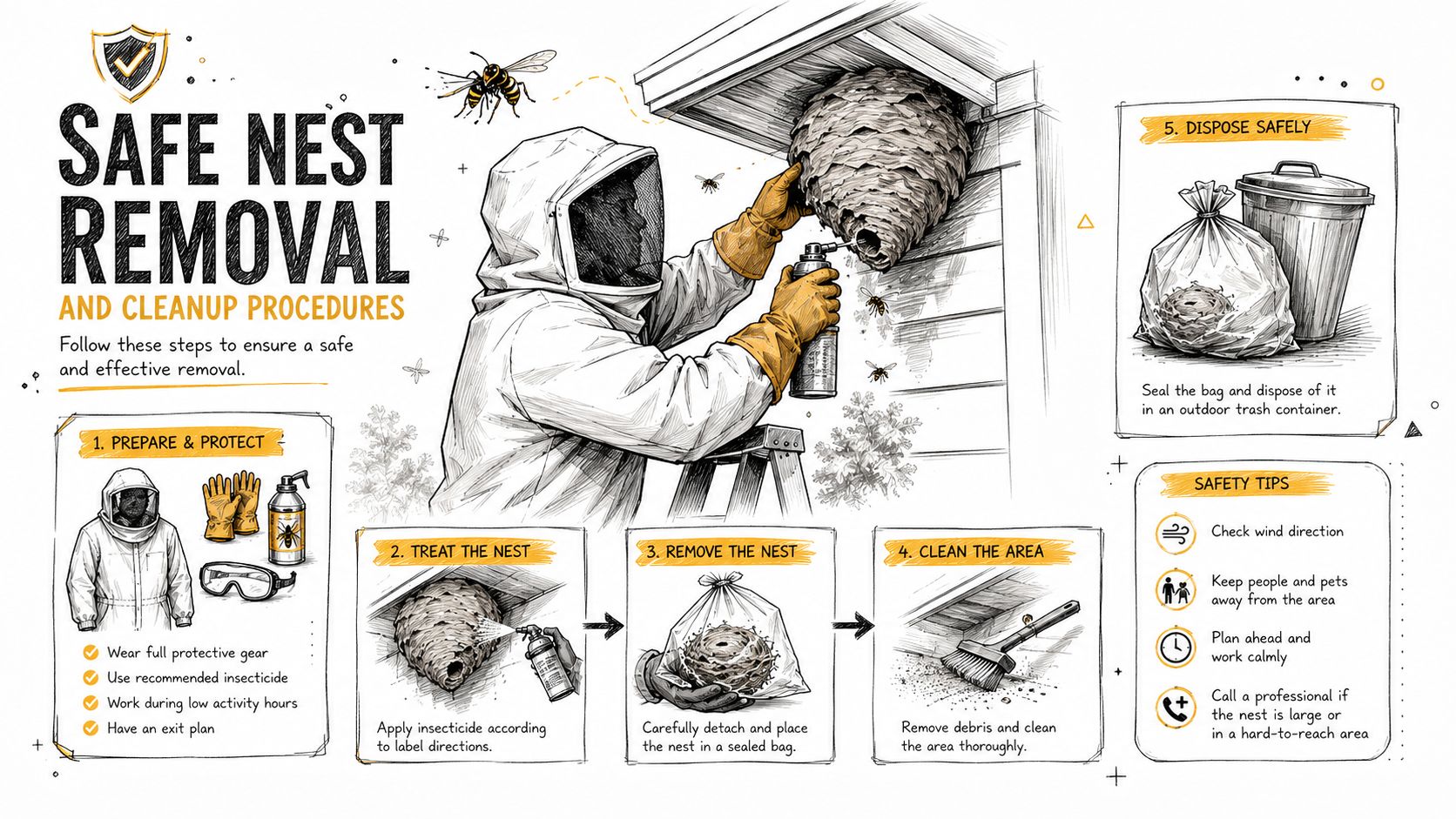
Safety comes before speed. If the nest is in an attic, wall cavity, crawlspace, or another poorly ventilated area, stop and assess whether you can work without disturbing contaminated particles. People with respiratory conditions, children, pets, and anyone who can't use appropriate protective equipment should stay away from the work zone.
Use this sequence:
- Isolate the area. Close interior doors, keep people and pets out, and prevent contaminated material from spreading through normal household traffic.
- Ventilate safely. Improve fresh-air movement when the layout allows it, but don't create a blast of air that spreads dust through the home.
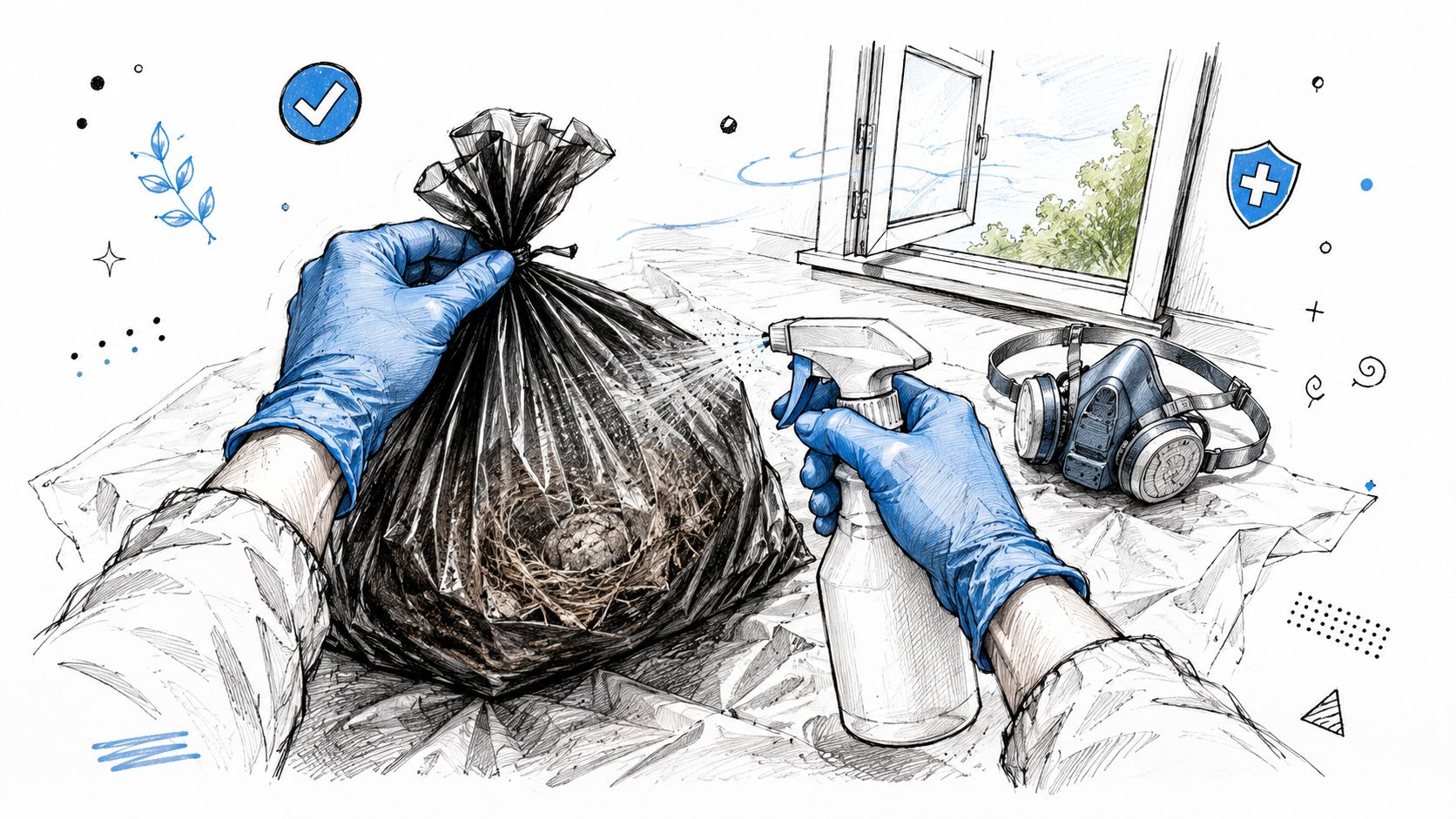
- Wear suitable PPE. Use protective gloves and respiratory protection appropriate for contaminated rodent material. Cover exposed skin and change contaminated clothing afterward.
- Disinfect before disturbance. Apply an approved disinfectant to droppings and nesting material, allowing the product to work according to its label. Wet material is less likely to become airborne than dry debris.
- Never sweep or vacuum dry droppings. A broom or vacuum can aerosolize contaminated particles, exactly the situation you need to avoid.
- Remove and double-bag material. Place wet nest debris in a sturdy bag, seal it, place that bag into a second bag, and clean the surrounding surface.
- Clean the route. Disinfect droppings, urine residue, and grease marks instead of masking the odor.
Don't seal an occupied void blindly. If rats remain inside a wall or ceiling, sealing their route without a removal plan can leave animals trapped in the structure. Locate activity, reduce the population, then complete exclusion and follow-up checks.
Trapping requires monitoring
Place snap traps or approved tracking devices along walls and known travel paths, not in the middle of a room. Useful locations can include under sinks, behind appliances, along sill plates, in crawlspaces, and in other areas inaccessible to children and pets. Secure every trap so it can't shift, and check it according to the product or service protocol.
One indoor rodent-control study reported 10.7% average trap success over a 2-day period, with results ranging from 4.2% to 25.0% per homestead, as reported in this indoor rodent-control study. That variation is why one trap placed once isn't a meaningful test of control. Food availability, clutter, trap alignment, and the accuracy of the suspected runway all affect results.
Track fresh droppings, new gnawing, grease marks, nighttime sounds, and sightings. Established infestations may require an extended removal and monitoring phase, especially when exclusion work reveals additional routes. For odor-specific cleanup advice, use this rat urine smell removal guide.
Rat-Proofing Your Home to Stop Re-Entry
Removal without exclusion leaves the door open for another rat. In Southeast Texas, rooflines, soffits, vents, utility penetrations, crawlspace openings, and aging seals deserve careful attention because warm, sheltered structures give rodents several ways to move between the yard and the home.
Rodent-proofing guidance recommends exclusion first, sanitation second, and trapping after those steps, with mechanical sealing of openings 1/4 inch or larger, according to the National Park Service rodent-exclusion manual. Verify active entry points before sealing. Look for rub marks, disturbed dust, droppings, tracks, daylight, and exterior routes that connect vegetation or structures to the opening.
Common Entry Points and How to Seal Them
| Entry Point | Risk Gap Size | Best Sealing Method |
|---|---|---|
| Soffit and fascia gaps | 1/4 inch or larger | Metal flashing or secured hardware cloth |
| Gable and attic vents | 1/4 inch or larger | Rodent-resistant metal screening |
| Utility penetrations | 1/4 inch or larger | Fitted metal mesh with durable exterior sealant |
| Crawlspace vents | 1/4 inch or larger | Reinforced metal screen fixed to the frame |
| Door and garage thresholds | 1/4 inch or larger | Rodent-resistant door sweep and threshold repair |
| Foundation and slab penetrations | 1/4 inch or larger | Mortar repair, metal mesh, or a suitable solid patch |
Foam or caulk alone often fails where rats can reach it. Use a material they can't easily chew through, then weatherproof the repair. Inspect roof edges, plumbing lines, HVAC penetrations, cable routes, vents, and the place where the roof meets the wall.
A study of contracted rodent exclusion in apartments found 46% to 92% incomplete exclusion, which shows how often partial sealing leaves usable routes behind. A repair can look finished from the ground while leaving a small opening behind a vent, under a soffit, or around a pipe.
Reduce the reasons rats stay
Secure garbage, store food in rigid containers, remove outdoor pet food, clean spills, and keep bird-feeding areas away from the structure. Pick up fallen fruit, trim branches that touch or overhang the roof, and remove brush, debris, and stored materials that create harborage near the foundation.
Use this rodent-proofing checklist as a final walkaround, but don't treat a checklist as a substitute for verifying an occupied void. Exclusion works when it closes the actual route and the indoor population has already been addressed.
When to Call a Professional in Southeast Texas
DIY control can make sense when there is one accessible nest, limited contamination, and a clear route that you can repair safely. It becomes a poor bet when the nest sits inside a wall, above a ceiling, beneath insulation, or in a crawlspace you can't inspect without disturbing material. Nightly sounds, signs in multiple rooms, repeated re-entry, damaged wiring, or contamination around children and people with asthma also justify professional help.
A licensed rodent service can inspect the structure, identify likely species and travel routes, coordinate trapping with exclusion, and provide sanitation guidance. Ask how the company handles occupied voids, follow-up monitoring, damaged insulation, and low-toxicity options for homes with children and pets.
FullScope Pest Control serves Magnolia, Texas, and nearby Southeast Texas communities, including Kingwood, Conroe, Porter, and Cleveland. Magnolia is in southwestern Montgomery County, has a 2020 census population of 2,359, and is covered by ZIP codes 77353, 77354, and 77355, according to the Magnolia locality reference. Service support can include inspection, exclusion, sanitation guidance, trapping, and follow-up.
Action sequence: Identify the signs, assess contamination and access, remove the rats safely, then seal and monitor the home.
If you've found a nest, heard repeated nighttime activity, or seen fresh droppings in your Magnolia, Kingwood, Conroe, Porter, or Cleveland property, schedule a rodent inspection with FullScope Pest Control before opening walls, disturbing insulation, or sealing an occupied entry route. A professional can help determine what needs removal, what needs sanitation, and which repairs will stop the next rat from getting inside.