1500+ reviews

You're standing at the kitchen shelf with a paper towel in one hand and a flashlight in the other, trying to decide whether those tiny dark specks are dirt, mouse signs, or the thing you were hoping to avoid. In Magnolia and across Southeast Texas, that moment usually happens under a sink, behind a coffee maker, or along the pantry edge, where heat and moisture make pests feel at home. Roaches do leave droppings, and those droppings tell you a lot more than people think.
What Roach Droppings Actually Tell You
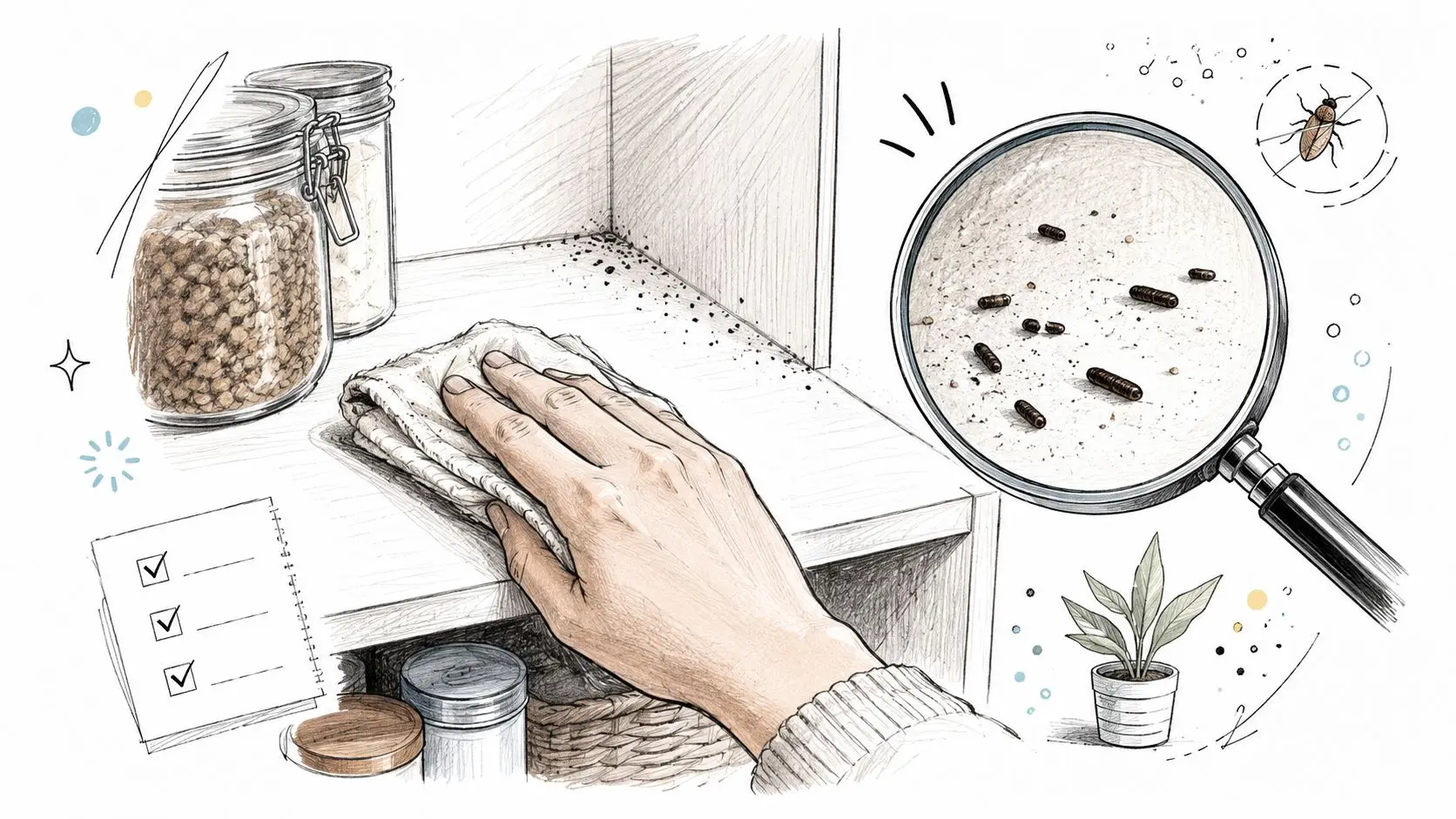
A homeowner usually notices the evidence before the insect. Small dark specks on a pantry shelf, in a drawer corner, or under the sink can look like nothing more than grime until they keep showing up after wiping. That's the point where the question changes from “What is this?” to “How much activity is there?”
Why droppings matter beyond the mess
Public-health agencies treat roach droppings as more than a cleanup issue. The U.S. Environmental Protection Agency notes that cockroach feces, saliva, eggs, and cuticles contain allergenic substances and that droppings can trigger asthma attacks, while the Illinois Department of Public Health explains that fragmented exoskeletons and bits of feces can act as antigens when inhaled in indoor spaces like kitchens and other enclosed rooms. The EPA also notes that roach allergens are a meaningful indoor hazard, not just visible waste, because they're tied to respiratory irritation and asthma risk. EPA guidance on cockroaches and indoor allergens
That's why droppings function as a diagnostic marker. Roaches tend to defecate where they live and travel, so the waste piles up in concentrated spots instead of appearing randomly all over the house. Those focal points can keep pulling roaches back through pheromones, which means the droppings aren't only evidence of current activity, they can help sustain it.
Practical rule: if you keep finding the same dark specks in the same cabinet, seam, or shelf edge, you're not looking at a one-time nuisance. You're looking at a location roaches have already claimed.
For Magnolia-area homes, that often means the pantry, the sink base, or the space behind appliances. A quick wipe tells you whether the material is stale. Reappearance tells you whether you still have a live source nearby.
Identifying Droppings by Cockroach Species
The shape of the dropping matters because not all roaches leave the same evidence. A lot of homeowners call every dark pellet “roach poop,” but the field ID gets more accurate when you match the size, shape, and texture to the likely insect. That helps you decide whether you're dealing with a stray outdoor roach or a breeding indoor problem.
What the size and shape tell you
Smaller indoor species such as German cockroaches typically leave 1 to 2 mm dark specks that look like black pepper or coffee grounds, while larger species such as American cockroaches leave roughly 2 to 3 mm cylindrical pellets with blunt ends and longitudinal ridges. That blunt-ended, ridged look matters because it helps separate roach droppings from mouse droppings, which are usually pointed. Better Termite's roach poop guide gives a useful side-by-side distinction, and the same practical difference shows up during real inspections.
| Species | Dropping Size | Shape and Texture | What It Suggests |
|---|---|---|---|
| German cockroach | 1 to 2 mm | Pepper-like specks, coffee-ground look | A likely indoor breeding issue |
| American cockroach | about 2 to 3 mm | Cylindrical pellets, blunt ends, ridges | A larger roach, often moving through moist zones |
| Oriental cockroach | Larger, pellet-like | Dark, cylindrical waste with a more obvious pellet form | Activity near damp entry points or crawlspaces |
German roaches matter more from a control standpoint because they're the indoor, fast-breeding problem that usually spreads through kitchens and cabinet voids. A few small specks in a Magnolia apartment, townhome, or slab home can turn into a broader infestation faster than one might expect. Larger American roaches are sometimes wanderers from outdoors, but if their droppings keep showing up indoors, the issue is no longer just a one-off visit.
The most useful decision point is the pattern, not just the species. A single pellet near a garage threshold might be manageable with exclusion. A repeated line of pepper-like specks under a toaster, along with the kind of clustering described in FullScope Pest Control's American versus German roach comparison, points to an indoor harborage that needs more than wiping.
Where to Look for Roach Droppings in Your Home
A fast inspection doesn't need special gear, just a flashlight and a minute-by-minute sweep that follows where roaches travel. They hug edges, hide in warm gaps, and settle near moisture, so the waste ends up where they feed and nest, not in the middle of open floors. That's why random cleaning rarely tells the whole story.
The highest-yield kitchen zones
Start at the pantry edges, then move to drawer corners, under the fridge, under the stove, behind appliances, and around the sink seam. Those places are high-value to roaches because food crumbs, grease film, and moisture collect there. If you see droppings in cabinet hinges or at the back of a lower shelf, you're seeing their traffic pattern, not just debris.
Bathrooms and laundry rooms matter too, especially near plumbing penetrations and under vanities. In a Southeast Texas house, the humidity keeps those spots attractive longer than in drier climates. Garages and entry thresholds deserve a look as well, especially if the home backs up to landscaping, wooded edges, or stored cardboard.
- Floor corners and baseboard edges: Roaches use these as travel lanes, so waste often builds up where the wall meets the floor.
- Behind appliances: Warmth and access to food residue make these common harborage points.
- Under sinks: Moisture and pipe gaps create the kind of shelter roaches prefer.
- Pantry corners: These are prime spots when droppings collect near dry goods or open packaging.
If the specks are showing up on open shelving or in daylight-visible areas, don't downplay it. That usually means the pressure is high enough that roaches are no longer staying hidden. In that case, cleaning the shelf is useful, but it's not the end of the problem.
If the droppings are on exposed surfaces instead of deep in a void, assume the infestation is already competing for space with your daily routine.
Health Risks Linked to Roach Droppings
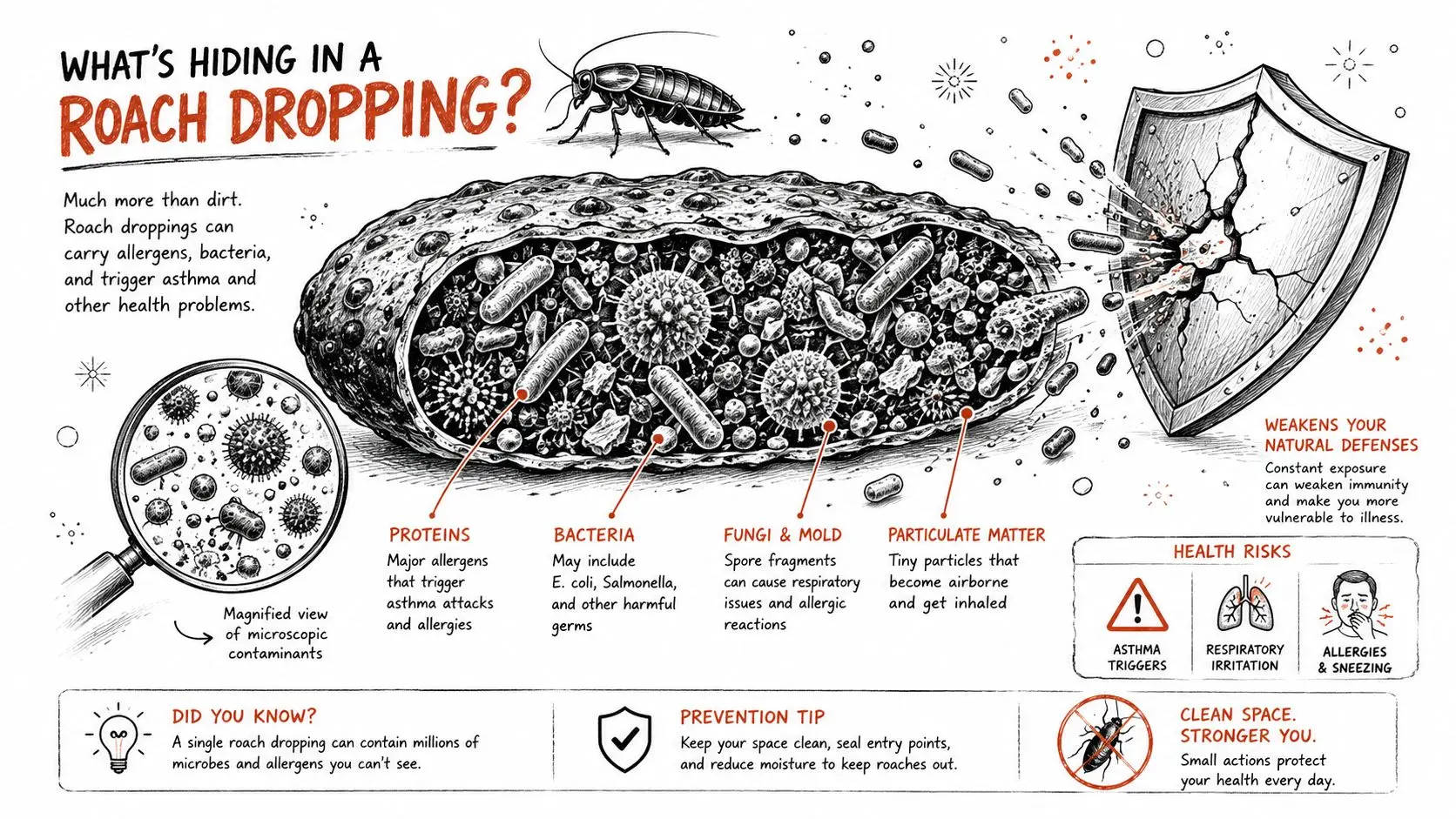
Roach droppings are a hygiene issue, but they're also a respiratory and contamination issue. The EPA says cockroach feces, saliva, eggs, and shed cuticles contain allergenic substances, and that these materials can trigger asthma attacks. The Illinois Department of Public Health adds that fragmented exoskeletons and fecal bits can act as antigens when inhaled, which is why even small amounts can matter in enclosed homes.
How contamination actually happens
Better Health Victoria notes that bacteria ingested by cockroaches can survive in their digestive system for months or even years and then pass in droppings, and it also notes that roaches may vomit and defecate on food. That creates a direct contamination path if food is left uncovered in a pantry or on a shelf. Better Health Victoria on cockroaches
Exposure routes are pretty ordinary. A person touches a contaminated shelf, then rubs their nose or eyes. Dust and tiny particles get stirred up during dry cleaning, then inhaled. Pantry items can pick up contamination if packaging was already compromised.
For homeowners who want a deeper look at the bacteria side of the issue, BacteriaFAQ's commercial E. coli guide is a useful companion read because it explains how fecal contamination becomes a sanitation concern in food-adjacent spaces. That's relevant here because roach waste turns a shelf problem into a food safety problem.
The practical takeaway is simple. If you're going to clean droppings, you should protect yourself while you do it. Gloves, a mask, and ventilation aren't overkill when the waste can carry allergens and contamination risk. The cleaning step needs to respect the health side of the problem, not just the stain.
Cleaning Roach Droppings Safely and Effectively
Start with protection, not scrubbing. Disposable gloves, an N95 or equivalent mask, and open ventilation help reduce exposure to allergens and fine debris while you work. That matters because the droppings can dry out, break apart, and become easier to inhale when disturbed.
A safe cleanup sequence
Begin with dry removal. A HEPA-filtered vacuum is ideal for loose droppings in cracks, seams, and hard edges, and damp paper towels work when vacuum access is awkward. Bag and seal the waste right away so you're not carrying it through the house. Then move to a surface cleaner to remove the remaining residue.
If you prefer a gentler cleaner for cabinets or finished counters, a resource like eco-friendly cleaning solutions from Fillaree can help you compare safer cleanup approaches for routine surfaces. The important part is that the cleaner still removes residue, because lingering film can attract new activity.
- Vacuum or wipe first: Dry material comes off before you introduce liquid, which helps limit smearing.
- Seal contaminated paper and debris: Waste should leave the room in a closed bag.
- Sanitize touched surfaces: After the droppings are gone, clean the shelf, seam, or drawer with an appropriate surface cleaner.
- Handle pantry items carefully: Toss anything visibly contaminated or with damaged packaging.
FullScope Pest Control's allergy-focused roach guidance fits into this part of the decision because droppings and allergens are linked. If you've got kids with asthma, or anyone sensitive to indoor allergens, don't treat cleanup as cosmetic work.
Heavy contamination is different. Large accumulations behind appliances, in ductwork, or inside voids are not a normal household cleanup job. Those areas often need containment tools and a licensed technician who can work the source instead of just the surface. Cleaning without solving the infestation only resets the clock.
Fresh Droppings Versus Old Residue
Not every dark speck means the house is currently active. Stale droppings can sit in place long after the roaches are gone, which is why homeowners often overreact to old residue or underreact to fresh signs. The trick is reading the material the way a technician would.
What fresh and old signs usually look like
Fresh droppings often appear dark brown, slightly shiny, or a little sticky. Smaller roach frass can smear like ink when crushed, which lines up with higher moisture content in the waste. Older droppings dry out, fade, and crumble, and they usually lose that darker, glossier look.
Decision rule: shiny, dark, sticky, or smearing droppings usually point to recent activity. Faded, dusty, or powdery residue usually points to an older issue, a former tenant problem, or a gap that hasn't been sealed well.
That distinction changes the response. Recent droppings in more than one spot justify immediate treatment because they suggest the insects are still feeding and traveling through the home. Isolated old residue can justify a slower approach, with monitoring and exclusion work first.
Sticky traps help in that slower case because they give you a read on whether anything is still moving through the area. If the traps stay empty and the residue keeps looking dry and old, you may be dealing with past activity rather than a current breeding issue. If the cleaning reveals fresh specks again within a short time, the infestation is still active and the cleanup only exposed it.
This is the part most public-facing articles skip. Droppings don't just tell you that roaches were there. They tell you whether your home is still serving them.
Prevention and When to Call a Professional
Southeast Texas homes give roaches a lot of help. Warm weather, high humidity, and housing styles around Magnolia, Cleveland, Kingwood, Conroe, and Porter can make it easier for moisture and entry gaps to persist. Attached garages, pier-and-beam spaces, slab-on-grade construction, and dense landscaping near foundations all create the kinds of conditions roaches use to move inside and stay there.

What prevention looks like in a real house
Seal gaps around pipes, baseboards, and utility penetrations. Cut moisture under sinks and behind dishwashers. Keep cardboard out of storage areas when you can, because roaches use cluttered material as cover. Store pantry goods in sealed containers and keep trash closed.
For homeowners who want outside perspective on what a pest-service visit can look like, Can Do Duct Cleaning's pest control page is a reminder that inspection and source control matter more than surface cleanup alone. The same logic applies here. If waste keeps coming back, someone needs to find the harborage.
When the signs keep repeating, a licensed provider is the right move. Recurring droppings after cleaning, droppings in multiple rooms, evidence in daylight, or German-sized frass usually mean the problem is no longer small. At that point, a service like FullScope Pest Control is one option because it provides inspections, targeted treatment, and ongoing plans for Magnolia and nearby north Houston and Southeast Texas communities, including Cleveland, Kingwood, Conroe, and Porter. Choosing a roach control service is easier when the trigger is clear.
A Practical Decision Framework for Magnolia-Area Homeowners
Use a simple tiered response. Monitor if you're seeing older, dry residue in one spot and the home is otherwise clean and dry. Clean and prevent if droppings look fresh in a single area, but you have no daylight activity and you're ready to seal gaps, reduce moisture, and monitor with traps. Call a licensed provider if the droppings keep coming back, show up in multiple rooms, look like German-sized frass, or you spot roaches during the day.
Magnolia homes near wooded lots, shared walls, or slab edges can go from manageable to established fast, so the threshold for action should be practical, not emotional. FullScope Pest Control serves Magnolia along with Cleveland, Kingwood, Conroe, Porter, and surrounding Southeast Texas communities with inspections, targeted treatment, and ongoing plans. The right response is proportionate to the sign in front of you.
Start today by checking the pantry edges and under the sink with a flashlight, then wipe one suspect area and see whether the evidence returns.