1500+ reviews

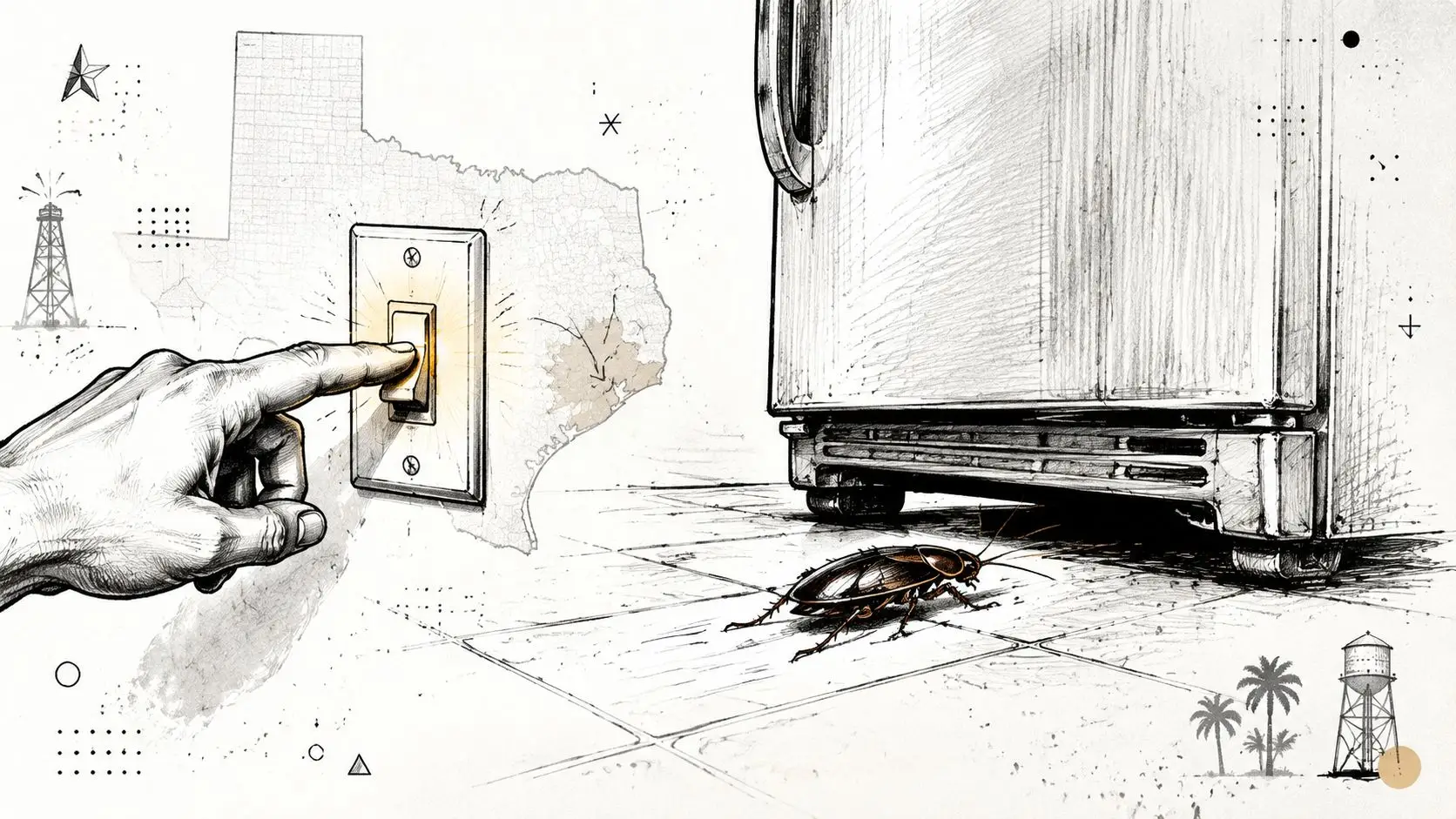
You walk into the kitchen for a glass of water, hit the switch, and catch a fast shadow cutting across the floor toward the refrigerator. Around Southeast Texas, that moment is familiar. A lot of homeowners call it a “water bug,” especially when it's big, dark, and shows up at night. Whatever name you use, the stress is the same. Once you've seen one, you start wondering what's behind the walls, under the appliances, and in the garage.
That concern isn't overreacting. Cockroach infestations peak during warmer months, with 60% of cases reported between May and September, and in North America they affect approximately 25% of multi-family housing units annually, with German and American cockroaches making up 80% of reported cases according to FullScope Pest Control's cockroach overview. In Southeast Texas, heat and humidity don't give you much margin for neglect. Small leaks, cluttered utility areas, cardboard stacks, and loose seals around plumbing all become invitations.
The good news is that prevention works when you treat it like home defense, not a one-time cleanup. If you want to know how to prevent cockroach infestation in this part of Texas, focus on habits, inspection, and sealing. That's what keeps a stray roach from turning into a recurring problem.
Your Guide to Cockroach Prevention in Southeast Texas
A roach sighting at midnight doesn't always mean your house is overrun. It does mean your home offered something useful that night. In my experience across north Houston communities, that “something” is usually moisture, shelter, or an easy pathway in from outside.
Why Southeast Texas homes stay on their radar
Our climate works in the roach's favor for a big part of the year. Warm evenings, humid air, summer storms, irrigated landscaping, and attached garages all create transition zones where roaches can live outside and move in when conditions line up.
American cockroaches often show up as the big ones homeowners notice first. German cockroaches are smaller and usually more serious because they settle into kitchens, bathrooms, and hidden voids. You don't need to panic over every single sighting, but you do need a plan that fits the region.
Practical rule: In Southeast Texas, assume moisture and access matter just as much as crumbs.
Prevention is maintenance, not a one-time spray
Many people think prevention starts with pesticide. It doesn't. The strongest prevention programs start with denying the basics roaches need and catching weak spots early. That means checking under sinks, behind the fridge, around the water heater, along baseboards, and at door thresholds before you ever think about treatment.
What works is consistency. Wipe surfaces. Dry out wet areas. Get boxes off the floor. Seal the small openings around utility lines. Keep outdoor clutter from piling against the house. Those steps aren't flashy, but they're the difference between occasional intruders and a pattern.
A concerned homeowner usually wants one answer. There isn't just one. There's a system. Once that system is in place, your house becomes much harder for roaches to use.
Your Proactive Home Inspection Checklist
Before you can stop roaches, you need to inspect like one. They're looking for food, water, and shelter, and they don't need much of any of them. A regular walkthrough beats a late reaction every time.
If you've recently bought a home or you're evaluating an older property, some of the same habits that help you spot structural or moisture problems also help with pest prevention. These crucial home buying insights from Superior Home Improvement are useful because pest issues often track with overlooked leaks, gaps, and maintenance shortcuts.
Where to inspect first
Start with the rooms that give roaches what they need most.
| Area | What to Check | Action Required |
|---|---|---|
| Kitchen | Under sink for leaks, behind fridge for debris, cabinet corners for droppings or egg casings, pantry shelving for spills | Fix leaks, vacuum debris, wipe grease, move food into sealed containers |
| Bathrooms | Toilet base, sink plumbing, tub lines, vanity corners, damp bath mats | Dry standing moisture, repair drips, clear clutter, inspect caulk lines |
| Laundry room | Washer hookups, drain pan, dryer area, detergent spills | Clean buildup, monitor for dampness, check wall penetrations |
| Garage | Stored cardboard, pet food, water heater area, door sweeps | Reduce clutter, elevate storage, seal gaps, keep pet items contained |
| Utility areas | HVAC closet, water heater base, pipe entries, wall void access points | Seal penetrations, check condensation, remove dust and debris |
| Exterior entry points | Thresholds, weatherstripping, foundation gaps, utility penetrations | Re-seal openings, replace worn sweeps, trim back harborage near walls |
What evidence matters
Don't just look for live insects. Look for signs that activity is building.
- Dark specks in corners: Fine droppings often show up in cabinet hinges, drawer slides, or along wall-floor joints.
- Egg casings: These are a stronger warning sign than a single wandering adult.
- Musty or oily odor: In tight spaces, a lingering odor can point to a hidden aggregation.
- Smear marks and debris: Around damp wall voids or appliance edges, these can show up before you ever catch a live roach.
One useful reference if you're unsure what counts as early evidence is this guide on how to tell if you have a cockroach infestation.
Check the house room by room, not all at once. Homeowners miss less when they slow down and inspect one zone thoroughly.
Make it a quarterly habit
A prevention inspection works best when it repeats. In Southeast Texas, I'd treat it like seasonal maintenance. Do a full pass before the hotter stretch of the year and another after heavy summer activity. That rhythm helps you catch leaks, worn weatherstripping, and garage clutter before roaches do.
Building Your Home Defense Strategy
Good prevention gets simpler when you stop thinking about roaches as random invaders and start thinking about life support. If they can't reliably access food, water, and shelter, they don't establish well.
Penn State Extension describes Integrated Pest Management as a three-part method: sanitation, exclusion, and targeted chemical application only when monitoring detects activity. It also notes that exclusion has to be precise, using silicone caulking or copper mesh to seal openings as small as 1/16 inch in order to work, as explained in Penn State Extension's IPM guidance.

Sanitation means removing the reasons they stay
Sanitation isn't about making the house look nice. It's about cutting off fuel.
The big misses are usually hidden. Grease film inside lower cabinets. Crumbs under the stove. Moisture under the sink. Pet bowls left out overnight. Condensation around plumbing. In a humid Southeast Texas house, even a minor drip under a bathroom vanity can support activity longer than people expect.
Focus on habits that reduce resources:
- Store food tightly: Pantry items, snacks, cereals, flour, and pet food should move out of paper and thin plastic when possible.
- Dry wet zones at night: Sinks, counters around the faucet, and splash areas matter.
- Control plumbing issues early: Slow leaks and sweating pipes create repeat moisture.
- Reduce hidden clutter: Bags, stacked paper, and crowded cabinet bases create shelter.
Drain areas deserve extra attention. If you're trying to understand how traps under sinks work and why certain plumbing areas stay damp, this home plumbing P-trap explanation gives useful context.
Exclusion is what turns cleaning into defense
A clean home with open gaps is still vulnerable. Exclusion is where many prevention plans fail because people seal the obvious crack and miss the utility opening behind the dishwasher or the loose escutcheon under a sink.
Check around:
- Pipe penetrations under sinks
- Wall openings behind appliances
- Baseboard separations
- Door sweeps and garage thresholds
- Cable and wire entries near exterior walls
Use silicone caulk for narrow seams. Use copper mesh where the opening is larger or irregular. Foam by itself isn't enough in the spots that get traffic or movement.
A solid walkthrough on broader sealing and entry-point work is this guide to pest-proofing your home.
Here's a practical visual on prevention and control methods:
Chemical products have a place, but not first place
This is the trade-off homeowners need to hear clearly. Spraying first feels productive, but if sanitation and exclusion are weak, treatment becomes maintenance on a bad system. You may kill visible roaches and still leave the conditions that keep replacing them.
Targeted products work better when the house no longer supports easy food, water, and shelter. That's why a home defense strategy starts with denial, then monitors, then treats only where evidence justifies it.
Uncovering Hidden Cockroach Hotspots
A lot of homeowners look only in the kitchen and bathrooms. That's understandable, but it leaves out some of the most useful hiding spots roaches have in modern homes.
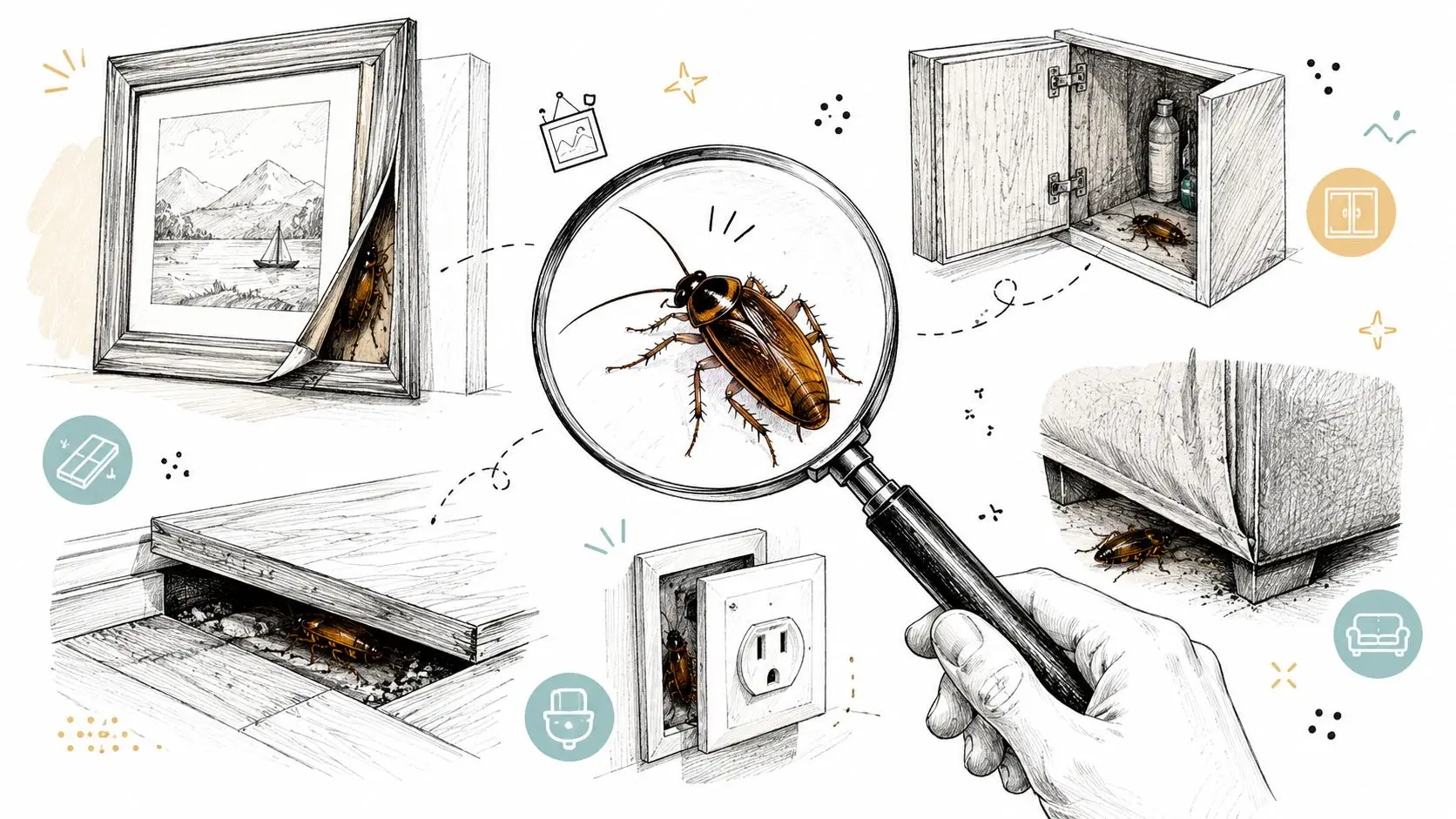
One of the biggest blind spots now is electronics. Purdue Extension notes that up to 18% of multi-family cockroach infestations originate from hidden wall voids near electrical outlets and device heat zones, and that roaches increasingly nest in warm components like routers, microwaves, and HVAC units, carrying allergens and bacteria inside those devices, according to Purdue Extension's publication on cockroach harborage.
Electronics create warm shelter
Routers, gaming consoles, microwave voids, cable boxes, and the backs of televisions all generate warmth. That warmth matters because it gives roaches a stable hiding area that people rarely disturb. Add dust and a nearby wall void, and you've got a hotspot that doesn't look like one.
If a room keeps producing activity even after the kitchen has been cleaned up, inspect the electronics and the outlet areas nearby. Unplug safely before checking, and don't force open equipment housings.
A spotless countertop doesn't help much if the real harborage is behind the microwave or inside the entertainment center.
Cardboard and cabinet buildup matter more than people think
Cardboard isn't just clutter. It gives roaches tight corrugated shelter, and in storage areas it stays undisturbed for long stretches. In garages, closets, and pantry overstock zones, replace cardboard with plastic bins when you can.
Kitchen cabinets are another trap because grease and dust collect slowly. If you need a practical method for tackling residue inside storage areas, this guide on degreasing and cleaning cabinets is useful for the spots homeowners often skip.
Outdoor harborage often feeds the indoor problem
In Southeast Texas, prevention fails outside as often as inside. Roaches use mulch, leaf litter, cluttered porches, damp fence lines, and wood piles near the house as staging areas. From there, they move through garage gaps, thresholds, and utility penetrations.
Check the perimeter for the conditions that stay humid and shaded. If the exterior stays inviting, interior cleanup won't solve the whole problem.
DIY Monitoring and Safe First Responses
Even strong prevention won't stop every stray roach. What matters next is whether you're dealing with an occasional intruder or active indoor pressure. The easiest way to tell is to monitor before you overreact.
Use glue boards like a map
Glue boards are simple, low-risk tools that show where activity is happening. Place them flat against edges, not out in the open middle of the room. Good spots include under the kitchen sink, behind the refrigerator, beside the toilet, near the water heater, and along garage walls.
Check them weekly and keep notes on where you catch activity. The location matters as much as the count. A repeated capture near one appliance or plumbing line usually tells you where to inspect and correct conditions.
If you bait, placement matters more than quantity
For DIY control, bait stations need to sit flush against corners and edges because roaches prefer dark, tight spaces and may ignore bait placed out in the open. Another major mistake is leaving pet food and water out overnight, which can reduce sanitation efficacy by over 40% in multi-family housing, as noted in the University of Kentucky entomology guidance.
That's why sloppy baiting disappoints people. They put too much product in the wrong place, then leave competing food and moisture nearby.
Use this approach:
- Monitor first: Don't guess where activity is strongest.
- Place bait where they travel: Cabinet corners, appliance void edges, and protected seams are better than exposed shelf centers.
- Keep food competition down: Clean spills, secure pet food, and dry wet areas before baiting.
- Avoid broad spray applications: Spraying floors and countertops usually doesn't solve the hiding-place problem.
If you've ever wondered why a do-it-yourself attempt seemed to make things worse, this breakdown of DIY pest control gone wrong covers the common mistakes.
Light, precise placement beats heavy, visible placement. Roaches follow edges and crevices.
Safe first responses that make sense
Glue boards, careful sanitation, and targeted baiting are the first line. Boric acid can also have a role when applied lightly into inaccessible voids, not broadcast across open surfaces where people and pets can contact it. If you're having to reapply products repeatedly with little change, that's usually the signal to stop experimenting and reassess the problem.
When to Call for Professional Pest Control
Some situations have moved past prevention and light DIY work. The signs are usually pretty clear once you know what they mean.
Daytime sightings are one. So is persistent odor in a cabinet run, wall void, or appliance area. Repeated captures of small roaches also tell you the problem isn't just a lone outdoor invader passing through.

Resistance is a real reason DIY stops working
One of the biggest trade-offs in store-bought control is repetition. Homeowners often use the same active ingredient over and over because it's available and familiar. That can backfire. Southern Living notes that cockroaches show high resistance to commonly used insecticides, and using the same class repeatedly can lead to bait avoidance and population rebound. Professional programs address this by rotating insecticide classes, as explained in Southern Living's discussion of roach control resistance.
That matters in Southeast Texas, where long warm seasons can keep pressure on a house for months. If the same treatment keeps fading, the issue may not be application effort. It may be product resistance, missed harborage, or untreated wall void movement.
What a professional inspection should solve
A good professional visit shouldn't just add more product. It should answer a few specific questions:
- Where are they entering or nesting?
- What moisture source is supporting them?
- Which voids or appliance areas are active?
- What treatment fits the evidence, not guesswork?
One local option is FullScope Pest Control, which provides inspection-based pest management in north Houston communities and uses an IPM approach with ongoing service options. That's useful when the issue involves repeated reinfestation pressure, multi-room activity, or conditions that need follow-up rather than a single visit.
If you're seeing daytime roaches, repeated nymph activity, or poor response to DIY baiting, this is the point where professional help usually saves time, product waste, and frustration.
Cockroach prevention works best when you stay ahead of the conditions that support them. In Southeast Texas, that means controlling moisture, sealing entry points, reducing clutter, checking hidden heat sources like electronics, and monitoring before problems spread. If your home is already showing stronger warning signs, schedule an inspection with a licensed pest professional and get a plan built around the actual problem, not guesswork.