 1500+ reviews


Mosquito Control Chemicals: Types, Safety and Resistance
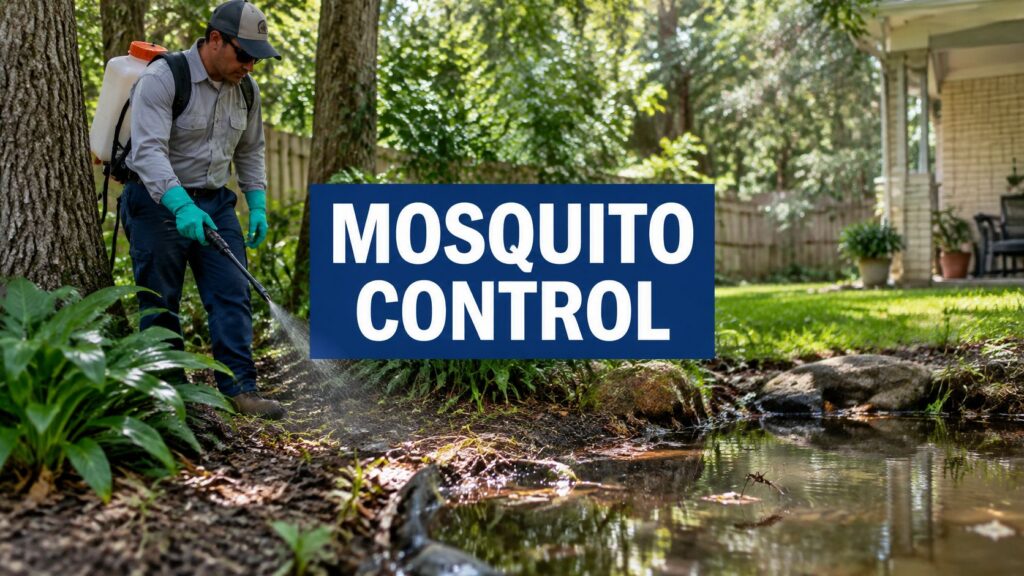
If the spray was mixed correctly and the weather cooperated, why are mosquitoes back on the patio three days later? Most homeowners treat that rebound as a weak product. More often the chemical hit the wrong life stage, missed the water where the next generation is hatching, or met a local population that no longer dies at the labeled dose. Mosquito control chemicals only work when the active ingredient, the habitat, and the label all point at the same problem. Mosquito Control Chemicals at a Glance Adulticides act on flying mosquitoes that are already biting and resting. Larvicides act on developing larvae in breeding water before those insects ever emerge. Read each row left to right. The stage tells you whether the product addresses the mosquitoes you can see. The strength is what the chemistry does well. The limit is the reason it can disappoint. Chemical class Common active ingredients Target stage Main strength Main limit Pyrethroids Deltamethrin, lambda-cyhalothrin, permethrin Adult mosquitoes Fast knockdown and surface residual Resistance is widespread and they are toxic to fish and bees Pyrethrins Natural pyrethrins from chrysanthemum flowers Adult mosquitoes Low persistence and natural origin Breaks down quickly in sunlight and needs frequent reapplication Organophosphates Malathion Adult mosquitoes Long track record against adults Resistance is common and use is restricted in many programs Insect growth regulators Methoprene, pyriproxyfen Larvae and pupae Stops larvae from emerging as adults Does not kill adults already flying Microbial larvicides Bti (Bacillus thuringiensis israelensis) Mosquito and black fly larvae Selective to target insects in water Short duration in water and needs reapplication as larvae hatch Spinosyns Spinosad Larvae in water Effective larval control Can affect some non-target aquatic insects No row is a universal answer. The stage and the habitat decide the choice. Why one persistent chemical stopped being the plan DDT shows what happens when a program leans on a single long-lasting compound. The EPA history of DDT records that U.S. use peaked at approximately 80 million pounds in 1959, that restrictions began in 1969, and that most uses were banned in 1972 after ecological harm, persistence, and widespread contamination. The Stockholm Convention still allows a narrow public-health exemption for indoor mosquito control where alternatives are unavailable. That split matters. DDT is not a general yard product. Modern programs rotate shorter-lived tools and pair them with habitat work. Dumping standing water still does more than swapping brands. A practical way to eliminate mosquito breeding grounds around your home is to empty the containers that refill after every storm, then reserve chemistry for water you cannot remove. Matching the Chemical to the Life Stage An adulticide knocks down mosquitoes that are already flying. A larvicide interrupts development in water so the next flight never starts. The WHO guidance on mosquito control options lists adult tools such as deltamethrin, lambda-cyhalothrin, pyrethroid mixes with piperonyl butoxide, and malathion, plus larval tools such as microbials, insect growth regulators, spinosyns, and benzoylphenyl ureas. Use only products registered for the site. A barrier on shrubs is a different exposure than a product placed in water near children, pets, or a drinking source. Three yards, three different jobs Temporary containers. Tires, birdbaths, plant saucers, clogged gutters, and trash-can lids hold water for a few days, which is enough for eggs to hatch. Empty or drill them first. A chemical belongs there only when you cannot dump the water. Persistent water. Ponds, drainage ditches, creek margins, and lake edges stay wet and often hold fish, tadpoles, and other non-target life. That is a larval job, with a product labeled for that water, not a broadcast adult spray. Shaded resting sites. Adults sit in shrubs, tall grass, and wooded edges during the day. A residual barrier spray leaves a deposit on those surfaces. An automated misting system releases product on a timer through nozzles aimed at the same resting zone. Fogging is a contact treatment for adults in the air at the moment of application, not a substitute for finding the water. The sequence and the record Map every site. Separate water you can dump from water that stays. Put a larvicide only where removal fails, and an adulticide on resting vegetation, not on open water. The mosquito life cycle makes the timing obvious. Eggs, larvae, and pupae are in water. Adults are on foliage. Write it down: For each product, record the target stage, the habitat, the label rate, and the re-entry or water-use restriction. A class name alone is not a plan. Why Mosquitoes Stop Responding to a Chemical A local mosquito population works like a crowd with uneven tolerance. The first treatments kill the most sensitive insects. Survivors breed. Each repeat of the same active ingredient shifts the crowd toward insects that live through the dose, and a longer-lasting residue raises that pressure because more generations meet the same chemistry. How wide the problem already is A World Health Organization review of insecticide resistance covering 2010 to 2016 compiled 17,824 resistance records from 79 of 91 malaria-endemic countries, and it sets confirmed resistance at mortality below 90 percent in a standardized bioassay. Resistance at that level showed up in all major malaria-vector species and in all four common classes: pyrethroids, organophosphates, carbamates, and organochlorines such as DDT. Among those 91 countries, 62 reported resistance to at least one class and 50 reported resistance to two or more. A Kingwood or Conroe yard sits far from any malaria program. The selection mechanism is the same, and a product that works on one block can fail two streets away. That is why a test beats a guess. For adult mosquitoes, labs run a bottle bioassay: they expose a sample of mosquitoes to a diagnostic dose, read mortality at a set time, and compare the result against a published threshold for that insecticide. High mortality means the population still responds as the label expects. Mortality sliding toward the 90 percent line signals a population worth watching. Results below it point to resistance that calls for a
Why Fleas Can Remain a Problem Inside Heated Texas Homes During Winter
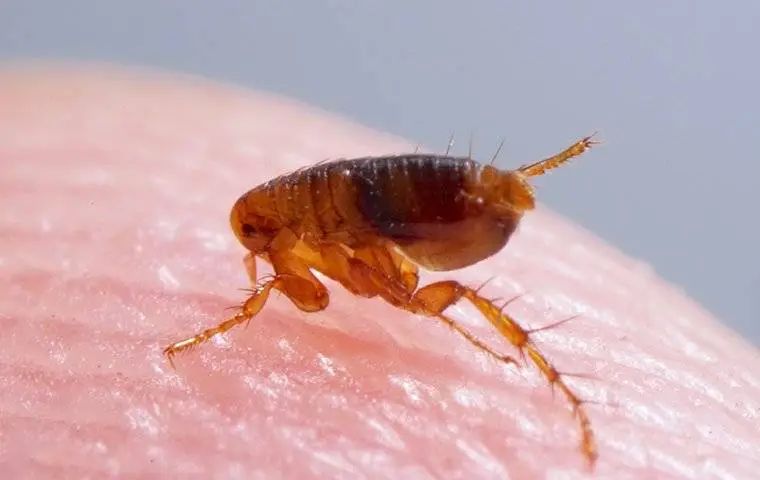
A dog settles onto the living room rug after an evening walk, and someone notices another tiny insect jumping near its paws. It is winter in Southeast Texas, so why are fleas still appearing? The answer often lies indoors, where heating, pets, and protected resting places can support flea activity even when outdoor conditions become less favorable. A winter flea problem does not necessarily mean a new infestation has just arrived. Eggs and developing fleas may already be present in the home. Our technicians look at the animal’s routine, where flea activity has been noticed, and which areas need attention before recommending treatment. Heated Rooms Can Support More Than Adult Fleas Fleas do not spend their entire life on a pet. Adults typically feed on an animal, while eggs fall into the surrounding environment. Larvae develop in protected locations, and pupae can remain in cocoons before emerging. This lifecycle helps explain why a warm house may experience recurring sightings despite cooler weather outside. Several indoor conditions can contribute: A flea that jumps onto someone’s ankle is only the visible part of a potentially wider problem. Finding adults does not reveal how many immature stages remain in nearby materials. Conversely, itching alone cannot confirm fleas, since pets can develop irritation for other reasons. Our article on flea treatment timing explains why adult fleas may decline before the household environment is fully controlled. Identifying the different stages helps homeowners understand why winter warmth can prolong a problem instead of ending it. Treating the House and Caring for Pets Are Separate Jobs When fleas persist, it is tempting to assume that an application to the carpet should solve everything. However, adult fleas continue using suitable animal hosts, while eggs, larvae, and pupae occupy the surrounding environment. Successful management often requires coordination between professional premises treatment and veterinary-approved flea prevention for every affected pet. Our inspection may consider: Professional flea treatment addresses the property, not the animal’s medical needs. A veterinarian should recommend appropriate products based on the pet’s species, age, and health. Products intended for dogs must never be assumed suitable for cats. Indoor applications should follow product labels and the technician’s preparation and reentry directions. We explain those requirements instead of describing any insecticide as completely harmless. A home may also need careful ongoing cleaning and monitoring, coordinated with the treatment plan rather than used as a substitute for it. Winter Follow-Up Helps Explain New Sightings Flea pupae may be protected within cocoons, and some adults can emerge after an initial treatment. As a result, a few later sightings do not always indicate that the original service was ineffective. The pattern, timing, and quantity of activity matter more than one isolated observation. A follow-up review can address: Our guide to pet flea prevention describes how animals can bring fleas into household environments and why indoor and outdoor conditions need consideration together. Although it discusses spring, pet movement and concealed flea stages remain relevant during winter. Southeast Texas winters are variable, and protected outdoor sites may remain suitable during mild periods. But a flea infestation can continue entirely within a heated home once suitable hosts and developmental locations are available. The most useful response is therefore based on evidence, not the assumption that lower temperatures will interrupt reproduction. Our team considers where fleas are appearing, whether pets have appropriate veterinary protection, and which treatment precautions apply. This coordinated approach helps reduce recurring activity without making unrealistic promises about how quickly every concealed stage will disappear. Keep Winter Comfort Without the Fleas If fleas keep appearing around pet bedding or living spaces, contact Fullscope Pest Control for a professional assessment. We can examine the property, explain suitable treatment options, and recommend appropriate monitoring.