 1500+ reviews


Can Ants Smell Food? How Their Senses Find Your Kitchen
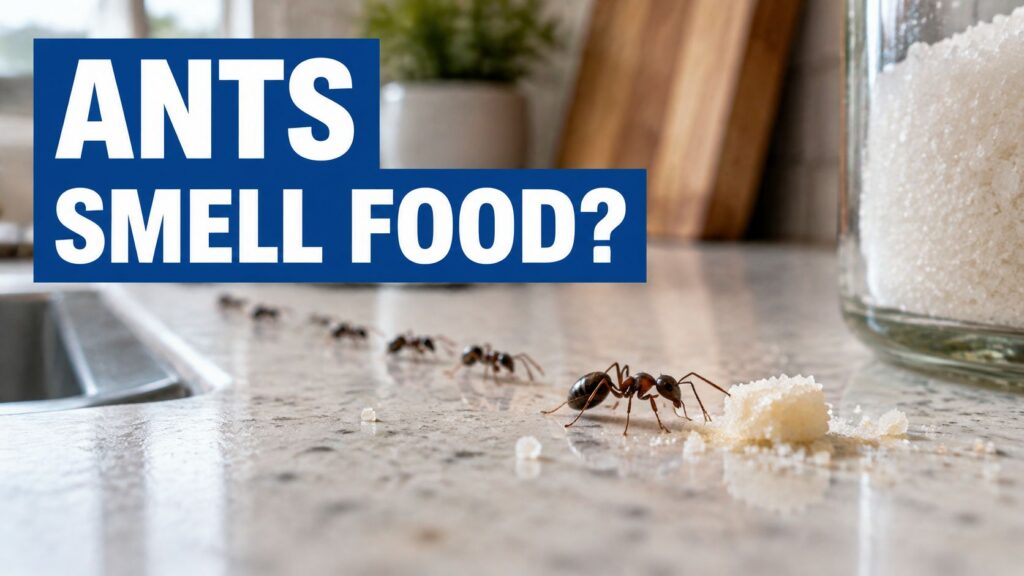
Yes, ants smell food mainly through chemical receptors on their antennae, using a two-stage process of airborne detection followed by contact sampling. Finding the food and recruiting nestmates are separate steps, which is why removing a crumb doesn't always stop an established trail. You wiped the counter after dinner, put the leftovers away, and still woke up to ants beside the coffee maker. The missing piece may be a sticky residue you can't see, a nearby water source, or the chemical route workers have already marked. Yes, Ants Smell Food Through Their Antennae Say a drop of soda lands beside your toaster at bedtime. By morning, ants are walking between that spot and the backsplash. Yes, ants can smell food without having a nose. Their antennae carry sensilla, tiny sensory hairs that detect airborne odor molecules and chemicals encountered through touch. Food-associated airborne compounds are commonly detected through basiconic sensilla, while other sensory structures help ants recognize different chemical signals. A small spill can become the destination of an organized trail. Noticing a possible meal versus checking it Airborne detection helps a worker notice a potential resource. Once it reaches the spot, antennal contact helps it assess the chemicals more closely. Those are related tasks, but they aren't interchangeable: detecting an odor doesn't establish that food is accessible or worth collecting. A 2026 red imported fire ant study published on PubMed Central tested antennal responses to 62 odor cues, including compounds associated with nectar, plants, and insect prey, and found that workers and winged females responded to most of them. That range matters because a kitchen offers more than sweet smells: plant material, food residues, and prey-related odors can also provide detectable cues. Ants find food through smell, then nestmates can follow a chemical route to the source. There isn't a universal detection distance you can apply to every kitchen. The food, airflow, obstacles, and ant species all affect whether a passing worker encounters a useful cue. How Ant Antennae Sort Food Smells From Other Odors Think of an antenna as a sorting room with many receiving bins, rather than a single food detector. Different receptor types respond to different molecules, and the ant's nervous system interprets the resulting pattern. Close inspection lets a worker gather information it couldn't obtain from an airborne cue alone. The 2018 Florida carpenter ant genome study available through PubMed Central identified 503 putatively functional odorant-receptor gene models, noted that many ant species possess roughly 300–400 odorant-receptor genes, and discussed a 2017 finding that ants lacking the Orco co-receptor couldn't forage effectively or bring food back to the nest. “Putatively functional” means the researchers identified gene models expected to function, not that they established a separate household smell for every gene. Orco helps the odorant-receptor system operate; it isn't merely a receptor for sugar. Ant chemical cues, home sources and colony responses The following distinctions help separate a food attractant from the signals ants exchange with each other. Water belongs in the comparison as a resource cue, not as a food odor. Chemical cue Common home source How the antenna detects it What the colony does with it Sweet liquids and residues Spilled soda, syrup, honey, sticky jam film Associated airborne volatiles detected by basiconic sensilla, then antennal contact Scouts assess quality and may recruit nestmates Protein and fat scraps Pet food, grease, meat or cheese crumbs Odor detection plus contact sampling Scouts sample the find and may recruit Water and moisture Sink drips, leaks, pet water bowls Close-range assessment involving antennae and mouthparts Reliable water can draw repeat foraging, especially in dry conditions Trail pheromone Chemical marks deposited by workers along a route Antennal receptors detect pheromone near the traveled surface Workers follow and reinforce a recruitment route Alarm and colony odors Disturbed nest material, crushed workers, other ants Distinct receptor responses to chemical signals Workers recognize danger or colony identity rather than food Watch how actively ants use their antennae while exploring. A useful correction follows: ants aren't necessarily smelling a pure sugar crystal from across the room. Odors associated with food can guide exploration, while direct sampling helps evaluate substances that don't readily become airborne. The antenna that helps flag a spilled drink also helps an ant distinguish recruitment from danger. Food-associated chemicals and trail pheromones carry different information, even when a worker encounters them in the same place. Why One Crumb Turns Into a Daily Trail Why did ants appear after dinner when the food was covered? A lid may protect the dish while leaving sauce on its rim, grease on the counter, or a drip beneath the serving spoon. Smelling food is not the same as locating an infestation. A worker can investigate a food odor without revealing where the colony lives, and a busy countertop route doesn't prove the nest is inside the kitchen. The ant-foraging study available through PubMed Central describes how food odors, visual information, and pheromone recruitment contribute to foraging. The visible line usually develops after workers confirm a usable resource, rather than because every worker independently smells your dinner. From exploration to repeated traffic An exploring worker encounters a food-associated odor, reaches the potential resource, and samples it. If the resource is worthwhile, the worker returns toward the nest and deposits recruitment pheromone along the route. Nestmates follow the chemical marks, reach the resource, and may add deposits of their own. Continued traffic strengthens the route, turning an inconspicuous spill into a busy destination. It's like a footpath across a lawn. An initial crossing barely marks the grass; repeated crossings make the path easier to recognize and follow. A covered dish may prompt investigation without supporting a lasting trail if workers can't reach anything edible. Conversely, residue outside the container may provide enough accessible food to sustain traffic. The important clue is where workers actually stop and feed. Wiping a route can interrupt traffic without removing the reason ants established it. Before cleaning, follow the ants far enough to identify their destination and entry