1500+ reviews

Sonic mouse repellents may cause only a 30 to 50% reduction in rodent movement during initial exposure, then lose that effect after 3 to 7 days as rodents habituate. In homes, they are not a reliable long-term solution, and the FTC says ultrasonic devices do not control insects or rodents in a home environment.
That's the part most product listings bury. A sonic mouse repellent sounds like the perfect answer when you've heard scratching in the attic or found droppings under the sink. Plug something in, avoid traps, skip the crawlspace work, and let technology handle it. The problem is that the science and field reality don't match the marketing.
In Southeast Texas, that gap gets even wider. Roof rats use attics and rooflines. House mice stay low, tuck into wall voids, and exploit small utility gaps. In a real house with insulation, cabinets, furniture, and multiple hidden travel routes, sound-based gadgets don't solve the problem that matters. They don't stop entry, they don't remove nesting sites, and they don't eliminate the rodents already inside.
The Allure of the Easy Fix for Mice
A sonic mouse repellent sells convenience. That's why people buy it.
If you're dealing with mice or rats, you want relief without poison, without handling traps, and without tearing into walls. That's understandable. Most homeowners are not looking for a lesson in rodent biology. They want the scratching to stop, the droppings to disappear, and the pantry to feel clean again.
The easy-fix appeal gets stronger when the infestation feels uncertain. Maybe you heard movement once in the ceiling. Maybe you found a few droppings in the garage. At that stage, a plug-in device looks safer and simpler than taking the house apart to hunt for gaps.
Why the promise is so attractive
A sonic repellent usually promises some combination of these benefits:
- No chemicals: People like the idea of avoiding sprays and baits.
- No cleanup: There's no snap trap to empty.
- No training required: Plug it in and leave it alone.
- No confrontation with the problem: You don't have to inspect the attic, crawl around the exterior, or admit rodents may already be nesting indoors.
That last point matters more than is often acknowledged. Rodent control works when you identify how they're getting in and where they're living. Products that avoid that work are attractive because they delay the uncomfortable part.
Practical rule: If a mouse control product promises permanent results without inspection, exclusion, or trapping, be skeptical.
Homeowners often test several repellent ideas before they move to proven methods. If you're also wondering about odor-based remedies, this breakdown of whether moth balls repel mice is worth reading, because it runs into the same core issue. A deterrent isn't the same thing as control.
What people actually need
Most rodent problems are structural problems first and pest problems second. The mouse or rat is just taking advantage of an opening, food source, water source, or protected nesting area. If those conditions remain, the “repellent” has to work perfectly all the time. That's not realistic.
A better standard is simple. Ask whether the method stops entry, reduces shelter, and removes the current population. Sonic devices don't do that. Professional rodent work does.
How Sonic Mouse Repellents Claim to Work
Manufacturers pitch these devices as a kind of silent alarm aimed at rodents. The unit plugs into an outlet and emits high-frequency sound, often called ultrasonic sound, that people are told mice and rats find irritating.
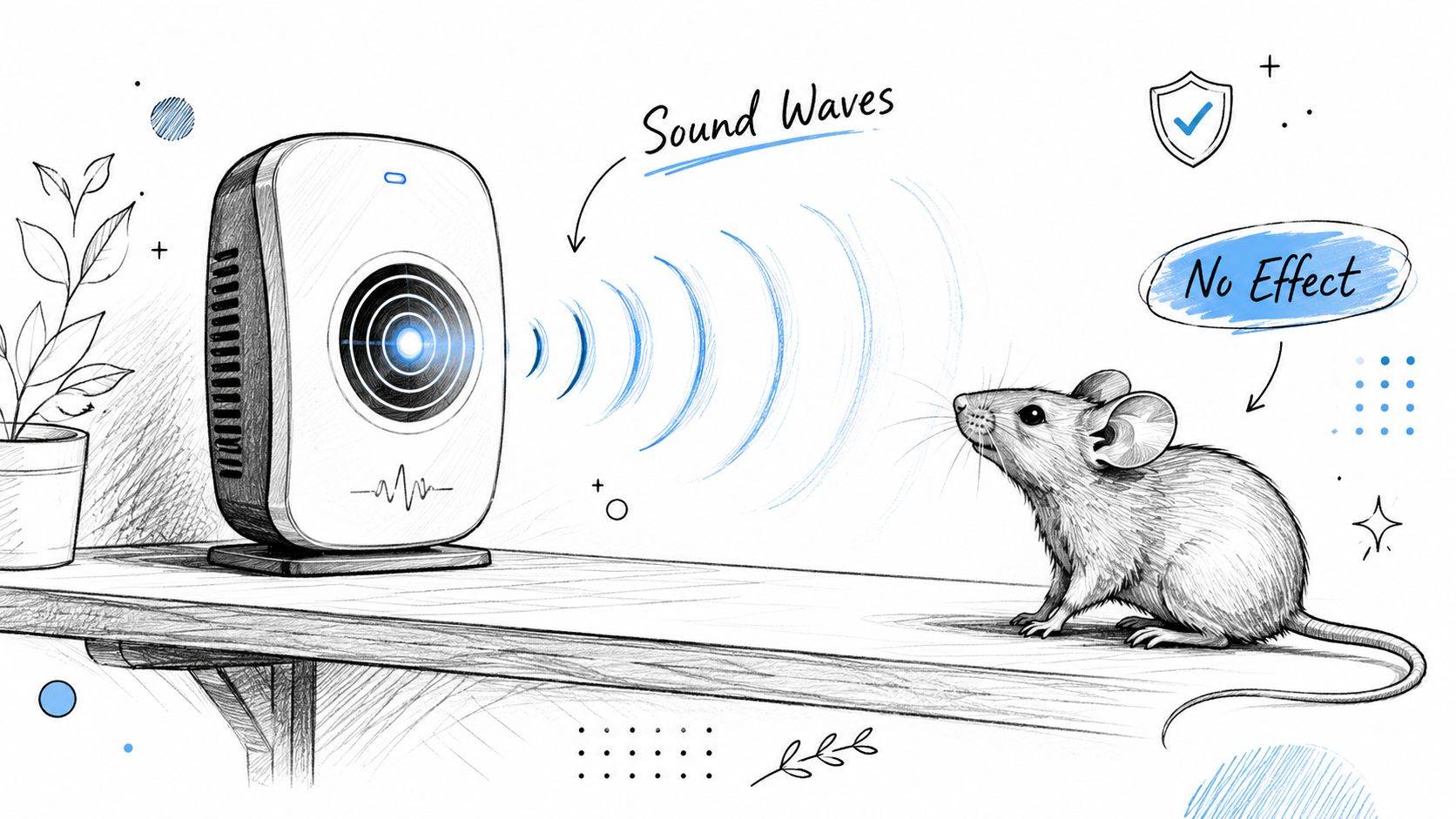
The marketing story is easy to follow. Rodents hear the sound. The sound makes the area uncomfortable. The rodents leave and stay gone. In theory, that sounds cleaner than traps and easier than sealing a structure.
What “sonic” and “ultrasonic” usually mean
For a homeowner, the distinction is less important than the sales pitch behind it.
- Sonic devices: These use sound in a range that may be audible.
- Ultrasonic devices: These use higher-frequency sound that people often can't hear.
- Variable-frequency models: These claim changing sound patterns will keep rodents from getting used to the signal.
The promise is that the device turns a room into hostile territory for mice. Some brands imply broad coverage. Others suggest one plug-in can protect a whole floor, garage, attic access area, or open-plan living space.
The built-in assumption behind the product
Every sonic mouse repellent depends on three assumptions:
- Rodents must hear the signal where they travel.
- The signal must bother them enough to change behavior.
- That effect must continue long enough to solve the infestation.
If even one of those fails, the product stops being control and becomes background noise.
A lot of buyers miss that point because the device looks technical. Lights blink. Packaging mentions frequency shifts. The language sounds engineered. But technical-sounding isn't the same as effective.
A plug-in repellent doesn't remove a nesting female from a wall void, and it doesn't close the gap under the garage door that let her in.
There's also a practical mismatch between the advertised use and the way rodents behave. Mice and rats don't spend their time standing in the middle of open rooms. They hug edges, move behind appliances, stay inside clutter, climb into attics, and travel through voids. Any product that depends on a clear path through open air is already working against the actual layout of a house.
The Scientific Verdict on Ultrasonic Repellents
Field experience lines up with the research. Ultrasonic devices may cause a brief change in rodent movement, but they do not solve an active infestation in a real house.
One of the better-known problems is habituation. Researchers with the USDA National Wildlife Research Center repellent study found that commercial ultrasonic devices produced only limited short-term disruption, then lost effect after repeated exposure. That fits what I see in Southeast Texas homes. A homeowner plugs one in, activity seems lighter for a few days, and then the scratching in the pantry wall or attic starts back up because the rodents never left the structure.
The other problem is physics. Ultrasonic sound does not move through a home the way marketing suggests. The Federal Trade Commission consumer guidance on pest control products points consumers toward proven methods such as sanitation, exclusion, and other practical control steps instead of relying on unproven device claims. In plain terms, a plug-in unit cannot reach mice traveling inside wall voids, behind cabinets, under insulation, or along the edge of a garage attic hatch.
That matters in occupied homes, not test rooms. Furniture, stored boxes, cabinets, appliances, and interior walls break up the signal. Rodents also have a strong incentive to stay put if they already have food, water, and a protected nest site.
Here is the practical reading of the evidence:
| Problem | What it means in a home |
|---|---|
| Short-lived response | Rodents may hesitate at first, then resume normal travel. |
| Poor real-world coverage | Sound weakens or gets blocked before it reaches hidden runways. |
| No correction of the cause | The device does not remove a nest, trap a rodent, or close an entry gap. |
| Delayed real treatment | Homeowners lose time while mice or rats keep breeding inside the house. |
A controlled device can only affect what it reaches. Rodent control works when you remove access, food, and shelter at the same time. That is why sealing common rodent entry points does more for long-term control than plugging in another repellent. The same home repairs that help seal drafts and reduce heating bills also cut off easy rodent access around doors, utility penetrations, and loose exterior gaps.
A sonic repellent does not fail because the homeowner picked the wrong outlet. It fails because rodents in real houses are protected by structure, motivated by resources, and quick to adapt.
Why Repellents Fail in Southeast Texas Homes
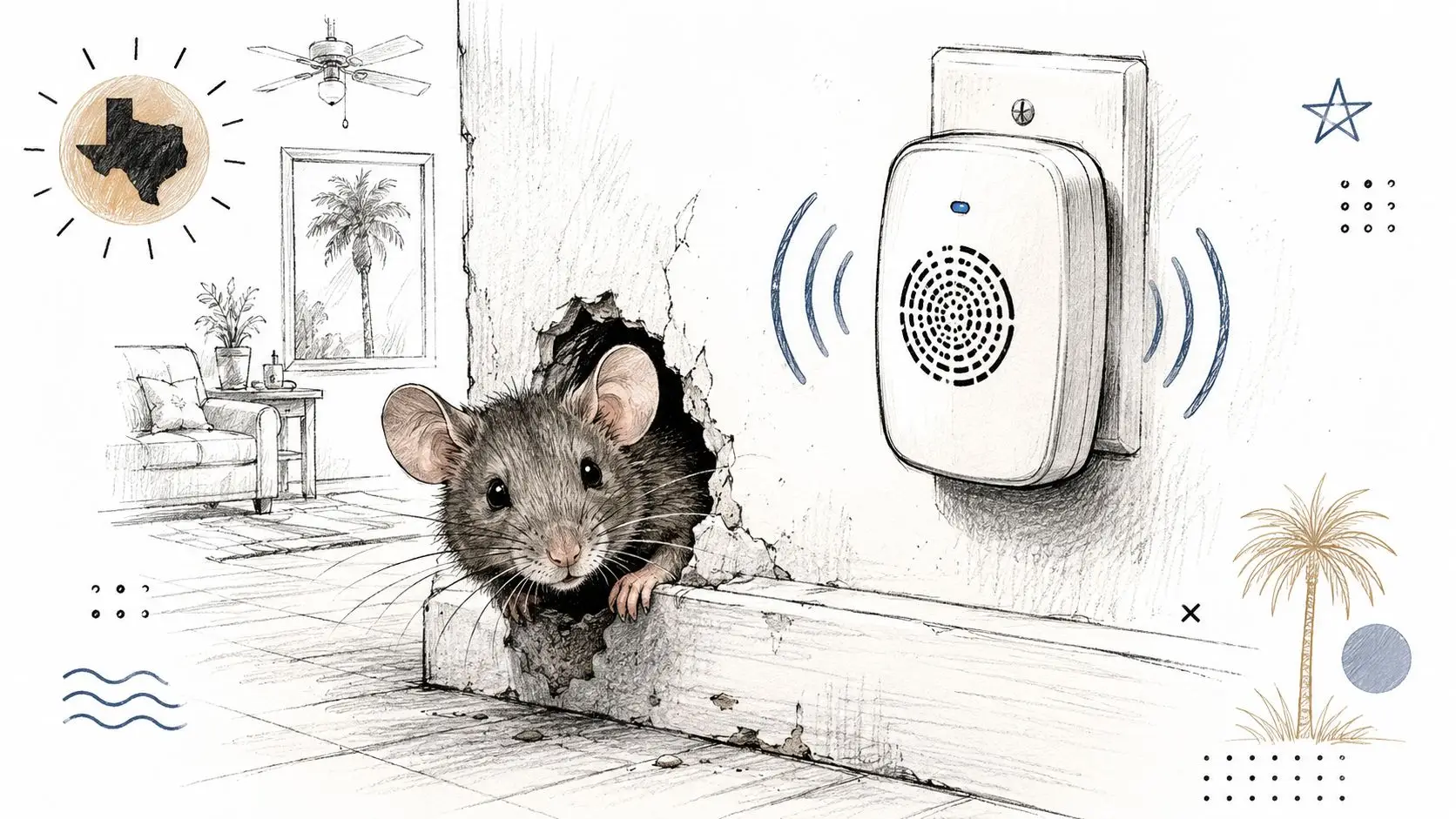
Sonic repellents sound modern, but Southeast Texas houses give rodents too many places to stay out of reach.
Around Magnolia and Conroe, the usual problem is not a mouse crossing an open room. It is a roof rat running the attic edge at night, dropping into a wall void, then feeding in the pantry before daylight. Or it is a house mouse living behind the laundry room, nesting near insulation, and traveling tight to framing where a plug-in device has little effect.
Plug one of these units into a kitchen outlet and you still have the same structural problem. The sound does not follow rodents into wall cavities, behind cabinets, under appliances, or across an attic broken up by joists, insulation, storage, and ductwork.
Real houses break up the signal
I see the same pattern in local homes all the time. The device is active in the room where people can hear the sales pitch, but the rodent activity is above the garage ceiling, inside the soffit return, behind the dishwasher, or along the back corner of the pantry.
Southeast Texas construction makes that worse:
- Wall voids and cabinet runs: Mice and rats travel inside enclosed spaces, not out in the open.
- Attic insulation and stored boxes: These create protected runways that let rodents move with little disturbance.
- Appliances, furniture, and closets: These block and scatter the area the device can affect.
- Complex rooflines and eaves: Roof rats use high entry routes far from the outlet where the unit is plugged in.
The climate adds pressure. Long warm seasons, heavy rains, thick vegetation, pet food, and easy water sources around the home give rodents a reason to keep coming back. A small gap at the eave, utility line, garage corner, or roof return matters more than any repellent setting.
Homes also shift, age, and open up over time. The same maintenance work that can seal drafts and reduce heating bills can also reduce rodent access if the details are done right. For rodent-specific vulnerabilities, start with identifying and sealing common entry points for rodents instead of adding another device.
In Magnolia and Conroe homes, repellents fail for a simple reason. They do not reach the nest, they do not interrupt the travel route, and they do not close the opening that let the rodent in. If you are hearing scratching in the attic after dark, finding fresh droppings in the pantry, or seeing repeat activity after cleanup, that is the point to call a local pro and stop treating it like an outlet problem.
The Proven Alternative Integrated Pest Management
Sonic devices sell convenience. Rodent control in a Southeast Texas home takes inspection, exclusion, trapping, and follow-up.
That is why professionals use Integrated Pest Management, or IPM. It solves the infestation the way it exists in the field. Roof rats in attics, house mice in kitchens and garages, and repeat entry through gaps that stay open until someone finds and seals them.

Start with evidence
A proper rodent plan starts with signs, not assumptions.
Check for fresh droppings, rub marks, gnawing, nesting, greasy smudges on travel routes, and disturbed insulation in the attic. Outside, inspect garage door corners, roof returns, soffit lines, plumbing penetrations, AC line entries, and utility gaps. In Magnolia and Conroe homes, I also pay close attention to attic access points and lower garage edges because those are common trouble spots after weather changes and seasonal shifts.
If you skip this step, you end up treating the room you occupy instead of the route the rodents use.
What IPM looks like in a real house
A working IPM plan has four parts, and each one matters:
- Inspection: Confirm the species, pressure, travel routes, nesting areas, and entry points before choosing tools.
- Exclusion: Close the openings that keep the infestation going. If you want the basics, this guide explains what exclusion means in rodent control.
- Targeted trapping: Set traps where mice and rats already travel. That usually means along walls, behind appliances, in attic runs, and near confirmed activity, not out in the open where it feels convenient.
- Sanitation and habitat correction: Store food properly, pick up pet food at night, reduce clutter, and fix moisture issues that support long-term activity.
That combination works because each step supports the next one. Seal first and trap what is left inside. Clean up food pressure so the baiting surface and trap placement make sense. Recheck the home so a missed gap does not restart the problem two weeks later.
What homeowners can do right away
Start with a flashlight and a trash bag.
Pull storage off garage and pantry walls so you can inspect the perimeter. Move dry goods and pet food into hard containers. Check under sinks, behind the stove, and around the water heater for openings around pipes or wiring. In the attic, look for compressed insulation trails, droppings, and daylight at the eaves or penetrations.
These are not glamorous steps, but they are the steps that change the outcome.
A visual walkthrough can help if you want to see how rodent control methods fit together in practice.
What IPM does that sonic devices do not
IPM gives rodents fewer ways in, fewer places to hide, less access to food, and direct pressure from trapping. That matters in Southeast Texas, where warm weather, dense vegetation, and long rodent seasons keep reinfestation pressure high.
A plug-in device does none of that. It does not seal the soffit gap a roof rat uses. It does not remove the mice already breeding behind the pantry wall. It does not correct the garage clutter, spilled bird seed, or pet bowl that keeps activity going.
The practical takeaway is simple. If rodents are active in the home, the answer is a plan, not a sound.
Pros Cons and Safety of Sonic Mouse Repellents
Some homeowners still want a fair pros-and-cons breakdown before they rule these devices out. That's reasonable. The appeal is real. The performance just doesn't hold up.
The short list of pros
There are a few reasons people keep buying sonic mouse repellent devices:
- Easy setup: Plugging in a device is simpler than trapping or sealing.
- No chemical application: People who want a non-chemical option like that aspect.
- Low effort: Once installed, there's little day-to-day work.
Those are buying advantages, not control advantages. Ease of use only matters if the method works.
The much longer list of cons
The drawbacks are more serious because they affect outcome, not convenience.
| Consideration | Reality |
|---|---|
| Effectiveness | The long-term control problem is the main issue. These devices don't solve established infestations in homes. |
| Coverage | Furnished rooms, walls, cabinets, and attic spaces interrupt the signal. |
| False security | Homeowners may postpone exclusion and trapping while rodents keep breeding and contaminating spaces. |
| Cost value | Even if the device seems inexpensive, it's wasted money if it delays proven control. |
| Root cause | It doesn't close entry points or remove food, water, and shelter. |
A lot of infestations get worse during the period when homeowners are “trying one more repellent.” That's the hidden cost. Not just the price of the gadget, but the time lost.
What about safety and pets
Safety questions usually come up next. People ask whether the sound is safe around kids, dogs, cats, or small pets.
The most honest answer is that the bigger issue isn't toxic risk. It's reliability. A product can be low-effort and still be the wrong tool. If you have small mammals kept as pets, any sound-based deterrent aimed at rodents deserves extra caution. For dogs and cats, household tolerance varies.
If you're comparing options, use this test. Choose the method that solves the infestation without creating dependency on a device that rodents can ignore. That pushes most homeowners back to exclusion, sanitation, and trapping.
When to Call a Professional for Rodent Control
The right time to call a pro is earlier than many homeowners think. In Southeast Texas, waiting usually means more attic contamination, more gnawing, and more time for roof rats or house mice to spread through the structure.
A professional inspection makes sense when the problem has moved beyond a single trap catch or a little activity in the garage. That usually shows up in a few clear ways.
- You keep seeing rodents indoors: One sighting can be incidental. Repeated sightings in kitchens, pantries, laundry rooms, or living areas usually mean active nesting and regular travel routes.
- You hear movement at night: Scratching in the attic, walls, or above the ceiling often points to roof rats. In this area, they commonly use trees, fence lines, and roof gaps to get in.
- Droppings show up in more than one part of the house: That means the rodents are not staying in one corner. They are moving through the home and finding multiple food or shelter sources.
- You tried traps and still have activity: If trapping, cleanup, and basic sealing have not changed the pattern, the missed piece is usually the inspection. Entry points, nesting sites, and pressure from outside the home need to be identified together.
- You see signs around the roofline or attic: Rub marks, gnawing, disturbed insulation, and droppings in attic spaces are strong signs that the job needs more than store-bought fixes.
Local experience matters here because Southeast Texas houses give rodents a lot to work with. Warm weather extends activity, heavy vegetation creates cover, and roof rats in particular do well around overhanging limbs and cluttered attic spaces. House mice are different. They exploit garages, utility penetrations, storage rooms, and small interior gaps that many homeowners never notice.

A good local pro should do more than set traps. The job is to inspect the exterior, identify how the rodents are getting in, map where they are traveling, and recommend exclusion and cleanup that fit the structure. That matters in Magnolia and Conroe, where homes often have the mix of roof access, garages, porches, and attic voids that support repeat infestations.
If you have already tried a sonic mouse repellent and still hear movement, that is a practical trigger to stop experimenting and get the home inspected. Sound devices do not close gaps, remove nesting sites, or solve an attic roof-rat problem.
For homeowners in Magnolia, Conroe, Kingwood, and nearby North Houston communities, FullScope Pest Control is one local option with a Magnolia presence and a service page here: Magnolia pest control service page. If the noise is overhead, droppings are spreading, or DIY work has stalled out, that is the point where professional rodent control usually saves time, cleanup, and frustration.