1500+ reviews

You're clearing out the garage in Magnolia, Texas, when a dark spider slips behind a storage bin. A tangled web hangs beneath a shelf, close to the concrete, and a pale sac is tucked into the corner. It's understandable to wonder whether you've found one stray spider or the first visible evidence of a larger problem.
The signs of black widow infestation usually appear as a pattern, not a single frightening discovery. Web location, web structure, egg sacs, hidden retreats, and live spiders provide much better evidence than an isolated web or an unexplained skin mark. The Southern black widow, Latrodectus mactans, is one of the widow spiders found in Texas and is the species most commonly encountered across much of the state, according to Texas Parks and Wildlife's arachnid safety guidance.
Is It a Black Widow Lurking in Your Home
A homeowner cleaning a shed may notice a web stretched between a wall and a stack of containers. Someone working beneath a porch may see a shiny black spider retreat into a protected gap. In Kingwood, Conroe, Magnolia, and nearby Southeast Texas communities, these discoveries deserve a careful look, but they don't automatically mean the entire home is infested.
The first question is whether the evidence is active. A dusty web that breaks apart when touched may be leftover activity. A web containing an egg sac, a live spider, or newly emerged spiderlings tells you much more. Black widows prefer quiet, sheltered locations, so the surrounding environment matters as much as the spider itself.
Look for a pattern, not a panic trigger
Focus your inspection on places that rarely get disturbed:
- Garages and sheds: Check behind stored items, beneath shelves, and around low wall edges.
- Crawl spaces: Humid, protected areas can provide shelter, especially where clutter remains undisturbed.
- Porches and foundations: Look under furniture, around foundation openings, and in structural voids.
- Outdoor storage: Woodpiles, boxes, yard debris, and water meter boxes can conceal webs and retreats.
A single adult spider may have wandered into a space, while repeated sightings in connected sheltered areas suggest established activity. The most useful evidence is a combination of a low, irregular web and a hidden retreat containing a live spider or egg sac.
Practical rule: Treat the web as a clue. Treat the web plus an egg sac or live spider as confirmation that the area needs prompt attention.
Homeowners who want to reduce inviting conditions can also review this practical guide to preventing black widow risks at home before disturbing storage areas or exterior harborage. Keep children away from suspected activity, and don't reach into dark gaps with bare hands.
Decoding the Telltale Webs and Egg Sacs
A dusty web under a porch or behind a garage box may be leftover activity. A low, tangled web connected to an egg sac or live spider points to activity that deserves prompt attention. Black widows build messy, irregular webs close to the ground, often in protected spaces such as humid crawl spaces, cluttered garages, sheds, woodpiles, and foundation voids. PestWorld's black widow identification guidance identifies this disorganized, low construction as a useful field clue.
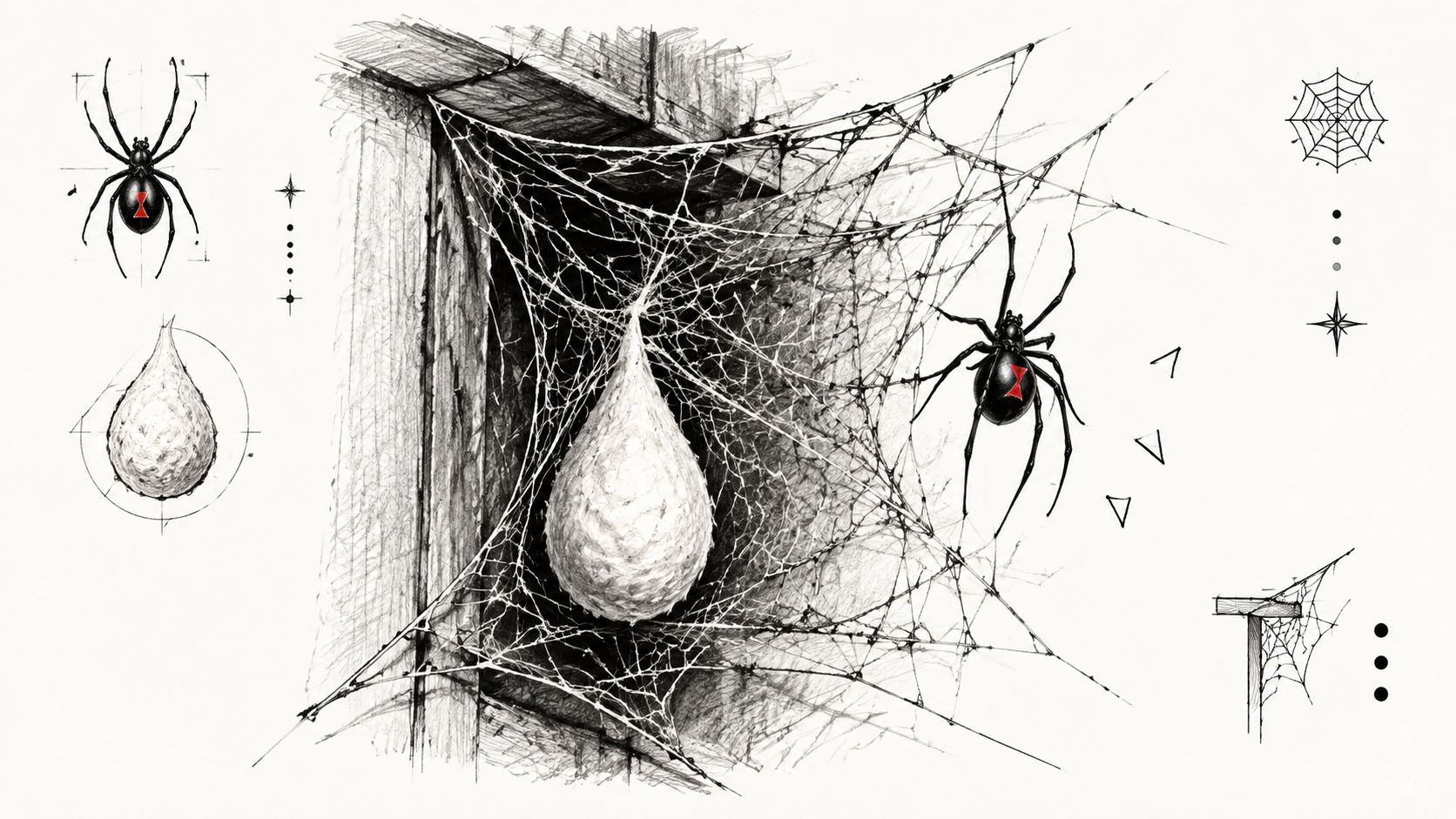
The setting matters in Southeast Texas homes. Check beneath porch edges, inside foundation openings, behind stored boxes, and under lawn furniture. The web may appear three-dimensional and disorderly, with strands joining nearby surfaces instead of forming the clean circular pattern associated with orb-weavers.
Separate old webbing from active evidence
Webbing alone cannot confirm that a black widow remains nearby. Dust, debris, and weather can leave loose strands behind after the spider has moved on. Stronger evidence includes a live spider, a hidden retreat, an egg sac, or newly emerged spiderlings attached to the web, consistent with Orkin Canada's guidance on black widow webs and activity.
Inspect from outside the web's reach. Use a flashlight and keep children away from the area. Look for:
- A live spider hanging beneath the web, particularly in a dark, undisturbed corner.
- A papery egg sac suspended in or beside the web.
- Small spiderlings or shed remains near the retreat.
- Fresh webbing leading into a protected space, rather than isolated strands exposed to rain or movement.
A black widow egg sac is usually papery and pale brown to white, about 8 to 12 millimeters in width or length, according to Alabama Cooperative Extension's black widow fact sheet. One sac may contain an average of 200 to 255 eggs, with reported ranges from 25 to more than 900 eggs. Females may produce 4 to 9 sacs in one summer, so crushing or handling one can create unnecessary contact with spiders or spiderlings.
Do not reach into a dark gap or sweep a suspected sac with bare hands. For practical handling guidance, review safe ways to remove spider eggs. An old web may only need removal after inspection. A web with an egg sac or live spider calls for prompt control planning.
Confirming Your Suspicions How to Identify a Black Widow
The adult female Southern black widow is usually the spider people recognize most easily. She has a glossy black body, a rounded abdomen, and a red hourglass marking on the underside. Because the spider often hangs upside down in its web, the marking may become visible when viewed from below, but don't approach closely just to confirm the color.
Males and immature spiders can look different from the familiar adult female. That makes the web, egg sac, location, and behavior important parts of identification. A technician may need to inspect the surrounding harborage rather than rely on a quick view of one spider.
The comparison below can help separate a suspected black widow from common spiders found around Southeast Texas homes.
Black Widow vs. Common Texas House Spiders
| Feature | Black Widow | Common Orb-Weaver | Cellar Spider (Daddy Long-legs) |
|---|---|---|---|
| Body appearance | Glossy, dark body with a distinctive red hourglass marking on the underside | Often patterned or brightly marked, with a larger abdomen that may be rounded or angular | Small body with very long, thin legs |
| Web type | Irregular, tangled web close to the ground or inside protected spaces | Neat, symmetrical circular web, often visible outdoors | Loose, delicate webbing in corners, ceilings, or sheltered indoor areas |
| Typical setting | Crawl spaces, garages, sheds, woodpiles, foundation voids, and cluttered low areas | Gardens, shrubs, porches, and other open outdoor locations | Quiet indoor corners, ceilings, basements, and utility spaces |
| Homeowner concern | Venomous bite risk means suspected active sites require caution | Generally considered a nuisance rather than a major household threat | Usually regarded as harmless to people |
A red hourglass is a valuable clue, but you shouldn't handle a spider to inspect its underside. Compare the spider with the web and habitat, then photograph it from a safe distance if you can do so without disturbing the site. For additional identification context, see identifying venomous spiders in Texas.
Understanding the Health Risks and Bite Symptoms
Black widow bites can cause localized pain and broader symptoms such as muscle aches, nausea, and discomfort. The seriousness varies by person, and medical evaluation matters more than trying to diagnose the spider from a skin mark.
A suspected bite shouldn't be used as your main method of detecting an infestation. Medical guidance emphasizes that bites may leave tiny puncture marks or be difficult to notice, while symptoms can become significant. The University of Illinois medical safety guidance on arachnids stresses that a suspected bite warrants medical evaluation, and that the absence of bites doesn't show that black widows are absent.
What to do after a suspected bite
Move away from the suspected web or spider and seek medical advice promptly. If the spider can be identified without touching it, a clear photograph may help, but don't risk another encounter by trying to capture or carry the spider.
Contact emergency services when symptoms appear severe or rapidly worsen. Keep the area calm and avoid treating the bite as proof of an infestation. A medical professional addresses the health concern, while a pest professional evaluates the property for active signs.
A bite is a health issue first, and an infestation clue only afterward.
Black widows generally avoid people, and a bite may happen when someone presses against or reaches into a hidden retreat. That's why proactive inspection is more reliable than waiting for a household member to be bitten. Look for the web and sac combination in low, sheltered areas, especially around stored materials and exterior structures.
What to Do If You Suspect an Infestation
Don't sweep, crush, vacuum, or reach into a suspected web until you've assessed the area safely. In a Magnolia garage or shed, wear gloves, long sleeves, closed shoes, and protective clothing before moving stored items, but remember that clothing reduces exposure risk. It doesn't make direct handling safe.
Keep children and pets away from the location. Mark the area mentally or with a safe visual reminder, then plan an inspection during good lighting rather than probing dark gaps.
Check the places that stay quiet
Around Magnolia homes, pay close attention to:
- Under porch furniture: Turn over cushions and inspect undersides without placing your hands underneath.
- Water meter boxes: Use a flashlight and keep your face and hands away from the opening.
- Foundation vents: Look around edges, voids, and nearby debris.
- Humid crawl spaces: Check low corners, stored materials, and areas where ventilation is limited.
- Cluttered garages: Inspect behind boxes, shelving, bins, and equipment that hasn't moved recently.
Magnolia is a defined city in northwest Montgomery County, Texas. The U.S. Census Bureau reported a 2020 census population of 1,959, which makes local service planning different from treating the area as an undefined part of greater Houston, as reflected in Texas A&M AgriLife's Southern black widow information.
A residual web with no other evidence may justify cleaning and continued monitoring. A live spider in a web raises the concern. An egg sac, multiple active webs, or spiderlings moves the situation beyond a sensible DIY cleanup.
Property managers and homeowners can use a structured risk review, such as Safety Space's assessment process, to record the location, access conditions, occupants, and hazards before arranging service. Don't apply pesticides blindly into crawl spaces or enclosed voids. A professional can identify the nesting area and select a targeted treatment plan without forcing you to disturb the site.
Secure Your Home with Professional Black Widow Control
A professional inspection is appropriate when you find an egg sac, a live adult spider, repeated active webs, or activity near children, pets, or workers. One old web is evidence of past activity, not proof of an active infestation. Webs with an egg sac, live spider, or spiderlings require a closer look. The technician should inspect connected harborage areas, identify conditions supporting activity, and recommend treatment suited to the property.
Southeast Texas homes create several hiding opportunities. Humid crawl spaces, cluttered garages, porch furniture, foundation vents, and woodpiles can connect several sheltered locations. Cleaning one visible web may improve appearance while leaving the adult spider, egg sac, or nearby shelter undisturbed.
What a practical service visit should address
A sound plan should include:
- Inspection: Check protected areas inside and outside the structure for webs, retreats, live spiders, and egg sacs.
- Targeted treatment: Treat confirmed activity instead of coating every surface without a clear reason.
- Web and harborage management: Remove accessible evidence after evaluating the risk and location.
- Prevention: Reduce clutter, improve inspection access, and address conditions that shelter spiders and their prey.
- Follow-up planning: Determine whether the property needs one-time remediation or continued monitoring.
Egg sacs deserve prompt attention because one sac may contain many eggs, and a female may produce several sacs during a season, as noted earlier. That does not guarantee successful development, but an apparently small discovery can develop into a larger problem. Leave the sac in place rather than disturbing it.
FullScope Pest Control serves Magnolia and nearby Southeast Texas communities, including Kingwood, Conroe, Porter, Cleveland, Montgomery, and surrounding service locations. Its technicians provide inspections, targeted pest treatments, and prevention planning for residential and commercial properties. Homeowners comparing local options can review spider control service in Montgomery, Texas and request an evaluation based on the evidence found.
If you find a suspected black widow, tangled low web, or egg sac in your Magnolia home, garage, shed, crawl space, or near the foundation, keep people and pets away. Photograph the area from a safe distance, avoid reaching into the hiding place, and contact FullScope Pest Control for an inspection and a clear plan.